
KSA Healthcare Technology Market Outlook to 2030
Region:Saudi Arabia
Author(s):Sanjna
Product Code:KROD11200
Region:Saudi Arabia
Author(s):Sanjna
Product Code:KROD11200
November 2024
87
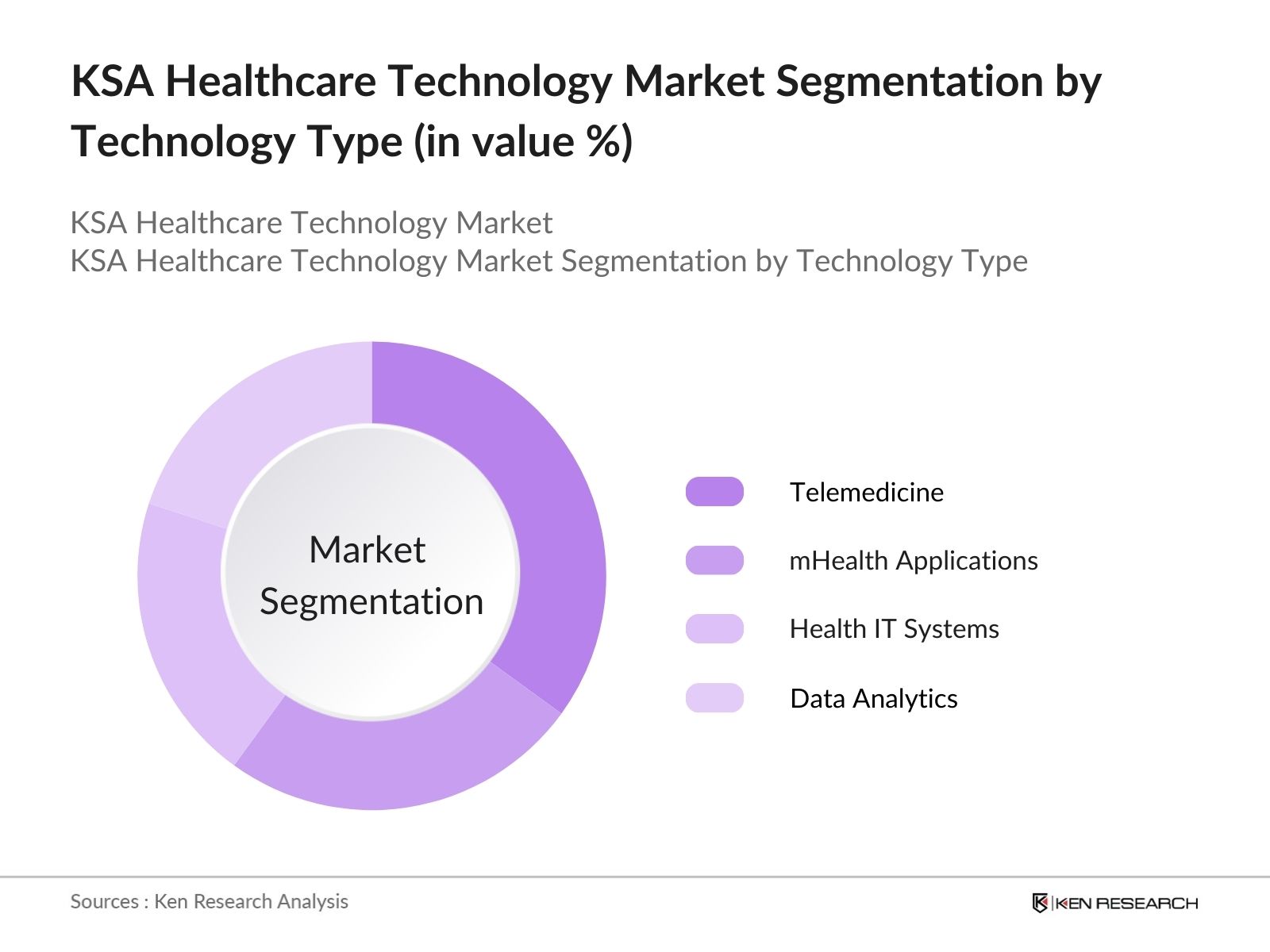
By Technology Type: KSA healthcare technology market is segmented by technology type into Telemedicine, mHealth Applications, Health IT Systems, and Data Analytics. Telemedicine holds a dominant share, largely due to increasing smartphone use and enhanced internet connectivity. Telemedicines popularity stems from its role in improving access to healthcare, especially in remote areas, where physical visits to healthcare facilities are limited. Additionally, government initiatives, like Seha Virtual Hospital, support remote health access, boosting this segment's adoption further.
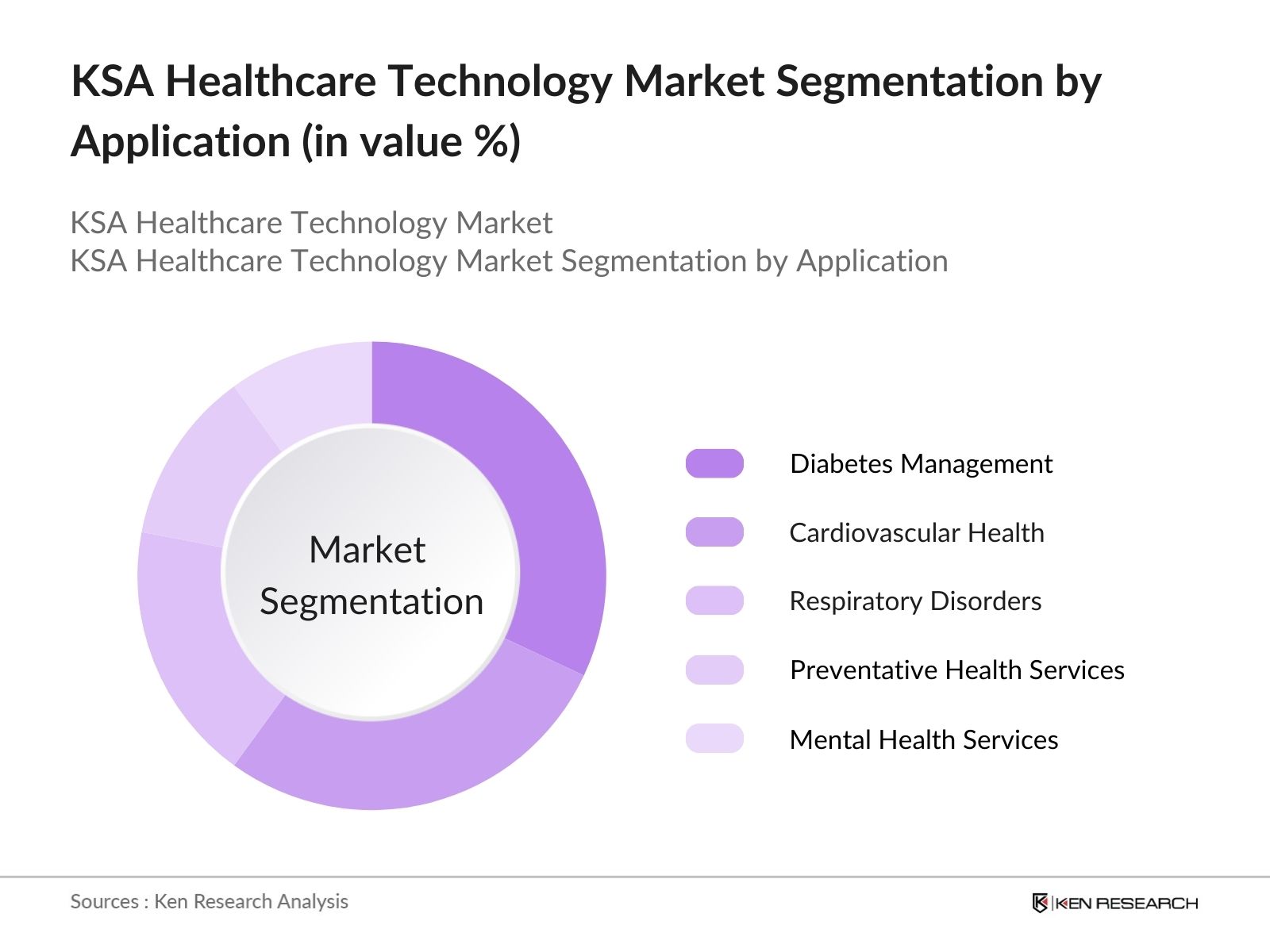
 By Application: The healthcare technology market is segmented by application into Diabetes Management, Cardiovascular Health, Respiratory Disorders, Preventative Health Services, and Mental Health Services. Diabetes Management is the most prominent segment, driven by the high prevalence of diabetes in Saudi Arabia. Digital solutions, such as glucose monitoring apps and wearable health devices, allow patients to manage their condition actively and aid healthcare providers in delivering personalized care, fostering this segment's dominance
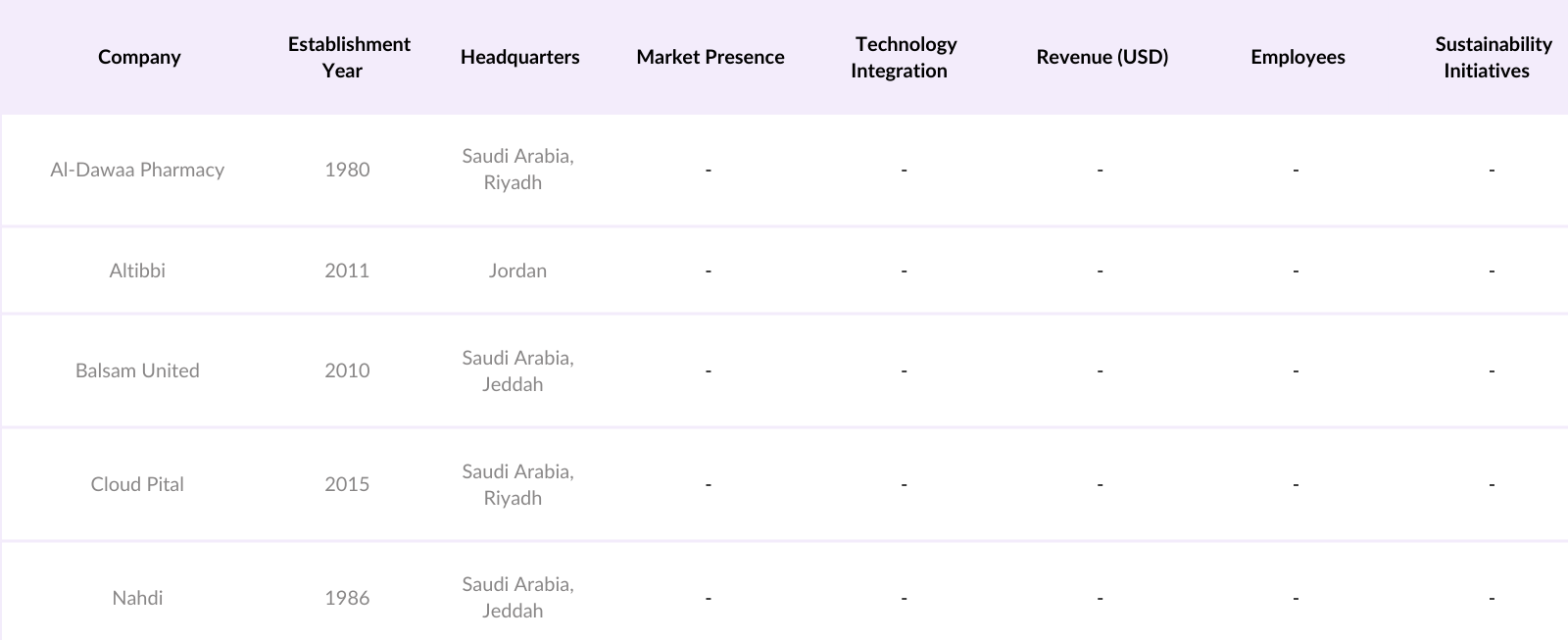
The KSA Healthcare Technology market is dominated by a few major players, including both international companies and domestic firms like Al-Dawaa Pharmacy and Altibbi. These companies leverage digital innovations to enhance their services and drive growth within the healthcare technology sector. This market consolidation underscores the influence of these players in driving advancements and setting industry standards.
Growth Drivers
Challenges
KSA healthcare technology market is expected to experience robust growth. This growth will be fueled by continuous government support, technological advancements, and increasing demand for efficient healthcare services. With the healthcare sectors rapid digitization, the focus will be on enhancing remote patient care, preventive health management, and telemedicine services to meet the evolving needs of the population.
Market Opportunities
|
Segment |
Sub-Segments |
|
Technology |
Telemedicine mHealth Applications Health IT Systems Data Analytics |
|
Application |
Diabetes Management Cardiovascular Health Respiratory Disorders Preventative Health Mental Health |
|
Component |
Services Software Hardware |
|
End User |
Patients Healthcare Providers Insurance Payers Pharmacies |
|
Region |
Riyadh Jeddah Mecca Dammam Other Cities |
1.1 Definition and Scope
1.2 Market Taxonomy
1.3 Market Growth Rate
1.4 Market Segmentation Overview
2.1 Historical Market Size
2.2 Year-On-Year Growth Analysis
2.3 Key Market Developments and Milestones
3.1 Growth Drivers
3.1.1 Telehealth Adoption (Internet Connectivity, Smartphone Penetration)
3.1.2 Chronic Disease Incidence (Diabetes, Cardiovascular)
3.1.3 Government Initiatives (Vision 2030, ICT Strategy)
3.1.4 Increased Private Sector Investment
3.2 Market Challenges
3.2.1 Data Privacy Concerns
3.2.2 Healthcare Provider Readiness (Digital Competence, Patient Engagement)
3.2.3 Regulatory Complexity
3.2.4 Infrastructure and Resource Constraints
3.3 Opportunities
3.3.1 Expansion of Virtual Healthcare Services
3.3.2 Integration of AI and Data Analytics
3.3.3 Development of Health IT Infrastructure (Electronic Health Records, Health Information Systems)
3.4 Trends
3.4.1 Adoption of Wearable Technology
3.4.2 Growth in Remote Patient Monitoring
3.4.3 Advancements in mHealth Applications
3.4.4 Rise of Digital Therapeutics
3.5 Regulatory Environment
3.5.1 Compliance Requirements for Health Data
3.5.2 E-Health Regulations and Certifications
3.5.3 National Health System Integration Standards
3.6 SWOT Analysis
3.7 Stakeholder Ecosystem
3.8 Porters Five Forces
3.9 Competitive Ecosystem
4.1 By Technology Type (In Value %)
4.1.1 Telemedicine
4.1.2 mHealth Applications
4.1.3 Health IT Systems
4.1.4 Data Analytics
4.2 By Application (In Value %)
4.2.1 Diabetes Management
4.2.2 Cardiovascular Health
4.2.3 Respiratory Disorders
4.2.4 Preventative Health Services
4.2.5 Mental Health Services
4.3 By Component (In Value %)
4.3.1 Services (Virtual Consultations, Training)
4.3.2 Software (EMR, Digital Platforms)
4.3.3 Hardware (Medical Devices, Wearables)
4.4 By End User (In Value %)
4.4.1 Patients
4.4.2 Healthcare Providers
4.4.3 Insurance Payers
4.4.4 Pharmacies
4.5 By Region (In Value %)
4.5.1 Riyadh
4.5.2 Jeddah
4.5.3 Mecca
4.5.4 Dammam
4.5.5 Other Cities
5.1 Detailed Profiles of Major Companies
5.1.1 Al-Dawaa Pharmacy
5.1.2 Altibbi
5.1.3 Anova Health
5.1.4 Balsam United
5.1.5 Boots Pharmacy
5.1.6 Cerner Corporation
5.1.7 Cloud Pital
5.1.8 Cura
5.1.9 Ghaya Pharmacies Ltd.
5.1.10 Nahdi
5.2 Cross Comparison Parameters (Revenue, Regional Presence, Key Technologies, Partnerships, Market Share, Growth Rate, Strategic Initiatives, Key Offerings)
5.3 Market Share Analysis
5.4 Strategic Initiatives (Product Launches, Technology Partnerships, R&D)
5.5 Mergers and Acquisitions
5.6 Investment Analysis
5.7 Government Grants and Funding for Health IT
5.8 Private Equity and Venture Capital Investments
6.1 E-Health Certification Requirements
6.2 Data Protection Regulations
6.3 Compliance Standards for Digital Health
6.4 Medical Device Regulations for Health Tech
7.1 Market Size Projections
7.2 Key Factors Driving Future Market Growth
8.1 By Technology Type (In Value %)
8.2 By Application (In Value %)
8.3 By Component (In Value %)
8.4 By End User (In Value %)
8.5 By Region (In Value %)
9.1 TAM/SAM/SOM Analysis
9.2 Customer Cohort Analysis
9.3 Marketing and Engagement Strategies
9.4 Identification of White Space Opportunities
The research begins with mapping the healthcare technology ecosystem in Saudi Arabia, identifying major stakeholders, and focusing on drivers, challenges, and emerging trends. Secondary sources, including industry databases and government publications, were used to identify key variables.
Historical data was gathered to analyze the current market state. This included assessing the penetration rate of digital health solutions, examining regional adoption differences, and understanding revenue dynamics to provide a baseline for 2023.
Hypotheses related to market drivers and restraints were developed and validated through interviews with industry experts. These consultations offered insights into operational challenges and future growth potential, refining the studys accuracy.
The final phase involved aggregating and synthesizing data, with additional insights from local healthcare providers. This bottom-up approach verified the markets growth trajectory, ensuring comprehensive and validated results.
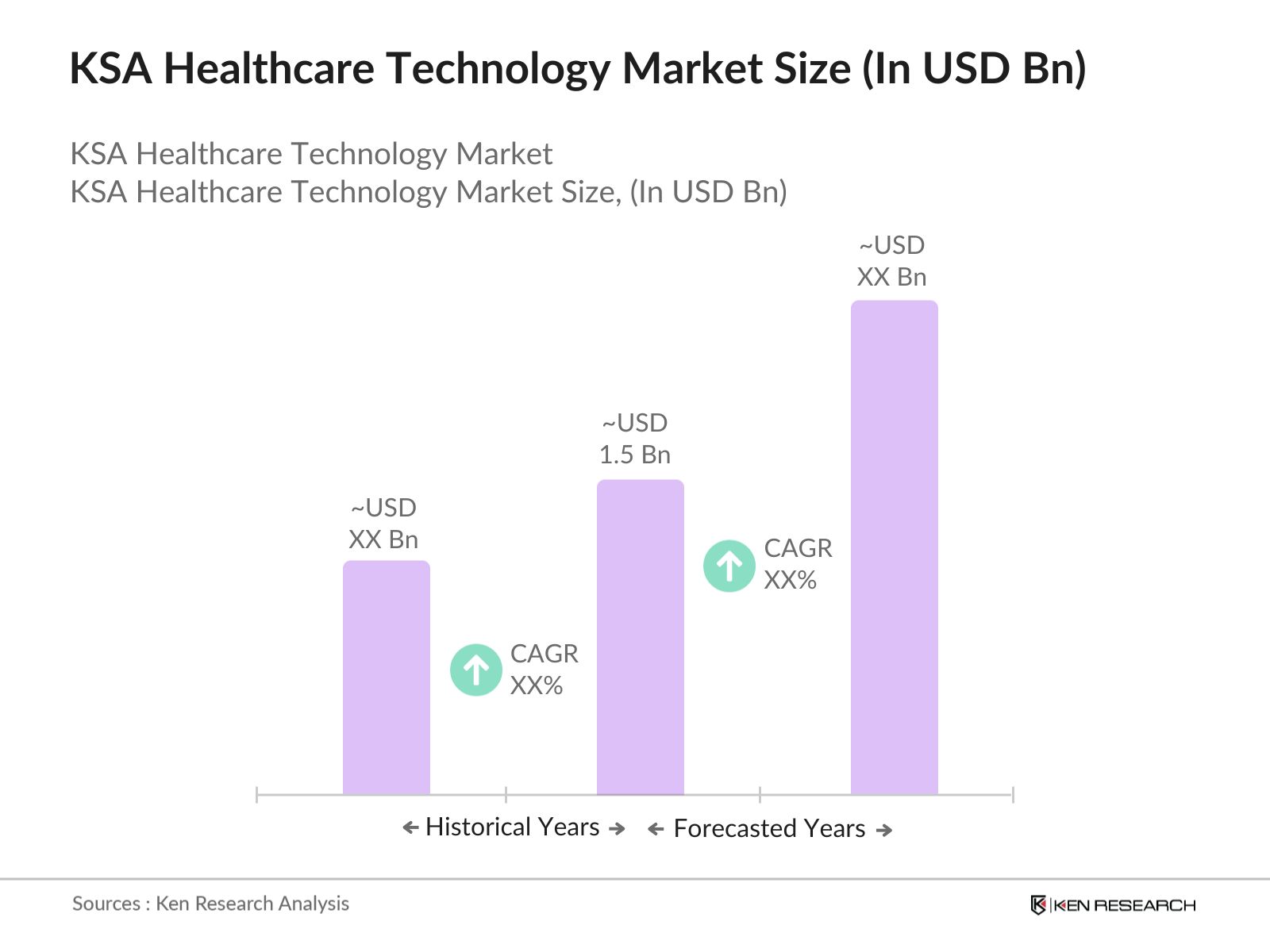
The KSA Healthcare Technology market is valued at USD 1.5 billion, driven by a surge in digital health adoption, government investments, and increasing healthcare demand due to an aging population.
Key challenges in KSA Healthcare Technology market include data privacy concerns, regulatory complexities, and the need for digital literacy among healthcare providers, which can limit the adoption of advanced digital health solutions.
Notable companies in KSA Healthcare Technology market include Al-Dawaa Pharmacy, Altibbi, Balsam United, Cloud Pital, and Nahdi. These firms are prominent due to their established market presence and their continuous focus on innovation and service quality.
Growth in KSA Healthcare Technology market is driven by increased healthcare spending, telemedicine expansion, a rise in chronic diseases, and the Saudi governments Vision 2030 initiative, which encourages healthcare modernization and digital integration.

What makes us stand out is that our consultants follows Robust, Refine and Result (RRR) methodology. i.e. Robust for clear definitions, approaches and sanity checking, Refine for differentiating respondents facts and opinions and Result for presenting data with story

We have set a benchmark in the industry by offering our clients with syndicated and customized market research reports featuring coverage of entire market as well as meticulous research and analyst insights.

While we don't replace traditional research, we flip the method upside down. Our dual approach of Top Bottom & Bottom Top ensures quality deliverable by not just verifying company fundamentals but also looking at the sector and macroeconomic factors.

With one step in the future, our research team constantly tries to show you the bigger picture. We help with some of the tough questions you may encounter along the way: How is the industry positioned? Best marketing channel? KPI's of competitors? By aligning every element, we help maximize success.

Our report gives you instant access to the answers and sources that other companies might choose to hide. We elaborate each steps of research methodology we have used and showcase you the sample size to earn your trust.

If you need any support, we are here! We pride ourselves on universe strength, data quality, and quick, friendly, and professional service.