
KSA Outdoor Heater Market Outlook to 2030
Region:Middle East
Author(s):Shubham Kashyap
Product Code:KROD4369
December 2024
85
About the Report
KSA Outdoor Heater Market Overview
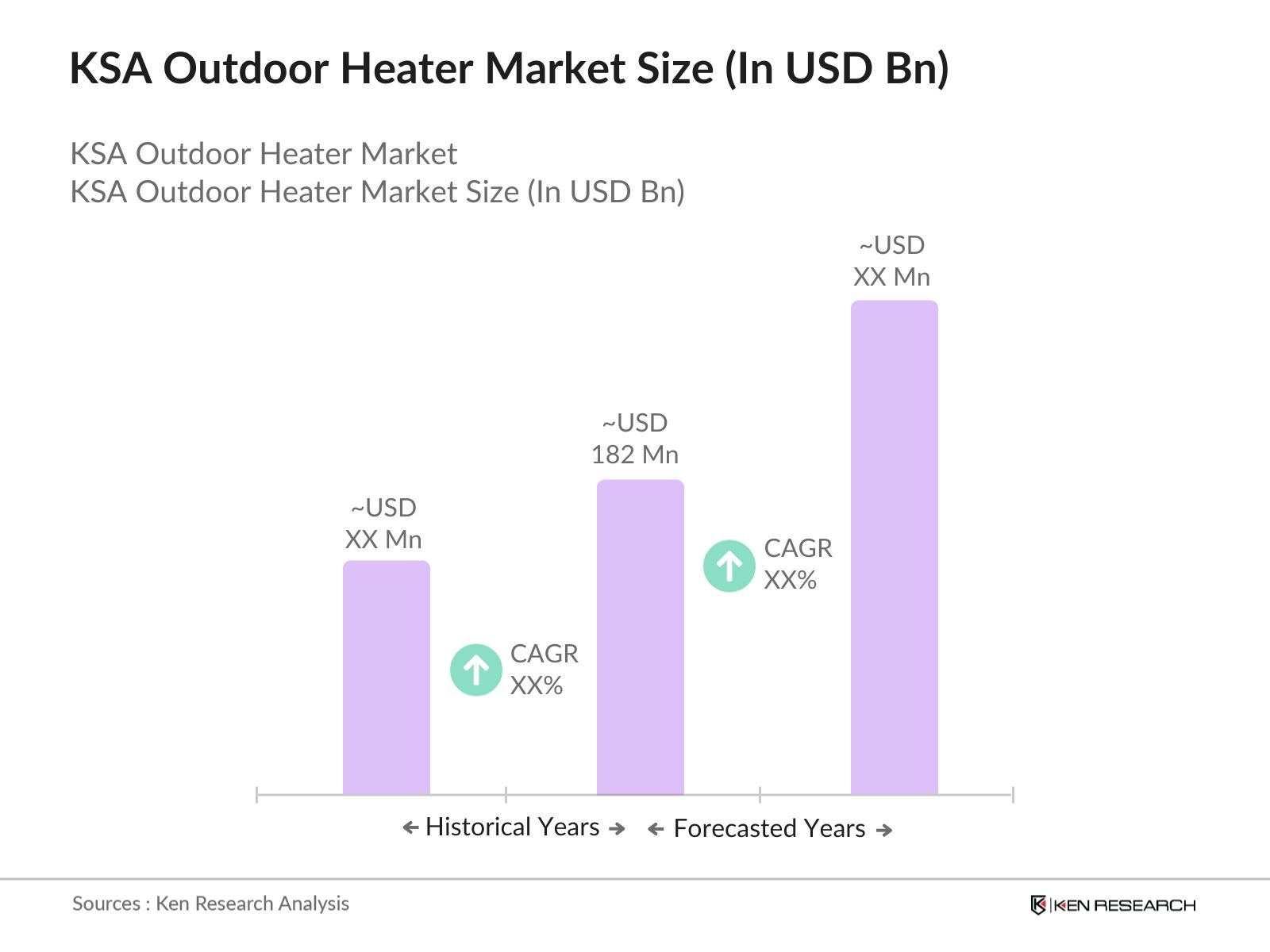
- The KSA outdoor heater market has witnessed steady growth over the past few years, reaching a market size of USD 182 Mn, driven by the increasing demand for outdoor leisure and entertainment spaces in both residential and commercial sectors. As the Kingdom continues to modernize, outdoor dining, cafes, and recreational areas have become more prevalent, particularly in Riyadh, Jeddah, and Dammam. The adoption of outdoor heaters is growing, especially in hospitality settings, as they offer a comfortable environment during cooler months.
- Riyadh and Jeddah dominate the outdoor heater market in Saudi Arabia. Riyadh, being the capital, sees a higher demand for commercial outdoor spaces such as cafes and hotels. Jeddah, a major tourist destination, drives the need for outdoor heaters in luxury hotels and restaurants. These cities are key hubs due to their large populations and focus on hospitality and entertainment sectors, which generate significant demand for outdoor heating solutions.
- The Saudi government has implemented strict energy efficiency standards for outdoor heating equipment. Under the guidelines set by SASO, all outdoor heaters sold in Saudi Arabia must meet specific energy consumption thresholds. As of 2024, this regulation has led to a shift towards energy-efficient products, particularly solar-powered and electric heaters, as manufacturers seek to comply with these standards.
KSA Outdoor Heater Market Segmentation
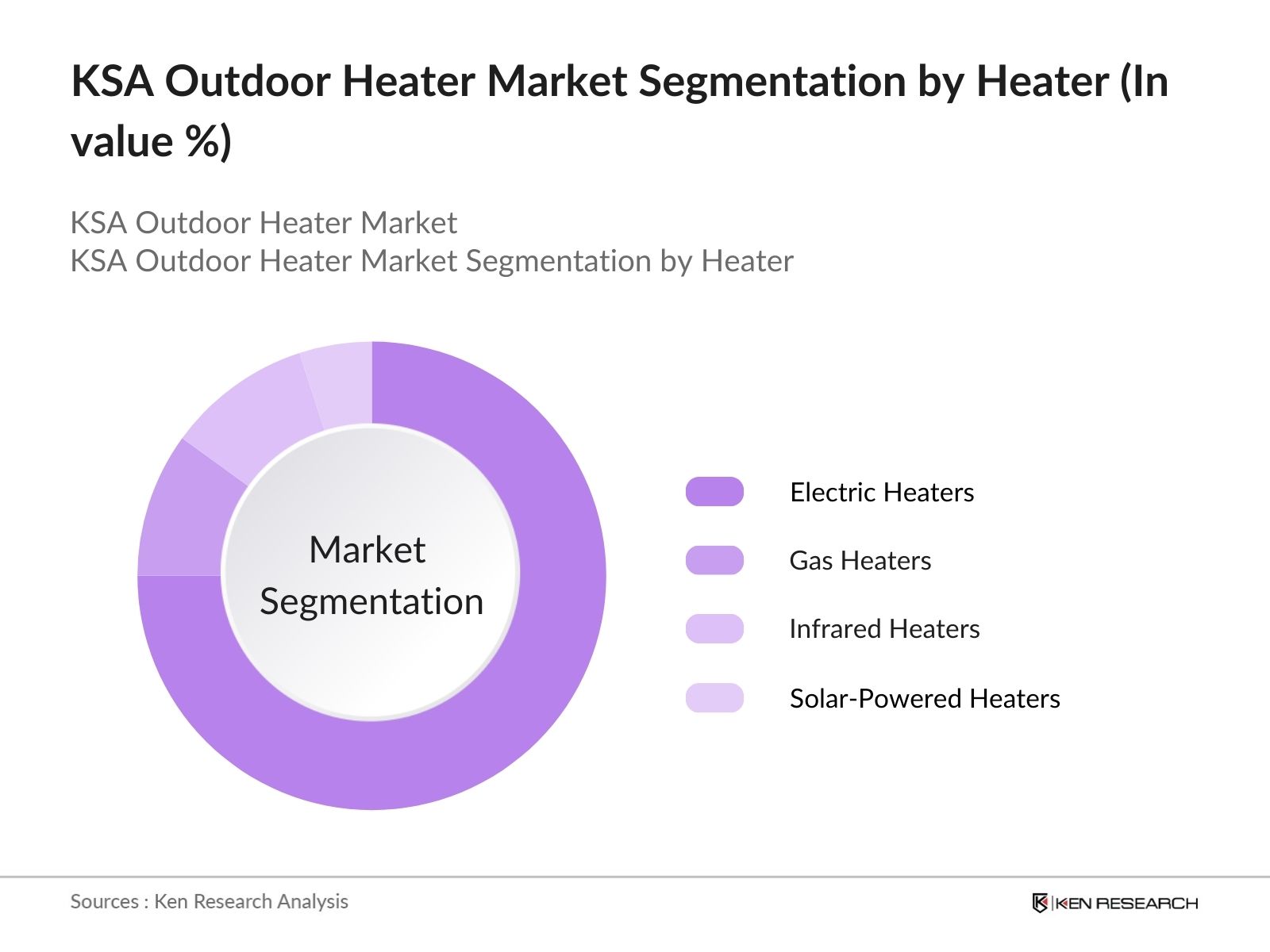
- By Heater Type: The market is segmented into electric heaters, gas heaters, solar power, and infrared heaters. Electric heaters are gaining traction due to their energy efficiency and ease of use, particularly in residential and small commercial spaces. Gas heaters, on the other hand, are widely used in large outdoor settings, such as restaurants and public spaces, due to their higher heat output. Infrared heaters are also growing in popularity for their ability to heat objects directly, providing efficient heating even in windy conditions.
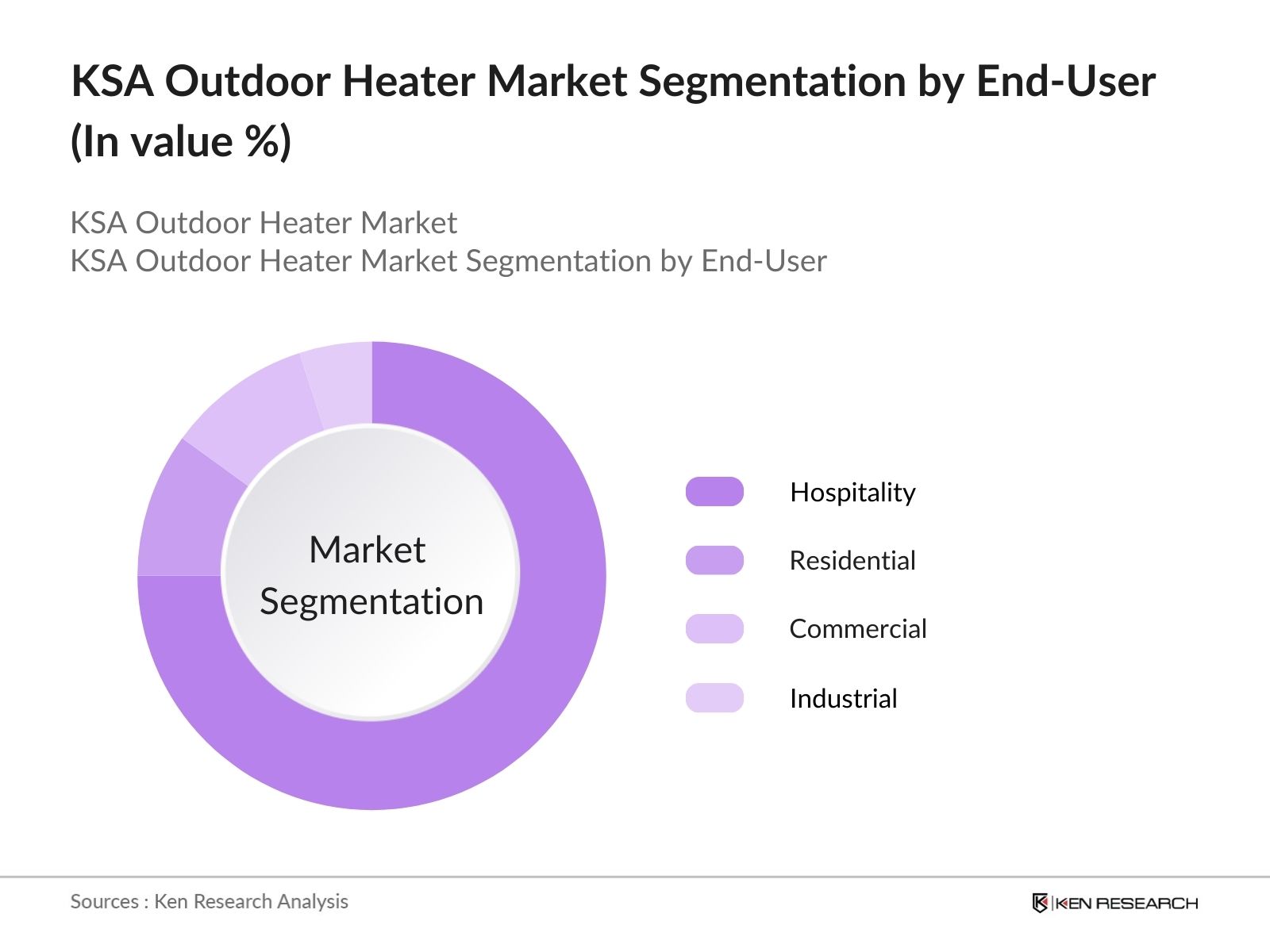
- By End-User: The market is segmented into residential, commercial, and industrial users. The commercial sector, particularly hospitality, restaurants, and cafes, holds the largest share of the market. With an increasing trend towards outdoor dining and leisure activities, commercial spaces are investing heavily in outdoor heaters. The residential segment is also growing, particularly among high-income households looking to enhance their outdoor spaces. Industrial users, although a smaller segment, rely on outdoor heaters for specific applications in large open spaces, such as construction sites or outdoor events.
KSA Outdoor Heater Market Competitive Landscape
The KSA outdoor heater market is highly competitive, with the presence of both international brands and local manufacturers. Major global players such as Bromic Heating, Schwank, and Infratech dominate the market, offering a wide range of outdoor heating solutions with advanced features like remote control, energy efficiency, and sleek designs. These companies maintain a competitive edge through continuous innovation and strategic partnerships with local distributors.
Local manufacturers are also emerging in the market, providing cost-effective solutions tailored to the unique requirements of the Saudi market. Companies such as Al Bait Al Sharqi and Al Faisal Outdoor Solutions have established strong distribution networks across major cities, ensuring timely delivery and installation services.
|
Company Name |
Establishment Year |
Headquarters |
Revenue (2023) |
Employees |
Key Product |
R&D Investment |
Key Clients |
Partnerships |
|
Bromic Heating |
1977 |
Australia |
||||||
|
Schwank |
1933 |
Germany |
||||||
|
Infratech |
1966 |
USA |
||||||
|
Al Bait Al Sharqi |
1995 |
Saudi Arabia |
||||||
|
Al Faisal Outdoor Solutions |
2001 |
Saudi Arabia |
KSA Outdoor Heater Industry Analysis
Growth Drivers:
- Hospitality and Tourism Sector Expansion: The rapid expansion of the hospitality and tourism sector in Saudi Arabia, driven by the government's Vision 2030, has led to a surge in outdoor dining spaces and luxury venues, requiring outdoor heating solutions. Saudi Arabia saw a record number of tourists in 2023, with 100 million visitors, significantly boosting demand for outdoor heaters in hospitality. Major projects like NEOM and the Red Sea Project contribute to this rise, with a total investment of USD 500 billion allocated to develop these areas heating solutions are now vital for hotels and resorts aiming to provide comfortable outdoor experiences.
- Supporting Government Initiatives: Saudi Arabias Vision 2030 is driving the development of mega-projects like NEOM and the Red Sea Project, which focus heavily on tourism and infrastructure expansion. As of 2024, NEOM has attracted USD 5.6 billion in government and private sector investments. This mlux is expected to boost demand for energy-efficient and sustainable outdoor heating solutions in hospitality and public spaces. The Red Sea Project alone, covering 28,000 square kilometers, will see increased demand for outdoor heaters in luxury resorts and public areas.
- Ur and Lifestyle Changes: Saudi Arabia is experiencing increased urbanization, with 84% of its population living in urban areas in 2024. This shift has boosted outdoor living spaces, including gardens, patios, and terraces in both residential and commercial sectors. Along with this, outdoor heaters are becoming essential in enhancing outdoor experiences. As cities like Riyadh and Jeddah expand, more homes and commercial spaces incorporate outdoor heating solutions for comfort in cooler months, leading to significant growth in this market.
Market Challenges:
- High Energy Costs: One of the significant challenges facing the KSA outdoor heater market is the high energy consumption associated with traditional gas and electric heaters. As the government pushes for energy efficiency and sustainability, consumers and businesses are increasingly looking for heaters that offer better energy savings. However, the initial cost of purchasing energy-efficient heaters can be a barrier for smaller businesses or residential users.
- Regulatory Compliance and Safety Standards: The Saudi Standards, Metrology and Quality Organization (SASO) enforces stringent safety and emissions regulations on outdoor heating equipment. As of 2024, compliance with energy efficiency standards has become mandatory for outdoor heaters sold in the Kingdom, with SASO requiring heaters to meet specific emissions and safety thresholds. These regulations, while aimed at enhancing sustainability, pose challenges for manufacturers and suppliers who need to ensure their products meet these stringent criteria to avoid penalties.
KSA Outdoor Heater Market Future Outlook
The KSA outdoor heater market is expected to experience continued growth, driven by the expansion of the hospitality sector, increased urbanization, and the development of mega-projects under Vision 2030. As the country continues to modernize, the demand for outdoor heating solutions in both residential and commercial spaces will increase, with a growing emphasis on energy-efficient products.
Future Market Opportunities:
- Expansion in Smart City Projects: Mega-projects like NEOM, which is expected to be completed by 2030, are heavily focused on integrating smart infrastructure, offering significant opportunities for IoT-enabled heating solutions. NEOM, covering an area of 26,500 square kilometers, emphasizes sustainability and smart technologies, creating a substantial market for smart outdoor heaters. The growing number of smart city initiatives in Saudi Arabia presents a lucrative market for advanced heating technologies, particularly those that can be integrated with smart home and city systems.
- Increasing Investment in Outdoor Leisure Spaces: Saudi Arabia has seen substantial investment in outdoor leisure spaces as part of its broader urban development plans. In 2023 alone, the government allocated USD 1.4 billion towards developing parks, recreational areas, and outdoor public spaces. This growth has fueled demand for outdoor heaters, particularly in public venues, as more events and activities are held outdoors. This trend presents an opportunity for manufacturers to tap into the increasing demand for outdoor heating solutions in these leisure spaces.
Scope of the Report
|
By Heater Type |
Electric Heaters Gas Heaters Infrared Heaters Solar-Powered Heaters |
|
By End-User |
Residential Commercial Hospitality Industrial |
|
By Distribution |
Online Retail Offline Retail Direct Sales |
|
By Technology |
IoT-Enabled Heaters Traditional Heaters Remote-Control Heaters |
|
By Region |
Riyadh Jeddah Dammam Eastern Province |
Products
Key Target Audience
Hospitality Industry Players (Hotels, Restaurants, and Resorts)
Residential Property Developers
Outdoor Recreation Companies
Public Infrastructure Developers
Industrial Site Operators
Government and Regulatory Bodies (Saudi Standards, Metrology and Quality Organization, SASO)
Investors and Venture Capitalist Firms
Local Distributors and Suppliers
Banks and Financial Institutions
Companies
Major Players Mentioned in the Report
Bromic Heating
Schwank
Infratech
Al Bait Al Sharqi
Al Faisal Outdoor Solutions
Sunglo Heaters
Solaira Infrared Heaters
Heatsail
Fire Sense
Dyna-Glo
Lava Heat Italia
Dayva International
Mr. Heater
AmazonBasics
Enders
Table of Contents
1. KSA Outdoor Heater Market Overview
1.1. Definition and Scope
1.2. Market Taxonomy
1.3. Market Growth Rate (Market growth driven by outdoor recreational spaces, hospitality expansion, energy-efficient technologies)
1.4. Market Segmentation Overview
2. KSA Outdoor Heater Market Size (In USD Mn)
2.1. Historical Market Size
2.2. Year-On-Year Growth Analysis (Growth metrics, changes in outdoor heating demand)
2.3. Key Market Developments and Milestones (Industry developments, government policies, innovation in outdoor heating technology)
3. KSA Outdoor Heater Market Analysis
3.1. Growth Drivers
3.1.1. Hospitality and Tourism Sector Expansion (Increase in outdoor dining spaces, rise in luxury hospitality venues)
3.1.2. Government Initiatives (Vision 2030 impact on tourism, development of mega-projects like NEOM, Red Sea Project)
3.1.3. Urbanization and Lifestyle Changes (Growth in outdoor living spaces, increase in demand for outdoor heaters in residential and commercial spaces)
3.1.4. Technological Advancements (Energy-efficient outdoor heaters, solar-powered heaters, IoT integration)
3.2. Market Challenges
3.2.1. High Energy Consumption (Challenges due to high energy usage of traditional gas heaters)
3.2.2. Regulatory Compliance (Stringent safety standards enforced by SASO, emissions compliance)
3.2.3. High Initial Investment Costs (Cost constraints for advanced, energy-efficient heaters)
3.2.4. Complex Supply Chain and Distribution Challenges (Transportation and logistics challenges for outdoor heating equipment)
3.3. Opportunities
3.3.1. Rising Demand for Energy-Efficient Heaters (Solar-powered and low-energy consumption heaters)
3.3.2. Expansion in Smart City Projects (Opportunities in projects like NEOM focusing on sustainability and smart infrastructure)
3.3.3. Increasing Investment in Outdoor Leisure Spaces (Growth in outdoor commercial spaces, parks, and recreational areas)
3.3.4. Local Manufacturing and Product Customization (Opportunities for local manufacturers to provide customized outdoor heating solutions)
3.4. Trends
3.4.1. Adoption of Smart Heaters (IoT-enabled heaters, remote control functionality)
3.4.2. Integration with Smart City Developments (Smart city projects focusing on energy-efficient public spaces)
3.4.3. Growing Focus on Sustainable Products (Shift towards green energy solutions, solar-powered heaters)
3.4.4. Outdoor Heating for Residential Spaces (Growth in consumer demand for home-based outdoor heaters)
3.5. Government Regulations
3.5.1. Energy Efficiency Standards (Government mandates on energy consumption for outdoor heaters)
3.5.2. Safety and Emissions Regulations (Regulatory standards enforced by SASO on safety and emissions)
3.5.3. Import and Export Policies (Policies impacting outdoor heater imports and local manufacturing)
3.5.4. Vision 2030 Initiatives (Government-backed mega-projects increasing demand for outdoor heaters)
3.6. SWOT Analysis
3.6.1. Strengths (Growing market, supportive government policies)
3.6.2. Weaknesses (High initial costs, regulatory complexities)
3.6.3. Opportunities (Expansion into smart city projects, demand for energy-efficient heaters)
3.6.4. Threats (Rising energy costs, competition from international brands)
3.7. Stakeholder Ecosystem (Suppliers, manufacturers, distributors, government bodies, regulatory authorities)
3.8. Porters Five Forces
3.8.1. Bargaining Power of Suppliers (Local vs international supply chains)
3.8.2. Bargaining Power of Buyers (Demand shifts in commercial vs residential sectors)
3.8.3. Threat of New Entrants (Emergence of local manufacturers)
3.8.4. Threat of Substitutes (Alternative heating solutions)
3.8.5. Industry Rivalry (Competition between global and local players)
3.9. Competition Ecosystem
(Analysis of the competitive landscape, focusing on product offerings, market strategies, and technological advancements)
4. KSA Outdoor Heater Market Segmentation
4.1. By Heater Type (In Value %)
4.1.1. Electric Heaters
4.1.2. Gas Heaters
4.1.3. Infrared Heaters
4.1.4. Solar-Powered Heaters
4.2. By End-User (In Value %)
4.2.1. Residential
4.2.2. Commercial
4.2.3. Hospitality
4.2.4. Industrial
4.3. By Distribution Channel (In Value %)
4.3.1. Online Retail
4.3.2. Offline Retail
4.3.3. Direct Sales
4.4. By Technology (In Value %)
4.4.1. IoT-Enabled Heaters
4.4.2. Traditional Heaters
4.4.3. Remote-Control Heaters
4.5. By Region (In Value %)
4.5.1. Riyadh
4.5.2. Jeddah
4.5.3. Dammam
4.5.4. Eastern Province
5. KSA Outdoor Heater Market Competitive Analysis
5.1. Detailed Profiles of Major Companies
5.1.1. Bromic Heating
5.1.2. Schwank
5.1.3. Infratech
5.1.4. Al Bait Al Sharqi
5.1.5. Al Faisal Outdoor Solutions
5.1.6. Sunglo Heaters
5.1.7. Solaira Infrared Heaters
5.1.8. Heatsail
5.1.9. Fire Sense
5.1.10. Dyna-Glo
5.1.11. Lava Heat Italia
5.1.12. Dayva International
5.1.13. Mr. Heater
5.1.14. AmazonBasics
5.1.15. Enders
5.2. Cross Comparison Parameters
(Number of Employees, Headquarters, Inception Year, Product Portfolio, R&D Investment, Revenue, Key Clients, Partnerships)
5.3. Market Share Analysis
5.4. Strategic Initiatives (Expansion strategies, product innovation, partnerships, and collaborations)
5.5. Mergers and Acquisitions
5.6. Investment Analysis
5.7. Venture Capital Funding
5.8. Government Grants
5.9. Private Equity Investments
6. KSA Outdoor Heater Market Regulatory Framework
6.1. Energy Consumption Standards
6.2. Safety Compliance Requirements
6.3. Import Regulations and Tariffs
6.4. Certification and Product Testing
7. KSA Outdoor Heater Future Market Size (In USD Mn)
7.1. Future Market Size Projections
7.2. Key Factors Driving Future Market Growth
8. KSA Outdoor Heater Future Market Segmentation
8.1. By Heater Type (In Value %)
8.2. By End-User (In Value %)
8.3. By Distribution Channel (In Value %)
8.4. By Technology (In Value %)
8.5. By Region (In Value %)
9. KSA Outdoor Heater Market Analyst's Recommendations
9.1. TAM/SAM/SOM Analysis
9.2. Customer Cohort Analysis
9.3. Marketing Initiatives
9.4. White Space Opportunity Analysis
Research Methodology
Step 1: Identification of Key Variables
The initial phase involves identifying key stakeholders within the KSA outdoor heater market. Through desk research and the use of proprietary databases, we gather detailed information regarding product trends, industry developments, and market drivers. This phase is essential for understanding the broader market dynamics.
Step 2: Market Analysis and Construction
In this step, we analyze historical data related to the market, evaluating various heater types and their adoption across different sectors. This includes examining market penetration within hospitality, residential, and commercial settings, which enables us to construct a detailed market framework.
Step 3: Hypothesis Validation and Expert Consultation
We consult with industry experts, including manufacturers, suppliers, and key players in the hospitality sector, through interviews. These consultations validate market hypotheses and provide operational and financial insights, which are crucial for refining the market data.
Step 4: Research Synthesis and Final Output
Finally, we synthesize the data from industry stakeholders and secondary sources to compile the final report. This process includes validating the market trends, key drivers, and challenges. The final output ensures that the analysis is comprehensive and accurate, with clear insights into the KSA outdoor heater market.
Frequently Asked Questions
01 How big is the KSA outdoor heater market?
The KSA outdoor heater market is valued at USD 182 million, driven by the growing demand for outdoor heating solutions in hospitality, residential, and commercial sectors.
02 What are the challenges in the KSA outdoor heater market?
Challenges in the KSA outdoor heater market include high energy consumption of traditional gas heaters, compliance with regulatory standards, and the initial investment costs for energy-efficient heating solutions.
03 Who are the major players in the KSA outdoor heater market?
Key players in the KSA outdoor heater market include Bromic Heating, Schwank, Infratech, Al Bait Al Sharqi, and Al Faisal Outdoor Solutions, with Bromic Heating and Schwank being dominant due to their advanced product offerings.
04 What are the growth drivers of the KSA outdoor heater market?
The KSA outdoor heater market is driven by the expansion of the hospitality sector, government initiatives under Vision 2030, and the growing preference for outdoor living and dining experiences in major cities like Riyadh and Jeddah.
Why Buy From Us?

What makes us stand out is that our consultants follows Robust, Refine and Result (RRR) methodology. i.e. Robust for clear definitions, approaches and sanity checking, Refine for differentiating respondents facts and opinions and Result for presenting data with story

We have set a benchmark in the industry by offering our clients with syndicated and customized market research reports featuring coverage of entire market as well as meticulous research and analyst insights.

While we don't replace traditional research, we flip the method upside down. Our dual approach of Top Bottom & Bottom Top ensures quality deliverable by not just verifying company fundamentals but also looking at the sector and macroeconomic factors.

With one step in the future, our research team constantly tries to show you the bigger picture. We help with some of the tough questions you may encounter along the way: How is the industry positioned? Best marketing channel? KPI's of competitors? By aligning every element, we help maximize success.

Our report gives you instant access to the answers and sources that other companies might choose to hide. We elaborate each steps of research methodology we have used and showcase you the sample size to earn your trust.

If you need any support, we are here! We pride ourselves on universe strength, data quality, and quick, friendly, and professional service.