
KSA Seasoning and Spices Market Outlook to 2030
Region:Saudi Arabia
Author(s):Paribhasha Tiwari
Product Code:KROD2549
Region:Saudi Arabia
Author(s):Paribhasha Tiwari
Product Code:KROD2549
October 2024
83
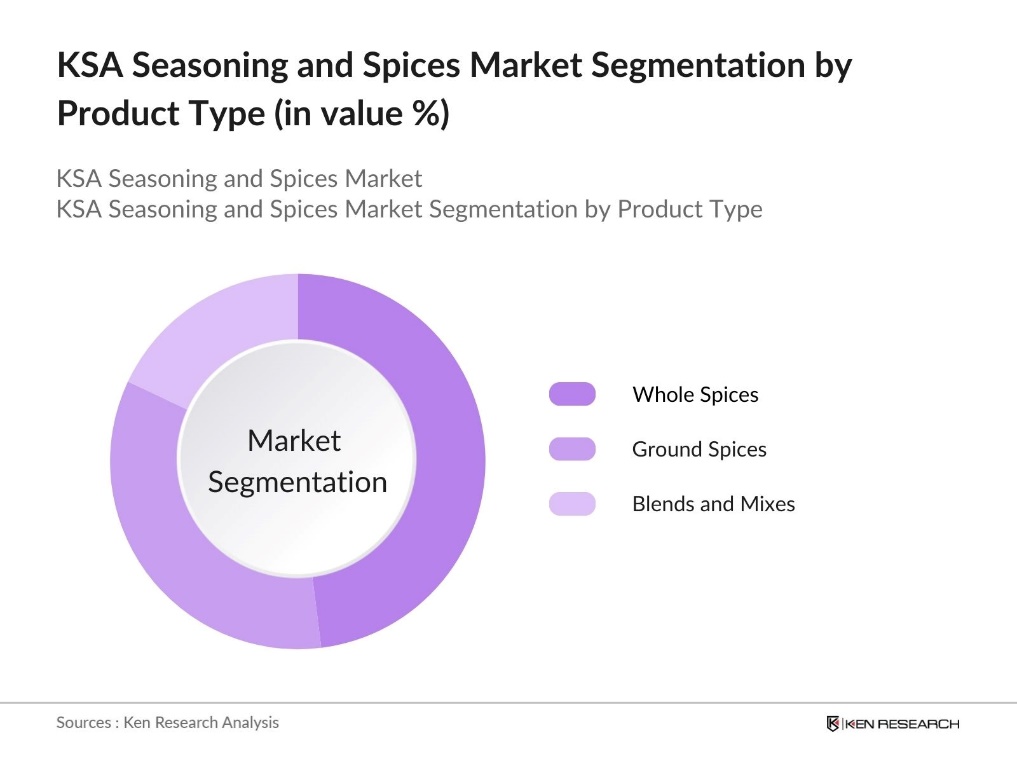
By Product Type: The KSA Seasoning and Spices Market is segmented by product type into whole spices, ground spices, and blends and mixes. In 2023, whole spices dominated the market as they offer flexibility in preparation and are seen as a premium product. Whole spices such as cumin seeds, cinnamon sticks, and black peppercorns are preferred due to their longer shelf life and perceived freshness. With increasing consumer interest in traditional and authentic cooking methods, whole spices maintain their stronghold in the market.
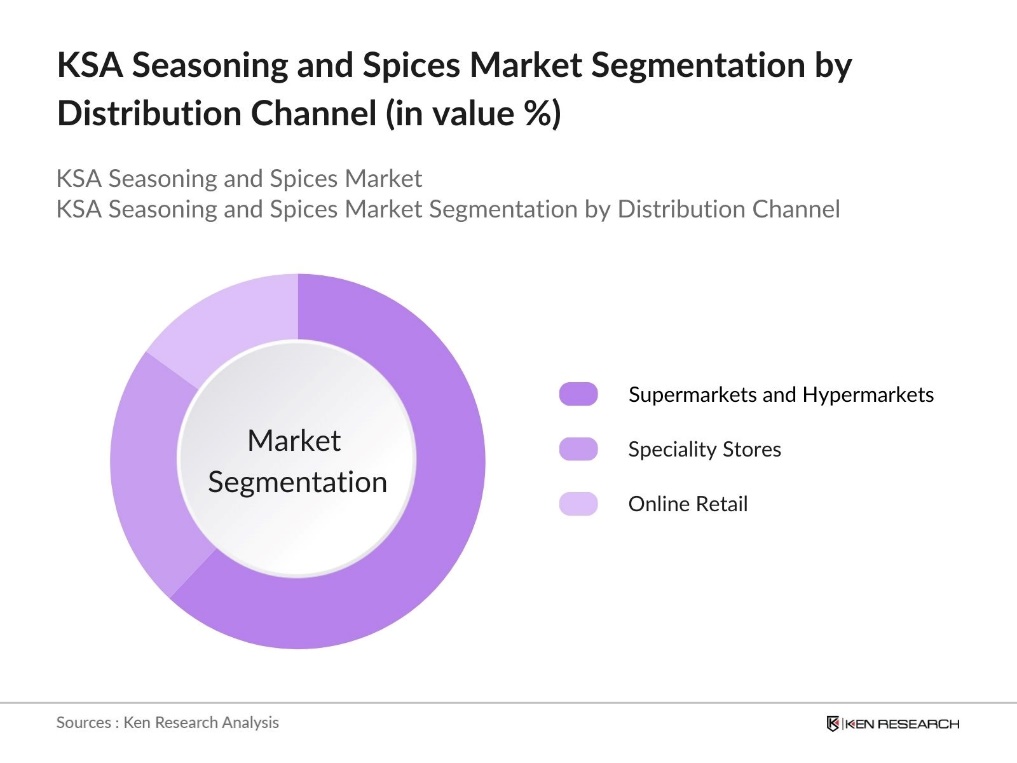
By Distribution Channel: The market is segmented into supermarkets and hypermarkets, specialty stores, and online retail. In 2023, supermarkets and hypermarkets continued to lead the market share due to the convenience and wide variety of products they offer. Consumers in Saudi Arabia prefer shopping in large retail outlets for their household needs, where they can find both local and international spice brands under one roof. These retail formats also benefit from attractive promotional offers and loyalty programs, drawing in more customers.
By Region: The market is geographically segmented into North, South, East, and West regions of Saudi Arabia. The Western region dominates the market with the largest share due to its position as a cultural and commercial hub, attracting international tourists and expatriates. The region's strong hospitality sector, coupled with its diverse population, creates high demand for various types of spices, particularly for international cuisines.
|
Company Name |
Establishment Year |
Headquarters |
|---|---|---|
|
McCormick & Company |
1889 |
Hunt Valley, USA |
|
Olam International |
1989 |
Singapore |
|
Nestl S.A. |
1867 |
Vevey, Switzerland |
|
Fuchs North America |
1939 |
Maryland, USA |
|
Al-Dawood Spices |
1955 |
Jeddah, KSA |
The KSA Seasoning and Spices Market is projected to grow exponentially in future. This growth will be driven by increasing demand for traditional and organic spices, growth in the tourism sector and expansion of retail infrastructure.
|
By Product Type |
Whole spices Ground spices Blends and mixes |
|
By Distribution Channel |
Supermarkets Hypermarkets Specialty stores Online retail |
|
By Region |
North South East West |
1.1. Definition and Scope
1.2. Market Taxonomy
1.3. Market Growth Rate (financial metrics, revenue breakdowns, volume metrics)
1.4. Market Segmentation Overview
1.5. Competitive Landscape (market concentration ratio, competition analysis)
1.6. Supply Chain Analysis (upstream suppliers, distribution channels, logistic challenges)
1.7. Ecosystem Mapping (stakeholder ecosystem, value chain analysis)
2.1. Historical Market Size (financial data from recent years)
2.2. Year-on-Year Growth Analysis (growth rate, volume shipped, market expansion metrics)
2.3. Key Market Developments and Milestones (new product launches, partnerships, major events)
3.1. Growth Drivers
3.1.1 Increasing Demand for Traditional and Organic Spices
3.1.2 Growth in the tourism sector
3.1.3 Expansion of Retail Infrastructure
3.2. Challenges
3.2.1. Fluctuation in raw material prices (global supply chain issues, inflation)
3.2.2. Stringent regulatory frameworks (compliance costs, operational challenges)
3.2.3. Intense competition from local producers (market fragmentation data, pricing challenges)
3.3. Opportunities
3.3.1. Increased demand for spice blends (consumer demand data, fast-food industry integration)
3.3.2. Expansion in the e-commerce segment (growth of digital retail, e-commerce penetration in KSA)
3.3.3. Government support for domestic agriculture (government subsidies, investment in local agriculture)
3.4. Recent Trends
3.4.1. Growth in organic and sustainable products (data on organic spice sector growth)
3.4.2. Rise in online grocery shopping (digital consumer behavior data, online platform statistics)
3.4.3. Increased demand for international spice varieties (import data, demand for exotic spices)
4.1. By Product Type (in value %)
4.1.1. Whole Spices
4.1.2. Ground Spices
4.1.3. Spice Blends and Mixes
4.2. By Distribution Channel (in value %)
4.2.1. Supermarkets and Hypermarkets
4.2.2. Specialty Stores
4.2.3. Online Retail
4.3. By Region (in value %)
4.3.1. Western Region
4.3.2. North Region
4.3.3. Eastern Region
4.3.4. Southern Region
5.1. Market Share Analysis (top players, market concentration)
5.2. Competitive Matrix (company size, market entry barriers, distribution networks)
5.3. Strategic Initiatives (new product developments, R&D investments)
5.4. Mergers and Acquisitions (recent deals, impact on market dynamics)
5.5. Investment Analysis (funding rounds, venture capital involvement)
5.6. Key Competitors (financial performance, product portfolios, market reach)
5.6.1. McCormick & Company
5.6.2. Olam International
5.6.3. Nestl S.A.
5.6.4. Fuchs North America
5.6.5. Al-Dawood Spices
5.6.6. Ajinomoto Co., Inc.
5.6.7. Everest Spices
5.6.8. MDH Spices
5.6.9. Badia Spices
5.6.10. Kalsec, Inc.
5.6.11. Goya Foods, Inc.
5.6.12. Frontier Co-op
5.6.13. Organic India
5.6.14. Keya Foods
5.6.15. Shan Foods
6.1. Saudi Food and Drug Authority (SFDA) Regulations (quality standards, compliance processes)
6.2. Import and Export Guidelines (tariffs, certification requirements)
6.3. Agricultural Support Initiatives (subsidies, local farming regulations)
6.4. Food Safety Standards (quality control, product testing protocols)
7.1. Revenue Generation (revenue models, pricing strategies, profitability metrics)
7.2. Cost Structure (raw material costs, processing costs)
7.3. Profitability Margins (gross profit margins, EBITDA margins)
7.4. Operational Efficiencies (supply chain optimization, production scalability)
8.1. Market Projections (market value, key drivers shaping future growth)
8.2. Key Factors Driving Future Growth (macroeconomic factors, government policies)
8.3. Emerging Trends (consumer preferences, technological advancements in spice manufacturing)
9.1. Total Addressable Market (TAM) Analysis (market potential, market penetration)
9.2. Serviceable Available Market (SAM) Analysis (geographical expansion opportunities)
9.3. White Space Opportunity Analysis (unmet market demand, potential areas for product innovation)
9.4. Strategic Recommendations (partnerships, market entry strategies, go-to-market plans)
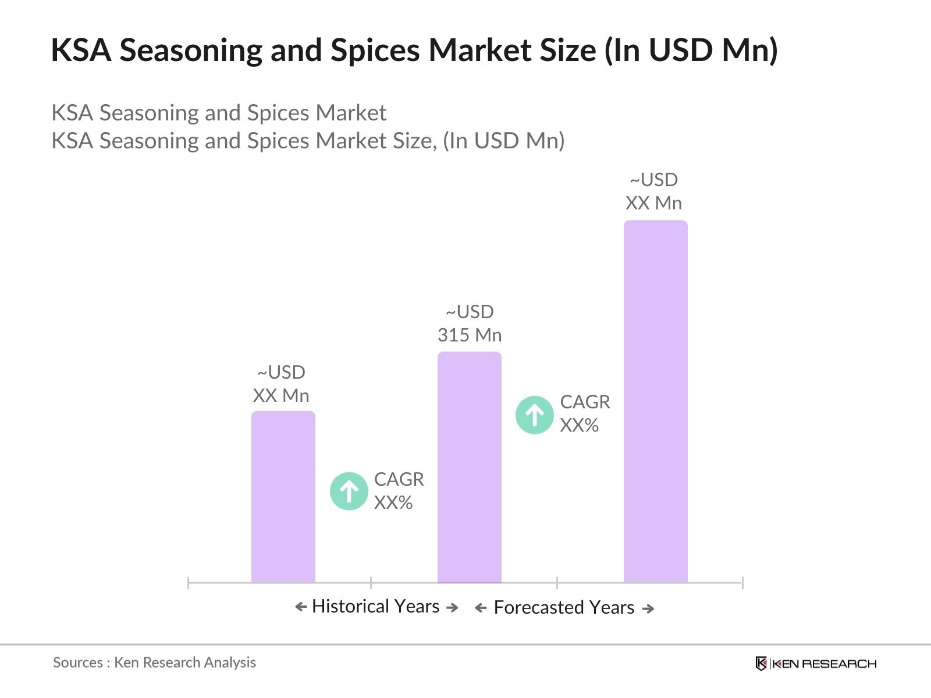
The KSA seasoning and spices market was valued at USD 315 million in 2023, driven by increasing demand for traditional spices, the expansion of the foodservice industry, and a growing preference for organic and natural spices among consumers.
Challenges of KSA Seasoning and Spices Market include strict government regulations on food safety, fluctuating raw material prices due to global supply chain disruptions, and rising competition from local spice producers, which puts pressure on international players.
Key players in the KSA Seasoning and Spices Market include McCormick & Company, Olam International, Nestl S.A., Fuchs North America, and Al-Dawood Spices. These companies have a strong presence due to their broad product range and well-established distribution networks.
The KSA Seasoning and Spices market is driven by increasing demand for traditional and organic spices, growth in the tourism sector and expansion of retail infrastructure.

What makes us stand out is that our consultants follows Robust, Refine and Result (RRR) methodology. i.e. Robust for clear definitions, approaches and sanity checking, Refine for differentiating respondents facts and opinions and Result for presenting data with story

We have set a benchmark in the industry by offering our clients with syndicated and customized market research reports featuring coverage of entire market as well as meticulous research and analyst insights.

While we don't replace traditional research, we flip the method upside down. Our dual approach of Top Bottom & Bottom Top ensures quality deliverable by not just verifying company fundamentals but also looking at the sector and macroeconomic factors.

With one step in the future, our research team constantly tries to show you the bigger picture. We help with some of the tough questions you may encounter along the way: How is the industry positioned? Best marketing channel? KPI's of competitors? By aligning every element, we help maximize success.

Our report gives you instant access to the answers and sources that other companies might choose to hide. We elaborate each steps of research methodology we have used and showcase you the sample size to earn your trust.

If you need any support, we are here! We pride ourselves on universe strength, data quality, and quick, friendly, and professional service.