
MEA Craft Spirits Market Outlook to 2030
Region:Egypt
Author(s):Meenakshi Bisht
Product Code:KROD10990
Region:Egypt
Author(s):Meenakshi Bisht
Product Code:KROD10990
November 2024
89
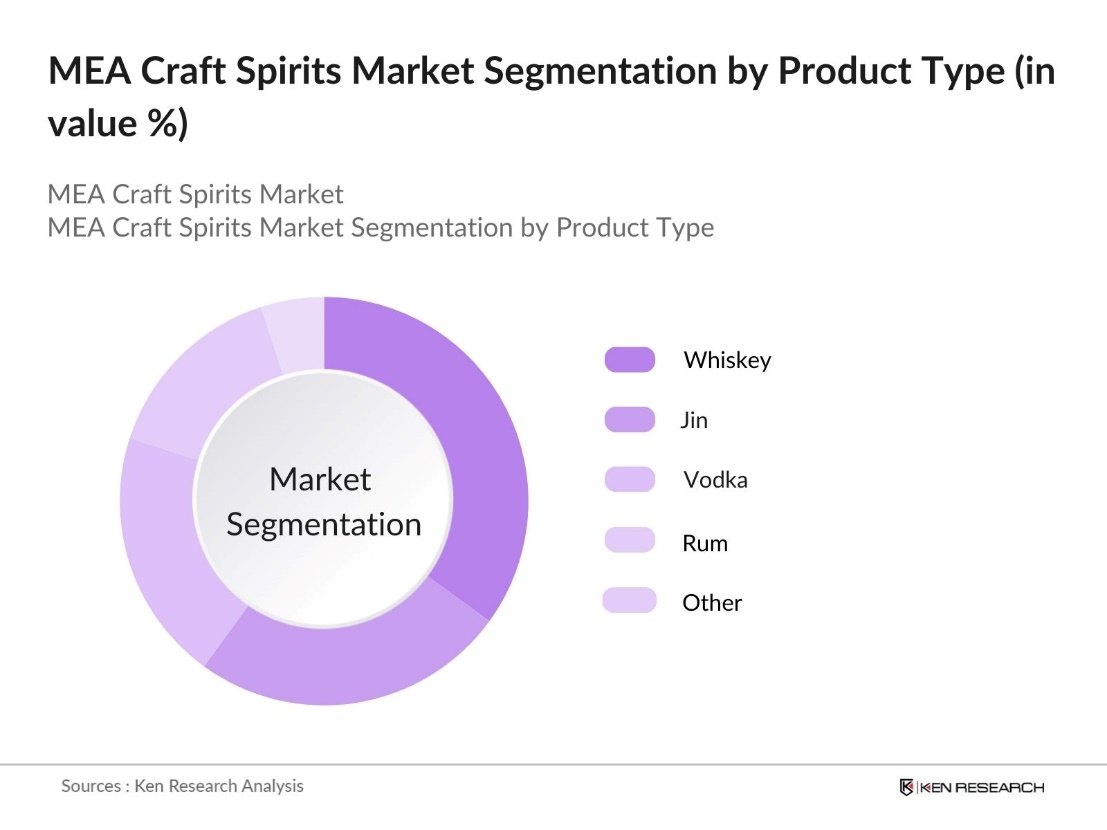
By Product Type: The market is segmented by product type into whiskey, gin, vodka, rum, and others. Whiskey holds the dominant market share under this segmentation, owing to its deeply rooted cultural significance and growing popularity among high-income consumers seeking a premium experience. Middle Eastern distilleries have begun producing unique blends catering to local preferences, further cementing whiskey's stronghold in the region.
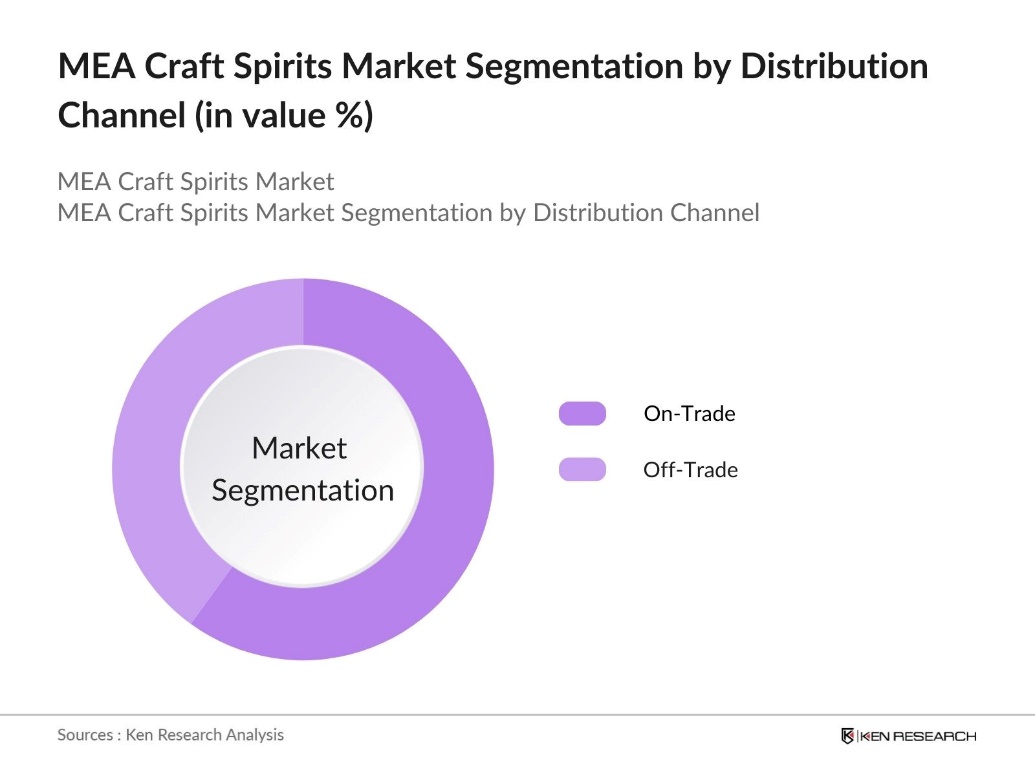
By Distribution Channel: The market segmentation by distribution channel includes on-trade (bars, restaurants, hotels) and off-trade (retail stores, e-commerce, duty-free shops). On-trade channels lead the market as craft spirits gain popularity in the regions hospitality sector. The high visibility of craft spirits in luxury hotels, bars, and upscale restaurants has helped solidify this channel's position, as consumers continue to explore premium and artisanal spirit options in these environments.
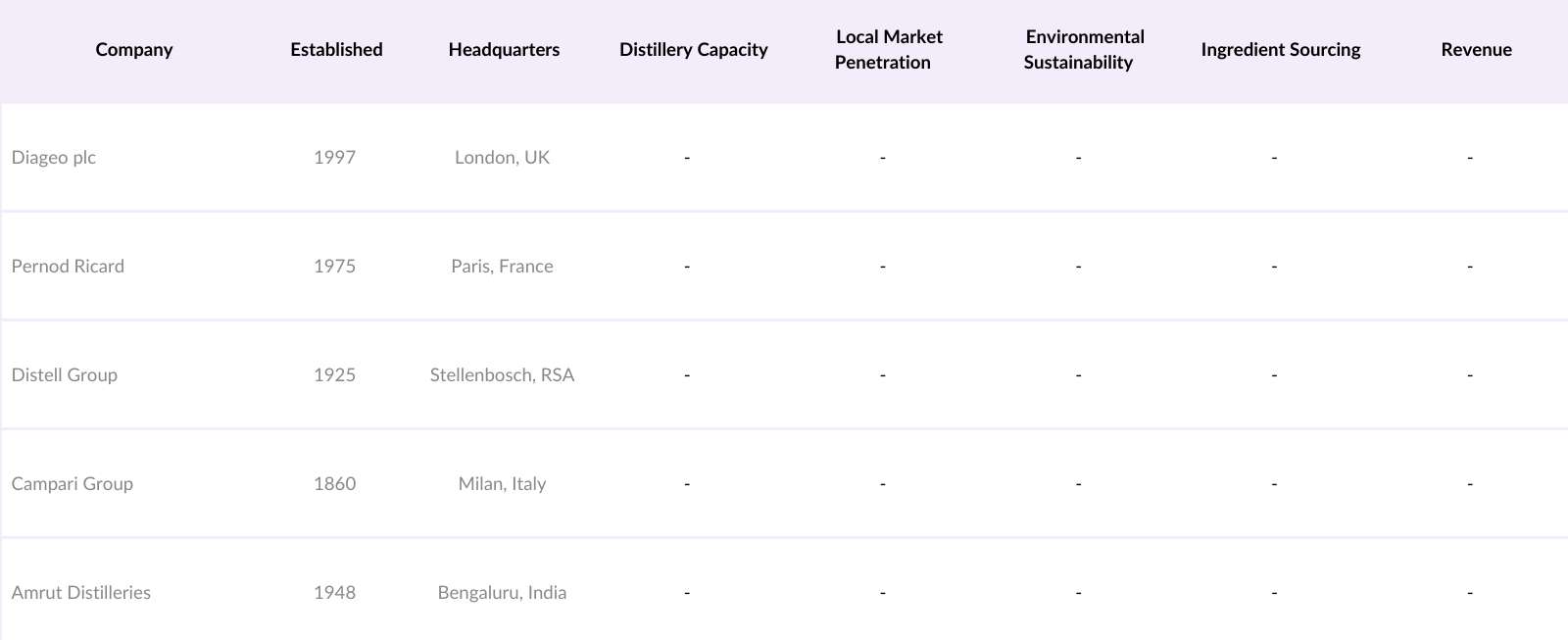
The MEA craft spirits market is marked by a mix of local and international players, with a concentration of established brands leveraging strategic positioning in affluent areas. Key players include multinational corporations and emerging craft distilleries catering to niche tastes.
Over the next five years, the MEA craft spirits market is set for substantial growth, supported by the increasing penetration of premium products and the rise of affluent consumer demographics in key regions. Ongoing tourism recovery, combined with local governments supportive policies for artisanal manufacturing, will further boost the market. Additionally, growing interest in eco-friendly practices in distilling is expected to attract environmentally conscious consumers to craft spirits.
|
Product Type |
Whiskey |
|
Distribution Channel |
On-Trade (Bars, Restaurants, Hotels) |
|
Ingredient |
Grain-Based |
|
Alcohol Content |
Low Alcohol |
|
Region |
GCC Countries |
1.1 Definition and Scope
1.2 Market Taxonomy
1.3 Market Growth Rate
1.4 Market Segmentation Overview
2.1 Historical Market Size
2.2 Year-On-Year Growth Analysis
2.3 Key Market Developments and Milestones
3.1 Growth Drivers (Craft Distillation Methods, Local Sourcing, Brand Authenticity)
3.1.1 Rising Demand for Premiumization
3.1.2 Increase in Tourism and Hospitality
3.1.3 Changing Consumer Preferences
3.2 Market Challenges (Regulatory Compliance, Import Restrictions, Competition from Multinational Brands)
3.2.1 Complex Licensing Regulations
3.2.2 High Production Costs
3.2.3 Limited Distribution Channels
3.3 Opportunities (Expansion in Emerging Markets, Digital Marketing, Direct-to-Consumer Models)
3.3.1 Growth of E-Commerce Platforms
3.3.2 Rise in Small-Batch Production
3.3.3 Partnership with Local Breweries
3.4 Trends (Innovative Flavors, Sustainable Practices, Craft Cocktails)
3.4.1 Shift Toward Organic Ingredients
3.4.2 Rise in Cask-Aged Spirits
3.4.3 Increase in Limited-Edition Spirits
3.5 Government Regulations (Taxation Policies, Quality Standards, Certification Processes)
3.5.1 Import and Export Guidelines
3.5.2 Sustainability Incentives
3.5.3 Local Production Subsidies
3.6 SWOT Analysis
3.7 Stakeholder Ecosystem
3.8 Porters Five Forces
3.9 Competition Ecosystem
4.1 By Product Type (In Value %)
4.1.1 Whiskey
4.1.2 Gin
4.1.3 Vodka
4.1.4 Rum
4.1.5 Others
4.2 By Distribution Channel (In Value %)
4.2.1 On-Trade (Bars, Restaurants, Hotels)
4.2.2 Off-Trade (Retail Stores, E-commerce, Duty-Free Shops)
4.3 By Ingredient (In Value %)
4.3.1 Grain-Based
4.3.2 Fruit-Based
4.3.3 Sugarcane-Based
4.3.4 Others
4.4 By Alcohol Content (In Value %)
4.4.1 Low Alcohol
4.4.2 Standard Alcohol
4.4.3 High Alcohol
4.5 By Region (In Value %)
4.5.1 GCC Countries
4.5.2 South Africa
4.5.3 North Africa
4.5.4 Rest of MEA
5.1 Detailed Profiles of Major Companies
5.1.1 Diageo plc
5.1.2 Pernod Ricard
5.1.3 Bacardi Limited
5.1.4 Rmy Cointreau
5.1.5 William Grant & Sons
5.1.6 Distell Group Limited
5.1.7 Brown-Forman Corporation
5.1.8 Campari Group
5.1.9 Heaven Hill Brands
5.1.10 Crafty Distillery
5.1.11 Amrut Distilleries
5.1.12 Belvedere Vodka
5.1.13 Loch Lomond Group
5.1.14 Alchemy Distilleries
5.1.15 African Distillers
5.2 Cross Comparison Parameters (Revenue, Distillery Capacity, Product Portfolio, Ingredient Sourcing, Craft Techniques, Environmental Sustainability, Distribution Network, Local Market Penetration)
5.3 Market Share Analysis
5.4 Strategic Initiatives
5.5 Mergers and Acquisitions
5.6 Investment Analysis
5.7 Venture Capital Funding
5.8 Government Grants
5.9 Private Equity Investments
6.1 Alcohol Production and Sales Legislation
6.2 Health and Safety Standards
6.3 Labeling and Packaging Regulations
6.4 Import and Export Regulations
6.5 Compliance Requirements
7.1 Future Market Size Projections
7.2 Key Factors Driving Future Market Growth
8.1. By Product Type (In Value %)
8.2. By Ingredient (In Value %)
8.3. By Distribution Channel (In Value %)
8.4. By Alcohol Content (In Value %)
8.5. By Region (In Value %)
9.1 TAM/SAM/SOM Analysis
9.2 Customer Cohort Analysis
9.3 Marketing Initiatives
9.4 White Space Opportunity Analysis
Disclaimer Contact UsThis initial phase involved mapping all significant stakeholders within the MEA craft spirits market. Extensive desk research supported by proprietary databases was utilized to gather data at the industry level, identifying the critical variables impacting market growth.
We compiled and analyzed historical data to understand market penetration, the balance between local and international brands, and revenue generation. Additionally, we assessed regional preferences to ensure accurate market segmentation.
Hypotheses were developed and validated through expert consultations. Structured interviews with executives from leading craft spirit companies provided insights into operational challenges, financial health, and growth potential in the MEA region.
Engaging directly with craft spirit manufacturers and distributors enabled us to refine the statistics gathered through bottom-up and top-down approaches, ensuring a thorough, validated market analysis for the MEA craft spirits industry.
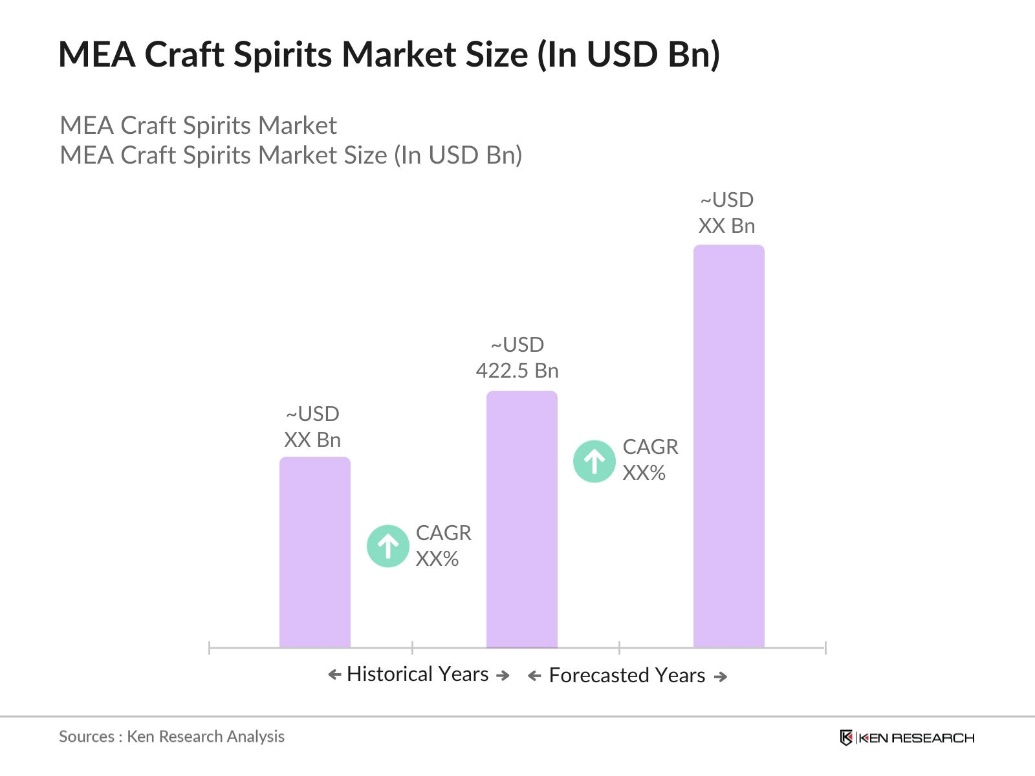
The MEA craft spirits market is valued at USD 422.5 billion, driven by rising consumer interest in premium, artisanal spirits.
Primary challenges in MEA craft spirits market include regulatory complexities, limited distribution networks, and competition from larger multinational brands.
Major players in MEA craft spirits market include Diageo plc, Pernod Ricard, Distell Group, Campari Group, and Amrut Distilleries, leveraging strong brand presence and wide distribution networks.
The MEA craft spirits market growth is driven by increasing demand for premium products, tourism growth, and shifting consumer preferences toward artisanal experiences.

What makes us stand out is that our consultants follows Robust, Refine and Result (RRR) methodology. i.e. Robust for clear definitions, approaches and sanity checking, Refine for differentiating respondents facts and opinions and Result for presenting data with story

We have set a benchmark in the industry by offering our clients with syndicated and customized market research reports featuring coverage of entire market as well as meticulous research and analyst insights.

While we don't replace traditional research, we flip the method upside down. Our dual approach of Top Bottom & Bottom Top ensures quality deliverable by not just verifying company fundamentals but also looking at the sector and macroeconomic factors.

With one step in the future, our research team constantly tries to show you the bigger picture. We help with some of the tough questions you may encounter along the way: How is the industry positioned? Best marketing channel? KPI's of competitors? By aligning every element, we help maximize success.

Our report gives you instant access to the answers and sources that other companies might choose to hide. We elaborate each steps of research methodology we have used and showcase you the sample size to earn your trust.

If you need any support, we are here! We pride ourselves on universe strength, data quality, and quick, friendly, and professional service.