
MEA Semiconductor Market Outlook to 2030
Region:Egypt
Author(s):Shreya
Product Code:KROD386
Region:Egypt
Author(s):Shreya
Product Code:KROD386
October 2024
86
The MEA Semiconductor Market is valued at USD 5.3 billion, reflecting robust growth based on a five-year historical analysis. This market is primarily driven by the expansion of the region's consumer electronics sector, the growing demand for telecommunication infrastructure due to the rise of 5G networks and increasing government investments in digitalization. Additionally, the regions industrial automation initiatives and the integration of semiconductors in automotive industries have further contributed to this growth.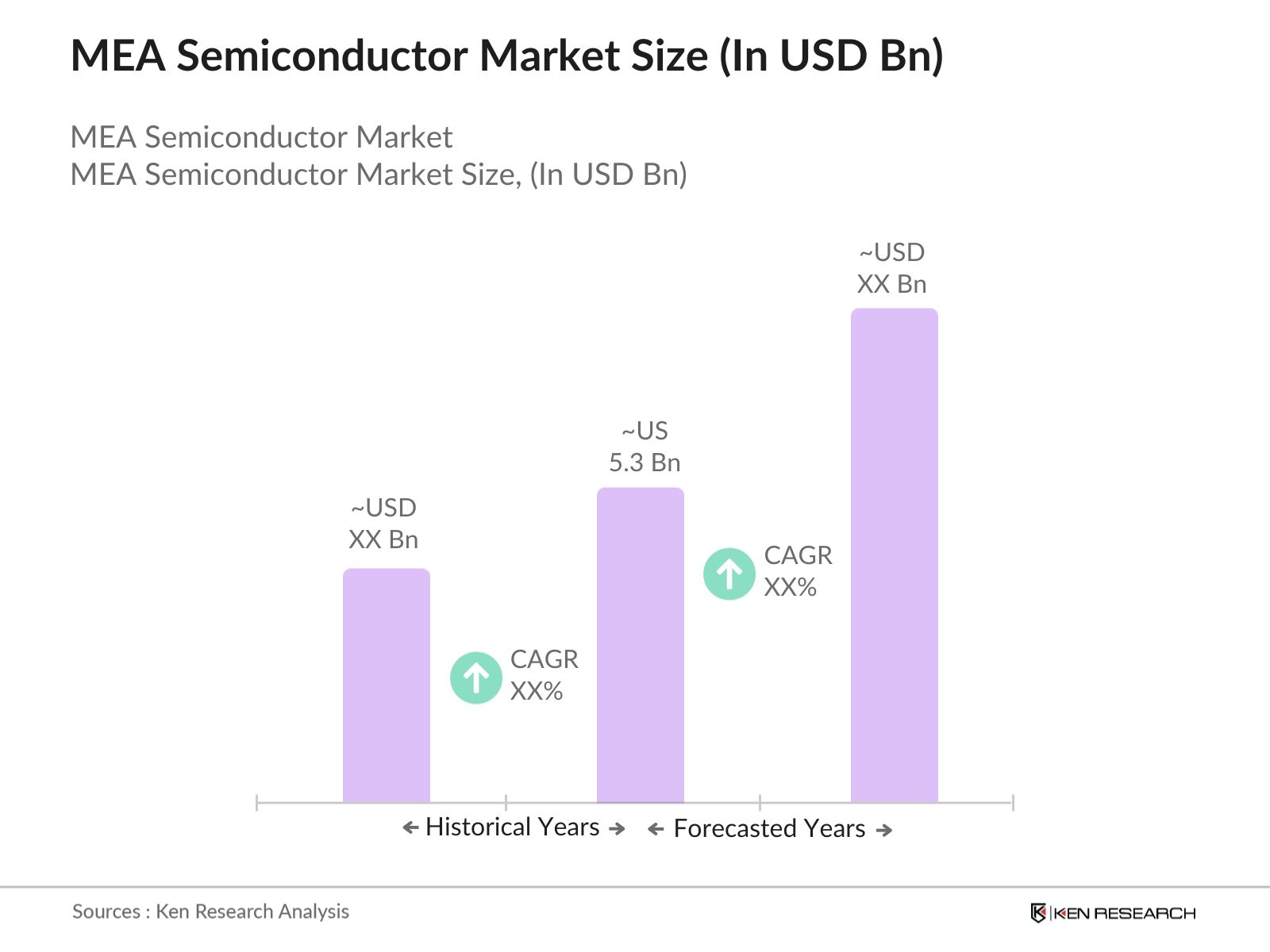
Dominant regions in the MEA Semiconductor Market include the Gulf Cooperation Council (GCC) countries and South Africa. These areas dominate the market due to their well-established infrastructure, ongoing digital transformation initiatives, and government policies supporting semiconductor research and development. The GCCs vision to reduce dependency on oil by diversifying into technology-driven industries, alongside South Africas growing tech ecosystem, also plays a pivotal role in their dominance.
Trade policies in the MEA region are evolving to support the semiconductor industry. In 2024, several MEA countries, including Egypt and South Africa, revised their trade regulations to streamline the import of semiconductor equipment and raw materials. These policy changes are aimed at attracting foreign investment and encouraging the establishment of local manufacturing facilities. Egypt has also signed agreements with key Asian semiconductor suppliers to facilitate equipment imports, boosting the regions semiconductor production capacity.
By Product Type: The Market is segmented by product type into analog semiconductors, microprocessors, memory devices, sensors, and discrete power devices. Microprocessors hold a dominant share in the market, as they are critical components in computing, consumer electronics, and telecommunications. With the increasing adoption of IoT devices and the expansion of 5G networks, demand for microprocessors has surged, particularly in the telecommunications and automotive sectors. Companies like Intel and Qualcomm have invested significantly in regional infrastructure, ensuring that microprocessors maintain a share of the market.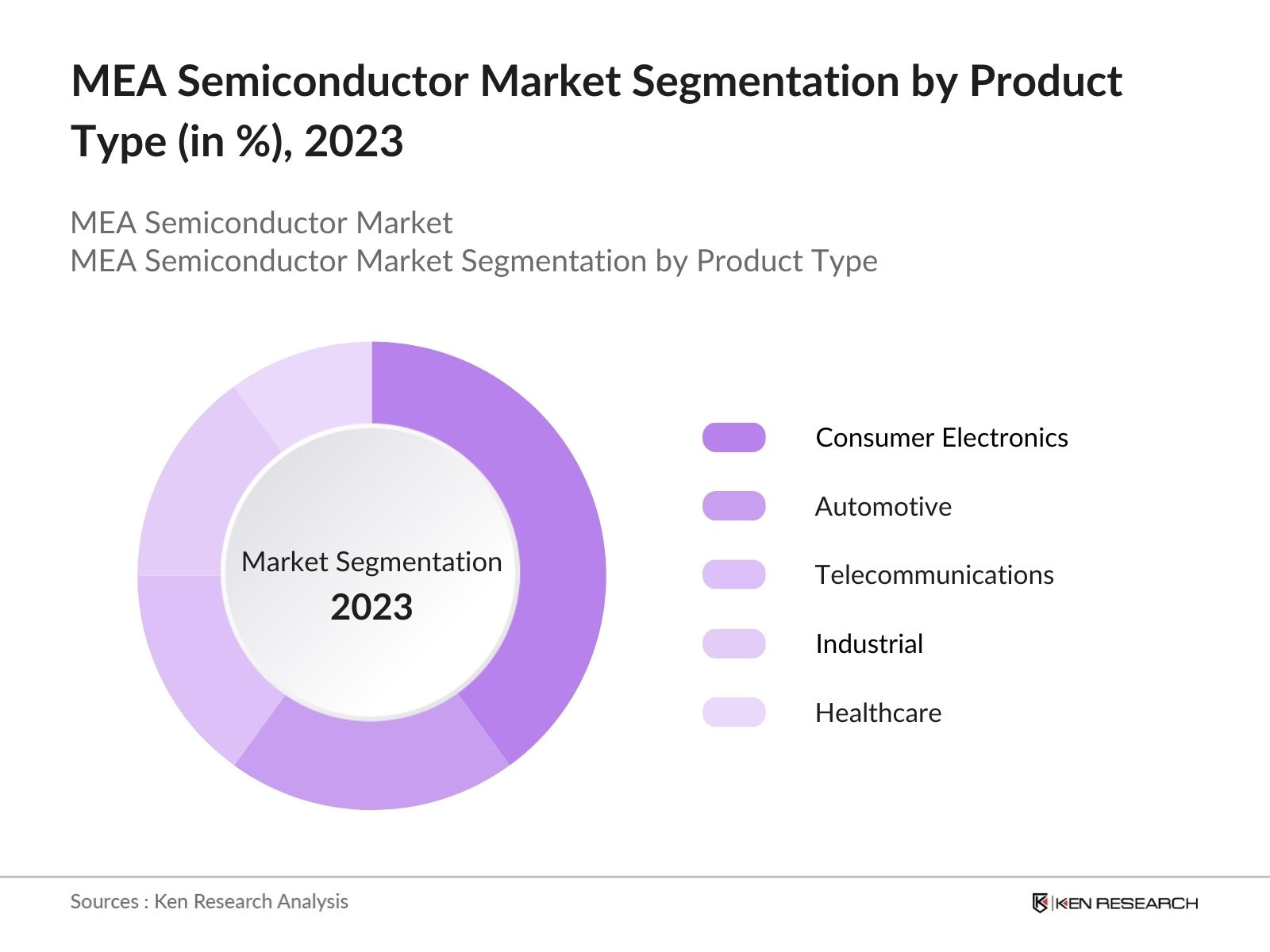
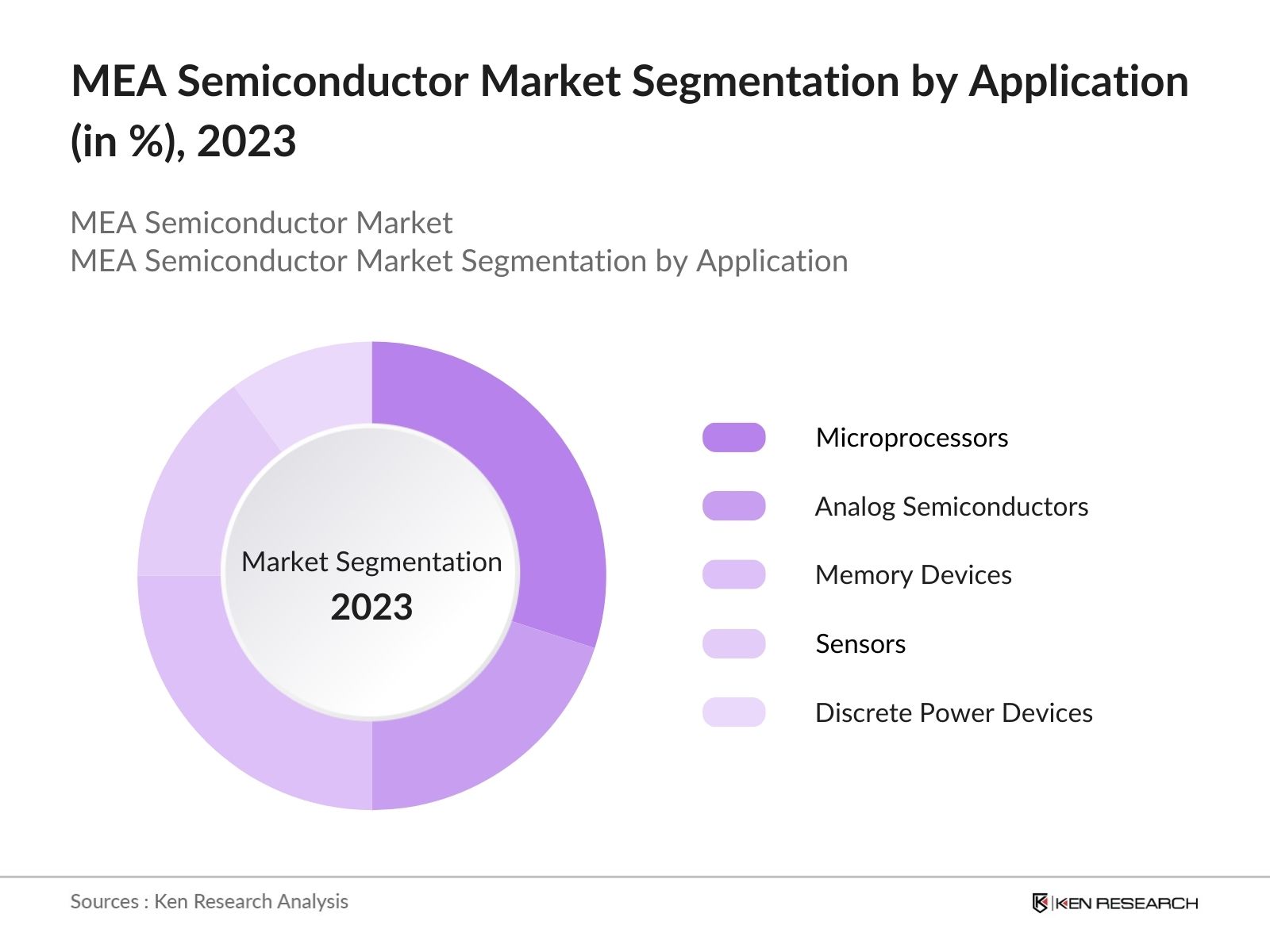
By Application: The Market is segmented by application into consumer electronics, automotive, telecommunications, industrial, and healthcare. The consumer electronics segment leads the market, primarily due to the growing demand for smartphones, laptops, and wearables in the region. The rapid penetration of technology, increased purchasing power, and higher rates of digitalization in key economies like the UAE and Saudi Arabia have driven the consumer electronics sector. Additionally, the rise of e-commerce and the adoption of smart home technologies have further bolstered this segment’s growth.
 MEA Semiconductor Market Competitive Landscape
The MEA Semiconductor Market is characterized by the presence of both global and regional players. Key players include large multinational semiconductor manufacturers that have established a strong foothold in the region through strategic partnerships, investments, and regional manufacturing hubs.
|
Company Name |
Establishment Year |
Headquarters |
Revenue |
R&D Investment |
Number of Patents |
Market Penetration |
Production Capacity |
Global Manufacturing Footprint |
|
Intel Corporation |
1968 |
Santa Clara, USA |
||||||
|
Samsung Electronics |
1938 |
Suwon, South Korea |
||||||
|
STMicroelectronics |
1987 |
Geneva, Switzerland |
||||||
|
NXP Semiconductors |
2006 |
Eindhoven, Netherlands |
||||||
|
Qualcomm Technologies Inc. |
1985 |
San Diego, USA |
Expansion of 5G Networks: The expansion of 5G networks across the Middle East and Africa (MEA) is a significant driver for the semiconductor market. As of 2024, the MEA region is experiencing accelerated 5G deployments, particularly in countries like the UAE, Saudi Arabia, and South Africa. The International Telecommunication Union (ITU) projects that over 150 million people in the MEA region will have access to 5G by the end of 2024. The growing demand for semiconductors in supporting 5G infrastructure, including base stations and network equipment, is expected to strengthen the markets foundation.
Government Initiatives for Digital Transformation: Governments across the MEA region is focusing on digital transformation to bolster their economies. Countries like Saudi Arabia, the UAE, and Egypt are leading with large-scale investments in technology-driven sectors. In 2024, the Saudi Arabian government announced its Vision 2030 initiative, with over $200 billion earmarked for digital infrastructure projects, significantly enhancing the demand for semiconductors used in cloud computing, AI, and cybersecurity. Similarly, Egypts Digital Egypt initiative, with a budget of $50 billion, will further catalyze the semiconductor market in sectors like e-government and telecommunications.
Increasing Demand for Consumer Electronics: The growing appetite for consumer electronics in the MEA region, driven by rising disposable incomes and increased urbanization, is a major growth driver for the semiconductor market. As of 2024, smartphone penetration in the region reached 75%, with countries like Egypt and South Africa seeing increases in consumer electronics adoption. Over 300 million devices, including smartphones, laptops, and wearables, are expected to be sold in the region in 2024, fueling semiconductor consumption for processors, memory, and sensors.
High R&D Costs: The high costs associated with semiconductor research and development (R&D) present a challenge for companies in the MEA region. Developing advanced chips requires substantial investments in specialized equipment and expertise. In 2024, the average R&D expenditure for semiconductor companies in the MEA was estimated to be over $1 billion annually, according to reports from national economic bodies. The high capital investment required for innovation in areas such as AI chips, quantum computing, and 5G infrastructure limits the entry of smaller players in the market.
Shortage of Skilled Workforce in the Region: The semiconductor industry in the MEA region faces a shortage of skilled professionals, especially in critical areas such as chip design, manufacturing, and testing. In 2024, the World Bank estimated that the MEA region faces a shortfall of 50,000 to 70,000 semiconductor engineers, largely due to a lack of local educational programs and training facilities. Governments in the region are now launching scholarship and vocational training initiatives to address this gap, but the shortage continues to hinder the regions ability to scale semiconductor production.
Over the next five years, the MEA Semiconductor Market is expected to experience significant growth, driven by several key factors. These include the ongoing expansion of 5G infrastructure, the increasing adoption of IoT and AI-driven applications, and the growing demand for semiconductors in the automotive and healthcare sectors. Additionally, government-backed initiatives to boost local semiconductor manufacturing, particularly in the GCC region, will play a crucial role in shaping the markets future trajectory.
Investment in AI and Machine Learning: Artificial Intelligence (AI) and Machine Learning (ML) present significant opportunities for the semiconductor market in the MEA region. In 2024, AI-related investments in the region surpassed $5 billion, with a growing demand for AI chips to power applications in healthcare, finance, and smart cities. The UAE government has launched the AI Strategy 2031 to position itself as a global leader in AI, which includes plans to incorporate AI in public services, transportation, and energy, driving demand for semiconductors in AI accelerators and ML processors.
Renewable Energy and Electric Vehicle Applications: The transition to renewable energy and the rise of electric vehicles (EVs) in the MEA region provide lucrative opportunities for semiconductor manufacturers. As of 2024, the UAE and Saudi Arabia have invested over $100 billion in renewable energy projects, which require power electronics semiconductors for solar inverters, wind turbines, and grid infrastructure. Additionally, the electric vehicle market in the MEA is projected to grow rapidly, with over 200,000 EVs expected on the roads by the end of 2024, further driving demand for semiconductor components used in power management and battery systems.
|
Segment |
Sub-Segments |
|---|---|
|
Product Type |
- Analog Semiconductors |
|
- Microprocessors |
|
|
- Memory Devices |
|
|
- Sensors |
|
|
- Discrete Power Devices |
|
|
Application |
- Consumer Electronics |
|
- Automotive |
|
|
- Telecommunications |
|
|
- Industrial |
|
|
- Healthcare |
|
|
Material |
- Silicon |
|
- Gallium Arsenide |
|
|
- Silicon Carbide |
|
|
- Gallium Nitride |
|
|
End-User |
- OEMs |
|
- ODMs |
|
|
- EMS Providers |
|
|
Region |
- GCC Countries |
|
- South Africa |
|
|
- North Africa |
|
|
- Sub-Saharan Africa |
1.1. Definition and Scope
1.2. Market Taxonomy
1.3. Market Growth Rate
1.4. Market Segmentation Overview
2.1. Historical Market Size
2.2. Year-On-Year Growth Analysis
2.3. Key Market Developments and Milestones
3.1. Growth Drivers
3.1.1. Expansion of 5G Networks
3.1.2. Rise of IoT Devices
3.1.3. Government Initiatives for Digital Transformation
3.1.4. Increasing Demand for Consumer Electronics
3.2. Market Challenges
3.2.1. Supply Chain Disruptions
3.2.2. High R&D Costs
3.2.3. Shortage of Skilled Workforce in the Region
3.3. Opportunities
3.3.1. Investment in AI and Machine Learning
3.3.2. Renewable Energy and Electric Vehicle Applications
3.3.3. Regional Manufacturing Expansion
3.4. Trends
3.4.1. Miniaturization of Semiconductors
3.4.2. Growth in Edge Computing
3.4.3. Adoption of Advanced Packaging Techniques
3.5. Government Regulation
3.5.1. MEA Semiconductor Manufacturing Initiatives
3.5.2. Trade and Export Policies on Semiconductor Equipment
3.5.3. Compliance with International Semiconductor Standards
3.6. SWOT Analysis
3.7. Stake Ecosystem
3.8. Porters Five Forces Analysis
3.9. Competition Ecosystem
4.1. By Product Type (In Value %)
4.1.1. Analog Semiconductors
4.1.2. Microprocessors
4.1.3. Memory Devices
4.1.4. Sensors
4.1.5. Discrete Power Devices
4.2. By Application (In Value %)
4.2.1. Consumer Electronics
4.2.2. Automotive
4.2.3. Telecommunications
4.2.4. Industrial
4.2.5. Healthcare
4.3. By Material (In Value %)
4.3.1. Silicon
4.3.2. Gallium Arsenide
4.3.3. Silicon Carbide
4.3.4. Gallium Nitride
4.4. By End-User (In Value %)
4.4.1. OEMs
4.4.2. ODMs
4.4.3. EMS Providers
4.5. By Region (In Value %)
4.5.1. GCC Countries
4.5.2. South Africa
4.5.3. North Africa
4.5.4. Sub-Saharan Africa
5.1. Detailed Profiles of Major Companies
5.1.1. Intel Corporation
5.1.2. Qualcomm Technologies, Inc.
5.1.3. Broadcom Inc.
5.1.4. Samsung Electronics Co., Ltd.
5.1.5. Texas Instruments
5.1.6. STMicroelectronics
5.1.7. NXP Semiconductors
5.1.8. Infineon Technologies AG
5.1.9. Analog Devices, Inc.
5.1.10. MediaTek Inc.
5.1.11. Micron Technology, Inc.
5.1.12. ON Semiconductor
5.1.13. Renesas Electronics
5.1.14. Rohm Semiconductor
5.1.15. Skyworks Solutions, Inc.
5.2. Cross Comparison Parameters (Revenue, R&D Expenditure, Number of Patents, Market Share, Innovation Score, Global Manufacturing Footprint, Production Capacity, Market Penetration)
5.3. Market Share Analysis
5.4. Strategic Initiatives
5.5. Mergers and Acquisitions
5.6. Investment Analysis
5.7. Venture Capital Funding
5.8. Government Grants
5.9. Private Equity Investments
6.1. Industry Compliance Standards
6.2. Trade and Tariff Regulations
6.3. Certification Processes
6.4. Environmental Regulations
7.1. Future Market Size Projections
7.2. Key Factors Driving Future Market Growth
8.1. By Product Type (In Value %)
8.2. By Application (In Value %)
8.3. By Material (In Value %)
8.4. By End-User (In Value %)
8.5. By Region (In Value %)
9.1. TAM/SAM/SOM Analysis
9.2. Customer Cohort Analysis
9.3. Marketing Initiatives
9.4. White Space Opportunity Analysis
The first step involved constructing an ecosystem map of the MEA Semiconductor Market. This process was carried out through extensive desk research and proprietary databases, with the primary objective of identifying the key variables that influence market dynamics, including product types and applications.
In this phase, historical data was compiled for the MEA Semiconductor Market. This analysis included assessing market penetration, evaluating revenue generation, and analyzing trends related to demand for semiconductors in consumer electronics and industrial applications.
Hypotheses developed during the research process were validated through consultations with industry experts. These consultations provided operational and financial insights, allowing us to refine and verify market data.
The final phase involved synthesizing the research findings through direct engagement with semiconductor manufacturers. This engagement provided detailed insights into product segments, sales performance, and consumer demand, ensuring a comprehensive and validated analysis of the MEA Semiconductor Market.
The MEA Semiconductor Market is valued at USD 5.3 billion, driven by demand from consumer electronics, telecommunications, and automotive sectors.
Challenges in the MEA Semiconductor Market include supply chain disruptions, high R&D costs, and a shortage of skilled labor for advanced semiconductor manufacturing.
Major players in the MEA Semiconductor Market include Intel Corporation, Samsung Electronics, STMicroelectronics, NXP Semiconductors, and Qualcomm Technologies Inc., each known for their strong market presence and product portfolios.
Key growth drivers in the MEA Semiconductor Market include the expansion of 5G infrastructure, increasing demand for consumer electronics, and the adoption of IoT and AI technologies in industrial and automotive sectors.
Government regulation plays a crucial role, with policies aimed at boosting local semiconductor manufacturing, supporting research and development, and enhancing digital infrastructure across the region in the MEA Semiconductor Market.

What makes us stand out is that our consultants follows Robust, Refine and Result (RRR) methodology. i.e. Robust for clear definitions, approaches and sanity checking, Refine for differentiating respondents facts and opinions and Result for presenting data with story

We have set a benchmark in the industry by offering our clients with syndicated and customized market research reports featuring coverage of entire market as well as meticulous research and analyst insights.

While we don't replace traditional research, we flip the method upside down. Our dual approach of Top Bottom & Bottom Top ensures quality deliverable by not just verifying company fundamentals but also looking at the sector and macroeconomic factors.

With one step in the future, our research team constantly tries to show you the bigger picture. We help with some of the tough questions you may encounter along the way: How is the industry positioned? Best marketing channel? KPI's of competitors? By aligning every element, we help maximize success.

Our report gives you instant access to the answers and sources that other companies might choose to hide. We elaborate each steps of research methodology we have used and showcase you the sample size to earn your trust.

If you need any support, we are here! We pride ourselves on universe strength, data quality, and quick, friendly, and professional service.