
MEA Wearable Sensors Market Outlook to 2030
Region:Middle East
Author(s):Shubham
Product Code:KROD5965
November 2024
84
About the Report
MEA Wearable Sensors Market Overview
-
The MEA Wearable Sensors Market has shown significant growth in recent years, valued at USD 3.0 billion, driven by an increasing focus on healthcare monitoring, fitness tracking, and technological advancements in sensor technology. With a rise in lifestyle-related health issues and demand for remote health monitoring, wearable sensors are becoming integral to health and fitness devices. Countries such as the UAE, Saudi Arabia, and South Africa are leading the adoption, with expanding healthcare and fitness awareness initiatives fostering growth in this market.
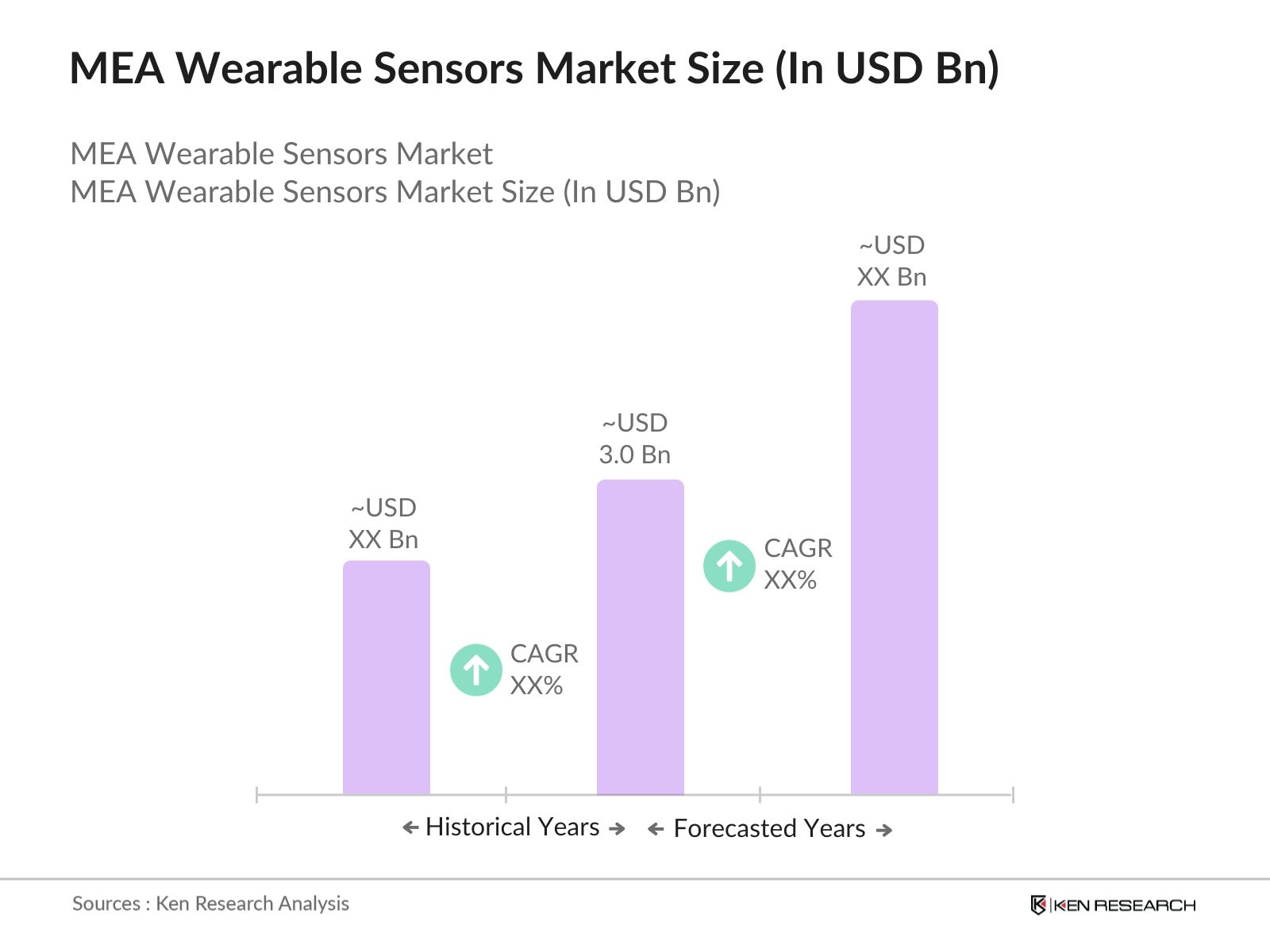
- The demand for wearable sensors is strongest in the UAE, Saudi Arabia, and Egypt. The UAE dominates due to substantial investments in healthcare technology and government support for digital health initiatives. Saudi Arabias drive towards Vision 2030 has similarly prioritized advancements in healthcare monitoring, which includes wearable technology. Egypts growing healthcare sector and focus on affordable health monitoring solutions also contribute to the regional demand for wearable sensors.
- Government-mandated health and safety standards across MEA have increased compliance requirements for wearable manufacturers. These standards ensure that over 5 million wearable units adhere to safety benchmarks, with regulatory bodies in UAE and Saudi Arabia actively enforcing policies. New safety certifications have increased by 15% annually, supporting consumer confidence in wearable devices.
MEA Wearable Sensors Market Segmentation
-
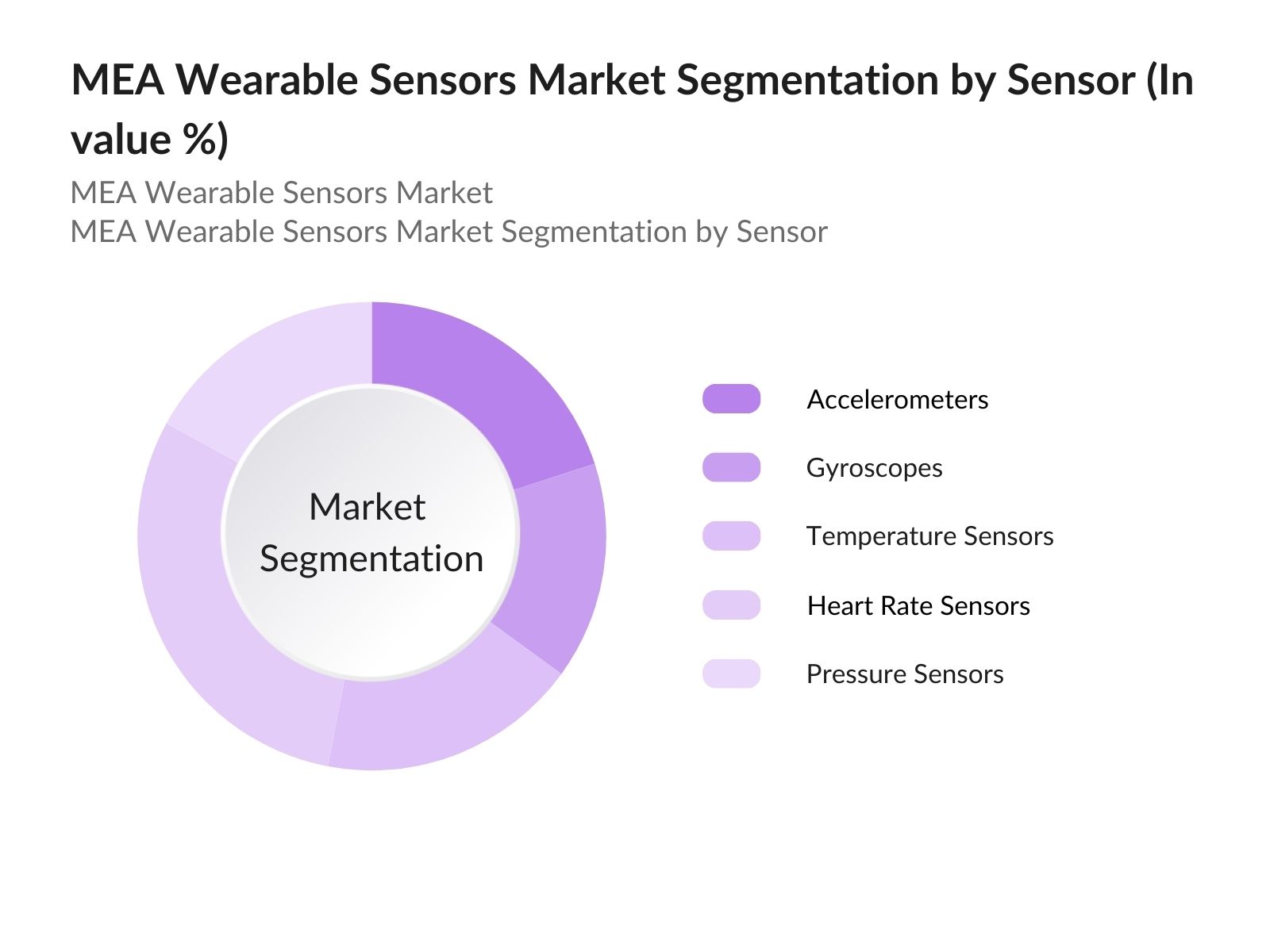
By Sensor Type: The Market is segmented by sensor type into accelerometers, gyroscopes, temperature sensors, heart rate sensors, and pressure sensors. Heart rate sensors hold a dominant market share in this segment, driven by their extensive use in fitness and healthcare applications. These sensors are crucial for real-time cardiovascular monitoring, widely adopted in fitness bands and smartwatches to track users' heart health. The demand for these sensors continues to grow with rising awareness of preventive health measures and the adoption of wearable health solutions across the region.
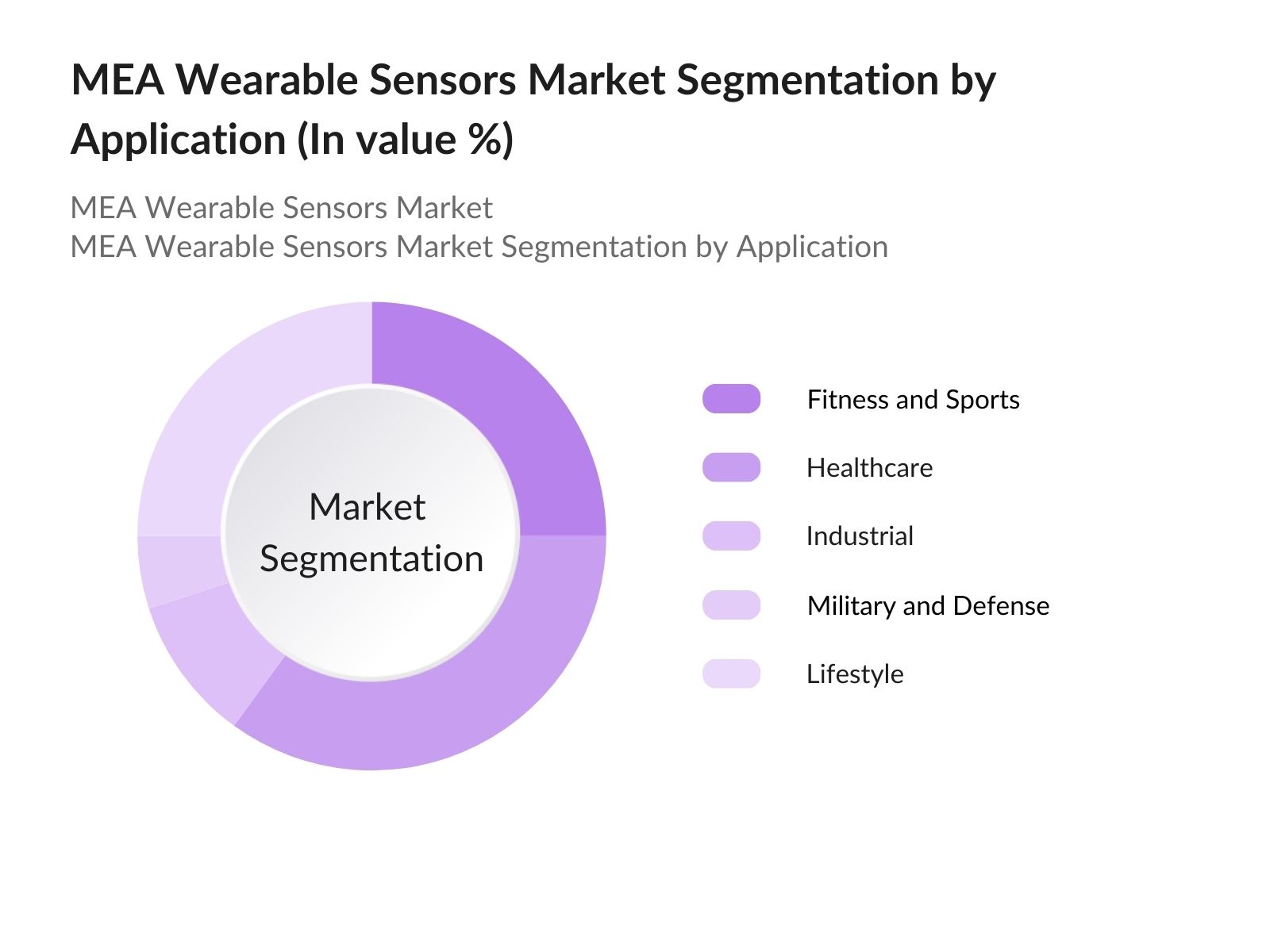
- By Application: The Market is further segmented by application into fitness and sports, healthcare, industrial, military and defense, and lifestyle. Healthcare applications lead the segment due to the increasing adoption of wearable sensors for monitoring chronic conditions and general health in real-time. These devices are crucial in managing cardiovascular diseases, diabetes, and other conditions. The healthcare sector's push toward early disease detection and personalized healthcare has intensified the adoption of wearable sensors in healthcare applications, making this the most prominent segment.
MEA Wearable Sensors Market Competitive Landscape
The MEA Wearable Sensors Market is moderately competitive, comprising both global and regional companies. Key players such as STMicroelectronics, Analog Devices Inc., and Texas Instruments dominate with advanced sensor solutions that meet high performance and reliability standards. The market also includes regional players with an expanding footprint, focusing on adapting sensor technologies to local healthcare and industrial needs. Competitive factors include innovation in sensor functionality, partnerships with wearable device manufacturers, and localized distribution strategies. 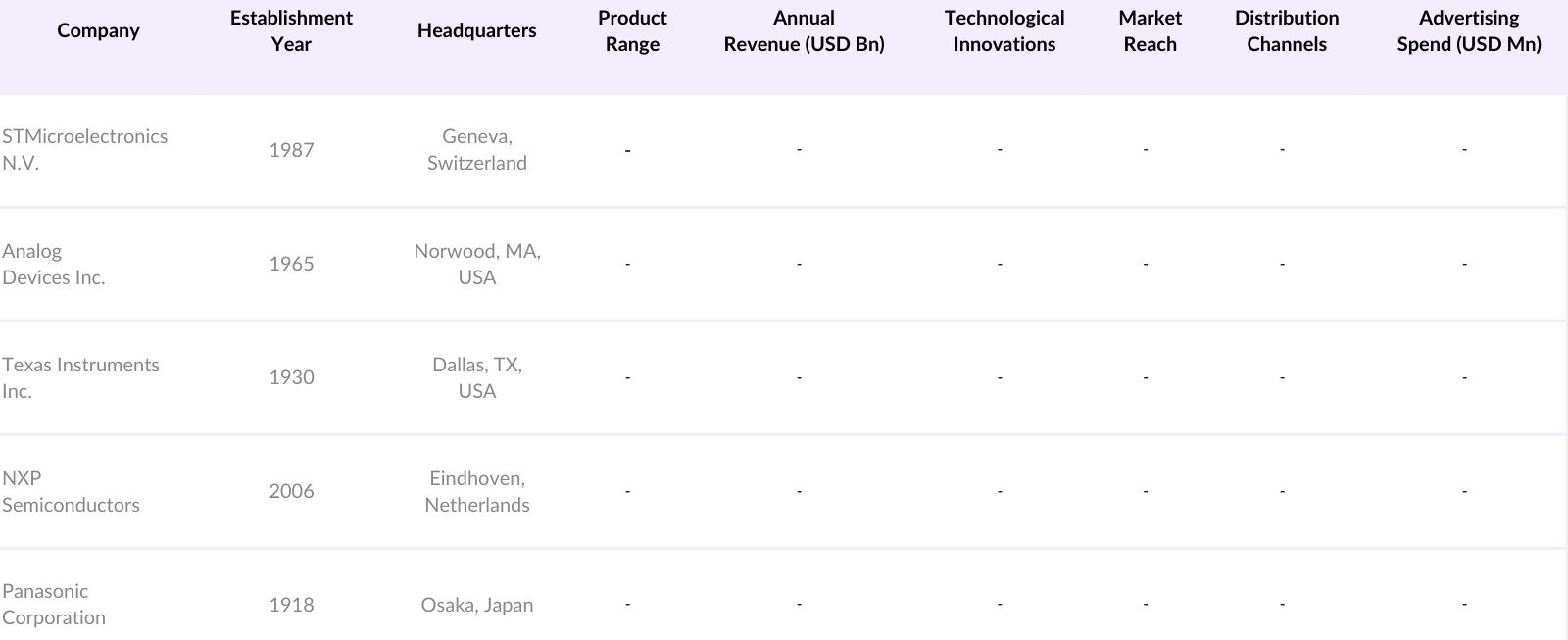
MEA Wearable Sensors Market Industry Analysis
Growth Drivers
-
Increasing Health Awareness: The MEA region has seen a notable shift towards health consciousness, supported by government data showing that over 120 million people in the region are actively investing in health-enhancing products, including wearables. The rise in chronic conditions such as diabetes and hypertension affect over 100 million people, prompting increased demand for wearable health solutions. In 2023, health-related government expenditures in the MEA region accounted for USD 95 billion, showing strong national initiatives supporting health and wellness.
- Technological Advancements in Sensor Technologies: Recent innovations in sensors have enhanced their performance, efficiency, and application range. Lightweight, flexible sensors capable of providing high-accuracy health data, such as heart rate variability and body temperature monitoring, are particularly favored. The number of wearable devices with advanced sensors exceeded 10 million units in MEA in 2023, driven by public and private sector R&D investments, which total approximately $20 billion annually across the region. The integration of AI and IoT into sensor technology has significantly improved real-time health monitoring, further supporting the adoption of wearable sensors.
- Government Initiatives for Health and Digital Transformation: Government initiatives in countries like the UAE and Saudi Arabia, aimed at enhancing digital health services, are spurring the growth of wearable sensors. For instance, the UAEs Ministry of Health encourages remote patient monitoring and preventative healthcare. Saudi Arabias Vision 2030 includes provisions for adopting smart health solutions, boosting the deployment of wearable sensors.
Market Challenges
-
Data Privacy and Security Concerns: Privacy and data security issues present challenges as wearable sensors collect sensitive information. Many consumers across MEA express concerns over data security in wearables, a point underscored by increased regulatory scrutiny, such as Saudi Arabias 2023 data protection legislation. This legislation enforces stringent data security requirements on wearable manufacturers, impacting numerous companies in the MEA market. Additionally, there is a growing emphasis on secure data handling as more consumers prioritize privacy.
- High Development Costs: Battery life limitations in wearables present operational constraints, impacting user experience. A significant portion of wearable users in MEA report dissatisfaction with battery performance, which limits daily usability. This has prompted a surge in R&D initiatives to enhance battery longevity, as manufacturers aim to improve user experience and operational efficiency. Additionally, there is growing interest in sustainable power solutions, with some companies exploring solar charging and energy-harvesting technologies to address battery constraints.
MEA Wearable Sensors Market Future Outlook
The MEA Wearable Sensors Market is poised to experience sustained growth, fueled by rising health awareness, increasing healthcare expenditures, and advancements in wearable technology. Countries such as the UAE, Saudi Arabia, and Egypt will continue to lead the market, with a growing adoption of wearable devices for health monitoring and fitness tracking. Demand for smart healthcare solutions, such as remote patient monitoring, is expected to surge, driven by both private and public health initiatives across the region.
Future Market Opportunities
-
Collaborations Between OEMs and Local Health Tech Firms: Collaborations between wearable sensor manufacturers and regional health tech firms provide growth potential. For example, partnerships aimed at developing localized wearable health solutions are gaining traction in Saudi Arabia and the UAE. These partnerships foster technology transfer, contribute to the local workforce, and address region-specific health challenges. Similar joint ventures are anticipated to expand in the future, encouraging innovation within the wearable sensor market.
- Advances in Wearable Technology for Chronic Disease Management: Chronic diseases such as diabetes and cardiovascular issues are prevalent in the MEA region, creating a strong demand for wearable sensors tailored for continuous health monitoring. Innovations in biosensors and AI-driven health analytics are expected to enhance the capabilities of wearable devices, enabling better management of chronic diseases and supporting healthcare providers with remote monitoring solutions.
Scope of the Report
|
By Sensor Type |
Accelerometers Gyroscopes Temperature Sensors Heart Rate Sensors Pressure Sensors |
|
By Application |
Fitness and Sports Healthcare Industrial Military and Defense Lifestyle |
|
By Technology |
MEMS, Optical Sensors CMOS-based Sensors GPS-based Sensors, Biosensors |
|
By Distribution Channel |
Online Channels Offline Channels |
|
By Region |
Saudi Arabia UAE Egypt South Africa Rest of MEA |
Products
Key Target Audience
Healthcare Providers and Hospitals
Wearable Device Manufacturers
Technology Solution Providers
Government and Regulatory Bodies (e.g., UAE Ministry of Health, Saudi Food & Drug Authority)
Investors and Venture Capitalist Firms
Banks and Financial Institutions
Industrial and Military Equipment Providers
Health and Wellness Centers
Companies
Players Mentioned in the Report
STMicroelectronics N.V.
Analog Devices Inc.
Texas Instruments Inc.
NXP Semiconductors
Panasonic Corporation
Bosch Sensortec GmbH
Medtronic Plc
Samsung Electronics
Sony Corporation
Huawei Technologies Co., Ltd.
Fitbit, Inc.
Garmin Ltd.
Abbott Laboratories
InvenSense, Inc.
Infineon Technologies AG
Table of Contents
1. MEA Wearable Sensors Market Overview
1.1. Definition and Scope
1.2. Market Taxonomy
1.3. Market Growth Rate
1.4. Market Segmentation Overview
2. MEA Wearable Sensors Market Size (In USD Mn)
2.1. Historical Market Size
2.2. Year-On-Year Growth Analysis
2.3. Key Market Developments and Milestones
3. MEA Wearable Sensors Market Analysis
3.1. Growth Drivers
3.1.1. Rise in Health Consciousness
3.1.2. Technological Advancements in Sensors
3.1.3. Expanding IoT and AI Integration
3.1.4. Surge in Sports and Fitness Applications
3.2. Market Challenges
3.2.1. Privacy and Data Security Concerns
3.2.2. Limited Battery Life in Wearable Devices
3.2.3. High Manufacturing Costs
3.3. Opportunities
3.3.1. Growing Demand for Remote Health Monitoring
3.3.2. Expansion into Emerging Markets
3.3.3. Wearables in Industrial and Military Applications
3.4. Trends
3.4.1. Adoption of Flexible and Stretchable Electronics
3.4.2. Integration of AI for Advanced Data Analytics
3.4.3. Personalized Wearable Health Solutions
3.5. Government Regulations
3.5.1. Health and Safety Standards for Wearables
3.5.2. Data Privacy Regulations
3.5.3. Certification and Compliance Requirements
3.6. SWOT Analysis
3.7. Stake Ecosystem
3.8. Porters Five Forces
3.9. Competition Ecosystem
4. MEA Wearable Sensors Market Segmentation
4.1. By Sensor Type (In Value %)
4.1.1. Accelerometers
4.1.2. Gyroscopes
4.1.3. Temperature Sensors
4.1.4. Heart Rate Sensors
4.1.5. Pressure Sensors
4.2. By Application (In Value %)
4.2.1. Fitness and Sports
4.2.2. Healthcare
4.2.3. Industrial
4.2.4. Military and Defense
4.2.5. Lifestyle
4.3. By Technology (In Value %)
4.3.1. MEMS
4.3.2. Optical Sensors
4.3.3. CMOS-based Sensors
4.3.4. GPS-based Sensors
4.3.5. Biosensors
4.4. By Distribution Channel (In Value %)
4.4.1. Online Channels
4.4.2. Offline Channels
4.5. By Region (In Value %)
4.5.1. Saudi Arabia
4.5.2. UAE
4.5.3. Egypt
4.5.4. South Africa
4.5.5. Rest of MEA
5. MEA Wearable Sensors Market Competitive Analysis
5.1. Detailed Profiles of Major Companies
5.1.1. STMicroelectronics N.V.
5.1.2. Analog Devices Inc.
5.1.3. Texas Instruments Inc.
5.1.4. NXP Semiconductors
5.1.5. Infineon Technologies AG
5.1.6. Bosch Sensortec GmbH
5.1.7. InvenSense, Inc.
5.1.8. Panasonic Corporation
5.1.9. Abbott Laboratories
5.1.10. Medtronic Plc
5.1.11. Garmin Ltd.
5.1.12. Samsung Electronics
5.1.13. Sony Corporation
5.1.14. Fitbit, Inc.
5.1.15. Huawei Technologies Co., Ltd.
5.2. Cross Comparison Parameters (Sensor Range, Product Portfolio, Partnerships, Revenue, Market Penetration, R&D Focus, Brand Strength, Customer Support)
5.3. Market Share Analysis
5.4. Strategic Initiatives
5.5. Mergers and Acquisitions
5.6. Investment Analysis
5.7. Venture Capital Funding
5.8. Government Grants
5.9. Private Equity Investments
6. MEA Wearable Sensors Market Regulatory Framework
6.1. Compliance Requirements for Medical Wearables
6.2. Health and Safety Standards for Electronic Devices
6.3. Environmental Standards for Sensor Manufacturing
7. MEA Wearable Sensors Future Market Size (In USD Mn)
7.1. Future Market Size Projections
7.2. Key Factors Driving Future Market Growth
8. MEA Wearable Sensors Future Market Segmentation
8.1. By Sensor Type (In Value %)
8.2. By Application (In Value %)
8.3. By Technology (In Value %)
8.4. By Distribution Channel (In Value %)
8.5. By Country (In Value %)
9. MEA Wearable Sensors Market Analysts Recommendations
9.1. TAM/SAM/SOM Analysis
9.2. Customer Cohort Analysis
9.3. Marketing Initiatives
9.4. White Space Opportunity Analysis
Disclaimer Contact UsResearch Methodology
Step 1: Identification of Key Variables
In this phase, an ecosystem map is created to include all major stakeholders in the MEA Wearable Sensors Market. Extensive desk research using secondary and proprietary sources helps identify critical market variables, providing a comprehensive view of market dynamics.
Step 2: Market Analysis and Construction
Historical data was compiled to assess market penetration, adoption rates, and revenue growth. This phase involves analyzing sub-segments to establish their contribution to market growth, ensuring reliable revenue estimates.
Step 3: Hypothesis Validation and Expert Consultation
Market hypotheses are validated through consultations with industry experts via computer-assisted telephone interviews (CATIs). These expert insights offer operational and financial perspectives, refining and verifying market data accuracy.
Step 4: Research Synthesis and Final Output
The final step involves engaging directly with sensor manufacturers to acquire detailed insights into product performance and sales data. This bottom-up approach complements the statistical data, providing a validated analysis of the MEA Wearable Sensors Market.
Frequently Asked Questions
1. How big is the MEA Wearable Sensors Market?
The MEA Wearable Sensors Market is valued at USD 3.0 billion, driven by increasing demand for health and fitness monitoring devices across the region.
2. What are the challenges in the MEA Wearable Sensors Market?
Challenges in the MEA Wearable Sensors Market include data privacy concerns and high production costs, which impact the accessibility and adoption of wearable devices.
3. Who are the major players in the MEA Wearable Sensors Market?
Key players in the MEA Wearable Sensors Market include STMicroelectronics, Analog Devices, Texas Instruments, NXP Semiconductors, and Panasonic, known for their innovation and market penetration.
4. What are the growth drivers of the MEA Wearable Sensors Market?
The MEA Wearable Sensors market growth is driven by rising health awareness, advancements in sensor technology, and government support for digital health initiatives.
Why Buy From Us?

What makes us stand out is that our consultants follows Robust, Refine and Result (RRR) methodology. i.e. Robust for clear definitions, approaches and sanity checking, Refine for differentiating respondents facts and opinions and Result for presenting data with story

We have set a benchmark in the industry by offering our clients with syndicated and customized market research reports featuring coverage of entire market as well as meticulous research and analyst insights.

While we don't replace traditional research, we flip the method upside down. Our dual approach of Top Bottom & Bottom Top ensures quality deliverable by not just verifying company fundamentals but also looking at the sector and macroeconomic factors.

With one step in the future, our research team constantly tries to show you the bigger picture. We help with some of the tough questions you may encounter along the way: How is the industry positioned? Best marketing channel? KPI's of competitors? By aligning every element, we help maximize success.

Our report gives you instant access to the answers and sources that other companies might choose to hide. We elaborate each steps of research methodology we have used and showcase you the sample size to earn your trust.

If you need any support, we are here! We pride ourselves on universe strength, data quality, and quick, friendly, and professional service.