
Middle East and Africa Vertical Farming Market Outlook to 2030
Region:Global
Author(s):Abhinav kumar
Product Code:KROD7773
December 2024
84
About the Report
Middle East and Africa Vertical Farming Market Overview
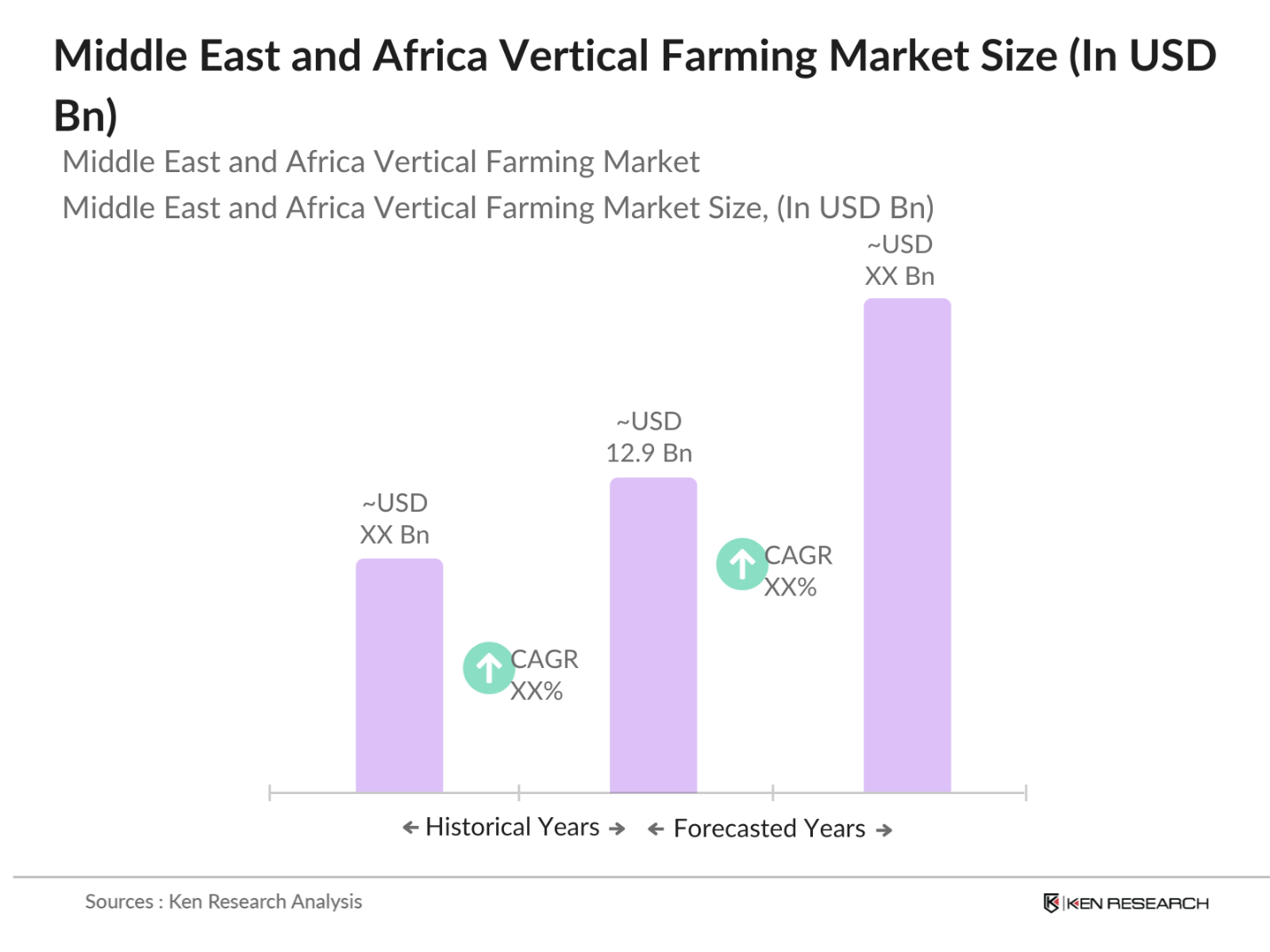
- The Middle East and Africa (MEA) Vertical Farming Market has seen steady growth over the past five years, driven by the increasing demand for sustainable agriculture solutions to combat food security challenges in arid regions. The market is valued at USD 12.9 billion, primarily driven by the growing urban population, limited availability of arable land, and rising environmental concerns. With water scarcity and harsh climates affecting traditional farming, vertical farming has emerged as a sustainable alternative, enabling year-round production in controlled environments.
- Countries such as the United Arab Emirates (UAE), Saudi Arabia, and South Africa are leading in vertical farming due to their significant investments in agricultural innovation, favorable government policies, and strategic initiatives aimed at achieving food self-sufficiency. These nations are leveraging advanced technologies such as hydroponics and aeroponics to optimize water usage and reduce dependence on imports, thus dominating the market. Additionally, their high level of technological infrastructure has supported the rapid development of indoor farming systems.
- Governments in the MEA region are increasingly focusing on sustainable agriculture policies to address food security challenges. In Saudi Arabia, for instance, the National Transformation Program includes initiatives aimed at increasing local food production through advanced farming techniques like vertical farming. The UAE government has also launched its National Food Security Strategy, which aims to position the country as a global leader in innovation-driven food production. These policies are facilitating the growth of vertical farming by offering incentives and regulatory support to farmers adopting sustainable practices.
Middle East and Africa Vertical Farming Market Segmentation
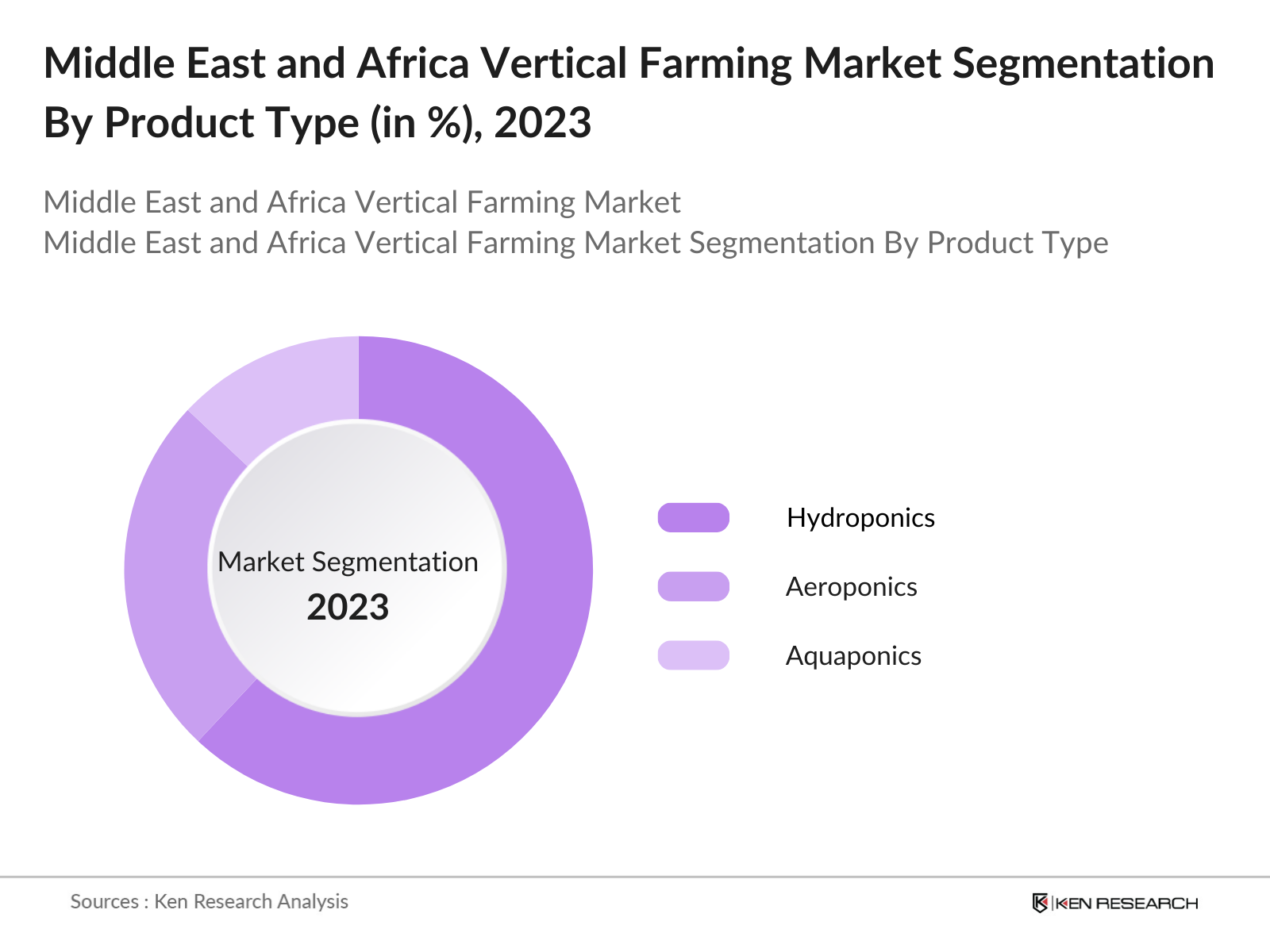
By Product Type: The Middle East and Africa Vertical Farming market is segmented by product type into hydroponics, aeroponics, and aquaponics. Hydroponics holds a dominant market share in the region, accounting for 62% of the total market in 2023. This dominance is attributed to its higher resource efficiency, particularly water, which is a critical factor in arid regions. The ability to use nutrient-rich solutions and avoid soil-related limitations makes hydroponics more popular in regions like the UAE, where water conservation is vital.
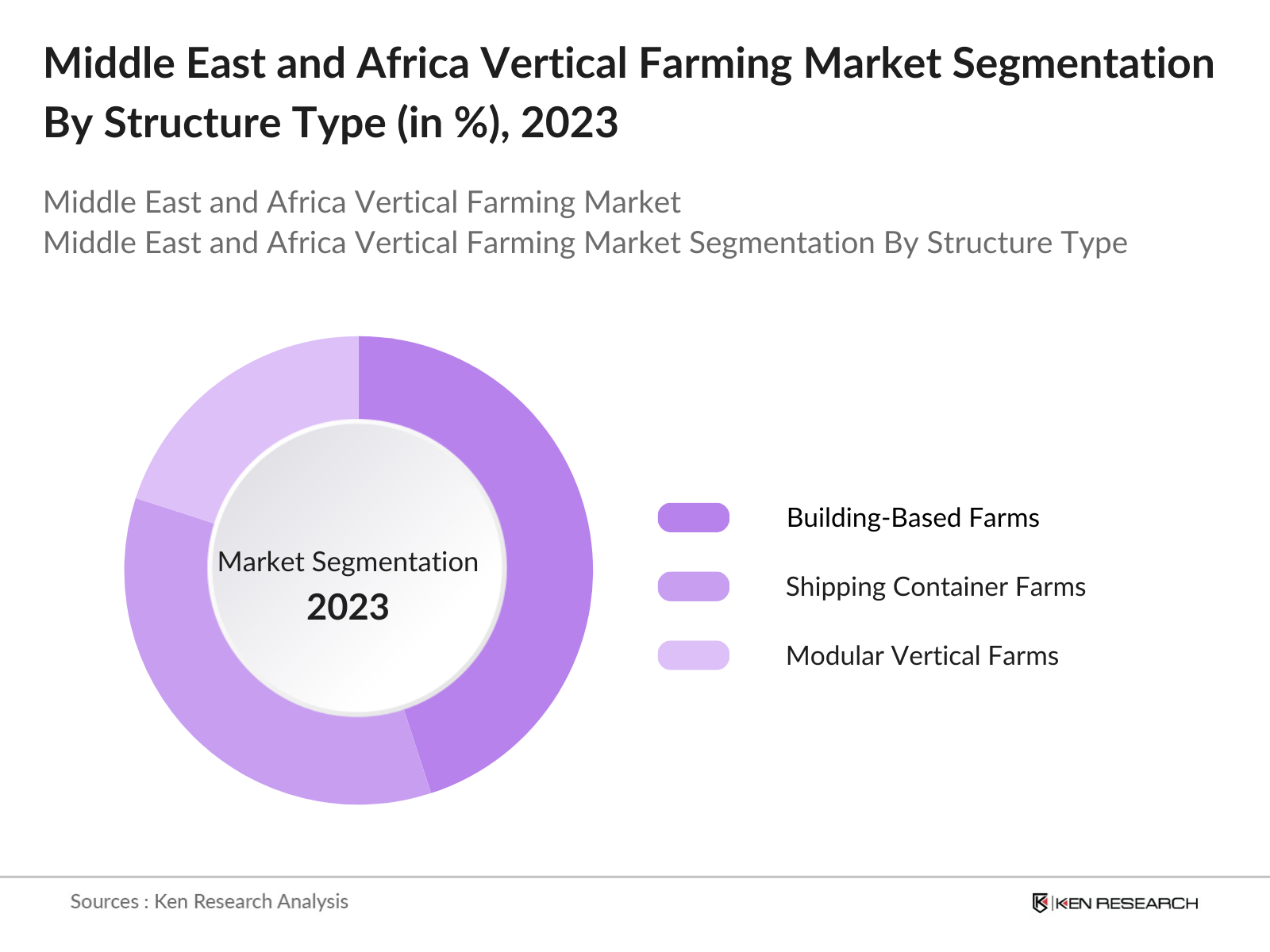
By Structure Type: The market is segmented by structure type into building-based vertical farms, shipping container-based vertical farms, and modular vertical farms. Building-based vertical farms dominate with 45% of the market share in 2023. These farms are particularly popular in urban centers like Dubai and Riyadh, where real estate for large-scale farming is scarce. The ability to integrate these farms into existing urban infrastructure makes them an ideal solution for densely populated areas, contributing to their dominance in the region.
Middle East and Africa Vertical Farming Market Competitive Landscape
The Middle East and Africa Vertical Farming Market is dominated by a mix of regional and international players who are continuously investing in technological advancements and expansion initiatives. The market landscape is highly competitive, with companies focusing on sustainable solutions, technological innovations, and cost-efficiency. The MEA vertical farming market features key players like AeroFarms and Crop One Holdings, which have established strong positions through strategic partnerships and technological innovations. Additionally, companies like Emirates Hydroponics Farms have capitalized on government support to expand their operations. These companies are focused on reducing operational costs, enhancing yield efficiency, and meeting the rising demand for fresh, locally grown produce.
|
Company Name |
Establishment Year |
Headquarters |
No. of Farms |
Automation Level (%) |
R&D Investment (USD Mn) |
Crop Yield Efficiency |
Energy Usage Efficiency |
Revenue (USD Mn) |
|
AeroFarms |
2004 |
Newark, USA |
_ |
_ |
_ |
_ |
_ |
_ |
|
Crop One Holdings |
2011 |
San Mateo, USA |
_ |
_ |
_ |
_ |
_ |
_ |
|
Emirates Hydroponics |
2005 |
Abu Dhabi, UAE |
_ |
_ |
_ |
_ |
_ |
_ |
|
Green Sense Farms |
2013 |
Portage, USA |
_ |
_ |
_ |
_ |
_ |
_ |
|
Kalera |
2010 |
Orlando, USA |
_ |
_ |
_ |
_ |
_ |
_ |
Middle East and Africa Vertical Farming Industry Analysis
Growth Drivers
- Population Growth and Urbanization: The population in the Middle East and Africa (MEA) is experiencing rapid growth, with the region's population projected to surpass 1.65 billion by the end of 2024. The urban population in the MEA is currently growing at an annual rate of 2.5%, with more than 58% of the regions total population living in urban areas. This surge in urbanization is driving demand for food production that can meet the challenges of space and resource limitations, thus favoring vertical farming. As land for traditional agriculture diminishes, vertical farming provides a viable solution to feed growing urban centers.
- Increasing Demand for Sustainable Agriculture: Sustainability is becoming increasingly crucial across the MEA region. Agriculture contributes significantly to the region's carbon emissions, particularly due to inefficient farming practices. The region's agricultural sector is responsible for approximately 12% of total greenhouse gas emissions. Vertical farming, with its capacity to reduce water usage by up to 90% compared to traditional farming methods, and the ability to use renewable energy sources, addresses the increasing demand for sustainable food production. The efficient land and water use of vertical farming makes it an attractive solution for meeting environmental goals.
- Technological Advancements in Vertical Farming Systems: Advances in technology, such as precision agriculture and the use of AI, are transforming vertical farming in the MEA. Automated systems are enhancing productivity by optimizing plant growth conditions, reducing manual labor, and monitoring resource consumption in real-time. The integration of IoT (Internet of Things) devices in vertical farming systems is expected to increase efficiency by nearly 25% in terms of water, nutrient, and energy management. These advancements are making vertical farming more scalable and efficient, contributing to its rapid adoption in urban environments.
Market Challenges
- High Initial Capital Investment: Vertical farming in the MEA region requires substantial upfront investment, primarily due to the costs associated with technology, equipment, and controlled-environment infrastructure. The average capital required for setting up a vertical farm ranges between USD 1 million to USD 10 million, depending on the size and complexity. While the return on investment (ROI) is promising in the long term, these high costs create significant barriers to entry, particularly in low-income regions of Africa where financial resources are limited. This financial hurdle has slowed the widespread adoption of vertical farming in the region.
- Limited Awareness Among Farmers: In many parts of Africa and the Middle East, traditional farming practices are deeply ingrained, and awareness of vertical farming technologies remains low. Based on recent surveys, the farmer awareness level index in sub-Saharan Africa regarding vertical farming is below 30 on a scale of 100. This lack of knowledge about the benefits and potential returns from vertical farming technologies limits its adoption. Governments and non-governmental organizations (NGOs) have initiated awareness programs, but the gap between knowledge and implementation remains a key challenge.
Middle East and Africa Vertical Farming Market Future Outlook
Over the next five years, the Middle East and Africa Vertical Farming market is expected to experience robust growth, driven by the increasing need for food security, government support for sustainable agriculture, and advancements in vertical farming technology. Innovations such as automation, artificial intelligence, and energy-efficient LED lighting systems will likely reduce operational costs, making vertical farming more commercially viable in the region. As more urban centers invest in vertical farming, the market will expand beyond current hubs, promoting localized food production and reducing import dependence.
Opportunities
- Expansion into Urban and Semi-Urban Areas: Urbanization in the MEA region presents a significant opportunity for vertical farming. Cities like Dubai and Cairo, with populations of 3.5 million and 10 million respectively, are witnessing a sharp rise in demand for locally produced, fresh food. Expanding vertical farms into semi-urban areas, where real estate is more affordable, could reduce food transportation costs and improve supply chain efficiency. This localization of food production is essential to meet the regions growing demand, as urban areas become increasingly reliant on vertical farming for sustainable food production.
- Integration of AI and Robotics: The adoption of AI and robotics is transforming vertical farming operations by reducing human labor and enhancing productivity. In 2023, the automation rate in vertical farms in the Middle East reached 30%, driven by investments in AI-based monitoring systems and robotic harvesting technologies. These technologies allow farms to operate more efficiently, with reduced human error and increased precision in controlling plant environments. The integration of such advanced systems presents an opportunity for the MEA region to lead in agricultural innovation and further expand its vertical farming sector.
Scope of the Report
|
By Product Type |
Hydroponics Aeroponics Aquaponics |
|
By Structure Type |
Building-Based Vertical Farms Shipping Container Farms Modular Vertical Farms |
|
By Component |
Lighting System Climate Control System Sensors & Control Systems |
|
By Crop Type |
Leafy Greens Fruits & Vegetables Herbs Flowers |
|
By Region |
GCC Countries South Africa Nigeria Kenya Rest of MEA |
Products
Key Target Audience Organizations and Entities Who Can Benefit by Subscribing This Report:
Vertical Farming Equipment Manufacturing Companies
Agritech Investors and Venture Capitalist Firms
Government and Regulatory Bodies (UAE Ministry of Climate Change and Environment, Saudi Ministry of Environment, Water and Agriculture)
Urban Farming Association and Cooperative Industries
Hydroponics System Supplier Companies
LED Lighting Technology Companies
Private Equity Companies
Companies
Players Mentioned in the Report
AeroFarms
Crop One Holdings
Emirates Hydroponics Farms
Green Sense Farms
Kalera
Bowery Farming
Infarm
BrightFarms
Sky Greens
FarmedHere
Table of Contents
1. Middle East and Africa Vertical Farming Market Overview
1.1. Definition and Scope
1.2. Market Taxonomy
1.3. Market Growth Rate
1.4. Market Segmentation Overview
2. Middle East and Africa Vertical Farming Market Size (In USD Mn)
2.1. Historical Market Size
2.2. Year-On-Year Growth Analysis
2.3. Key Market Developments and Milestones
3. Middle East and Africa Vertical Farming Market Analysis
3.1. Growth Drivers
3.1.1. Population Growth and Urbanization
3.1.2. Increasing Demand for Sustainable Agriculture
3.1.3. Technological Advancements in Vertical Farming Systems
3.1.4. Favorable Government Policies and Initiatives
3.2. Market Challenges
3.2.1. High Initial Capital Investment
3.2.2. Limited Awareness Among Farmers (Awareness Level Index)
3.2.3. Climate Adaptation and Energy Dependency (Energy Usage Efficiency)
3.3. Opportunities
3.3.1. Expansion into Urban and Semi-Urban Areas
3.3.2. Integration of AI and Robotics (Automation Rate)
3.3.3. Increasing Investment from Private and Public Entities
3.4. Trends
3.4.1. Adoption of Hydroponics and Aquaponics Systems
3.4.2. Increasing Use of LED Lighting Systems (Energy Savings %)
3.4.3. Growth in Indoor Farming Spaces in Cities
3.5. Government Regulations
3.5.1. National Sustainable Agriculture Policies
3.5.2. Import and Export Regulations on Farm Produce
3.5.3. Subsidies for Renewable Energy in Vertical Farms
3.6. SWOT Analysis
3.7. Stake Ecosystem
3.8. Porters Five Forces
3.9. Competition Ecosystem
4. Middle East and Africa Vertical Farming Market Segmentation
4.1. By Product Type (In Value %)
4.1.1. Hydroponics
4.1.2. Aeroponics
4.1.3. Aquaponics
4.2. By Structure Type (In Value %)
4.2.1. Building-Based Vertical Farms
4.2.2. Shipping Container-Based Vertical Farms
4.2.3. Modular Vertical Farms
4.3. By Component (In Value %)
4.3.1. Lighting System
4.3.2. Climate Control System
4.3.3. Sensors & Control Systems
4.4. By Crop Type (In Value %)
4.4.1. Leafy Greens
4.4.2. Fruits & Vegetables
4.4.3. Herbs
4.4.4. Flowers
4.5. By Region (In Value %)
4.5.1. GCC Countries
4.5.2. South Africa
4.5.3. Nigeria
4.5.4. Kenya
4.5.5. Rest of MEA
5. Middle East and Africa Vertical Farming Market Competitive Analysis
5.1. Detailed Profiles of Major Companies
5.1.1. AeroFarms
5.1.2. Crop One Holdings
5.1.3. Bowery Farming
5.1.4. Infarm
5.1.5. BrightFarms
5.1.6. Sky Greens
5.1.7. Emirates Hydroponics Farms
5.1.8. Green Sense Farms
5.1.9. FarmedHere
5.1.10. Plantagon International
5.1.11. Kalera
5.1.12. CubicFarm Systems
5.1.13. Iron Ox
5.1.14. Spread Co.
5.1.15. Plenty Inc.
5.2. Cross Comparison Parameters (No. of Employees, Production Capacity, Headquarters, Automation Rate, Total Cultivation Area, Energy Usage Efficiency, Innovation Index, Revenue)
5.3. Market Share Analysis
5.4. Strategic Initiatives
5.5. Mergers and Acquisitions
5.6. Investment Analysis
5.7. Venture Capital Funding
5.8. Government Grants
5.9. Private Equity Investments
6. Middle East and Africa Vertical Farming Market Regulatory Framework
6.1. Environmental Standards
6.2. Compliance Requirements
6.3. Certification Processes
7. Middle East and Africa Vertical Farming Future Market Size (In USD Mn)
7.1. Future Market Size Projections
7.2. Key Factors Driving Future Market Growth
8. Middle East and Africa Vertical Farming Future Market Segmentation
8.1. By Product Type (In Value %)
8.2. By Structure Type (In Value %)
8.3. By Component (In Value %)
8.4. By Crop Type (In Value %)
8.5. By Region (In Value %)
9. Middle East and Africa Vertical Farming Market Analysts Recommendations
9.1. TAM/SAM/SOM Analysis
9.2. Customer Cohort Analysis
9.3. Marketing Initiatives
9.4. White Space Opportunity Analysis
Research Methodology
Step 1: Identification of Key Variables
The first stage of the research process involved identifying key variables such as the technological landscape, market demand drivers, and regional agricultural challenges. This was achieved through a combination of primary and secondary data sources, including government reports and proprietary databases.
Step 2: Market Analysis and Construction
The historical data for market penetration and service provider ratios was compiled to construct a detailed analysis of the vertical farming market in MEA. This phase also included tracking the revenue generation from different market segments and analyzing regional consumption patterns.
Step 3: Hypothesis Validation and Expert Consultation
Interviews with key market participants, including vertical farming operators and technology providers, were conducted to validate the market hypotheses. Expert opinions were critical in refining our market forecasts and ensuring the accuracy of the data.
Step 4: Research Synthesis and Final Output
The final research synthesis involved collecting insights from multiple stakeholders, including farm owners and technology vendors, to finalize the market report. This helped ensure that the report reflects the true state of the market and provides a reliable forecast.
Frequently Asked Questions
1. How big is the Middle East and Africa Vertical Farming Market?
The Middle East and Africa Vertical Farming market is valued at USD 12.9 billion, driven by increasing demand for sustainable agricultural solutions and technological advancements in controlled environment agriculture.
2. What are the challenges in the Middle East and Africa Vertical Farming Market?
The market faces challenges including high initial capital investments, limited awareness among traditional farmers, and the dependency on energy-intensive systems, particularly in regions with limited energy infrastructure.
3. Who are the major players in the Middle East and Africa Vertical Farming Market?
Key players include AeroFarms, Crop One Holdings, Emirates Hydroponics Farms, Green Sense Farms, and Kalera. These companies dominate the market due to their strong technological infrastructure and extensive research and development investments.
4. What are the growth drivers of the Middle East and Africa Vertical Farming Market?
The market is driven by the increasing need for food security in arid regions, government incentives to promote sustainable agriculture, and the rise of technological innovations such as hydroponics, automation, and energy-efficient systems.
Why Buy From Us?

What makes us stand out is that our consultants follows Robust, Refine and Result (RRR) methodology. i.e. Robust for clear definitions, approaches and sanity checking, Refine for differentiating respondents facts and opinions and Result for presenting data with story

We have set a benchmark in the industry by offering our clients with syndicated and customized market research reports featuring coverage of entire market as well as meticulous research and analyst insights.

While we don't replace traditional research, we flip the method upside down. Our dual approach of Top Bottom & Bottom Top ensures quality deliverable by not just verifying company fundamentals but also looking at the sector and macroeconomic factors.

With one step in the future, our research team constantly tries to show you the bigger picture. We help with some of the tough questions you may encounter along the way: How is the industry positioned? Best marketing channel? KPI's of competitors? By aligning every element, we help maximize success.

Our report gives you instant access to the answers and sources that other companies might choose to hide. We elaborate each steps of research methodology we have used and showcase you the sample size to earn your trust.

If you need any support, we are here! We pride ourselves on universe strength, data quality, and quick, friendly, and professional service.