
Middle East Personal Development Market Outlook to 2030
Region:Middle East
Author(s):Naman Rohilla
Product Code:KROD4487
Region:Middle East
Author(s):Naman Rohilla
Product Code:KROD4487
December 2024
89
The Middle East personal development market is dominated by a few major players, including local firms and global brands. Global players such as MindValley and BetterUp have established a presence, leveraging technology to scale their offerings. Local players are also growing by catering to region-specific needs and offering Arabic-language content. This consolidation highlights the influence of technology and international partnerships in shaping the competitive landscape.
| Company | Establishment Year | Headquarters | No. of Courses | Focus Area | Global Reach | Subscription Model | Mobile Accessibility | Certifications Offered |
|---|---|---|---|---|---|---|---|---|
| MindValley | 2003 | UAE | ||||||
| Tony Robbins | 1980 | USA | ||||||
| Coursera | 2012 | USA | ||||||
| BetterUp | 2013 | USA | ||||||
| FranklinCovey | 1997 | USA |
Over the next five years, the Middle East personal development market is expected to witness substantial growth, driven by advancements in digital learning platforms, increasing corporate investments in employee development, and a heightened focus on mental health and well-being. The growing popularity of mindfulness programs and leadership training, combined with government initiatives supporting workforce development, is projected to contribute to market expansion.
| By Type |
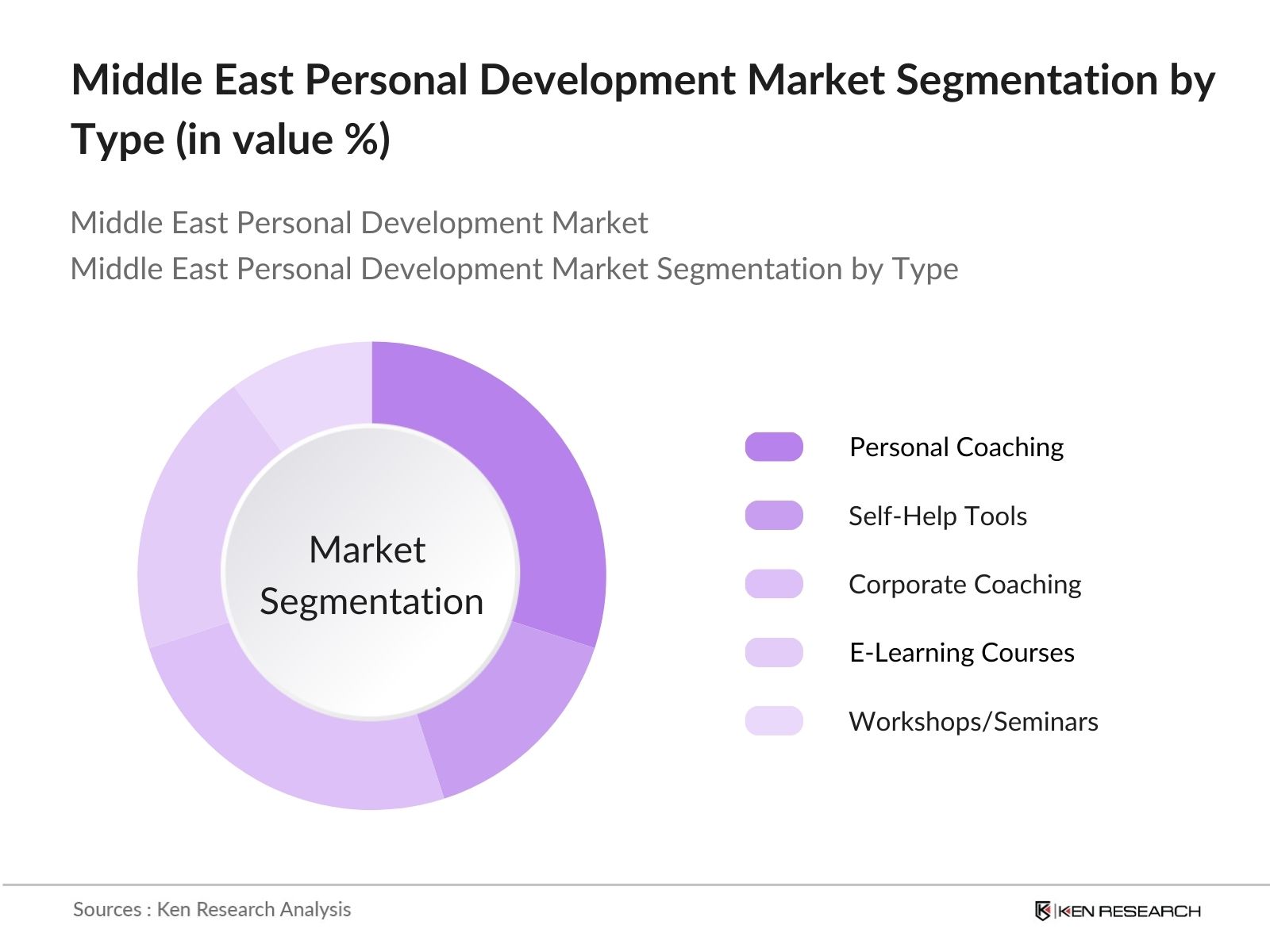
Personal Coaching Self-Help Tools Corporate Coaching E-learning Courses Workshops and Seminars |
| By Age Group |
Millennials Gen Z Generation X Baby Boomers |
| By Gender |
Male Female Non-Binary |
| By Mode of Delivery |
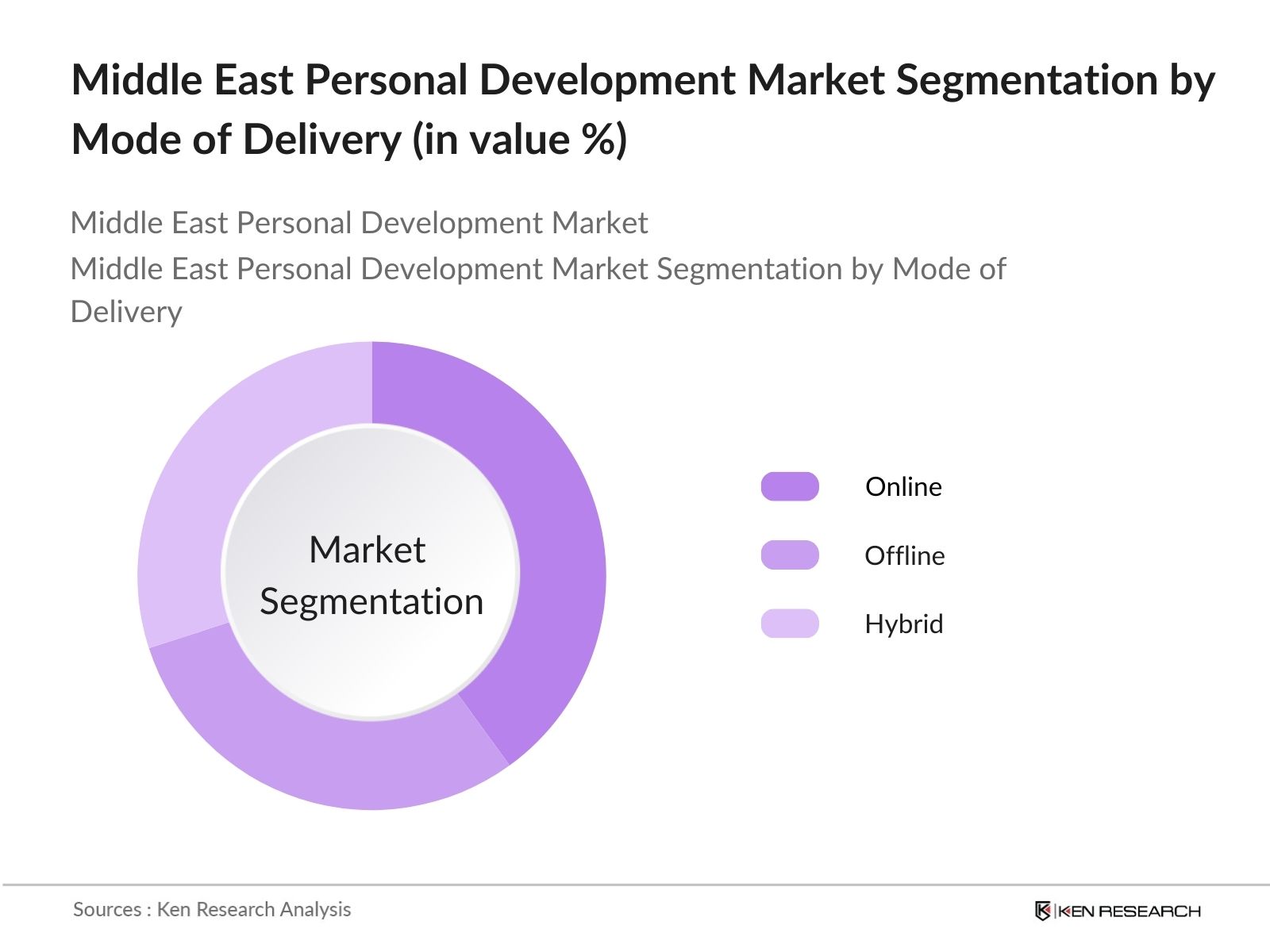
Online Offline Hybrid |
| By Region |
GCC Levant North Africa |
1.1 Definition and Scope
1.2 Market Taxonomy
1.3 Market Growth Rate
1.4 Market Segmentation Overview
2.1 Historical Market Size
2.2 Year-On-Year Growth Analysis
2.3 Key Market Developments and Milestones
3.1 Growth Drivers
3.1.1 Cultural Shifts Toward Self-Improvement
3.1.2 Increased Focus on Mental Well-Being
3.1.3 Digital Platforms Expansion (e-learning, apps)
3.1.4 Government Initiatives Supporting Skill Development
3.2 Market Challenges
3.2.1 High Cost of Premium Programs
3.2.2 Lack of Standardized Certification
3.2.3 Cultural Sensitivities and Resistance
3.2.4 Language Barriers
3.3 Opportunities
3.3.1 Growing Millennial and Gen Z Population
3.3.2 Corporate Training and Leadership Development
3.3.3 Adoption of AI and Virtual Coaching
3.3.4 Collaboration with Global Personal Development Brands
3.4 Trends
3.4.1 Rise of Mindfulness and Meditation Programs
3.4.2 Online Personal Coaching Platforms
3.4.3 Customized Development Plans Based on AI Analysis
3.4.4 Hybrid Learning Models (Offline and Online)
3.5 Government Regulation
3.5.1 Vocational Training Initiatives
3.5.2 Licensing Requirements for Coaches and Trainers
3.5.3 Support for Women’s Skill Development Programs
3.5.4 Public-Private Partnerships for Education and Training
3.6 SWOT Analysis
3.7 Stakeholder Ecosystem
3.8 Porter’s Five Forces
3.9 Competition Ecosystem
4.1 By Type (In Value %)
4.1.1 Personal Coaching
4.1.2 Self-Help Tools (Books, Podcasts, etc.)
4.1.3 Corporate Coaching
4.1.4 E-learning Courses
4.1.5 Workshops and Seminars
4.2 By Age Group (In Value %)
4.2.1 Millennials
4.2.2 Gen Z
4.2.3 Generation X
4.2.4 Baby Boomers
4.3 By Gender (In Value %)
4.3.1 Male
4.3.2 Female
4.3.3 Non-Binary
4.4 By Mode of Delivery (In Value %)
4.4.1 Online
4.4.2 Offline
4.4.3 Hybrid
4.5 By Region (In Value %)
4.5.1 GCC
4.5.2 Levant
4.5.3 North Africa
5.1 Detailed Profiles of Major Companies
5.1.1 MindValley
5.1.2 Tony Robbins
5.1.3 The John Maxwell Company
5.1.4 Dale Carnegie
5.1.5 The Coaching Academy
5.1.6 Skillshare
5.1.7 Coursera
5.1.8 Udemy
5.1.9 BetterUp
5.1.10 Headspace
5.1.11 Calm
5.1.12 FranklinCovey
5.1.13 Leadership Academy
5.1.14 Success Resources
5.1.15 Coaching Federation
5.2 Cross Comparison Parameters (Number of Courses, Subscription Fees, Global Reach, Focus Area, Partnerships, Mobile Accessibility, Duration of Programs, and Certification)
5.3 Market Share Analysis
5.4 Strategic Initiatives
5.5 Mergers And Acquisitions
5.6 Investment Analysis
5.7 Venture Capital Funding
5.8 Government Grants
5.9 Private Equity Investments
6.1 Licensing and Certification Requirements
6.2 Compliance with Industry Standards
6.3 Privacy and Data Protection Regulations
6.4 Taxation Policies on E-learning Platforms
7.1 Future Market Size Projections
7.2 Key Factors Driving Future Market Growth
8.1 By Type (In Value %)
8.2 By Age Group (In Value %)
8.3 By Gender (In Value %)
8.4 By Mode of Delivery (In Value %)
8.5 By Region (In Value %)
9.1 TAM/SAM/SOM Analysis
9.2 Customer Cohort Analysis
9.3 Marketing Initiatives
9.4 White Space Opportunity Analysis
The initial phase involves identifying critical variables influencing the Middle East personal development market, such as market trends, consumer preferences, and emerging technologies. This was achieved through secondary research using proprietary databases and industry reports.
In this step, historical data on market size, revenue generation, and service offerings were analyzed. The segment-wise performance of various modes of delivery was also examined to provide accurate insights into market behaviour.
Market hypotheses were developed and validated through interviews with industry experts. Insights on regional trends and market challenges were gathered to fine-tune data accuracy.
This phase included synthesizing all the data collected from secondary research and expert consultations to provide a detailed, data-backed report, with final insights into market dynamics and growth drivers.
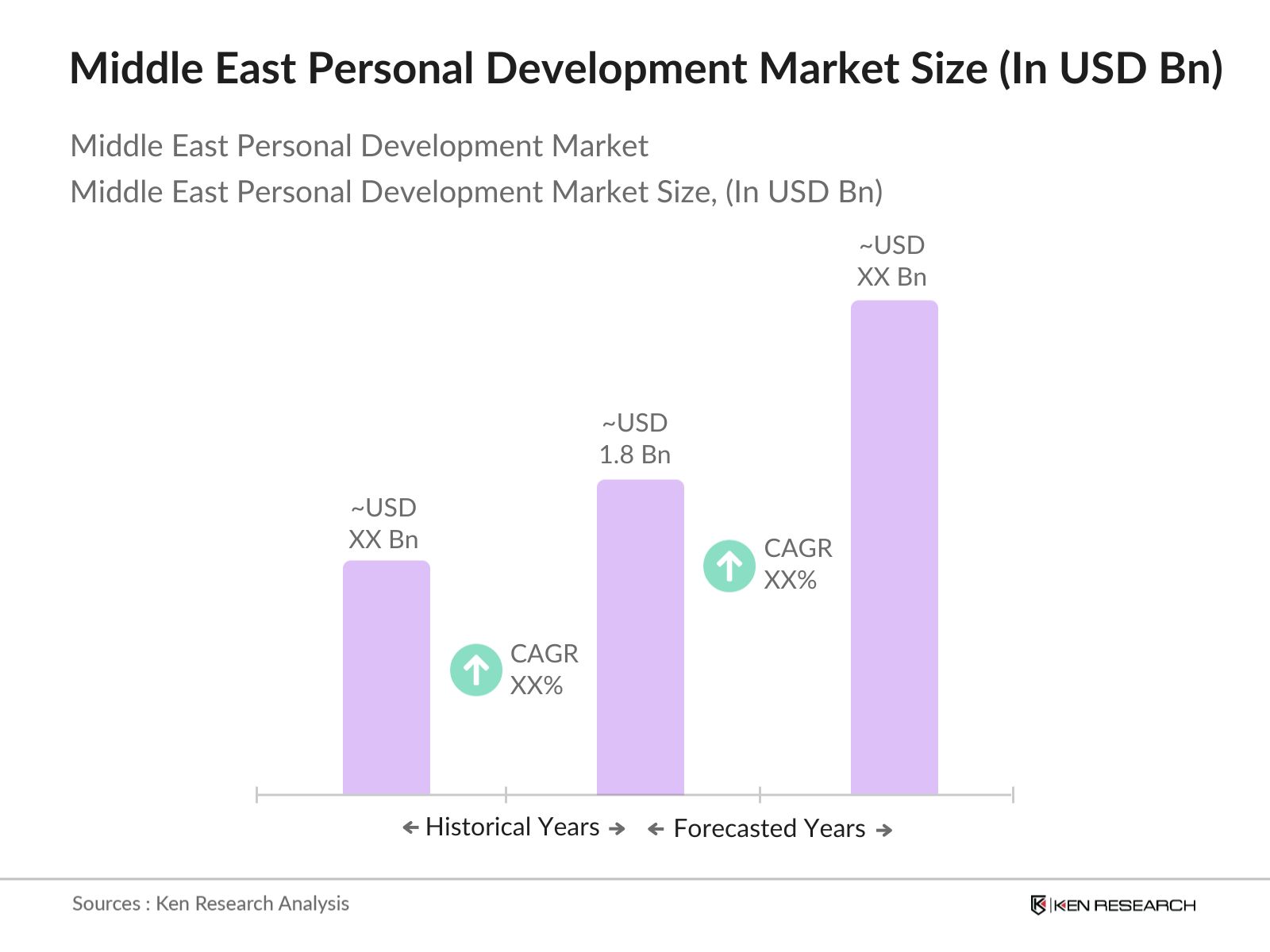
The Middle East personal development market is valued at USD 1.8 billion, driven by growing interest in self-improvement, corporate training, and digital platforms for learning and personal growth.
Challenges in the Middle East personal development market include cultural resistance to personal coaching, high costs associated with premium services, and the lack of standardized certification for coaches across the region.
Key players in the Middle East personal development market include MindValley, Tony Robbins, The John Maxwell Company, BetterUp, and FranklinCovey. These companies dominate the market due to their wide range of services and global presence.
Middle East personal development market growth drivers include rising awareness of mental health, increased demand for leadership and professional development programs, and government-backed initiatives to enhance workforce skills.

What makes us stand out is that our consultants follows Robust, Refine and Result (RRR) methodology. i.e. Robust for clear definitions, approaches and sanity checking, Refine for differentiating respondents facts and opinions and Result for presenting data with story

We have set a benchmark in the industry by offering our clients with syndicated and customized market research reports featuring coverage of entire market as well as meticulous research and analyst insights.

While we don't replace traditional research, we flip the method upside down. Our dual approach of Top Bottom & Bottom Top ensures quality deliverable by not just verifying company fundamentals but also looking at the sector and macroeconomic factors.

With one step in the future, our research team constantly tries to show you the bigger picture. We help with some of the tough questions you may encounter along the way: How is the industry positioned? Best marketing channel? KPI's of competitors? By aligning every element, we help maximize success.

Our report gives you instant access to the answers and sources that other companies might choose to hide. We elaborate each steps of research methodology we have used and showcase you the sample size to earn your trust.

If you need any support, we are here! We pride ourselves on universe strength, data quality, and quick, friendly, and professional service.