
North America Biostimulants Market Outlook to 2030
Region:North America
Author(s):Vijay Kumar
Product Code:KROD4884
December 2024
82
About the Report
North America Biostimulants Market Overview
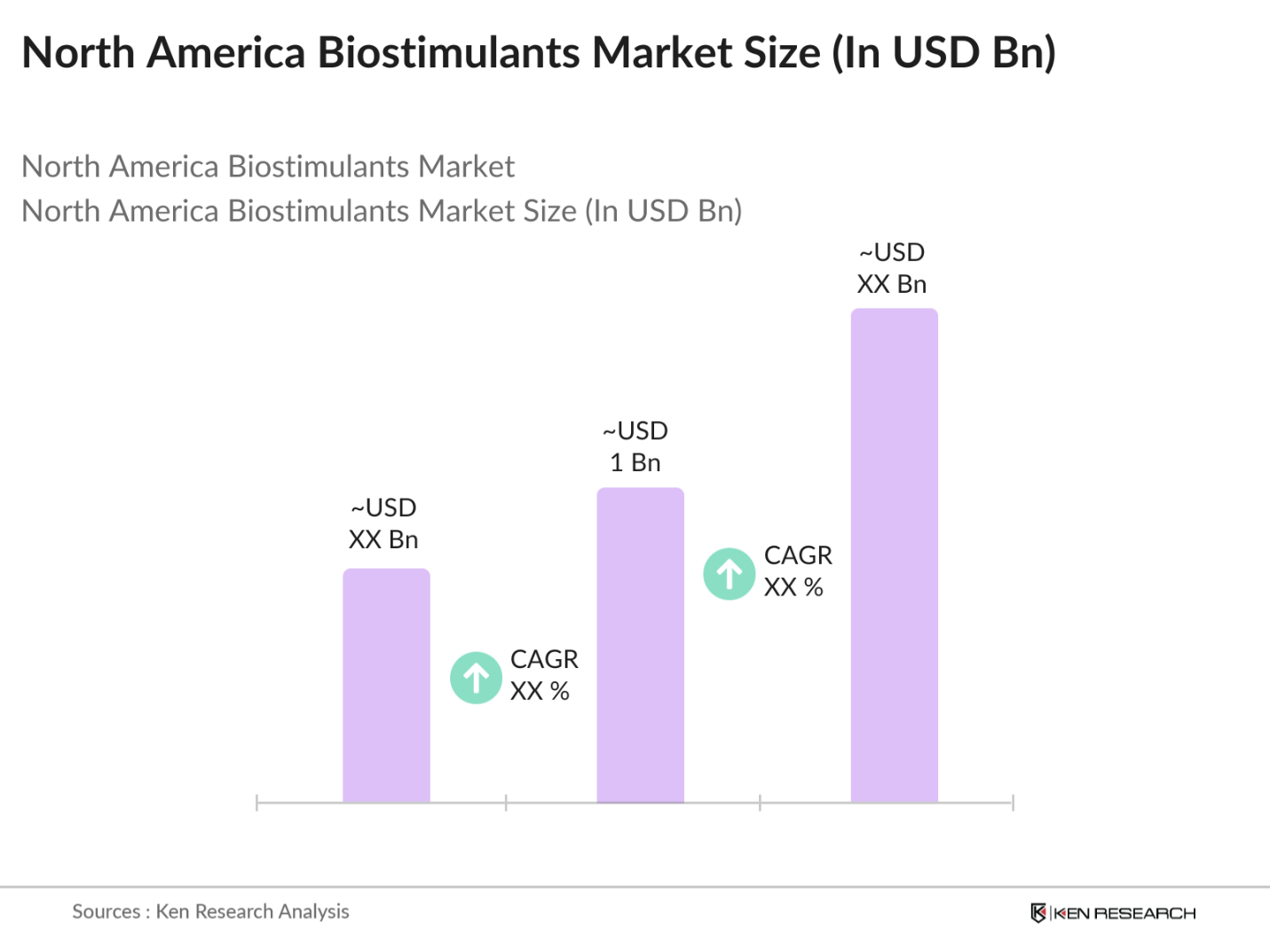
- The North America Biostimulants market is valued at USD 1 billion, based on a five-year historical analysis. This market is primarily driven by the increasing demand for sustainable agricultural practices, as well as the rising need to improve crop resilience to environmental stresses like drought and nutrient deficiency. Biostimulants, which enhance plant growth, soil health, and stress tolerance, have seen growing adoption, particularly in high-value crops such as fruits and vegetables, where farmers are looking to increase both yield and quality through eco-friendly solutions.
- The United States dominates the North American biostimulants market, thanks to its advanced agricultural practices and higher adoption of innovative farming solutions. Additionally, Canada's market presence is notable due to its focus on organic farming and environmental sustainability. Mexico is also emerging as a key player due to the countrys increasing focus on export-driven agriculture and the growing need for biostimulants in fruit and vegetable production, positioning it as a competitive market for biostimulant adoption.
- The USDA has established guidelines for biostimulant products, ensuring they meet safety and efficacy standards before reaching the market. In 2023, the USDA issued over 150 product approvals for biostimulants intended for U.S. crops. These regulations focus on the safety of both the product and its environmental impact, making USDA approval a significant benchmark for biostimulant manufacturers.
North America Biostimulants Market Segmentation
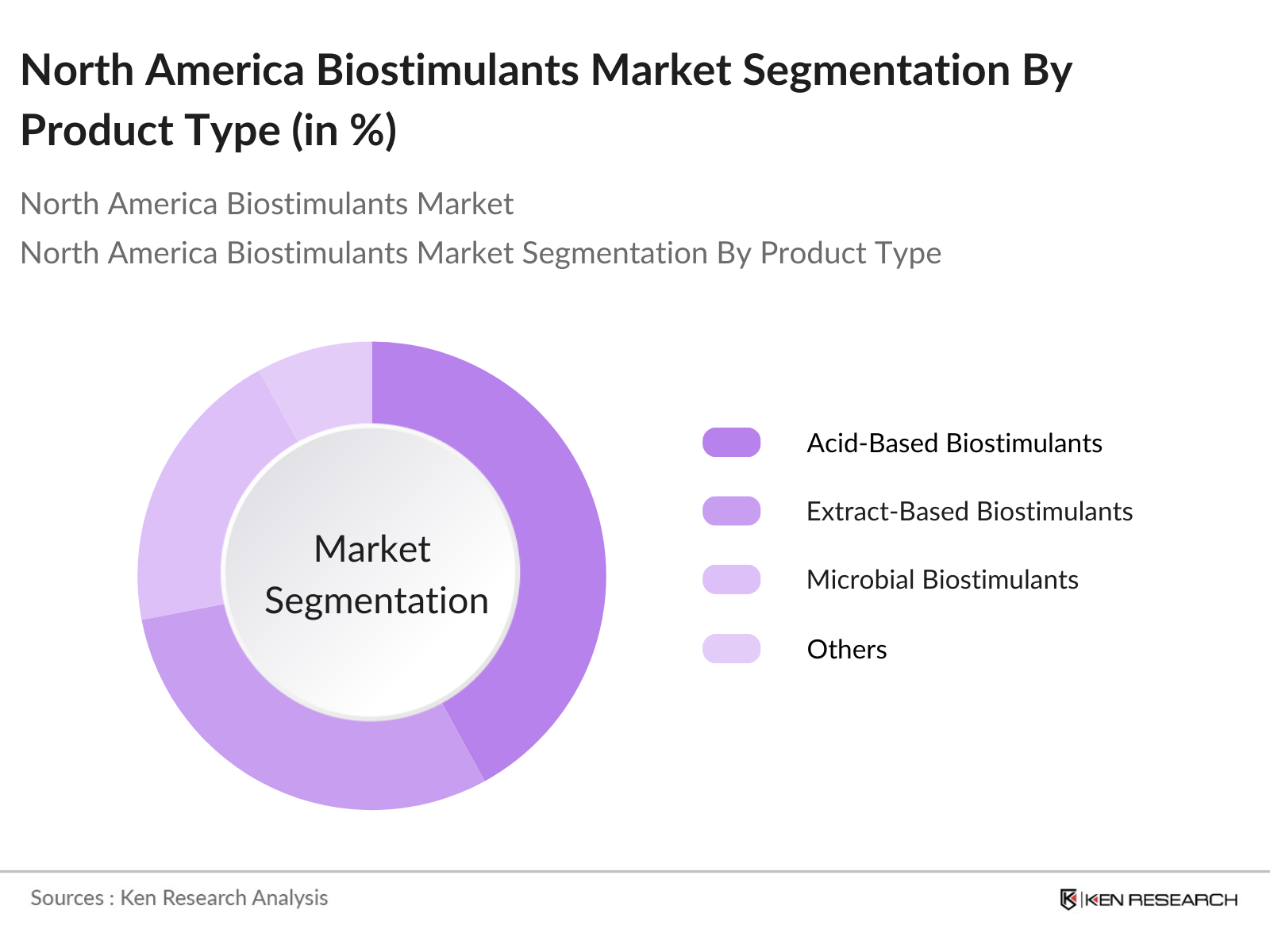
By Product Type: The North American biostimulants market is segmented by product type into acid-based biostimulants, extract-based biostimulants, microbial biostimulants, and others (chitosan, proteins, etc.). Acid-based biostimulants, including humic acid and fulvic acid, held a dominant market share in 2023. This is due to their widespread use in improving soil structure, enhancing nutrient uptake, and promoting root growth.
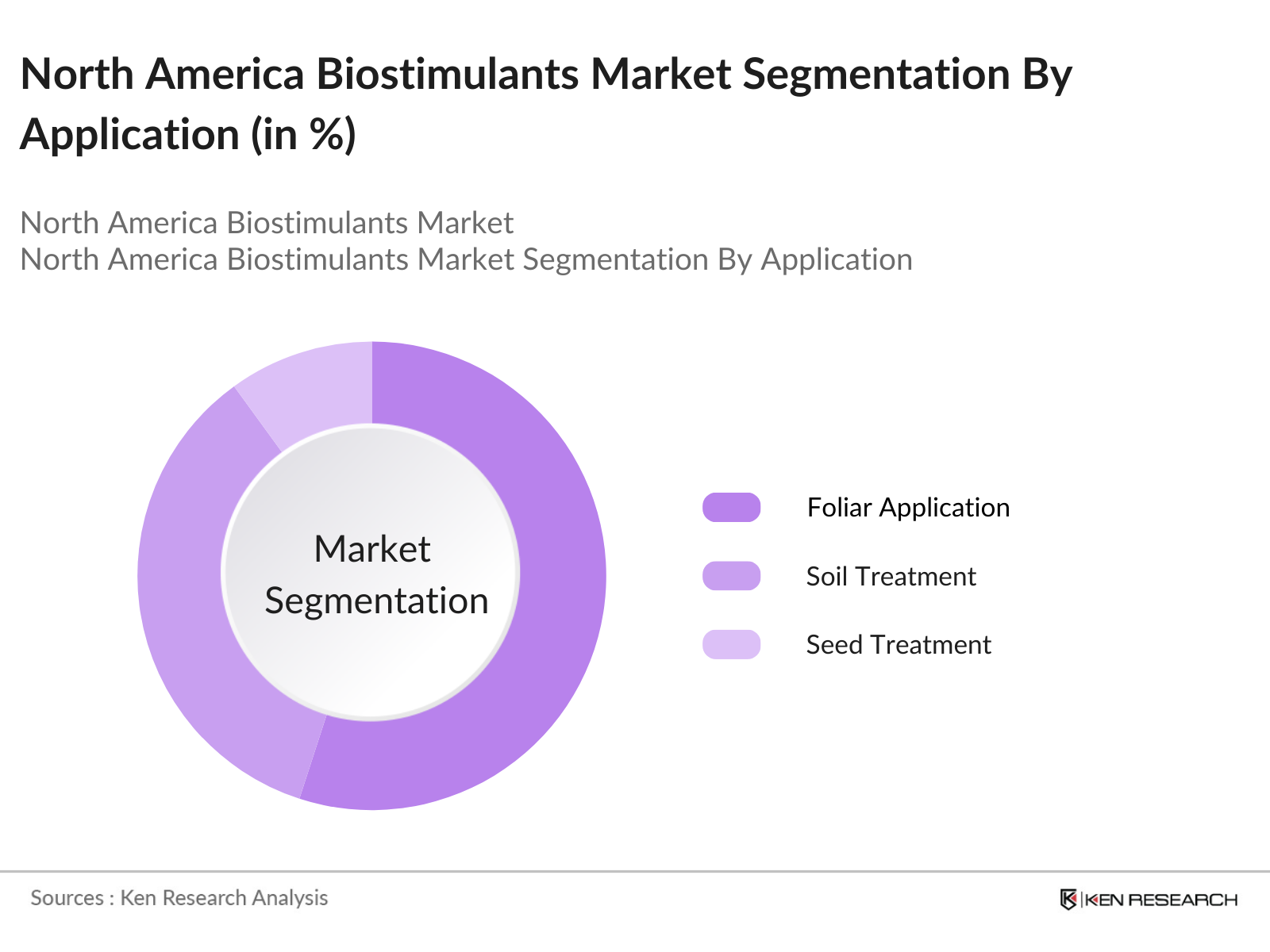
By Application Method: The market is also segmented by application method into foliar application, soil treatment, and seed treatment. Foliar application led the market in 2023, attributed to its ease of use and quick impact on plant health. This method is preferred by farmers dealing with high-value crops like fruits and vegetables, where rapid response to stress factors like drought or nutrient deficiency is critical.
North America Biostimulants Market Competitive Landscape
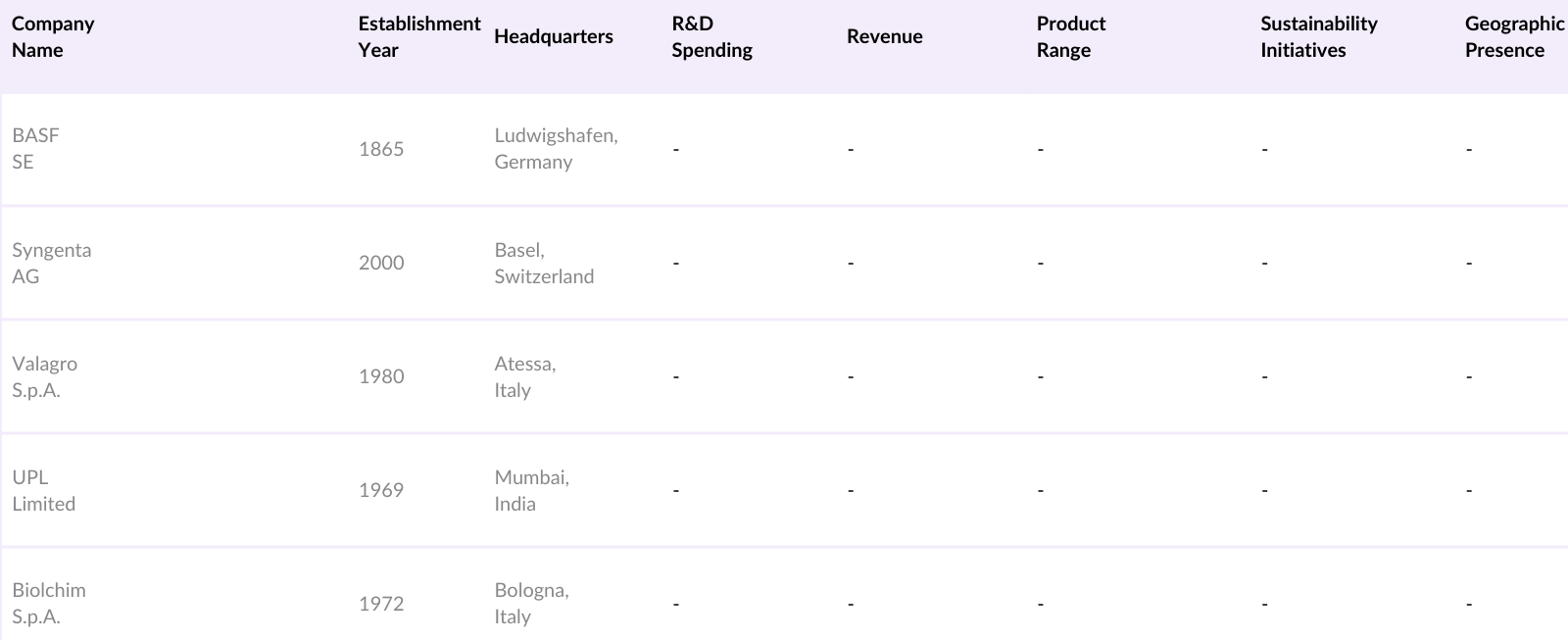
The North American biostimulants market is dominated by key industry players such as BASF SE, Syngenta AG, Valagro S.p.A., and UPL Limited. These companies have established strong market positions through a combination of extensive research and development efforts, strategic mergers, and partnerships with agricultural institutions. Additionally, smaller regional players are emerging, providing niche products tailored to local agricultural needs.
North America Biostimulants Industry Analysis
Growth Drivers
- Agricultural Yield Enhancement (Focus on soil health and crop productivity): The North American agricultural sector is experiencing a push toward maximizing crop yields while maintaining soil health, which has led to a significant rise in biostimulant use. In 2024, around 900 million metric tons of crops are expected to be harvested in the United States alone, with farmers increasingly adopting biostimulants to enhance crop performance and soil fertility. The USDA reports that healthier soils retain moisture better, leading to a reduction in water usage by 20% across many farms.
- Growing Organic Farming Practices (Biostimulant demand in organic agriculture): In the U.S., certified organic farming practices have grown from around 5.5 million acres in 2015 to over 7.2 million acres in 2023. Biostimulants, which fit into the organic certification requirements, are seeing increased demand as a result. Organic crop production values have surpassed $55 billion in revenue, with organic biostimulants playing a pivotal role in increasing output without synthetic chemicals.
- Rising Demand for Sustainable Farming (Sustainability and eco-friendly practices): Sustainable farming practices, including the reduction of chemical fertilizers, are driving biostimulant adoption across North America. By 2024, its estimated that nearly 40% of farmers in the U.S. and Canada are incorporating eco-friendly inputs like biostimulants into their farming operations to meet sustainability goals. The U.S. Environmental Protection Agency (EPA) has noted that farms using biostimulants can reduce their carbon footprint by lowering nitrogen-based fertilizer use, leading to reductions in greenhouse gas emissions by approximately 15 million tons annually.
Market Challenges
- Regulatory Ambiguities (Regulation challenges in different states): The regulatory landscape for biostimulants remains fragmented in North America, especially in the U.S., where agricultural laws differ across states. While the USDA has provided general guidelines, states like California and New York have more stringent regulations on product formulations, making it difficult for companies to standardize across the country. The lack of a unified federal framework has led to delays in market approvals, stalling new product launches by 12-18 months on average.
- High Production Costs (Cost constraints for manufacturers): Biostimulant production in North America is hindered by high raw material and manufacturing costs. For example, microbial biostimulants require stringent quality control measures, driving production costs to as much as $2,000 per ton, compared to chemical fertilizers, which average about $700 per ton. The technology and infrastructure required for biostimulant production are capital-intensive, and many manufacturers are unable to achieve economies of scale, limiting widespread adoption despite the growing demand.
North America Biostimulants Future Outlook
Over the next five years, the North American biostimulants market is expected to experience significant growth. This growth will be fueled by the increasing shift towards organic farming, stringent environmental regulations, and the rising need for sustainable agriculture solutions. Technological advancements in biostimulant formulation, along with a heightened focus on enhancing soil health and crop resilience, will further drive market expansion.
Market Opportunities
- Increasing Investments in Agricultural R&D (Growth in research and development): Agricultural R&D has been a focal point for the North American biostimulant market, with both public and private institutions significantly increasing their investment. In 2023, the U.S. allocated $1.2 billion to agricultural R&D, a portion of which is earmarked for studying biostimulant efficacy. Collaborations between government agencies, universities, and private companies are yielding biostimulants that cater specifically to North American crop varieties.
- Collaboration with Agronomic Institutions (Public and private partnerships): Biostimulant manufacturers are increasingly collaborating with agronomic research institutions across North America. For instance, in 2023, the USDA formed a partnership with Cornell University to study the effects of biostimulants on soil health across various agroecological zones. These collaborations have produced valuable data, improving farmer trust in biostimulant efficacy.
Scope of the Report
|
Product Type |
Acid-Based Biostimulants (Humic Acid, Fulvic Acid, Amino Acids) Extract-Based Biostimulants (Seaweed Extract, Plant Extracts) Microbial Biostimulants (Beneficial Bacteria, Fungi, Yeasts) Others (Chitin, Chitosan, and Others) |
|
Crop Type |
Row Crops Fruits & Vegetables Turf & Ornamentals Other Specialty Crops |
|
Application Method |
Foliar Application Soil Treatment Seed Treatment |
|
Active Ingredient |
Humic Substances Protein Hydrolysates Algae Extracts Microbial Amendments |
|
By Region |
United States Canada Mexico |
Products
Key Target Audience
Biostimulant Manufacturers
Agricultural Product Distributors
Farmers and Agronomists
Crop Protection Companies
Agrochemical Research Institutions
Investments and Venture Capital Firms
Government and Regulatory Bodies (USDA, EPA)
Organic Certification Bodies
Companies
Players Mentioned in the Report
BASF SE
Syngenta AG
Valagro S.p.A.
UPL Limited
Biolchim S.p.A.
Bayer CropScience AG
Italpollina
Acadian Seaplants
Lallemand Plant Care
Koppert Biological Systems
Table of Contents
1. North America Biostimulants Market Overview
1.1. Definition and Scope
1.2. Market Taxonomy
1.3. Market Growth Rate
1.4. Market Segmentation Overview
2. North America Biostimulants Market Size (In USD Bn)
2.1. Historical Market Size
2.2. Year-On-Year Growth Analysis
2.3. Key Market Developments and Milestones
3. North America Biostimulants Market Analysis
3.1. Growth Drivers
3.1.1. Agricultural Yield Enhancement (Focus on soil health and crop productivity)
3.1.2. Growing Organic Farming Practices (Biostimulant demand in organic agriculture)
3.1.3. Rising Demand for Sustainable Farming (Sustainability and eco-friendly practices)
3.1.4. Technological Advancements in Biostimulant Formulation (New product innovation)
3.2. Market Challenges
3.2.1. Regulatory Ambiguities (Regulation challenges in different states)
3.2.2. High Production Costs (Cost constraints for manufacturers)
3.2.3. Lack of Awareness Among Farmers (Educational barriers in adopting biostimulants)
3.3. Opportunities
3.3.1. Increasing Investments in Agricultural R&D (Growth in research and development)
3.3.2. Collaboration with Agronomic Institutions (Public and private partnerships)
3.3.3. Expansion in Specialty Crops Market (Biostimulant use in high-value crops)
3.4. Trends
3.4.1. Shift Towards Bio-Based Agricultural Inputs (Reduction in chemical fertilizers)
3.4.2. Product Diversification (Custom biostimulants for specific crops)
3.4.3. Integration with Precision Agriculture (Technology-driven applications)
3.5. Regulatory Framework
3.5.1. USDA Regulations (U.S. Department of Agriculture guidelines)
3.5.2. EPA Standards (Environmental Protection Agency compliance)
3.5.3. Organic Certifications (Organic materials review institutes)
3.6. SWOT Analysis
3.7. Stakeholder Ecosystem
3.8. Porters Five Forces
3.9. Competition Ecosystem
4. North America Biostimulants Market Segmentation
4.1. By Product Type (In Value %)
4.1.1. Acid-Based Biostimulants (Humic Acid, Fulvic Acid, Amino Acids)
4.1.2. Extract-Based Biostimulants (Seaweed Extract, Plant Extracts)
4.1.3. Microbial Biostimulants (Beneficial Bacteria, Fungi, and Yeasts)
4.1.4. Others (Chitin, Chitosan, and Others)
4.2. By Crop Type (In Value %)
4.2.1. Row Crops
4.2.2. Fruits & Vegetables
4.2.3. Turf & Ornamentals
4.2.4. Other Specialty Crops
4.3. By Application Method (In Value %)
4.3.1. Foliar Application
4.3.2. Soil Treatment
4.3.3. Seed Treatment
4.4. By Active Ingredient (In Value %)
4.4.1. Humic Substances
4.4.2. Protein Hydrolysates
4.4.3. Algae Extracts
4.4.4. Microbial Amendments
4.5. By Region (In Value %)
4.5.1. United States
4.5.2. Canada
4.5.3. Mexico
5. North America Biostimulants Market Competitive Analysis
5.1. Detailed Profiles of Major Companies
5.1.1. BASF SE
5.1.2. Bayer CropScience AG
5.1.3. Isagro S.p.A.
5.1.4. Valagro S.p.A.
5.1.5. UPL Limited
5.1.6. Biolchim S.p.A.
5.1.7. Syngenta AG
5.1.8. FMC Corporation
5.1.9. Agrinos AS
5.1.10. Koppert Biological Systems
5.1.11. Lallemand Plant Care
5.1.12. Arysta LifeScience
5.1.13. Italpollina
5.1.14. Acadian Seaplants
5.1.15. BioWorks, Inc.
5.2. Cross Comparison Parameters (Revenue, R&D Spending, Product Innovation, Market Presence, Sustainability Initiatives, Strategic Partnerships, Geographic Expansion, Employee Strength)
5.3. Market Share Analysis
5.4. Strategic Initiatives
5.5. Mergers And Acquisitions
5.6. Investment Analysis
5.7. Venture Capital Funding
5.8. Government Grants
5.9. Private Equity Investments
6. North America Biostimulants Market Regulatory Framework
6.1. Agricultural Regulatory Policies
6.2. Compliance Requirements
6.3. Certification Processes
7. North America Biostimulants Future Market Size (In USD Bn)
7.1. Future Market Size Projections
7.2. Key Factors Driving Future Market Growth
8. North America Biostimulants Future Market Segmentation
8.1. By Product Type (In Value %)
8.2. By Crop Type (In Value %)
8.3. By Application Method (In Value %)
8.4. By Active Ingredient (In Value %)
8.5. By Region (In Value %)
9. North America Biostimulants Market Analysts Recommendations
9.1. TAM/SAM/SOM Analysis
9.2. Customer Cohort Analysis
9.3. Marketing Initiatives
9.4. White Space Opportunity Analysis
Research Methodology
Step 1: Identification of Key Variables
The first phase involves mapping the biostimulants market ecosystem in North America. Extensive desk research is conducted using secondary databases and proprietary sources to gather critical information regarding the key stakeholders and market dynamics. Key variables influencing the market, such as product types, application methods, and crop types, are identified.
Step 2: Market Analysis and Construction
Historical data from the last five years is analyzed to identify growth patterns and assess the current market size. This analysis includes evaluating product penetration rates, assessing the competitive landscape, and examining customer adoption trends.
Step 3: Hypothesis Validation and Expert Consultation
Industry hypotheses are developed based on the gathered data and then validated through interviews with key market stakeholders, including manufacturers, distributors, and agricultural experts. These interviews provide direct insights into market trends and operational challenges.
Step 4: Research Synthesis and Final Output
The final step involves synthesizing the gathered data and insights to produce a comprehensive report. The market size and forecast figures are cross-validated through consultations with biostimulant manufacturers and distributors, ensuring the final output reflects the current state and future outlook of the North American biostimulants market.
Frequently Asked Questions
01. How big is the North America Biostimulants Market?
The North America Biostimulants market is valued at USD 1 billion, based on a five-year historical analysis.
02. What are the challenges in the North America Biostimulants Market?
Challenges include high production costs, lack of farmer awareness regarding biostimulants' benefits, and regulatory ambiguities across different regions, which can delay product approvals.
03. Who are the major players in the North America Biostimulants Market?
Key players in the market include BASF SE, Syngenta AG, Valagro S.p.A., and UPL Limited. These companies lead the market due to their extensive product portfolios, innovation capabilities, and strong distribution networks.
04. What are the growth drivers of the North America Biostimulants Market?
The growth of the North America biostimulants market is driven by increasing consumer demand for organic produce, advancements in biostimulant formulations, and the growing adoption of sustainable agricultural practices.
Why Buy From Us?

What makes us stand out is that our consultants follows Robust, Refine and Result (RRR) methodology. i.e. Robust for clear definitions, approaches and sanity checking, Refine for differentiating respondents facts and opinions and Result for presenting data with story

We have set a benchmark in the industry by offering our clients with syndicated and customized market research reports featuring coverage of entire market as well as meticulous research and analyst insights.

While we don't replace traditional research, we flip the method upside down. Our dual approach of Top Bottom & Bottom Top ensures quality deliverable by not just verifying company fundamentals but also looking at the sector and macroeconomic factors.

With one step in the future, our research team constantly tries to show you the bigger picture. We help with some of the tough questions you may encounter along the way: How is the industry positioned? Best marketing channel? KPI's of competitors? By aligning every element, we help maximize success.

Our report gives you instant access to the answers and sources that other companies might choose to hide. We elaborate each steps of research methodology we have used and showcase you the sample size to earn your trust.

If you need any support, we are here! We pride ourselves on universe strength, data quality, and quick, friendly, and professional service.