
North America Brain Computer Interface Market Outlook to 2030
Region:North America
Author(s):Yogita Sahu
Product Code:KROD6701
December 2024
86
About the Report
North America Brain Computer Interface Market Overview
- The North America Brain-Computer Interface (BCI) market was valued at USD 790 million, driven by substantial advancements in neurotechnology and healthcare applications. The BCI market is being propelled by a growing demand for assistive technologies that support individuals with neurodegenerative conditions like Parkinson's disease and spinal cord injuries.
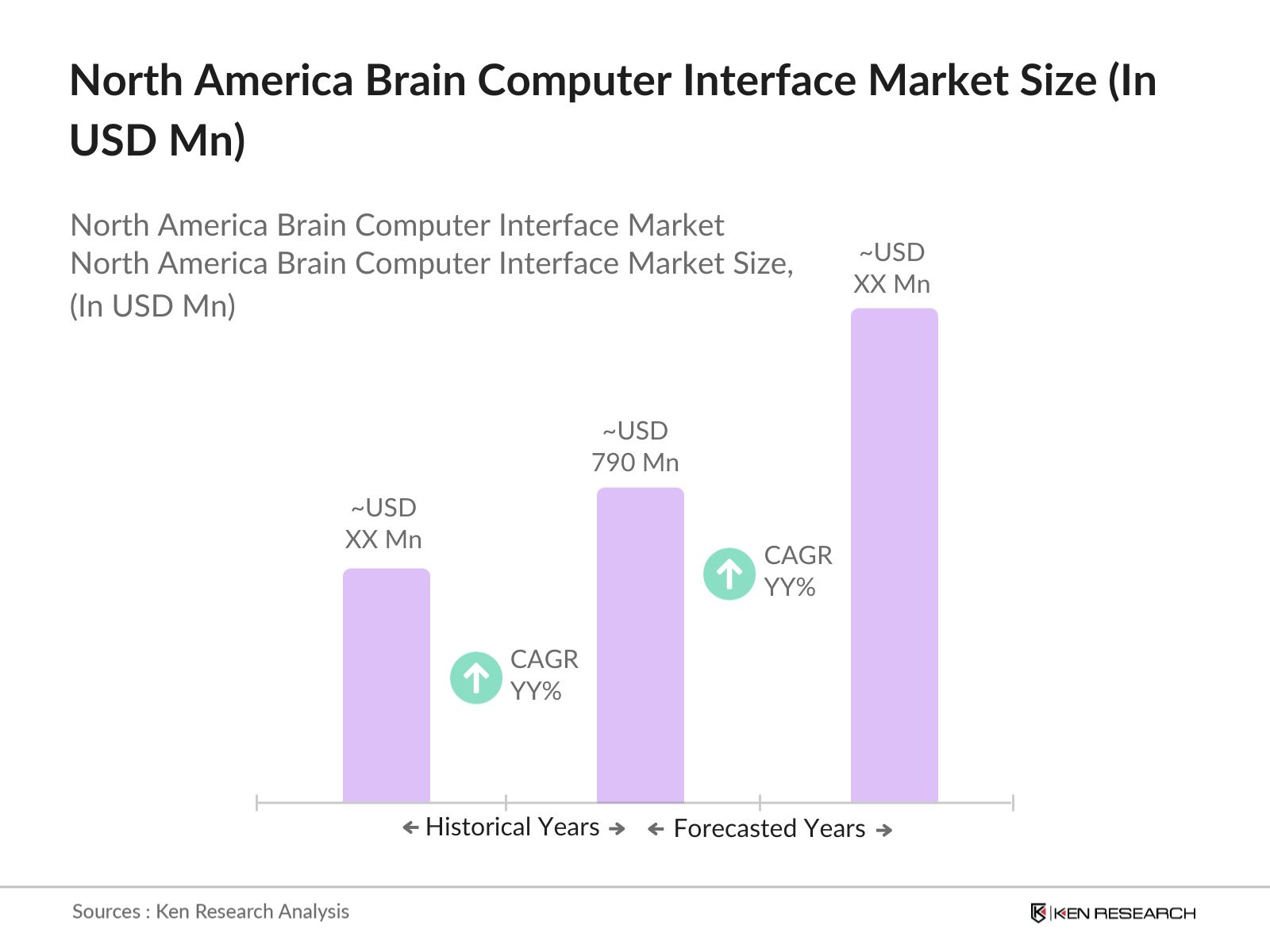
- In North America, the United States leads the BCI market due to its strong foundation in advanced neuroscience research, a well-developed healthcare infrastructure, and significant government and private sector investments in neurotechnology. The country has seen high adoption rates of BCIs, driven by the need for innovative solutions for patients suffering from neurodegenerative diseases.
- DARPA has been at the forefront of funding BCI research, with its Next-Generation Nonsurgical Neurotechnology (N3) initiative set to receive USD 9.8 million in 2024. This program aims to develop non-invasive BCI systems that can enable real-time communication between soldiers and their command systems, advancing the use of BCI in military applications.
North America Brain Computer Interface Market Segmentation
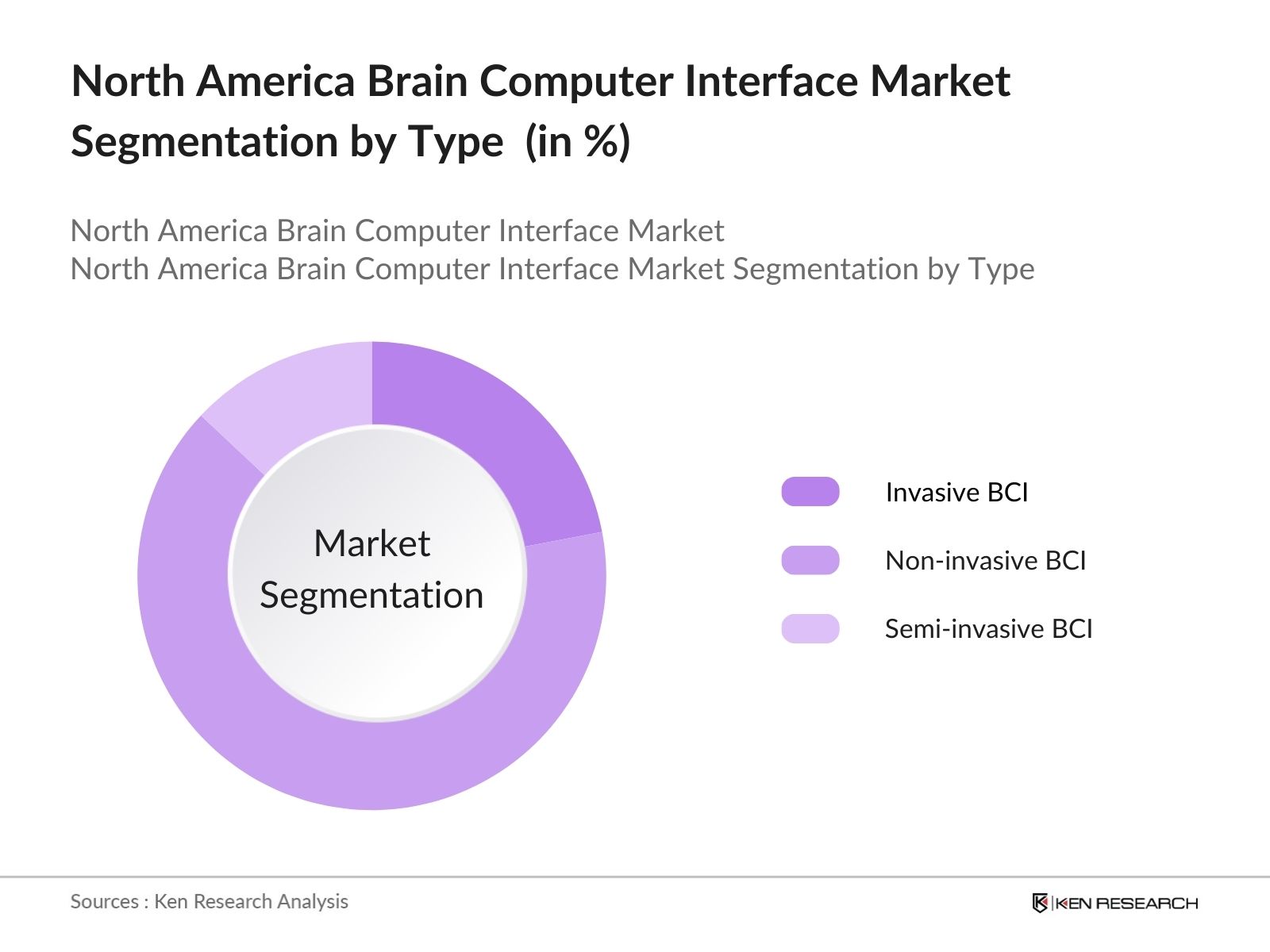
By Type: The market is segmented by type into invasive, non-invasive, and semi-invasive interfaces. Non-invasive BCIs dominate the market due to their growing popularity in healthcare applications. Non-invasive BCIs provide an effective solution without requiring surgery, making them accessible to a broader patient base. Their use in neurofeedback, rehabilitation, and mental health monitoring has positioned this segment as the preferred choice for both patients and practitioners.
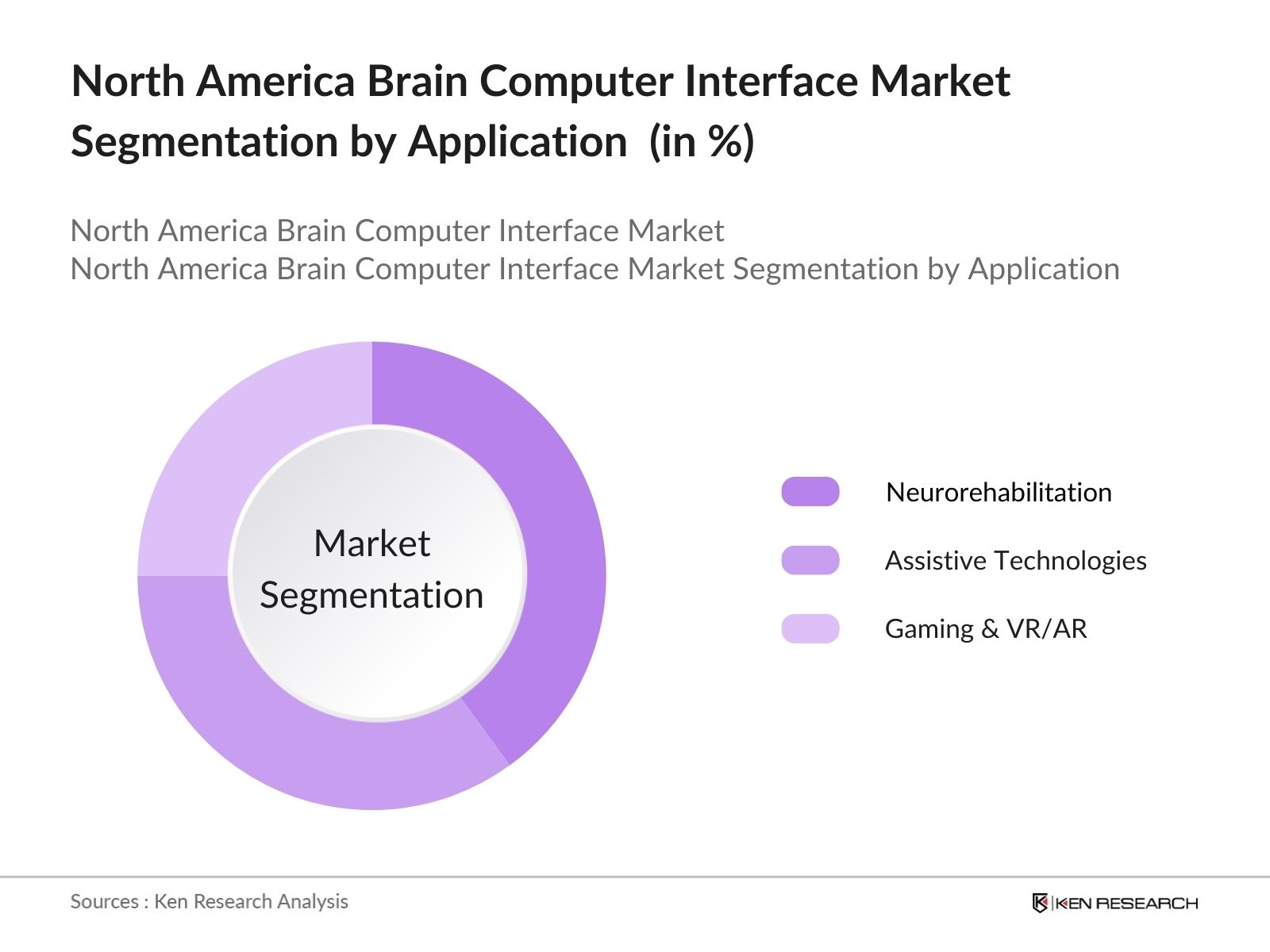
By Application: The BCI market is segmented by application into neurorehabilitation, assistive technologies, and gaming & VR/AR. Neurorehabilitation is the dominant application, particularly in supporting individuals recovering from strokes or neurological disorders like multiple sclerosis and ALS. The increasing demand for therapies that restore lost motor functions, speech, or cognitive abilities is driving growth in this segment. BCIs are used in brain-controlled prosthetics, wheelchairs, and robotic arms, contributing to their high adoption in neurorehabilitation.
North America Brain Computer Interface Market Competitive Landscape
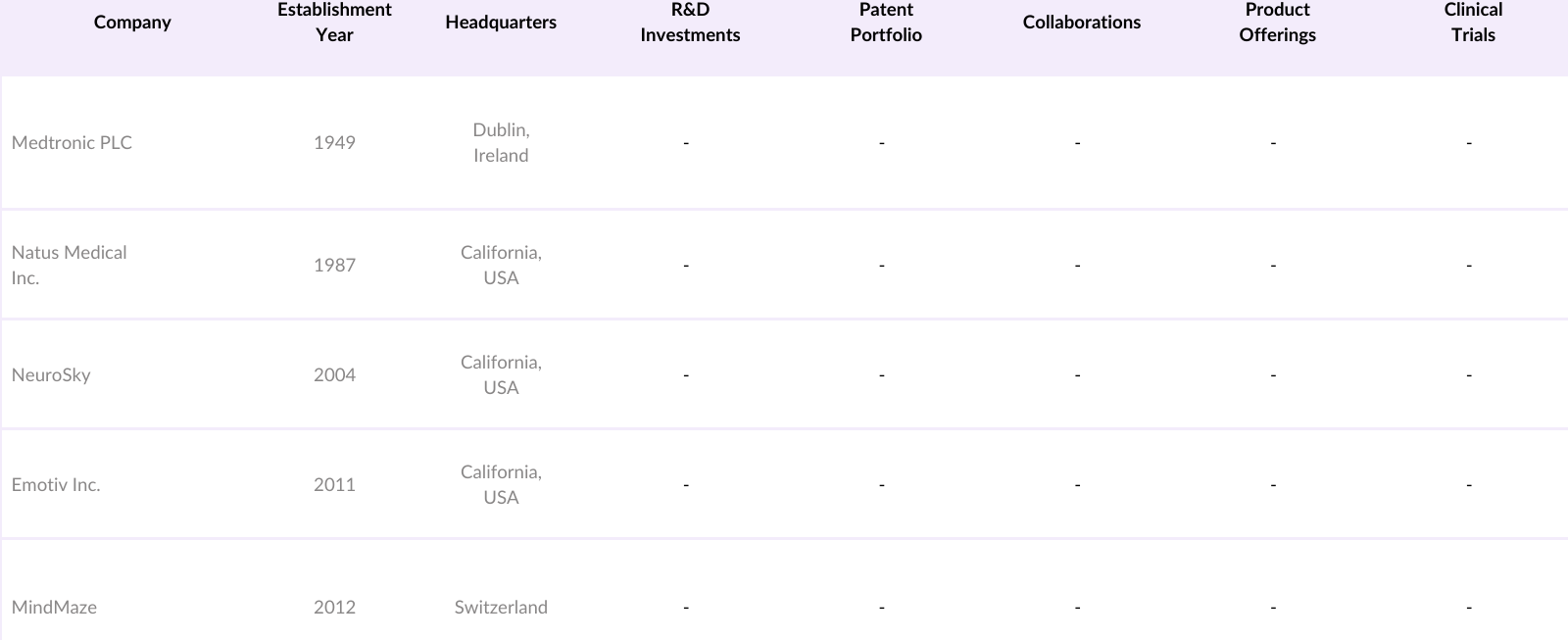
The market is consolidated, with a few key players driving innovation and market share. These companies have established themselves through extensive research, clinical trials, and product innovation.
North America Brain Computer Interface Market Analysis
Market Growth Drivers
- Rising Demand for Neurorehabilitation Technologies: The growing prevalence of neurodegenerative diseases like Parkinsons, Alzheimers, and multiple sclerosis is creating a strong demand for brain-computer interface (BCI) solutions in North America. In 2024, it is estimated that approximately 6 million individuals in the United States alone will be affected by these conditions, contributing to the need for innovative rehabilitation technologies.
- Expanding Applications in Assistive Technologies: There is increasing use of BCIs in assistive technologies aimed at improving the quality of life for individuals with disabilities, such as those with paralysis or ALS (Amyotrophic Lateral Sclerosis). The U.S. Department of Health reports that over 5.6 million people in the country require assistive devices, many of which now include BCI technology for improved independence.
- Growing Integration with Virtual Reality (VR) and Augmented Reality (AR): The entertainment industry is embracing BCIs, particularly in VR and AR applications, for immersive gaming experiences. In 2024, an estimated 84 million VR devices will be in use in North America, with a growing proportion integrating BCIs to offer users direct control through brain signals.
Market Challenges
- Complex Regulatory Landscape Regulatory requirements for BCI devices are a challenge for manufacturers in North America. The FDAs rigorous approval processes, especially for invasive BCIs, can delay product launches. In 2024, it is projected that obtaining regulatory approval for a new medical device in the U.S. can take between 3 to 5 years, increasing the cost burden on companies.
- High Production and R&D Costs Developing BCI technologies requires substantial investment in research, development, and clinical trials. The cost of developing invasive BCI systems is particularly high due to the need for complex brain surgeries and safety testing. In 2024, the development cost for an invasive BCI device is expected to surpass USD 15 million, limiting market entry for smaller companies.
North America Brain Computer Interface Market Future Outlook
Over the next five years, the North America Brain-Computer Interface (BCI) industry is poised for substantial growth, driven by technological advancements in neurostimulation, wearable BCIs, and AI-integrated systems.
Future Market Opportunities
- Increased Adoption of AI-Integrated BCIs Over the next five years, AI integration in BCI devices is expected to improve signal processing and enhance the accuracy of brainwave interpretation. AI-powered BCIs will be able to predict user intent with higher precision, leading to wider applications in both healthcare and military settings.
- Expansion of BCI Applications in Mental Health Monitoring By 2029, BCIs will likely be a common tool in mental health monitoring, helping individuals manage stress, anxiety, and depression. Continuous brainwave monitoring will allow healthcare providers to offer personalized treatment plans. Mental health BCIs are expected to be deployed in more than 15,000 clinics across North America within five years.
Scope of the Report
|
By Type |
Invasive Non-Invasive Semi-Invasive |
|
By Application |
Neurorehabilitation Assistive Tech Gaming & VR/AR |
|
By End-User |
Healthcare Military & Defense Smart Homes & IoT |
|
By Region |
United States Canada Mexico |
Products
Key Target Audience Organizations and Entities Who Can Benefit by Subscribing This Report:
Healthcare Providers (e.g., hospitals, rehabilitation centers)
Government and Regulatory Bodies (e.g., FDA, DARPA)
Medical Device Manufacturers
Venture Capital Firms and Investors
Military and Defense Contractors
Neuroscience Research Institutions
Assistive Technology Providers
Tech Companies Involved in Gaming and VR/AR
Companies
Players Mentioned in the Report:
Medtronic PLC
Natus Medical Inc.
NeuroSky
Emotiv Inc.
MindMaze
g.tec medical engineering GmbH
Nihon Kohden Corporation
Integra LifeSciences Corporation
Advanced Brain Monitoring Inc.
ANT Neuro
Table of Contents
North America Brain-Computer Interface (BCI) Market Overview
1.1. Definition and Scope
1.2. Market Taxonomy
1.3. Market Growth Rate
1.4. Market Segmentation Overview
North America Brain-Computer Interface (BCI) Market Size (In USD Million)
2.1. Historical Market Size
2.2. Year-On-Year Growth Analysis
2.3. Key Market Developments and Milestones
North America Brain-Computer Interface (BCI) Market Analysis
3.1. Growth Drivers
Growing Adoption in Neurorehabilitation (Healthcare)
Increasing Use in Assistive Technologies (Medical Devices)
Integration with Virtual and Augmented Reality (Technology & Gaming)
Rise in Neurodegenerative Conditions (Healthcare Needs)
3.2. Market Challenges
Regulatory Approval Complexities (Compliance and Safety)
High Cost of BCI Devices (Cost Barriers)
Cybersecurity and Data Privacy Concerns (Security Issues)
3.3. Opportunities
Advancements in AI-Driven BCI Solutions (Artificial Intelligence Integration)
Increasing Demand in Military Applications (Defense Sector)
Non-Invasive BCI Devices for Cognitive Enhancement (Healthcare and Wearables)
3.4. Trends
Growth in Smart Home Control Applications (IoT and Home Automation)
Use of BCI in Cognitive and Mental Health Monitoring (Mental Health Solutions)
Rising Collaborations for BCI Research (Partnership and Innovation)
3.5. Government Regulation
FDA Approvals for Medical BCIs
DARPA's Role in Military-Grade BCIs
Healthcare Reimbursement Policies for BCI Devices
North America Brain-Computer Interface (BCI) Market Segmentation
4.1. By Type (In Value %)
Invasive Brain-Computer Interface
Non-Invasive Brain-Computer Interface
Semi-Invasive Brain-Computer Interface
4.2. By Application (In Value %)
Neurorehabilitation
Assistive Technologies
Gaming and VR/AR
4.3. By End-User Industry (In Value %)
Healthcare
Military and Defense
Smart Homes and IoT
4.4. By Region (In Value %)
United States
Canada
Mexico
North America Brain-Computer Interface (BCI) Market Competitive Analysis
5.1. Detailed Profiles of Major Companies
Medtronic PLC
Natus Medical Inc.
NeuroSky
Emotiv Inc.
g.tec medical engineering GmbH
MindMaze
Nihon Kohden Corporation
Integra LifeSciences Corporation
Advanced Brain Monitoring Inc.
ANT Neuro
NextMind
Compumedics Ltd
Brain Products GmbH
Cadwell Industries Inc.
NIRx Medical Technologies
5.2. Regulatory Framework
(Data Security and Patient Confidentiality Standards, Certification Processes, Compliance with Healthcare Regulations)
North America Brain-Computer Interface (BCI) Future Market Size (In USD Million)
7.1. Future Market Size Projections
7.2. Key Drivers for Future Growth
North America Brain-Computer Interface (BCI) Future Market Segmentation
8.1. By Type
8.2. By Application
8.3. By End-User Industry
8.4. By Region
North America Brain-Computer Interface (BCI) Market Analysts Recommendations
9.1 TAM/SAM/SOM Analysis
9.2 White Space Opportunity Analysis
9.3 Key Marketing Strategies
9.4 Customer Cohort Analysis
Research Methodology
Step 1: Identification of Key Variables
The first phase involved mapping out all the critical stakeholders in the North America Brain-Computer Interface Market. This step used extensive desk research, combining proprietary databases and industry publications to pinpoint major market variables.
Step 2: Market Analysis and Construction
The second phase assessed historical data, including key performance indicators like market penetration and revenue generation across sectors. The evaluation of the competitive landscape provided insight into service quality and product demand.
Step 3: Hypothesis Validation and Expert Consultation
In the third phase, hypotheses were validated through expert consultations conducted via telephonic interviews and industry surveys. The insights helped refine the market projections and competitive strategies.
Step 4: Research Synthesis and Final Output
The final phase involved synthesizing the collected data with direct insights from companies in the BCI industry, ensuring an accurate and reliable assessment of market conditions and trends.
Frequently Asked Questions
How big is the North America Brain-Computer Interface (BCI) market?
The North America Brain-Computer Interface market is valued at USD 790 million, driven by technological advancements and increasing healthcare applications.
What are the major challenges in the North America BCI market?
The North America Brain-Computer Interface market faces regulatory hurdles, high costs of devices, and cybersecurity risks, which pose challenges for widespread adoption.
Who are the key players in the North America BCI market?
Major players in the North America Brain-Computer Interface market include Medtronic PLC, NeuroSky, Emotiv Inc., Natus Medical Inc., and MindMaze, dominating through innovation and strategic partnerships.
What are the growth drivers in the North America BCI market?
Key drivers in the North America Brain-Computer Interface market include the rise in neurodegenerative diseases, advancements in non-invasive BCI technologies, and increased demand in the healthcare and military sectors.
What is the future of the North America BCI market?
The North America Brain-Computer Interface market is expected to grow in the next five years, driven by increasing applications in healthcare, gaming, and defense, alongside AI integration.
Why Buy From Us?

What makes us stand out is that our consultants follows Robust, Refine and Result (RRR) methodology. i.e. Robust for clear definitions, approaches and sanity checking, Refine for differentiating respondents facts and opinions and Result for presenting data with story

We have set a benchmark in the industry by offering our clients with syndicated and customized market research reports featuring coverage of entire market as well as meticulous research and analyst insights.

While we don't replace traditional research, we flip the method upside down. Our dual approach of Top Bottom & Bottom Top ensures quality deliverable by not just verifying company fundamentals but also looking at the sector and macroeconomic factors.

With one step in the future, our research team constantly tries to show you the bigger picture. We help with some of the tough questions you may encounter along the way: How is the industry positioned? Best marketing channel? KPI's of competitors? By aligning every element, we help maximize success.

Our report gives you instant access to the answers and sources that other companies might choose to hide. We elaborate each steps of research methodology we have used and showcase you the sample size to earn your trust.

If you need any support, we are here! We pride ourselves on universe strength, data quality, and quick, friendly, and professional service.