
North America Dairy Milk Market Outlook to 2030
Region:North America
Author(s):Shreya Garg
Product Code:KROD3781
November 2024
85
About the Report
North America Dairy Milk Market Overview
- The North America dairy milk market is valued at USD 126 billion based on a five-year historical analysis. This growth has been driven by an increasing demand for protein-rich diets, the versatility of dairy products in everyday consumption, and continuous innovation in dairy processing technologies. Dairy milk remains a household staple, especially in the United States and Canada, where consumer demand for natural, organic, and enriched dairy products has surged. The rising health consciousness, coupled with the growing trend of clean-label products, has further fueled this demand.
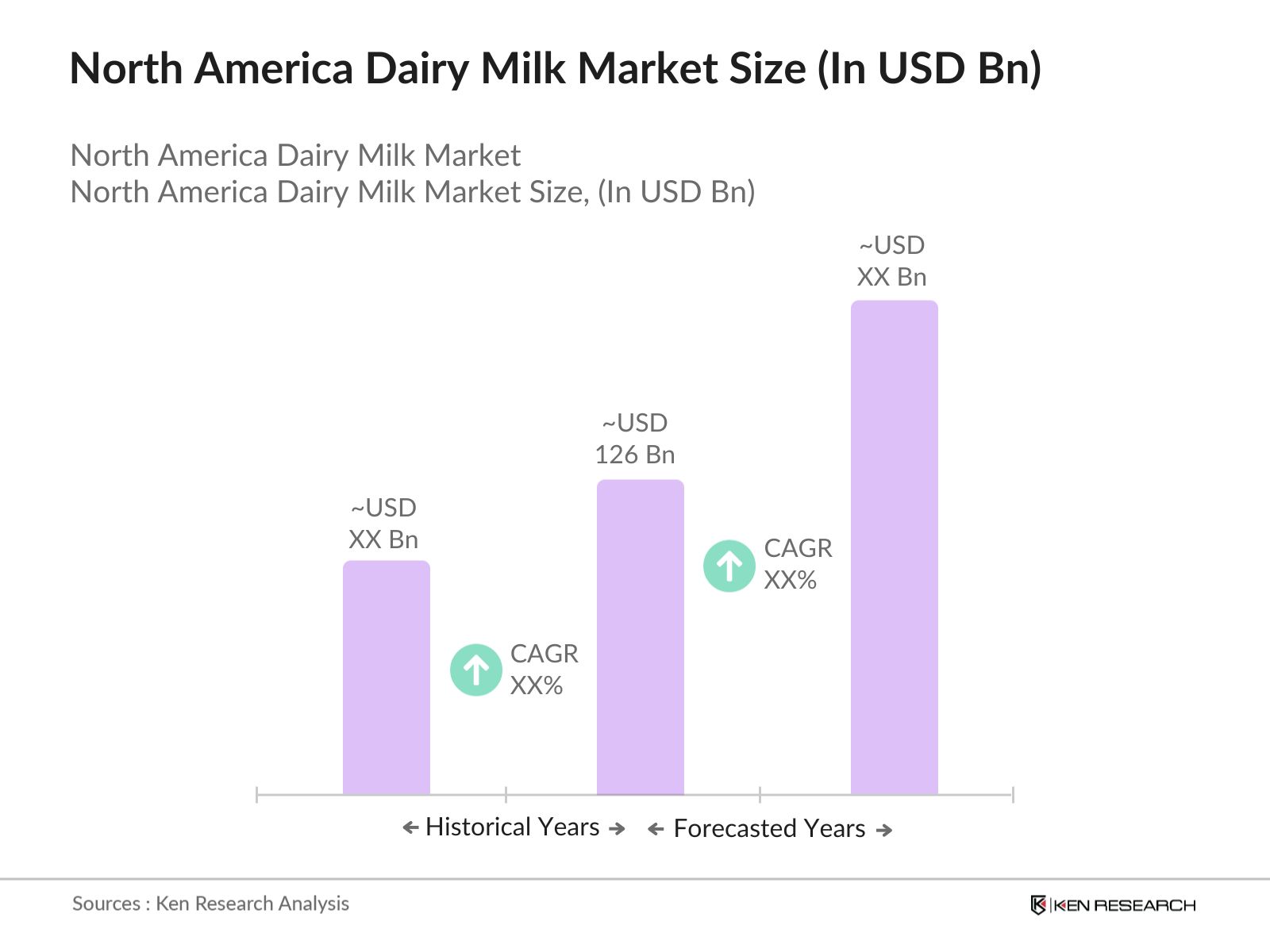
- The dairy milk market in North America is primarily dominated by the United States, followed by Canada. The dominance of the U.S. is attributed to its large-scale dairy farming operations, extensive distribution networks, and consumer preference for dairy-based beverages and products. In Canada, the strong regulatory framework, coupled with consumer preference for local and organic dairy products, further enhances its position in the market. These countries benefit from advanced farming techniques and government subsidies that support dairy farmers, making them key players in the global dairy industry.
- Agricultural subsidies remain a critical pillar of support for the North American dairy industry. In 2022, the U.S. government allocated $4.5 billion in direct payments to dairy farmers under various agricultural subsidy programs. These subsidies provide financial stability to farmers facing fluctuating milk prices and production costs. Additionally, dairy farmers in Canada benefit from the country's supply management system, which controls production quotas and ensures fair market prices. The Canadian government has committed over CAD 1.75 billion in support of its dairy farmers under the USMCA transition plan, ensuring continued domestic dairy production.
North America Dairy Milk Market Segmentation
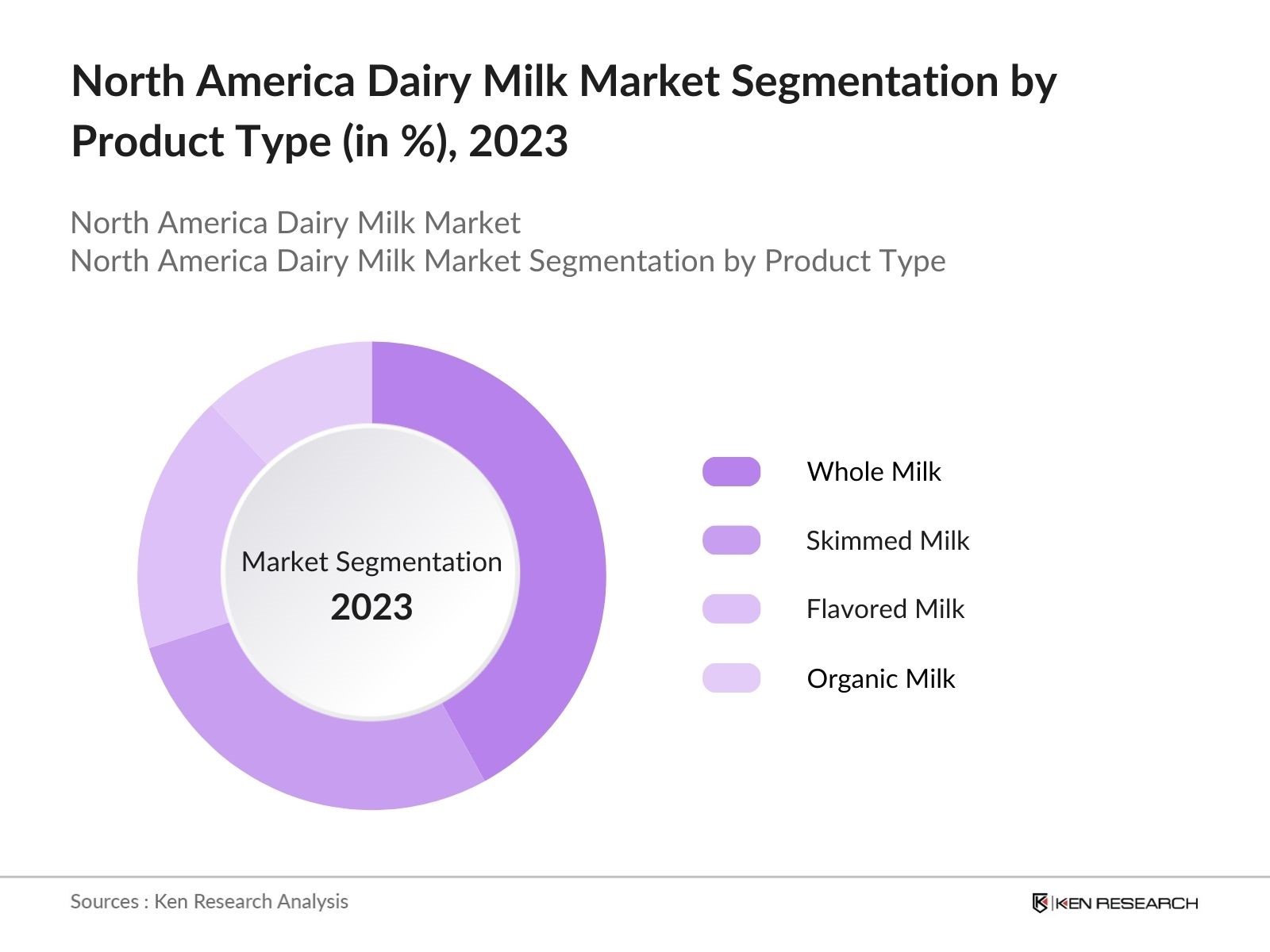
By Product Type: The market is segmented by product type into whole milk, skimmed milk, flavored milk, and organic milk. Whole milk continues to dominate the market share due to its rich nutrient content and historical consumer preference for full-fat dairy products. While the demand for low-fat alternatives is rising, whole milk's versatility in culinary applications and its prominent use in households and the food service industry contributes to its sustained dominance. Additionally, its natural fat content aligns with recent consumer trends favoring unprocessed and natural food products.
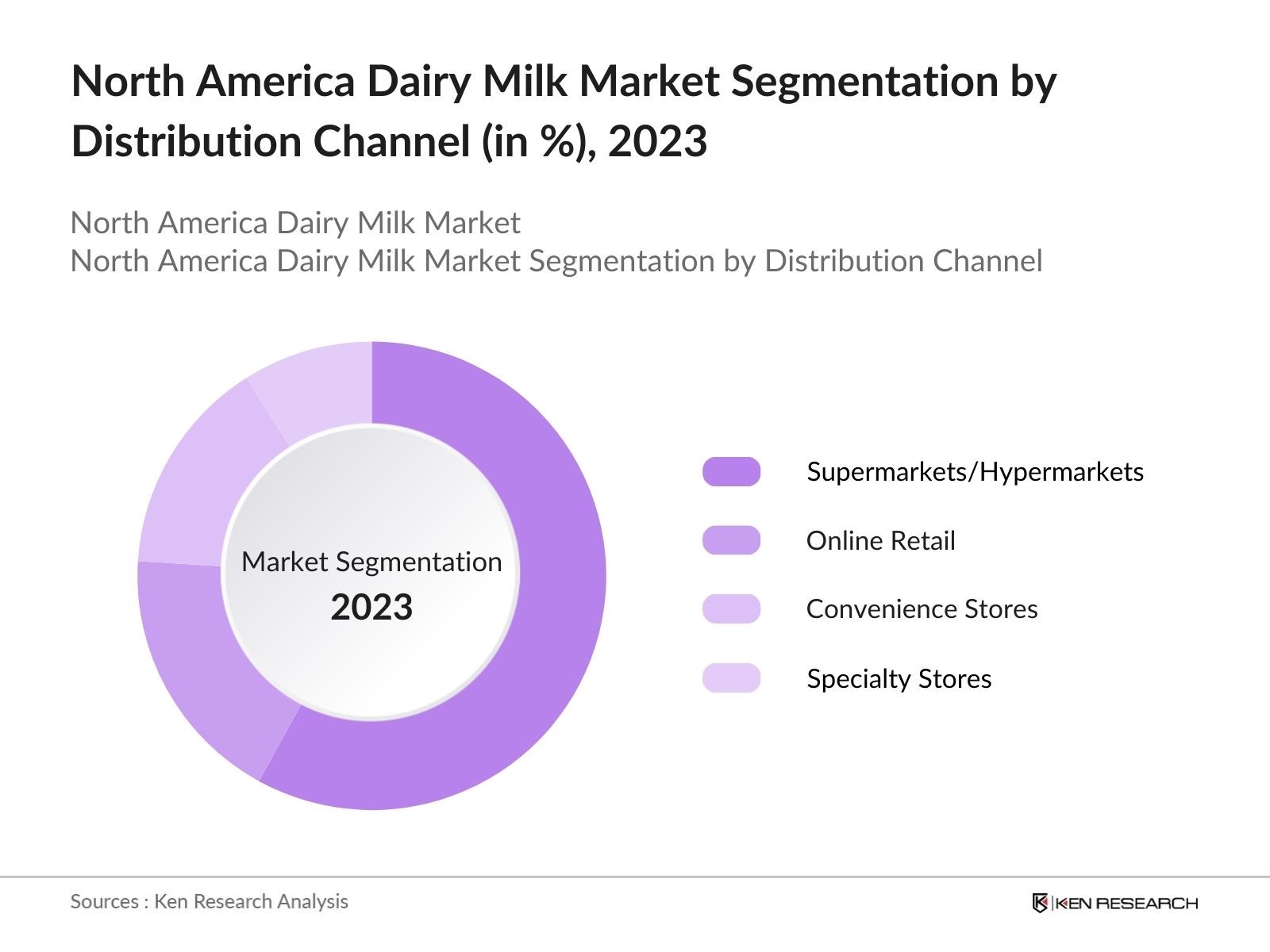
By Distribution Channel: The market is segmented by distribution channels into supermarkets/hypermarkets, online retail, convenience stores, and specialty stores. Supermarkets/hypermarkets hold the dominant market share in this category, driven by the convenience they offer and their wide availability of dairy products. The ability to purchase dairy products alongside other grocery items makes supermarkets a one-stop solution for many consumers. The expanding trend of large supermarket chains offering organic and specialty dairy products has also contributed to their dominance in the market.
North America Dairy Milk Market Competitive Landscape
The North America dairy milk market is dominated by a few key players that leverage large-scale operations, strong distribution networks, and brand loyalty. Companies like Dairy Farmers of America and Saputo Inc. dominate the market with their extensive production capabilities and innovation in dairy processing. Organic Valley and other niche brands have gained traction by focusing on organic and clean-label products, appealing to health-conscious consumers.
|
Company |
Establishment Year |
Headquarters |
Revenue (USD Bn) |
Employee Count |
Product Range |
Dairy Production (Gallons) |
Sustainability Initiatives |
Technological Innovations |
Market Presence (Countries) |
|---|---|---|---|---|---|---|---|---|---|
|
Dairy Farmers of America |
1998 |
Kansas, USA |
|||||||
|
Saputo Inc. |
1954 |
Montreal, Canada |
|||||||
|
Dean Foods |
1925 |
Texas, USA |
|||||||
|
Organic Valley |
1988 |
Wisconsin, USA |
|||||||
|
Agropur Cooperative |
1938 |
Quebec, Canada |
North America Dairy Milk Industry Analysis
Growth Drivers
- Health and Nutritional Awareness: Health and nutritional awareness has significantly influenced the North American dairy milk market, with consumers increasingly preferring protein-rich diets. Dairy milk, recognized as a primary source of high-quality protein, has seen consistent demand as consumers seek healthier lifestyles. North American dairy farms produced 127.5 million tons in 2023, reflecting steady consumption linked to increased protein intake preferences. According to the USDA, consumers in the U.S. incorporate dairy products into their daily protein intake. The U.S. Department of Agriculture's National Agricultural Statistics Service (NASS) reports ongoing growth in dairy production supported by nutritional awareness initiatives.
- Expansion of Dairy-based Products: The North American dairy market has experienced rapid expansion of dairy-based products such as cream, yogurt, and butter. According to the USDA, U.S. butter production alone reached 960,000 metric tons in 2023, supported by increased consumer demand for varied dairy products. The expansion into value-added dairy products has also contributed to the diversification of revenue streams for dairy producers. Dairy-based yogurts accounted for $9.2 billion in 2022, with demand bolstered by preferences for natural, probiotic-rich products. Dairy exports to key markets like Canada and Mexico have also surged, contributing to the diversification of the product base.
- Consumer Demand for Clean Label Products: Clean label products, including organic and grass-fed milk, are witnessing increased demand from health-conscious consumers. In 2023, organic dairy sales in North America reached $6.7 billion, as reported by the USDA, reflecting a 9% increase from the previous year. Grass-fed milk, which promises better nutritional profiles, has been embraced by consumers looking for transparency in sourcing and production. The Clean Label Project reported that nearly 70% of consumers prefer dairy products free from artificial additives, pushing producers to cater to these evolving preferences. Retailers have expanded their organic dairy sections, reflecting strong consumer demand
Market Challenges
- Increasing Popularity of Plant-based Milk Alternatives: The rise of plant-based milk alternatives presents a significant challenge to the dairy milk market. In 2023, plant-based milk sales in North America were valued at $3.5 billion, with almond and oat milk leading the category. According to the USDA, plant-based milk now constitutes nearly 15% of the overall milk category, drawing consumers for its perceived environmental benefits and lactose-free options. This shift has reduced traditional dairy consumption, especially among younger demographics. The U.S. Census Bureau indicates that almost 25% of North Americans between the ages of 18-34 regularly consume plant-based milk products.
- Environmental Concerns and Sustainability Issues: Environmental sustainability has become a growing concern in the dairy industry, impacting market dynamics. Dairy farming is a resource-intensive process, with reports showing that producing an 8-fluid ounce glass of milk has an average water footprint of 188 liters, while the more commonly consumed cheese has a water footprint of 450 liters per four ounces. According to the Environmental Protection Agency (EPA), dairy farming contributes significantly to methane emissions, which has led to calls for sustainable farming practices. The dairy sector accounts for roughly 3.4% of total greenhouse gas emissions in North America. As environmental awareness grows, consumers and regulatory bodies are pushing for changes, increasing pressure on the dairy industry to adopt more sustainable methods.
North America Dairy Milk Market Future Outlook
Over the next five years, the North America dairy milk market is expected to experience steady growth, driven by the increasing demand for health-focused and sustainable dairy products. Consumers are shifting toward organic and fortified dairy products, and the market will likely see significant expansion in this area. The rise of e-commerce, along with innovations in packaging and processing technologies, will also shape the markets future landscape. Additionally, governmental support for sustainable farming practices and the reduction of carbon footprints will create growth opportunities for environmentally conscious dairy brands.
Future Market Opportunities
- Growing Exports of Dairy Products: The growing export market for North American dairy products offers significant opportunities for producers. In 2022, U.S. dairy exports reached $7.75 billion, with strong demand from key markets like China, Japan, and the EU, as reported by the U.S. Dairy Export Council (USDEC). The United States-Mexico-Canada Agreement (USMCA) has also facilitated easier access to regional markets. The dairy export sector is projected to benefit from favorable trade agreements, especially as demand for high-quality dairy products continues to rise in Asia-Pacific markets. These export opportunities have helped North American dairy producers mitigate domestic consumption challenges.
- Development of Specialty Dairy Products: The development of specialty dairy products such as lactose-free and A2 milk presents a lucrative growth opportunity for the North American dairy market. In 2023, lactose-free dairy product sales were estimated at $1.9 billion, driven by increasing consumer sensitivity to lactose and a rise in demand for digestible dairy alternatives. A2 milk, which contains a different protein structure, has also gained traction due to its health benefits for lactose-intolerant consumers. Specialty dairy products are being heavily promoted in retail chains across the U.S. and Canada, reflecting a shift towards consumer-driven innovation in the dairy sector.
Scope of the Report
|
Product Type |
Whole Milk |
|
Distribution Channel |
Supermarkets/Hypermarkets |
|
Packaging Type |
Cartons |
|
Fat Content |
Full-Fat |
|
Region |
United States Mexico |
Products
Key Target Audience
Dairy Product Manufacturers
Dairy Farm Owners and Cooperatives
Supermarkets and Hypermarkets
Online Retail Platforms
Specialty Organic Food Stores
Government and Regulatory Bodies (FDA, USDA)
Investor and Venture Capitalist Firms
Exporters and Importers of Dairy Products
Companies
Major Players
Dairy Farmers of America
Saputo Inc.
Dean Foods
Organic Valley
Agropur Cooperative
Lactalis Group
Danone North America
Prairie Farms Dairy
The Kroger Co.
Schreiber Foods
Hiland Dairy
Borden Dairy Company
Nestl USA
Tillamook County Creamery Association
Great Lakes Cheese
Table of Contents
North America Dairy Milk Market Overview
1.1 Definition and Scope
1.2 Market Taxonomy
1.3 Market Growth Rate (Liters per capita, year-over-year growth)
1.4 Market Segmentation Overview
North America Dairy Milk Market Size (In USD Bn)
2.1 Historical Market Size (Consumption trends, per capita spending)
2.2 Year-On-Year Growth Analysis (Percentage change in demand, value growth)
2.3 Key Market Developments and Milestones
North America Dairy Milk Market Analysis
3.1 Growth Drivers
3.1.1 Health and Nutritional Awareness (Consumer preferences for protein-rich diets)
3.1.2 Expansion of Dairy-based Products (Milk, cream, yogurt, butter, etc.)
3.1.3 Government Subsidies and Support (Subsidy programs for dairy farmers)
3.1.4 Consumer Demand for Clean Label Products (Organic, grass-fed milk)
3.2 Market Challenges
3.2.1 Increasing Popularity of Plant-based Milk Alternatives (Almond, soy, oat milk)
3.2.2 Environmental Concerns and Sustainability Issues (Carbon footprint, water usage)
3.2.3 Fluctuations in Raw Milk Prices (Global supply-demand imbalance)
3.3 Opportunities
3.3.1 Technological Advancements in Dairy Processing (Automation in milking, AI for farm management)
3.3.2 Growing Exports of Dairy Products (Trade agreements with APAC, EU markets)
3.3.3 Development of Specialty Dairy Products (Lactose-free, A2 milk)
3.4 Trends
3.4.1 Rise of Online Grocery Shopping and Dairy E-commerce (Direct-to-consumer sales)
3.4.2 Adoption of Smart Farming Techniques (Precision farming, sensors, and IoT)
3.4.3 Premiumization of Dairy Products (Organic, fortified, and enriched dairy milk)
3.5 Government Regulation
3.5.1 Dairy Industry Regulation Standards (FDA guidelines, USMCA impact)
3.5.2 Sustainability Regulations (Emission control for dairy farms)
3.5.3 Agricultural Subsidies (Government support for dairy production)
3.6 SWOT Analysis
3.7 Stakeholder Ecosystem
3.8 Porters Five Forces (Supplier power, buyer power, threat of substitutes, etc.)
3.9 Competitive Ecosystem
North America Dairy Milk Market Segmentation
4.1 By Product Type (In Value %)
4.1.1 Whole Milk
4.1.2 Skimmed Milk
4.1.3 Flavored Milk
4.1.4 Organic Milk
4.2 By Distribution Channel (In Value %)
4.2.1 Supermarkets/Hypermarkets
4.2.2 Online Retail
4.2.3 Convenience Stores
4.2.4 Specialty Stores
4.3 By Packaging Type (In Value %)
4.3.1 Cartons
4.3.2 Bottles
4.3.3 Plastic Pouches
4.4 By Fat Content (In Value %)
4.4.1 Full-Fat
4.4.2 Low-Fat
4.4.3 Fat-Free
4.5 By Region (In Value %)
4.5.1 United States
4.5.2 Canada
4.5.3 Mexico
North America Dairy Milk Market Competitive Analysis
5.1 Detailed Profiles of Major Companies
5.1.1. Dairy Farmers of America
5.1.2. Saputo Inc.
5.1.3. Dean Foods
5.1.4. Agropur Cooperative
5.1.5. Danone North America
5.1.6. Lactalis Group
5.1.7. The Kroger Co.
5.1.8. Nestl USA
5.1.9. Great Lakes Cheese
5.1.10. Prairie Farms Dairy
5.1.11. Organic Valley
5.1.12. Schreiber Foods
5.1.13. Borden Dairy Company
5.1.14. Hiland Dairy
5.1.15. Tillamook County Creamery Association
5.2 Cross Comparison Parameters (No. of Employees, Headquarters, Production Capacity, Product Portfolio, Sustainability Initiatives, Technological Innovation, Dairy Supply Chain Management, Consumer Reach)
5.3 Market Share Analysis (Market share of key players in percentage)
5.4 Strategic Initiatives
5.5 Mergers And Acquisitions
5.6 Investment Analysis
5.7 Government Subsidies for Dairy Farms
5.8 Private Equity and Venture Capital Funding
North America Dairy Milk Market Regulatory Framework
6.1 Dairy Industry Regulations
6.2 Environmental Compliance and Emission Norms
6.3 Certification Processes for Organic and Grass-fed Milk
North America Dairy Milk Future Market Size (In USD Bn)
7.1 Future Market Size Projections
7.2 Key Factors Driving Future Market Growth (Health awareness, export demand, sustainability concerns)
North America Dairy Milk Future Market Segmentation
8.1 By Product Type (In Value %)
8.2 By Distribution Channel (In Value %)
8.3 By Packaging Type (In Value %)
8.4 By Fat Content (In Value %)
8.5 By Region (In Value %)
North America Dairy Milk Market Analysts Recommendations
9.1 TAM/SAM/SOM Analysis
9.2 Consumer Preferences Analysis
9.3 Branding and Marketing Initiatives
9.4 Product Innovation Opportunities
Research Methodology
Step 1: Identification of Key Variables
The research process begins by identifying key variables within the North America Dairy Milk Market. Through extensive desk research, we mapped out the major stakeholders in the market, including producers, suppliers, and consumers. This phase also involved analyzing secondary data from proprietary databases and public sources such as USDA and FDA reports.
Step 2: Market Analysis and Construction
Historical data for the dairy milk market was analyzed to assess trends in production, consumption, and pricing. This step involved evaluating the growth trajectory of various dairy sub-segments, such as whole milk and organic milk, and how they influence overall market revenue.
Step 3: Hypothesis Validation and Expert Consultation
We validated our market hypotheses through consultations with dairy industry experts and farm owners. These consultations provided critical insights into production challenges, regulatory impacts, and consumer behavior, further refining the market data.
Step 4: Research Synthesis and Final Output
In this phase, the research findings were synthesized into a comprehensive report, with a strong focus on market segmentation, competitive landscape, and future projections. This included cross-verification of data from leading dairy companies and regulatory bodies to ensure accuracy and reliability.
Frequently Asked Questions
01. How big is the North America Dairy Milk Market?
The North America dairy milk market is valued at USD 126 billion, driven by increasing consumer demand for protein-rich diets, growing interest in organic products, and advancements in dairy farming technologies.
02. What are the challenges in the North America Dairy Milk Market?
Challenges in the market include the rising popularity of plant-based alternatives, environmental sustainability concerns, and fluctuating prices of raw milk due to supply chain disruptions.
03. Who are the major players in the North America Dairy Milk Market?
Major players include Dairy Farmers of America, Saputo Inc., Dean Foods, Organic Valley, and Agropur Cooperative. These companies dominate due to their strong distribution networks, large-scale production, and investment in sustainable dairy farming practices.
04. What are the growth drivers of the North America Dairy Milk Market?
The market is driven by rising health awareness, consumer demand for organic and clean-label products, and government initiatives to support dairy farmers. Technological advancements in dairy processing also play a key role in market expansion.
05. What are the emerging trends in the North America Dairy Milk Market?
Emerging trends include the premiumization of dairy products, growth in online dairy retail, and increased adoption of smart farming techniques to enhance dairy production efficiency.
Why Buy From Us?

What makes us stand out is that our consultants follows Robust, Refine and Result (RRR) methodology. i.e. Robust for clear definitions, approaches and sanity checking, Refine for differentiating respondents facts and opinions and Result for presenting data with story

We have set a benchmark in the industry by offering our clients with syndicated and customized market research reports featuring coverage of entire market as well as meticulous research and analyst insights.

While we don't replace traditional research, we flip the method upside down. Our dual approach of Top Bottom & Bottom Top ensures quality deliverable by not just verifying company fundamentals but also looking at the sector and macroeconomic factors.

With one step in the future, our research team constantly tries to show you the bigger picture. We help with some of the tough questions you may encounter along the way: How is the industry positioned? Best marketing channel? KPI's of competitors? By aligning every element, we help maximize success.

Our report gives you instant access to the answers and sources that other companies might choose to hide. We elaborate each steps of research methodology we have used and showcase you the sample size to earn your trust.

If you need any support, we are here! We pride ourselves on universe strength, data quality, and quick, friendly, and professional service.