
North America Electric Fence Market Outlook to 2030
Region:Global
Author(s):Shreya
Product Code:KROD4116
October 2024
92
About the Report
North America Electric Fence Market Overview
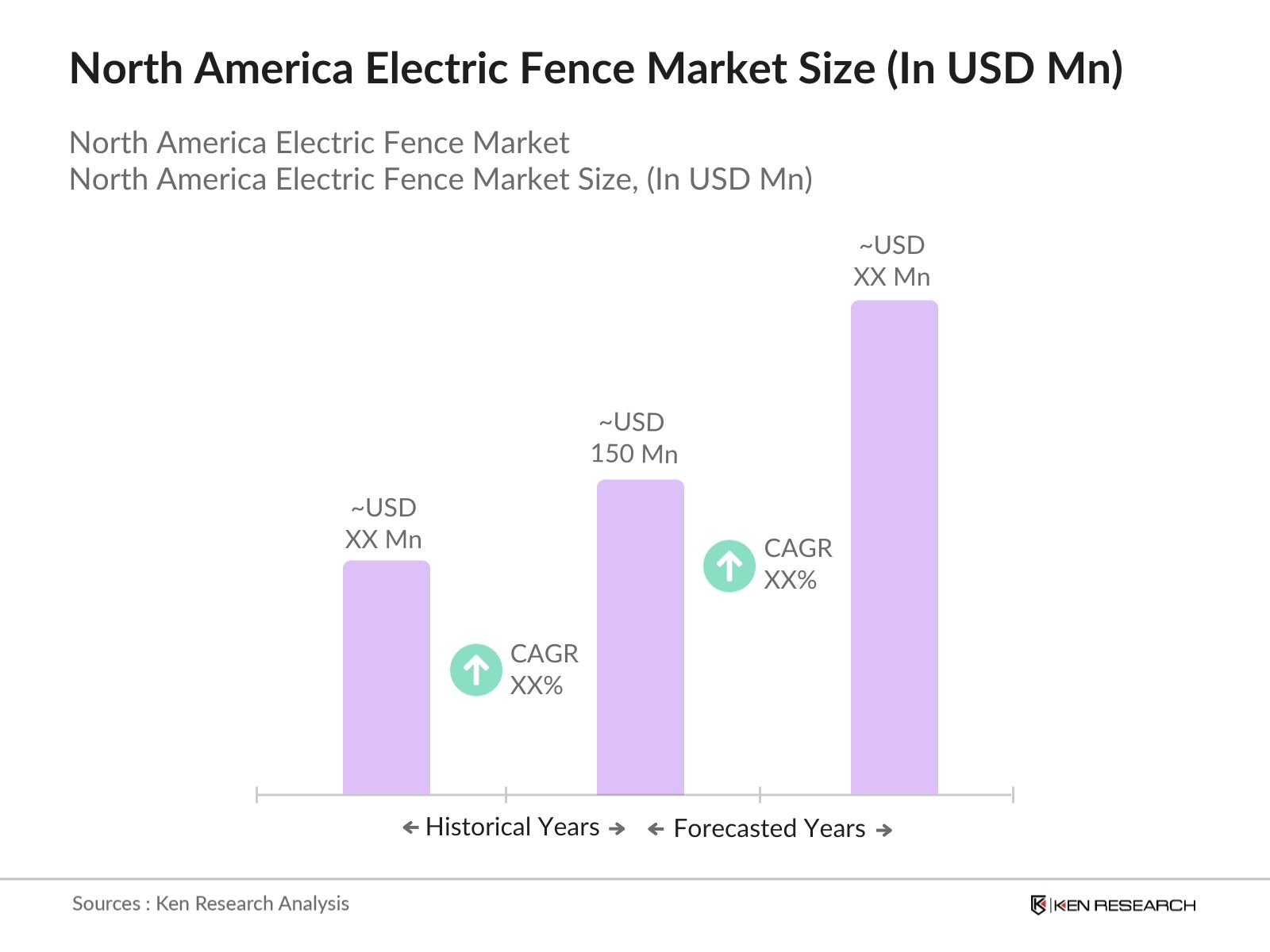
- The North America Electric Fence Market is valued at USD 150 million, based on a five-year historical analysis. The market's expansion is primarily driven by the rising need for perimeter security in sectors such as agriculture, residential, and commercial properties. Government initiatives, particularly in wildlife protection and national border control, further boost the adoption of electric fences. Moreover, advancements in solar-powered electric fences are encouraging environmentally conscious consumers to switch from traditional fencing options.
- The United States dominates the North American electric fence market due to its substantial investments in both residential and agricultural security systems. Additionally, Canada is emerging as a key player, driven by its growing agricultural sector and the need for innovative fencing solutions for livestock and crop protection. Mexico is also experiencing rising demand due to its efforts in securing borders and wildlife preservation programs. The dominance of these countries can be attributed to strong government regulations, high adoption of technology, and the expansion of commercial and residential construction activities.
- In 2024, the U.S. Environmental Protection Agency (EPA) introduced new guidelines for rural electrification projects, mandating the use of solar-powered electric fences to minimize environmental impact. These standards are designed to reduce carbon emissions, with over 70,000 kilometers of electric fencing in rural North America now powered by renewable energy sources. Compliance with these safety regulations is essential for farms, wildlife reserves, and national parks utilizing electric fencing for perimeter security and wildlife protection.
North America Electric Fence Market Segmentation
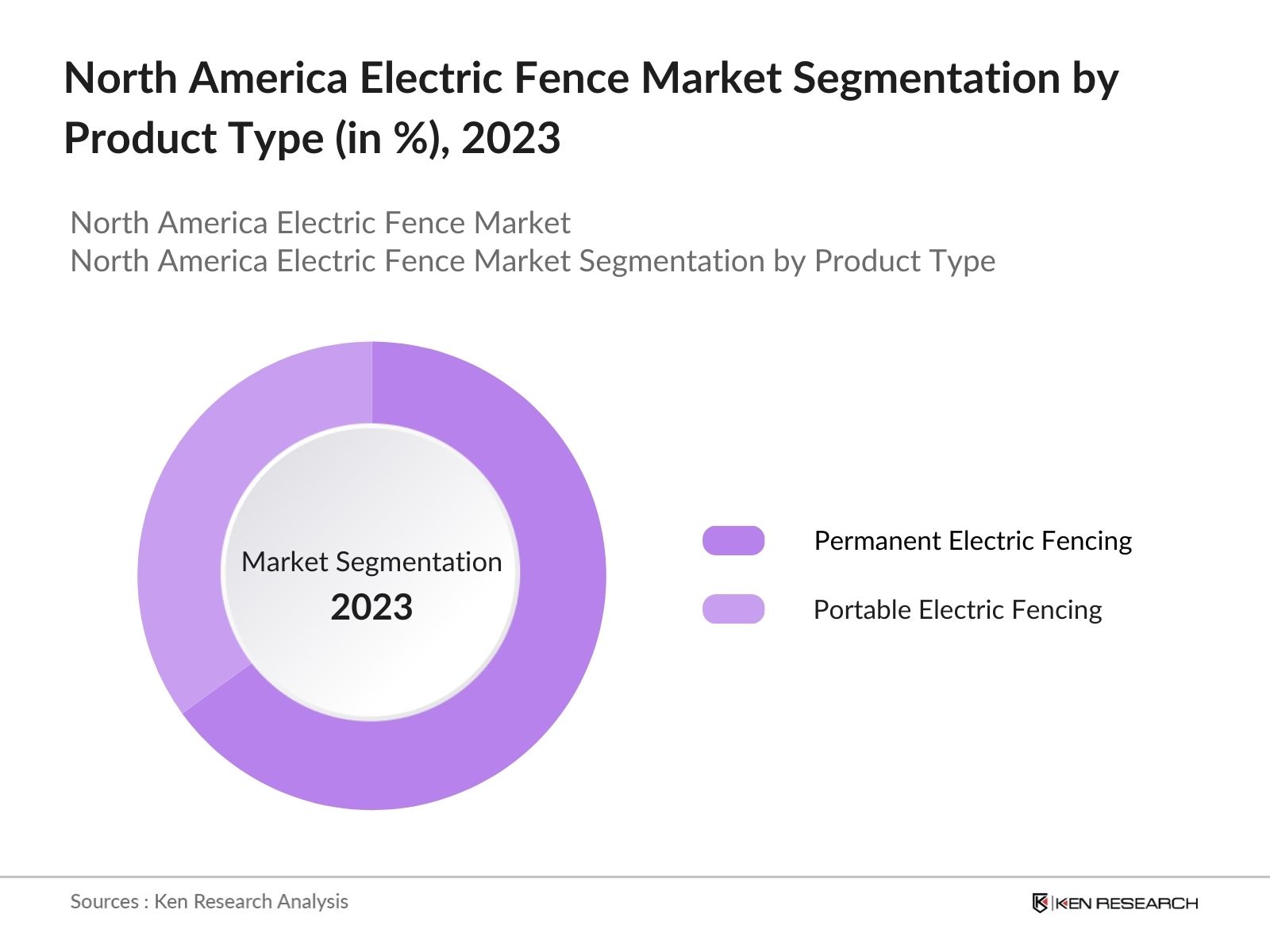
- By Product Type: The market is segmented by product type into permanent electric fencing and portable electric fencing. Recently, permanent electric fencing holds a dominant market share under the product type segment. This dominance is attributed to its widespread use in agriculture for long-term livestock management and perimeter protection. Permanent fences are preferred by farmers and commercial property owners for their durability, reliability, and ability to withstand various environmental conditions. These features make it the most suitable option for properties that require extensive security solutions.
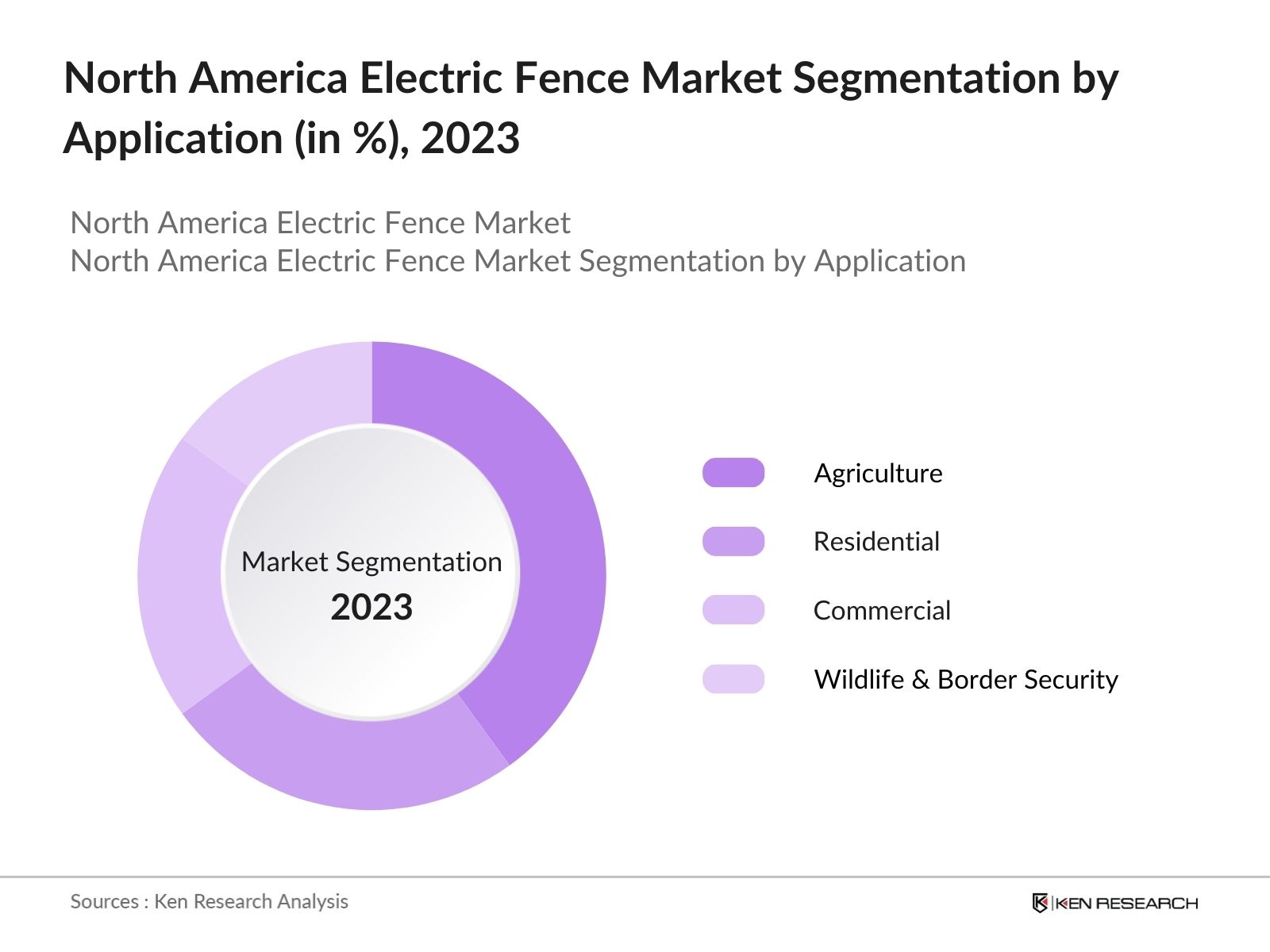
- By Application: The market is further segmented by application into agriculture, residential, commercial, and wildlife & border security. Agriculture dominates the market share under this segmentation. The increasing need to protect crops and manage livestock, especially in rural areas, has led to higher adoption of electric fencing systems. The versatility of electric fencing in containing various types of livestock and the growing trend of farm automation are major contributors to the agricultural sectors dominance in this market.
North America Electric Fence Market Competitive Landscape
The North America electric fence market is characterized by the presence of a few key players that dominate the industry with strong technological capabilities and extensive distribution networks. Companies are focusing on product innovation, integrating smart technology, and expanding their geographic reach. The North American electric fence market is dominated by prominent players such as Gallagher Group, Tru-Test Group, and Parker McCrory Mfg. Co., with a few regional players also making notable strides. They also focus on product innovation, including solar-powered and remote-controlled fence systems, further differentiating themselves in the market.
|
Company Name |
Establishment Year |
Headquarters |
No. of Employees |
Annual Revenue (USD) |
Product Range |
Technology |
Distribution Network |
Key Market |
|---|---|---|---|---|---|---|---|---|
|
Gallagher Group Limited |
1938 |
New Zealand |
||||||
|
Tru-Test Group |
1960 |
New Zealand |
||||||
|
Parker McCrory Mfg. Co. |
1921 |
USA |
||||||
|
Premier 1 Supplies |
1977 |
USA |
||||||
|
Zareba Systems |
1937 |
USA |
North America Electric Fence Industry Analysis
Growth Drivers
- Adoption of Electric Fencing in Agriculture: The growing need for agricultural security, particularly in livestock containment, has driven the adoption of electric fencing across North America. In 2023, the agricultural sector in the U.S. and Canada accounted for over 200 million hectares of arable land, with farmers increasingly opting for electric fencing systems to manage livestock and safeguard crops. In particular, over 1.3 million farms in the U.S. benefit from electric fencing solutions to protect livestock from predators and prevent crop damage from wildlife. These systems provide cost-effective solutions for managing agricultural boundaries.
- Increasing Security Concerns in Residential and Commercial Sectors: Rising concerns over security in residential and commercial properties have led to a surge in demand for electric fences, with 14 million burglary cases reported across North America in 2023. In the U.S., the security equipment industry for residential properties saw a significant rise in electric fence installations as a primary means of intrusion prevention. Additionally, commercial real estate developments, with more than 13 billion square feet under construction across North America, increasingly incorporate electric fencing for perimeter security, offering robust protection.
- Technological Advancements in Electric Fence Systems: Technological advancements, particularly the introduction of solar-powered electric fences and remote monitoring systems, are transforming the market. Solar-powered fences, which reduce the reliance on grid electricity, now account for over 20% of new electric fencing installations in rural and off-grid areas in North America. Remote monitoring systems are also gaining traction, allowing real-time control and alerts for perimeter breaches. As of 2024, over 1 million electric fences in the U.S. and Canada are equipped with IoT-based monitoring systems, improving security measures and operational efficiency for property owners.
Market Challenges
- High Installation Costs: High upfront installation costs remain a significant barrier for electric fence adoption in residential and commercial sectors. The average installation cost of an electric fence for a standard 200-meter perimeter in residential areas ranges from $2,000 to $4,000, with prices even higher for commercial properties. This price disparity deters small and medium property owners from adopting electric fencing solutions. Moreover, rural installations, which require more complex setup due to terrain, face additional cost burdens, further limiting adoption rates.
- Maintenance and Technical Issues: Maintenance and technical challenges, particularly in rural areas, continue to hinder the growth of the electric fence market. Electric fences in remote areas often suffer from issues such as battery failures, line faults, and inadequate maintenance, which lead to operational downtimes. A 2023 report from the U.S. Department of Agriculture highlighted that over 25% of rural electric fences require regular repairs due to weather conditions and wildlife interference. Furthermore, the lack of technical expertise in these areas contributes to prolonged downtimes, affecting both security and containment functions.
North America Electric Fence Market Future Outlook
Over the next few years, the North America electric fence market is expected to experience steady growth, driven by increasing government investments in border security, wildlife protection, and agricultural development. Technological advancements in solar and battery-powered electric fencing systems, along with growing consumer demand for eco-friendly and smart perimeter security solutions, are anticipated to be key factors in the market's future expansion. Additionally, the rise of smart home integration with electric fencing systems will create new opportunities for innovation and market growth.
Future Market Opportunities
- Emerging Market Penetration: The electric fence market is witnessing opportunities in Mexico and Canada, where adoption rates are growing due to increased demand for agricultural security and border control. In Mexico, where over 23 million hectares of farmland are susceptible to livestock theft and crop damage, the government has introduced subsidies for electric fence installations. Similarly, Canada, with over 6 million hectares of farmland, has implemented wildlife protection programs that include electric fencing. This cross-border expansion represents a major opportunity for market players to increase their footprint.
- Increasing Adoption in Urban Farming and Eco-Parks: Urban farming and eco-park projects in major North American cities are driving new demand for electric fencing systems. Cities like New York, Toronto, and Los Angeles have seen rapid growth in urban agriculture initiatives, with over 30,000 urban farms established in 2023. These farms require efficient perimeter security, leading to a surge in the installation of electric fences designed for urban environments. Additionally, eco-parks, which aim to promote green living and environmental conservation, are incorporating electric fencing for habitat protection and sustainable land management.
Scope of the Report
|
Segments |
Sub-Segments |
|---|---|
|
By Product Type |
- Permanent Electric Fencing |
|
- Portable Electric Fencing |
|
|
By Application |
- Agriculture (Livestock, Crop Protection) |
|
- Residential (Home Security, Property Fencing) |
|
|
- Commercial (Industrial, Construction Sites) |
|
|
- Wildlife and Border Security |
|
|
By Technology |
- Battery-Powered Fencing |
|
- Solar-Powered Fencing |
|
|
- Hybrid-Powered Fencing |
|
|
By Distribution Channel |
- Online Retail |
|
- Offline Retail (Distributors, Direct Sales) |
|
|
By Region |
- USA |
|
- Canada |
|
|
- Mexico |
Products
Key Target Audience
Government and regulatory bodies (U.S. Department of Agriculture, U.S. Department of Homeland Security)
Agriculture and livestock management companies
Residential and commercial security solution providers
Construction and infrastructure companies
Wildlife conservation agencies
Border security agencies
Banks and Financial Institutes
Investments and venture capitalist firms
Manufacturers and distributors of electric fencing systems
Companies
Major Players
Gallagher Group Limited
Tru-Test Group
Parker McCrory Mfg. Co.
Premier 1 Supplies
Zareba Systems
Dare Products, Inc.
Kencove Farm Fence Supplies
Patriot Electric Fence
Speedrite Electric Fencing
Fi-Shock Inc.
FenceFast Ltd.
Baygard Electric Fencing
Stafix Electric Fencing
OBriens Fencing
JVA Technologies
Table of Contents
1. North America Electric Fence Market Overview
1.1. Definition and Scope
1.2. Market Taxonomy
1.3. Market Growth Rate
1.4. Market Segmentation Overview
2. North America Electric Fence Market Size (In USD Mn)
2.1. Historical Market Size
2.2. Year-On-Year Growth Analysis
2.3. Key Market Developments and Milestones
3. North America Electric Fence Market Analysis
3.1. Growth Drivers
3.1.1. Adoption of Electric Fencing in Agriculture (Agricultural Security, Livestock Containment)
3.1.2. Increasing Security Concerns in Residential and Commercial Sectors (Intrusion Prevention, Perimeter Security)
3.1.3. Technological Advancements in Electric Fence Systems (Solar-Powered Fences, Remote Monitoring Systems)
3.1.4. Government Support for Wildlife Protection and Border Security (Wildlife Conservation, Homeland Security)
3.2. Market Challenges
3.2.1. High Installation Costs (Residential and Commercial Sector)
3.2.2. Regulatory Compliance (Environmental and Safety Regulations)
3.2.3. Maintenance and Technical Issues (Rural Areas, Remote Monitoring)
3.3. Opportunities
3.3.1. Emerging Market Penetration (Mexico, Canada)
3.3.2. Increasing Adoption in Urban Farming and Eco-Parks (Green Initiatives, Urbanization)
3.3.3. Product Innovation and Automation (Smart Fencing, IoT Integration)
3.4. Trends
3.4.1. Integration of AI and Machine Learning in Monitoring Systems
3.4.2. Rise of Solar-Powered Electric Fencing (Sustainability, Renewable Energy)
3.4.3. Demand for Smart Home Integration (Security Systems, Perimeter Control)
3.5. Government Regulation
3.5.1. US Homeland Security Policies (Border Control, Security Compliance)
3.5.2. Animal Welfare and Wildlife Protection Laws (Livestock, Wildlife Fencing)
3.5.3. Environmental Safety Standards (Rural Electrification, Eco-Friendly Fencing)
3.6. SWOT Analysis
3.7. Stakeholder Ecosystem
3.8. Porters Five Forces Analysis
3.9. Competitive Landscape
4. North America Electric Fence Market Segmentation
4.1. By Product Type (In Value %)
4.1.1. Permanent Electric Fencing
4.1.2. Portable Electric Fencing
4.2. By Application (In Value %)
4.2.1. Agriculture (Livestock, Crop Protection)
4.2.2. Residential (Home Security, Property Fencing)
4.2.3. Commercial (Industrial Sites, Construction Sites)
4.2.4. Wildlife and Border Security (Wildlife Control, National Security)
4.3. By Technology (In Value %)
4.3.1. Battery-Powered Fencing
4.3.2. Solar-Powered Fencing
4.3.3. Hybrid-Powered Fencing
4.4. By Distribution Channel (In Value %)
4.4.1. Online Retail
4.4.2. Offline Retail (Distributors, Direct Sales)
4.5. By Region (In Value %)
4.5.1. USA
4.5.2. Canada
4.5.3. Mexico
5. North America Electric Fence Market Competitive Analysis
5.1. Detailed Profiles of Major Companies
5.1.1. Gallagher Group Limited
5.1.2. JVA Technologies
5.1.3. Tru-Test Group
5.1.4. Parker McCrory Mfg. Co.
5.1.5. Premier 1 Supplies
5.1.6. Dare Products, Inc.
5.1.7. Stafix Electric Fencing
5.1.8. Kencove Farm Fence Supplies
5.1.9. Zareba Systems
5.1.10. Speedrite Electric Fencing
5.1.11. Patriot Electric Fence
5.1.12. FenceFast Ltd.
5.1.13. Fi-Shock Inc.
5.1.14. Baygard Electric Fencing
5.1.15. OBriens Fencing
5.2. Cross Comparison Parameters (No. of Employees, Headquarters, Inception Year, Revenue, Product Range, Technological Capabilities, Market Penetration, Innovation Rate)
5.3. Market Share Analysis
5.4. Strategic Initiatives
5.5. Mergers and Acquisitions
5.6. Investment Analysis
5.7. Venture Capital Funding
5.8. Government Grants and Subsidies
5.9. Private Equity Investments
6. North America Electric Fence Market Regulatory Framework
6.1. Compliance with Environmental Safety Regulations
6.2. Federal and State-Level Certification Requirements
6.3. US Department of Agriculture (USDA) Guidelines for Livestock Fencing
6.4. Occupational Safety and Health Administration (OSHA) Regulations
7. North America Electric Fence Future Market Size (In USD Mn)
7.1. Future Market Size Projections
7.2. Key Factors Driving Future Market Growth
8. North America Electric Fence Future Market Segmentation
8.1. By Product Type (In Value %)
8.2. By Application (In Value %)
8.3. By Technology (In Value %)
8.4. By Distribution Channel (In Value %)
8.5. By Region (In Value %)
9. North America Electric Fence Market Analysts Recommendations
9.1. TAM/SAM/SOM Analysis
9.2. Customer Cohort Analysis
9.3. Marketing Initiatives
9.4. White Space Opportunity Analysis
Disclaimer
Contact Us
Research Methodology
Step 1: Identification of Key Variables
The initial phase involves constructing an ecosystem map of the North America Electric Fence Market, identifying key stakeholders. This step includes desk research utilizing secondary data from proprietary databases, industry reports, and government publications to determine key market variables influencing the dynamics.
Step 2: Market Analysis and Construction
In this phase, historical data is compiled and analyzed to assess the performance of the electric fence market. This includes evaluating market penetration, the ratio of product distribution channels, and revenue streams. Data is then corroborated through performance reviews of key service providers.
Step 3: Hypothesis Validation and Expert Consultation
Market hypotheses are tested and validated through interviews with industry experts. Using CATI methods, feedback is obtained from professionals in electric fence manufacturing and distribution, ensuring the reliability of the data and market forecasts.
Step 4: Research Synthesis and Final Output
The final phase involves direct engagement with manufacturers to obtain detailed insights on product performance and market trends. These interactions provide critical information to ensure the data is comprehensive, reliable, and validated, leading to an accurate analysis of the North America electric fence market.
Frequently Asked Questions
01. How big is the North America Electric Fence Market?
The North America electric fence market is valued at USD 150 million, driven by the increasing demand for perimeter security solutions in the agriculture, residential, and commercial sectors.
02. What are the challenges in the North America Electric Fence Market?
Challenges in the North America electric fence market include high initial installation costs and regulatory compliance issues, particularly in wildlife protection and residential zones. Additionally, the maintenance of electric fences in remote or rural areas can pose technical difficulties.
03. Who are the major players in the North America Electric Fence Market?
Key players in the North America electric fence market include Gallagher Group, Tru-Test Group, Parker McCrory Mfg. Co., Premier 1 Supplies, and Zareba Systems. These companies dominate the market due to their technological advancements, strong distribution networks, and comprehensive product offerings.
04. What are the growth drivers of the North America Electric Fence Market?
The North America electric fence market is propelled by increasing government investments in border security, wildlife protection, and agricultural development. Furthermore, technological advancements in solar-powered and smart electric fences are creating new growth opportunities.
05. What technological trends are shaping the North America Electric Fence Market?
Key trends in the North America electric fence market include the integration of IoT-enabled smart fencing systems, the development of solar-powered fences, and the growing adoption of remote monitoring technologies for enhanced perimeter security.
Why Buy From Us?

What makes us stand out is that our consultants follows Robust, Refine and Result (RRR) methodology. i.e. Robust for clear definitions, approaches and sanity checking, Refine for differentiating respondents facts and opinions and Result for presenting data with story

We have set a benchmark in the industry by offering our clients with syndicated and customized market research reports featuring coverage of entire market as well as meticulous research and analyst insights.

While we don't replace traditional research, we flip the method upside down. Our dual approach of Top Bottom & Bottom Top ensures quality deliverable by not just verifying company fundamentals but also looking at the sector and macroeconomic factors.

With one step in the future, our research team constantly tries to show you the bigger picture. We help with some of the tough questions you may encounter along the way: How is the industry positioned? Best marketing channel? KPI's of competitors? By aligning every element, we help maximize success.

Our report gives you instant access to the answers and sources that other companies might choose to hide. We elaborate each steps of research methodology we have used and showcase you the sample size to earn your trust.

If you need any support, we are here! We pride ourselves on universe strength, data quality, and quick, friendly, and professional service.