North America Gardening Equipment Market Outlook to 2030

Region:North America

Author(s):Shubham Kashyap

Product Code:KROD8134

Published On

December 2024

Total pages

91

About the Report

North America Gardening Equipment Market Overview

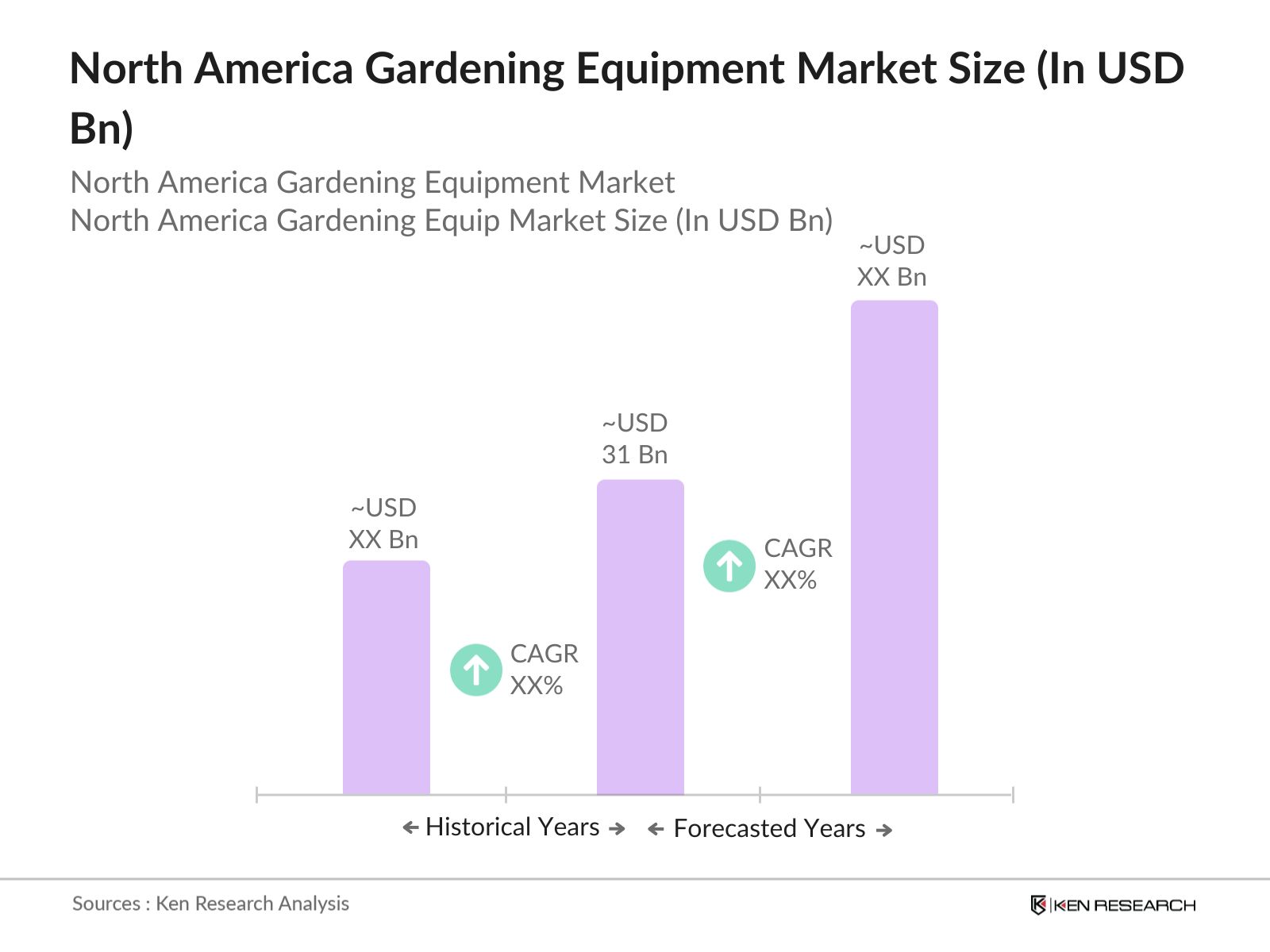
  • The North America Gardening Equipment Market is currently valued at USD 31 billion, based on a five-year historical analysis. Growth is primarily driven by rising consumer interest in home gardening, alongside advancements in battery-operated and eco-friendly equipment. The market has seen significant growth in demand for tools that improve gardening efficiency and sustainability, aligning with consumer preferences for both functionality and environmental consciousness. Additionally, technological advancements in smart gardening tools have broadened the appeal of these products, particularly in urban areas where gardening is becoming a popular hobby.

North America Gardening Equipment Market Size

  • The United States leads the North America Gardening Equipment Market, attributed to its high urban population density and substantial consumer spending on landscaping and gardening activities. Major cities such as Los Angeles, Houston, and New York play pivotal roles due to their emphasis on green spaces and the popularity of sustainable gardening practices. In Canada, cities like Toronto and Vancouver also contribute significantly to the market, as a growing interest in eco-friendly landscaping solutions drives demand for modern gardening tools.
  • Noise pollution regulations for gardening equipment, particularly lawn mowers, have tightened in North America. The U.S. Environmental Protection Agency (EPA) enforces limits, capping residential mower noise at 85 decibels. In 2023, California introduced stricter noise regulations for residential areas, reducing allowable levels to 80 decibels to minimize noise disturbance in high-density neighborhoods. These regulations impact equipment design, encouraging manufacturers to adopt quieter, battery-powered models.

North America Gardening Equipment Market Segmentation

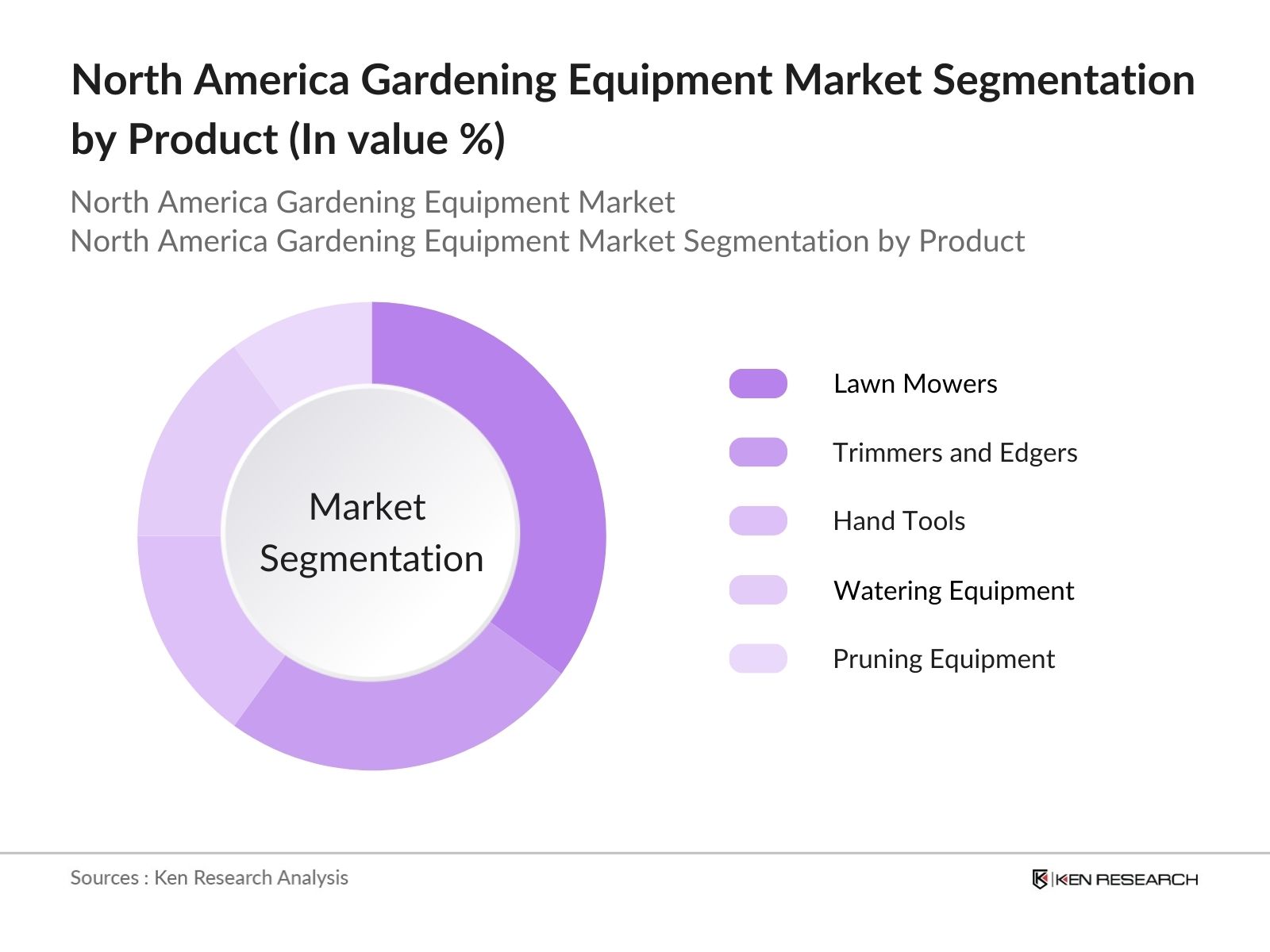
  • By Product Type: The North America Gardening Equipment Market is segmented by product type into Lawn Mowers, Trimmers and Edgers, Hand Tools, Watering Equipment, and Pruning Equipment. Recently, Lawn Mowers have a dominant market share within the product type segment. This dominance is driven by the essential role of lawn mowers in both residential and commercial landscaping. Consumers prioritize lawn mowers for their efficiency and ease of use, with increased demand for battery-operated and robotic models that offer environmentally friendly and low-maintenance options.

North America Gardening Equipment Market Segmentation By Product Type

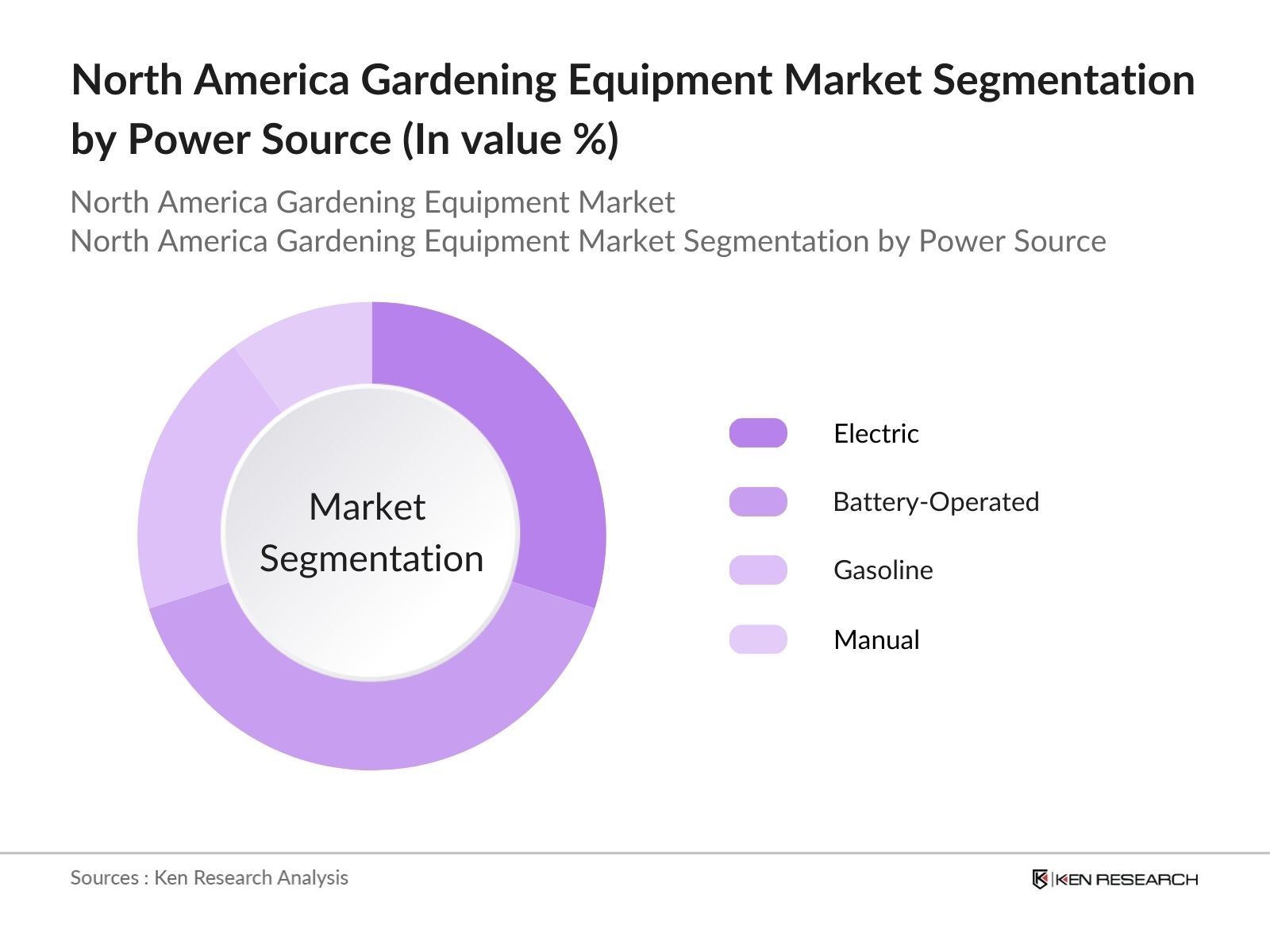
  • By Power Source: The market is further segmented by power source into Electric, Battery-Operated, Gasoline, and Manual. Battery-Operated gardening tools hold a dominant position in this segment, owing to their environmental benefits, low noise levels, and ease of use. Consumers are increasingly choosing battery-operated tools as they provide a cleaner, quieter, and more sustainable option, especially in urban areas where there are restrictions on noise and emissions.

North America Gardening Equipment Market Segmentation By Power Source

North America Gardening Equipment Market Competitive Landscape

The North America Gardening Equipment Market is characterized by prominent players such as Deere & Company, Honda Power Equipment, and Husqvarna Group, which dominate the market through continuous innovation and a strong focus on sustainability. These companies retain their competitive edge by developing advanced, eco-friendly gardening tools that cater to modern consumer demands for convenience and environmental stewardship.
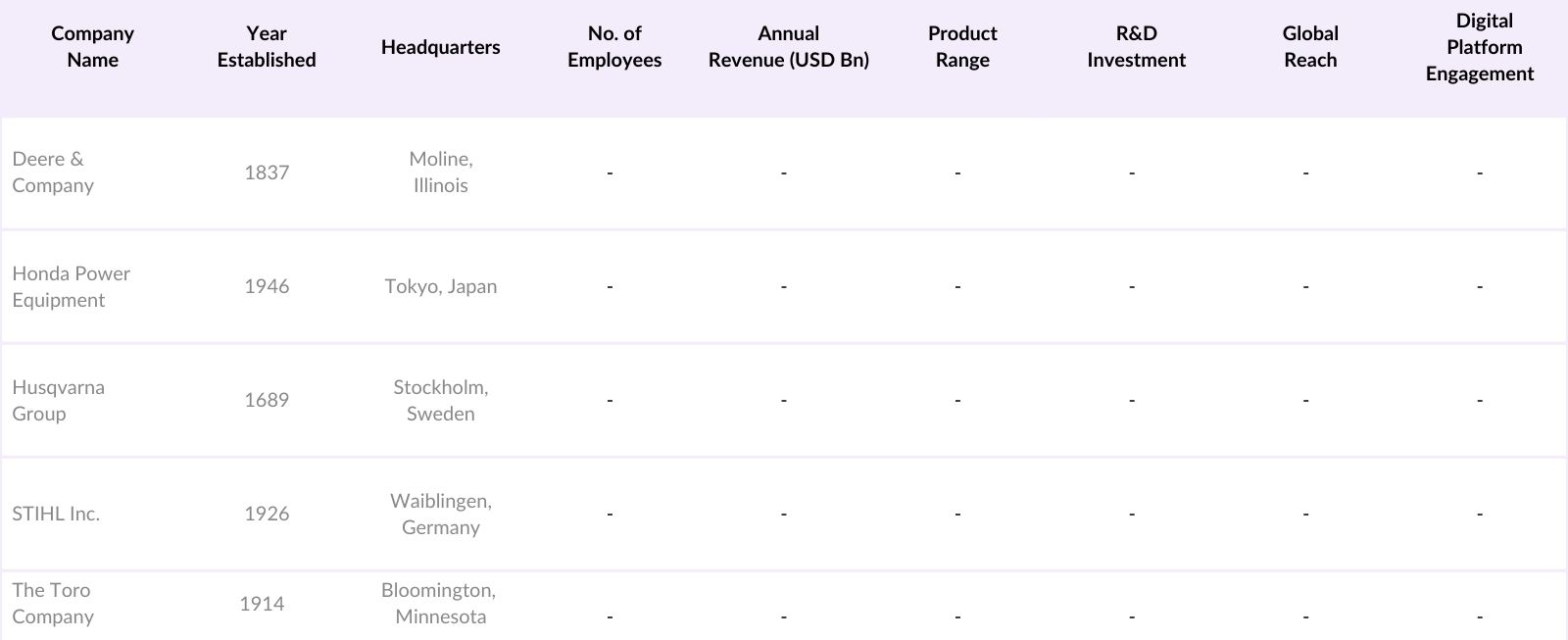
North America Gardening Equipment Market Competitive Landscape

North America Gardening Equipment Market Analysis

Growth Drivers

  • Increase in Home Gardening Trends: Home gardening has surged in popularity across North America, driven by a lifestyle shift towards self-sufficiency and sustainable practices. 40 million households in the U.S. actively engage in home gardening, with data from the U.S. Department of Agriculture showing a substantial increase in households starting home gardens since 2022. This increase is linked to factors like the pandemic-induced desire for outdoor spaces and a growing interest in organic food production. The USDA also reports that gardening supplies saw a significant rise in demand, correlating with a surge in DIY home gardening trends.
  • Rising Popularity of Sustainable Landscaping: Sustainable landscaping practices are becoming integral in North American gardening, with over 15 million U.S. households reportedly adopting native plantings to conserve water and reduce chemical use, as per the Environmental Protection Agency (EPA). The focus on eco-friendly designs is also reflected in the growing demand for organic fertilizers, which increased by 12% in volume since 2022. This shift aligns with North Americas sustainable development goals to reduce environmental impact in urban green spaces.
  • Advances in Battery-Operated Equipment: Battery-operated gardening tools have gained traction, with data indicating that a notable portion of households prefer battery-powered over gas-powered equipment, according to the U.S. Energy Information Administration. Improvements in lithium-ion technology have enabled the production of lightweight, efficient tools with longer operational lifespans, catering to both residential and commercial users. This trend is further fueled by government incentives promoting clean energy solutions, as outlined by the U.S. Department of Energy.

Market Challenges

  • High Product Costs: THigh initial costs for quality gardening equipment remain a barrier in North America, where 60% of potential customers cite expense as a primary deterrent. According to data from the U.S. Bureau of Economic Analysis, inflation-adjusted consumer spending on durable goods, including gardening tools, increased substantially over the past two years. This rise in costs impacts accessibility for average consumers, affecting adoption rates among low-income households
  • Limited Skilled Workforce for Professional Equipment: The professional landscaping industry faces a notable skilled labor shortage, which directly impacts the efficient use of specialized gardening equipment. This shortage of qualified workers restricts productivity and creates operational challenges for companies within the commercial gardening sector. As a result, businesses struggle to maintain and expand their service offerings due to the lack of trained personnel to operate advanced equipment effectively. Additionally, this labor gap contributes to higher operational costs, as companies must invest in training or pay a premium for skilled labor, further affecting profitability and scalability within the industry.

North America Gardening Equipment Market Future Outlook

The North America Gardening Equipment Market is projected to grow steadily, driven by continued innovations in eco-friendly and smart gardening tools. The integration of IoT technology and AI-powered tools is expected to transform gardening practices, making equipment more accessible and user-friendly for both professionals and hobbyists. Increased urban gardening initiatives and sustainable landscaping solutions are anticipated to play a significant role in driving market growth.

Future Market Opportunities

  • Adoption of Smart Gardening Tools: Smart gardening tools, including automated mowers and app-connected watering systems, have gained popularity, with the smart home device market in North America expanding remarkably in 2023, according to data from the International Data Corporation (IDC). Increased connectivity and accessibility to IoT-based devices offer homeowners and commercial users precise control over gardening activities, enhancing productivity and water conservation. This technological adoption is supported by government funding aimed at promoting digital infrastructure in North America.
  • Government Initiatives for Urban Gardening: Various local governments across North America have initiated urban gardening programs, with cities like New York investing USD 5 million in green roof initiatives and urban farms in 2023, as reported by the New York City Department of Parks & Recreation. These programs support community gardening spaces and incentivize residents to contribute to local food production. Such initiatives align with the broader goal of increasing green spaces in urban areas, enhancing demand for gardening equipment.

Scope of the Report

Product Type

Lawn Mowers
Trimmers and Edgers
Hand Tools
Watering Equipment
Pruning Equipment

Power Source

Electric
Battery-Operated
Gasoline
Manual

Distribution Channel

Online Retail
Specialty Stores
Home Improvement Centers
Department Stores

End User

Residential
Commercial Landscaping
Government & Municipal

Region

United States
Canada
Mexico

Products

Key Target Audience

  • Residential Landscaping Companies

  • Commercial Gardening Services

  • Retailers and Distributors of Gardening Equipment

  • Investors and Venture Capitalist Firms

  • Banks and Financial Institutions

  • Environmental Protection Agency (EPA)

  • Urban Development Authorities

Companies

Players Mentioned in the Report

  • Deere & Company

  • Honda Power Equipment

  • Husqvarna Group

  • STIHL Inc.

  • The Toro Company

  • Black & Decker Inc.

  • MTD Products Inc.

  • Robert Bosch GmbH

  • Craftsman

  • Greenworks Tools

  • Troy-Bilt

  • Snow Joe LLC

  • Makita Corporation

  • ECHO Incorporated

  • Ryobi

Table of Contents

01 North America Gardening Equipment Market Overview

1.1. Definition and Scope

1.2. Market Taxonomy

1.3. Market Growth Rate (Key Indicators: Revenue Growth, Equipment Penetration Rates)

1.4. Market Segmentation Overview (Product Segmentation, Channel Segmentation, End-User Segmentation)

02 North America Gardening Equipment Market Size (In USD Mn)

2.1. Historical Market Size

2.2. Year-On-Year Growth Analysis

2.3. Key Market Developments and Milestones (Innovations in Eco-Friendly Equipment, Digitalization)

03 North America Gardening Equipment Market Analysis

3.1. Growth Drivers

3.1.1. Increase in Home Gardening Trends

3.1.2. Rising Popularity of Sustainable Landscaping

3.1.3. Advances in Battery-Operated Equipment

3.1.4. Expanding DIY Culture

3.2. Market Challenges

3.2.1. High Product Costs

3.2.2. Limited Skilled Workforce for Professional Equipment

3.2.3. Volatility in Raw Material Prices

3.3. Opportunities

3.3.1. Adoption of Smart Gardening Tools

3.3.2. Government Initiatives for Urban Gardening

3.3.3. Growth in Commercial Landscaping Segment

3.4. Trends

3.4.1. Integration of IoT in Gardening Equipment

3.4.2. Rising Demand for Lightweight and Portable Tools

3.4.3. Increased Use of Subscription-Based Services

3.5. Government Regulation

3.5.1. Noise Control Standards for Lawn Mowers

3.5.2. Emission Standards Compliance

3.5.3. Environmental Restrictions on Chemical Use

3.6. SWOT Analysis

3.7. Stake Ecosystem (Manufacturer, Distributor, Retailer, Consumer)

3.8. Porters Five Forces Analysis

3.9. Competition Ecosystem

04 North America Gardening Equipment Market Segmentation

4.1. By Product Type (In Value %)

4.1.1. Lawn Mowers

4.1.2. Trimmers and Edgers

4.1.3. Hand Tools

4.1.4. Watering Equipment

4.1.5. Pruning Equipment

4.2. By Power Source (In Value %)

4.2.1. Electric

4.2.2. Battery-Operated

4.2.3. Gasoline

4.2.4. Manual

4.3. By Distribution Channel (In Value %)

4.3.1. Online Retail

4.3.2. Specialty Stores

4.3.3. Home Improvement Centers

4.3.4. Department Stores

4.4. By End User (In Value %)

4.4.1. Residential

4.4.2. Commercial Landscaping

4.4.3. Government & Municipal

4.5. By Region (In Value %)

4.5.1. United States

4.5.2. Canada

4.5.3. Mexico

05 North America Gardening Equipment Market Competitive Analysis

5.1. Detailed Profiles of Major Companies

5.1.1. Deere & Company

5.1.2. Honda Power Equipment

5.1.3. Husqvarna Group

5.1.4. Kubota Corporation

5.1.5. STIHL Inc.

5.1.6. The Toro Company

5.1.7. Black & Decker Inc.

5.1.8. MTD Products Inc.

5.1.9. Robert Bosch GmbH

5.1.10. Craftsman

5.1.11. Greenworks Tools

5.1.12. Troy-Bilt

5.1.13. Snow Joe LLC

5.1.14. Makita Corporation

5.1.15. ECHO Incorporated

5.2. Cross Comparison Parameters (Revenue, Product Innovation, Environmental Compliance, Distribution Network, Market Presence, Customer Loyalty Programs, Sustainability Initiatives, Product Range Diversity)

5.3. Market Share Analysis

5.4. Strategic Initiatives (R&D Investments, Product Expansions, Marketing Strategies)

5.5. Mergers and Acquisitions

5.6. Investment Analysis

5.7. Venture Capital Funding

5.8. Government Grants

5.9. Private Equity Investments

06 North America Gardening Equipment Market Regulatory Framework

6.1. Environmental Standards Compliance

6.2. Certification Processes (EPA Standards, CARB Compliance)

6.3. Product Safety Regulations

07 North America Gardening Equipment Future Market Size (In USD Mn)

7.1. Future Market Size Projections

7.2. Key Factors Driving Future Market Growth (Smart Garden Technology Adoption, Urbanization Trends)

08 North America Gardening Equipment Future Market Segmentation

8.1. By Product Type (In Value %)

8.2. By Power Source (In Value %)

8.3. By Distribution Channel (In Value %)

8.4. By End User (In Value %)

8.5. By Region (In Value %)

09 North America Gardening Equipment Market Analysts Recommendations

9.1. TAM/SAM/SOM Analysis

9.2. Target Audience Segmentation Strategies

9.3. White Space Opportunity Analysis

9.4. Key Marketing Initiatives

Disclaimer Contact Us

Research Methodology

Step 1: Identification of Key Variables


The initial phase of the research involved constructing a comprehensive map of all key stakeholders within the North America Gardening Equipment Market. This was achieved through a combination of secondary research and analysis of proprietary databases to gather foundational market information.

Step 2: Market Analysis and Construction


This phase included analyzing historical data for the gardening equipment market, focusing on market penetration, consumer purchasing behavior, and product category demand. Data was cross-referenced with market trends to establish a reliable framework for market projections.

Step 3: Hypothesis Validation and Expert Consultation


Market hypotheses were tested through interviews with industry experts. These discussions provided insights into current operational and financial dynamics, which were essential in refining market assumptions and data accuracy.

Step 4: Research Synthesis and Final Output


The final stage involved synthesizing data from primary and secondary sources, ensuring a robust, validated report output. Major gardening equipment manufacturers provided feedback, confirming the accuracy of the data, which was used to generate comprehensive market insights.

Frequently Asked Questions

01. How big is the North America Gardening Equipment Market?

The North America Gardening Equipment Market is valued at USD 31 billion, primarily driven by consumer interest in home gardening and advancements in sustainable gardening tools.

02. What are the growth drivers for the North America Gardening Equipment Market?

Key growth drivers in the North America Gardening Equipment Market include increased DIY gardening activities, technological advancements in battery-operated tools, and a strong consumer focus on eco-friendly products.

03. Who are the major players in the North America Gardening Equipment Market?

Major players in the North America Gardening Equipment Market include Deere & Company, Honda Power Equipment, Husqvarna Group, STIHL Inc., and The Toro Company, all of whom leverage innovation and eco-friendly products.

04. What challenges does the North America Gardening Equipment Market face?

Challenges in the North America Gardening Equipment Market include high initial costs for battery-operated equipment, regulatory restrictions on emissions, and competition from low-cost international manufacturers.

Why Buy From Us?

RRR
Refine Robust Result (RRR) Framework

What makes us stand out is that our consultants follows Robust, Refine and Result (RRR) methodology. i.e. Robust for clear definitions, approaches and sanity checking, Refine for differentiating respondents facts and opinions and Result for presenting data with story

Our Reach Is Unmatched

We have set a benchmark in the industry by offering our clients with syndicated and customized market research reports featuring coverage of entire market as well as meticulous research and analyst insights.

Research
Shifting the Research Paradigm

While we don't replace traditional research, we flip the method upside down. Our dual approach of Top Bottom & Bottom Top ensures quality deliverable by not just verifying company fundamentals but also looking at the sector and macroeconomic factors.

Insite
More Insights-Better Decisions

With one step in the future, our research team constantly tries to show you the bigger picture. We help with some of the tough questions you may encounter along the way: How is the industry positioned? Best marketing channel? KPI's of competitors? By aligning every element, we help maximize success.

Trust
Transparency and Trust

Our report gives you instant access to the answers and sources that other companies might choose to hide. We elaborate each steps of research methodology we have used and showcase you the sample size to earn your trust.

support
Round the Clock Support

If you need any support, we are here! We pride ourselves on universe strength, data quality, and quick, friendly, and professional service.

Why Client Choose Us?

400000+ Reports in repository
150+ Consulting project a year
100+ Analysts
8000+ Client Queries in 2022