
North America Hydrogen Sulphide Market Outlook to 2030
Region:Global
Author(s):Sanjna
Product Code:KROD8013
November 2024
83
About the Report
North America Hydrogen Sulphide Market Overview
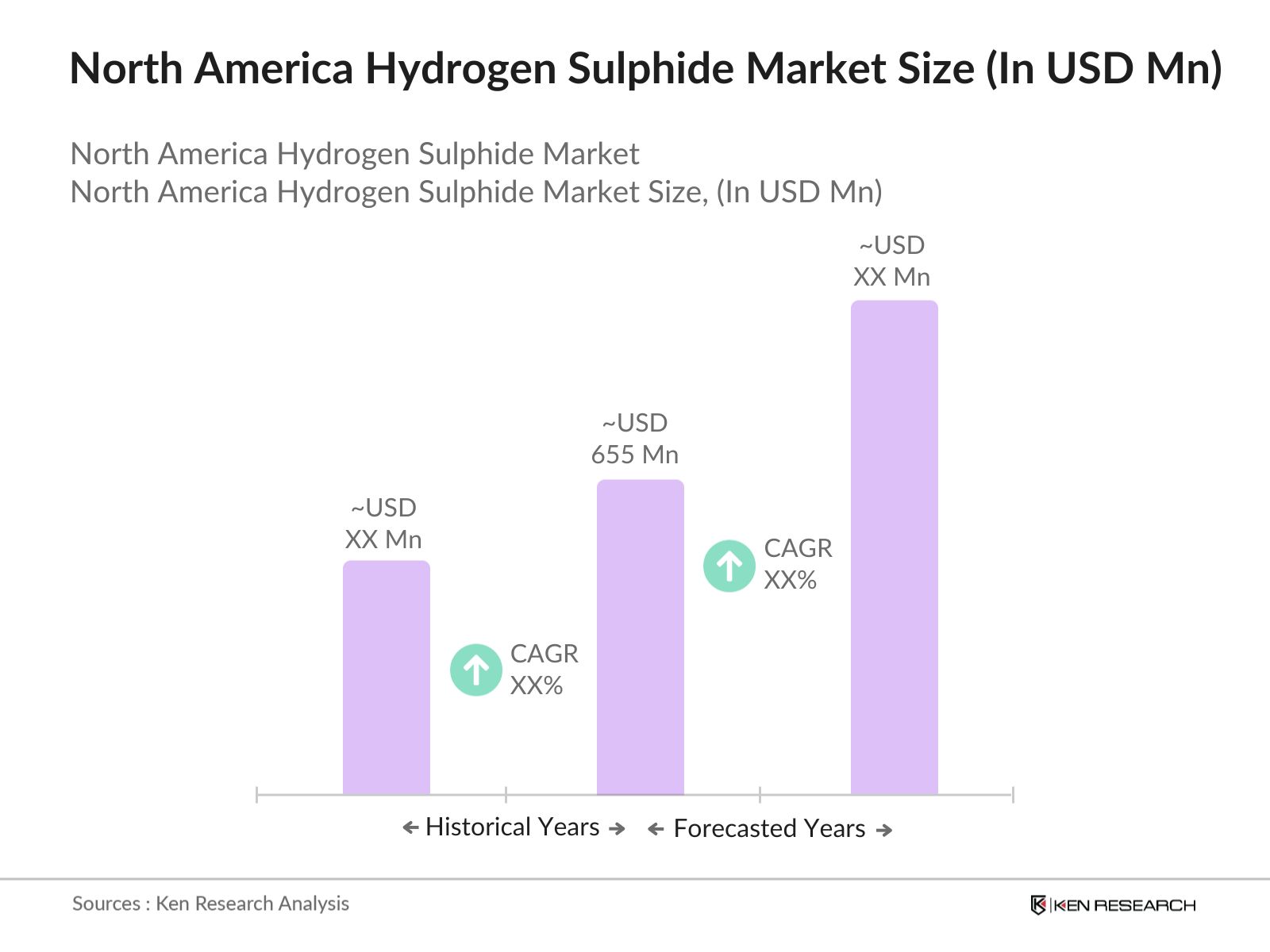
- The North America Hydrogen Sulphide market is valued at USD 660 million, primarily driven by its essential role in the oil and gas sector for applications like desulfurization and sulfur recovery. This segment remains integral to refining processes and enhanced oil recovery, contributing to sustained demand for hydrogen sulfide. The market is bolstered by rising investments in the petrochemical and gas processing industries, necessitating efficient gas treatment and sulfur management.
- The United States dominates the hydrogen sulfide market, attributed to its substantial oil and gas production infrastructure and stringent environmental regulations requiring gas treatment solutions. Canada follows closely due to its expanding natural gas processing operations, with significant growth in Alberta and British Columbia, where oil and gas sectors demand efficient hydrogen sulfide management technologies.
- Strict compliance standards for hydrogen sulphide emissions are being enforced in 2024, particularly by the EPA, requiring all facilities to report their H2S emissions. Compliance audits for over 800 facilities in North America in 2024 highlighted an increased adherence to emission standards. These regulations have heightened the need for controlled hydrogen sulphide usage, driving technological innovations and compliance solutions to meet stringent standards.
North America Hydrogen Sulphide Market Segmentation
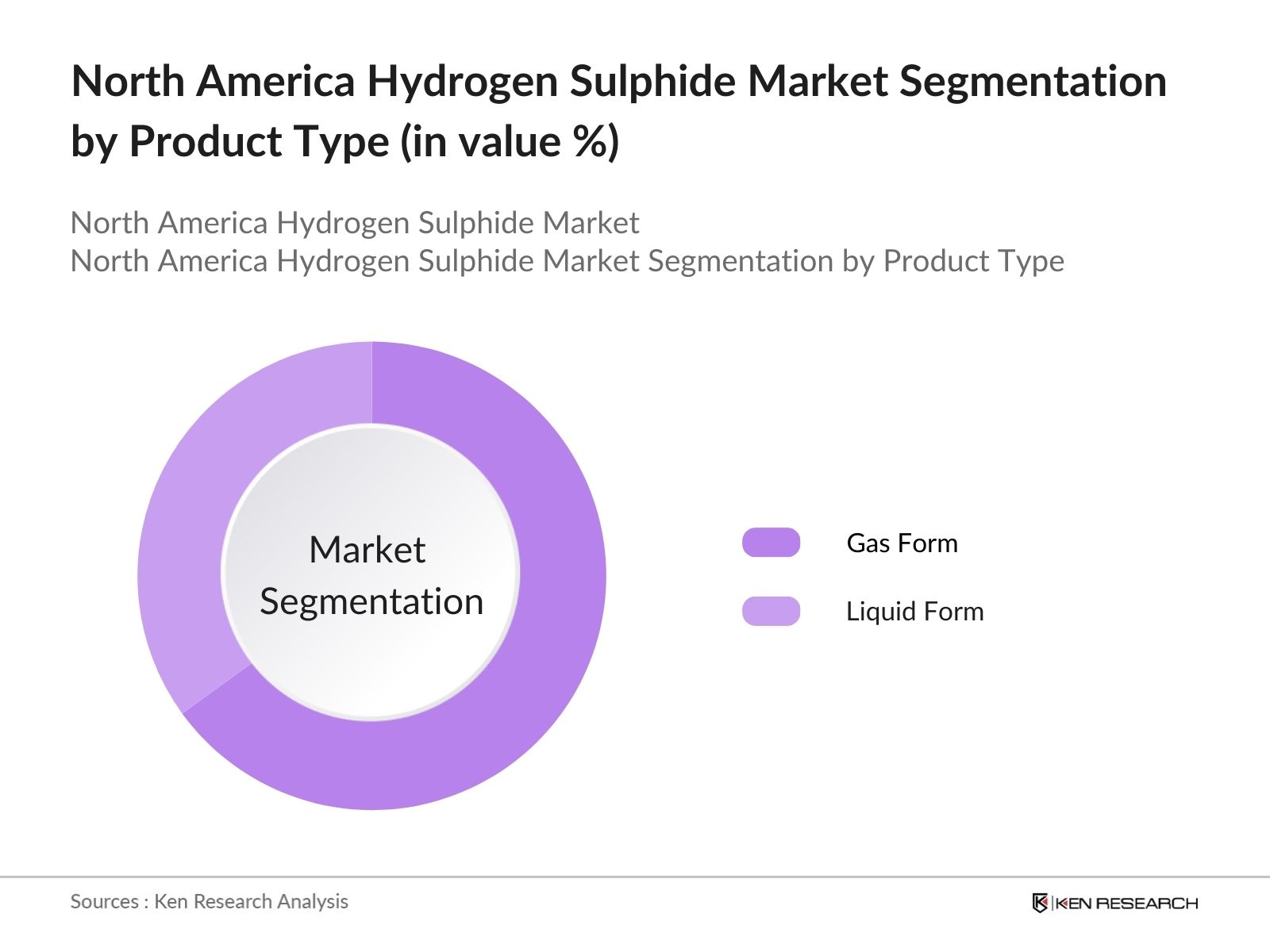
By Product Type: The North America Hydrogen Sulfide market is segmented by product type into Gas Form and Liquid Form. Recently, the gas form has dominated the market due to its prevalent use in desulfurization in the oil refining industry, where it is utilized to extract sulfur compounds from hydrocarbon fuels. This segments dominance stems from the efficiency and adaptability of gaseous hydrogen sulfide in large-scale industrial processes, making it a preferred choice for operators.
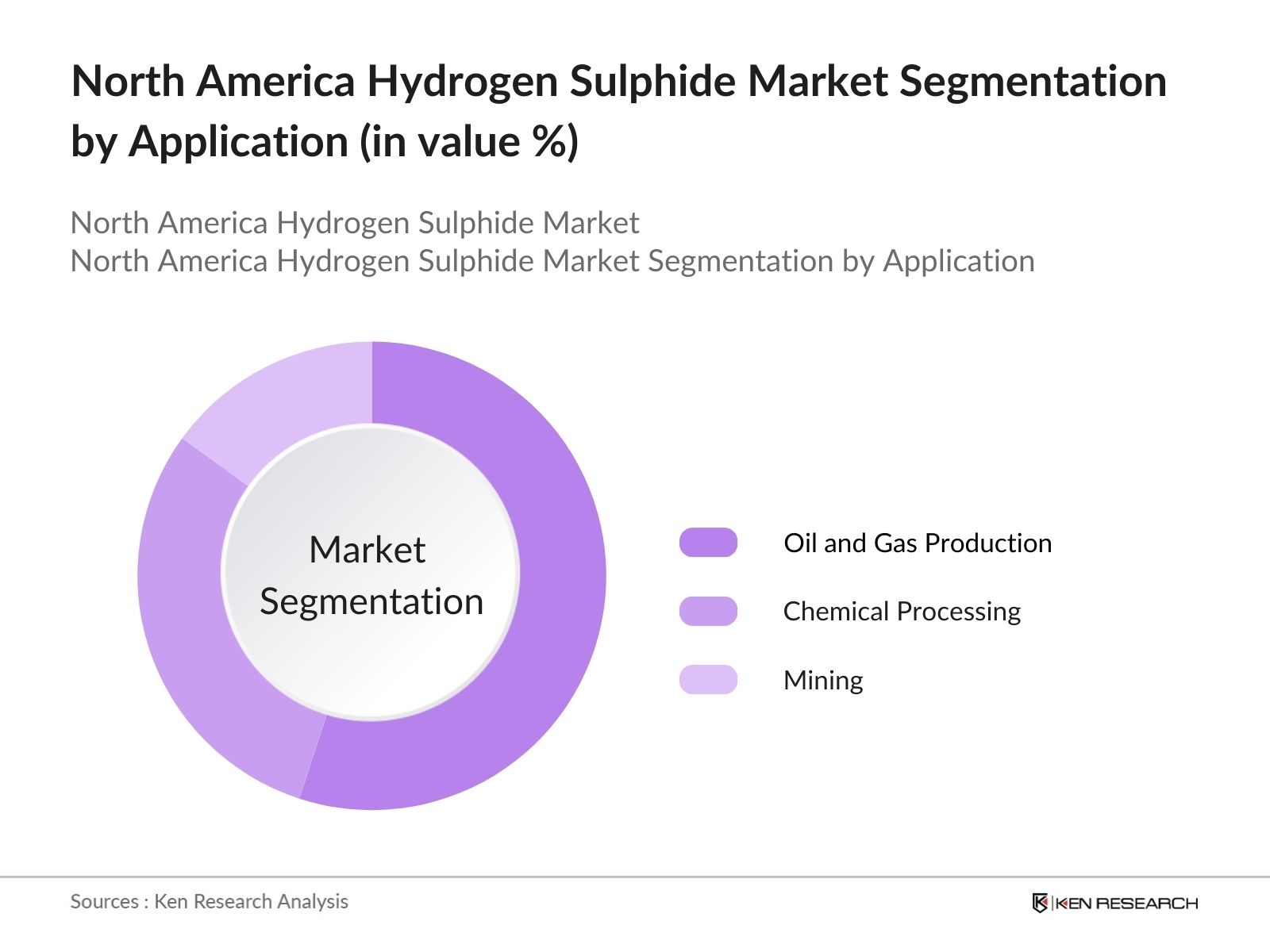
By Application: The market is segmented by application into Oil and Gas Production, Chemical Processing, and Mining. Within these, the oil and gas production segment holds the largest market share, as hydrogen sulfide is crucial in refining and desulfurization processes. This applications leadership is due to the extensive presence of oil refineries and natural gas processing facilities in North America, with hydrogen sulfide being essential for maintaining environmental standards in emissions control.
North America Hydrogen Sulphide Market Competitive Landscape
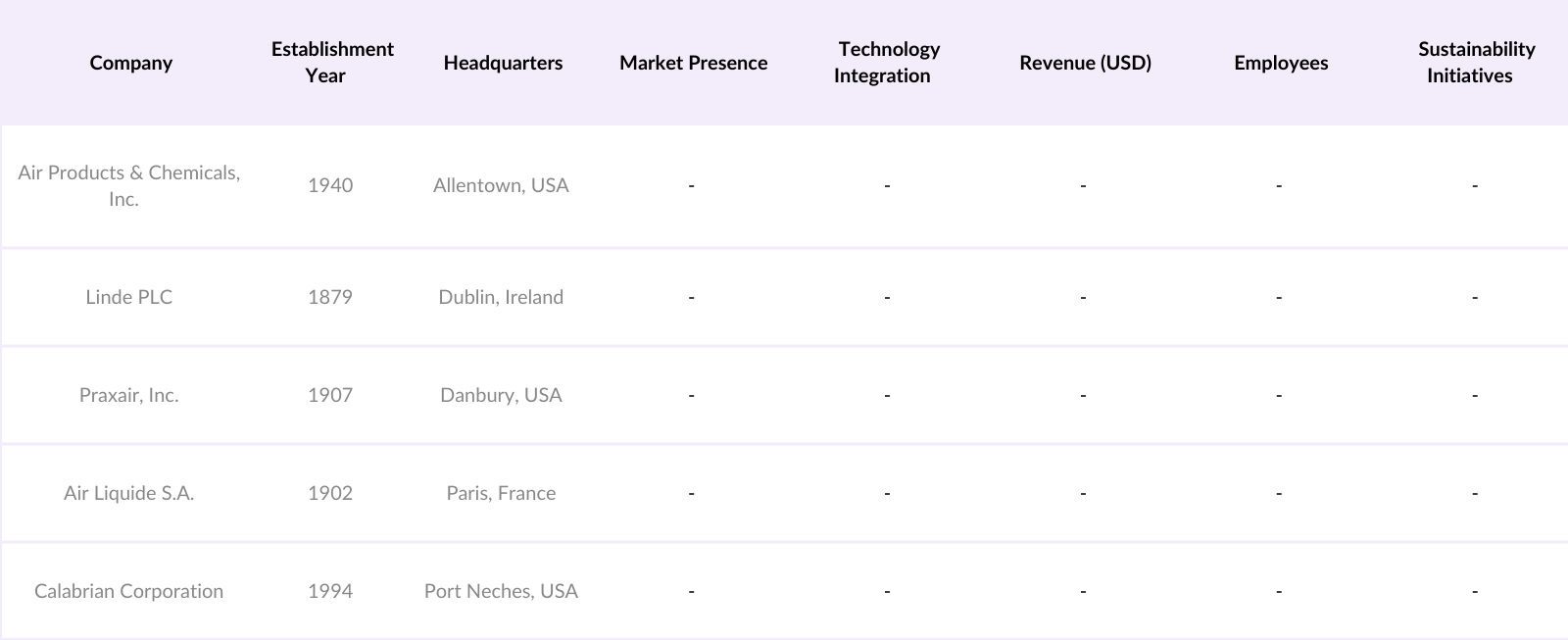
The North America Hydrogen Sulphide market is dominated by key players such as Linde PLC, Air Liquide S.A., and Praxair, Inc. Their dominance underscores the consolidated nature of the market, where these players leverage technological advancements and safety standards to meet stringent regulatory requirements.
North America Hydrogen Sulphide Market Analysis
Growth Drivers
- Industrial Demand: The North American hydrogen sulphide market sees strong industrial demand due to its extensive use in chemical production, particularly for elemental sulfur and sulfuric acid. In 2024, North Americas chemical manufacturing output reached over $700 billion, of which hydrogen sulphide is integral in various processes. The U.S. Bureau of Labor Statistics (BLS) confirms a stable growth in chemical production output for 2024, creating robust demand for hydrogen sulphide across manufacturing sectors. With North American production levels of sulfuric acid approximating 33 million metric tons in 2023, this demand bolsters the hydrogen sulphide market's relevance for the regions industrial outputs.
- Enhanced Oil Recovery (EOR) Adoption: Enhanced Oil Recovery (EOR) techniques utilizing hydrogen sulphide are gaining traction, especially in regions like Texas, which produced over 1.9 billion barrels of crude oil in 2023. This demand is tied to the U.S. Energy Information Administration's (EIA) reports showing that EOR techniques enhance recovery rates by up to 60%, depending on the reservoir characteristics. Such techniques have gained prominence, with approximately 45% of new EOR projects in 2024 adopting gas injection methods involving hydrogen sulphide. This significant adoption emphasizes the growing demand for hydrogen sulphide in the energy sector.
- Gas Processing Sector Growth: The U.S. and Canada collectively processed approximately 4.7 trillion cubic meters of natural gas in 2023, with purification processes that utilize hydrogen sulphide as an essential component. According to the U.S. Department of Energy, the steady growth of natural gas processing plants increased to 515 facilities across North America in 2024. These facilities require hydrogen sulphide to separate impurities, thereby driving the demand for this compound within the natural gas processing sector.
Challenges
- Health & Safety Concerns: Hydrogen sulphide poses significant health risks at high exposure levels, leading to a focus on safety protocols. In 2024, the Occupational Safety and Health Administration (OSHA) reported that hydrogen sulphide exposure remains a concern in over 35% of oil and gas facilities across North America, with regulations aiming to limit permissible exposure limits (PELs) to ensure workforce safety. Addressing these safety concerns requires continuous investments in protective gear and monitoring systems, making it challenging for smaller facilities to implement necessary safeguards.
- High Costs in Handling and Storage: The storage and handling of hydrogen sulphide involve high operational expenses due to its toxic nature. Data from the U.S. Energy Information Administration reveals that storage infrastructure costs have risen approximately 9% year-over-year in 2024 due to stringent safety requirements. Additional costs in North American facilities also reflect the expenses associated with safe handling practices, impacting the profitability of hydrogen sulphide applications in various sectors.
North America Hydrogen Sulphide Market Future Outlook
North America Hydrogen Sulphide market is anticipated to experience steady growth due to ongoing advancements in gas treatment technologies and the rising importance of environmental compliance. Additionally, growing demand in downstream applications, particularly within the oil, gas, and chemical sectors, is expected to drive further investment and development in this market.
Market Opportunities
- Technological Advancements in Safety: Technological advances in gas detection and monitoring systems present opportunities to enhance safety protocols in hydrogen sulphide handling. According to data from the National Institute of Standards and Technology (NIST), over 200 new sensor technologies were introduced in 2024, significantly reducing hydrogen sulphide exposure risks. These innovations allow for real-time detection and monitoring, especially in industries with complex operations like refining and gas processing, opening the door for safer, more efficient hydrogen sulphide applications.
- Investments in Oil and Gas Sector: The North American oil and gas sector, bolstered by $82 billion in investments in 2024 (EIA data), has shown strong interest in enhanced extraction techniques requiring hydrogen sulphide. With major refineries expanding operations, especially in the Gulf region, the need for hydrogen sulphide-based processes has increased. The sectors reliance on hydrogen sulphide for EOR further underscores its significance in supporting production activities. This investment trend reflects the expanding future role of hydrogen sulphide within North Americas oil and gas infrastructure.
Scope of the Report
|
Segment |
Sub-Segment |
|
Product Type |
Gas Form |
|
Liquid Form |
|
|
Application |
Chemical Processing |
|
Oil and Gas Production |
|
|
Mining |
|
|
End-User |
Industrial Use |
|
Laboratories |
|
|
Extraction Method |
Gas Processing Plants |
|
Refinery By-Products |
|
|
Region |
United States |
|
Canada |
Products
Key Target Audience
Oil and Gas Companies
Chemical Processing Companies
Environmental Compliance Firms
Hydrogen Sulfide Mitigation Solution Providers
Mining Corporations
Industrial Safety Equipment Manufacturers
Investors and Venture Capitalist Firms
Government and Regulatory Bodies (e.g., EPA, OSHA)
Companies
Players Mentioned in the Report
Air Products & Chemicals, Inc.
Linde PLC
Praxair, Inc.
Air Liquide S.A.
Calabrian Corporation
Messer Group GmbH
BOC Group
Matheson Tri-Gas, Inc.
Gulf Coast Chemical, LLC
Airgas, Inc.
Table of Contents
1. North America Hydrogen Sulphide Market Overview
1.1 Definition and Scope
1.2 Market Taxonomy
1.3 Market Growth Rate
1.4 Market Segmentation Overview
2. North America Hydrogen Sulphide Market Size (In USD Mn)
2.1 Historical Market Size
2.2 Year-On-Year Growth Analysis
2.3 Key Market Developments and Milestones
3. North America Hydrogen Sulphide Market Analysis
3.1 Growth Drivers
3.1.1 Industrial Demand (by Segment)
3.1.2 Enhanced Oil Recovery (EOR) Adoption
3.1.3 Gas Processing Sector Growth
3.1.4 Environmental Regulations
3.2 Market Challenges
3.2.1 Health & Safety Concerns
3.2.2 High Costs in Handling and Storage
3.2.3 Volatile Raw Material Prices
3.3 Opportunities
3.3.1 Technological Advancements in Safety
3.3.2 Investments in Oil and Gas Sector
3.3.3 Demand for H2S Mitigation Solutions
3.4 Trends
3.4.1 Shift towards Safer Extraction Techniques
3.4.2 Integration with Renewable Gas Technologies
3.5 Government Regulation
3.5.1 Compliance Standards
3.5.2 Emission Control Policies
3.6 SWOT Analysis
3.7 Porters Five Forces
3.8 Competition Ecosystem
4. North America Hydrogen Sulphide Market Segmentation
4.1 By Product Type (In Value %)
4.1.1 Gas Form
4.1.2 Liquid Form
4.2 By Application (In Value %)
4.2.1 Chemical Processing
4.2.2 Oil and Gas Production
4.2.3 Mining
4.3 By End-User (In Value %)
4.3.1 Industrial Use
4.3.2 Laboratories
4.4 By Extraction Method (In Value %)
4.4.1 Gas Processing Plants
4.4.2 Refinery By-Products
4.5 By Region (In Value %)
4.5.1 United States
4.5.2 Canada
5. North America Hydrogen Sulphide Market Competitive Analysis
5.1 Detailed Profiles of Major Companies
5.1.1 Air Products & Chemicals, Inc.
5.1.2 Messer Group GmbH
5.1.3 Linde PLC
5.1.4 Praxair, Inc.
5.1.5 Air Liquide S.A.
5.1.6 Matheson Tri-Gas, Inc.
5.1.7 BOC Group
5.1.8 Airgas, Inc.
5.1.9 Gulf Coast Chemical, LLC
5.1.10 Calabrian Corporation
5.2 Cross Comparison Parameters (Product Portfolio, Revenue, Market Presence, Safety Protocols, Supply Chain Network, Compliance with Emission Standards, Technological Investments, Operational Efficiency)
5.3 Market Share Analysis
5.4 Strategic Initiatives
5.5 Mergers and Acquisitions
5.6 Investment Analysis
6. North America Hydrogen Sulphide Market Regulatory Framework
6.1 Environmental Standards
6.2 Occupational Health Requirements
6.3 Transportation and Storage Compliance
7. North America Hydrogen Sulphide Future Market Size (In USD Mn)
7.1 Future Market Size Projections
7.2 Key Factors Driving Future Market Growth
8. North America Hydrogen Sulphide Future Market Segmentation
8.1 By Product Type (In Value %)
8.2 By Application (In Value %)
8.3 By End-User (In Value %)
8.4 By Extraction Method (In Value %)
8.5 By Region (In Value %)
9. North America Hydrogen Sulphide Market Analysts Recommendation
9.1 Target Market Opportunities
9.2 Risk Assessment and Mitigation Strategies
9.3 Supply Chain Optimization Suggestions
9.4 Future Product Development Pathways
Research Methodology
Step 1: Identification of Key Variables
This stage involves identifying the primary factors influencing the North America Hydrogen Sulfide Market. Extensive research is conducted, focusing on regulatory frameworks, industry requirements, and critical operational factors specific to the sector.
Step 2: Market Analysis and Construction
Historical data are aggregated and analyzed to derive key insights into market performance. This includes examining industrial applications and the adoption rate of hydrogen sulfide management solutions across North America.
Step 3: Hypothesis Validation and Expert Consultation
Hypotheses are validated through consultations with industry experts, providing firsthand insights from major industry players, including those from regulatory agencies and leading market stakeholders.
Step 4: Research Synthesis and Final Output
Data from secondary research and industry consultations are synthesized to deliver a comprehensive analysis, validated through cross-referencing with proprietary databases, ensuring accuracy and reliability.
Frequently Asked Questions
1. How big is the North America Hydrogen Sulphide Market?
The North America Hydrogen Sulphide market is valued at USD 660 million, driven by strong demand in oil refining and chemical processing industries, alongside stringent environmental standards.
2. What are the challenges in the North America Hydrogen Sulphide Market?
Key challenges in North America Hydrogen Sulphide Market include handling and storage hazards, environmental concerns, and regulatory compliance issues, especially due to hydrogen sulfide's toxicity and potential environmental impact.
3. Who are the major players in the North America Hydrogen Sulphide Market?
Prominent players in North America Hydrogen Sulphide Market include Linde PLC, Praxair, Inc., and Air Liquide S.A., known for their technological prowess, expansive distribution networks, and commitment to meeting safety standards.
4. What are the growth drivers in the North America Hydrogen Sulphide Market?
Growth drivers in North America Hydrogen Sulphide Market include the rising demand in the oil and gas sector, particularly for desulfurization applications, alongside increased investments in safety and environmental compliance measures.
Why Buy From Us?

What makes us stand out is that our consultants follows Robust, Refine and Result (RRR) methodology. i.e. Robust for clear definitions, approaches and sanity checking, Refine for differentiating respondents facts and opinions and Result for presenting data with story

We have set a benchmark in the industry by offering our clients with syndicated and customized market research reports featuring coverage of entire market as well as meticulous research and analyst insights.

While we don't replace traditional research, we flip the method upside down. Our dual approach of Top Bottom & Bottom Top ensures quality deliverable by not just verifying company fundamentals but also looking at the sector and macroeconomic factors.

With one step in the future, our research team constantly tries to show you the bigger picture. We help with some of the tough questions you may encounter along the way: How is the industry positioned? Best marketing channel? KPI's of competitors? By aligning every element, we help maximize success.

Our report gives you instant access to the answers and sources that other companies might choose to hide. We elaborate each steps of research methodology we have used and showcase you the sample size to earn your trust.

If you need any support, we are here! We pride ourselves on universe strength, data quality, and quick, friendly, and professional service.