
North America Infrared Imaging Market Outlook to 2030
Region:Mexico
Author(s):Meenakshi Bisht
Product Code:KROD5790
Region:Mexico
Author(s):Meenakshi Bisht
Product Code:KROD5790
December 2024
98
Listen to the audio summary
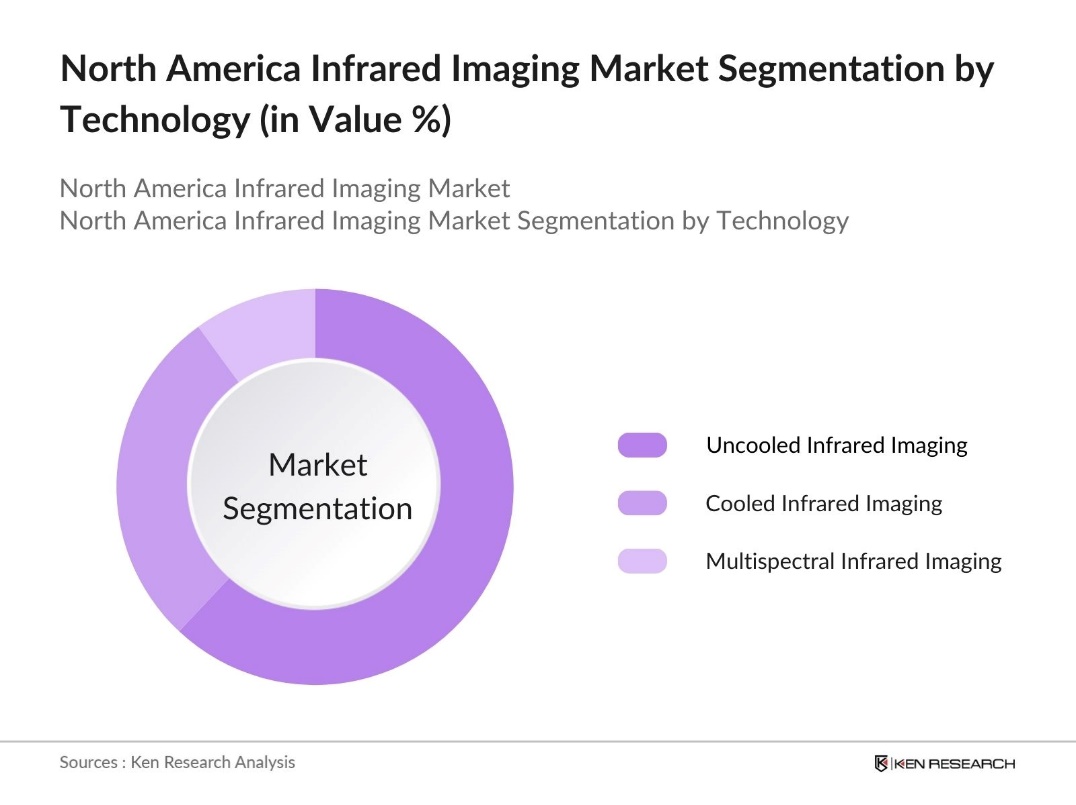
By Technology: The North America Infrared Imaging market is segmented by technology into cooled infrared imaging, uncooled infrared imaging, and multispectral infrared imaging. Recently, uncooled infrared imaging has taken the dominant market share due to its wide application in various industries such as automotive, industrial, and healthcare. Uncooled infrared sensors are more cost-effective and easier to maintain, making them highly suitable for applications like predictive maintenance and healthcare diagnostics. Their reliability in extreme environmental conditions and advancements in sensor technology have further contributed to their dominance.
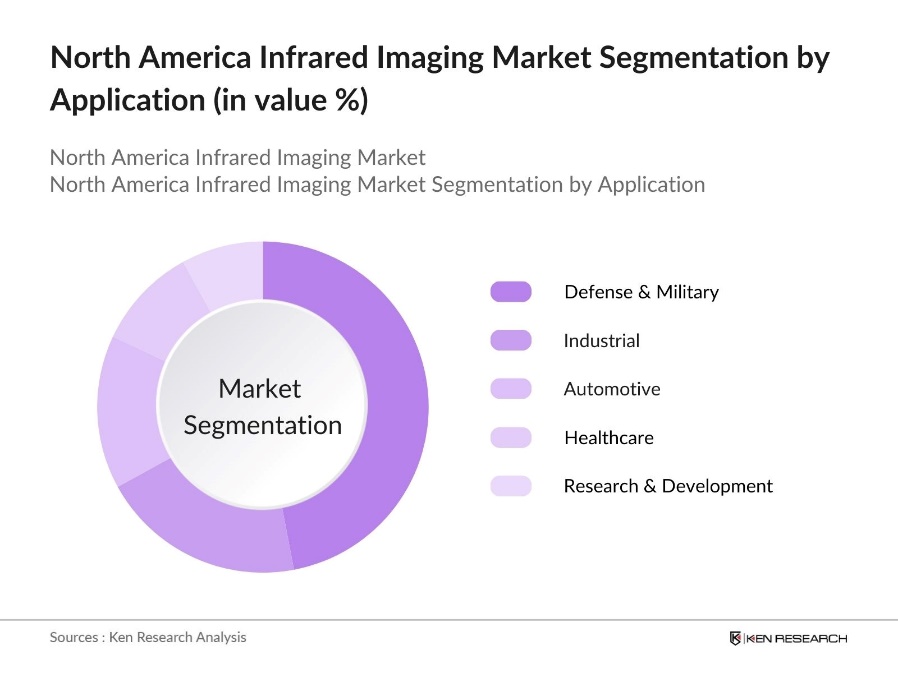
By Application: The North America Infrared Imaging market is segmented by application into defense & military, industrial, automotive, healthcare, and research & development. The defense and military application holds a dominant market share due to the high demand for thermal imaging cameras for border surveillance, drone operations, and target identification. The extensive use of infrared imaging in identifying threats in low visibility conditions and enhancing tactical advantage has fueled its adoption in military applications. Investments by the U.S. Department of Defense in next-generation thermal imaging technologies have further solidified the dominance of this segment.
The market shows a consolidated structure, with the top five players commanding a significant share of the market due to their innovations in sensor technologies, strong R&D investments, and military contracts. These companies maintain their market presence through strategic partnerships with defense organizations, aerospace industries, and advanced technological solutions for both civil and military use.
|
Company |
Establishment Year |
Headquarters |
Product Portfolio |
Global Presence |
Strategic Partnerships |
Innovation Focus |
R&D Investment |
Defense Contracts |
|
FLIR Systems |
1978 |
Wilsonville, OR |
||||||
|
Teledyne Technologies |
1960 |
Thousand Oaks, CA |
||||||
|
BAE Systems |
1999 |
Arlington, VA |
||||||
|
Leonardo DRS |
1969 |
Arlington, VA |
||||||
|
Raytheon Technologies |
1922 |
Waltham, MA |
Over the next five years, the North America Infrared Imaging market is poised for significant growth, driven by continuous investments in defense technologies, advancements in automotive ADAS systems, and increasing healthcare applications. The development of AI and IoT-integrated infrared sensors and increasing demand for thermal imaging solutions in industrial automation are set to drive the market further. With rising security concerns and technological innovations in military surveillance systems, the market will continue to see substantial growth across multiple industries.
|
Technology |
Cooled Infrared Imaging Uncooled Infrared Imaging Multispectral Infrared Imaging |
|
Application |
Defense & Military Industrial Automotive Healthcare Research & Development |
|
Wavelength |
Near-Infrared (NIR) Short-Wave Infrared (SWIR) Mid-Wave Infrared (MWIR) Long-Wave Infrared (LWIR) |
|
Component |
Infrared Cameras Infrared Detectors Infrared Sensors Imaging Systems |
|
End-User Industry |
Defense & Security Aerospace Manufacturing Automotive Medical |
1.1. Definition and Scope
1.2. Market Taxonomy
1.3. Market Growth Rate (Thermal Imaging, Long-Wave Infrared, Mid-Wave Infrared, Short-Wave Infrared)
1.4. Market Segmentation Overview
2.1. Historical Market Size
2.2. Year-On-Year Growth Analysis (Infrared Cameras, Infrared Sensors, Infrared Detectors)
2.3. Key Market Developments and Milestones (Defense & Military, Industrial, Healthcare, Research, Automotive)
3.1. Growth Drivers
3.1.1. Increased Adoption in Defense Applications
3.1.2. Expanding Use in Automotive ADAS Systems
3.1.3. Rising Demand in Medical Imaging
3.1.4. Growing Industrial Applications (Predictive Maintenance, R&D)
3.2. Market Challenges
3.2.1. High Production Costs of Infrared Detectors
3.2.2. Limited Range of Infrared Technologies
3.2.3. Regulatory and Certification Constraints in Military and Healthcare
3.3. Opportunities
3.3.1. Innovation in Infrared Sensors
3.3.2. Increasing Focus on Autonomous Vehicle Systems
3.3.3. Expansion in Emerging Industrial Markets (Smart Cities, Industry 4.0)
3.3.4. Collaborations with Aerospace & Defense Sector
3.4. Trends
3.4.1. Integration of Infrared Imaging with AI and IoT
3.4.2. Rise of Compact and Handheld Infrared Devices
3.4.3. Technological Advancements in Mid-Wave Infrared Systems
3.4.4. Infrared Applications in Healthcare Diagnostics
3.5. Government Regulation
3.5.1. Military Export Regulations (ITAR Compliance)
3.5.2. Medical Device Approvals (FDA Certifications)
3.5.3. Energy Efficiency and Environmental Standards
3.5.4. Safety Standards for Infrared Usage in Industrial Settings
3.6. SWOT Analysis
3.7. Stakeholder Ecosystem
3.8. Porters Five Forces Analysis (Supplier Power, Buyer Power, Competitive Rivalry, Threat of Substitutes, Entry Barriers)
3.9. Competition Ecosystem
4.1. By Technology (In Value %)
4.1.1. Cooled Infrared Imaging
4.1.2. Uncooled Infrared Imaging
4.1.3. Multispectral Infrared Imaging
4.2. By Application (In Value %)
4.2.1. Defense & Military
4.2.2. Industrial
4.2.3. Automotive
4.2.4. Healthcare
4.2.5. Research & Development
4.3. By Wavelength (In Value %)
4.3.1. Near-Infrared (NIR)
4.3.2. Short-Wave Infrared (SWIR)
4.3.3. Mid-Wave Infrared (MWIR)
4.3.4. Long-Wave Infrared (LWIR)
4.4. By Component (In Value %)
4.4.1. Infrared Cameras
4.4.2. Infrared Detectors
4.4.3. Infrared Sensors
4.4.4. Imaging Systems
4.5. By End-User Industry (In Value %)
4.5.1. Defense & Security
4.5.2. Aerospace
4.5.3. Manufacturing
4.5.4. Automotive
4.5.5. Medical
5.1. Detailed Profiles of Major Companies
5.1.1. FLIR Systems
5.1.2. Teledyne Technologies
5.1.3. BAE Systems
5.1.4. Leonardo DRS
5.1.5. Xenics
5.1.6. Opgal Optronic Industries
5.1.7. Raytheon Technologies
5.1.8. InfraTec
5.1.9. Testo SE & Co.
5.1.10. Sofradir Group
5.1.11. L3Harris Technologies
5.1.12. Lockheed Martin
5.1.13. Axis Communications
5.1.14. FLUKE Corporation
5.1.15. General Dynamics
5.2. Cross Comparison Parameters (Product Portfolio, Market Share, Global Presence, Product Innovation, Strategic Partnerships)
5.3. Market Share Analysis
5.4. Strategic Initiatives
5.5. Mergers And Acquisitions
5.6. Investment Analysis
5.7. Venture Capital Funding
5.8. Government Grants & Incentives
5.9. Private Equity Investments
6.1. ITAR Compliance
6.2. FDA Certification for Medical Applications
6.3. Emission and Efficiency Standards
6.4. Industrial Safety Standards
7.1. Future Market Size Projections
7.2. Key Factors Driving Future Market Growth (AI Integration, Autonomous Systems, Advancements in Thermal Imaging)
8.1. By Technology (In Value %)
8.2. By Application (In Value %)
8.3. By Wavelength (In Value %)
8.4. By Component (In Value %)
8.5. By End-User Industry (In Value %)
9.1. TAM/SAM/SOM Analysis
9.2. Customer Cohort Analysis
9.3. Marketing Initiatives
9.4. White Space Opportunity Analysis
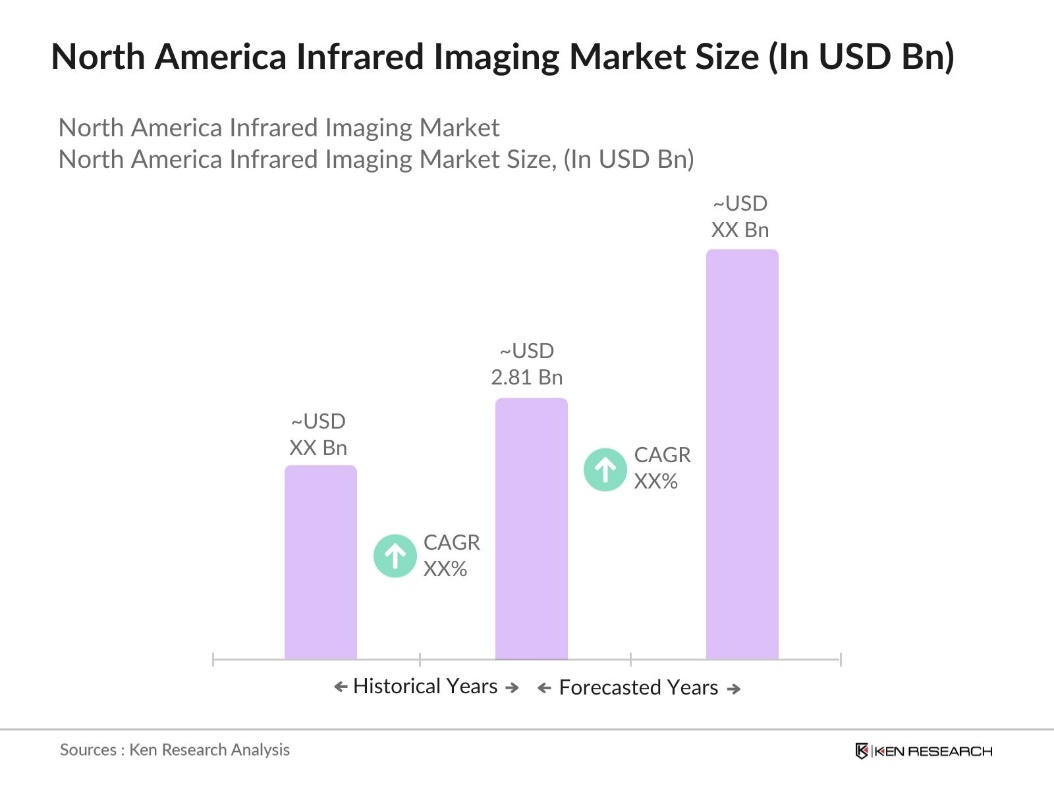
Disclaimer Contact UsThe North America Infrared Imaging Market is valued at USD 2.81 billion, with significant demand from the defense, industrial, and healthcare sectors, fueled by technological advancements.
The primary challenges in North America Infrared Imaging Market include high production costs for infrared detectors and regulatory hurdles, especially for defense and medical applications, which limit the adoption of the technology.
Key players in North America Infrared Imaging Market include FLIR Systems, Teledyne Technologies, BAE Systems, Leonardo DRS, and Raytheon Technologies, dominating through their innovation, strategic partnerships, and military contracts.
The North America Infrared Imaging Market is driven by rising demand for thermal imaging in defense, advancements in AI and IoT integration, and increased adoption in industrial automation and healthcare.

What makes us stand out is that our consultants follows Robust, Refine and Result (RRR) methodology. i.e. Robust for clear definitions, approaches and sanity checking, Refine for differentiating respondents facts and opinions and Result for presenting data with story

We have set a benchmark in the industry by offering our clients with syndicated and customized market research reports featuring coverage of entire market as well as meticulous research and analyst insights.

While we don't replace traditional research, we flip the method upside down. Our dual approach of Top Bottom & Bottom Top ensures quality deliverable by not just verifying company fundamentals but also looking at the sector and macroeconomic factors.

With one step in the future, our research team constantly tries to show you the bigger picture. We help with some of the tough questions you may encounter along the way: How is the industry positioned? Best marketing channel? KPI's of competitors? By aligning every element, we help maximize success.

Our report gives you instant access to the answers and sources that other companies might choose to hide. We elaborate each steps of research methodology we have used and showcase you the sample size to earn your trust.

If you need any support, we are here! We pride ourselves on universe strength, data quality, and quick, friendly, and professional service.