
North America Military Aviation Market Outlook to 2030
Region:North America
Author(s):Abhinav kumar
Product Code:KROD8235
November 2024
88
About the Report
North America Military Aviation Market Overview
- The North America Military Aviation market is valued at USD 21.2 billion, driven by the continuous modernization of military fleets and increasing government spending on defense. The U.S. and Canada play pivotal roles in fueling demand for advanced military aircraft, particularly fighter jets, transport aircraft, and unmanned aerial vehicles (UAVs). Strategic partnerships between local governments and major defense contractors also contribute to the growth of the market.
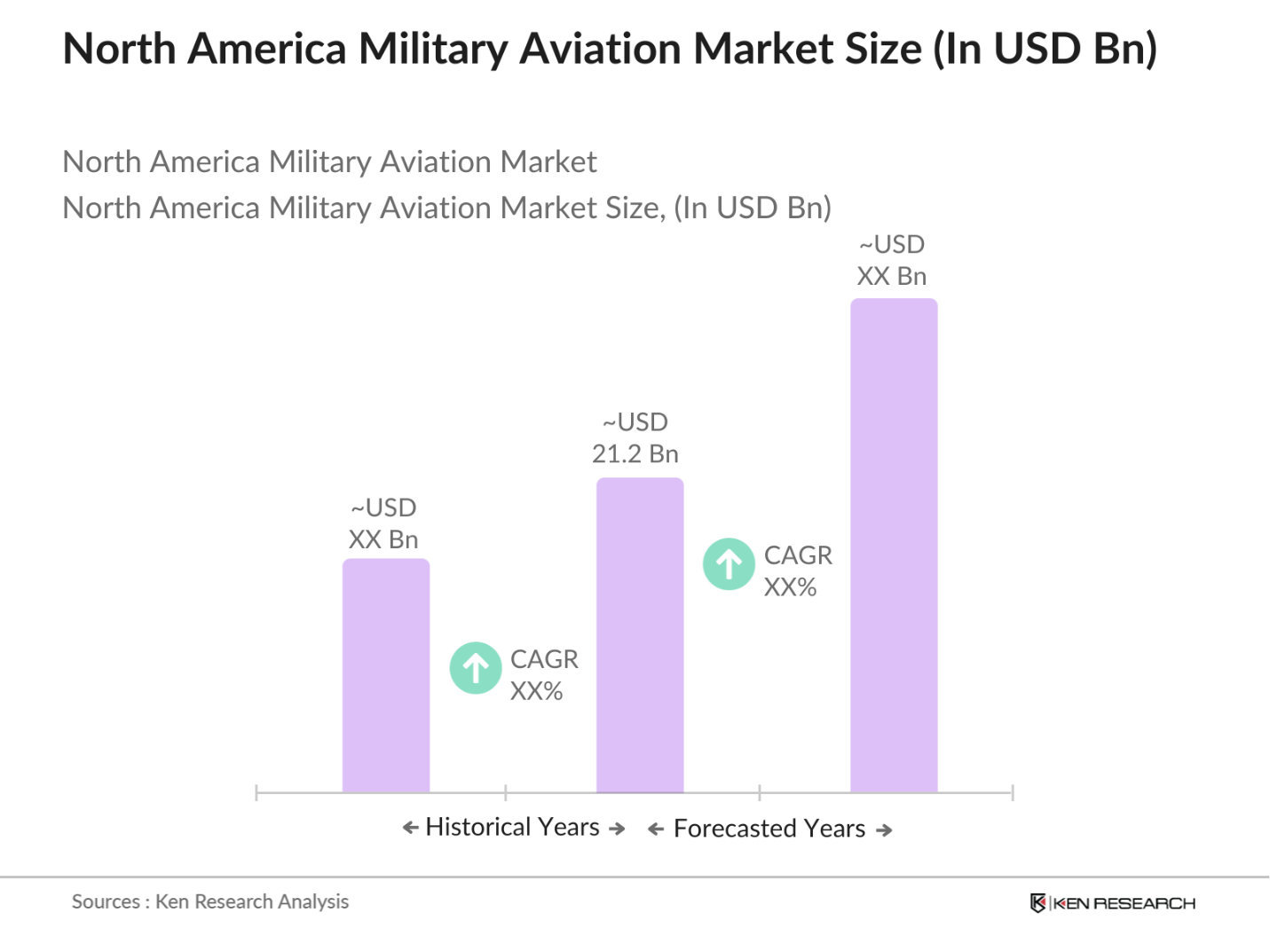
- The dominance of the United States in the military aviation market is attributed to its extensive defense budget, strong government backing for aerospace innovation, and the presence of leading manufacturers. Canada, with its specialized focus on transport aircraft and strategic alliances with the U.S., also significantly impacts market dynamics. The countrys geographic positioning and involvement in NATO further strengthen its influence.
- The United States anntinue to strengthen their defense and aerospace cooperation through programs such as NORAD, which plays a key role in safeguarding the regions airspace. In 2023, the U.S. Congress approved a $2 billion investment to modernize NORADs early warning and surveillance systems . This cooperation includes the exchange of technology and defense assets, which has led to joint development projects and increased demand for military aircraft in both countries.
North America Military Aviation Market Segmentation
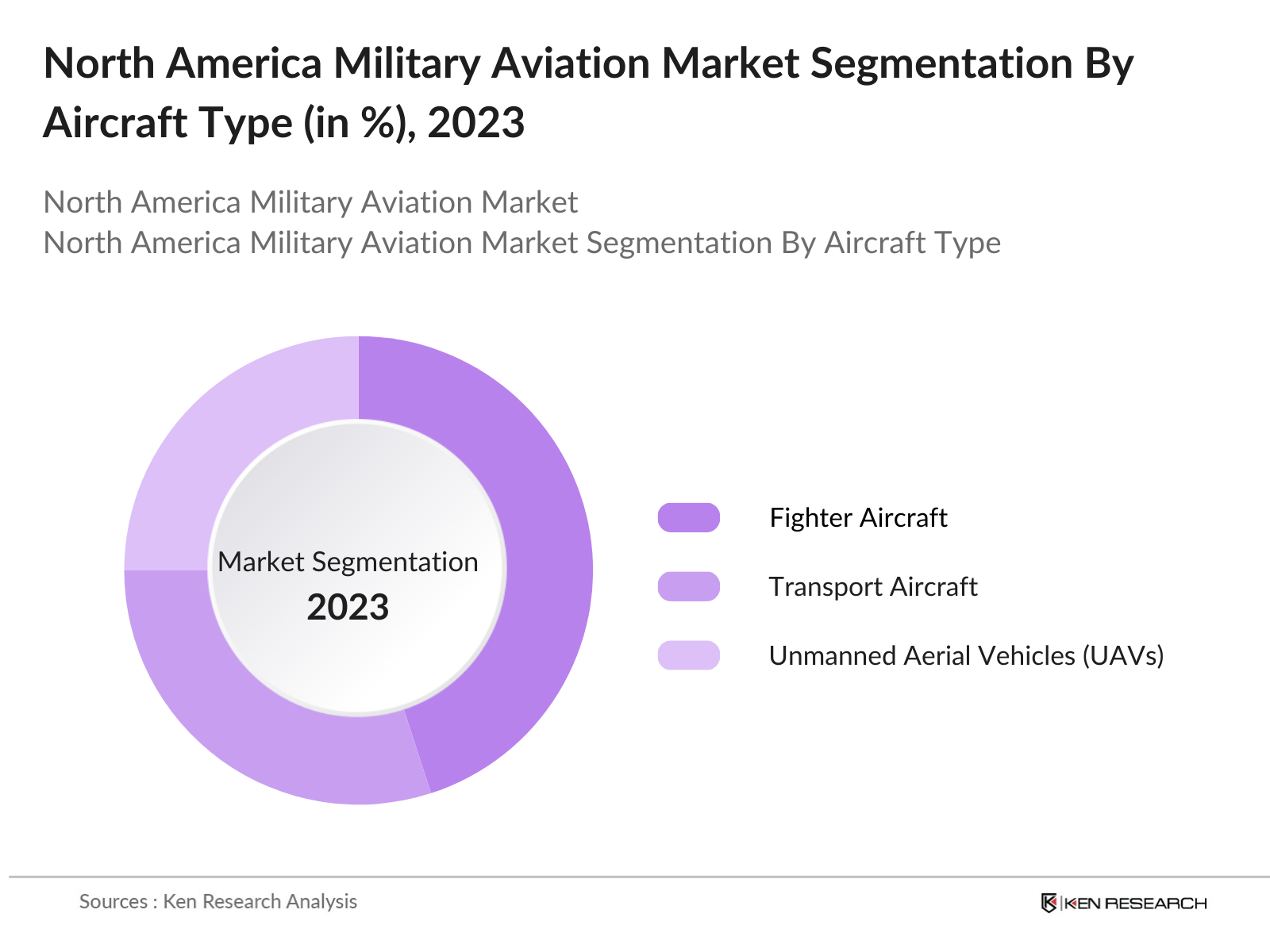
By Aircraft Type: The North America Military Aviation market is segmented by aircraft type into fighter aircraft, transport aircraft, and unmanned aerial vehicles (UAVs). Fighter aircraft hold a dominant market share due to their critical role in defense and national security. The continuous need for technological upgrades and the procurement of next-generation fighter jets such as the F-35 program drive this segments dominance.
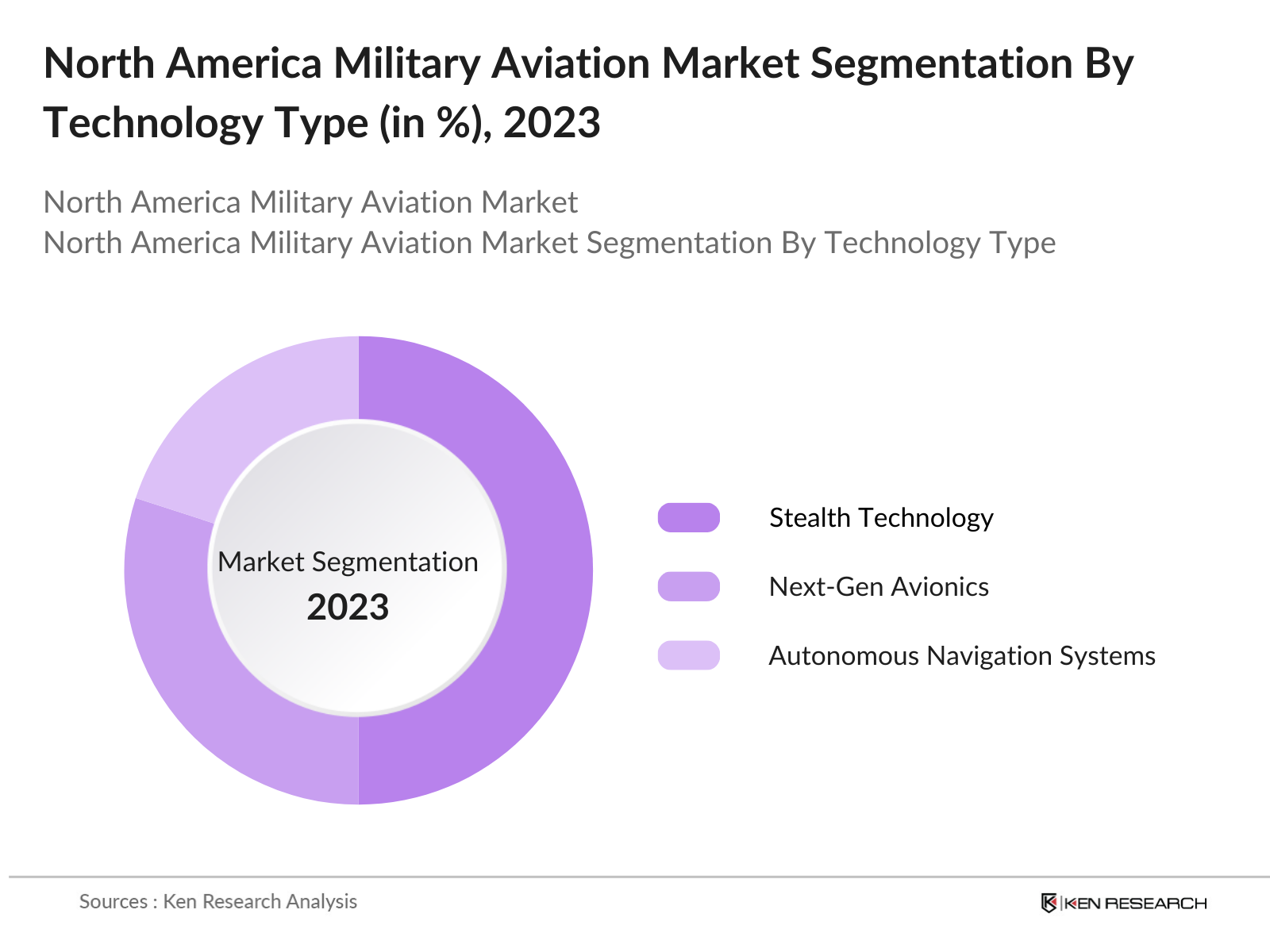
By Technology: The market is further segmented by technology into stealth technology, next-gen avionics, and autonomous navigation systems. Stealth technology remains dominant, driven by the strategic focus on increasing aircraft survivability and reducing detection by enemy radar. The growing investment in developing sophisticated stealth capabilities for military jets such as the F-22 and B-2 bombers has sustained the demand in this sub-segment.
North America Military Aviation Market Competitive Landscape
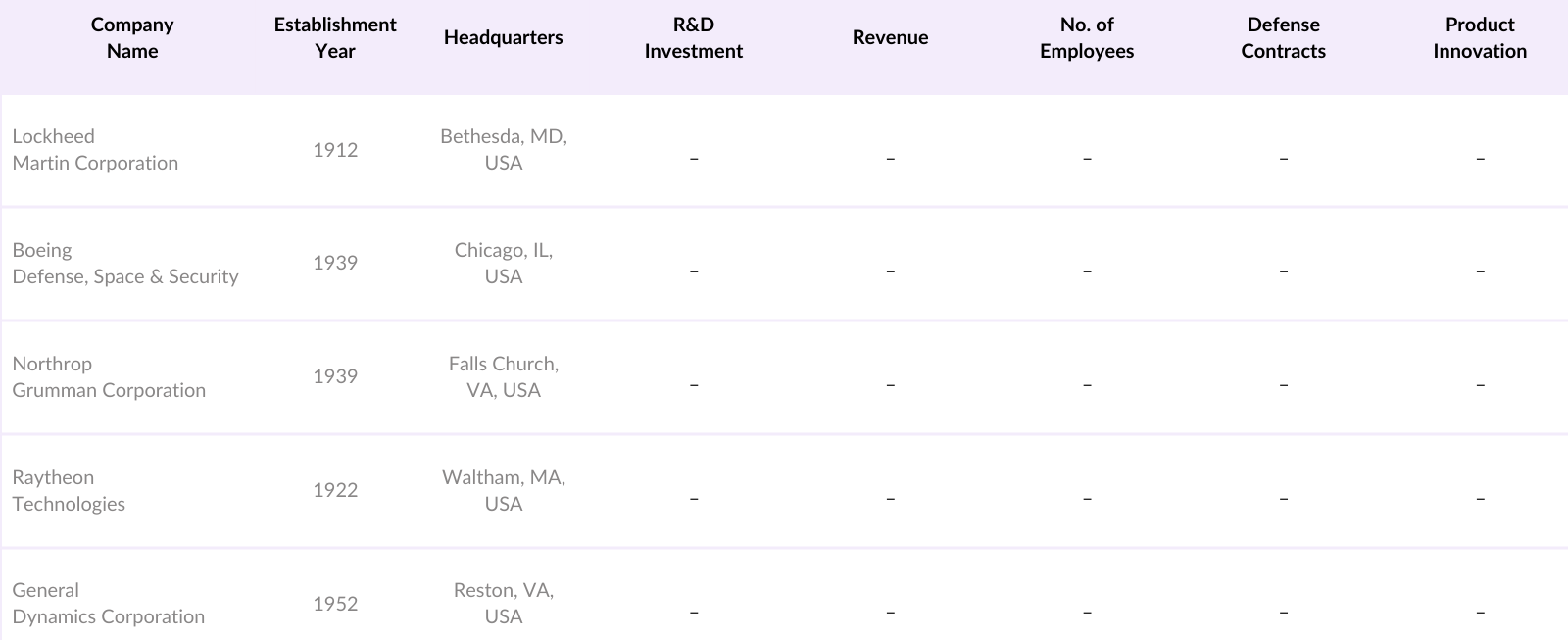
The North America Military Aviation market is dominated by a few key players, which include Lockheed Martin, Boeing, and Northrop Grumman. The influence of these companies is profound, given their established market presence and involvement in large-scale defense contracts. Additionally, these firms have a substantial competitive edge due to their ability to innovate and integrate next-gen military technologies, which are critical for maintaining national security and global military leadership.
North America Military Aviation Industry Analysis
Growth Drivers
- Increase in Defense Budget: The United States, being the largest military spender globally, allocated $858 billion to its defense budget in 2023, with a significant portion directed towards aviation technology and aircraft acquisition programs raised its defense budget to CAD 26.4 billion in 2023, focusing on enhancing its air defense capabilities. This increase in military expenditure is driving procurement and modernization of aircraft fleets across North America, supporting the growth of the military aviation market. Moreover, investment in defense infrastructure contributes to the development of airbases and aviation technology innovations.
- Technology Advancements in Aircraft Systems: North American defense forces are leveraging the latest technological innovations, such as stealth capabilities, electronic warfare, and radar systems. In 2023, the U.S. Air Force introduced upgrades to its F-35 fighter jets with advanced radar-evading technology and AI-based decision-making systems. Additionally, Canada hasa billion program for acquiring state-of-the-art aircraft technology. The continuous integration of systems such as these into military aviation fleets is driving operational efficiency, improving defense capabilities, and boosting the market.
- Geopolitical Tensions and Strategic Military Alliances: The North American region's military aviation market has been significantly influenced by ongoing geopolitical tensions, particularly involving NATOs response to threats in Eastern Europe and Asia-Pacific. U.S. defense officials allocated an additional $6 billion in 2023 to enhance aerial defense preparedness in response to the evolving international situation. Strategic military alliances, such as the North American Aerospace Defense Command (NORAD) modernization initiative, are also fueling investments in aviation upgrades to counteract growing geopolitical pressures.
Market Challenges
- High Development and Maintenance Costs: The cost of developing advanced military aircraft remains a major challenge. For instance, the U.S. F-35 program, which encompasses ongoing upgrades, is estimated to cost $1.7 trillion over its lifetime, making it the most expensive defense project in history. Maintenance of these sophisticated systems also requires substantial investment operating costs for each F-35 jet averaging $7 million. Such high costs are a burden on defense budgets and affect procurement rates, andpotential market growth.
- Regulatory and Compliance Complexities: Military aviation programs face stringent regulatory frameworks regarding aircraft design, testing, and deployment. In the U.S., military aircraft must meet Federal Aviation Administration (FAA) and Department of Defense (DoD) requirements for airworthiness, cybersecurity, and safety compliance . Additionally, export regulations under the International Traffic in Arms Regulations (ITAR) imposempliance standards on North American manufacturers, slowing down international sales of military aircraft . These regulatory hurdles increase operational costs and delay program execution.
North America Military Aviation Market Future Outlook
Over the next five years, the North America Military Aviation market is poised for significant growth driven by continued government investment in defense modernization, the rapid integration of artificial intelligence in aircraft systems, and an increased focus on developing unmanned aerial vehicles. The rising demand for high-performance fighter jets and innovations in next-gen avionics will further bolster the market. Moreover, strategic military partnerships and collaborations with allied nations are expected to support this growth trajectory.
Opportunities
- Increasing Adoption of Next-Gen Fighter Jets: North Americas military aviation sector is witnessing the accelerated adoption of next-generation fighter jets. The U.S. government approved a $35 billion order for over 300 new F-35 jets in 2023, bolstering its air superiority capabilities. Canada is also in the process of acquiring 88 F-35 fighters under a CAD 19 billion program. These acquisitions represent lucrative oppo manufacturers and defense contractors, driving market growth as countries continue to moderfleets with cutting-edge fighter technology.
- Partnerships for Enhanced Aviation Maintenance, Repair, and Overhaul: The North American military aviation market is experiencing a surge in partnerships between defense contractors and MRO service providers. In 2023, Lockheed Martin and the U.S. Air Force established a multi-billion-dollar agreement to enhance aircraft maintenance services for the F-35 program. Similarly, Canadian defense contractors are collaborating with international firms to provide MRO services for military aviation fleets, ensuring aircraft and operational readiness. This expanding network of partnerships presents growth opportunities for MRO businesses in the region.
Scope of the Report
|
By Aircraft Type |
Fighter Aircraft Transport Aircraft Unmanned Aerial Vehicles (UAVs) |
|
By Application |
Combat Surveillance and Reconnaissance Logistics and Transportation |
|
By Technology |
Stealth Technology Next-Gen Avionics Autonomous Navigation Systems |
|
By Component |
Engines Avionics Sensors and Radars |
|
By Region |
United States Canada Mexico |
Products
Key Target Audience Organizations and Entities Who Can Benefit by Subscribing This Report:
Defense Contract Companies
Aerospace Manufacturing Industries
Government Agencies (e.g., U.S. Department of Defense, Canadian Armed Forces)
Investors and Venture Capitalist Firms
Military Equipment Companies
Aerospace Research and Development Companies
Regulatory Bodies (e.g., Federal Aviation Administration, Transport Canada Civil Aviation)
Strategic Military Alliances
Companies
Players Mentioned in the Report
Lockheed Martin Corporation
Boeing Defense, Space & Security
Northrop Grumman Corporation
Raytheon Technologies
General Dynamics Corporation
Textron Inc.
BAE Systems plc
Thales Group
Leonardo S.p.A.
Saab AB
Table of Contents
1. North America Military Aviation Market Overview
1.1. Definition and Scope
1.2. Market Taxonomy
1.3. Market Growth Rate
1.4. Market Segmentation Overview
2. North America Military Aviation Market Size (In USD Mn)
2.1. Historical Market Size
2.2. Key Market Developments and Milestones
2.3. Year-On-Year Growth Analysis
3. North America Military Aviation Market Analysis
3.1. Growth Drivers
3.1.1. Increase in Defense Budget
3.1.2. Technological Advancements in Aircraft Systems
3.1.3. Geopolitical Tensions and Strategic Military Alliances
3.1.4. Rising Demand for Unmanned Aerial Systems (UAS)
3.2. Market Challenges
3.2.1. High Development and Maintenance Costs
3.2.2. Regulatory and Compliance Complexities
3.2.3. Supply Chain Disruptions
3.3. Opportunities
3.3.1. Increasing Adoption of Next-Gen Fighter Jets
3.3.2. Partnerships for Enhanced Aviation Maintenance, Repair, and Overhaul (MRO)
3.3.3. Rising Investments in Artificial Intelligence for Aircraft Operations
3.4. Trends
3.4.1. Autonomous and Smart Aircraft Systems
3.4.2. Enhanced Surveillance Capabilities
3.4.3. Integrated Cybersecurity Solutions
3.5. Government Regulation
3.5.1. North American Defense and Aerospace Cooperation
3.5.2. Aircraft Certification and Compliance Guidelines
3.5.3. Military Aircraft Export Regulations
3.6. SWOT Analysis
3.7. Porters Five Forces
3.8. Competition Ecosystem
4. North America Military Aviation Market Segmentation
4.1. By Aircraft Type (In Value %)
4.1.1. Fighter Aircraft
4.1.2. Transport Aircraft
4.1.3. Unmanned Aerial Vehicles (UAVs)
4.2. By Application (In Value %)
4.2.1. Combat
4.2.2. Surveillance and Reconnaissance
4.2.3. Logistics and Transportation
4.3. By Technology (In Value %)
4.3.1. Stealth Technology
4.3.2. Next-Gen Avionics
4.3.3. Autonomous Navigation Systems
4.4. By Component (In Value %)
4.4.1. Engines
4.4.2. Avionics
4.4.3. Sensors and Radars
4.5. By Region (In Value %)
4.5.1. United States
4.5.2. Canada
4.5.3. Mexico
5. North America Military Aviation Market Competitive Analysis
5.1. Detailed Profiles of Major Companies
5.1.1. Lockheed Martin Corporation
5.1.2. Northrop Grumman Corporation
5.1.3. Boeing Defense, Space & Security
5.1.4. Raytheon Technologies Corporation
5.1.5. General Dynamics Corporation
5.1.6. Textron Inc.
5.1.7. BAE Systems plc
5.1.8. Leonardo S.p.A.
5.1.9. Thales Group
5.1.10. Saab AB
5.1.11. Elbit Systems Ltd.
5.1.12. Embraer Defense & Security
5.1.13. Bombardier Inc.
5.1.14. L3Harris Technologies, Inc.
5.1.15. KAI (Korea Aerospace Industries)
5.2. Cross Comparison Parameters (No. of Employees, Headquarters, Inception Year, Revenue, R&D Expenditure, Market Presence, Strategic Partnerships, Product Portfolio)
5.3. Market Share Analysis
5.4. Strategic Initiatives
5.5. Mergers and Acquisitions
5.6. Investment Analysis
5.7. Government Contracts and Defense Deals
5.8. Private Equity Investments
6. North America Military Aviation Market Regulatory Framework
6.1. Compliance Standards for Military Aircraft
6.2. Certification Processes for New Aircraft and Technologies
6.3. Regional Export Regulations
7. North America Military Aviation Future Market Size (In USD Mn)
7.1. Future Market Size Projections
7.2. Key Factors Driving Future Market Growth
8. North America Military Aviation Future Market Segmentation
8.1. By Aircraft Type (In Value %)
8.2. By Application (In Value %)
8.3. By Technology (In Value %)
8.4. By Component (In Value %)
8.5. By Region (In Value %)
9. North America Military Aviation Market Analysts Recommendations
9.1. TAM/SAM/SOM Analysis
9.2. Customer Cohort Analysis
9.3. White Space Opportunity Analysis
9.4. Marketing Initiatives for Industry Players
Disclaimer Contact UsResearch Methodology
Step 1: Identification of Key Variables
The first step involves the identification of key variables influencing the North America Military Aviation market. This includes a thorough analysis of government spending patterns, advancements in military aircraft technologies, and defense partnerships. Extensive desk research, supported by proprietary databases, will form the foundation of this step.
Step 2: Market Analysis and Construction
This phase encompasses the collection and analysis of historical data to determine market trends, growth drivers, and challenges. Key indicators such as defense procurement contracts, military fleet expansion, and research in next-gen avionics will be assessed to project market revenue and penetration.
Step 3: Hypothesis Validation and Expert Consultation
Industry-specific hypotheses will be developed based on data and market analysis. Expert consultation through interviews with professionals in the defense sector and aerospace manufacturers will be conducted to validate these hypotheses and ensure the accuracy of the market estimates.
Step 4: Research Synthesis and Final Output
The final stage of research will integrate data from various sources, including industry reports, government publications, and expert opinions. The bottom-up approach will be employed to validate statistics and create a comprehensive market overview, ensuring that all data is accurate and actionable.
Frequently Asked Questions
01. How big is the North America Military Aviation Market?
The North America Military Aviation market is valued at USD 21.2 billion, driven by the increasing demand for advanced fighter jets, UAVs, and technological innovations in avionics systems.
02. What are the challenges in the North America Military Aviation Market?
Challenges include high development and maintenance costs for military aircraft, stringent regulatory requirements, and supply chain disruptions, particularly in the avionics and engine components sectors.
03. Who are the major players in the North America Military Aviation Market?
Key players include Lockheed Martin, Boeing Defense, Northrop Grumman, Raytheon Technologies, and General Dynamics, which dominate due to their extensive defense contracts and innovative aircraft systems.
04. What are the growth drivers of the North America Military Aviation Market?
Growth is driven by rising government defense budgets, the modernization of military fleets, and increasing demand for next-gen fighter jets and UAVs, particularly in the U.S.
Why Buy From Us?

What makes us stand out is that our consultants follows Robust, Refine and Result (RRR) methodology. i.e. Robust for clear definitions, approaches and sanity checking, Refine for differentiating respondents facts and opinions and Result for presenting data with story

We have set a benchmark in the industry by offering our clients with syndicated and customized market research reports featuring coverage of entire market as well as meticulous research and analyst insights.

While we don't replace traditional research, we flip the method upside down. Our dual approach of Top Bottom & Bottom Top ensures quality deliverable by not just verifying company fundamentals but also looking at the sector and macroeconomic factors.

With one step in the future, our research team constantly tries to show you the bigger picture. We help with some of the tough questions you may encounter along the way: How is the industry positioned? Best marketing channel? KPI's of competitors? By aligning every element, we help maximize success.

Our report gives you instant access to the answers and sources that other companies might choose to hide. We elaborate each steps of research methodology we have used and showcase you the sample size to earn your trust.

If you need any support, we are here! We pride ourselves on universe strength, data quality, and quick, friendly, and professional service.