
North America Organic Food and Beverages Market Outlook to 2030
Region:North America
Author(s):Shubham Kashyap
Product Code:KROD5391
December 2024
95
About the Report
North America Organic Food and Beverages Market Overview
- The North America Organic Food and Beverages Market is currently valued at USD 230 billion, based on a five-year historical analysis. The markets growth is driven by increasing consumer demand for healthy, sustainably sourced products across various segments, including organic fruits, vegetables, dairy products, and beverages. Government regulations promoting organic farming and labeling, combined with rising awareness about the health benefits of organic products, are major contributors to the markets expansion. Additionally, the growing availability of organic products through online and offline retail channels is further propelling the market forward.
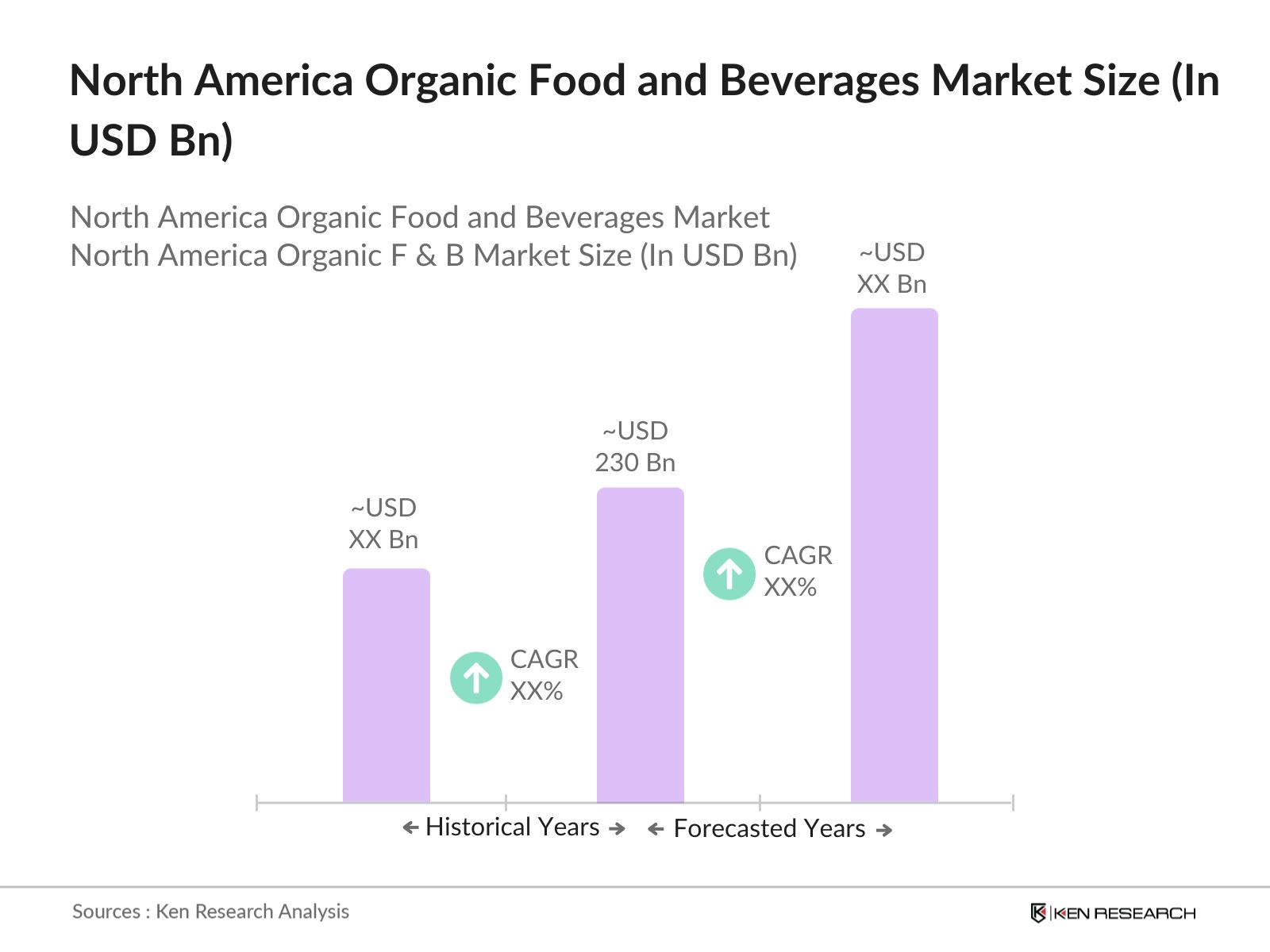
- The U.S. and Canada are the leading countries within North America for organic food and beverage consumption. Cities like New York, Los Angeles, and Toronto play pivotal roles in shaping the market due to higher awareness, more disposable income, and a greater focus on sustainable living. The dominance of these countries is also bolstered by government policies supporting organic farming and certification programs. In Canada, initiatives to promote organic agriculture have been instrumental in the markets steady growth, while the U.S. has strong consumer demand for USDA-certified organic products.
- The USDA and the Foreign Agricultural Service (FAS) regulate the import and export of organic products in North America. As of 2024, the United States has established organic equivalency arrangements with several countries, including Canada and the European Union, which streamline the trade of organic goods. The USDAs National Organic Program (NOP) ensures that imported organic products meet U.S. standards. These regulations promote the international trade of organic products while maintaining consumer trust in organic labeling. By facilitating organic imports and exports, these policies have expanded the availability of organic foods across the North American market.
North America Organic Food and Beverages Market Segmentation
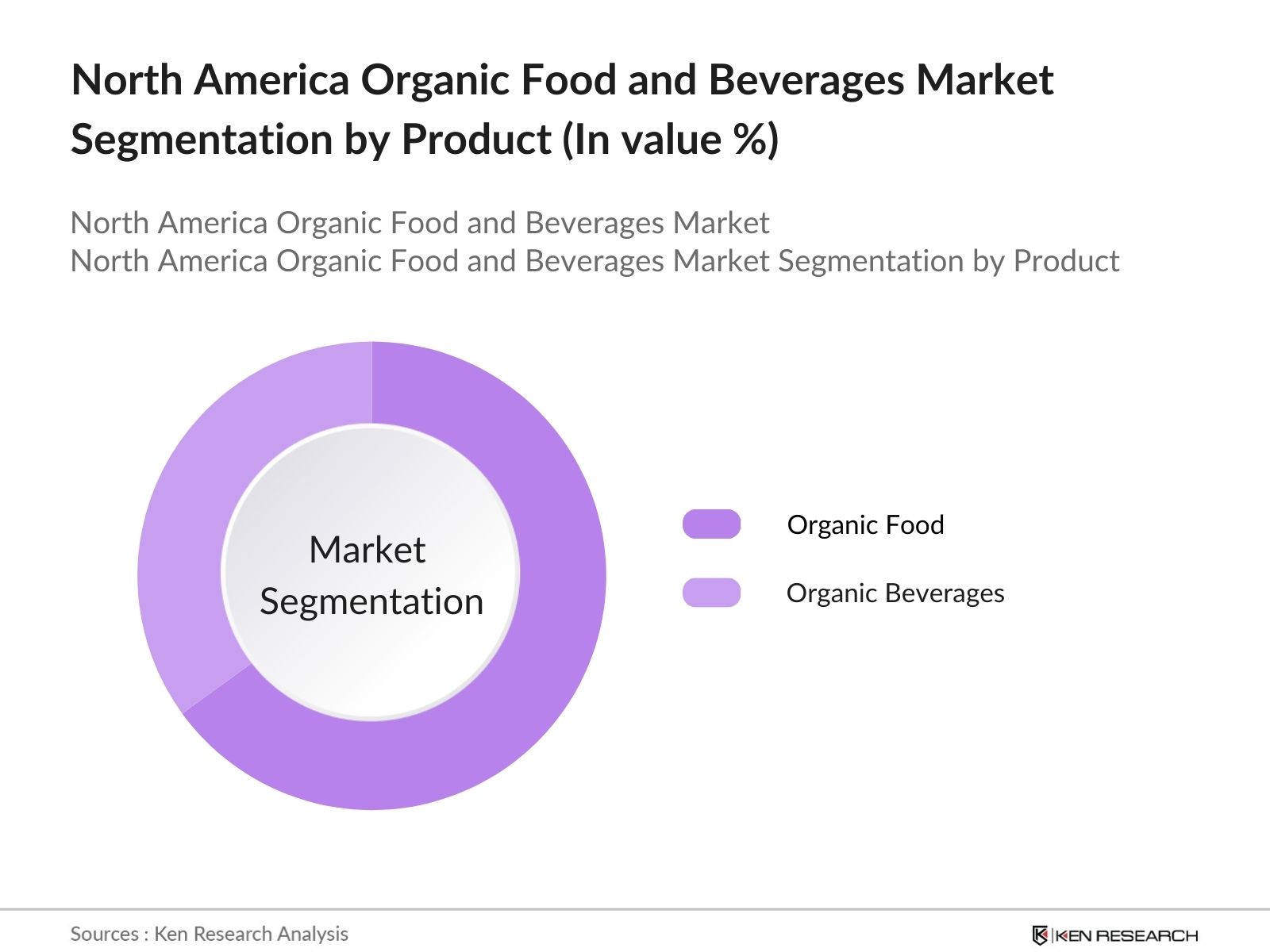
- By Product Type: The Market is segmented by product type into organic food and organic beverages. Organic food, which includes fruits and vegetables, dairy products, and meat & poultry, holds the dominant market share in 2023. Fruits and vegetables account for a significant portion of the market share within this segment due to increasing consumer preference for fresh, pesticide-free produce. These products are widely consumed for their perceived health benefits, with major retailers focusing on expanding their organic product offerings to cater to health-conscious consumers. Organic dairy products and meat are also witnessing growing demand, driven by a shift towards sustainable and ethical sourcing practices.
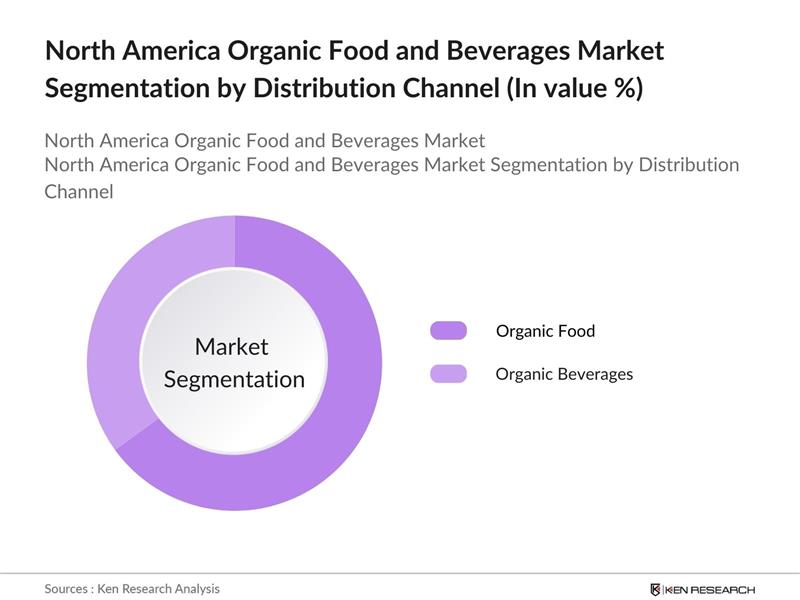
- By Distribution Channel: The market is also segmented by distribution channel into supermarkets & hypermarkets, online stores, specialty stores, and convenience stores. Supermarkets and hypermarkets dominate the distribution segment, with a market share of 55% in 2023. This dominance is attributed to their ability to offer a wide variety of organic products, making it convenient for consumers to access them in one location. The rise of organic private labels within major supermarket chains has also boosted the availability and affordability of organic food and beverages. Meanwhile, online stores are gaining traction, particularly post-pandemic, as consumers prefer the convenience of home delivery for organic products.
North America Organic Food and Beverages Market Competitive Landscape
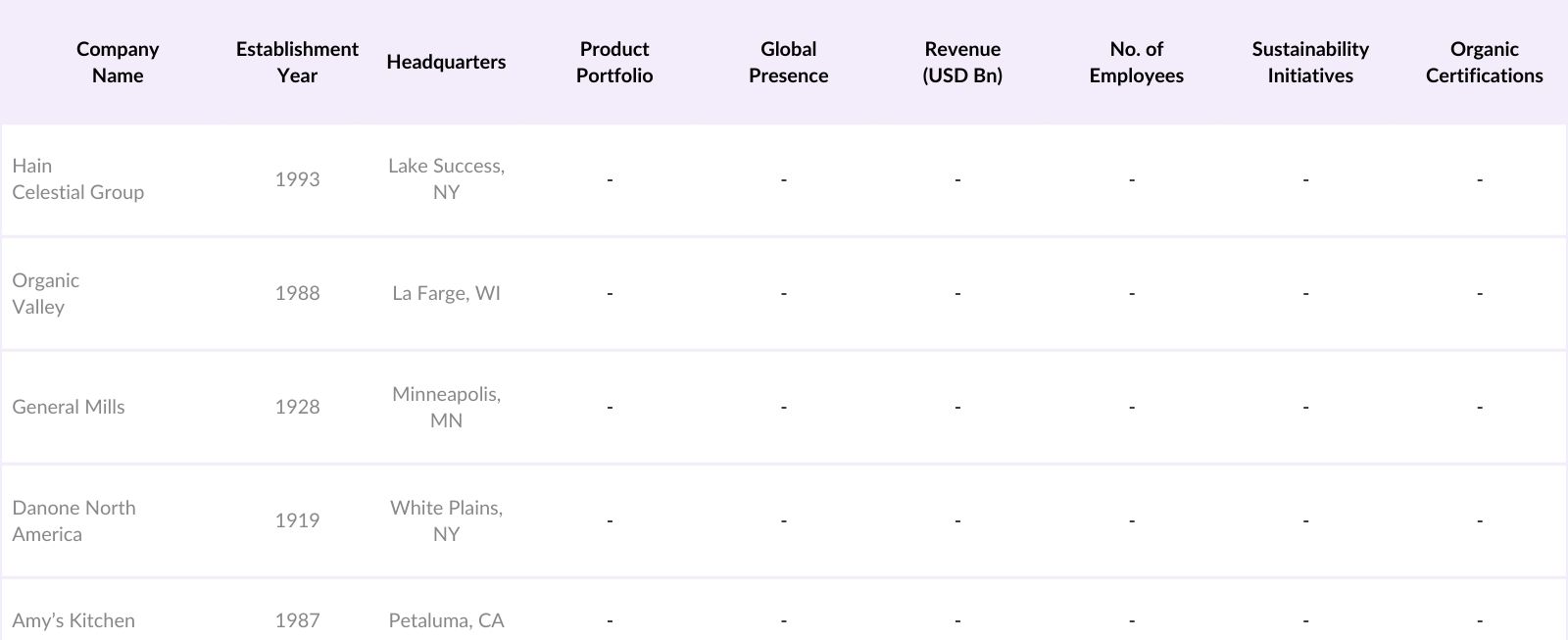
The North America Organic Food and Beverages Market is highly competitive, with a mix of global and regional players dominating the landscape. These companies focus on expanding their organic product lines, enhancing sustainability initiatives, and forming strategic partnerships to strengthen their market presence. The competitive dynamics are shaped by large-scale investments in organic farming, sustainable sourcing, and the development of new product categories.
The competitive landscape in North America highlights a growing focus on sustainability initiatives and innovation, with key players expanding their product portfolios to meet the increasing demand for organic food and beverages. These companies are leveraging organic certifications to build consumer trust and maintain market leadership.
North America Organic Food and Beverages Market Analysis
Growth Drivers
- Rising Consumer Awareness of Health and Sustainability: The rising demand for organic food and beverages in North America is driven by consumer preference for chemical-free products. In 2024, USDA estimates show that more than 17,300 organic farms in the United States produce organic food without synthetic fertilizers and pesticides, fulfilling the demand for safer food options. The emphasis on chemical-free production aligns with consumer health concerns, where organic farming methods reduce exposure to harmful chemicals. According to the Organic Trade Association, more than 50% of Americans have purchased organic products regularly, reflecting the increasing demand for chemical-free and environmentally sustainable foods.
- Government Support and Organic Certification Programs: Government regulations have played a significant role in promoting organic food production. The USDAs Organic Certification Program ensures that products labeled "organic" meet strict guidelines, which include avoiding genetically modified organisms (GMOs) and synthetic inputs. The program has certified over 45 million acres of farmland in North America by 2024, supported by initiatives like the Organic Agriculture Research and Extension Initiative (OREI) that grants USD 20 million annually to research organic farming methods. Such regulations ensure product integrity and encourage the adoption of organic practices, providing consumers with certified organic products.
- Health benefits of organic foods: The health benefits of organic food, particularly the absence of GMOs and chemical residues, have been a primary driver of market growth. According to USDA reports, majority of organic consumers purchase organic products because they believe they are healthier and safer. Studies have shown that organic foods contain fewer pesticide residues and higher levels of antioxidants, which boost health. Consumers concerned with long-term health effects, such as chronic diseases, prefer organic products. Organic farming's environmental benefits, like improved soil quality and reduced pollution, also contribute to the health advantages of these products.
Market Challenges
- High Production Costs: The organic food industry in North America faces significant challenges due to higher production costs. Organic farming requires more labor-intensive processes, expensive organic fertilizers, and extended crop rotations to maintain soil health. In 2024, USDA data indicates that organic farms spend nearly 10% more on inputs compared to conventional farms. These higher operational costs are passed on to consumers, making organic products less accessible to price-sensitive individuals. While demand remains high, the cost barrier limits widespread adoption, particularly in lower-income segments, as organic foods are often priced higher than conventional alternatives.
- Supply Chain Constraints: Supply chain limitations pose a considerable challenge for organic food producers in North America. According to the USDAs 2023 report, organic farmers often struggle with transportation and distribution networks tailored to their needs. Organic products require separate handling, transportation, and storage facilities to maintain certification, which increases logistical costs. This fragmented infrastructure has made it challenging for organic producers to expand their market reach, especially in remote and less developed regions where distribution channels are underdeveloped. Improving organic supply chain logistics is crucial for meeting the growing consumer demand for organic foods.
North America Organic Food and Beverages Market Future Outlook
The North America Organic Food and Beverages Market is expected to continue its robust growth trajectory through 2028, driven by increasing consumer demand for health-conscious products and sustained government support for organic farming practices. As e-commerce continues to gain ground, especially for organic products, the market will experience further expansion. Innovations in organic product categories, such as plant-based and functional beverages, will also contribute to market growth. The market will witness new opportunities as consumers increasingly focus on sustainability, clean-label products, and ethical sourcing.
Future Market Opportunities
- Expansion into untapped regions: North Americas organic food and beverages market has significant growth opportunities in untapped regions, particularly in rural areas and smaller cities where access to organic products remains limited. The USDA reports that nearly majority of organic farms are located in California and the Midwest, leaving large parts of the Southeast and Northeast underdeveloped in terms of organic food supply. Investing in distribution networks and organic farming in these regions will enable producers to reach new markets, satisfying growing demand for organic foods in underpenetrated areas, particularly in underserved, health-conscious communities.
- Collaborations with local farms for direct sourcing: Collaborations between organic food producers and local farms offer a significant opportunity to streamline supply chains and promote local food consumption. In 2024, the USDA has promoted initiatives such as the Local Food Promotion Program (LFPP), which provides USD 10.5 million annually to support direct farm-to-market sales. Partnering with local farms can reduce transportation costs, ensure fresher produce, and enhance community ties, thus driving consumer loyalty. Direct sourcing through local collaborations also meets growing consumer preferences for locally sourced, organic foods, helping producers scale their operations sustainably while catering to regional demand.
Scope of the Report
|
By Product Type |
Organic Food, Organic Beverages Fruits & Vegetables, Dairy Products, Meat Poultry & Seafood, Processed Foods Non-Dairy Beverages, Tea & Coffee, Alcohol |
|
By Distribution Channel |
Supermarkets Online Stores Specialty Stores Convenience Stores |
|
By Consumer Type |
Individual Consumers Institutional Buyers |
|
By Certification Type |
USDA Organic Non-GMO Certified, Others |
|
By Region |
USA Canada Mexico |
Products
Key Target Audience
Organic Food & Beverage Manufacturers
Retail Chains & Supermarkets
E-Commerce Platforms
Government Agencies (USDA, FDA)
Organic Certification Bodies
Investors and Venture Capitalist Firms
Banks and Financial Institutions
Regulatory Bodies (USDA Organic Standards, Canadian Organic Regime)
Companies
Players Mentioned in the Report
Hain Celestial Group
Organic Valley
General Mills
Danone North America
Amys Kitchen
United Natural Foods Inc.
Natures Path Foods
Eden Foods
SunOpta
WhiteWave Foods
Whole Foods Market (Amazon)
Sprouts Farmers Market
Clif Bar & Company
Aurora Organic Dairy
Green & Blacks
Table of Contents
01 North America Organic Food and Beverages Market Overview
1.1. Definition and Scope
1.2. Market Taxonomy
1.3. Market Growth Rate (Increased consumer health consciousness, sustainable agriculture practices)
1.4. Market Segmentation Overview
02 North America Organic Food and Beverages Market Size (In USD Mn)
2.1. Historical Market Size
2.2. Year-On-Year Growth Analysis
2.3. Key Market Developments and Milestones
03 North America Organic Food and Beverages Market Analysis
3.1. Growth Drivers
3.1.1. Rising demand for chemical-free products
3.1.2. Government regulations supporting organic certification
3.1.3. Health benefits of organic foods (Market-Specific: Chemical-free, No GMO)
3.1.4. Increasing consumer awareness and preference
3.2. Market Challenges
3.2.1. Higher production costs (Market-Specific: Organic farming inputs)
3.2.2. Limited supply chain infrastructure
3.2.3. Price sensitivity of consumers
3.3. Opportunities
3.3.1. Expansion into untapped regions (Market-Specific: Organic food supply)
3.3.2. Technological advancements in organic farming methods
3.3.3. Collaborations with local farms for direct sourcing
3.4. Trends
3.4.1. Increased demand for organic beverages (Market-Specific: Organic juices, teas)
3.4.2. Rise in plant-based organic alternatives
3.4.3. Organic food e-commerce growth
3.5. Government Regulations
3.5.1. Organic certification standards (Market-Specific: USDA Organic, Non-GMO certification)
3.5.2. Federal subsidies for organic farming
3.5.3. Import/export regulations for organic products
04 North America Organic Food and Beverages Market Segmentation
4.1. By Product Type (In Value %)
4.1.1. Organic Fruits and Vegetables
4.1.2. Organic Meat and Poultry
4.1.3. Organic Dairy Products
4.1.4. Organic Packaged Foods
4.1.5. Organic Beverages
4.2. By Distribution Channel (In Value %)
4.2.1. Supermarkets and Hypermarkets
4.2.2. Specialty Stores
4.2.3. Online Retailers
4.2.4. Convenience Stores
4.3. By End-User (In Value %)
4.3.1. Households
4.3.2. Commercial Establishments
4.4. By Processing Method (In Value %)
4.4.1. Fresh Produce
4.4.2. Processed Organic Foods
4.5. By Country (In Value %)
4.5.1. USA
4.5.2. Canada
4.5.3. Mexico
05 North America Organic Food and Beverages Market Competitive Analysis
5.1. Detailed Profiles of Major Companies
5.1.1. Hain Celestial Group
5.1.2. Whole Foods Market (Amazon)
5.1.3. General Mills Inc.
5.1.4. Danone S.A.
5.1.5. Organic Valley
5.1.6. SunOpta Inc.
5.1.7. WhiteWave Foods
5.1.8. Natures Path Foods
5.1.9. Clif Bar & Company
5.1.10. Amys Kitchen Inc.
5.1.11. Earths Best
5.1.12. Green & Blacks Organic
5.1.13. Newmans Own
5.1.14. Horizon Organic
5.1.15. Organic India
5.2. Cross Comparison Parameters (Market-Specific: Revenue, Organic Product Range, Sustainability Initiatives, Supply Chain Partnerships)
5.3. Market Share Analysis
5.4. Strategic Initiatives
5.5. Mergers and Acquisitions
5.6. Investment Analysis
5.7. Venture Capital Funding
5.8. Government Grants
5.9. Private Equity Investments
06 North America Organic Food and Beverages Market Regulatory Framework
6.1. Organic Food Production Standards
6.2. Labeling and Certification Requirements (Market-Specific: USDA Organic)
6.3. Import Regulations for Organic Products
6.4. Food Safety Regulations for Organic Processing
07 North America Organic Food and Beverages Future Market Size (In USD Mn)
7.1. Future Market Size Projections
7.2. Key Factors Driving Future Market Growth
08 North America Organic Food and Beverages Future Market Segmentation
8.1. By Product Type (In Value %)
8.2. By Distribution Channel (In Value %)
8.3. By End-User (In Value %)
8.4. By Processing Method (In Value %)
8.5. By Country (In Value %)
09 North America Organic Food and Beverages Market Analysts Recommendations
9.1. TAM/SAM/SOM Analysis
9.2. Customer Cohort Analysis
9.3. Marketing Initiatives
9.4. White Space Opportunity Analysis
Research Methodology
Step 1: Identification of Key Variables
The initial phase involves constructing an ecosystem map encompassing all major stakeholders within the North America Organic Food and Beverages Market. This step is underpinned by extensive desk research, utilizing secondary databases to gather industry-level information, aiming to identify the critical variables that influence market dynamics.
Step 2: Market Analysis and Construction
We compile and analyze historical data pertaining to the North America Organic Food and Beverages Market, evaluating market penetration, sales performance, and consumer preferences. A comprehensive assessment is performed to validate market estimates.
Step 3: Hypothesis Validation and Expert Consultation
Market hypotheses are validated through expert consultations with industry practitioners, including organic food manufacturers and retailers. These consultations provide valuable insights that help refine and corroborate the market data.
Step 4: Research Synthesis and Final Output
The final step involves integrating the validated data and insights from multiple stakeholders to produce a detailed and accurate market report, ensuring that the analysis is comprehensive and reliable.
Frequently Asked Questions
01 How big is the North America Organic Food and Beverages Market?
The North America Organic Food and Beverages Market is valued at USD 230 billion, driven by increasing consumer demand for health-focused and sustainably sourced products.
02 What are the challenges in the North America Organic Food and Beverages Market?
The primary challenges in the North America Organic Food and Beverages Market include high production costs and supply chain constraints, which make organic products relatively more expensive and harder to scale.
03 Who are the major players in the North America Organic Food and Beverages Market?
Key players in the North America Organic Food and Beverages Market include Hain Celestial Group, Organic Valley, General Mills, Danone North America, and Amys Kitchen, each focusing on sustainability and expanding their organic product lines.
04 What are the growth drivers of the North America Organic Food and Beverages Market?
Growth inthe North America Organic Food and Beverages Market is driven by rising consumer awareness of health and sustainability, along with government support for organic farming through subsidies and certification programs.
Why Buy From Us?

What makes us stand out is that our consultants follows Robust, Refine and Result (RRR) methodology. i.e. Robust for clear definitions, approaches and sanity checking, Refine for differentiating respondents facts and opinions and Result for presenting data with story

We have set a benchmark in the industry by offering our clients with syndicated and customized market research reports featuring coverage of entire market as well as meticulous research and analyst insights.

While we don't replace traditional research, we flip the method upside down. Our dual approach of Top Bottom & Bottom Top ensures quality deliverable by not just verifying company fundamentals but also looking at the sector and macroeconomic factors.

With one step in the future, our research team constantly tries to show you the bigger picture. We help with some of the tough questions you may encounter along the way: How is the industry positioned? Best marketing channel? KPI's of competitors? By aligning every element, we help maximize success.

Our report gives you instant access to the answers and sources that other companies might choose to hide. We elaborate each steps of research methodology we have used and showcase you the sample size to earn your trust.

If you need any support, we are here! We pride ourselves on universe strength, data quality, and quick, friendly, and professional service.