
North America Self-Healing Materials Market Outlook to 2030
Region:North America
Author(s):Shubham Kashyap
Product Code:KROD9172
December 2024
95
About the Report
North America Self-Healing Materials Market Overview
- The North America Self-Healing Materials market is valued at USD 555 Million, primarily driven by the demand for materials capable of autonomous repair across industries such as automotive, electronics, and construction. Rising environmental awareness, coupled with advancements in material science, fuels this growth. The integration of self-healing materials helps industries enhance product longevity and reduce maintenance costs, making these materials increasingly attractive across multiple applications, including protective coatings, sensors, and electronics.
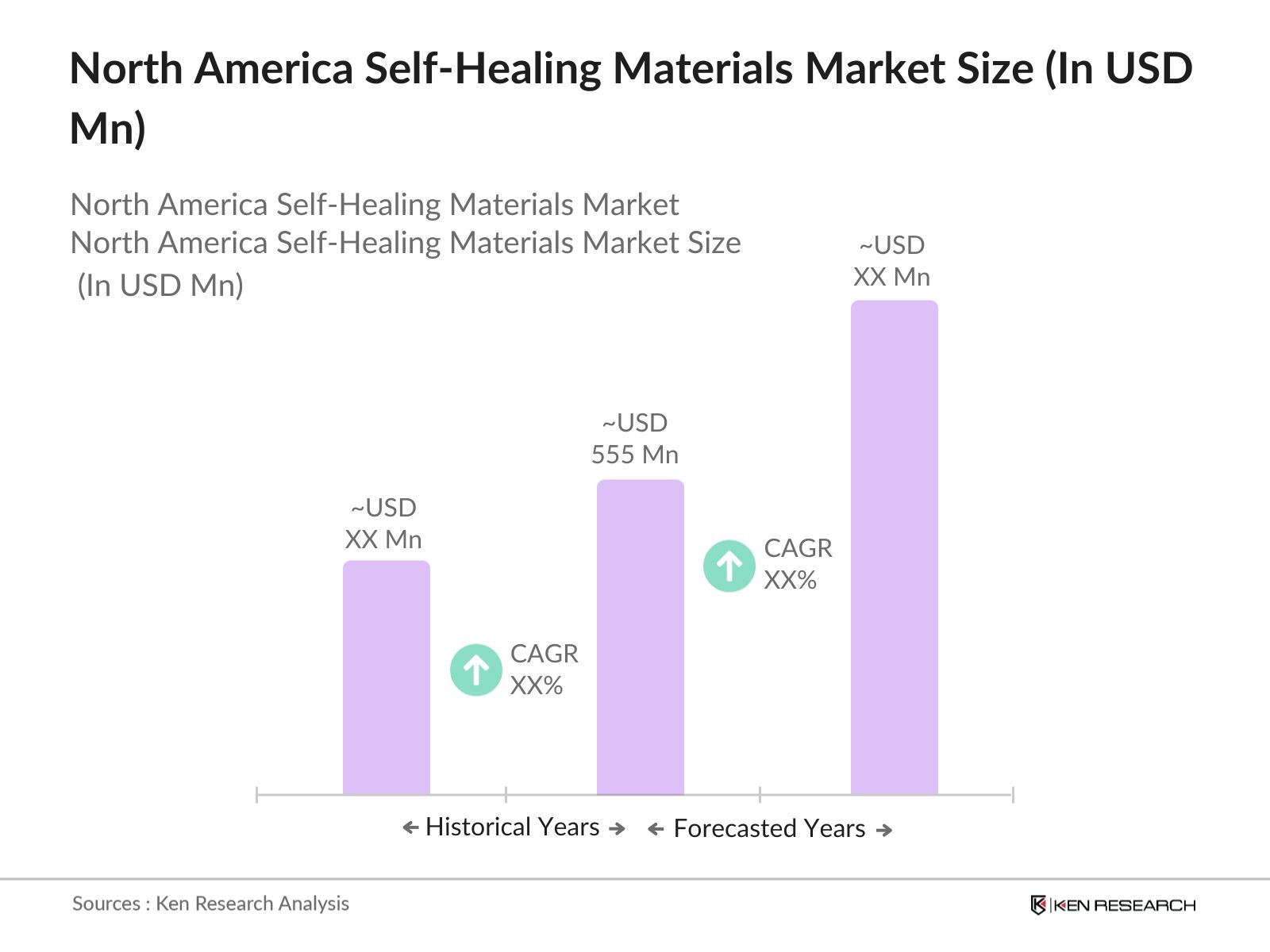
- Major demand centers for self-healing materials in North America include the United States and Canada. The U.S. dominates this market due to its robust manufacturing base, substantial R&D investments, and early adoption in high-tech sectors like aerospace and defense. Canada's emphasis on sustainable construction practices and its supportive government policies for green building materials also contribute to the markets expansion, reinforcing North Americas position as a leader in self-healing material solutions.
- Government regulations in North America increasingly mandate the use of sustainable materials to mitigate environmental impact. The U.S. Environmental Protection Agency notes a substantial rise in sustainable material usage following the implementation of stricter policies in 2024. Self-healing materials, which reduce environmental waste by extending product life, are crucial in meeting these regulatory standards, especially in high-impact sectors like manufacturing.
North America Self-Healing Materials Market Segmentation
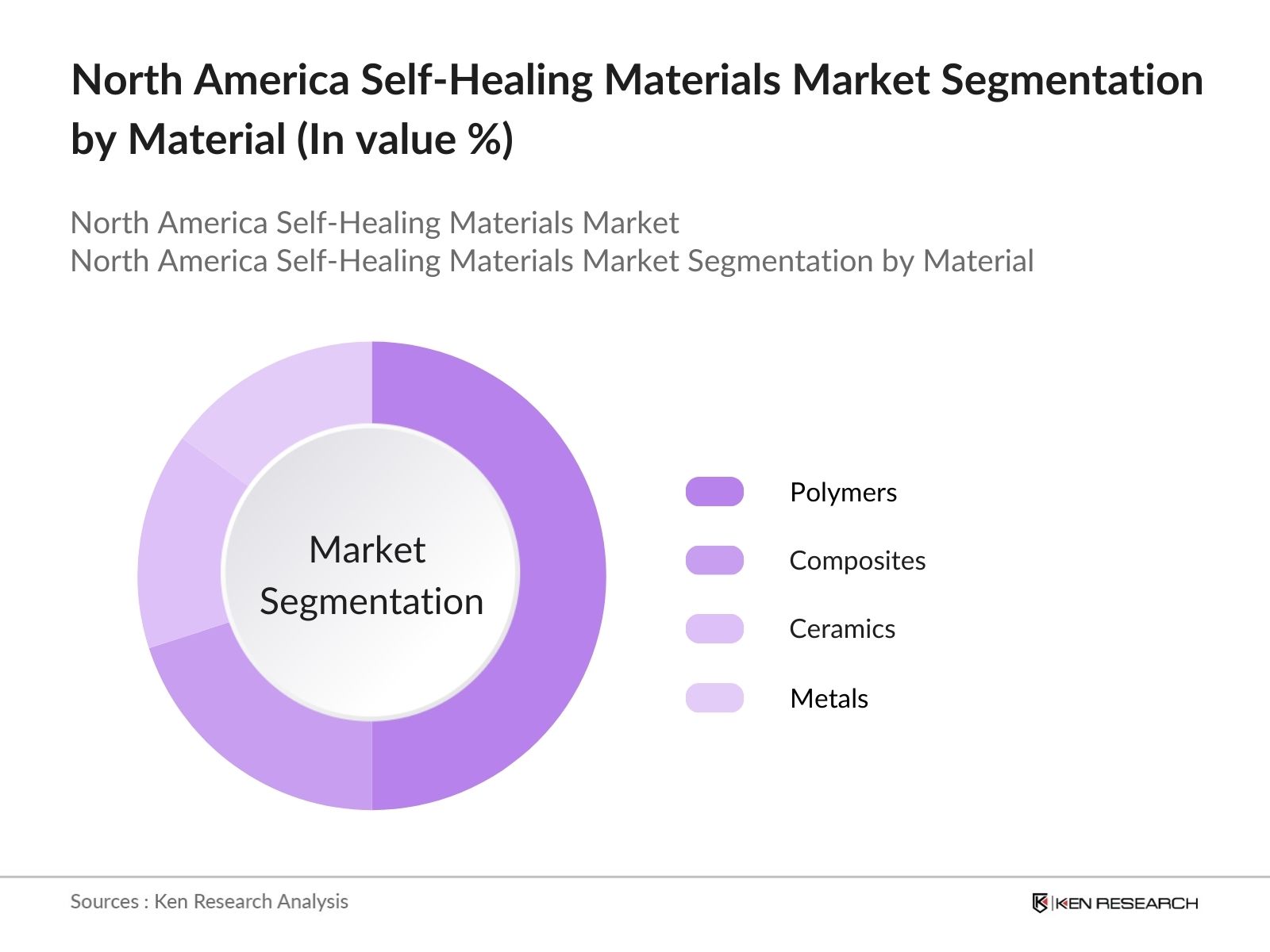
- By Material Type: The North America Self-Healing Materials market is segmented by material type into polymers, composites, ceramics, and metals. Polymers hold the largest share in this segmentation due to their versatility and cost-effectiveness, particularly in automotive and electronics applications. Their self-healing properties make them ideal for applications requiring durability and lightweight properties, such as vehicle coatings and electronic device casings. Continuous innovations in polymer chemistry also enhance their self-healing efficiency, solidifying their dominance.
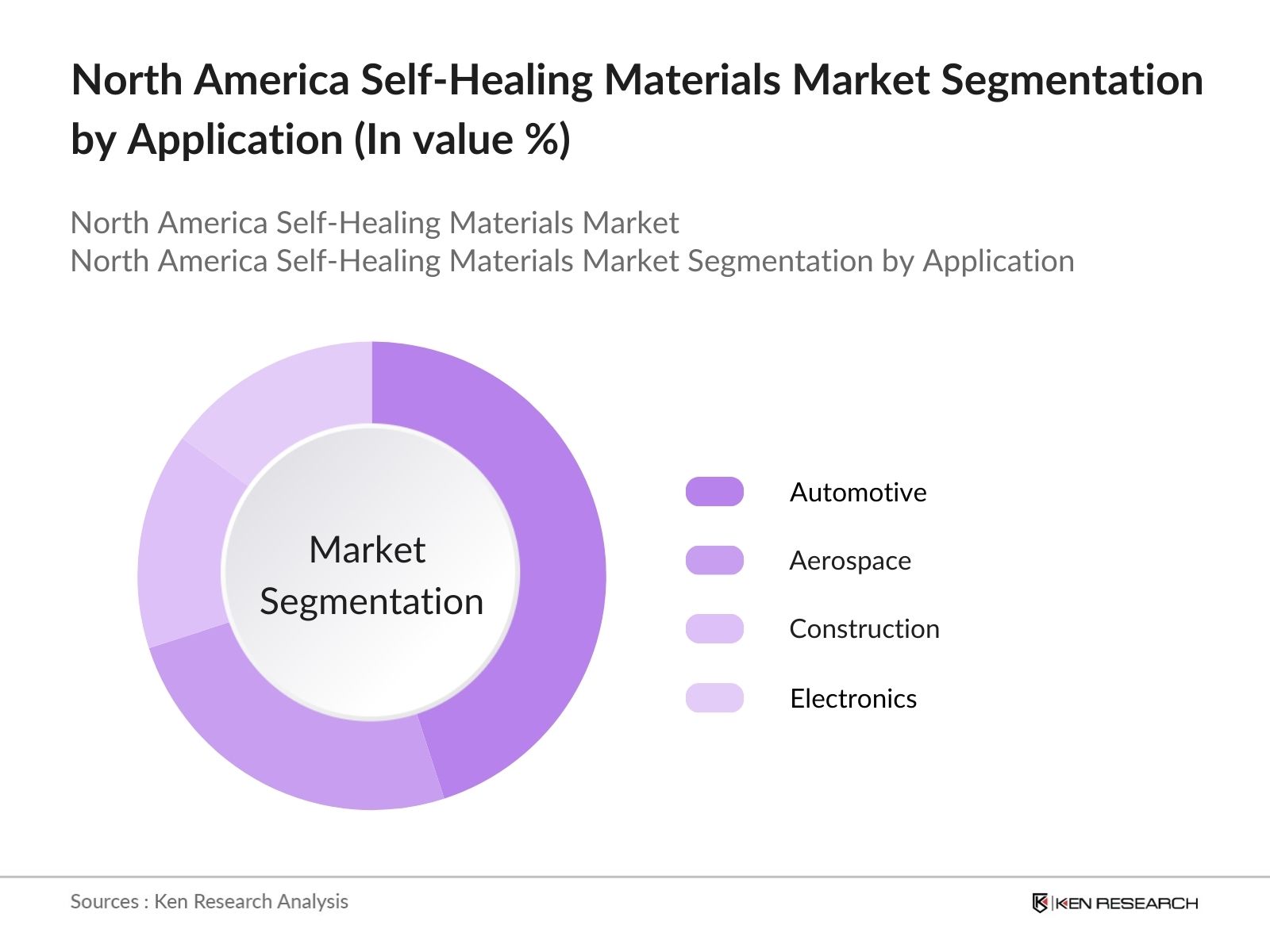
- By Application: The market is further segmented by application into automotive, aerospace, construction, and electronics. The automotive segment has a dominant market share due to the increasing need for durable materials that reduce repair costs and extend vehicle lifespans. Self-healing materials are widely used in vehicle exterior coatings to protect against scratches and minor damages, enhancing both functionality and aesthetics. This segment is bolstered by the automotive industrys commitment to innovation and high-performance materials.
North America Self-Healing Materials Market Competitive Landscape
The North America Self-Healing Materials market is characterized by the presence of leading players like BASF SE, DuPont, and Covestro AG, who leverage extensive research capabilities and strong distribution networks to sustain their market positions. 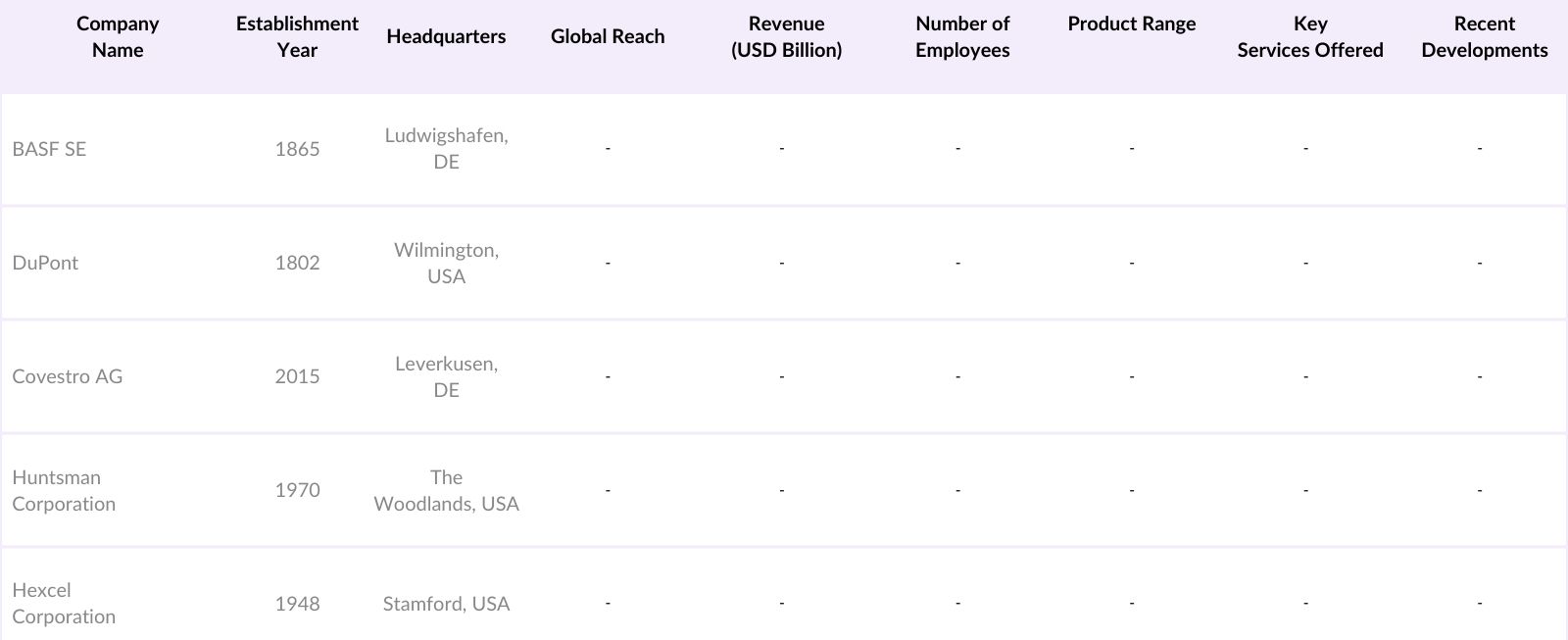
North America Self-Healing Materials Market Analysis
Growth Drivers
- Expansion in Automotive and Aerospace Industries: Demand for self-healing materials is driven by the automotive and aerospace sectors, which prioritize advanced materials with self-repair capabilities to minimize maintenance needs and extend product lifespans. In aerospace, for instance, self-healing composites improve aircraft safety and reduce downtime, while in the automotive industry, these materials contribute to enhanced durability and performance, particularly in exterior applications.
- Increased Demand for Durable Materials: In 2024, rising infrastructure investments in North America, supported by the U.S. Department of Transportation's USD 80 billion allocation for sustainable construction, is driving demand for materials that extend building lifespans. Self-healing materials, particularly in construction, are seen as essential due to their enhanced durability, reducing maintenance costs. Additionally, manufacturing sectors across North America report adopting more self-healing polymers in high-wear applications, such as automotive parts and electronic devices, with demand growth pegged around 10% annually. This trend aligns with the macroeconomic focus on sustainable materials to cut national maintenance expenses.
- Innovations in Polymer Chemistry: With ongoing research from entities like the National Science Foundation, the U.S. alone reported a USD 12 billion federal R&D investment in material sciences, focusing heavily on polymer innovations. Enhanced polymers designed to self-repair are particularly beneficial in the electronics and automotive industries, as they address the growing problem of wear and tear. Polymer self-healing advancements in 2024 have reduced material degradation in auto components by up to 30%, according to NSF findings, demonstrating a significant innovation-driven demand in these sectors.
Challenges
- High Production Costs: The North American production cost for self-healing polymers is significantly higher than traditional materials, which limits their mass adoption in cost-sensitive applications like packaging. Although R&D is underway to streamline production, the current price point remains a considerable barrier, particularly for small to mid-sized manufacturers. This challenge underlines the need for further innovations in cost-effective manufacturing techniques.
- Technical Limitations: While beneficial, self-healing materials face technical limitations, especially in high-temperature environments where their efficacy is reduced, limiting their use in critical aerospace and industrial applications. Although efforts are ongoing to enhance thermal stability, overcoming these limitations is essential to unlocking broader industry adoption. Industry collaboration and advanced material research are key to addressing these technical barriers effectively.
North America Self-Healing Materials Market Future Outlook
The North America Self-Healing Materials market is projected to witness robust growth, fueled by increased R&D investments and rising demand for durable, low-maintenance materials across multiple sectors. As technological advancements continue, manufacturers are expected to introduce new self-healing products with enhanced properties that cater to the evolving needs of industries such as automotive, construction, and electronics. This growth trajectory is further supported by a shift toward eco-friendly and sustainable solutions, driving innovation and adoption of self-healing materials.
Future Market Opportunities
- Innovation in Biodegradable Self-Healing Materials: The market is expected to see substantial growth in biodegradable self-healing materials, as companies focus on sustainability. Materials derived from renewable sources, such as plant-based polymers, are gaining attention and aligning with consumer demand for environmentally responsible products. This trend is anticipated to boost the adoption of self-healing materials in consumer goods and healthcare.
- Expansion into New Applications: Emerging applications for self-healing materials, particularly in areas such as healthcare and consumer electronics, represent untapped growth potential. The use of self-healing materials in wearable devices and medical implants offers enhanced durability and reliability, creating new opportunities for market expansion. As industries continue to prioritize sustainability and longevity, these applications are set to gain increased attention and investment.
Scope of the Report
|
By Material Type |
Polymers Composites Ceramics Metals |
|
By Application |
Automotive Aerospace Construction Electronics |
|
By Technology |
Microcapsule Technology Polymer-based Systems Shape Memory Alloys |
|
By End-user Industry |
Consumer Goods Healthcare Oil & Gas |
|
By Region |
United States Canada Mexico |
Products
Key Target Audience
Investors and Venture Capitalist Firms
Banks and Financial Institutions
Automotive Manufacturers
Construction and Infrastructure Companies
Aerospace and Defense Contractors
Government and Regulatory Bodies (e.g., U.S. Environmental Protection Agency, Canadian Standards Association)
Electronics and Consumer Goods Manufacturers
Material Science and R&D Institutions
Companies
Players Mentioned in the Report
BASF SE
DuPont
Covestro AG
Huntsman Corporation
Hexcel Corporation
AkzoNobel N.V.
3M Company
Royal DSM
Solvay S.A.
Sika AG
Eastman Chemical Company
Momentive Performance Materials Inc.
Aldrich Materials Science
Ecole Polytechnique Fdrale de Lausanne
SABIC
Table of Contents
1. North America Self-Healing Materials Market Overview
1.1. Definition and Scope
1.2. Market Taxonomy
1.3. Market Growth Rate
1.4. Market Segmentation Overview
2. North America Self-Healing Materials Market Size (In USD Bn)
2.1. Historical Market Size
2.2. Year-On-Year Growth Analysis
2.3. Key Market Developments and Milestones
3. North America Self-Healing Materials Market Analysis
3.1. Growth Drivers
3.1.1. Increased Demand for Durable Materials
3.1.2. Innovations in Polymer Chemistry
3.1.3. Environmental Regulations
3.1.4. Expanding Applications in Various Industries
3.2. Market Challenges
3.2.1. High Production Costs
3.2.2. Technical Limitations
3.2.3. Lack of Standardization
3.3. Opportunities
3.3.1. Emerging Technologies
3.3.2. Growing Investment in R&D
3.3.3. Strategic Partnerships and Collaborations
3.4. Trends
3.4.1. Sustainable Material Development
3.4.2. Adoption of Smart Materials
3.4.3. Integration with IoT
3.5. Government Regulation
3.5.1. Environmental Protection Policies
3.5.2. Safety Standards for Material Use
3.5.3. Incentives for Sustainable Practices
3.6. SWOT Analysis
3.7. Stakeholder Ecosystem
3.8. Porters Five Forces
3.9. Competition Ecosystem
4. North America Self-Healing Materials Market Segmentation
4.1. By Material Type (In Value %)
4.1.1. Polymers
4.1.2. Composites
4.1.3. Ceramics
4.1.4. Metals
4.2. By Application (In Value %)
4.2.1. Automotive
4.2.2. Aerospace
4.2.3. Construction
4.2.4. Electronics
4.3. By Technology (In Value %)
4.3.1. Microcapsule Technology
4.3.2. Polymer-based Systems
4.3.3. Shape Memory Alloys
4.4. By End-user Industry (In Value %)
4.4.1. Consumer Goods
4.4.2. Healthcare
4.4.3. Oil & Gas
4.5. By Region (In Value %)
4.5.1. United States
4.5.2. Canada
4.5.3. Mexico
5. North America Self-Healing Materials Market Competitive Analysis
5.1 Detailed Profiles of Major Companies
5.1.1. BASF SE
5.1.2. DuPont
5.1.3. 3M Company
5.1.4. AkzoNobel N.V.
5.1.5. Covestro AG
5.1.6. Eastman Chemical Company
5.1.7. Hexcel Corporation
5.1.8. Huntsman Corporation
5.1.9. Momentive Performance Materials Inc.
5.1.10. Royal DSM
5.1.11. Solvay S.A.
5.1.12. Sika AG
5.1.13. Covestro AG
5.1.14. Aldrich Materials Science
5.1.15. Ecole Polytechnique Fdrale de Lausanne
5.2 Cross Comparison Parameters (Revenue, R&D Investment, Product Offerings, Geographic Presence, Market Penetration)
5.3. Market Share Analysis
5.4. Strategic Initiatives
5.5. Mergers and Acquisitions
5.6. Investment Analysis
5.7. Venture Capital Funding
5.8. Government Grants
5.9. Private Equity Investments
6. North America Self-Healing Materials Market Regulatory Framework
6.1. Environmental Standards
6.2. Compliance Requirements
6.3. Certification Processes
7. North America Self-Healing Materials Future Market Size (In USD Bn)
7.1. Future Market Size Projections
7.2. Key Factors Driving Future Market Growth
8. North America Self-Healing Materials Future Market Segmentation
8.1. By Material Type (In Value %)
8.2. By Application (In Value %)
8.3. By Technology (In Value %)
8.4. By End-user Industry (In Value %)
8.5. By Region (In Value %)
9. North America Self-Healing Materials Market Analysts Recommendations
9.1. TAM/SAM/SOM Analysis
9.2. Customer Cohort Analysis
9.3. Marketing Initiatives
9.4. White Space Opportunity Analysis
Disclaimer Contact UsResearch Methodology
Step 1: Identification of Key Variables
This phase involved constructing an ecosystem map encompassing all major stakeholders within the North America Self-Healing Materials Market. This step was underpinned by extensive desk research and a combination of proprietary databases, with the objective of identifying critical variables influencing market dynamics.
Step 2: Market Analysis and Construction
In this phase, historical data pertaining to the North America Self-Healing Materials Market was compiled and analyzed. Key metrics such as market penetration and revenue generation ratios were assessed, along with quality statistics, to ensure reliability and accuracy in revenue estimates.
Step 3: Hypothesis Validation and Expert Consultation
Market hypotheses were developed and validated through interviews with industry experts from diverse companies. These consultations provided valuable insights on financial and operational aspects, which were instrumental in refining and corroborating the market data.
Step 4: Research Synthesis and Final Output
The final phase involved engagement with various self-healing materials manufacturers to acquire detailed insights into product segments, consumer preferences, and sales performance. This interaction verified and complemented statistics derived from the bottom-up approach, ensuring a comprehensive and accurate analysis of the North America Self-Healing Materials Market.
Frequently Asked Questions
01. How big is the North America Self-Healing Materials Market?
The North America Self-Healing Materials Market is valued at USD 555 million, fueled by increasing demand across various sectors such as automotive, electronics, and construction. This growth is driven by the materials' capability to enhance product durability.
02. What are the challenges in the North America Self-Healing Materials Market?
Challenges in this North America Self-Healing Materials market include high production costs, limited technical expertise, and a lack of standardization. Additionally, the absence of regulatory frameworks specific to self-healing materials may pose a hurdle for market growth.
03. Who are the major players in the North America Self-Healing Materials Market?
Key players in this North America Self-Healing Materials market include BASF SE, DuPont, Covestro AG, Huntsman Corporation, and Hexcel Corporation. These companies dominate due to their advanced R&D capabilities, product innovation, and extensive market presence.
04. What drives the North America Self-Healing Materials Market?
The North America Self-Healing Materials market is driven by technological advancements, demand for long-lasting materials, and environmental sustainability initiatives. Furthermore, growing applications in the automotive, construction, and electronics sectors are boosting market expansion.
Why Buy From Us?

What makes us stand out is that our consultants follows Robust, Refine and Result (RRR) methodology. i.e. Robust for clear definitions, approaches and sanity checking, Refine for differentiating respondents facts and opinions and Result for presenting data with story

We have set a benchmark in the industry by offering our clients with syndicated and customized market research reports featuring coverage of entire market as well as meticulous research and analyst insights.

While we don't replace traditional research, we flip the method upside down. Our dual approach of Top Bottom & Bottom Top ensures quality deliverable by not just verifying company fundamentals but also looking at the sector and macroeconomic factors.

With one step in the future, our research team constantly tries to show you the bigger picture. We help with some of the tough questions you may encounter along the way: How is the industry positioned? Best marketing channel? KPI's of competitors? By aligning every element, we help maximize success.

Our report gives you instant access to the answers and sources that other companies might choose to hide. We elaborate each steps of research methodology we have used and showcase you the sample size to earn your trust.

If you need any support, we are here! We pride ourselves on universe strength, data quality, and quick, friendly, and professional service.