
North America Skill Gaming Market Outlook to 2030
Region:North America
Author(s):Meenakshi Bisht
Product Code:KROD5875
Region:North America
Author(s):Meenakshi Bisht
Product Code:KROD5875
November 2024
81
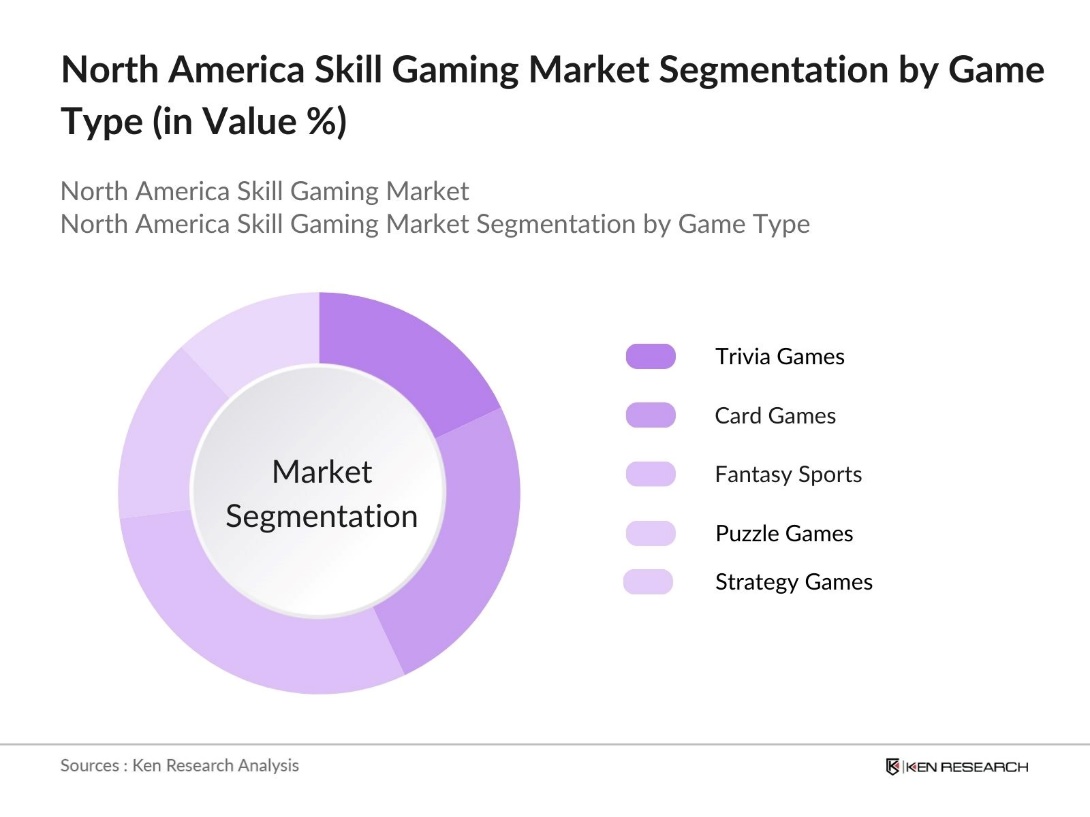
By Game Type: The market is segmented by game type into Trivia Games, Card Games, Fantasy Sports, Puzzle Games, and Strategy Games. Fantasy sports currently hold a dominant share in the skill gaming segment. This dominance stems from the popularity of fantasy leagues for sports like football, baseball, and basketball, which attract significant user engagement through competitive play. Major platforms like DraftKings and FanDuel offer various fantasy leagues and tournaments, leveraging user loyalty and extensive data analytics to deliver tailored gaming experiences.
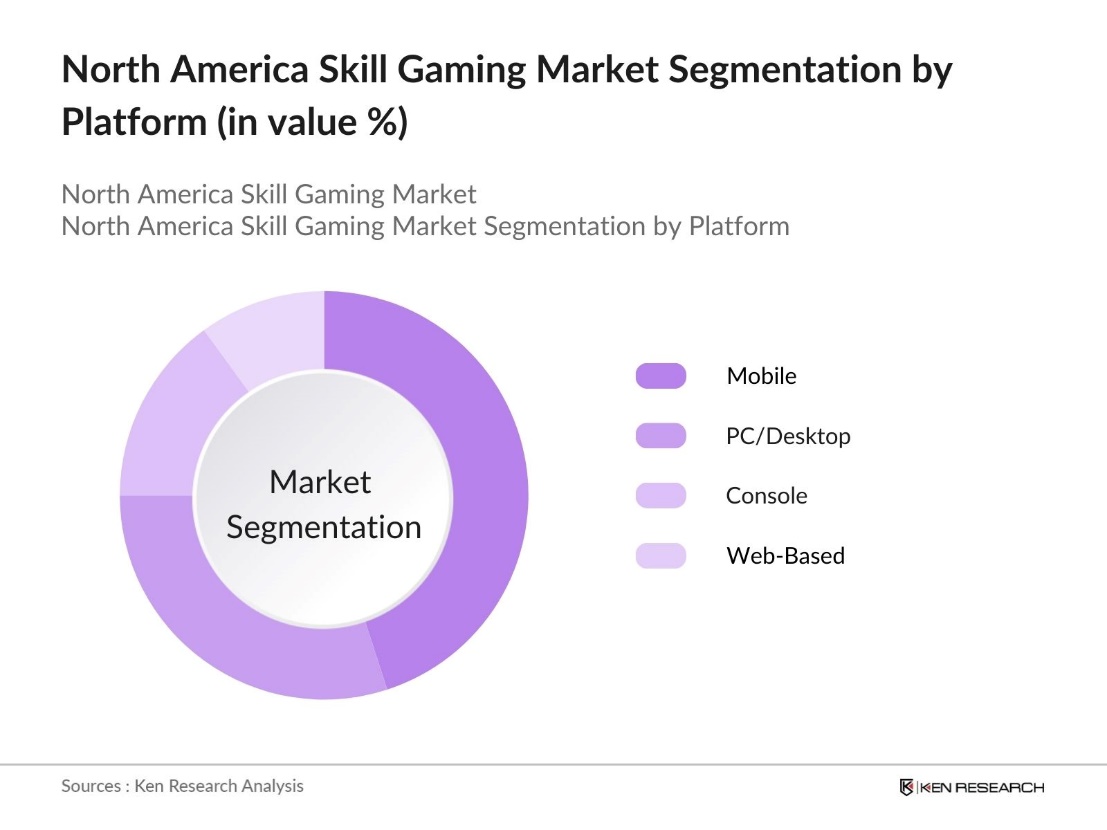
By Platform: The market segmentation by platform includes Mobile, PC/Desktop, Console, and Web-Based platforms. Mobile gaming holds the largest market share under this segmentation due to the widespread penetration of smartphones and high-speed internet. With skill games optimized for mobile interfaces, users enjoy the convenience of on-the-go gaming. Companies like Skillz Inc. and Zynga are capitalizing on this trend, providing mobile-centric games that appeal to casual gamers and competitive players alike.
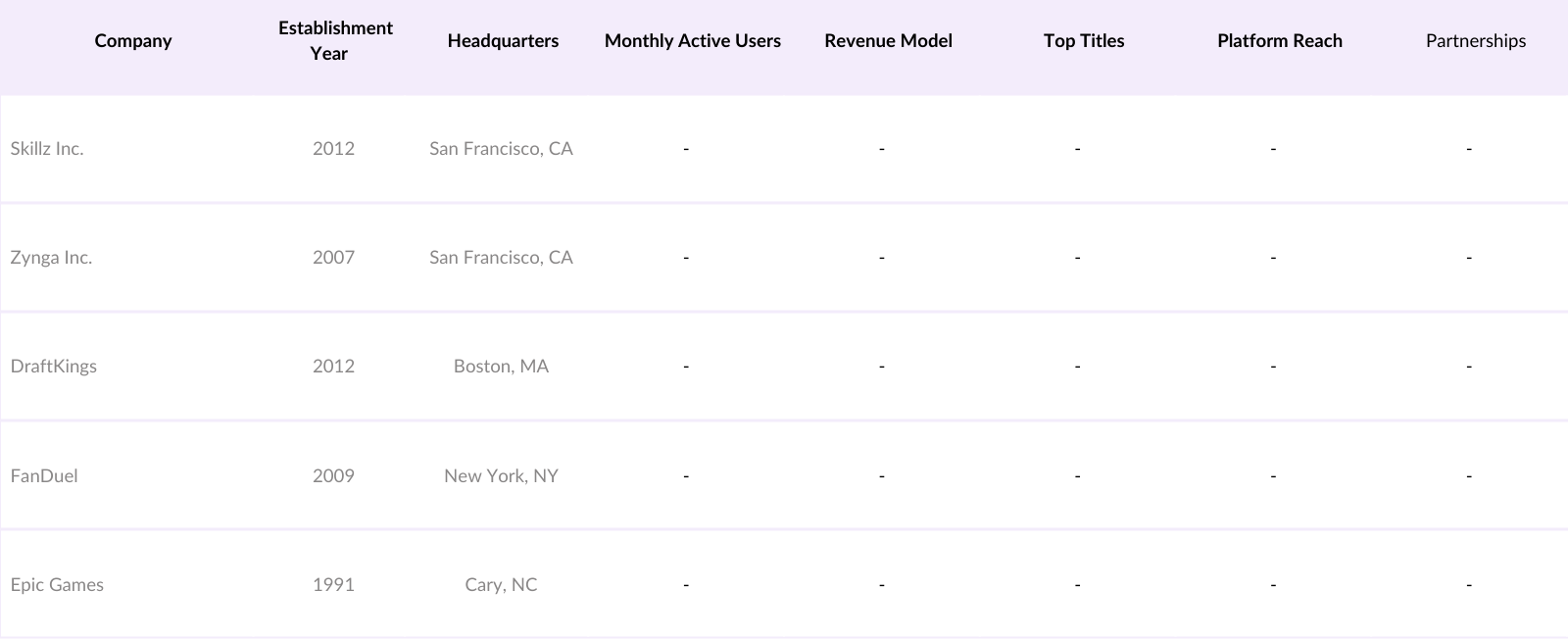
The North America skill gaming market is dominated by a few major players, including established companies such as Skillz Inc., Zynga Inc., and DraftKings. This market is characterized by strong competition, where companies focus on user engagement, regular updates, and innovation to retain and expand their user base.
Over the next five years, the North America skill gaming market is expected to witness robust growth, driven by continuous advancements in mobile gaming, real-time data analytics, and gamification technologies. The popularity of competitive gaming formats, coupled with high user engagement and a shift towards skill-based competition, is anticipated to fuel demand across various segments. Innovations in augmented and virtual reality, along with partnerships with major sports leagues, will likely create new opportunities for market expansion.
|
Game Type |
Trivia Games Card Games Fantasy Sports Puzzle Games Strategy Games |
|
Platform |
Mobile PC/Desktop Console Web-Based |
|
Revenue Model |
In-App Purchases Subscription-Based Pay-Per-Play Advertisement-Based |
|
Age Group |
Below 18 1835 3650 51 and above |
|
Region |
United States Canada Mexico |
1.1 Definition and Scope
1.2 Market Taxonomy
1.3 Market Growth Rate
1.4 Market Segmentation Overview
2.1 Historical Market Size
2.2 Year-On-Year Growth Analysis
2.3 Key Market Developments and Milestones
3.1 Growth Drivers (Regulatory Landscape, Rising Smartphone Penetration, Increasing Monetization in Gaming, Technological Integration)
3.2 Market Challenges (Complex Licensing, High Development Costs, Regulatory Constraints, Fraudulent Activities)
3.3 Opportunities (Expansion in E-Sports, Growth of AR/VR in Gaming, Social Integration, Influencer Partnerships)
3.4 Trends (Real-Time Analytics in Skill Gaming, Blockchain for Secure Transactions, Cross-Platform Gaming, Cloud Gaming)
3.5 Government Regulation (Gaming License Policies, Anti-Money Laundering Compliance, Data Privacy Regulations, State-Specific Gaming Laws)
3.6 SWOT Analysis
3.7 Stake Ecosystem (Game Developers, Platform Providers, Payment Processors, End-Users)
3.8 Porters Five Forces Analysis
3.9 Competitive Landscape and Key Metrics
4.1 By Game Type (In Value %)
4.1.1. Trivia Games
4.1.2. Card Games
4.1.3. Fantasy Sports
4.1.4. Puzzle Games
4.1.5. Strategy Games
4.2 By Platform (In Value %)
4.2.1. Mobile
4.2.2. PC/Desktop
4.2.3. Console
4.2.4. Web-Based
4.3 By Revenue Model (In Value %)
4.3.1. In-App Purchases
4.3.2. Subscription-Based
4.3.3. Pay-Per-Play
4.3.4. Advertisement-Based
4.4 By Age Group (In Value %)
4.4.1. Below 18
4.4.2. 1835
4.4.3. 3650
4.4.4. 51 and above
4.5 By Region (In Value %)
4.5.1. United States
4.5.2. Canada
4.5.3. Mexico
5.1 Detailed Profiles of Major Companies
5.1.1 Activision Blizzard
5.1.2 Electronic Arts
5.1.3 Skillz Inc.
5.1.4 Zynga Inc.
5.1.5 Nintendo of America Inc.
5.1.6 Tencent Games
5.1.7 Epic Games
5.1.8 Razer Inc.
5.1.9 FanDuel
5.1.10 DraftKings
5.1.11 Supercell
5.1.12 Roblox Corporation
5.1.13 GamePoint
5.1.14 Arkadium
5.1.15 GSN Games
5.2 Cross Comparison Parameters (Revenue, Number of Monthly Active Users, Gaming Categories, Country of Origin, Top Titles, Technology Used, Monetization Models, Key Partnerships)
5.3 Market Share Analysis
5.4 Strategic Initiatives
5.5 Mergers and Acquisitions
5.6 Investment Analysis
5.7 Venture Capital Funding
5.8 Government Grants and Funding
5.9 Private Equity Investments
6.1 Industry-Specific Licensing
6.2 Compliance Requirements
6.3 Certification and Standards
6.4 Cross-Border Regulations
7.1 Future Market Size Projections
7.2 Key Factors Driving Future Market Growth
8.1 By Game Type (In Value %)
8.2 By Platform (In Value %)
8.3 By Revenue Model (In Value %)
8.4 By Age Group (In Value %)
8.5 By Region (In Value %)
9.1 TAM/SAM/SOM Analysis
9.2 Customer Cohort Analysis
9.3 Marketing Initiatives
9.4 White Space Opportunity Analysis
Disclaimer Contact UsThis phase involved mapping out the skill gaming ecosystem in North America, identifying the roles of major stakeholders like game developers, users, and technology providers. Extensive desk research using secondary sources was conducted to pinpoint essential market variables.
Historical data was compiled and analyzed to understand the market dynamics of the North America skill gaming sector, including user demographics, spending habits, and engagement levels. This helped in constructing a reliable revenue model for the market.
Market assumptions were validated through in-depth interviews with industry experts from major companies in the gaming industry, providing valuable insights into revenue patterns, challenges, and opportunities.
Data from bottom-up and top-down approaches were integrated to deliver a comprehensive analysis of the market. Expert opinions, combined with statistical data, were utilized to ensure accuracy in revenue projections and market size estimates.
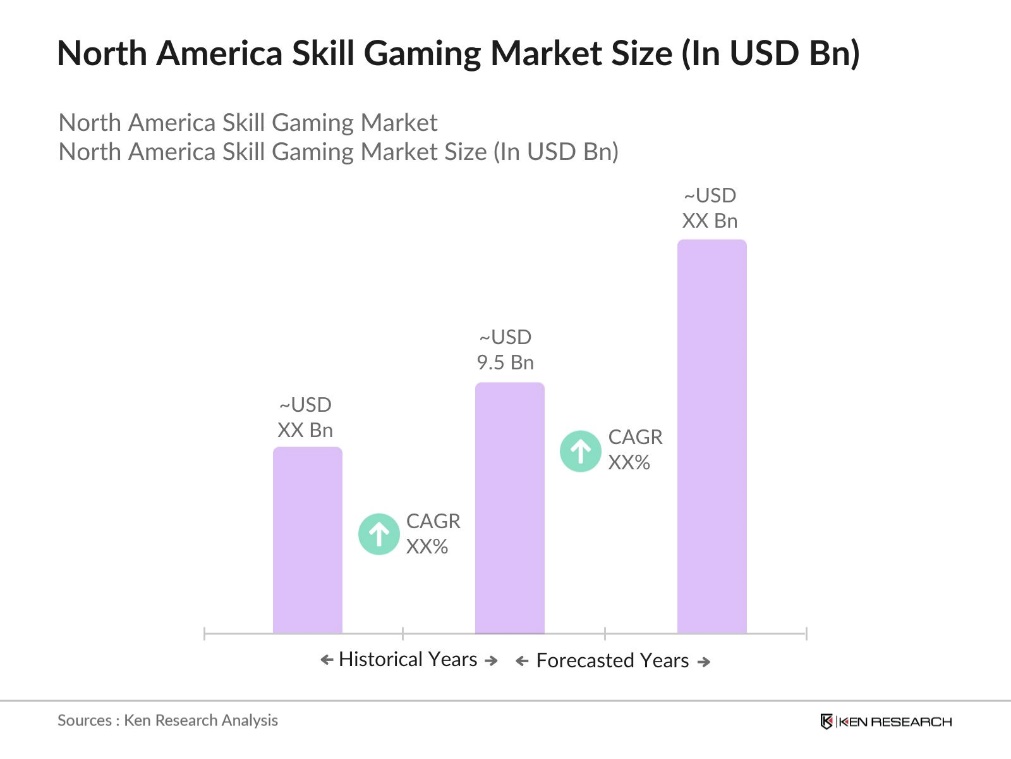
The North America skill gaming market is valued at USD 9.5 billion, driven by the increasing demand for interactive and competitive gaming formats.
Challenges in North America skill gaming market include regulatory hurdles, high development costs, and ensuring fair play and security, which can affect user trust and retention.
Prominent players in North America skill gaming market include Skillz Inc., Zynga Inc., DraftKings, FanDuel, and Epic Games, each known for their specialized games and platforms that attract a large user base.
The North America skill gaming market growth is driven by technological advancements, high smartphone penetration, and consumer interest in competitive gaming formats, especially in urban areas.

What makes us stand out is that our consultants follows Robust, Refine and Result (RRR) methodology. i.e. Robust for clear definitions, approaches and sanity checking, Refine for differentiating respondents facts and opinions and Result for presenting data with story

We have set a benchmark in the industry by offering our clients with syndicated and customized market research reports featuring coverage of entire market as well as meticulous research and analyst insights.

While we don't replace traditional research, we flip the method upside down. Our dual approach of Top Bottom & Bottom Top ensures quality deliverable by not just verifying company fundamentals but also looking at the sector and macroeconomic factors.

With one step in the future, our research team constantly tries to show you the bigger picture. We help with some of the tough questions you may encounter along the way: How is the industry positioned? Best marketing channel? KPI's of competitors? By aligning every element, we help maximize success.

Our report gives you instant access to the answers and sources that other companies might choose to hide. We elaborate each steps of research methodology we have used and showcase you the sample size to earn your trust.

If you need any support, we are here! We pride ourselves on universe strength, data quality, and quick, friendly, and professional service.