
North America Soy Lecithin Market Outlook to 2030
Region:North America
Author(s):Shubham Kashyap
Product Code:KROD4061
December 2024
85
About the Report
North America Soy Lecithin Market Overview
- The North America soy lecithin market is valued at USD 192 million, driven by increasing demand for natural emulsifiers in the food, pharmaceuticals, and cosmetics sectors. Soy lecithin, a byproduct of soybean oil extraction, is widely utilized as an emulsifier, stabilizer, and dispersing agent in these industries. The food industry leads the adoption due to its applications in processed foods, bakery, and confectionery items. The growing preference for plant-based, non-GMO, and clean-label ingredients further boosts its demand, particularly in the U.S. market, where consumers seek healthier alternatives in processed food.
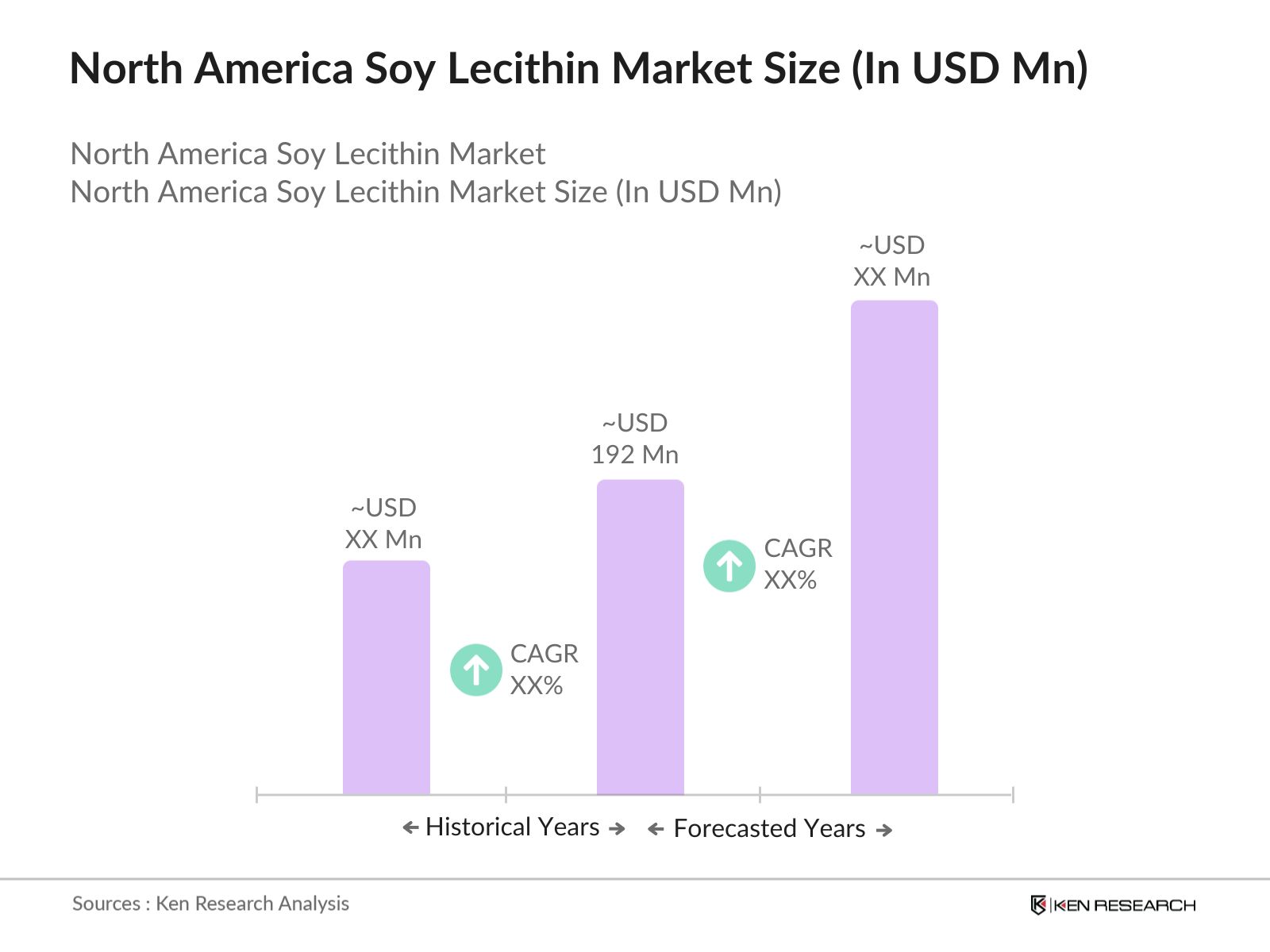
- In North America, the U.S. is the dominant market for soy lecithin, followed by Canada. The U.S. maintains its leadership due to its well-developed food processing industry and increasing demand for natural additives. Furthermore, the countrys large pharmaceutical and cosmetic industries rely heavily on lecithin for its binding and emulsifying properties. Canada also plays a significant role, especially in the organic and non-GMO soy lecithin segments, driven by the countrys stringent regulations on genetically modified organisms and consumer preference for clean-label products.
- The U.S. and Canada are the primary markets for soy lecithin, with growth driven by an increased focus on health and wellness trends. The U.S. leads the market due to its extensive food processing sector and rising consumer awareness about the benefits of lecithin in food products. Canada follows closely, with increasing demand for organic and clean-label food products driving the market's expansion.
North America Soy Lecithin Market Segmentation
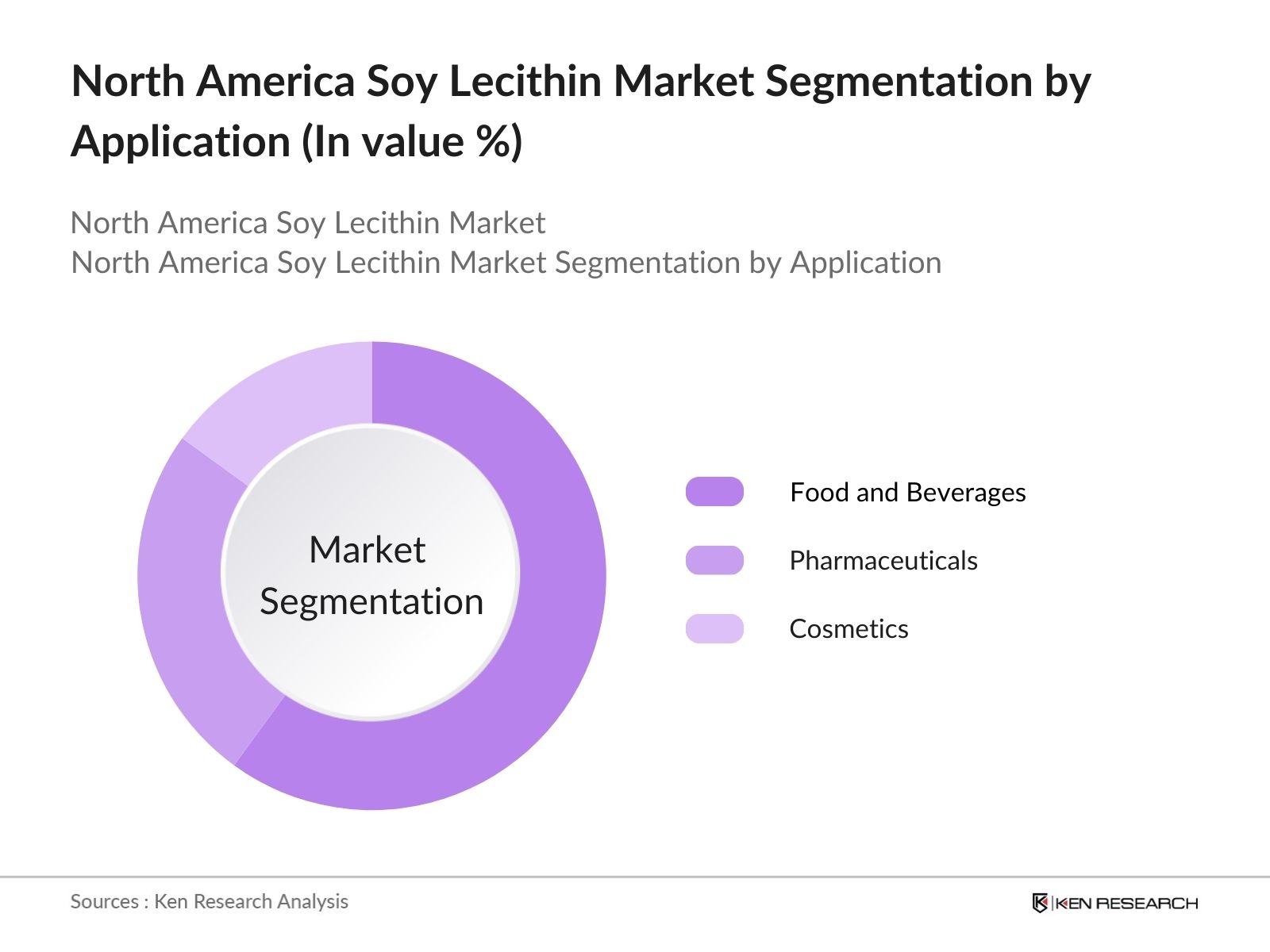
- By Application: The market is segmented by application into food and beverage, pharmaceutical, and cosmetic industries. The food and beverage segment dominates the market, driven by the demand for emulsifiers in products like chocolate, margarine, and salad dressings. The pharmaceutical segment is experiencing significant growth as lecithin is increasingly used in drug formulations to improve the bioavailability of active ingredients. In cosmetics, soy lecithin is becoming a popular ingredient due to its natural emulsifying properties and skin benefits.
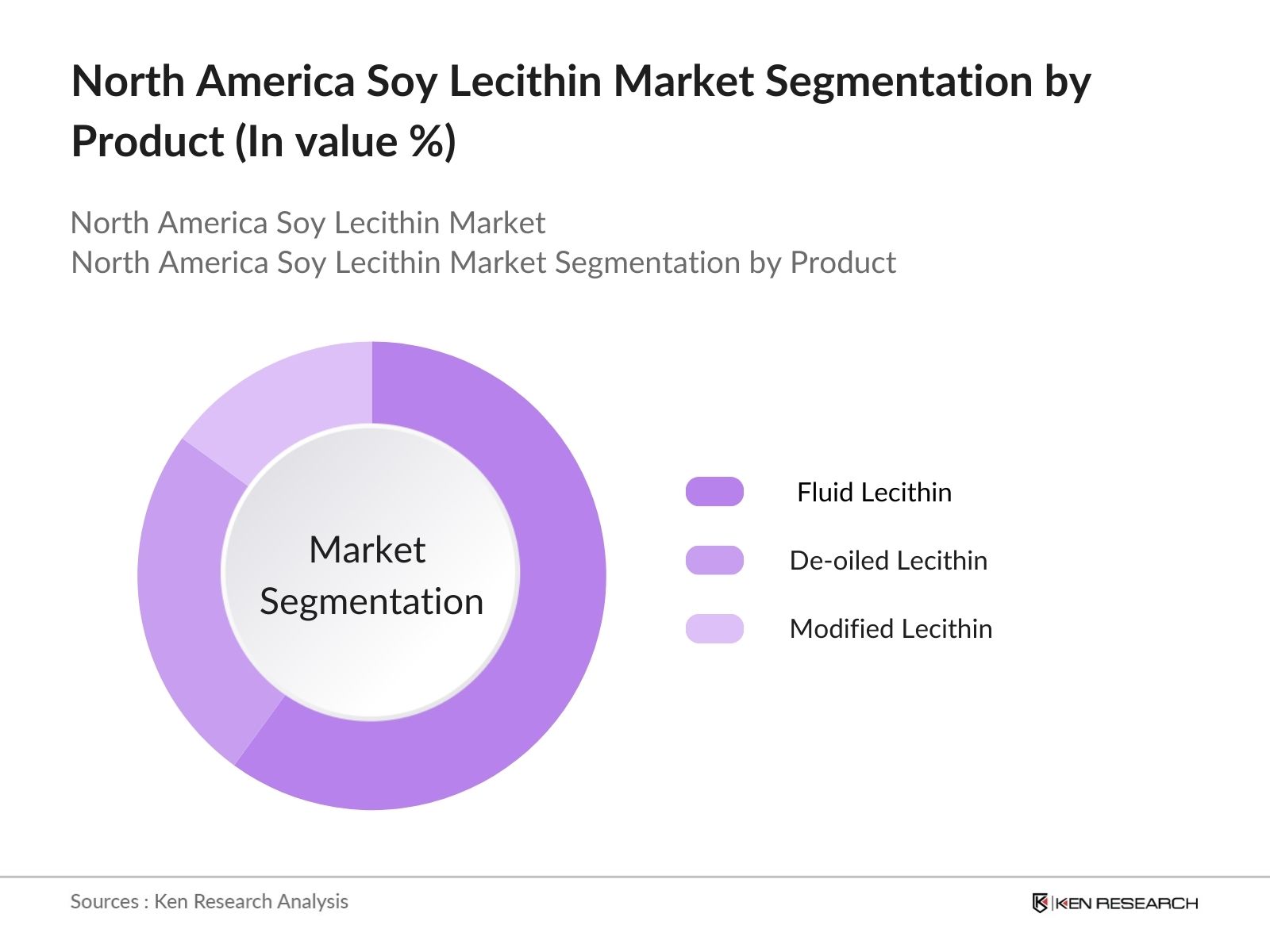
- By Product Type: The market is further segmented by product type into fluid soy lecithin, de-oiled lecithin, and modified lecithin. Fluid lecithin leads the market due to its versatility and ease of use in food products. De-oiled lecithin, which is free of fats, is gaining popularity in the health-conscious consumer segment. Modified lecithin, which is enzymatically treated, is also growing due to its superior functionality in specialized applications like pharmaceutical formulations.
North America Soy Lecithin Market Competitive Landscape
The North America soy lecithin market is competitive, with several global and regional players vying for market share through product innovations, strategic partnerships, and a focus on sustainability. Leading companies such as Cargill, ADM, Lipoid, and Bunge dominate the market, offering a wide range of lecithin products that cater to various end-use industries. These companies focus on enhancing the functionality and purity of their lecithin products to meet the growing demand for non-GMO and organic ingredients.
|
Company Name |
Establishment Year |
Headquarters |
Key Products |
Revenue (2023) |
R&D Focus |
Sustainability Initiatives |
Market Share |
Major Markets |
Strategic Partnerships |
|
Cargill |
1865 |
Minneapolis, MN |
|||||||
|
ADM |
1902 |
Chicago, IL |
|||||||
|
Lipoid |
1977 |
Ludwigshafen, Germany |
|||||||
|
Bunge |
1818 |
Chesterfield, MO |
|||||||
|
Lecico GmbH |
1996 |
Hamburg, Germany |
North America Soy Lecithin Industry Analysis
Growth Drivers
- Rising Demand for Natural Cosmetics Ingredients: Soy lecithin is seeing increased application in the natural cosmetics industry, which has been valued in billions in North America as of 2022, as per the U.S. Department of Commerce. Lecithins moisturizing and stabilizing properties make it a preferred ingredient for natural skin care products. With more consumers opting for products free from synthetic chemicals, the cosmetics industry is focusing on plant-based ingredients, enhancing the demand for non-GMO soy lecithin. This trend is further supported by the rise in clean beauty products across the region.
- Increasing Demand in Food and Beverage Industry: The food and beverage sector has seen a significant rise in demand for soy lecithin, primarily due to the shift towards plant-based ingredients. In 2022, the U.S. food processing industry witnessed tremendous growth with a growing segment of plant-based products gaining prominence. Soy lecithin is widely used as an emulsifier in a range of products like bakery goods and dairy alternatives, driven by consumer demand for healthier and sustainable options. The U.S. Department of Agriculture (USDA) highlighted that food processors are actively incorporating lecithin in cleaner label formulations.
- Expanding Use in Pharmaceuticals: Soy lecithin has gained traction in the pharmaceutical industry for its emulsifying and stabilizing properties, particularly in liposomal drug formulations. According to the U.S. National Library of Medicine, lecithin-based drug delivery systems are being increasingly researched for bioavailability enhancement. In 2023, the U.S. pharmaceutical market grew remarkably, with lecithin seeing widespread use in drug formulations, including lipid nanoparticles used in vaccines and medications. The need for effective drug delivery solutions is driving the demand for high-quality soy lecithin in this sector.
Market Challenges
- Price Volatility of Raw Materials: One of the significant challenges facing the soy lecithin market in North America is the price volatility of raw soybeans, which directly impacts lecithin production costs. Soybean prices are subject to fluctuations due to factors such as weather conditions, trade policies, and global supply-demand dynamics, making it difficult for manufacturers to maintain consistent pricing. Additionally, trade disputes and global supply chain issues have further affected soybean availability, increasing input costs for lecithin producers in North America.
- Soy Allergies Affecting Adoption: Despite its widespread use, soy lecithin faces some resistance due to allergen concerns. Soy is one of the top allergens, and while lecithin typically contains trace amounts of soy proteins, it can still trigger allergic reactions in sensitive individuals. This has led some consumers to seek alternative emulsifiers, such as sunflower lecithin, which could limit the growth potential of soy lecithin. The increasing demand for allergen-free products has pushed some manufacturers to seek alternative lecithin sources, such as sunflower lecithin.
North America Soy Lecithin Market Future Outlook
The North America soy lecithin market is poised for growth over the next five years, driven by increasing demand across food, pharmaceutical, and cosmetic industries. The trend towards clean-label products, the rising popularity of plant-based diets, and the expansion of the health and wellness sector will further fuel market growth. Moreover, innovations in lecithin processing and the development of non-GMO and organic variants will provide new opportunities for market players.
Future Market Opportunities
- Growing Demand for Non-GMO and Organic Lecithin: Organic soy lecithin is witnessing growing demand in the clean-label market, as consumers prioritize transparency and natural ingredients. The organic food sector in the U.S. reached USD 63 billion in sales in 2023, as per the USDA. As clean-label trends continue to rise, soy lecithin manufacturers are focusing on organic certifications to meet consumer preferences. Organic soy lecithin is finding increased application in natural food and personal care products, contributing to a lucrative market opportunity for producers.
- Increasing Demand in Functional Foods: The functional food segment, valued at USD 58 billion in North America in 2022, is driving the need for soy lecithin due to its functional properties in food products like energy bars, protein shakes, and nutraceuticals. As consumers seek health-enhancing products, the demand for lecithin as an emulsifier and nutrient enhancer has increased. The U.S. Food and Drug Administration (FDA) also promotes lecithin use in functional foods, highlighting its role in improving the texture and nutrient delivery of food products.
Scope of the Report
|
By Application |
Food And Beverage Pharmaceutical Cosmetic Industries |
|
By Product |
Fluid Soy Lecithin De-Oiled Lecithin Modified Lecithin |
|
By Source |
GMO Soy Lecithin Non-GMO Soy Lecithin Organic Soy Lecithin |
|
By Processing Technique |
Water Degumming Enzyme Degumming |
|
By Region |
U.S. |
Products
Key Target Audience
Food & Beverage Manufacturers
Pharmaceutical Companies
Cosmetic Manufacturers
Nutraceutical Companies
Investors and Venture Capitalist Firms
Government and Regulatory Bodies (FDA, USDA)
Organic Product Certification Bodies
Soybean Oil Manufacturers
Banks and Financial Institutions
Companies
Major Players Mentioned in the Report
Cargill
ADM
Bunge
Lipoid
Stern-Wywiol Gruppe
DuPont Nutrition & Biosciences
Sonic Biochem Extractions
VAV Life Sciences
Lasenor
Fismer Lecithin GmbH
American Lecithin Company
Thew Arnott Group
Clarkson Specialty Lecithins
Lecital
AgroSolvent
Table of Contents
1. North America Soy Lecithin Market Overview
1.1. Definition and Scope
1.2. Market Taxonomy (Food & Beverage, Pharmaceuticals, Cosmetics)
1.3. Market Growth Rate (Plant-based demand, Non-GMO trends, Organic food adoption)
1.4. Market Segmentation Overview
2. North America Soy Lecithin Market Size (In USD Mn)
2.1. Historical Market Size (By Sector and Application)
2.2. Year-On-Year Growth Analysis (Demand for Natural Emulsifiers, Plant-Based Diets)
2.3. Key Market Developments and Milestones
3. North America Soy Lecithin Market Analysis
3.1. Growth Drivers (Clean-label trends, Soy Lecithin Applications in Nutraceuticals)
3.1.1. Increasing Use in Food Processing
3.1.2. Growing Demand in Pharmaceuticals
3.1.3. Expansion in Organic and Non-GMO Sectors
3.1.4. Rising Adoption in Vegan Products
3.2. Market Challenges (Soybean Price Volatility, Competition from Sunflower Lecithin)
3.2.1. Raw Material Price Fluctuations
3.2.2. Soy Allergen Concerns
3.2.3. Regulatory Challenges in Clean-label Certifications
3.3. Opportunities (Pharmaceutical Applications, Functional Foods)
3.3.1. Expansion of Organic Lecithin Market
3.3.2. Emerging Opportunities in Sports Nutrition
3.3.3. Rising Demand in Infant Formulas
3.4. Trends (Plant-Based Alternatives, Technological Advancements in Lecithin Processing)
3.4.1. Adoption of Non-GMO Lecithin in Nutraceuticals
3.4.2. Increased Focus on Sustainability and Organic Lecithin
3.4.3. Innovation in Extraction Techniques
3.5. Government Regulation (FDA Approvals, Organic Certifications, Non-GMO Standards)
3.5.1. Organic and Non-GMO Certification Processes
3.5.2. Regulatory Compliance in Food Safety (FDA, USDA)
3.5.3. U.S. and Canada Trade Regulations Impact on Soy Products
3.6. SWOT Analysis
3.7. Stake Ecosystem (Manufacturers, Distributors, End Users)
3.8. Porters Five Forces Analysis
3.9. Competition Ecosystem
4. North America Soy Lecithin Market Segmentation
4.1. By Application (In Value %)
4.1.1. Food and Beverage (Bakery, Confectionery, Dairy Alternatives, Plant-Based Meat)
4.1.2. Pharmaceuticals (Drug Formulation, Supplements, Delivery Systems)
4.1.3. Cosmetics (Emulsifiers, Skin Conditioning Agents)
4.2. By Product Type (In Value %)
4.2.1. Fluid Lecithin (Versatility in Food Processing)
4.2.2. De-oiled Lecithin (Pharmaceutical and Health Food Industry)
4.2.3. Modified Lecithin (Superior Emulsifying Properties)
4.3. By Source (In Value %)
4.3.1. GMO Soy Lecithin
4.3.2. Non-GMO Soy Lecithin
4.3.3. Organic Soy Lecithin
4.4. By Processing Technique (In Value %)
4.4.1. Water Degumming
4.4.2. Enzyme Degumming
4.5. By Region (In Value %)
4.5.1. U.S.
4.5.2. Canada
4.5.3. Mexico
5. North America Soy Lecithin Market Competitive Analysis
5.1 Detailed Profiles of Major Companies
5.1.1. Cargill
5.1.2. ADM
5.1.3. Bunge
5.1.4. Lipoid
5.1.5. Stern-Wywiol Gruppe
5.1.6. DuPont Nutrition & Biosciences
5.1.7. Sonic Biochem Extractions
5.1.8. VAV Life Sciences
5.1.9. Lasenor
5.1.10. Fismer Lecithin GmbH
5.1.11. American Lecithin Company
5.1.12. Thew Arnott Group
5.1.13. Clarkson Specialty Lecithins
5.1.14. Lecital
5.1.15. AgroSolvent
5.2 Cross Comparison Parameters (R&D Investments, Product Range, Sustainability Certifications, Global Reach, Strategic Partnerships, Revenue Streams, Supply Chain Strength, Technology Adoption)
5.3 Market Share Analysis
5.4 Strategic Initiatives (Mergers, Acquisitions, Joint Ventures)
5.5 Investment Analysis
5.6 Venture Capital Funding
5.7 Government Grants
5.8 Private Equity Investments
6. North America Soy Lecithin Market Regulatory Framework
6.1 FDA Regulations on Food Safety and Pharmaceuticals
6.2 Non-GMO and Organic Certification Processes
6.3 Compliance Requirements for Clean-label Products
6.4 Import-Export Regulations on Soy Lecithin Products
7. North America Soy Lecithin Future Market Size (In USD Mn)
7.1 Future Market Size Projections
7.2 Key Factors Driving Future Market Growth
8. North America Soy Lecithin Future Market Segmentation
8.1 By Application (In Value %)
8.2 By Product Type (In Value %)
8.3 By Source (In Value %)
8.4 By Processing Technique (In Value %)
8.5 By Region (In Value %)
9. North America Soy Lecithin Market Analysts Recommendations
9.1 TAM/SAM/SOM Analysis
9.2 Customer Cohort Analysis
9.3 Marketing Initiatives
9.4 White Space Opportunity Analysis
Research Methodology
Step 1: Identification of Key Variables
In this initial step, we define and map out the key variables driving the North America soy lecithin market. This involves extensive desk research and leveraging proprietary databases to gather insights on market dynamics, industry players, and trends. The objective is to outline the ecosystem of stakeholders influencing the market, including producers, suppliers, and end-use industries.
Step 2: Market Analysis and Construction
In the second phase, historical data related to market size, penetration rates, and consumer behavior are compiled and analyzed. This data helps build a comprehensive view of market growth, competitive landscape, and revenue potential across different sectors. The analysis also considers emerging trends in plant-based diets and clean-label product preferences.
Step 3: Hypothesis Validation and Expert Consultation
Market hypotheses are developed and validated through consultations with industry experts via interviews and surveys. These experts provide insights into operational challenges, product innovations, and consumer demand, which are critical in refining and validating the market projections and key drivers.
Step 4: Research Synthesis and Final Output
In the final phase, the research is synthesized to provide actionable insights and strategic recommendations for industry players. Data from industry consultations is cross-verified to ensure accuracy, and final market forecasts are developed using a bottom-up approach, incorporating both primary and secondary research inputs.
Frequently Asked Questions
01 How big is the North America Soy Lecithin Market?
The North America soy lecithin market is valued at USD 192 million, driven by its widespread use as a natural emulsifier in food, pharmaceuticals, and cosmetics sectors. This growth is propelled by increasing demand for clean-label and non-GMO products.
02 What are the challenges in the North America Soy Lecithin Market?
Key challenges in the North America soy lecithin market include fluctuations in soybean prices, which affect production costs, and allergen concerns related to soy products. Additionally, the competition from alternative lecithins like sunflower lecithin poses a challenge for market players.
03 Who are the major players in the North America Soy Lecithin Market?
The North America soy lecithin market is dominated by companies such as Cargill, ADM, Bunge, Lipoid, and Stern-Wywiol Gruppe, all of which offer a wide range of lecithin products catering to various end-use industries.
04 What are the growth drivers of the North America Soy Lecithin Market?
Growth drivers in the North America soy lecithin market include the rising demand for plant-based and vegan food products, the growing preference for clean-label ingredients, and the expanding use of soy lecithin in pharmaceuticals and cosmetics due to its natural emulsifying properties.
Why Buy From Us?

What makes us stand out is that our consultants follows Robust, Refine and Result (RRR) methodology. i.e. Robust for clear definitions, approaches and sanity checking, Refine for differentiating respondents facts and opinions and Result for presenting data with story

We have set a benchmark in the industry by offering our clients with syndicated and customized market research reports featuring coverage of entire market as well as meticulous research and analyst insights.

While we don't replace traditional research, we flip the method upside down. Our dual approach of Top Bottom & Bottom Top ensures quality deliverable by not just verifying company fundamentals but also looking at the sector and macroeconomic factors.

With one step in the future, our research team constantly tries to show you the bigger picture. We help with some of the tough questions you may encounter along the way: How is the industry positioned? Best marketing channel? KPI's of competitors? By aligning every element, we help maximize success.

Our report gives you instant access to the answers and sources that other companies might choose to hide. We elaborate each steps of research methodology we have used and showcase you the sample size to earn your trust.

If you need any support, we are here! We pride ourselves on universe strength, data quality, and quick, friendly, and professional service.