
North America Transmission Infrastructure Market Outlook to 2030
Region:Global
Author(s):Abhinav kumar
Product Code:KROD5464
November 2024
94
About the Report
North America Transmission Infrastructure Market Overview
- The North America Transmission Infrastructure market is valued at USD 14.1 billion, based on a five-year historical analysis. The market is primarily driven by increasing investments in grid modernization, especially in the United States, which is focusing on transitioning to a more resilient and smart grid infrastructure. Government initiatives, such as those aimed at improving energy efficiency and integrating renewable energy sources like solar and wind, further propel the demand for enhanced transmission networks across the region.
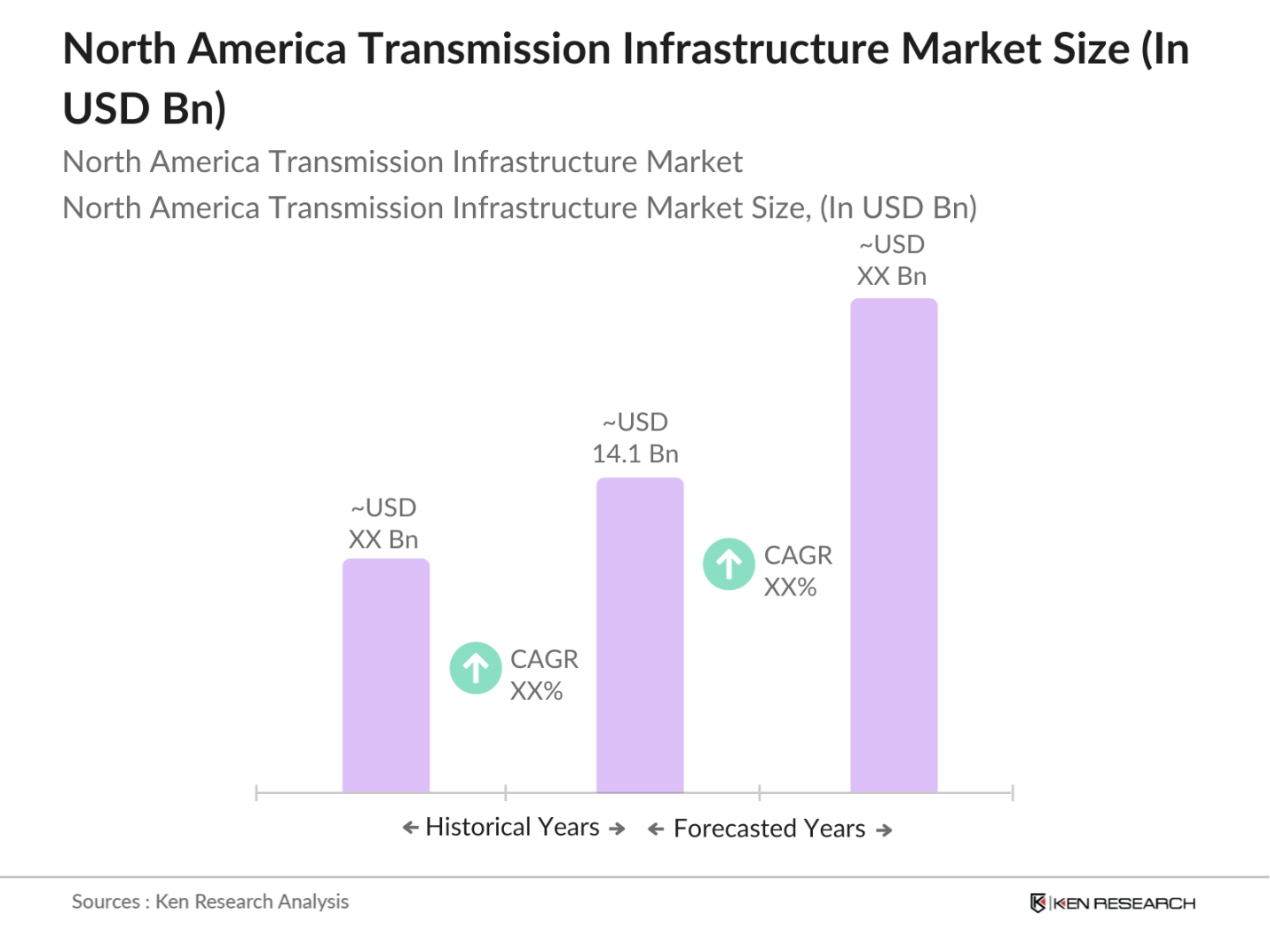
- Key cities and countries dominating the market include the United States and Canada, with major contributions from cities like New York, Los Angeles, and Toronto. These areas lead the market due to their high population density, urbanization, and governmental support for energy infrastructure projects. The United States, in particular, benefits from extensive federal funding to modernize the grid and improve the reliability and efficiency of power transmission systems.
- The adoption of digital substations is a notable trend transforming the transmission infrastructure landscape. Digital substations utilize IoT and advanced communication technologies to improve operational efficiency and reliability. In 2022, the global market for digital substations was valued at approximately $11 billion, with the North American market contributing significantly to this figure. By integrating digital technologies, utilities can enhance monitoring, reduce maintenance costs, and improve the overall performance of transmission systems.
North America Transmission Infrastructure Market Segmentation
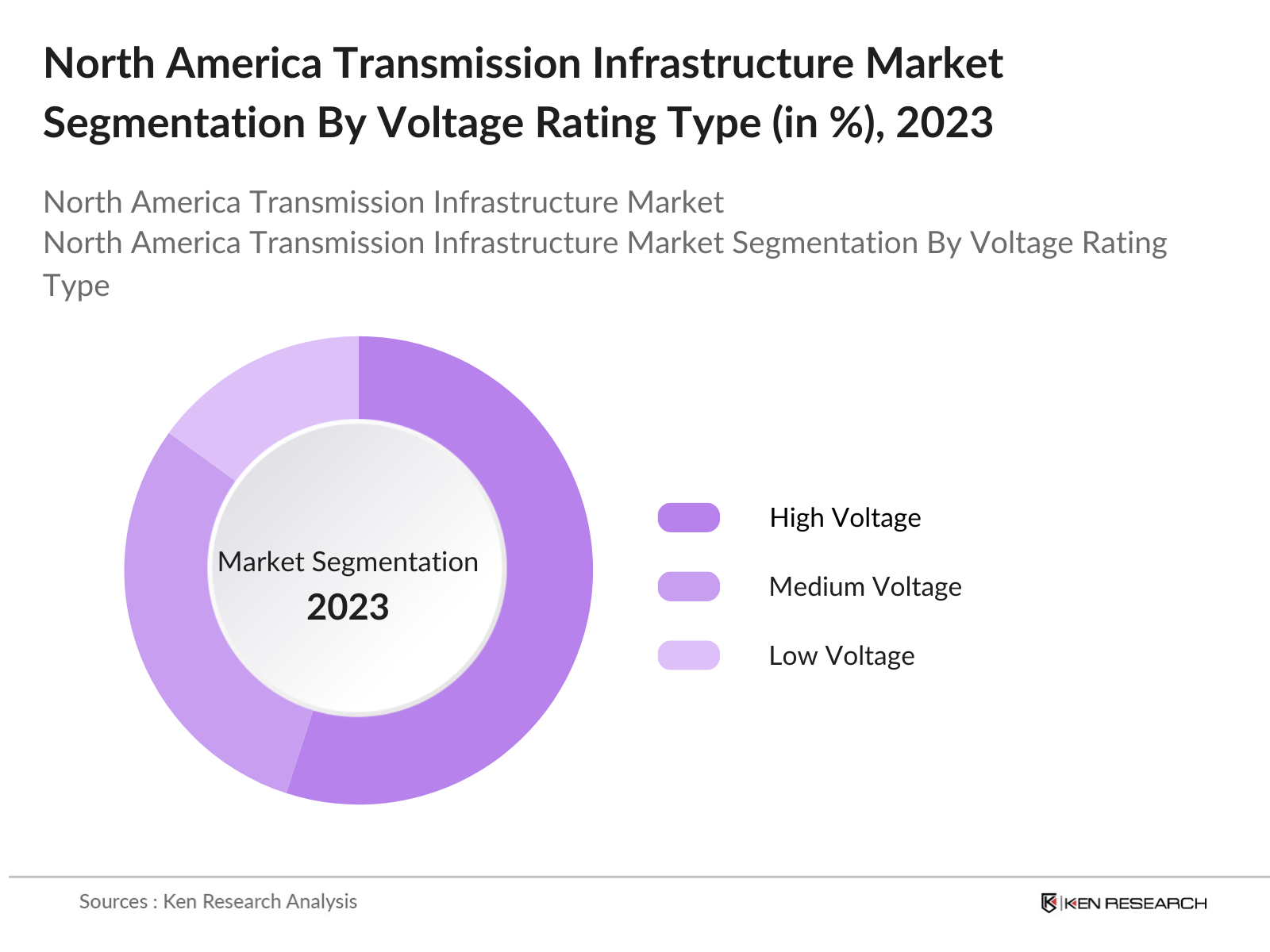
By Voltage Rating: The North America Transmission Infrastructure market is segmented by voltage rating into Low Voltage (Below 69 kV), Medium Voltage (69 kV to 230 kV), and High Voltage (Above 230 kV). High Voltage systems dominate the market due to their capacity to transmit electricity over long distances with minimal losses, which is critical for integrating remote renewable energy sources. The increasing use of renewable energy, such as offshore wind farms, has driven demand for high-voltage transmission systems that can connect these distant resources to population centers.
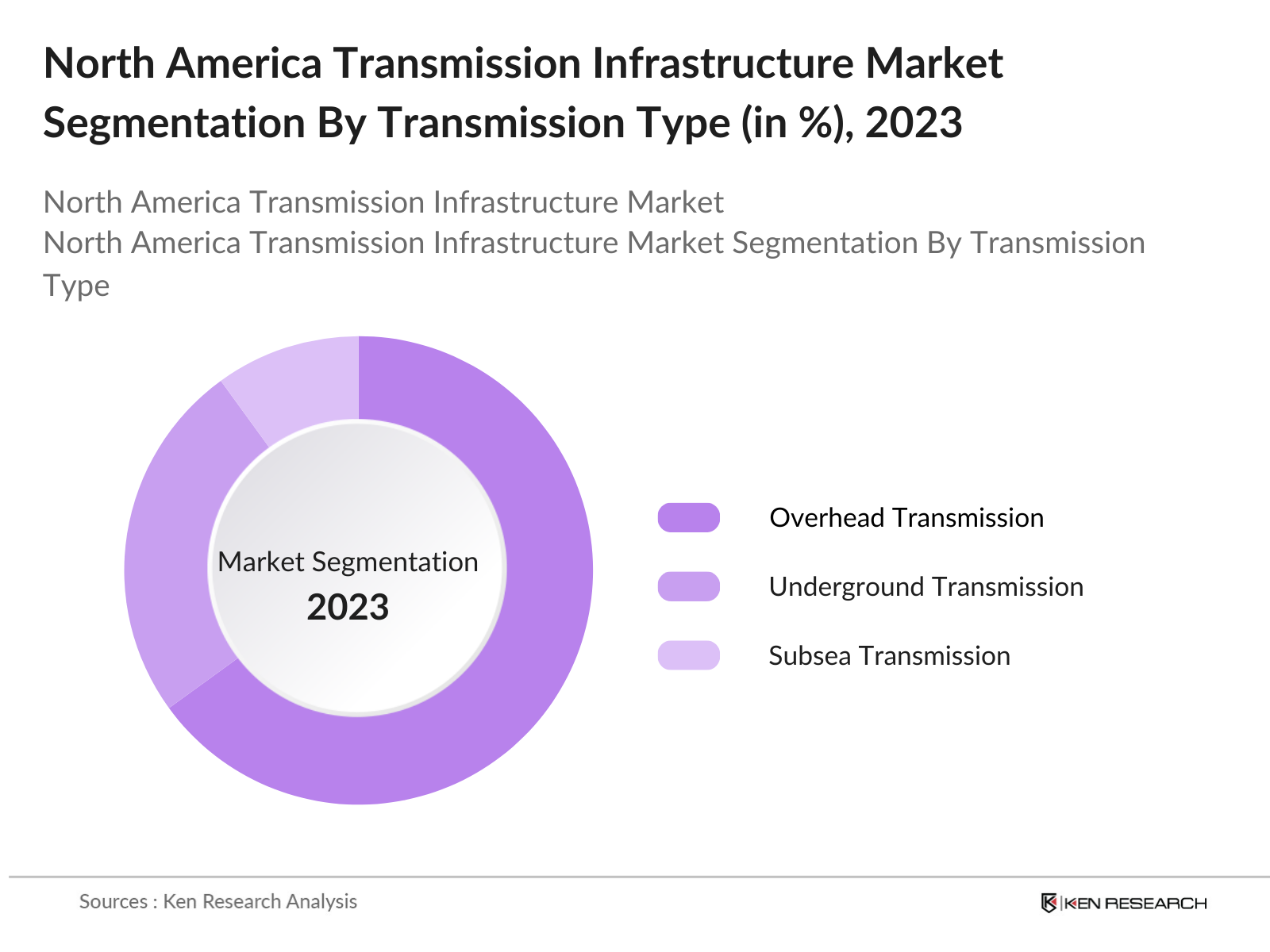
By Transmission Type: The market is further segmented by transmission type into Overhead Transmission, Underground Transmission, and Subsea Transmission. Overhead transmission lines hold the dominant market share due to their lower cost of installation and maintenance compared to underground and subsea systems. Overhead lines are more commonly used in rural and less densely populated areas, where the land is available for such infrastructure. However, the demand for underground transmission is growing, especially in urban centers where space constraints and aesthetic considerations make it more feasible.
North America Transmission Infrastructure Market Competitive Landscape
The North America Transmission Infrastructure market is characterized by the presence of several key players, ranging from traditional energy companies to newer firms focusing on grid modernization technologies. Major companies dominate the market through strong investment portfolios, strategic partnerships, and governmental support. The competitive landscape highlights the dominance of established multinational companies that lead in both technology and investment in transmission infrastructure. These firms have secured key contracts and strategic partnerships that enable them to stay ahead in terms of innovation and market penetration.
|
Company |
Establishment Year |
Headquarters |
Revenue (2023) |
Employees |
Key Projects |
Technology Focus |
Grid Modernization Initiatives |
|
General Electric |
1892 |
Boston, MA, USA |
_ |
_ |
_ |
_ |
_ |
|
Siemens Energy |
1847 |
Munich, Germany |
_ |
_ |
_ |
_ |
_ |
|
ABB Ltd. |
1988 |
Zurich, Switzerland |
_ |
_ |
_ |
_ |
_ |
|
Eaton Corporation |
1911 |
Dublin, Ireland |
_ |
_ |
_ |
_ |
_ |
|
Hitachi Energy |
1908 |
Tokyo, Japan |
_ |
_ |
_ |
_ |
_ |
North America Transmission Infrastructure Industry Analysis
Growth Drivers
- Government Initiatives for Grid Modernization: Government initiatives aimed at grid modernization are significant contributors to the North American transmission infrastructure market. For instance, the U.S. Department of Energy (DOE) allocated approximately $7.5 billion from the Infrastructure Investment and Jobs Act to modernize the grid, ensuring compliance with North American Electric Reliability Corporation (NERC) standards. Additionally, the Federal Energy Regulatory Commission (FERC) is promoting investments in modernized infrastructure to bolster reliability and resilience. These efforts are expected to enhance the capacity and reliability of the grid, which is crucial for integrating renewable energy sources.
- Increasing Demand for Renewable Energy Transmission: The shift towards renewable energy has created a pressing need for robust transmission infrastructure. In 2022, wind energy generation in the U.S. reached over 140 gigawatts (GW), contributing to around 9% of total electricity generation. Similarly, solar energy capacity grew to approximately 130 GW in 2022, indicating a rising trend in clean energy production. This surge necessitates enhanced transmission capabilities to transport renewable energy from generation sites to urban centers. The Energy Information Administration (EIA) projects that by 2025, renewable sources will contribute significantly to the electricity mix, further driving infrastructure investments.
- Rising Investments in High-Voltage Transmission Lines: Investments in high-voltage transmission lines are critical for improving grid efficiency and reliability. According to the U.S. Energy Information Administration, the average annual investment in high-voltage transmission is projected to be around $20 billion from 2022 to 2025. The push for high-voltage direct current (HVDC) lines, which can transmit electricity over long distances with minimal losses, is gaining momentum. Projects like the TransWest Express Transmission Project aim to deliver renewable energy from Wyoming to Nevada, highlighting significant investment in this sector.
Market Challenges
- High Infrastructure Costs: High infrastructure costs remain a significant challenge for the transmission sector. The average cost of building a new transmission line can range from $1 million to $4 million per mile, depending on the location and technology used. As of 2023, the total investment needed to upgrade and expand transmission systems in the U.S. is estimated at $100 billion over the next decade. These high costs can deter utilities from investing in necessary upgrades, thereby impacting grid reliability. Source: U.S. Department of Energy.
- Complex Regulatory Framework: The complex regulatory framework governing the transmission sector poses significant challenges. The multitude of federal, state, and local regulations creates a cumbersome environment for utility companies. In 2022, over 50% of utility executives cited regulatory complexities as a primary barrier to infrastructure investment. Navigating this intricate landscape requires substantial time and resources, potentially delaying critical projects aimed at enhancing grid reliability.
North America Transmission Infrastructure Market Future Outlook
Over the next five years, the North America Transmission Infrastructure market is expected to show steady growth driven by rising investments in renewable energy transmission and grid modernization. Governments across the region are focusing on reducing carbon emissions, which will lead to significant upgrades in existing infrastructure. The integration of advanced technologies, such as smart grids, HVDC (High Voltage Direct Current), and IoT-enabled substations, will further enhance the efficiency and reliability of transmission systems. Moreover, the demand for energy storage solutions to complement renewable energy sources will create new growth opportunities in the market. The expansion of subsea and underground transmission networks, particularly in densely populated urban centers, is expected to accelerate as part of ongoing efforts to minimize environmental impact and improve transmission reliability.
Opportunities
Technological Innovations in Smart Grid Infrastructure: Technological innovations in smart grid infrastructure present significant opportunities for growth. The integration of Internet of Things (IoT) technologies into grid systems enhances monitoring and control capabilities, improving overall efficiency. In 2022, investments in smart grid technologies reached approximately $22 billion in the U.S. This trend is expected to continue as utilities seek to enhance operational efficiency and customer engagement through advanced technologies. Smart grids also facilitate the integration of distributed energy resources, driving further innovation in the sector.
Integration of Advanced Energy Storage Solutions: The integration of advanced energy storage solutions is crucial for stabilizing the grid and enhancing reliability. In 2022, the U.S. battery storage capacity reached 5.5 GW, with projections indicating a growth to over 15 GW by 2025. Energy storage systems, including lithium-ion batteries and pumped hydro storage, provide the flexibility needed to balance supply and demand fluctuations, especially with increasing renewable energy generation. This integration presents a significant opportunity for utilities to enhance grid reliability while meeting environmental goals.
Scope of the Report
|
Voltage Rating |
Low Voltage (Below 69 kV) Medium Voltage (69 kV to 230 kV) High Voltage (Above 230 kV) |
|
Transmission Type |
Overhead Transmission Underground Transmission Subsea Transmission |
|
Application |
Power Utilities Industrial Renewable Energy Integration |
|
Component |
Conductors Transformers Substations Towers and Poles |
|
Region |
United States Canada Mexico |
Products
Key Target Audience Organizations and Entities Who Can Benefit by Subscribing This Report:
Energy Transmission Companies
Utility Provider Industries
Government and Regulatory Bodies (Federal Energy Regulatory Commission, North American Electric Reliability Corporation)
Renewable Energy Development Companies
Investors and Venture Capitalist Firms
Grid Modernization Equipment Manufacturing Companies
Smart Grid Technology Provider Industries
High Voltage Equipment Companies
Companies
Players Mentioned in the Report
General Electric
Siemens Energy
ABB Ltd.
Eaton Corporation
Hitachi Energy
Schneider Electric
American Electric Power
Nexans S.A.
Prysmian Group
Mitsubishi Electric Corporation
Table of Contents
1. North America Transmission Infrastructure Market Overview
1.1. Definition and Scope
1.2. Market Taxonomy
1.3. Market Growth Rate
1.4. Market Segmentation Overview
2. North America Transmission Infrastructure Market Size (In USD Mn)
2.1. Historical Market Size
2.2. Year-On-Year Growth Analysis
2.3. Key Market Developments and Milestones (Grid Modernization, Interregional Expansion, Renewable Integration)
3. North America Transmission Infrastructure Market Analysis
3.1. Growth Drivers
3.1.1. Government Initiatives for Grid Modernization
3.1.2. Increasing Demand for Renewable Energy Transmission
3.1.3. Rising Investments in High-Voltage Transmission Lines
3.1.4. Regulatory Mandates and Incentives for Energy Efficiency
3.2. Market Challenges
3.2.1. High Infrastructure Costs
3.2.2. Complex Regulatory Framework
3.2.3. Environmental Concerns
3.2.4. Aging Grid Infrastructure
3.3. Opportunities
3.3.1. Technological Innovations in Smart Grid Infrastructure
3.3.2. Integration of Advanced Energy Storage Solutions
3.3.3. Expansion of Offshore Wind Power Transmission
3.3.4. Inter-regional Transmission Collaboration Opportunities
3.4. Trends
3.4.1. Adoption of Digital Substations
3.4.2. Focus on Decarbonization through Grid Expansion
3.4.3. Expansion of HVDC (High Voltage Direct Current) Transmission Lines
3.4.4. Transition to Underground Cables in Urban Areas
3.5. Government Regulation
3.5.1. Federal Energy Regulatory Commission (FERC) Guidelines
3.5.2. North American Electric Reliability Corporation (NERC) Reliability Standards
3.5.3. State-Level Renewable Portfolio Standards (RPS)
3.5.4. Environmental Protection Agency (EPA) Guidelines for Transmission Projects
3.6. SWOT Analysis
3.7. Stake Ecosystem (Utilities, Transmission Operators, EPC Contractors, Regulators)
3.8. Porters Five Forces
3.9. Competition Ecosystem
4. North America Transmission Infrastructure Market Segmentation
4.1. By Voltage Rating (In Value %)
4.1.1. Low Voltage (Below 69 kV)
4.1.2. Medium Voltage (69 kV to 230 kV)
4.1.3. High Voltage (Above 230 kV)
4.2. By Transmission Type (In Value %)
4.2.1. Overhead Transmission
4.2.2. Underground Transmission
4.2.3. Subsea Transmission
4.3. By Application (In Value %)
4.3.1. Power Utilities
4.3.2. Industrial
4.3.3. Renewable Energy Integration
4.4. By Component (In Value %)
4.4.1. Conductors
4.4.2. Transformers
4.4.3. Substations
4.4.4. Towers and Poles
4.5. By Region (In Value %)
4.5.1. United States
4.5.2. Canada
4.5.3. Mexico
5. North America Transmission Infrastructure Market Competitive Analysis
5.1. Detailed Profiles of Major Companies
5.1.1. General Electric
5.1.2. Siemens Energy
5.1.3. ABB Ltd.
5.1.4. Eaton Corporation
5.1.5. Schneider Electric
5.1.6. Hitachi Energy
5.1.7. Mitsubishi Electric Corporation
5.1.8. American Electric Power
5.1.9. Nexans S.A.
5.1.10. Prysmian Group
5.1.11. Duke Energy
5.1.12. National Grid
5.1.13. Quanta Services
5.1.14. Entergy Corporation
5.1.15. Xcel Energy
5.2. Cross Comparison Parameters (Revenue, Headquarters, Employees, Regional Presence, Projects Completed, Technology Focus, ESG Initiatives, Key Clients)
5.3. Market Share Analysis
5.4. Strategic Initiatives (Partnerships, Technology Collaborations, Grid Modernization Initiatives)
5.5. Mergers and Acquisitions
5.6. Investment Analysis (Private Equity, Infrastructure Funds, Utility Investments)
5.7. Venture Capital Funding
5.8. Government Grants and Subsidies
5.9. Private Equity Investments
6. North America Transmission Infrastructure Market Regulatory Framework
6.1. Federal Energy Regulations
6.2. State-Level Transmission Policies
6.3. Compliance Requirements
6.4. Environmental and Permitting Guidelines
7. North America Transmission Infrastructure Future Market Size (In USD Mn)
7.1. Future Market Size Projections
7.2. Key Factors Driving Future Market Growth (Renewable Integration, Grid Modernization, Urbanization)
8. North America Transmission Infrastructure Future Market Segmentation
8.1. By Voltage Rating (In Value %)
8.2. By Transmission Type (In Value %)
8.3. By Application (In Value %)
8.4. By Component (In Value %)
8.5. By Region (In Value %)
9. North America Transmission Infrastructure Market Analysts Recommendations
9.1. TAM/SAM/SOM Analysis
9.2. Market Entry Strategy
9.3. Key Opportunity Identification
9.4. Customer Cohort Analysis
9.5. White Space Opportunity Analysis
Research Methodology
Step 1: Identification of Key Variables
In the initial phase, we identified the critical variables that influence the North America Transmission Infrastructure Market. This includes factors such as voltage ratings, transmission types, and the impact of renewable energy integration. Data was gathered using a combination of primary research and secondary sources, including government reports and industry publications.
Step 2: Market Analysis and Construction
We analyzed historical data to understand the market trends, focusing on transmission infrastructure developments, grid modernization projects, and the adoption of smart grid technologies. Market penetration and service provider revenue ratios were evaluated to construct a comprehensive market outlook.
Step 3: Hypothesis Validation and Expert Consultation
Key market hypotheses were validated through consultations with industry experts. These discussions were conducted via CATIS (computer-assisted telephone interviews), providing valuable insights into operational and financial trends that shaped the market landscape.
Step 4: Research Synthesis and Final Output
The final phase included synthesizing data from multiple sources, cross-referencing findings with manufacturers, and validating statistics with bottom-up analysis. This ensured a well-rounded and accurate final report that reflects the current dynamics of the transmission infrastructure market.
Frequently Asked Questions
01. How big is the North America Transmission Infrastructure Market?
The North America Transmission Infrastructure market is valued at USD 14.1 billion, driven by large-scale investments in grid modernization and renewable energy integration. The market has shown steady growth due to governmental support and regulatory mandates.
02. What are the challenges in the North America Transmission Infrastructure Market?
Key challenges include high infrastructure costs, complex regulatory frameworks, and the aging grid system. These issues, coupled with environmental concerns and land acquisition difficulties, slow down project implementation in certain regions.
03. Who are the major players in the North America Transmission Infrastructure Market?
Major players include General Electric, Siemens Energy, ABB Ltd., Eaton Corporation, and Hitachi Energy. These companies lead the market with extensive portfolios in transmission technologies, smart grid solutions, and renewable energy integration.
04. What are the growth drivers of the North America Transmission Infrastructure Market?
Growth drivers include increasing government investments in renewable energy transmission, grid modernization efforts, and technological advancements in smart grid infrastructure. The integration of high-voltage transmission lines has also been a significant factor.
Why Buy From Us?

What makes us stand out is that our consultants follows Robust, Refine and Result (RRR) methodology. i.e. Robust for clear definitions, approaches and sanity checking, Refine for differentiating respondents facts and opinions and Result for presenting data with story

We have set a benchmark in the industry by offering our clients with syndicated and customized market research reports featuring coverage of entire market as well as meticulous research and analyst insights.

While we don't replace traditional research, we flip the method upside down. Our dual approach of Top Bottom & Bottom Top ensures quality deliverable by not just verifying company fundamentals but also looking at the sector and macroeconomic factors.

With one step in the future, our research team constantly tries to show you the bigger picture. We help with some of the tough questions you may encounter along the way: How is the industry positioned? Best marketing channel? KPI's of competitors? By aligning every element, we help maximize success.

Our report gives you instant access to the answers and sources that other companies might choose to hide. We elaborate each steps of research methodology we have used and showcase you the sample size to earn your trust.

If you need any support, we are here! We pride ourselves on universe strength, data quality, and quick, friendly, and professional service.