
North America Yoga Clothing Market Outlook to 2030
Region:Mexico
Author(s):Meenakshi Bisht
Product Code:KROD8701
Region:Mexico
Author(s):Meenakshi Bisht
Product Code:KROD8701
December 2024
98
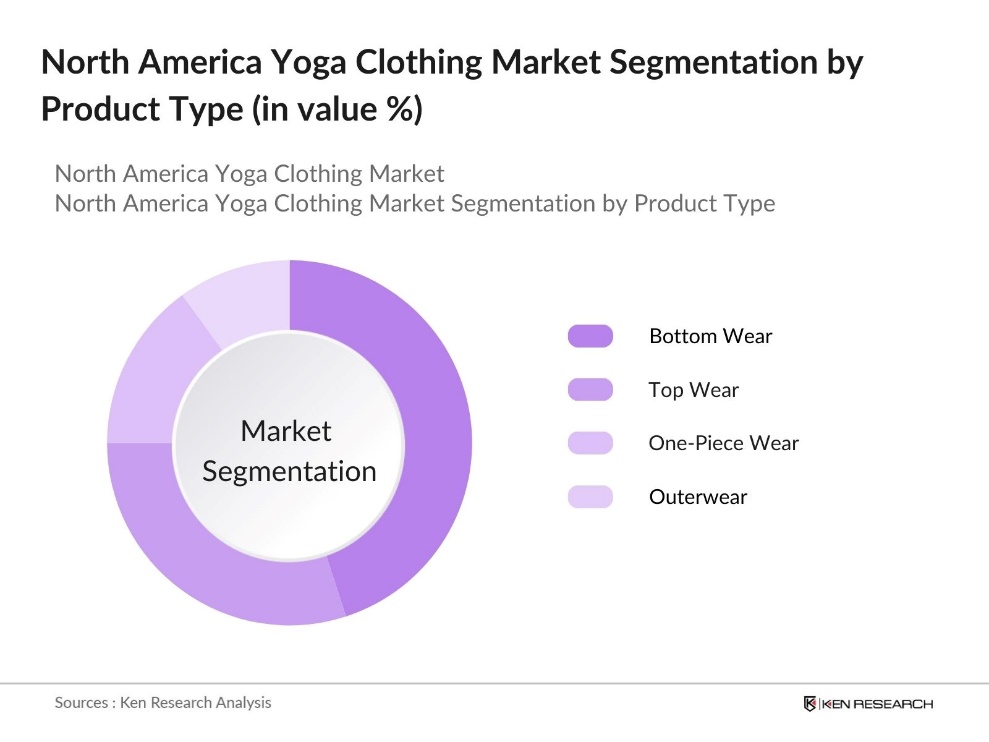
By Product Type: The North America yoga clothing market is segmented by product type into bottom wear, top wear, one-piece wear, and outerwear. Among these, bottom wear (leggings, yoga pants, and shorts) holds a dominant market share. This dominance can be attributed to the comfort, versatility, and style appeal of leggings and yoga pants, which are not only worn for yoga but also for casual and athleisure purposes. Brands have continuously innovated with moisture-wicking, stretchable, and sustainable fabrics, further driving consumer preference for this segment.
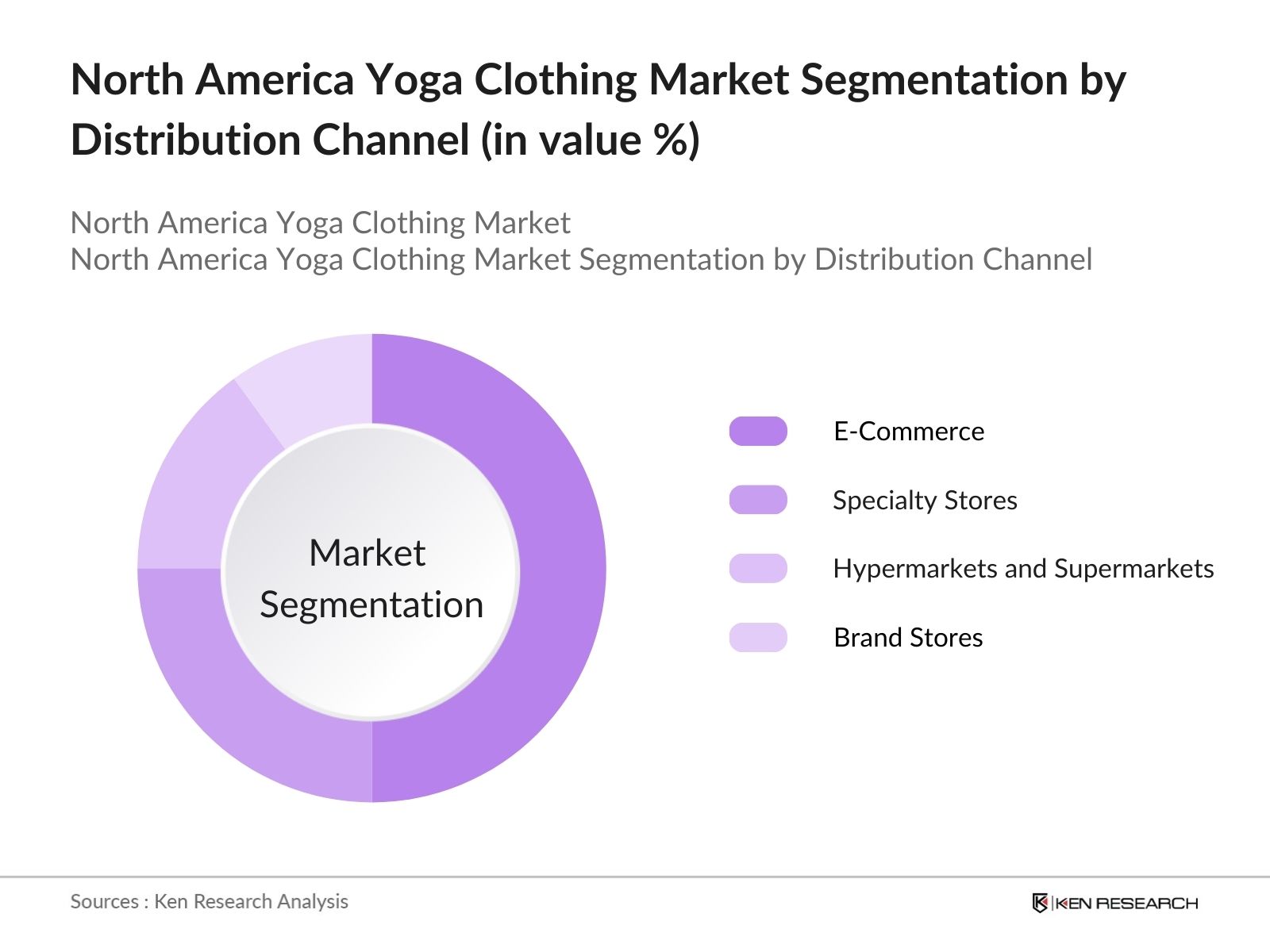
By Distribution Channel: In terms of distribution channels, the market is segmented into e-commerce, specialty stores, hypermarkets and supermarkets, and brand stores. E-commerce holds the leading share in 2023. The convenience of online shopping, combined with the availability of multiple brands and a wide range of product options, has made e-commerce the dominant channel. Additionally, customers benefit from user reviews, sizing guides, and competitive pricing, contributing to the growing preference for online purchases of yoga apparel.
The market is dominated by key players that have established strong brand identities and offer a wide range of products, from budget-friendly to premium lines. The competitive landscape is characterized by the increasing emphasis on sustainability, innovation in fabric technology, and strategic collaborations with influencers and fitness communities. The market sees a strong focus on product innovation, with brands offering smart fabrics, sustainable options, and functional designs that appeal to a wide range of consumers.
|
Company |
Established |
Headquarters |
Number of Employees |
Revenue (USD Bn) |
Product Range |
Sustainability Initiatives |
Market Penetration |
E-Commerce Presence |
Product Innovation |
|
Lululemon Athletica |
1998 |
Vancouver, Canada |
|||||||
|
Athleta |
1998 |
San Francisco, USA |
|||||||
|
Nike |
1964 |
Beaverton, USA |
|||||||
|
Alo Yoga |
2007 |
Los Angeles, USA |
|||||||
|
Beyond Yoga |
2005 |
Los Angeles, USA |
Over the next five years, the North America yoga clothing market is expected to experience steady growth driven by increasing health awareness, a rise in the number of yoga practitioners, and a growing preference for sustainable and eco-friendly clothing options. Furthermore, advancements in fabric technology, such as moisture-wicking and smart fabrics, will continue to attract consumers who prioritize both functionality and fashion in their workout attire. E-commerce is likely to maintain its dominance, with more brands adopting direct-to-consumer models to cater to a tech-savvy customer base.
|
Product Type |
Bottom Wear (Leggings, Yoga Pants, Shorts) Top Wear (Sports Bras, Tank Tops, T-shirts) One-Piece Wear (Jumpsuits, Leotards) Outerwear |
|
End-User |
Women Men Kids |
|
Distribution Channel |
E-Commerce Specialty Stores Hypermarkets and Supermarkets Brand Stores |
|
Fabric Type |
Cotton Nylon Polyester Blended Fabric |
|
Region |
United States Canada Mexico |
1.1. Definition and Scope
1.2. Market Taxonomy
1.3. Market Growth Rate
1.4. Market Segmentation Overview
2.1. Historical Market Size
2.2. Year-On-Year Growth Analysis
2.3. Key Market Developments and Milestones
3.1. Growth Drivers
3.1.1. Increased Focus on Health and Wellness
3.1.2. Rising Participation in Yoga and Fitness Activities
3.1.3. Evolving Fashion Trends
3.1.4. Growth of E-Commerce Platforms
3.2. Market Challenges
3.2.1. High Competition in Activewear Segment
3.2.2. Sustainability Concerns with Fabrics
3.2.3. Price Sensitivity of Consumers
3.3. Opportunities
3.3.1. Rising Demand for Sustainable and Eco-friendly Fabrics
3.3.2. Growth in Womens Yoga Clothing Segment
3.3.3. Technological Integration (Smart Fabrics, Wearable Technology)
3.4. Trends
3.4.1. Fashion-Forward Yoga Wear
3.4.2. Athleisure as a Lifestyle Trend
3.4.3. Customization and Personalization
3.5. Government Regulations
3.5.1. Trade Regulations on Importing Fabrics
3.5.2. Labor and Manufacturing Regulations
3.5.3. Environmental and Sustainability Standards
3.6. SWOT Analysis
3.7. Stakeholder Ecosystem
3.7.1. Fabric Suppliers
3.7.2. Manufacturers
3.7.3. Retailers and E-commerce Platforms
3.7.4. Yoga Studios and Fitness Centers
3.8. Porters Five Forces Analysis
3.8.1. Bargaining Power of Suppliers
3.8.2. Bargaining Power of Buyers
3.8.3. Threat of New Entrants
3.8.4. Threat of Substitutes
3.8.5. Competitive Rivalry
3.9. Competitive Landscape
4.1. By Product Type (In Value %)
4.1.1. Bottom Wear (Leggings, Yoga Pants, Shorts)
4.1.2. Top Wear (Sports Bras, Tank Tops, T-shirts)
4.1.3. One-Piece Wear (Jumpsuits, Leotards)
4.1.4. Outerwear (Jackets, Hoodies, Sweaters)
4.2. By End-User (In Value %)
4.2.1. Women
4.2.2. Men
4.2.3. Kids
4.3. By Distribution Channel (In Value %)
4.3.1. E-Commerce
4.3.2. Specialty Stores
4.3.3. Hypermarkets and Supermarkets
4.3.4. Brand Stores
4.4. By Fabric Type (In Value %)
4.4.1. Cotton
4.4.2. Nylon
4.4.3. Polyester
4.4.4. Blended Fabric
4.5. By Region (In Value %)
4.5.1. United States
4.5.2. Canada
4.5.3. Mexico
5.1. Detailed Profiles of Major Competitors
5.1.1. Lululemon Athletica
5.1.2. Athleta
5.1.3. Alo Yoga
5.1.4. Nike
5.1.5. Adidas
5.1.6. Under Armour
5.1.7. Manduka
5.1.8. Beyond Yoga
5.1.9. Girlfriend Collective
5.1.10. Prana
5.1.11. Spiritual Gangster
5.1.12. Free People
5.1.13. Fabletics
5.1.14. Outdoor Voices
5.1.15. Vuori
5.2. Cross Comparison Parameters (Number of Employees, Headquarters, Inception Year, Revenue, Product Range, Market Penetration, Sustainability Initiatives, Product Innovation)
5.3. Market Share Analysis
5.4. Strategic Initiatives
5.5. Mergers and Acquisitions
5.6. Investment Analysis
5.7. Venture Capital Funding
5.8. Government Grants
5.9. Private Equity Investments
6.1. Import and Export Regulations for Fabrics
6.2. Labor Laws in Manufacturing
6.3. Environmental Regulations (Sustainable Manufacturing, Recyclable Materials)
6.4. Textile and Apparel Safety Standards
7.1. Future Market Size Projections
7.2. Key Factors Driving Future Market Growth
8.1. By Product Type (In Value %)
8.2. By End-User (In Value %)
8.3. By Distribution Channel (In Value %)
8.4. By Fabric Type (In Value %)
8.5. By Region (In Value %)
9.1. TAM/SAM/SOM Analysis
9.2. Consumer Cohort Analysis
9.3. White Space Opportunities
9.4. Marketing Strategy Recommendations
Disclaimer Contact UsThis phase involved mapping the North America yoga clothing market ecosystem, identifying all major stakeholders, including fabric suppliers, manufacturers, distributors, and end consumers. The primary focus was to determine key variables such as product demand, pricing, and sustainability trends that influence market dynamics.
We gathered and analyzed historical data on market growth, product segmentation, and revenue generation. The analysis focused on the performance of key players, distribution channels, and fabric innovations. The objective was to assess the current market status and future trends.
Market hypotheses were validated through interviews with industry experts, including representatives from yoga clothing manufacturers and distributors. This feedback helped refine revenue estimates and provided insights into consumer preferences and emerging trends.
Finally, data was synthesized from various sources, including expert consultations, secondary research, and proprietary databases. The analysis was verified through multiple rounds of validation, ensuring a robust and comprehensive understanding of the North America yoga clothing market.
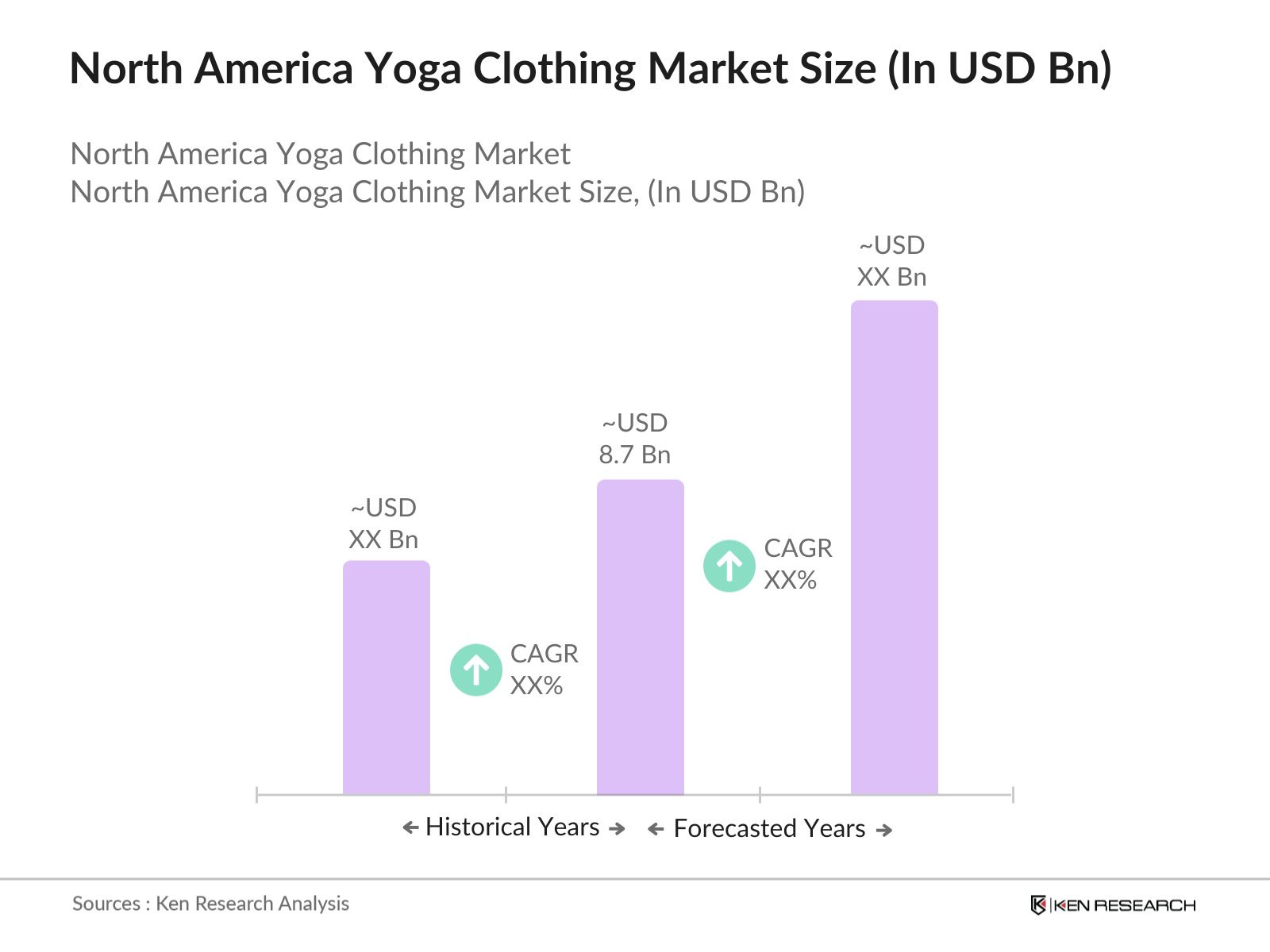
The North America Yoga Clothing Market is valued at USD 8.7 billion, driven by the growing popularity of yoga, increasing consumer demand for sustainable products, and the expansion of online retail channels.
Key challenges in North America Yoga Clothing Market include high competition among established brands, the rise of counterfeit products, and the cost of sustainable fabric production, which can impact profitability.
Major players in North America Yoga Clothing Market include Lululemon Athletica, Nike, Athleta, Alo Yoga, and Beyond Yoga. These companies dominate due to their strong brand presence, product innovation, and extensive distribution networks.
The North America Yoga Clothing Market growth is driven by increasing consumer health consciousness, the rise in yoga practitioners, and the growing preference for eco-friendly, fashionable, and comfortable yoga apparel.

What makes us stand out is that our consultants follows Robust, Refine and Result (RRR) methodology. i.e. Robust for clear definitions, approaches and sanity checking, Refine for differentiating respondents facts and opinions and Result for presenting data with story

We have set a benchmark in the industry by offering our clients with syndicated and customized market research reports featuring coverage of entire market as well as meticulous research and analyst insights.

While we don't replace traditional research, we flip the method upside down. Our dual approach of Top Bottom & Bottom Top ensures quality deliverable by not just verifying company fundamentals but also looking at the sector and macroeconomic factors.

With one step in the future, our research team constantly tries to show you the bigger picture. We help with some of the tough questions you may encounter along the way: How is the industry positioned? Best marketing channel? KPI's of competitors? By aligning every element, we help maximize success.

Our report gives you instant access to the answers and sources that other companies might choose to hide. We elaborate each steps of research methodology we have used and showcase you the sample size to earn your trust.

If you need any support, we are here! We pride ourselves on universe strength, data quality, and quick, friendly, and professional service.