CHAPTER 1 - MARKET SUMMARY
Market Overview
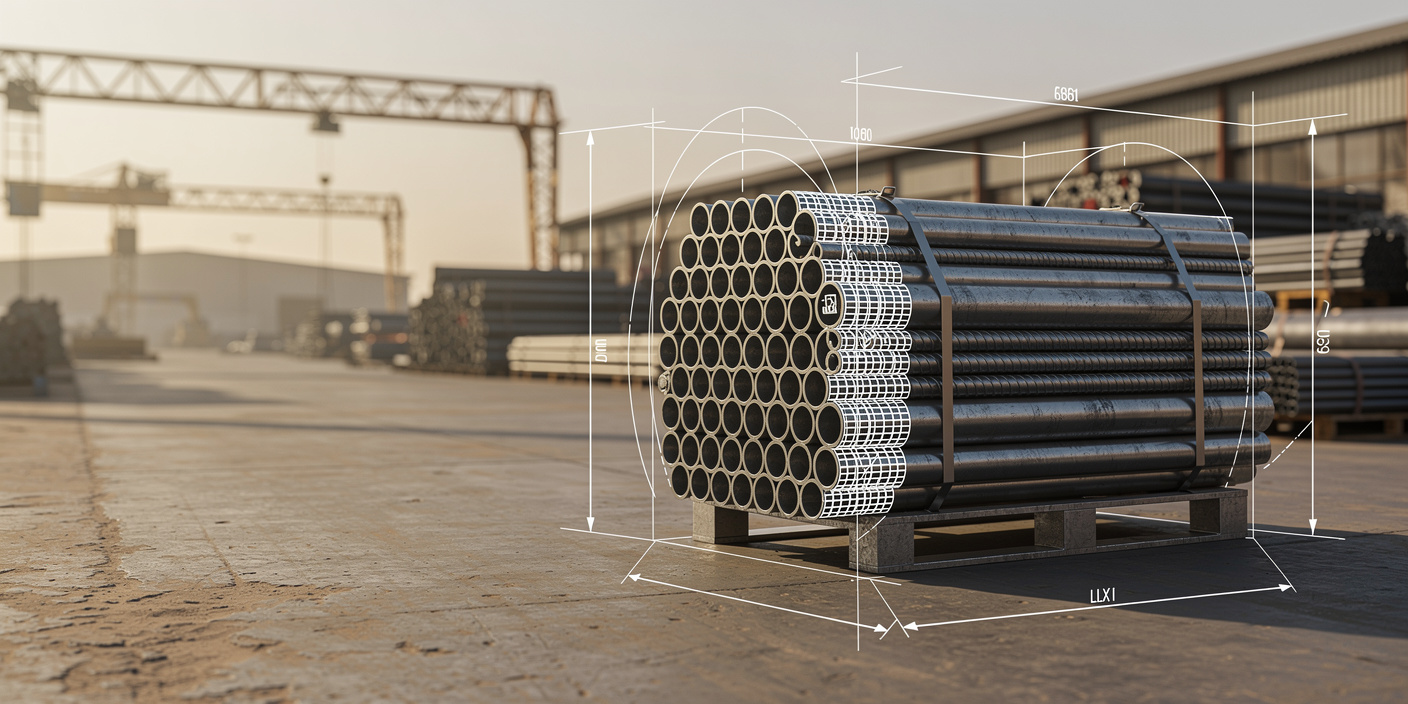
The Saudi Arabia Steel Pipes and Rebars Market operates through two linked but commercially distinct pools: reinforcing bars sold mainly through project contractors and distributors, and steel pipes sold through qualified tenders to energy, water, industrial, and construction buyers. Demand reached an estimated 10.40 million tons in 2025, making procurement timing, diameter-grade mix, and project release schedules the principal revenue determinants.
Production and distribution are concentrated in the Eastern Province, where Jubail, Dammam, Dhahran, and Ras Al-Khair connect steelmaking, pipe mills, coating facilities, ports, and major oil and gas customers. Saudi Arabia produced 9.6 million tons of crude steel in 2024, ranking twentieth globally, while major pipe mills in the eastern cluster offer more than 1.5 million tons of combined nameplate capacity.
Market Value
USD 8.32 billion
2025
Dominant Region
Eastern Province
2025
Dominant Segment
Rebars
largest product category, 2025
Total Number of Players
38
Future Outlook
The Saudi Arabia Steel Pipes and Rebars Market is projected to rise from USD 8.32 billion in 2025 to USD 13.68 billion by 2031, representing an 8.64% forecast CAGR. The forecast assumes sustained execution of housing, transport, water, energy, and industrial projects, alongside improving domestic supply share from 77.0% in 2025 to 83.0% in 2031. Value growth is expected to exceed volume growth because the sales mix shifts toward coated line pipe, higher-pressure tubular products, corrosion-resistant grades, and prefabricated reinforcement solutions. Price volatility remains material, but localization and qualification barriers should support more stable margins for integrated producers.
Historical growth averaged 10.81% during 2020-2025, reflecting both post-pandemic volume recovery and the global steel-price cycle. Future growth should be less price-led and more project-led, with finished-product volume increasing from 10.40 million tons in 2025 to 15.40 million tons in 2031. Rebar remains the largest revenue pool, while steel pipes expand faster because water conveyance, gas transmission, industrial localization, and oilfield procurement require higher specifications and longer qualification cycles. The strongest strategic positions will combine local melting or rolling access, coating and testing capability, project delivery reliability, and long-term customer approvals.
8.64%
Forecast CAGR
$13,680 Mn
2030 Projection
Base Year
2025
Historical Period
2020-2025
Forecast Period
2026-2031
Historical CAGR
10.81%
CHAPTER 2 - SCOPE OF REPORT
Scope of the Market
CHAPTER 3 - Key Stakeholders
Key Target Audience
Key stakeholders who can leverage from this market analysis for investment, strategy, and operational planning.
Investors
CAGR, utilization, capex intensity, margins, contract visibility, risk
Corporates
procurement cost, steel mix, qualification, lead time, availability
Government
localization, standards, capacity, resilience, emissions, industrial jobs
Operators
throughput, yield, downtime, coating, testing, order backlog
Financial institutions
project finance, covenants, working capital, demand stability
CHAPTER 4 - Market Size & Growth
Market Size, Growth Forecast and Trends
This section evaluates the historical market size, analyzes year-over-year growth dynamics, and presents forecast projections supported by market performance indicators and demand-side drivers.
Historical & Projected Market Size ($ Million)
Year-over-Year Growth Rate (%)
Market Value vs Volume Growth (%)
Historical Market Performance (2020-2025)
The market's strongest annual expansion occurred in 2021, when value increased 22.7% as project restocking coincided with a 13.0% rise in the blended average selling price. Growth moderated to 3.8% in 2023 as prices normalized, before recovering to 8.8% in 2025. Volume expanded from 7.00 million tons in 2020 to 10.40 million tons in 2025, indicating that the historical cycle was not solely price-driven. Demand remained concentrated in concrete reinforcement and energy-related pipe procurement, while Eastern Province mills captured the largest local production share.
Forecast Market Outlook (2026-2031)
Forecast growth is expected to remain within an 8.4% to 8.8% annual range, producing an 8.64% CAGR through 2031. Market volume rises by 6.2% to 7.2% annually, while the blended selling price increases from USD 800 per ton in 2025 to USD 888 per ton in 2031. The value mix shifts toward higher-specification pipes, coatings, threading, and processed rebar. Terminal growth is supported by industrial localization, utility pipeline construction, transport corridors, and staged delivery of large urban developments rather than a single megaproject assumption.
CHAPTER 5 - Market Data
Market Breakdown
The market's transition from a price-led recovery toward project-led expansion increases the importance of volume conversion, product mix, and domestic qualification. CEOs and investors should track whether capacity additions convert into secured contracts without eroding utilization or pricing discipline.
Year | Market Size (USD Mn) | YoY Growth (%) | Finished Product Volume (Mn Tons) | Average Selling Price (USD/Ton) | Domestic Supply Share (%) | Period |
|---|---|---|---|---|---|---|
| 2020 | $4,980 Mn | +- | 7.00 | 711 | Forecast | |
| 2021 | $6,110 Mn | +22.7% | 7.60 | 804 | Forecast | |
| 2022 | $6,920 Mn | +13.3% | 8.40 | 824 | Forecast | |
| 2023 | $7,180 Mn | +3.8% | 9.00 | 798 | Forecast | |
| 2024 | $7,650 Mn | +6.5% | 9.60 | 797 | Forecast | |
| 2025 | $8,320 Mn | +8.8% | 10.40 | 800 | Forecast | |
| 2026F | $9,020 Mn | +8.4% | 11.10 | 813 | Forecast | |
| 2027F | $9,790 Mn | +8.5% | 11.90 | 823 | Forecast | |
| 2028F | $10,630 Mn | +8.6% | 12.70 | 837 | Forecast | |
| 2029F | $11,560 Mn | +8.7% | 13.60 | 850 | Forecast | |
| 2030F | $12,570 Mn | +8.7% | 14.50 | 867 | Forecast | |
| 2031F | $13,680 Mn | +8.8% | 15.40 | 888 | Forecast |
Finished Product Volume
10.40 million tons, 2025, Saudi Arabia. Volume conversion is the clearest test of whether project pipelines are translating into shipments. Saudi Arabia produced 9.6 million tons of crude steel in 2024, providing a strong domestic metallic base but not a complete match for all pipe grades.
Average Selling Price
USD 800 per ton, 2025, Saudi Arabia. A blended price masks substantial dispersion between commodity rebar and qualified coated or seamless pipe. East Pipes reported that FY2025-26 revenue growth reflected both higher sales volume and a higher average selling price per ton.
Domestic Supply Share
77.0%, 2025, Saudi Arabia. Rising local share improves lead times and supports procurement localization, but import dependence persists for selected seamless, alloyed, and premium-connection products. Aramco reported reaching 70% local supply-chain spending in 2025, reinforcing qualification incentives.
CHAPTER 6 - Segmentation
Market Segmentation Framework
Comprehensive analysis across key dimensions providing insights into market structure, consumer preferences, and distribution patterns.
No of Segments
7
Dominant Segment
Product Type
Fastest Growing Segment
Technology
Product Type
End-Use Industry
Application
Customer Type
Sales Channel
Technology
Geography
Key Segmentation Takeaways
Comprehensive analysis across all extracted segmentation dimensions providing insights into market structure, consumer preferences, and distribution patterns.
Product Type
Product type is the dominant commercial dimension because rebar, welded pipe, seamless pipe, and reinforcement services have different raw-material inputs, customer approvals, pricing, and capacity economics. Reinforcing Bars represent the largest Level-2 pool due to concrete-intensive construction, while qualified pipe products generate higher revenue per ton and longer contract visibility.
Technology
Technology is the fastest-growing dimension because buyers increasingly specify higher-strength grades, corrosion protection, premium connections, automated welding, and digital traceability. Surface Protection and Traceability is the fastest-growing Level-2 category as utilities and energy customers seek longer asset life, batch-level quality assurance, and reduced field-failure risk across harsh operating environments.
CHAPTER 7 - Regional Analysis
Regional Analysis
Saudi Arabia ranks first among selected GCC and adjacent peer markets by combined steel pipes and rebars value in 2025. Its position reflects the region's largest crude steel base, a high construction-investment share, and energy-sector localization that supports both commodity rebar and technically qualified pipe demand.
Focus Country Ranking
1st
Focus Country Market Size
USD 8.32 Bn (2025)
Focus Country CAGR (2026-2031)
8.64%
Focus Country Ranking
1st
Focus Country Market Size
USD 8.32 Bn (2025)
Focus Country CAGR (2026-2031)
8.64%
Regional Analysis (Current Year)
Market Position
Saudi Arabia's USD 8.32 billion market ranks first in the peer set, supported by 9.6 million tons of domestic crude steel production and a nationally significant construction pipeline.
Growth Advantage
Saudi Arabia's 8.64% forecast CAGR exceeds Turkey's 5.70% and the UAE's 6.90%, positioning the Kingdom as the peer-set growth leader as project execution and localization deepen.
Competitive Strengths
Competitive strengths include 70% Aramco local supply-chain spending, 9.6 million tons of crude steel output, and integrated eastern-cluster pipe, coating, testing, and port infrastructure.
CHAPTER 8 - INDUSTRY ANALYSIS
Growth Drivers, Market Challenges & Market Opportunities
Comprehensive analysis of key factors shaping the Saudi Arabia Steel Pipes and Rebars Market, including growth catalysts, operational challenges, and emerging opportunities across production, distribution, and consumer segments.
Growth Drivers
Construction and Infrastructure Capital Formation
- Construction represented 7.7% of nominal GDP (2024, Saudi Arabia), broadening demand beyond a small number of flagship projects and supporting recurring distributor and mill-direct rebar volumes.
- Construction activity grew 5.5% in real terms (2024, Saudi Arabia), improving order conversion across foundations, bridges, rail, utility, and industrial-zone packages.
- Gross capital formation accounted for 31.7% of nominal GDP (2024, Saudi Arabia), favoring suppliers that bundle processed rebar, scheduled call-offs, and project logistics.
Energy and Utility Localization
- The iktva ecosystem identifies a USD 28 billion annual procurement opportunity (2025, Saudi Arabia) across 12 sectors, expanding the addressable pool for localized tubular suppliers.
- Saudi Steel Pipe reports production capacity above 400,000 tons per year (latest, Saudi Arabia), demonstrating the scale available for OCTG, line pipe, construction pipe, and coating.
- Aramco's supplier ecosystem includes 290+ corporate purchase agreements (2025, Saudi Arabia), giving approved mills recurring opportunities to monetize coating, bending, threading, and inspection.
Domestic Industry Consolidation and Capacity Expansion
- Hadeed's rebar rolling footprint includes 1.2 million tons plus 0.8 million tons annual capacity (latest, Saudi Arabia), supporting larger national supply commitments.
- East Pipes announced a fifth line targeting 500,000 tons annual capacity (2025, Saudi Arabia), strengthening local HSAW supply for oil, gas, and water transmission.
- National Pipe Company's two large-diameter plants provide 430,000 tons combined rated capacity (latest, Saudi Arabia), supporting domestic transmission-pipe availability and project resilience.
Market Challenges
Raw-Material and Selling-Price Volatility
- Saudi Arabia's crude steel output declined from 9.9 million tons in 2023 to 9.6 million tons in 2024, showing that domestic availability can fluctuate despite structural demand.
- Market value growth slowed to 3.8% in 2023 (Saudi Arabia market estimate) as prices normalized, requiring tighter inventory turns and shorter quotation validity.
- World apparent steel use fell from 1,843.1 million tons in 2021 to 1,742.4 million tons in 2024, exposing regional prices to global supply-demand cycles.
Project Timing and Customer Concentration
- An East Pipes contract worth about USD 40.6 million (2024, Saudi Arabia) was mutually terminated, demonstrating order-book risk even after project award.
- East Pipes' FY2025-26 revenue rose to SAR 2.3 billion (2026 filing, company) from SAR 1.8 billion, illustrating how delivery schedules can create sharp annual swings.
- Large energy buyers use 290+ corporate purchase agreements (2025, Aramco ecosystem), concentrating qualification power among a limited set of approved procurement channels.
Qualification, Standards, and Product-Mix Gaps
- The Saudi Quality Mark scope explicitly includes reinforcement steel bars (current, Saudi Arabia), increasing testing, audit, labeling, and traceability requirements.
- Saudi Steel Pipe manufactures welded products up to 20 inches in diameter (latest, Saudi Arabia), leaving selected larger, seamless, or specialized grades dependent on different facilities or imports.
- JESCO's facility focuses on carbon-steel seamless pipe (latest, Saudi Arabia), but premium sour-service and connection qualification still requires product-specific approvals and trial orders.
Market Opportunities
High-Specification and Corrosion-Resistant Pipe
- Aramco's 70% local spending achievement (2025, Saudi Arabia) supports premium revenue from sour-service grades, multilayer coating, premium threading, bends, and inspection.
- East Pipes has manufactured more than 2.8 million tons of pipe cumulatively (2024, company), giving local suppliers a reference base for higher-specification contract expansion.
- Realization requires the testing and process capability needed for API, NACE, coating, and batch traceability standards (current, energy pipe), favoring technically integrated investors.
Processed Rebar and Construction Productivity Services
- Hadeed's combined rebar rolling lines exceed 2.0 million tons annual capacity (latest, Saudi Arabia), providing feedstock scale for downstream processing and scheduled delivery.
- Construction's 7.7% share of nominal GDP (2024, Saudi Arabia) supports service centers that monetize processing fees, lower scrap, bundled delivery, and project call-offs.
- SASO standards covering welded deformed steel bar mats (current, Saudi Arabia) provide a compliance framework for scaling mesh and prefabricated reinforcement solutions.
Green Steel and Low-Carbon Procurement
- Worldsteel identifies EAF production as using mainly recycled steel and electricity (current, global), supporting Saudi DRI-EAF pathways for lower-carbon products.
- PIF invested approximately USD 2.5 billion for a 10% Vale Base Metals stake (2024, PIF), signaling strategic interest in secure metallic inputs and industrial supply chains.
- Aramco reported a cumulative iktva GDP contribution of USD 240 billion (2024, Saudi Arabia), indicating institutional support for localization models that can extend to verified low-carbon steel.
CHAPTER 9 - Competitive Landscape
Competitive Landscape Overview
The market is moderately concentrated, with the top 10 producers accounting for an estimated 78.0% of 2025 value. Entry barriers are highest in seamless and energy-qualified pipe, where capital intensity, testing, approvals, and reference projects matter more than basic rolling capacity.
Market Share Distribution
Top 5 Players
Market Dynamics
8 new entrants in the past 5 years, indicating strong market attractiveness and growth potential.
Company Name | Market Share | Headquarters | Founding Year | Core Market Focus |
|---|---|---|---|---|
Saudi Iron and Steel Company (Hadeed) | 28.0% (estimated) | Jubail, Saudi Arabia | 1979 | Rebars, wire rod, flat steel, integrated steelmaking |
Al Ittefaq Steel Products Company | 12.0% (estimated) | Dammam, Saudi Arabia | - | Rebars, billets, long products |
East Pipes Integrated Company for Industry | 9.0% (estimated) | Dammam, Saudi Arabia | 2010 | HSAW line pipe, coating, double-jointing |
Saudi Steel Pipe Company | 7.0% (estimated) | Dammam, Saudi Arabia | 1980 | HFI welded OCTG, line pipe, coating and bending |
Arabian Pipes Company | 6.0% (estimated) | Riyadh, Saudi Arabia | 1991 | Welded steel pipe for energy and industrial applications |
ArcelorMittal Tubular Products Al-Jubail | 5.0% (estimated) | Jubail, Saudi Arabia | - | Seamless OCTG and line pipe |
Jubail Energy Services Company (JESCO) | 4.0% (estimated) | Jubail, Saudi Arabia | - | Carbon-steel seamless pipe products |
National Pipe Company | 3.0% (estimated) | Dhahran, Saudi Arabia | 1980 | Large-diameter HSAW and LSAW transmission pipe |
Al Yamamah Steel Industries Company | 2.5% (estimated) | Riyadh, Saudi Arabia | - | Steel tubes, pipes, poles, and fabricated products |
Al-Jazera Factories for Steel Products | 1.5% (estimated) | - | - | Steel pipes and tubes for construction and industrial use |
Cross Comparison Parameters
The report provides detailed cross-comparison of key players across 10 performance parameters to identify competitive strengths and weaknesses.
Annual Finished-Product Capacity
Capacity Utilization
Revenue Growth
EBITDA Margin
Analysis Covered
Market Share Analysis:
Compares estimated value contribution across qualified domestic steel producers
Cross Comparison Matrix:
Benchmarks capacity, utilization, growth, and profitability across competitors
SWOT Analysis:
Evaluates technology, customer approvals, costs, and project exposure
Pricing Strategy Analysis:
Assesses contract indexing, product premiums, and tender discipline
Company Profiles:
Summarizes ownership, facilities, products, positioning, and strategic priorities
CHAPTER 10 - REPORT TOC
CHAPTER 14 - Table Of Contents
Phase 1Market Assessment Phase
11
Chapters
Supply-side and competitive intelligence covering market sizing, segmentation, competitive dynamics, regulatory landscape, and future forecasts.
Phase 2Go-To-Market Strategy Phase
15
Chapters
Entry strategy evaluation, execution roadmap, partner recommendations, and profitability outlook.
Complete Report Coverage
201+ detailed sections covering every aspect of the market
143
Assessment Sections
58
Strategy Sections
CHAPTER 11 - Our Approach
Research Methodology
Desk Research
- Mapped Saudi rebar and pipe taxonomy
- Reviewed steel production and trade statistics
- Assessed project and procurement pipelines
- Analyzed company capacity and financial filings
Primary Research
- Interviewed steel mill commercial directors
- Consulted pipeline procurement category managers
- Engaged EPC project controls directors
- Surveyed rebar distributors and fabricators
Validation and Triangulation
- Validated findings across 266 respondents
- Reconciled shipments with production capacity
- Cross-checked imports, exports, and consumption
- Tested prices against contract benchmarks
CHAPTER 12 - FAQ
FAQs
Still have questions?
Our research team is here to help you find the right solution
CHAPTER 13 - Related Research
Explore Related Reports
Expand your market intelligence with complementary research across regions and adjacent markets.
Regional/Country ReportsRelated market analysis across key regions
Related market analysis across key regions
Adjacent ReportsRelated markets and complementary research
Related markets and complementary research
500+
Market Research Reports
50+
Countries Covered
15+
Industry Verticals