CHAPTER 1 - MARKET SUMMARY
Market Overview
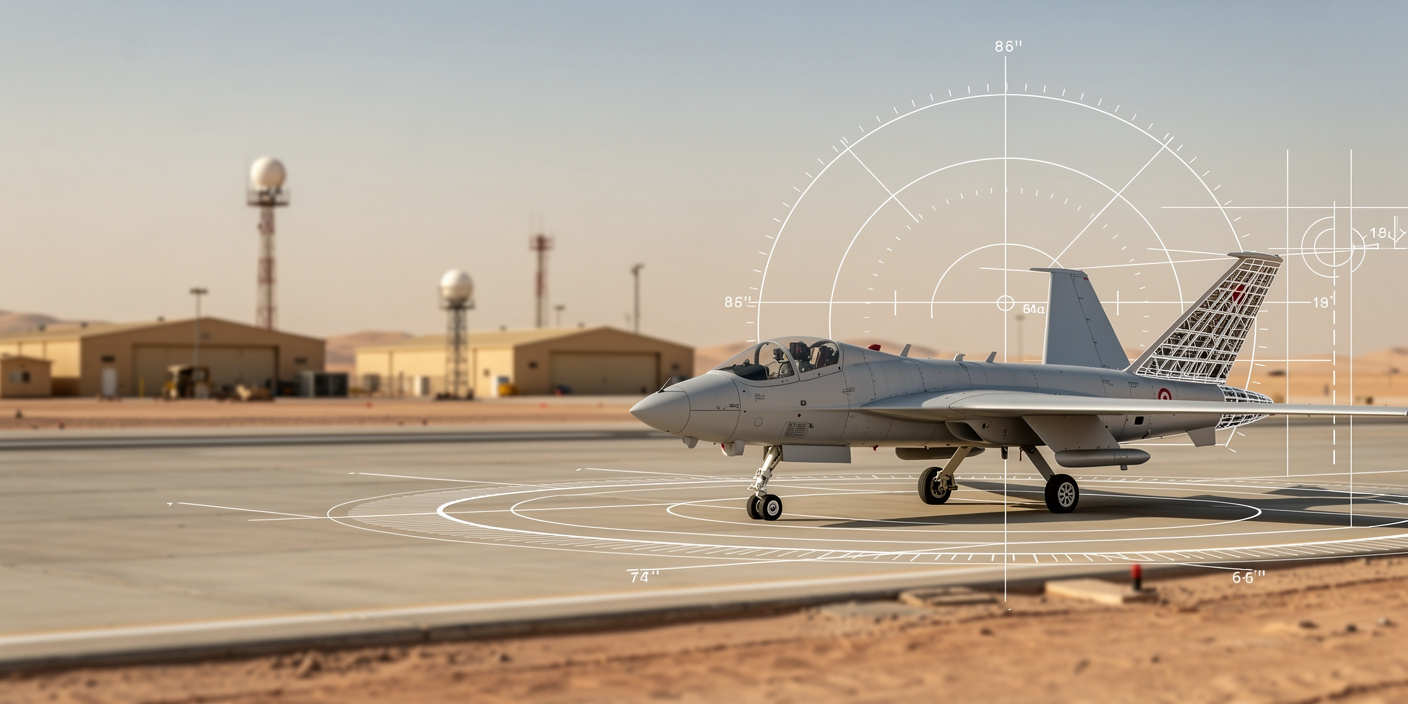
The Saudi Arabia Target Drone Market operates through government-led procurement of expendable and recoverable aerial targets, mission payloads, command systems, range services, and lifecycle support. Demand is tied to weapons qualification and realistic threat simulation rather than routine fleet replacement. Saudi military expenditure reached USD 83.2 billion in 2025, preserving a large funding base for air-defense readiness and live-fire training.
Commercial activity is concentrated in the Central Region, particularly Riyadh, where defense procurement governance, GAMI licensing, major local primes, and national research institutions are clustered. The broader military-industries ecosystem had 296 licensed and authorized establishments by the third quarter of 2024. This concentration reduces customer-access friction, but it also makes local partnerships and proximity to decision makers important competitive requirements.
Market Value
USD 700 million
2025
Dominant Region
Central Region
Riyadh
Dominant Segment
Aerial Target Drones
fastest growing
Total Number of Players
15
Future Outlook
The Saudi Arabia Target Drone Market is projected to increase from USD 700 million in 2025 to USD 1,367 million by 2031. The historical period recorded an 8.5% CAGR from 2020 to 2025, as procurement recovered from pandemic-era execution delays and training demand broadened across air-to-air, surface-to-air, and weapons-evaluation missions. Forecast growth is expected to accelerate because target systems are becoming more sophisticated, with higher-speed profiles, programmable autonomy, electronic-signature emulation, and reusable architectures increasing the value per contracted training event.
During 2026-2031, the market is forecast to expand at an 11.8% CAGR. Platform-equivalent volume is projected to rise from 310 units in 2025 to 519 units in 2031, while average revenue per platform equivalent increases from USD 2.26 million to USD 2.63 million. The combination of volume growth and richer mission packages will support recurring revenue in telemetry, flight operations, maintenance, and software. Local-content requirements will increasingly favor suppliers that can transfer manufacturing processes, certify Saudi technicians, and establish secure domestic support infrastructure.
11.8%
Forecast CAGR
$1,367 Mn
2030 Projection
Base Year
2025
Historical Period
2020-2025
Forecast Period
2026-2031
Historical CAGR
8.5%
CHAPTER 2 - SCOPE OF REPORT
Scope of the Market
CHAPTER 3 - Key Stakeholders
Key Target Audience
Key stakeholders who can leverage from this market analysis for investment, strategy, and operational planning.
Investors
CAGR, backlog visibility, localization capex, program risk
Corporates
tender pipeline, lifecycle margin, partnerships, export controls
Government
readiness, localization, sovereign capability, procurement efficiency
Operators
sortie rate, recoverability, telemetry, mission availability
Financial institutions
contract bankability, cash conversion, guarantees, counterparty risk
CHAPTER 4 - Market Size & Growth
Market Size, Growth Forecast and Trends
This section evaluates the historical market size, analyzes year-over-year growth dynamics, and presents forecast projections supported by market performance indicators and demand-side drivers.
Historical & Projected Market Size ($ Million)
Year-over-Year Growth Rate (%)
Market Value vs Volume Growth (%)
Historical Market Performance (2020-2025)
The market increased from USD 465 million in 2020 to USD 700 million in 2025, producing an 8.5% historical CAGR. The trough occurred in 2021, when value growth was 5.6% and platform-equivalent volume rose only 3.3%. An inflection began in 2023 as value growth reached 8.9%, followed by 9.4% in 2024 and 11.1% in 2025. Demand remained concentrated in aerial threat simulation and air-defense qualification, while higher mission complexity lifted average revenue per platform equivalent from USD 1.94 million to USD 2.26 million.
Forecast Market Outlook (2026-2031)
The market is forecast to reach USD 1,367 million in 2031, representing an 11.8% CAGR from the 2025 base. Annual growth is expected to move from 10.7% in 2026 to 12.7% in 2031 as autonomous programming, electronic-signature payloads, and high-speed threat profiles become a larger share of procurement. Platform-equivalent volume is projected to expand at 9.0% annually, while average revenue per platform equivalent rises at 2.6%. This mix indicates that both training frequency and system sophistication will contribute materially to forecast value creation.
CHAPTER 5 - Market Data
Market Breakdown
Saudi Arabia's target-drone spending is moving from discrete platform purchases toward integrated mission packages combining vehicles, control systems, instrumentation, range operations, and support. The resulting 2026-2031 growth trajectory is strategically relevant to investors because recurring services and local-content obligations can expand lifetime value beyond initial equipment delivery.
Year | Market Size (USD Mn) | YoY Growth (%) | Platform-Equivalent Volume (Units) | Average Revenue per Platform Equivalent (USD Mn) | Target Drone Local Content Share (Estimated %) | Period |
|---|---|---|---|---|---|---|
| 2020 | $465 Mn | +- | 240 | 1.94 | Forecast | |
| 2021 | $491 Mn | +5.6% | 248 | 1.98 | Forecast | |
| 2022 | $529 Mn | +7.7% | 262 | 2.02 | Forecast | |
| 2023 | $576 Mn | +8.9% | 277 | 2.08 | Forecast | |
| 2024 | $630 Mn | +9.4% | 292 | 2.16 | Forecast | |
| 2025 | $700 Mn | +11.1% | 310 | 2.26 | Forecast | |
| 2026 | $775 Mn | +10.7% | 335 | 2.31 | Forecast | |
| 2027 | $864 Mn | +11.5% | 363 | 2.38 | Forecast | |
| 2028 | $966 Mn | +11.8% | 395 | 2.45 | Forecast | |
| 2029 | $1082 Mn | +12.0% | 431 | 2.51 | Forecast | |
| 2030 | $1213 Mn | +12.1% | 472 | 2.57 | Forecast | |
| 2031 | $1367 Mn | +12.7% | 519 | 2.63 | Forecast |
Platform-Equivalent Volume
310 units, 2025, Saudi Arabia. Volume captures procured systems and contracted mission-equivalent bundles, helping investors separate physical demand from price-led growth. Kratos disclosed production orders for 192 BQM-177A aerial targets within a major program, illustrating the scale potential of multi-year target fleets.
Average Revenue per Platform Equivalent
USD 2.26 million, 2025, Saudi Arabia. The metric includes platform, telemetry, control, range integration, and support, so it is higher than bare-airframe pricing. A USD 85.9 million target-control support contract disclosed by Kratos shows how software, cybersecurity, spares, and field services expand program value.
Target Drone Local Content Share
27.50%, 2025, Saudi Arabia. Local content determines bid competitiveness, partner economics, and service-margin retention. Saudi military-spending localization reached 24.89% at the end of 2024, establishing a policy anchor for the market-specific estimate and supporting a path toward domestic integration above 50% after 2030.
CHAPTER 6 - Segmentation
Market Segmentation Framework
Comprehensive analysis across key dimensions providing insights into market structure, consumer preferences, and distribution patterns.
No of Segments
7
Dominant Segment
Target Type
Fastest Growing Segment
Autonomy Level
Target Type
End User
Application
Performance Class
Autonomy Level
Deployment Method
Geography
Key Segmentation Takeaways
Comprehensive analysis across all extracted segmentation dimensions providing insights into market structure, consumer preferences, and distribution patterns.
Target Type
This dimension dominates revenue allocation because platform architecture determines speed, survivability, payload capacity, launch method, recoverability, and unit economics. Aerial Target Drones form the largest Level-2 pool because they support fighter training, surface-to-air missile qualification, radar testing, and joint-force exercises. High-Speed Target Drones command higher contract values but remain lower-volume due to propulsion and safety complexity.
Autonomy Level
This dimension is the fastest growing because programmable and adaptive mission logic increases realism while reducing operator workload. Autonomous Programmable Target Drones are expected to lead incremental spending as customers require multi-target coordination, route re-tasking, electronic-signature control, and repeatable threat profiles. Suppliers with secure mission software and locally supportable command systems should capture stronger lifecycle revenue than airframe-only vendors.
CHAPTER 7 - Regional Analysis
Regional Analysis
Saudi Arabia ranks second among a selected peer group of target-drone markets, behind Israel and ahead of Turkey, the UAE, and Qatar. Its position reflects unusually high defense spending, a broad air-defense training requirement, and a policy-led transition toward local integration and lifecycle support.
Focus Country Ranking
2nd
Focus Country Market Size
USD 700 Mn (2025)
Focus Country CAGR (2026-2031)
11.8%
Focus Country Ranking
2nd
Focus Country Market Size
USD 700 Mn (2025)
Focus Country CAGR (2026-2031)
11.8%
Regional Analysis (Current Year)
Market Position
Saudi Arabia's estimated USD 700 million market ranks second in the peer set, supported by the region's largest 2025 military budget and broad air-defense training demand.
Growth Advantage
Saudi Arabia's 11.8% CAGR exceeds Israel's 8.4% and the UAE's 10.6%, but trails Turkey's 13.5% as both countries deepen domestic unmanned-systems capability.
Competitive Strengths
A 50%+ localization target by 2030, USD 83.2 billion military spending, and four identified domestic UAV suppliers give Saudi programs scale, policy continuity, and partnership depth.
CHAPTER 8 - INDUSTRY ANALYSIS
Growth Drivers, Market Challenges & Market Opportunities
Comprehensive analysis of key factors shaping the Saudi Arabia Target Drone Market, including growth catalysts, operational challenges, and emerging opportunities across production, distribution, and consumer segments.
Growth Drivers
Defense Readiness and Live-Fire Training
- Saudi Arabia remained the Middle East's largest military spender, giving air and missile-defense commands the budget scale to run recurring target-drone exercises rather than one-off demonstrations. USD 83.2 billion (2025, Saudi Arabia) supports multi-year procurement visibility for platform and range-service suppliers.
- The FY2025 military-sector allocation was USD 72.5 billion equivalent (2025, Saudi budget), reinforcing demand for readiness, modernization, and sustainment. Suppliers that bundle targets with telemetry, mission planning, and post-flight analysis can capture a larger share of training expenditure.
- Military-sector expenditure increased 6.7% in the first half of 2025 (Saudi Arabia), indicating continued execution despite wider fiscal pressure. Stable disbursement reduces cancellation risk for scheduled range activity and favors vendors with in-country spares and rapid mission turnaround.
Localization and Industrial Participation
- The national localization objective exceeds 50% by 2030 (Saudi Arabia). Target-drone suppliers can improve tender competitiveness by transferring airframe work, mission-computer integration, maintenance, and operator training to Saudi entities.
- INTRA's unmanned-systems project was announced with expected investment of about USD 200 million (2020, Saudi Arabia) and an average localization ratio of 60%, demonstrating government support for domestic UAV industrialization.
- The military-industries ecosystem reached 296 licensed and authorized establishments (Q3 2024, Saudi Arabia). A larger supplier base lowers localization friction for electronics, composites, ground equipment, testing, cybersecurity, and MRO work packages.
Threat Complexity and Technology Refresh
- Global target-drone growth is projected at 4.98% CAGR (2026-2034, global), while Saudi Arabia's 11.8% forecast indicates faster modernization and localization effects. Vendors can prioritize Saudi-specific high-heat operations, secure telemetry, and electronic-threat payloads.
- AI in drones was estimated at USD 821.3 million (2025, global) and is forecast to grow at 27.4% through 2030. Adaptive mission profiles and autonomous multi-target behavior can raise target realism and contract value.
- Leonardo's Mirach 100/5 can control up to 8 targets simultaneously (current product capability), showing how swarm-like training and coordinated threat scenarios are becoming commercially relevant. Saudi ranges can monetize this capability through denser, multi-axis exercises.
Market Challenges
Import Dependence and Export-Control Exposure
- The gap between 24.89% localization and the 50%+ target (2030, Saudi Arabia) implies continued reliance on foreign intellectual property and controlled components. Delays in export approvals can affect range schedules and working capital.
- Target systems may contain controlled propulsion, telemetry, electronic-warfare payloads, and encryption. Suppliers must absorb compliance costs under GAMI's licensing framework, which requires formal authorization before military manufacturing or services begin. 100% license compliance (current requirement, Saudi Arabia) is a market-entry condition.
- Airbus positions its Do-DT25-derived system as free from US export-control dependency, illustrating the commercial value of sovereign supply chains. One ITAR-free architecture (2026, Europe) can shorten approvals and diversify Saudi sourcing options.
High Program and Mission Costs
- Advanced target programs require air vehicles, launchers, command systems, telemetry, safety systems, range crews, and spares. A disclosed target-control support award of USD 85.9 million (2021, United States) demonstrates the scale of non-airframe cost.
- Recoverable targets reduce cost per mission only when recovery rates and flight tempo are high. The Saudi forecast assumes ASP growth of 2.6% CAGR (2025-2031, Saudi Arabia), so procurement teams must evaluate lifecycle cost rather than acquisition price alone.
- Live-fire exercises can destroy the target, converting a capital asset into a single-use consumable. Suppliers that design modular payloads and interchangeable propulsion can protect margins while offering customers lower mission cost. Forecast volume rises to 519 platform equivalents (2031, Saudi Arabia), increasing sustainment intensity.
Range, Airspace, and Safety Constraints
- Military manufacturing and services each require separate licensing pathways. Two core license categories (current, Saudi Arabia) increase setup work for vendors that both supply platforms and operate range missions.
- High-speed and sea-skimming profiles need segregated airspace, maritime coordination, telemetry coverage, and termination systems. These requirements constrain the number of usable training windows and favor suppliers with established safety cases. Four geographic training clusters (2025, Saudi Arabia) are assessed in this report.
- Supersonic targets generate higher safety and infrastructure demands than low-subsonic systems. The forecast therefore keeps supersonic systems lower-volume while high-subsonic autonomous platforms lead incremental procurement. Three performance classes (2025, Saudi Arabia) require differentiated range economics.
Market Opportunities
Local Assembly and Lifecycle Support Hubs
- Foreign OEMs can retain high-value design authority while local partners perform assembly, test, depot maintenance, and range support. The market reaches USD 1,367 million by 2031 (Saudi Arabia), creating sufficient scale for dedicated facilities.
- Local operators benefit from shorter turnaround, reduced overseas repair cycles, and better availability. INTRA reports more than 25,000 flight hours (current, Saudi Arabia), indicating an operational base that can support contracted flying and maintenance models.
- Opportunity realization requires certified local technicians, secure data environments, configuration control, and approved component sourcing. INTRA's Riyadh factory spans more than 6,000 square meters (reported, Saudi Arabia), illustrating the infrastructure needed for domestic UAV manufacture and testing.
Autonomous Multi-Threat Simulation
- Mission software can be sold through upgrade licenses, scenario libraries, and annual support, generating recurring revenue beyond airframe delivery. Average platform-equivalent revenue rises to USD 2.63 million by 2031 (Saudi Arabia) as software and payload content expands.
- Air-defense forces benefit from programmable speed, altitude, electronic signature, and coordinated ingress profiles that better represent modern threats. Leonardo's system manages 8 simultaneous targets (current capability), setting a practical benchmark for multi-threat exercises.
- Adoption requires trusted autonomy, cyber accreditation, secure datalinks, and human authorization controls. Suppliers that localize mission-data preparation and verification can align with the broader 24.89% localization baseline (2024, Saudi Arabia).
Range-as-a-Service and Reusable Mission Models
- Operators can monetize launch, flight control, telemetry, recovery, maintenance, and mission analytics under per-sortie or availability contracts. This shifts customer spending from irregular capital purchases toward predictable operating budgets. Market volume grows at 9.0% CAGR (2025-2031, Saudi Arabia).
- Defense buyers gain faster access to trained crews and certified equipment without owning every support asset. World Defense Show 2026 announced 60 deals worth about USD 8.8 billion (2026, Saudi Arabia), demonstrating strong partnership and contracting activity.
- Commercial viability requires reliable recovery, high sortie generation, and transparent mission costing. Leonardo's Mirach 40 is designed as a reusable system, showing how recovery can reduce through-life expenditure when targets survive engagements. Reusable architecture (current product capability) is the key enabling change.
CHAPTER 9 - Competitive Landscape
Competitive Landscape Overview
The market is moderately concentrated around established global aerial-target OEMs and Saudi defense integrators. Entry barriers include classified requirements, export controls, range certification, safety assurance, local-content commitments, and long qualification cycles.
Market Share Distribution
Top 5 Players
Market Dynamics
8 new entrants in the past 5 years, indicating strong market attractiveness and growth potential.
Company Name | Market Share | Headquarters | Founding Year | Core Market Focus |
|---|---|---|---|---|
Kratos Defense & Security Solutions, Inc. | - | Round Rock, Texas, United States | 1994 | Jet-powered aerial targets, target control systems, mission operations |
QinetiQ Group plc | - | Farnborough, United Kingdom | 2001 | Banshee aerial targets, range services, test and evaluation |
Airbus Defence and Space | - | Leiden, Netherlands | 2014 | Do-DT target drones, integrated air-defense training systems |
Leonardo S.p.A. | - | Rome, Italy | 1948 | Mirach reusable aerial targets and support services |
Saab AB | - | Stockholm, Sweden | 1937 | Air-defense training, sensors, command systems, range integration |
Northrop Grumman Corporation | - | Falls Church, Virginia, United States | 1939 | BQM aerial targets, full-scale target conversion, test support |
The Boeing Company, Defense, Space & Security | - | Arlington, Virginia, United States | 1916 | Full-scale aerial targets, aircraft conversion, flight-test services |
Lockheed Martin Corporation | - | Bethesda, Maryland, United States | 1995 | Weapons integration, target support, air and missile-defense systems |
BAE Systems plc | - | London, United Kingdom | 1999 | Training systems, electronic warfare, range and mission support |
INTRA Defense Technologies | - | Riyadh, Saudi Arabia | 2013 | Local autonomous systems, UAV manufacturing, operations and MRO |
Cross Comparison Parameters
The report provides detailed cross-comparison of key players across 10 performance parameters to identify competitive strengths and weaknesses.
Analysis Covered
Market Share Analysis:
Estimates supplier positions across platform, service, and integration revenue pools.
Cross Comparison Matrix:
Benchmarks mission capability, localization, delivery performance, and financial resilience.
SWOT Analysis:
Assesses technology strengths, market gaps, risks, and partnership opportunities.
Pricing Strategy Analysis:
Compares acquisition pricing, sortie economics, support, and recovery assumptions.
Company Profiles:
Reviews portfolios, Saudi presence, partnerships, capabilities, and strategic priorities.
CHAPTER 10 - REPORT TOC
Table Of Contents
Market Assessment Phase
Supply-side and competitive intelligence covering market sizing, segmentation, competitive dynamics, regulatory landscape, and future forecasts.
Go-To-Market Strategy Phase
15 chapters
Entry strategy evaluation, execution roadmap, partner recommendations, and profitability outlook.
Survey Phase
8 chapters
Demand-side primary research conducted through structured interviews and online surveys with end users across priority metros and Tier 2/3 cities to capture consumption behavior, unmet needs, and purchase drivers.
Complete Report Coverage
201+ detailed sections covering every aspect of the market
143
Assessment Sections
58
Strategy Sections
CHAPTER 11 - Our Approach
Research Methodology
Desk Research
- Reviewed Saudi defense budget allocations
- Mapped GAMI licensing and localization
- Assessed aerial-target product portfolios
- Analyzed range-service contract benchmarks
Primary Research
- Interviewed target-systems program directors
- Engaged air-defense training commanders
- Consulted UAV manufacturing executives
- Interviewed range-safety and telemetry leads
Validation and Triangulation
- Validated findings across 264 respondents
- Reconciled procurement and mission volumes
- Cross-checked platform and service revenues
- Stress-tested ASP and localization assumptions
CHAPTER 12 - FAQ
FAQs
Still have questions?
Our research team is here to help you find the right solution
CHAPTER 13 - Related Research
Explore Related Reports
Expand your market intelligence with complementary research across regions and adjacent markets.
Regional/Country ReportsRelated market analysis across key regions
Related market analysis across key regions
- North America Target Drone Market Size, Share & Forecast, By Product Type, Application & Technology, 2026-2031
- APAC Target Drone Market Outlook to 2030: Size, Share, Growth and Trends
- Indonesia Target Drone Market
- Vietnam Target Drone Market
- Thailand Target Drone Market
Adjacent ReportsRelated markets and complementary research
Related markets and complementary research
- South Korea Drone Payloads Market
- South Korea Aerial Target Systems Market
- Oman Missile Defense Systems Market
- Indonesia Electronic Warfare Systems Market
- Mexico Unmanned Aerial Surveillance Market
500+
Market Research Reports
50+
Countries Covered
15+
Industry Verticals