
Global Software Defined Networking (SDN) Market Outlook to 2030
Region:Global
Author(s):Naman Rohilla
Product Code:KROD6480
December 2024
96
About the Report
Global Software-Defined Networking (SDN) Market Overview
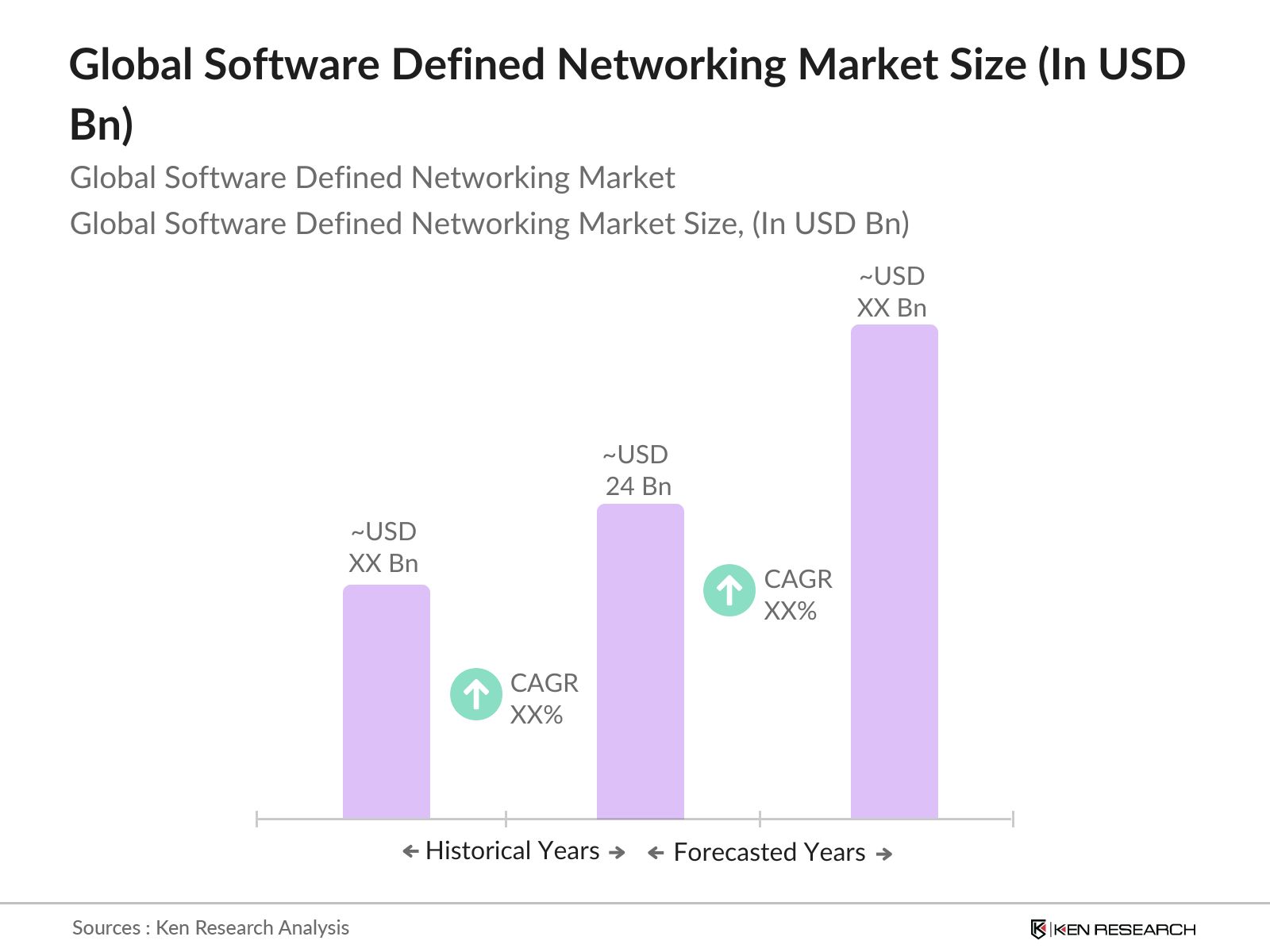
- The global Software-Defined Networking (SDN) market is valued at USD 24 billion based on a five-year historical analysis. The market has been driven primarily by the need for more efficient, agile, and cost-effective networking solutions as businesses migrate to cloud infrastructures and adopt 5G technology. Increasing demand for virtualization, automation of networks, and the rise in connected devices have been key factors influencing the market's growth.
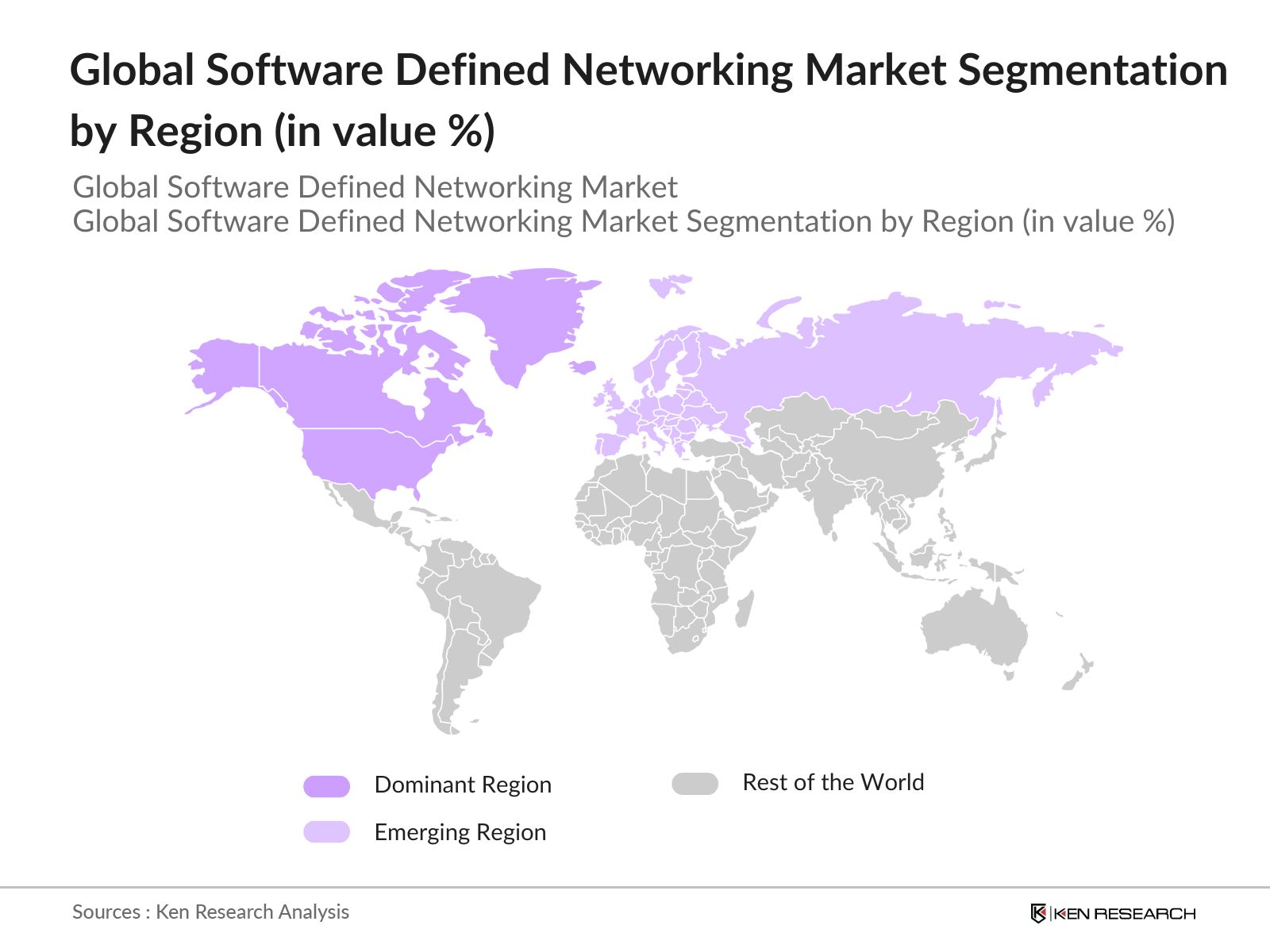
- North America dominates the SDN market, primarily due to the presence of major cloud service providers and extensive deployment of advanced networking infrastructure. The United States, in particular, is a hub for SDN innovation due to the rapid adoption of cloud technologies and 5G rollouts. Other key regions like Europe and Asia Pacific have also seen uptake, with countries like Germany and China pushing for enhanced network agility to support their digital transformation initiatives.
- Data localization regulations are increasingly impacting the SDN market, particularly in countries like India and Russia, where strict laws mandate that data generated within the country be stored locally. By 2023, approximately 70 nations had implemented some form of data localization laws, affecting the way global SDN providers offer their services. In India alone, the push for data localization has spurred investments of up to $4 billion in new data centers, prompting SDN providers to adapt their offerings to comply with local regulations while ensuring efficient network management.
Global Software-Defined Networking (SDN) Market Segmentation
- By Solution Type: The market is segmented by solution type into software, hardware, and services. The software segment is currently the dominant market player. This is largely due to the widespread need for network virtualization and automation solutions, enabling businesses to operate more efficiently while reducing operational costs. Major firms are investing heavily in SDN software platforms to keep up with evolving enterprise needs.
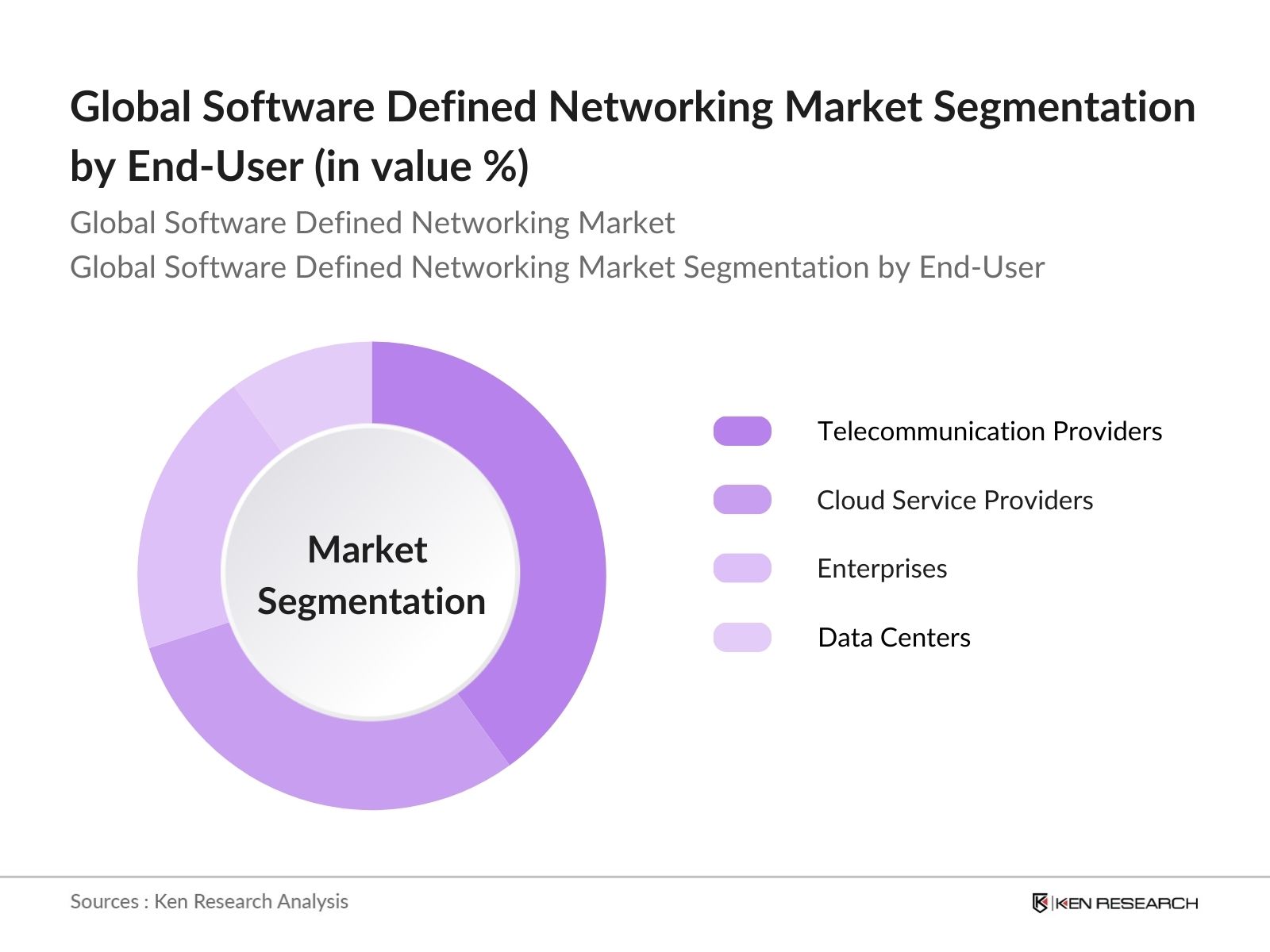
- By End-User: The market is segmented by end-users into telecommunication providers, cloud service providers, enterprises, and data centers. Among these, telecommunication providers dominate the market due to the ongoing rollouts of 5G networks and the need for more flexible and scalable network infrastructures to handle growing data traffic. SDN allows telecom operators to manage their networks more efficiently, reducing costs while increasing flexibility.
- By Region: The SDN market is geographically segmented into North America, Europe, Asia Pacific, Latin America, and the Middle East & Africa. North America holds the largest share due to the rapid adoption of cloud-based infrastructure, driven by U.S.-based companies like Google, Amazon, and Microsoft. Asia Pacific follows closely due to the digitalization efforts in China and India, driven by the need for better network management.
Global Software-Defined Networking (SDN) Market Competitive Landscape
The global SDN market is dominated by a few major players who control a substantial portion of the market due to their technological expertise and established partnerships with enterprises and telecommunications companies. Key players in the market include:
Company | Establishment Year | Headquarters | Revenue (USD) | Product Portfolio | R&D Expenditure | Market Share | No. of Employees | Global Reach |
Cisco Systems, Inc. | 1984 | San Jose, USA | - | - | - | - | - | - |
VMware, Inc. | 1998 | Palo Alto, USA | - | - | - | - | - | - |
Huawei Technologies | 1987 | Shenzhen, China | - | - | - | - | - | - |
Juniper Networks | 1996 | Sunnyvale, USA | - | - | - | - | - | - |
Nokia Corporation | 1865 | Espoo, Finland | - | - | - | - | - | - |
Global Software-Defined Networking (SDN) Market Analysis
Global Software-Defined Networking (SDN) Market Growth Drivers
- Increased Demand for Network Virtualization: Network virtualization is witnessing a notable rise in demand as organizations prioritize flexibility and operational efficiency. In 2024, around 80% of enterprises are expected to embrace some form of network virtualization to reduce the hardware dependency of traditional networking, enhancing agility and scalability. This shift is largely driven by industries such as finance and telecom, which increasingly rely on virtual networks to manage large-scale data traffic. The demand for virtualized networks is reflected in the growth of hyper-converged infrastructure (HCI) deployments, which surged by 15% between 2022 and 2023 globally, further pushing SDN adoption.
- Rising Adoption of Cloud-Based Solutions: Cloud-based solutions are a critical driver for SDN adoption, as businesses increasingly migrate their operations to cloud platforms. The Global cloud computing market expanded in 2023,, with over 90% of enterprises relying on hybrid or multi-cloud environments to manage their workloads. The adoption of SDN enhances the flexibility and security of cloud infrastructures, particularly in managing data centers. The reliance on cloud platforms is further accelerated by the growth of cloud service providers (CSPs) globally, with the number of CSPs doubling between 2022 and 2024.
- Evolution of 5G Networks: The deployment of 5G networks is revolutionizing networking infrastructures, making SDN a critical enabler of the technology. By 2024, it is estimated that 1.5 billion 5G connections will be active globally, with most of the growth concentrated in North America and Asia-Pacific regions. SDN supports the deployment of 5G by allowing network operators to efficiently manage bandwidth and resources, facilitating seamless connectivity across multiple devices and sectors, including automotive, healthcare, and smart cities. The efficiency of SDN will be crucial as 5G connections grow by 50 million per quarter in 2024 alone.
Global Software-Defined Networking (SDN) Market Challenges
- Security Concerns with Network Virtualization: While SDN offers substantial benefits in terms of network efficiency, it also introduces new security risks. The centralization of control in SDN architecture presents vulnerabilities, especially to cyberattacks. By 2023, approximately 38% of organizations reported experiencing security issues linked to their virtual networks. The susceptibility to Distributed Denial of Service (DDoS) attacks has been a critical concern, with reports showing that SDN systems are 25% more likely to be targeted than traditional networks. This ongoing challenge highlights the need for enhanced security measures in SDN deployments.
- Interoperability Issues: Interoperability remains a major barrier for SDN adoption, especially when integrating with legacy systems. Enterprises with mixed-network environments, where traditional and virtual networks coexist, often struggle with compatibility, leading to higher operational complexity. In 2023, over 60% of large-scale organizations reported challenges in implementing SDN alongside existing infrastructure. This issue affects industries like manufacturing and logistics, which rely on both old and new network architectures. Consequently, the lack of standardization across SDN solutions further complicates seamless integration efforts.
Global Software-Defined Networking (SDN) Market Future Outlook
Over the next five years, the global Software-Defined Networking (SDN) market is expected to experience growth driven by continuous advancements in networking technology, increased adoption of 5G infrastructure, and the shift towards cloud-native network management. As more businesses opt for digital transformation, SDN will play a crucial role in managing increasingly complex networks with greater agility and efficiency.
Global Software-Defined Networking (SDN) Market Opportunities
- Expansion into Emerging Markets: The SDN market is experiencing opportunities for growth in emerging markets, especially in regions like Southeast Asia, Latin America, and Africa. Countries like Brazil and India are investing heavily in digital infrastructure, with Brazils investment in IT infrastructure projected to grow by 12% in 2024. SDN adoption in these regions is driven by increasing internet penetration and demand for efficient network solutions to support economic growth. For instance, India's digital economy is expected to reach $1 trillion by 2025, providing a fertile ground for SDN providers to expand their reach.
- Development of Edge Computing: The development of edge computing is a major opportunity for SDN, as enterprises seek to manage data processing closer to the source. Edge computing, which is growing at a 20% annual rate, requires SDN solutions to ensure efficient data routing and processing across distributed networks. By 2024, it is expected that over 50% of new infrastructure deployments will be at the edge, presenting a lucrative opportunity for SDN providers to develop tailored solutions. This growth is further driven by sectors like IoT, autonomous vehicles, and real-time analytics, which rely heavily on low-latency networking.
Scope of the Report
Solution | Software Hardware Services |
End-User | Telecommunication Providers Cloud Service Providers Enterprises Data Centers |
Deployment | On-Premise Cloud-Based |
Application | Security Services Network Management Network Virtualization Performance Monitoring |
Region | North America Europe, Asia Pacific Latin America Middle East & Africa |
Products
Key Target Audience
Telecommunication Providers
Cloud Service Providers
Data Centers
Enterprise Network Managers
Banks and Financial Institutions
Network Infrastructure Developers
Government and Regulatory Bodies (Federal Communications Commission, European Telecommunications Standards Institute)
Investor and Venture Capitalist Firms
SDN Technology Vendors
Companies
Players Mentioned in the Report
Cisco Systems, Inc.
VMware, Inc.
Huawei Technologies Co., Ltd.
Juniper Networks, Inc.
Nokia Corporation
NEC Corporation
Big Switch Networks
Ciena Corporation
Arista Networks, Inc.
Dell Technologies
Table of Contents
1. Global Software-Defined Networking (SDN) Market Overview
1.1. Definition and Scope
1.2. Market Taxonomy
1.3. Market Growth Rate
1.4. Market Segmentation Overview
2. Global Software-Defined Networking (SDN) Market Size (In USD Bn)
2.1. Historical Market Size
2.2. Year-On-Year Growth Analysis
2.3. Key Market Developments and Milestones
3. Global Software-Defined Networking (SDN) Market Analysis
3.1. Growth Drivers
3.1.1. Increased Demand for Network Virtualization
3.1.2. Rising Adoption of Cloud-Based Solutions
3.1.3. Evolution of 5G Networks
3.1.4. Cost Efficiency and Agility in Networking
3.2. Market Challenges
3.2.1. Security Concerns with Network Virtualization
3.2.2. Interoperability Issues
3.2.3. Complexity in Implementation
3.3. Opportunities
3.3.1. Expansion into Emerging Markets
3.3.2. Development of Edge Computing
3.3.3. AI Integration in Network Management
3.4. Trends
3.4.1. Shift Toward Intent-Based Networking
3.4.2. Increased Use of White-Box Solutions
3.4.3. Growth in Multi-Cloud Networking
3.5. Government Regulations
3.5.1. Data Localization Laws
3.5.2. Network Security Compliance
3.5.3. 5G Network Infrastructure Initiatives
3.6. SWOT Analysis
3.7. Stakeholder Ecosystem
3.8. Porters Five Forces
3.9. Competitive Ecosystem
4. Global Software-Defined Networking (SDN) Market Segmentation
4.1. By Solution (In Value %)
4.1.1. Software
4.1.2. Hardware
4.1.3. Services
4.2. By End-User (In Value %)
4.2.1. Telecommunication Providers
4.2.2. Cloud Service Providers
4.2.3. Enterprises
4.2.4. Data Centers
4.3. By Deployment (In Value %)
4.3.1. On-Premise
4.3.2. Cloud-Based
4.4. By Application (In Value %)
4.4.1. Security Services
4.4.2. Network Management
4.4.3. Network Virtualization
4.4.4. Performance Monitoring
4.5. By Region (In Value %)
4.5.1. North America
4.5.2. Europe
4.5.3. Asia Pacific
4.5.4. Latin America
4.5.5. Middle East & Africa
5. Global Software-Defined Networking (SDN) Market Competitive Analysis
5.1. Detailed Profiles of Major Companies
5.1.1. Cisco Systems, Inc.
5.1.2. VMware, Inc.
5.1.3. Huawei Technologies Co., Ltd.
5.1.4. Juniper Networks, Inc.
5.1.5. Nokia Corporation
5.1.6. NEC Corporation
5.1.7. Big Switch Networks
5.1.8. Ciena Corporation
5.1.9. Arista Networks, Inc.
5.1.10. Dell Technologies
5.1.11. Hewlett Packard Enterprise (HPE)
5.1.12. Extreme Networks, Inc.
5.1.13. Pluribus Networks
5.1.14. F5 Networks, Inc.
5.1.15. Versa Networks
5.2. Cross Comparison Parameters (Revenue, Product Portfolio, Market Share, Strategic Initiatives, Number of Patents, Employee Strength, R&D Spending, Innovation Index)
5.3. Market Share Analysis
5.4. Strategic Initiatives
5.5. Mergers and Acquisitions
5.6. Investment Analysis
5.7. Venture Capital Funding
5.8. Private Equity Investments
6. Global Software-Defined Networking (SDN) Market Regulatory Framework
6.1. Network Infrastructure Standards
6.2. Data Security and Privacy Regulations
6.3. SDN-Specific Certification Requirements
7. Global Software-Defined Networking (SDN) Future Market Size (In USD Bn)
7.1. Future Market Size Projections
7.2. Key Factors Driving Future Market Growth
8. Global Software-Defined Networking (SDN) Future Market Segmentation
8.1. By Solution (In Value %)
8.2. By End-User (In Value %)
8.3. By Deployment (In Value %)
8.4. By Application (In Value %)
8.5. By Region (In Value %)
9. Global Software-Defined Networking (SDN) Market Analysts Recommendations
9.1. TAM/SAM/SOM Analysis
9.2. Customer Segmentation Analysis
9.3. Strategic Roadmap
9.4. White Space Opportunities
DisclaimerContact UsResearch Methodology
Step 1: Identification of Key Variables
The first step involves mapping out the SDN ecosystem, focusing on the major stakeholders such as cloud service providers, telecommunication companies, and data centers. Through extensive desk research and use of proprietary databases, key variables affecting market dynamics, including technological developments and investment patterns, were identified.
Step 2: Market Analysis and Construction
This phase involved collecting and analyzing historical data on market size, deployment types, and end-user segments. We examined how SDN penetration has evolved over time, the relationship between SDN adoption and 5G infrastructure, and how these factors impact the revenue generated by the industry.
Step 3: Hypothesis Validation and Expert Consultation
We conducted interviews with industry professionals, including network architects and SDN vendors, to validate our market hypotheses. This consultation process provided operational insights that helped refine our market predictions and confirm the growth trends anticipated for the SDN market.
Step 4: Research Synthesis and Final Output
In the final phase, detailed market data was cross-verified with inputs from key industry players. We synthesized information on revenue streams, product segmentation, and end-user preferences to create a comprehensive analysis of the SDN market, which forms the basis of this report.
Frequently Asked Questions
01. How big is the global Software-Defined Networking (SDN) market?
The global Software-Defined Networking (SDN) market is valued at USD 24 billion, driven by increasing adoption of cloud-based networking solutions and 5G rollouts.
02. What are the challenges in the global SDN market?
Challenges in the global Software-Defined Networking (SDN) market include network security concerns, interoperability issues, and the complexity of integrating SDN with existing network infrastructures. Overcoming these challenges is key to broader adoption.
03. Who are the major players in the global SDN market?
Key players in the global Software-Defined Networking (SDN) market include Cisco Systems, VMware, Huawei Technologies, Juniper Networks, and Nokia, who dominate due to their extensive portfolios and strong customer bases.
04. What are the growth drivers of the SDN market?
The global Software-Defined Networking (SDN) market is driven by the shift towards cloud-based infrastructure, the rise of 5G networks, and increasing demand for flexible, cost-efficient networking solutions.
Why Buy From Us?

What makes us stand out is that our consultants follows Robust, Refine and Result (RRR) methodology. i.e. Robust for clear definitions, approaches and sanity checking, Refine for differentiating respondents facts and opinions and Result for presenting data with story

We have set a benchmark in the industry by offering our clients with syndicated and customized market research reports featuring coverage of entire market as well as meticulous research and analyst insights.

While we don't replace traditional research, we flip the method upside down. Our dual approach of Top Bottom & Bottom Top ensures quality deliverable by not just verifying company fundamentals but also looking at the sector and macroeconomic factors.

With one step in the future, our research team constantly tries to show you the bigger picture. We help with some of the tough questions you may encounter along the way: How is the industry positioned? Best marketing channel? KPI's of competitors? By aligning every element, we help maximize success.

Our report gives you instant access to the answers and sources that other companies might choose to hide. We elaborate each steps of research methodology we have used and showcase you the sample size to earn your trust.

If you need any support, we are here! We pride ourselves on universe strength, data quality, and quick, friendly, and professional service.