
US Brain-Computer Interface (BCI) Market Outlook to 2030
Region:North America
Author(s):Shivani Mehra
Product Code:KROD11124
December 2024
96
About the Report
US Brain-Computer Interface (BCI) Market Overview
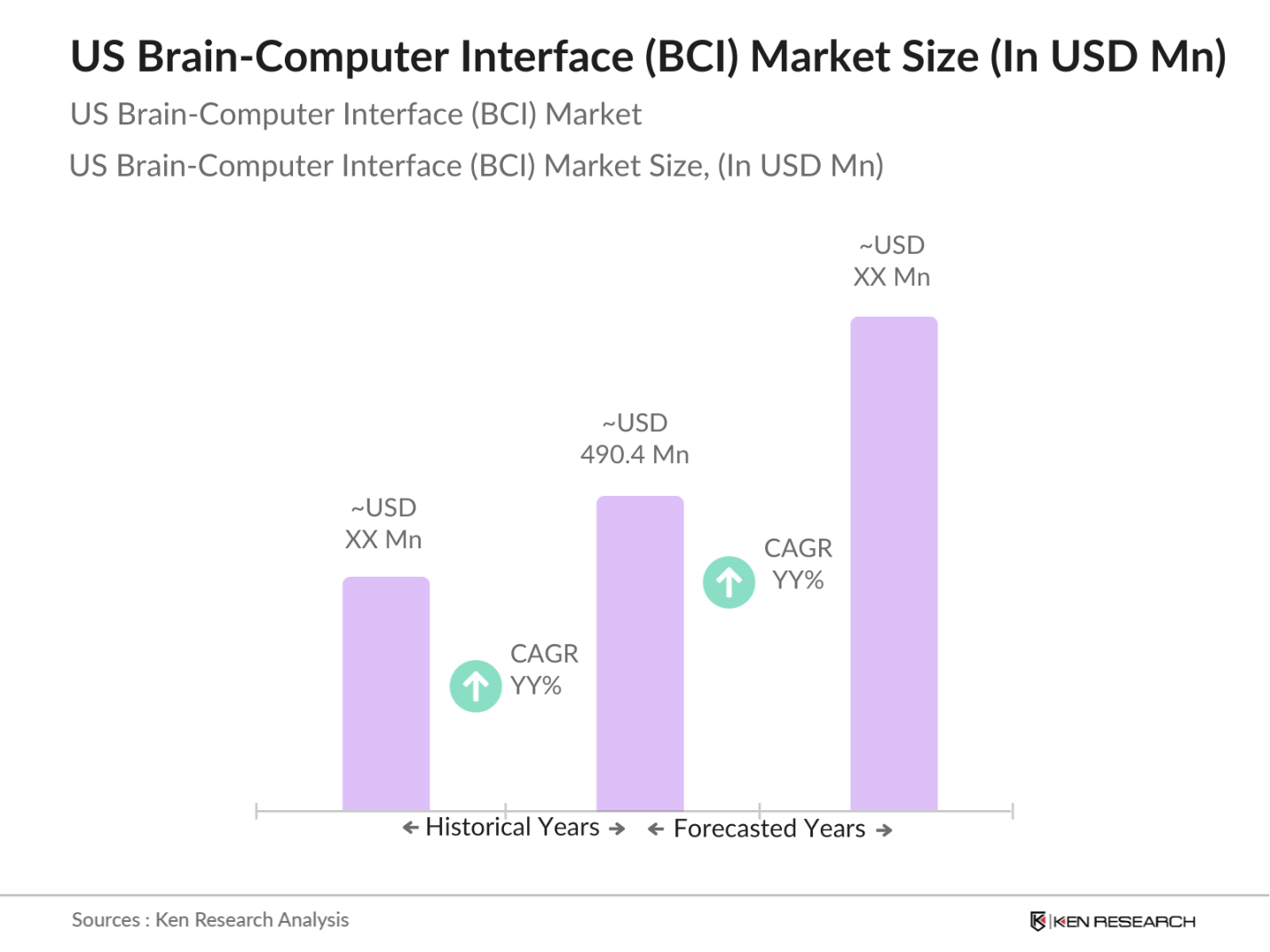
- The US Brain-Computer Interface (BCI) Market is projected to grow to USD 490.4 Million, with a compound annual growth rate (CAGR) driven by innovations in neuroscience and the increasing applications of BCIs in healthcare, gaming, and defense. The rising prevalence of neurological disorders, coupled with advancements in AI and neural sensor technology, is driving demand for BCI devices in healthcare for neurorehabilitation, cognitive therapy, and stroke recovery.
- The West Coast, led by Silicon Valley, dominates the U.S. BCI market due to the presence of major tech companies and R&D centers such as Neuralink and Kernel. Additionally, Northeast USA, especially Boston, is home to leading research institutions focused on neuroscience and BCI development. The Midwest is also emerging due to investments in healthcare innovations and collaborative efforts between hospitals and tech companies.
- The U.S. government is significantly increasing funding for neurotechnology research, including brain-computer interfaces (BCIs), to foster innovation and support startups in developing advanced solutions. This investment aims to enhance the capabilities of BCIs, particularly in healthcare applications, and drive market growth by addressing unmet medical needs.
US Brain-Computer Interface (BCI) Market Segmentation
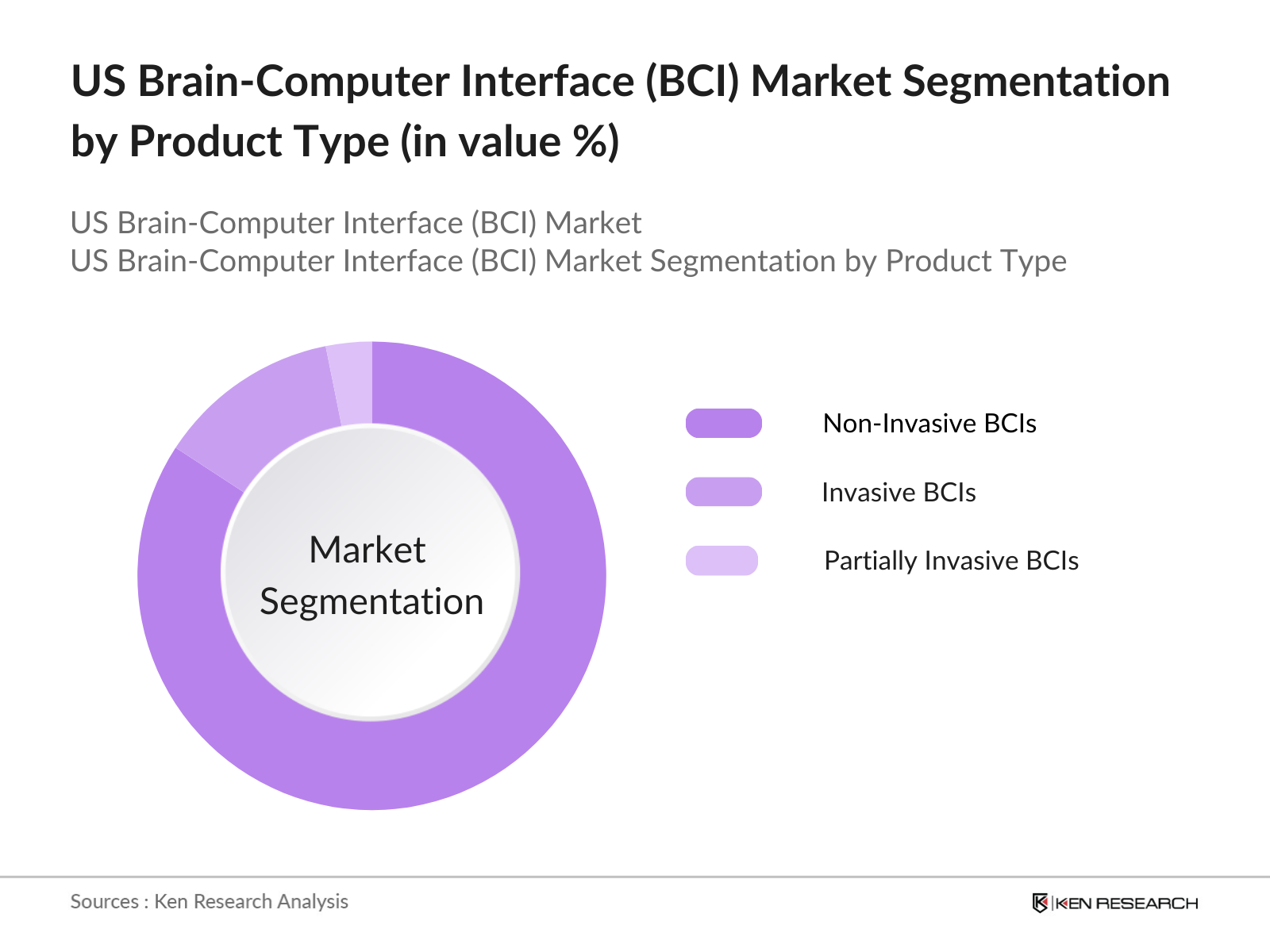
- By Product Type: The US Brain-Computer Interface Market is segmented by product type into Non-invasive BCIs are expected to hold the largest market share due to their ease of use and widespread applications, particularly in healthcare and consumer markets. However, invasive BCIs are also gaining traction for more specialized applications, such as neuroprosthetics and precision brain control.
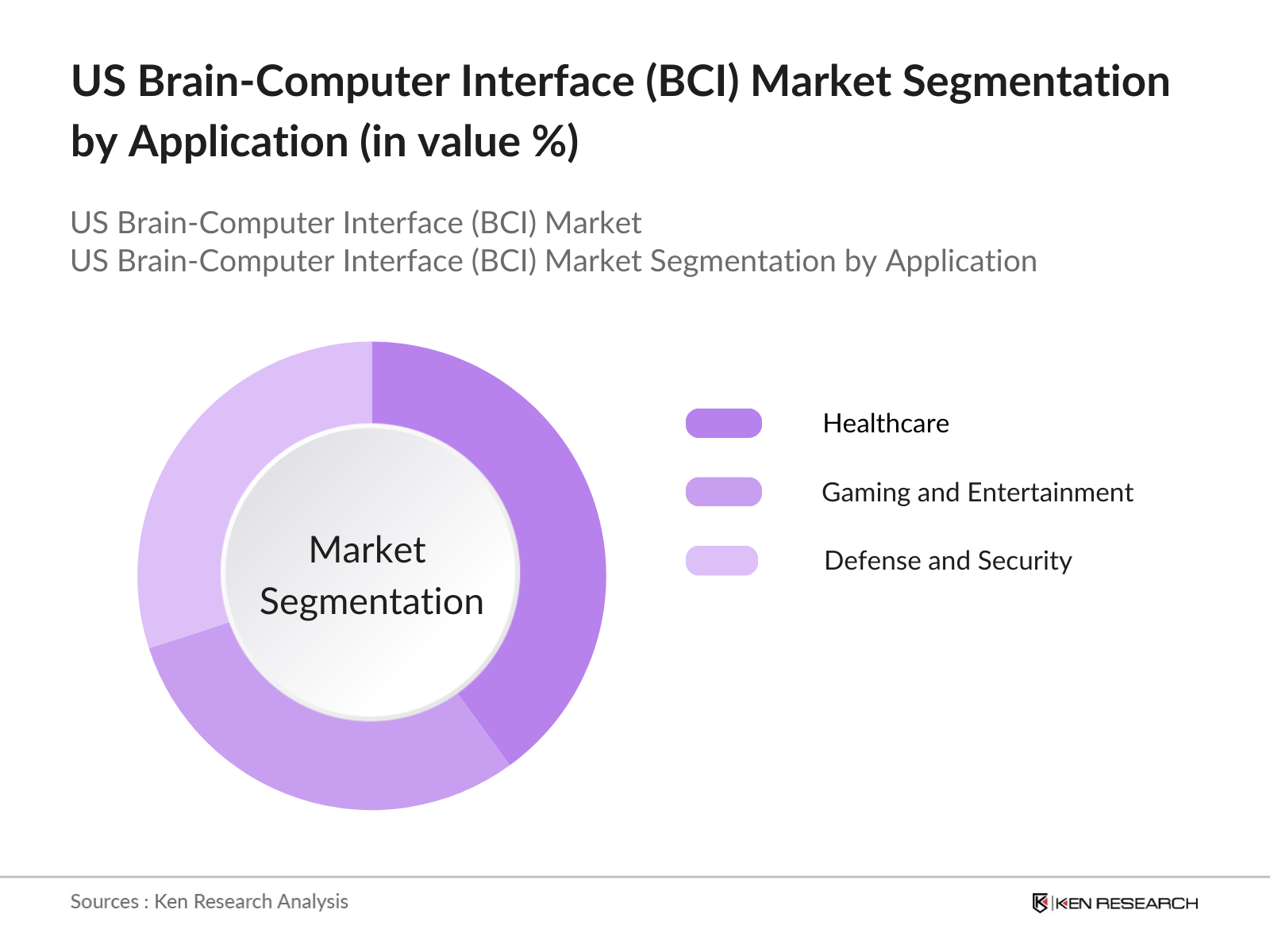
- By Application: The U.S. Brain-Computer Interface Market is segmented by application into healthcare, gaming, and entertainment. Healthcare remains the dominant application, particularly in neurorehabilitation, brain signal monitoring, and cognitive therapy. Gaming and entertainment are also experiencing rapid growth as BCIs are increasingly explored for brain-controlled gaming and virtual reality experiences.
US Brain-Computer Interface (BCI) Market Competitive Landscape
The US Brain-Computer Interface Market is highly competitive, with a mix of established companies and startups driving innovation. These companies are focused on R&D, partnerships, and product launches to maintain their competitive edge.
|
Company Name |
Establishment Year |
Headquarters |
Revenue (2023) |
Key Products |
Partnerships/Clients |
|
Neuralink |
2016 |
California |
- |
- |
- |
|
Emotiv |
2011 |
California |
- |
- |
- |
|
OpenBCI |
2014 |
New York |
- |
- |
- |
|
Neurable |
2015 |
Massachusetts |
- |
- |
- |
|
Paradromics |
2015 |
Texas |
- |
- |
- |
|
Blackrock Neurotech |
2008 |
Utah |
- |
- |
- |
|
Kernel |
2016 |
California |
- |
- |
- |
|
NeuroPace |
2001 |
California |
- |
- |
- |
|
Synchron |
2016 |
New York |
- |
- |
- |
|
Naxon Labs |
2017 |
Uruguay |
- |
- |
- |
|
CTRL-Labs |
2015 |
New York |
- |
- |
- |
|
BrainCo |
2015 |
Massachusetts |
- |
- |
- |
|
MindMaze |
2012 |
Switzerland |
- |
- |
- |
|
NextMind |
2017 |
France |
- |
- |
- |
|
BioSerenity |
2014 |
France |
- |
- |
- |
US Brain-Computer Interface (BCI) Market Analysis
US Brain-Computer Interface (BCI) Market Growth Drivers
- Rising Demand for Neurorehabilitation Solutions: BCIs are becoming increasingly important for neurorehabilitation in patients with neurological disorders such as stroke, spinal cord injuries, and epilepsy. These devices enable better motor control and cognitive recovery, driving demand in the healthcare sector.
- Technological Advancements in AI and Neural Sensors: AI integration is significantly improving the efficiency and accuracy of BCI systems. Advancements in neural sensors are making BCIs more accessible and less invasive, enhancing their applications in both clinical and commercial sectors.
- Increasing Research Investments in Neuroscience: Significant investments from private companies and government agencies, such as the BRAIN Initiative, are fueling the growth of the BCI market. This funding is accelerating the development of new technologies that improve neural interface accuracy and functionality.
- Expanding Applications in Healthcare and Gaming: Beyond healthcare, BCIs are gaining traction in the gaming and entertainment industries. With the potential to create immersive experiences controlled by brain signals, BCIs are becoming an integral part of future gaming technologies.
US Brain-Computer Interface (BCI) Market Challenges
- High Cost of BCI Devices: The development and deployment of BCI technology, particularly invasive systems, remain expensive, limiting widespread adoption. Reducing costs through technological innovation and economies of scale will be crucial for market expansion.
- Regulatory Barriers: BCI devices, especially those used for medical purposes, must undergo stringent regulatory approval processes from the FDA. These regulatory hurdles can slow down the commercialization of innovative BCI technologies.
US Brain-Computer Interface (BCI) Market Future Outlook
The US Brain-Computer Interface Market is poised for substantial growth over the next five years, driven by innovations in AI, neural sensors, and expanding applications in healthcare, gaming, and defense. The market is expected to benefit from increased investments in neuroscience research, as well as the integration of BCIs with AI for enhanced performance.
Market opportunities:
- Expansion in Healthcare for Neurorehabilitation and Stroke Recovery: There is significant potential for BCIs to revolutionize neurorehabilitation, particularly for stroke recovery and the treatment of neurological disorders. As hospitals increasingly adopt BCI technology, demand is expected to rise.
- Growing Demand in Gaming and Entertainment: The gaming industry is rapidly embracing BCIs for immersive brain-controlled experiences. As this market continues to evolve, BCI companies will have the opportunity to cater to a new audience of tech-savvy consumers.
- Integration of AI for Improved BCI Performance: AI-enhanced BCIs will offer improved performance, faster processing of neural signals, and better user experience. This integration presents a key growth opportunity for companies to offer advanced BCI solutions in both medical and consumer markets.
Scope of the Report
|
By Product Type |
Invasive BCIs Non-Invasive BCIs Partially Invasive BCIs |
|
By Application |
Healthcare Gaming and Entertainment Defense and Security |
|
By End-User |
Hospitals and Healthcare Providers Research Institutions Gaming Companies |
|
By Region |
North-East Midwest West Coast Southern States |
Products
Key Target Audience
Hospitals and Healthcare Providers
Research Institutions
Gaming and Entertainment Companies
Government Agencies (NIH, FDA)
Tech Companies
Venture Capital and Investment Firms
Academic Institutions
Regulatory Bodies
Companies
Players Mentioned in the report
Neuralink
Emotiv
OpenBCI
Neurable
Paradromics
Blackrock Neurotech
Kernel
NeuroPace
Synchron
Naxon Labs
CTRL-Labs
BrainCo
MindMaze
NextMind
BioSerenity
Table of Contents
1. US Brain-Computer Interface Market Overview
1.1. Definition and Scope
1.2. Market Taxonomy (By Product Type, Application, End-User, Region)
1.3. Market Growth Rate (CAGR, Revenue Growth, Market Expansion)
1.4. Market Segmentation Overview
2. US Brain-Computer Interface Market Size (In USD Mn)
2.1. Historical Market Size
2.2. Year-On-Year Growth Analysis (Market Performance, Economic Impact)
2.3. Key Market Developments and Milestones (Product Launches, Innovations, Regulatory Approvals)
3. US Brain-Computer Interface Market Analysis
3.1. Growth Drivers
3.1.1. Rising Demand for Neurorehabilitation Solutions
3.1.2. Technological Advancements in AI and Neural Sensors
3.1.3. Increasing Research Investments in Neuroscience
3.1.4. Expanding Applications in Healthcare and Gaming
3.2. Market Challenges
3.2.1. High Cost of BCI Devices
3.2.2. Regulatory Barriers
3.2.3. Ethical Concerns and Data Privacy
3.2.4. Limited Expertise and Infrastructure
3.3. Market Opportunities
3.3.1. Expansion in Healthcare for Neurorehabilitation and Stroke Recovery
3.3.2. Growing Demand in Gaming and Entertainment
3.3.3. Integration of AI for Improved BCI Performance
3.4. Trends
3.4.1. Adoption of Wearable BCIs
3.4.2. Non-Invasive BCI Systems for Commercial Applications
3.4.3. Growth in Personalized Brain Monitoring Devices
3.5. Government Regulations and Standards
3.5.1. FDA Approval Processes for BCI Devices
3.5.2. Data Privacy and Security Regulations
3.5.3. Standards for Clinical Trials in Neuroscience
3.6. SWOT Analysis
3.7. Stakeholder Ecosystem (Medical Institutions, Research Labs, Tech Companies, Regulatory Bodies)
3.8. Porters Five Forces Analysis
3.9. Competitive Ecosystem (Market Dynamics, New Entrants)
4. US Brain-Computer Interface Market Segmentation
4.1. By Product Type (In Value %)
4.1.1. Invasive BCIs
4.1.2. Non-Invasive BCIs
4.1.3. Partially Invasive BCIs
4.2. By Application (In Value %)
4.2.1. Healthcare (Neurorehabilitation, Stroke Recovery, etc.)
4.2.2. Gaming and Entertainment
4.2.3. Defense and Security
4.3. By End-User (In Value %)
4.3.1. Hospitals and Healthcare Providers
4.3.2. Research Institutions
4.3.3. Gaming Companies
4.4. By Region (In Value %)
4.4.1. Northeast US
4.4.2. West Coast
4.4.3. Midwest
4.4.4. Southern States
5. US Brain-Computer Interface Market Competitive Analysis
5.1. Detailed Profiles of Major Companies
5.1.1. Neuralink
5.1.2. Emotiv
5.1.3. OpenBCI
5.1.4. Neurable
5.1.5. Paradromics
5.1.6. Blackrock Neurotech
5.1.7. Kernel
5.1.8. NeuroPace
5.1.9. Synchron
5.1.10. Naxon Labs
5.1.11. CTRL-Labs
5.1.12. BrainCo
5.1.13. MindMaze
5.1.14. NextMind
5.1.15. BioSerenity
5.2. Cross Comparison Parameters (Revenue, No. of Employees, R&D Investments, Key Clients, Headquarters, Strategic Initiatives, Product Portfolio)
5.3. Market Share Analysis
5.4. Strategic Initiatives (Partnerships, Mergers, New Product Launches)
5.5. Mergers and Acquisitions
5.6. Investment and Funding Analysis
5.7. Venture Capital Funding
5.8. Government Grants and Funding
6. US Brain-Computer Interface Market Regulatory Framework
6.1. Compliance with FDA Standards for BCIs
6.2. Certification for BCI Devices
6.3. Ethical and Privacy Guidelines for BCI Applications
7. US Brain-Computer Interface Market Future Size (In USD Mn)
7.1. Future Market Size Projections (Technological Progress, Adoption Rates)
7.2. Key Factors Driving Future Market Growth (Healthcare Expansion, AI Integration)
8. US Brain-Computer Interface Market Future Segmentation
8.1. By Product Type (In Value %)
8.2. By Application (In Value %)
8.3. By End-User (In Value %)
8.4. By Region (In Value %)
9. US Brain-Computer Interface Market Analysts Recommendations
9.1. TAM/SAM/SOM Analysis
9.2. Customer Cohort Analysis
9.3. Marketing and Distribution Strategies
9.4. White Space Opportunity Analysis
Research Methodology
Step 1: Identification of Key Variables
Key variables influencing the USBCI Market were identified through extensive desk research, including the analysis of neuroscience trends, AI integration in BCIs, technological advancements, and market demand across different industries such as healthcare, gaming, and defense.
Step 2: Market Analysis and Construction
Historical market data, trends, and growth rates were compiled, focusing on key drivers like the increasing use of BCIs in neurorehabilitation, advancements in non-invasive technologies, and growing demand in the entertainment and gaming industries. Data from industry reports and government publications were synthesized to estimate current and future market size.
Step 3: Hypothesis Validation and Expert Consultation
Consultations with industry experts, including BCI developers, healthcare professionals, and academic researchers, helped validate market hypotheses. These consultations provided insights into emerging trends, challenges, and opportunities in the BCI space. Key players were interviewed to gauge their market strategies and technological developments.
Step 4: Research Synthesis and Final Output
The data from desk research and expert interviews were combined to develop a comprehensive report. A top-down and bottom-up approach was used to ensure accuracy in market segmentation, competitive analysis, and future growth projections.
Frequently Asked Questions
01. How big is the US Brain-Computer Interface Market?
The USBCI Market is currently valued at USD 490.4 Million, driven by increasing demand for neurorehabilitation solutions, advancements in neural sensor technologies, and growing applications in both healthcare and gaming industries.
02. What are the challenges in the USBCI Market?
Key challenges include high production costs of BCI devices, regulatory barriers imposed by the FDA, ethical concerns related to brain data privacy, and limited technical expertise in developing advanced BCI systems.
03. Who are the major players in the USBCI Market?
The major players in the market include Neuralink, Emotiv, OpenBCI, Blackrock Neurotech, Neurable, Paradromics, Kernel, and NeuroPace, among others. These companies lead innovation in both invasive and non-invasive BCIs for healthcare and consumer applications.
04. What are the growth drivers of the USBCI Market?
Growth drivers include the increasing prevalence of neurological disorders, the growing demand for neurorehabilitation solutions, significant technological advancements in neural sensors and AI integration, and expanding applications in the gaming and entertainment sectors.
Why Buy From Us?

What makes us stand out is that our consultants follows Robust, Refine and Result (RRR) methodology. i.e. Robust for clear definitions, approaches and sanity checking, Refine for differentiating respondents facts and opinions and Result for presenting data with story

We have set a benchmark in the industry by offering our clients with syndicated and customized market research reports featuring coverage of entire market as well as meticulous research and analyst insights.

While we don't replace traditional research, we flip the method upside down. Our dual approach of Top Bottom & Bottom Top ensures quality deliverable by not just verifying company fundamentals but also looking at the sector and macroeconomic factors.

With one step in the future, our research team constantly tries to show you the bigger picture. We help with some of the tough questions you may encounter along the way: How is the industry positioned? Best marketing channel? KPI's of competitors? By aligning every element, we help maximize success.

Our report gives you instant access to the answers and sources that other companies might choose to hide. We elaborate each steps of research methodology we have used and showcase you the sample size to earn your trust.

If you need any support, we are here! We pride ourselves on universe strength, data quality, and quick, friendly, and professional service.