
US Cancer Biomarkers Market Outlook to 2030
Region:North America
Author(s):Sanjeev
Product Code:KROD4925
December 2024
81
About the Report
US Cancer Biomarkers Market Overview
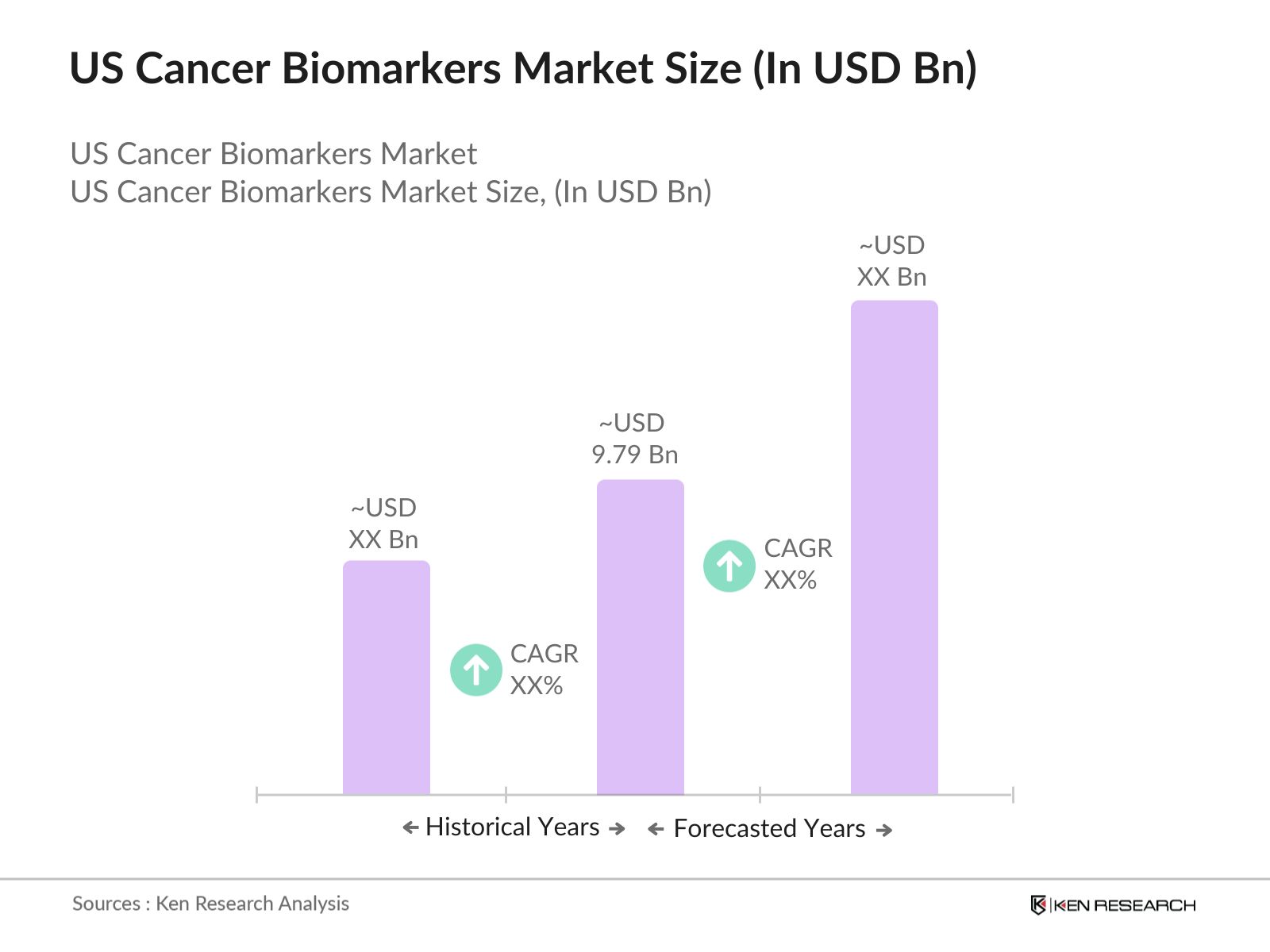
- The US Cancer Biomarkers Market is valued at USD 9.79 billion, according to a comprehensive historical analysis. This market is largely driven by the increasing adoption of precision medicine and companion diagnostics in cancer treatment, alongside significant advancements in genomic technologies and biomarker research. These innovations help to personalize treatment plans based on patients genetic profiles, reducing trial and error in treatments and driving the demand for cancer biomarkers in the healthcare industry.
- The US Cancer Biomarkers Market is predominantly led by cities with large medical research hubs, such as Boston, New York, and San Francisco. These cities are home to prestigious institutions, including leading cancer research centers and universities, making them focal points for biomarker research. The concentration of pharmaceutical companies, diagnostic labs, and biotechnology startups further enhances their leadership in the market, supported by access to skilled labor and substantial R&D investments.
- The U.S. Food and Drug Administration (FDA) provides comprehensive guidelines on biomarker development, with stringent requirements for clinical validation and approval. In 2024, over 30 biomarker tests were approved under these guidelines, emphasizing the importance of regulatory compliance for market participants. The FDAs Biomarker Qualification Program continues to support the development of innovative biomarker technologies, ensuring patient safety and promoting innovation in cancer diagnostics.
US Cancer Biomarkers Market Segmentation
The US Cancer Biomarkers Market is segmented by biomarker type and by cancer type.
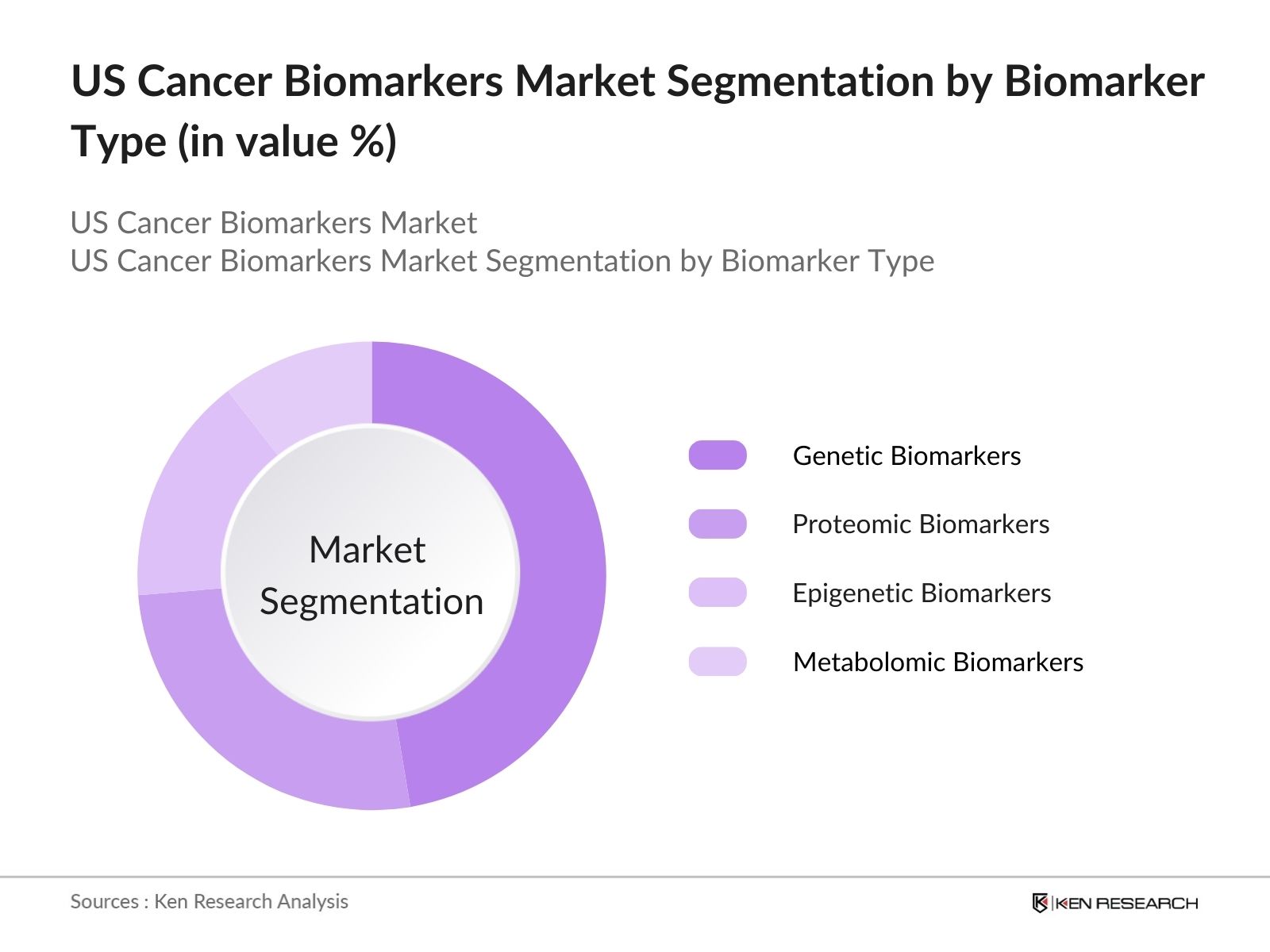
- By Biomarker Type: The US Cancer Biomarkers Market is segmented by biomarker type into genetic biomarkers, proteomic biomarkers, epigenetic biomarkers, and metabolomic biomarkers. Among these, genetic biomarkers dominate due to the increasing utilization of genomic profiling in precision medicine. Genetic biomarkers like BRCA1/2 mutations are extensively used to predict cancer risks and guide personalized treatments, especially in breast and ovarian cancers. The integration of next-generation sequencing (NGS) technology has facilitated rapid and accurate identification of genetic alterations, making this segment dominant in cancer diagnosis and treatment.
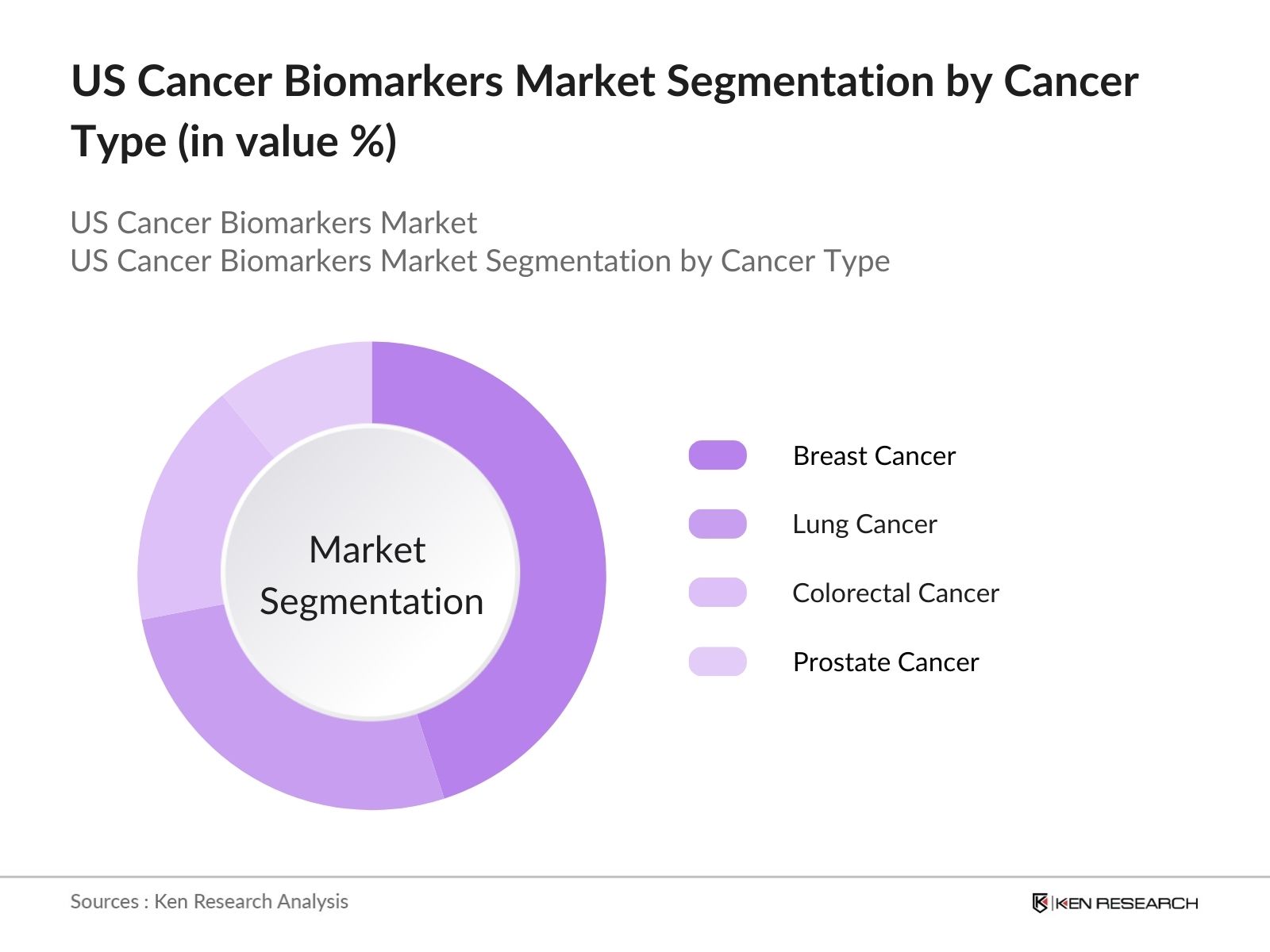
- By Cancer Type: The market is also segmented by cancer type into breast cancer, lung cancer, colorectal cancer, prostate cancer, and others. Breast cancer biomarkers hold the largest share in this segment, primarily due to the high incidence of breast cancer and the development of well-established biomarkers such as HER2 and BRCA1/2. These biomarkers not only help in early detection but also assist in guiding targeted therapy, making breast cancer biomarker testing essential for personalized medicine.
US Cancer Biomarkers Market Competitive Landscape
The US Cancer Biomarkers Market is dominated by a few major players, including global companies with extensive research capabilities and strong product portfolios. These players have established partnerships with leading hospitals and research institutions, which helps them stay at the forefront of biomarker innovation and development.
|
Company |
Establishment Year |
Headquarters |
R&D Expenditure |
FDA Approvals |
|
Roche Diagnostics |
1896 |
Basel, Switzerland |
||
|
Thermo Fisher Scientific |
1956 |
Waltham, MA, USA |
||
|
Illumina Inc. |
1998 |
San Diego, CA, USA |
||
|
Qiagen N.V. |
1984 |
Hilden, Germany |
||
|
Myriad Genetics |
1991 |
Salt Lake City, UT, USA |
US Cancer Biomarkers Market Analysis
Growth Drivers
- Rising Cancer Incidence Rates: In the United States, cancer remains a significant public health concern, with approximately 1.9 million new cancer cases diagnosed in 2024, as per estimates from the National Cancer Institute (NCI). The rising number of cancer cases continues to drive the demand for biomarkers as they play a critical role in early detection and personalized treatment. Specifically, lung, breast, and colorectal cancers are among the most diagnosed, further emphasizing the need for precise diagnostic tools and biomarkers for effective patient management. The growing cancer burden highlights the critical need for advancements in cancer biomarkers to support precision oncology strategies.
- Advancements in Genomic Technologies: Genomic technologies, particularly next-generation sequencing (NGS), are rapidly evolving in the U.S., aiding biomarker discovery. NGS allows for detailed analysis of genetic mutations and abnormalities associated with cancer. For instance, the U.S. National Human Genome Research Institute (NHGRI) reports that as of 2024, nearly 50,000 genomic tests are performed annually for cancer diagnosis, treatment planning, and research, making NGS a cornerstone in precision medicine. The affordability and efficiency of these technologies have catalyzed further research and clinical applications, bolstering the demand for biomarkers.
- Increasing Use of Precision Medicine: Precision medicine is gaining momentum in the U.S., with more than 70% of new cancer drugs approved in 2023 being precision therapies targeting specific genetic mutations. This growth is heavily reliant on the availability of accurate biomarkers. With initiatives like the National Cancer Moonshot program receiving $1.8 billion in funding for precision oncology research, there has been a significant focus on leveraging biomarkers to guide targeted treatments. Precision medicines adoption is increasing the demand for cancer biomarkers, driving innovation and research in the U.S. healthcare market.
Market Challenges
- Regulatory and Reimbursement Barriers: The complex regulatory landscape in the U.S. presents a significant challenge to the cancer biomarker market. The U.S. Food and Drug Administration (FDA) has stringent guidelines for the approval of biomarkers, which can delay commercialization. Additionally, reimbursement policies for biomarker tests under Medicare and private insurers remain inconsistent. As of 2024, only about 60% of biomarkers are covered under standard Medicare policies. This inconsistency impacts market growth by limiting patient access to novel biomarker-driven diagnostic tests.
- High Cost of Biomarker Development: Developing cancer biomarkers is a resource-intensive process, with the average cost for the development and clinical validation of a new biomarker ranging from $20 million to $40 million. This high financial barrier hinders the entry of smaller companies into the market, limiting innovation and competition. While government grants like those from the NIH support biomarker research, the high cost of development remains a significant bottleneck, particularly for emerging companies.
US Cancer Biomarkers Market Future Outlook
Over the next five years, the US Cancer Biomarkers Market is expected to witness robust growth driven by the increasing adoption of precision medicine, advances in genomic technologies, and the growing need for early cancer detection. Additionally, the rising incidence of cancer across the US and the increased government funding for cancer research are anticipated to further drive the demand for cancer biomarkers in clinical practice and research.
Market Opportunities
- Development of Companion Diagnostics: The rise of companion diagnostics presents significant growth opportunities for the U.S. cancer biomarkers market. As of 2024, over 40 FDA-approved companion diagnostic tests are in use, linked to targeted therapies for cancer. These diagnostics are crucial in determining patient eligibility for specific treatments, making them indispensable in precision oncology. With pharmaceutical companies increasingly collaborating with diagnostic firms, the development of companion diagnostics is expected to expand, driving the biomarker market forward.
- Expansion of Liquid Biopsy Market: Liquid biopsies, a non-invasive method for detecting cancer biomarkers, are gaining traction in the U.S. market. In 2024, over 200,000 liquid biopsy tests were conducted, highlighting the increasing demand for such technologies. This growth is fueled by the ability to monitor disease progression and treatment response without the need for invasive procedures. Research and funding initiatives, such as the NIHs Liquid Biopsy Consortium, are expected to further accelerate the adoption of liquid biopsy technologies, offering a robust opportunity for market growth.
Scope of the Report
|
Genetic Biomarkers Epigenetic Biomarkers Proteomic Biomarkers Glycoprotein Biomarkers Metabolomic Biomarkers |
|
|
By Cancer Type |
Breast Cancer Lung Cancer Prostate Cancer Colorectal Cancer Ovarian Cancer |
|
By Application |
Diagnostics Drug Discovery and Development Prognostics Risk Assessment Personalized Medicine |
|
By Profiling Technology |
Genomics Transcriptomics Proteomics Metabolomics Imaging-Based Biomarkers |
|
By Region |
North East West South |
Products
Key Target Audience
Pharmaceutical Companies
Biotechnology Firms
Diagnostic Laboratories
Government and Regulatory Bodies (FDA, National Cancer Institute)
Research and Academic Institutes
CROs (Contract Research Organizations)
Investment and Venture Capitalist Firms
Healthcare Providers (Hospitals and Cancer Centers)
Companies
Players Mention in the Report:
Roche Diagnostics
Thermo Fisher Scientific
Illumina Inc.
Qiagen N.V.
Myriad Genetics
Bio-Rad Laboratories
PerkinElmer Inc.
Abbott Laboratories
Agilent Technologies
Merck & Co., Inc.
Pfizer Inc.
Bristol-Myers Squibb
Guardant Health, Inc.
Exact Sciences Corporation
Genomic Health, Inc.
Table of Contents
1. US Cancer Biomarkers Market Overview
1.1. Definition and Scope
1.2. Market Taxonomy
1.3. Market Growth Rate
1.4. Market Segmentation Overview
2. US Cancer Biomarkers Market Size (In USD Bn)
2.1. Historical Market Size
2.2. Year-On-Year Growth Analysis
2.3. Key Market Developments and Milestones (FDA Approvals, Product Launches, Clinical Trials)
3. US Cancer Biomarkers Market Analysis
3.1. Growth Drivers
3.1.1. Rising Cancer Incidence Rates
3.1.2. Advancements in Genomic Technologies
3.1.3. Increasing Use of Precision Medicine
3.1.4. Government Support for Biomarker Research (NIH Funding, National Cancer Institute Initiatives)
3.2. Market Challenges
3.2.1. Regulatory and Reimbursement Barriers
3.2.2. High Cost of Biomarker Development
3.2.3. Lack of Standardization Across Biomarker Platforms
3.3. Opportunities
3.3.1. Development of Companion Diagnostics
3.3.2. Expansion of Liquid Biopsy Market
3.3.3. Collaborations with Research Institutes and Biopharma Companies
3.4. Trends
3.4.1. Growing Adoption of NGS (Next-Generation Sequencing) for Biomarker Discovery
3.4.2. Use of Artificial Intelligence in Biomarker Identification
3.4.3. Increased Focus on Immuno-oncology Biomarkers
3.5. Regulatory Environment
3.5.1. FDA Guidelines on Biomarker Development
3.5.2. CLIA Certification for Diagnostic Laboratories
3.5.3. HIPAA Compliance and Data Security in Biomarker Research
3.6. SWOT Analysis
3.7. Stakeholder Ecosystem (Diagnostic Laboratories, Biopharma Companies, Regulatory Bodies)
3.8. Porters Five Forces
3.9. Competition Ecosystem
4. US Cancer Biomarkers Market Segmentation
4.1. By Type of Biomarker (In Value %)
4.1.1. Genetic Biomarkers (BRCA1/2, EGFR)
4.1.2. Epigenetic Biomarkers (DNA Methylation, miRNA)
4.1.3. Proteomic Biomarkers (PSA, HER2)
4.1.4. Glycoprotein Biomarkers (CA125, CA19-9)
4.1.5. Metabolomic Biomarkers
4.2. By Cancer Type (In Value %)
4.2.1. Breast Cancer
4.2.2. Lung Cancer
4.2.3. Prostate Cancer
4.2.4. Colorectal Cancer
4.2.5. Ovarian Cancer
4.3. By Application (In Value %)
4.3.1. Diagnostics
4.3.2. Drug Discovery and Development
4.3.3. Prognostics
4.3.4. Risk Assessment
4.3.5. Personalized Medicine
4.4. By Profiling Technology (In Value %)
4.4.1. Genomics
4.4.2. Transcriptomics
4.4.3. Proteomics
4.4.4. Metabolomics
4.4.5. Imaging-Based Biomarkers
4.5. By Region (In Value %)
4.5.1. North
4.5.2. East
4.5.3. West
4.5.4. South
5. US Cancer Biomarkers Market Competitive Analysis
5.1. Detailed Profiles of Major Competitors
5.1.1. Roche Diagnostics
5.1.2. Thermo Fisher Scientific
5.1.3. Qiagen N.V.
5.1.4. Illumina Inc.
5.1.5. Agilent Technologies
5.1.6. Bio-Rad Laboratories, Inc.
5.1.7. PerkinElmer, Inc.
5.1.8. Abbott Laboratories
5.1.9. Merck & Co., Inc.
5.1.10. Pfizer Inc.
5.1.11. Bristol-Myers Squibb
5.1.12. Myriad Genetics, Inc.
5.1.13. Genomic Health, Inc.
5.1.14. Guardant Health, Inc.
5.1.15. Exact Sciences Corporation
5.2. Cross Comparison Parameters (Number of Patents, Partnerships/Collaborations, Revenue from Biomarker Segment, Clinical Trial Success Rate, FDA Approvals, R&D Expenditure, Innovation Index, Geographic Presence)
5.3. Market Share Analysis
5.4. Strategic Initiatives
5.5. Mergers and Acquisitions
5.6. Investment Analysis
5.7. Venture Capital Funding
5.8. Government Grants
5.9. Private Equity Investments
6. US Cancer Biomarkers Market Regulatory Framework
6.1. FDA Approval Process for Biomarkers
6.2. CMS Reimbursement Policies
6.3. CLIA and CAP Accreditation for Biomarker Testing
6.4. HIPAA Guidelines for Data Security
7. US Cancer Biomarkers Future Market Size (In USD Bn)
7.1. Future Market Size Projections
7.2. Key Factors Driving Future Market Growth
8. US Cancer Biomarkers Future Market Segmentation
8.1. By Type of Biomarker (In Value %)
8.2. By Cancer Type (In Value %)
8.3. By Application (In Value %)
8.4. By Profiling Technology (In Value %)
8.5. By Region (In Value %)
9. US Cancer Biomarkers Market Analysts Recommendations
9.1. TAM/SAM/SOM Analysis
9.2. Customer Cohort Analysis
9.3. Marketing Initiatives
9.4. White Space Opportunity Analysis
Disclaimer Contact UsResearch Methodology
Step 1: Identification of Key Variables
In this phase, an ecosystem map of the US Cancer Biomarkers Market was created. Using extensive desk research and secondary databases, we identified major stakeholders, including pharmaceutical companies, diagnostic laboratories, and research institutions. Critical variables such as biomarker adoption rates and regulatory frameworks were defined to understand the market landscape.
Step 2: Market Analysis and Construction
We analyzed historical data to evaluate market growth, including cancer incidence rates, biomarker discovery breakthroughs, and technological advancements in genomics. This helped us estimate the market penetration and assess how different biomarker segments contributed to overall revenue.
Step 3: Hypothesis Validation and Expert Consultation
Using CATIs (Computer-Assisted Telephone Interviews), we consulted industry experts from key companies. These interviews provided in-depth insights into market dynamics, helping us validate our hypotheses and refine our market estimates.
Step 4: Research Synthesis and Final Output
Finally, we synthesized the findings from interviews with manufacturers, hospitals, and diagnostic centers. This step ensured the accuracy of our revenue estimates and provided a holistic view of the US Cancer Biomarkers Market.
Frequently Asked Questions
01. How big is the US Cancer Biomarkers Market?
The US Cancer Biomarkers Market is valued at USD 9.79 billion, driven by the increasing demand for precision medicine and advances in genomic research.
02. What are the challenges in the US Cancer Biomarkers Market?
Key challenges in the US Cancer Biomarkers Market include the high cost of biomarker discovery, regulatory hurdles for clinical validation, and the lack of standardization in biomarker testing protocols.
03. Who are the major players in the US Cancer Biomarkers Market?
Major players in US Cancer Biomarkers Market include Roche Diagnostics, Thermo Fisher Scientific, Illumina Inc., Qiagen N.V., and Myriad Genetics, all of whom dominate due to their robust R&D investments and strategic partnerships.
04. What are the growth drivers of the US Cancer Biomarkers Market?
The US Cancer Biomarkers Market is propelled by the rising incidence of cancer, advancements in genomic technologies, and the increasing integration of biomarkers into precision medicine for personalized cancer treatment.
05. Which cities dominate the US Cancer Biomarkers Market?
Cities like Boston, San Francisco, and New York dominate due to their strong medical research infrastructure, proximity to leading universities, and concentration of pharmaceutical and biotechnology companies.
Why Buy From Us?

What makes us stand out is that our consultants follows Robust, Refine and Result (RRR) methodology. i.e. Robust for clear definitions, approaches and sanity checking, Refine for differentiating respondents facts and opinions and Result for presenting data with story

We have set a benchmark in the industry by offering our clients with syndicated and customized market research reports featuring coverage of entire market as well as meticulous research and analyst insights.

While we don't replace traditional research, we flip the method upside down. Our dual approach of Top Bottom & Bottom Top ensures quality deliverable by not just verifying company fundamentals but also looking at the sector and macroeconomic factors.

With one step in the future, our research team constantly tries to show you the bigger picture. We help with some of the tough questions you may encounter along the way: How is the industry positioned? Best marketing channel? KPI's of competitors? By aligning every element, we help maximize success.

Our report gives you instant access to the answers and sources that other companies might choose to hide. We elaborate each steps of research methodology we have used and showcase you the sample size to earn your trust.

If you need any support, we are here! We pride ourselves on universe strength, data quality, and quick, friendly, and professional service.