
USA Air Purifier Market Outlook to 2030
Region:North America
Author(s):Mukul
Product Code:KROD5207
October 2024
93
About the Report
USA Air Purifier Market Overview
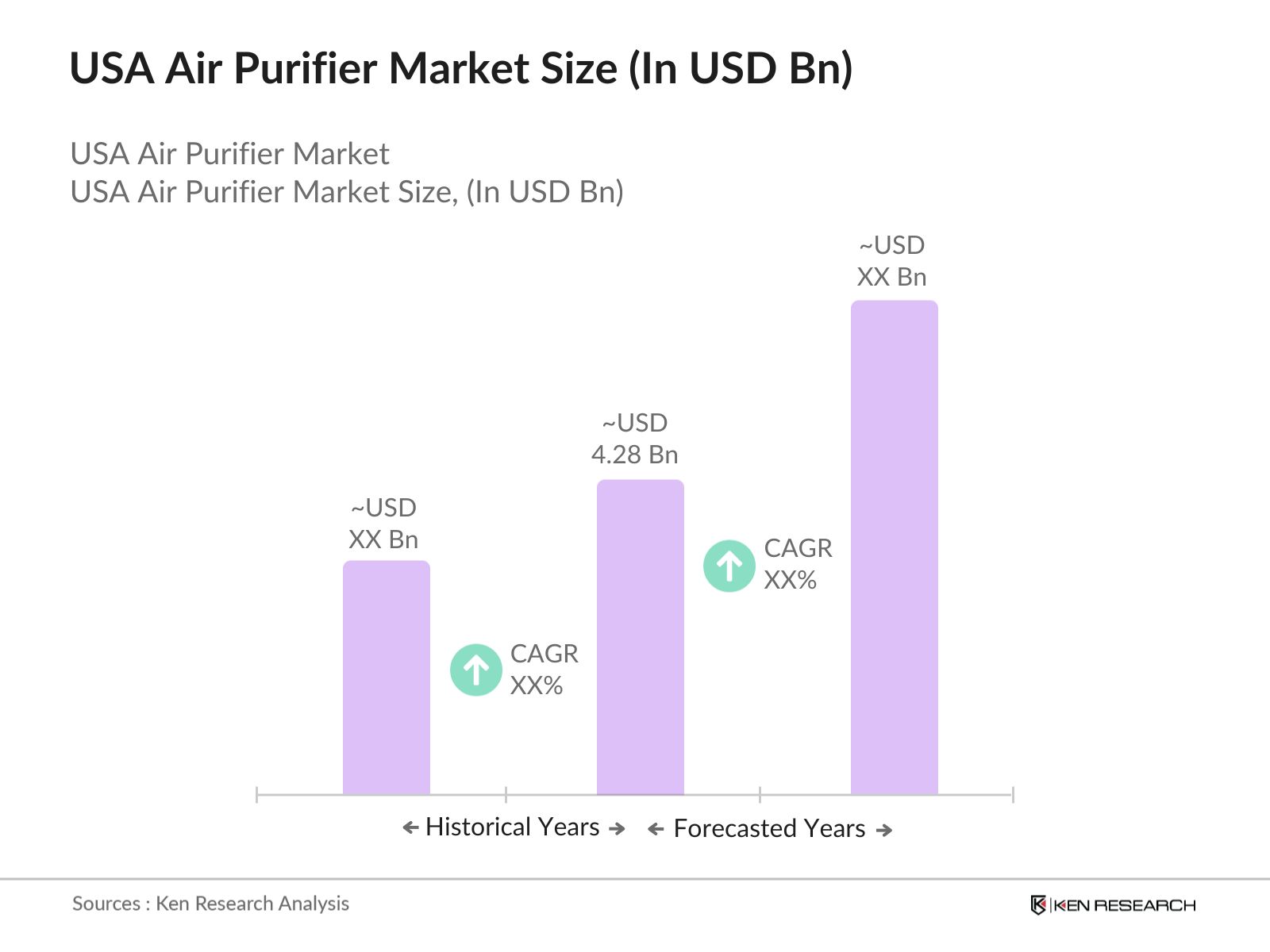
- The USA air purifier market is valued at USD 4.28 billion, based on a five-year historical analysis, with a steady growth trend driven primarily by rising air pollution levels and growing health consciousness. The surge in respiratory diseases, like asthma and allergies, has pushed consumers toward purchasing air purifiers to improve indoor air quality. Additionally, the integration of advanced filtration technologies such as HEPA, activated carbon, and UV-based purification systems has further contributed to market growth. Credible sources such as Statista and Fortune Business Insights validate the valuation.
- Major cities like Los Angeles, New York, and Chicago dominate the market due to their higher population densities, urbanization, and significant air pollution problems caused by traffic congestion and industrial activities. Furthermore, high consumer disposable incomes in these areas support the adoption of advanced and premium air purifier systems. Cities with poor outdoor air quality, such as those in California, also drive the demand for indoor air purifiers due to frequent wildfires and smog.
- In 2024, local governments in countries like South Korea and China have implemented stringent air quality mandates. Seoul, for instance, requires commercial buildings to install air purification systems capable of reducing PM2.5 levels by at least 50%. Non-compliance with these mandates can result in fines, driving businesses to invest in air purification technologies. These mandates are part of broader initiatives to combat the chronic air pollution issues plaguing major cities in the Asia-Pacific region.
USA Air Purifier Market Segmentation
-
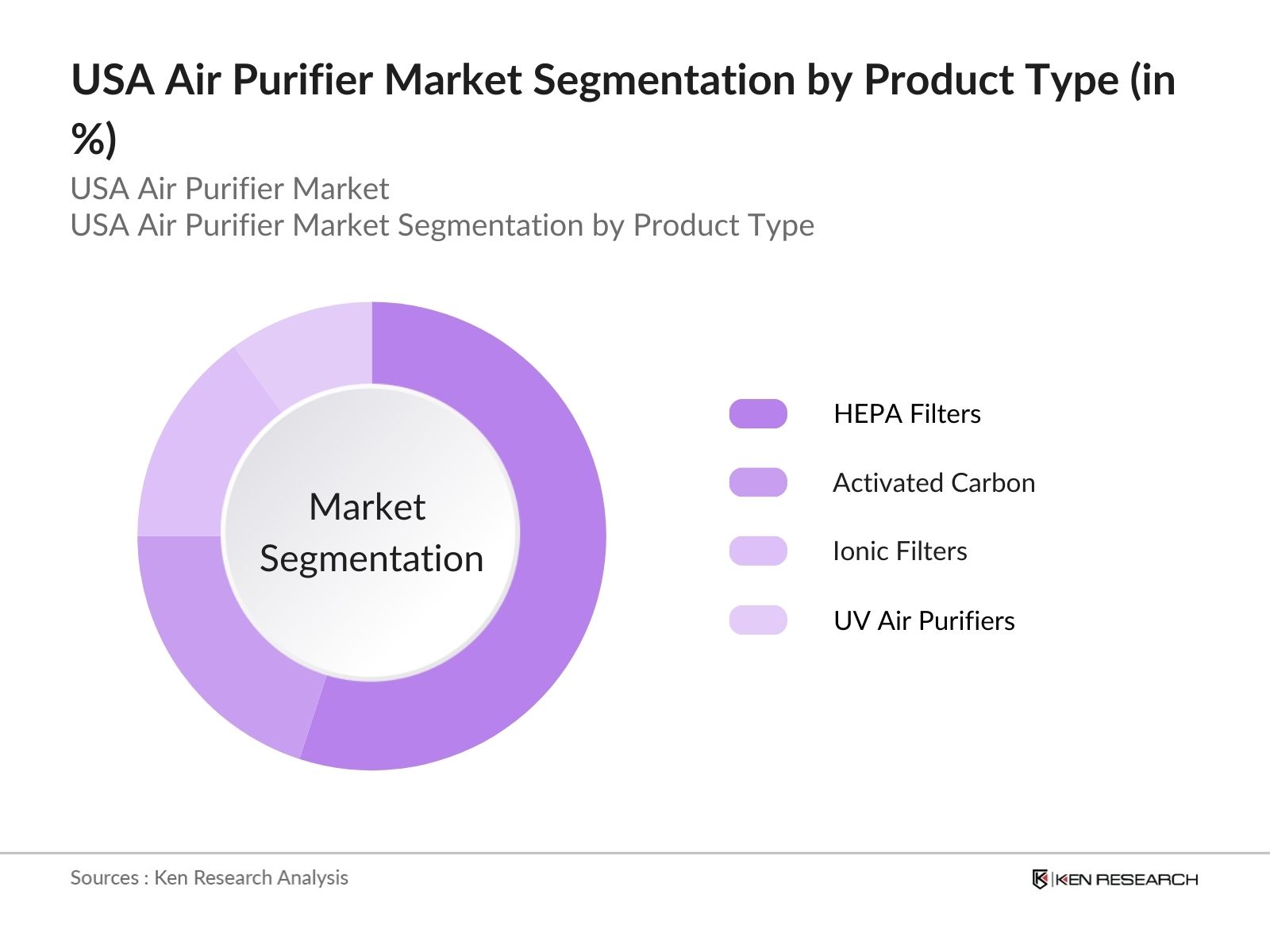
By Product Type: The USA air purifier market is segmented by product type into HEPA filters, activated carbon filters, ionic filters, UV air purifiers, and hybrid systems. HEPA filters hold the dominant market share due to their superior ability to capture 99.97% of airborne particles like dust, pollen, and mold, making them highly preferred in residential and healthcare settings. The effectiveness of HEPA filters in removing allergens and pollutants has driven their popularity, particularly in homes and hospitals where air quality is crucial for health.
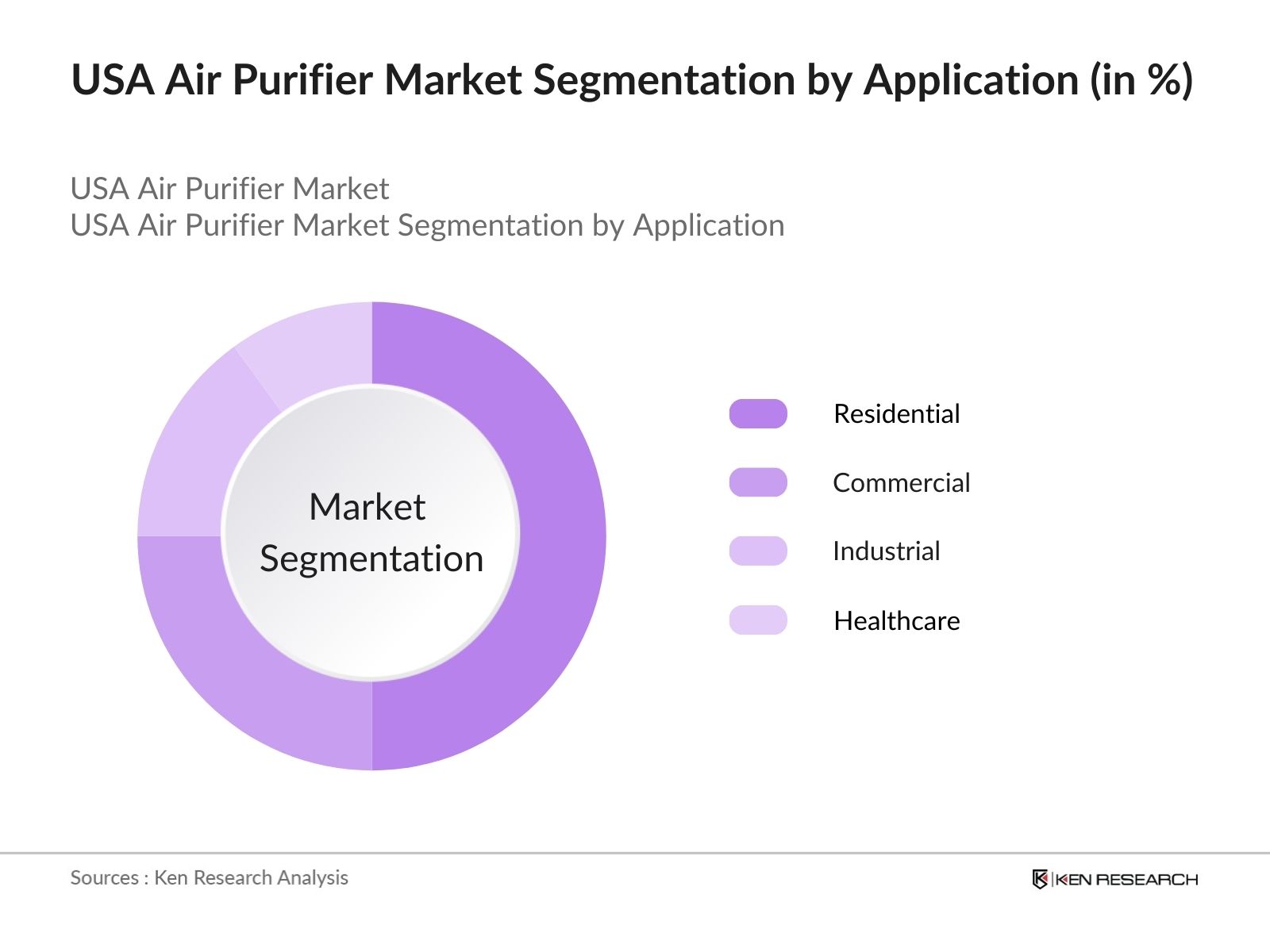
- By Application: The market is also segmented by application into residential, commercial, industrial, and healthcare sectors. The residential segment is the largest, driven by increasing consumer awareness about indoor air quality and the rise in home-based work setups. The work-from-home trend, coupled with growing concerns over indoor pollution, has led to a significant uptick in demand for air purifiers in households. Moreover, the rise of smart home integration and IoT-enabled devices has encouraged homeowners to invest in air purifiers that can be easily controlled via mobile applications.
USA Air Purifier Market Competitive Landscape
The USA air purifier market is dominated by a mix of established global companies and emerging local manufacturers. Companies such as Honeywell International Inc., Dyson Ltd., and LG Electronics Inc. have maintained a strong market presence due to their extensive product portfolios, technological innovations, and strong distribution networks. These companies have successfully targeted both residential and commercial sectors, offering a range of products that cater to varying air quality needs and preferences. The competitive landscape is characterized by innovation in filtration technologies and smart integration features, enabling companies to differentiate themselves.
|
Company |
Established |
Headquarters |
Revenue (USD Bn) |
Product Portfolio |
R&D Expenditure |
Technology Focus |
Geographic Presence |
Strategic Partnerships |
|
Honeywell International Inc. |
1906 |
Charlotte, NC |
||||||
|
Dyson Ltd. |
1991 |
Malmesbury, UK |
||||||
|
Coway Co., Ltd. |
1989 |
Seoul, South Korea |
||||||
|
LG Electronics Inc. |
1958 |
Seoul, South Korea |
||||||
|
Blueair Inc. |
1996 |
Stockholm, Sweden |
USA Air Purifier Industry
Market Growth Drivers
- Consumer Demand for Clean Air: With air pollution contributing to over 7 million premature deaths globally, consumer demand for clean air has surged. In 2024, urban areas like Delhi, India, experienced particulate matter (PM2.5) levels as high as 300 micrograms per cubic meter, well above the World Health Organizations safe limit of 25. This growing concern about air quality has driven demand for air purifiers, particularly in cities with heavy industrial activities. The rise in respiratory diseases like asthma, which affects approximately 300 million people globally, further fuels this demand for clean air solutions.
- Air Pollution Levels: According to the World Bank, air pollution remains a critical health issue in many regions, especially in Southeast Asia. In 2024, over 90% of people in these areas are exposed to harmful levels of air pollutants. Bangladesh reported PM2.5 levels of 78 micrograms per cubic meter, highlighting the urgency of air purifier adoption. Governments are introducing more stringent pollution control regulations, further encouraging both residential and commercial sectors to adopt air purifiers.
- Health Consciousness: The global rise in health-conscious consumers is another significant driver. In 2024, studies by the International Institute for Population Sciences showed that individuals are increasingly concerned about the impact of poor air quality on their health. Indoor air quality concerns are growing in nations such as China and India, where exposure to pollutants is particularly high due to urbanization and industrialization. With more than 3 billion people using solid fuels for cooking, air purifier demand is on the rise.
Market Restraints
- Maintenance Complexity: Air purifiers require regular maintenance, such as filter replacements every 612 months, which can be both costly and technically demanding. In 2024, in countries like India, where technical support services are underdeveloped in rural areas, this becomes a significant challenge for consumers. According to the International Energy Agency, air purifiers in some regions have a lifespan reduced by 30% due to poor maintenance, limiting their effectiveness in combating air pollution.
- Consumer Awareness Gaps: Despite growing health concerns, a significant knowledge gap exists among consumers regarding the types of air purifiers and their benefits. In 2024, reports by the World Health Organization indicated that only 45% of households in high-pollution areas such as Bangladesh and India are aware of the advantages of using air purifiers, highlighting a major challenge for market growth. Misconceptions about their ability to eliminate all pollutants, especially in countries with lower literacy rates, further hinder widespread adoption.
USA Air Purifier Market Future Outlook
Over the next five years, the USA air purifier market is expected to experience significant growth driven by technological advancements, increasing air pollution levels, and rising health awareness among consumers. The integration of IoT in smart air purifiers and the push toward energy-efficient and eco-friendly products are anticipated to accelerate market adoption. The healthcare and commercial sectors, particularly hospitals and offices, are expected to witness high demand as air quality standards become more stringent and indoor pollution concerns gain prominence.
Market Opportunities
- Technological Advancements in Filters: In 2024, advancements in air purification technology, particularly in HEPA and carbon filters, have created new growth opportunities. The use of nanotechnology has improved the effectiveness of filters by up to 95% in capturing airborne pollutants. In regions like Europe, where air quality regulations are stringent, new-generation air purifiers are being adopted across healthcare facilities and schools. This advancement is crucial in cities like London, where nitrogen dioxide levels were recorded at 30 micrograms per cubic meter, necessitating improved air filtration solutions.
- Increasing Adoption in Commercial Spaces: In 2024, commercial spaces such as shopping malls and office buildings have been increasingly integrating air purifiers. In China, for instance, stricter regulations on indoor air quality in public spaces have led to a surge in installations. Approximately 75% of newly built commercial structures in Beijing now incorporate air filtration systems. Similar trends are visible in Southeast Asian countries, where air quality has become a top priority for commercial establishments, especially in the hospitality sector.
Scope of the Report
|
Product Type |
HEPA Filters, Activated Carbon, Ionic Filters, UV Air Purifiers, Hybrid Systems |
|
Application |
Residential, Commercial, Industrial, Healthcare |
|
Technology |
Smart Air Purifiers (IoT-enabled), Non-Smart Purifiers, Portable Purifiers |
|
Distribution Channel |
Online Retail, Offline Retail (Specialty Stores, Supermarkets), Direct Sales |
|
Region |
Northeast, Midwest, South, West |
Products
Key Target Audience
Investments and Venture Capitalist Firms
Government and Regulatory Bodies (Environmental Protection Agency - EPA)
HVAC and Home Appliance Manufacturers
Healthcare Facilities and Hospitals
Real Estate Developers
Retailers and Distributors
Corporate Offices and Commercial Establishments
Hospitality and Hotel Chains
Companies
Players Mentioned in the Report:
Honeywell International Inc.
Dyson Ltd.
Coway Co., Ltd.
LG Electronics Inc.
Blueair Inc.
Philips N.V.
IQAir
Levoit
Whirlpool Corporation
Sharp Corporation
Panasonic Corporation
Winix Inc.
Daikin Industries, Ltd.
Medify Air
Hamilton Beach Brands
Table of Contents
1. USA Air Purifier Market Overview
1.1. Definition and Scope
1.2. Market Taxonomy
1.3. Market Growth Rate
1.4. Market Segmentation Overview
2. USA Air Purifier Market Size (In USD Bn)
2.1. Historical Market Size
2.2. Year-On-Year Growth Analysis
2.3. Key Market Developments and Milestones
3. USA Air Purifier Market Analysis
3.1. Growth Drivers (Consumer Demand for Clean Air, Air Pollution Levels, Health Consciousness, Indoor Air Quality, Smart Home Integration)
3.2. Market Challenges (High Installation Costs, Maintenance Complexity, Consumer Awareness Gaps, Regulatory Compliance)
3.3. Opportunities (Technological Advancements in Filters, Increasing Adoption in Commercial Spaces, Rising Government Incentives, Growing Demand in Healthcare Sector)
3.4. Trends (Smart Air Purifiers with IoT, HEPA and Carbon Filters Innovation, Increasing Use of Portable Air Purifiers, Hybrid HVAC Systems)
3.5. Government Regulations (EPA Standards, Local Air Quality Mandates, Energy Efficiency Standards, Federal Emission Norms)
3.6. SWOT Analysis
3.7. Stake Ecosystem (Suppliers, Distributors, Retailers, End-Consumers)
3.8. Porters Five Forces (Supplier Power, Buyer Power, Threat of Substitutes, Threat of New Entrants, Competitive Rivalry)
3.9. Competition Ecosystem
4. USA Air Purifier Market Segmentation
4.1. By Product Type (In Value %)
4.1.1. HEPA Filters
4.1.2. Activated Carbon
4.1.3. Ionic Filters
4.1.4. UV Air Purifiers
4.1.5. Hybrid Systems
4.2. By Application (In Value %)
4.2.1. Residential
4.2.2. Commercial
4.2.3. Industrial
4.2.4. Healthcare
4.3. By Technology (In Value %)
4.3.1. Smart Air Purifiers (IoT-enabled)
4.3.2. Non-Smart Purifiers
4.3.3. Portable Purifiers
4.4. By Distribution Channel (In Value %)
4.4.1. Online Retail
4.4.2. Offline Retail (Specialty Stores, Supermarkets)
4.4.3. Direct Sales
4.5. By Region (In Value %)
4.5.1. Northeast
4.5.2. Midwest
4.5.3. South
4.5.4. West
5. USA Air Purifier Market Competitive Analysis
5.1. Detailed Profiles of Major Companies
5.1.1. Honeywell International Inc.
5.1.2. Dyson Ltd.
5.1.3. Coway Co., Ltd.
5.1.4. Whirlpool Corporation
5.1.5. IQAir
5.1.6. LG Electronics Inc.
5.1.7. Panasonic Corporation
5.1.8. Blueair Inc.
5.1.9. Sharp Corporation
5.1.10. Philips N.V.
5.1.11. Levoit
5.1.12. Winix Inc.
5.1.13. Daikin Industries, Ltd.
5.1.14. Hamilton Beach Brands
5.1.15. Medify Air
5.2. Cross Comparison Parameters (Revenue, Market Share, Product Portfolio, Technology Focus, Geographical Presence, Strategic Partnerships, Innovation Capability, Employee Strength)
5.3. Market Share Analysis
5.4. Strategic Initiatives
5.5. Mergers and Acquisitions
5.6. Investment Analysis
5.7. Venture Capital Funding
5.8. Government Grants
5.9. Private Equity Investments
6. USA Air Purifier Market Regulatory Framework
6.1. Environmental Standards
6.2. Compliance Requirements
6.3. Certification Processes (Energy Star, CARB, UL Certification)
7. USA Air Purifier Future Market Size (In USD Bn)
7.1. Future Market Size Projections
7.2. Key Factors Driving Future Market Growth (Population Growth, Air Quality Decline, Innovations in Filtration Technology)
8. USA Air Purifier Future Market Segmentation
8.1. By Product Type (In Value %)
8.2. By Application (In Value %)
8.3. By Technology (In Value %)
8.4. By Distribution Channel (In Value %)
8.5. By Region (In Value %)
9. USA Air Purifier Market Analysts Recommendations
9.1. TAM/SAM/SOM Analysis
9.2. Customer Cohort Analysis
9.3. Marketing Initiatives
9.4. White Space Opportunity Analysis
Disclaimer
Contact Us
Research Methodology
Step 1: Identification of Key Variables
The initial phase involves constructing an ecosystem map encompassing all major stakeholders within the USA air purifier market. This is based on extensive desk research, combining proprietary and secondary databases. The key objective is to identify the critical variables driving market trends and influencing consumer behavior.
Step 2: Market Analysis and Construction
In this phase, historical data is compiled and analyzed, focusing on penetration rates, product usage, and revenue generation. We assess product quality and technology innovations to ensure accurate market size and segmentation analysis.
Step 3: Hypothesis Validation and Expert Consultation
Industry hypotheses are tested through expert consultations, particularly using CATI methods, with insights from manufacturers and retailers. These consultations provide operational perspectives and validate our findings, ensuring reliable data.
Step 4: Research Synthesis and Final Output
The final phase involves synthesizing primary and secondary research into a comprehensive report. This includes engaging with air purifier manufacturers to acquire detailed insights on consumer trends, which are used to validate revenue projections and product segment growth.
Frequently Asked Questions
1. How big is the USA Air Purifier Market?
The USA air purifier market is valued at USD 4.28 billion, driven by rising air pollution levels and growing consumer awareness about the benefits of improved indoor air quality.
2. What are the challenges in the USA Air Purifier Market?
Challenges include high initial purchase and maintenance costs, lack of consumer awareness in rural areas, and compliance with stringent regulatory standards set by environmental agencies.
3. Who are the major players in the USA Air Purifier Market?
Key players include Honeywell International Inc., Dyson Ltd., LG Electronics Inc., Blueair Inc., and Coway Co., Ltd. These companies dominate the market due to their strong product portfolios, technological innovations, and global distribution networks.
4. What are the growth drivers of the USA Air Purifier Market?
Growth is driven by rising air pollution levels, increasing incidence of respiratory illnesses, technological advancements like IoT integration, and government initiatives to improve indoor air quality.
Why Buy From Us?

What makes us stand out is that our consultants follows Robust, Refine and Result (RRR) methodology. i.e. Robust for clear definitions, approaches and sanity checking, Refine for differentiating respondents facts and opinions and Result for presenting data with story

We have set a benchmark in the industry by offering our clients with syndicated and customized market research reports featuring coverage of entire market as well as meticulous research and analyst insights.

While we don't replace traditional research, we flip the method upside down. Our dual approach of Top Bottom & Bottom Top ensures quality deliverable by not just verifying company fundamentals but also looking at the sector and macroeconomic factors.

With one step in the future, our research team constantly tries to show you the bigger picture. We help with some of the tough questions you may encounter along the way: How is the industry positioned? Best marketing channel? KPI's of competitors? By aligning every element, we help maximize success.

Our report gives you instant access to the answers and sources that other companies might choose to hide. We elaborate each steps of research methodology we have used and showcase you the sample size to earn your trust.

If you need any support, we are here! We pride ourselves on universe strength, data quality, and quick, friendly, and professional service.