
USA Beer Market Outlook to 2030
Region:United States
Author(s):Naman Rohilla
Product Code:KROD9647
Region:United States
Author(s):Naman Rohilla
Product Code:KROD9647
December 2024
88
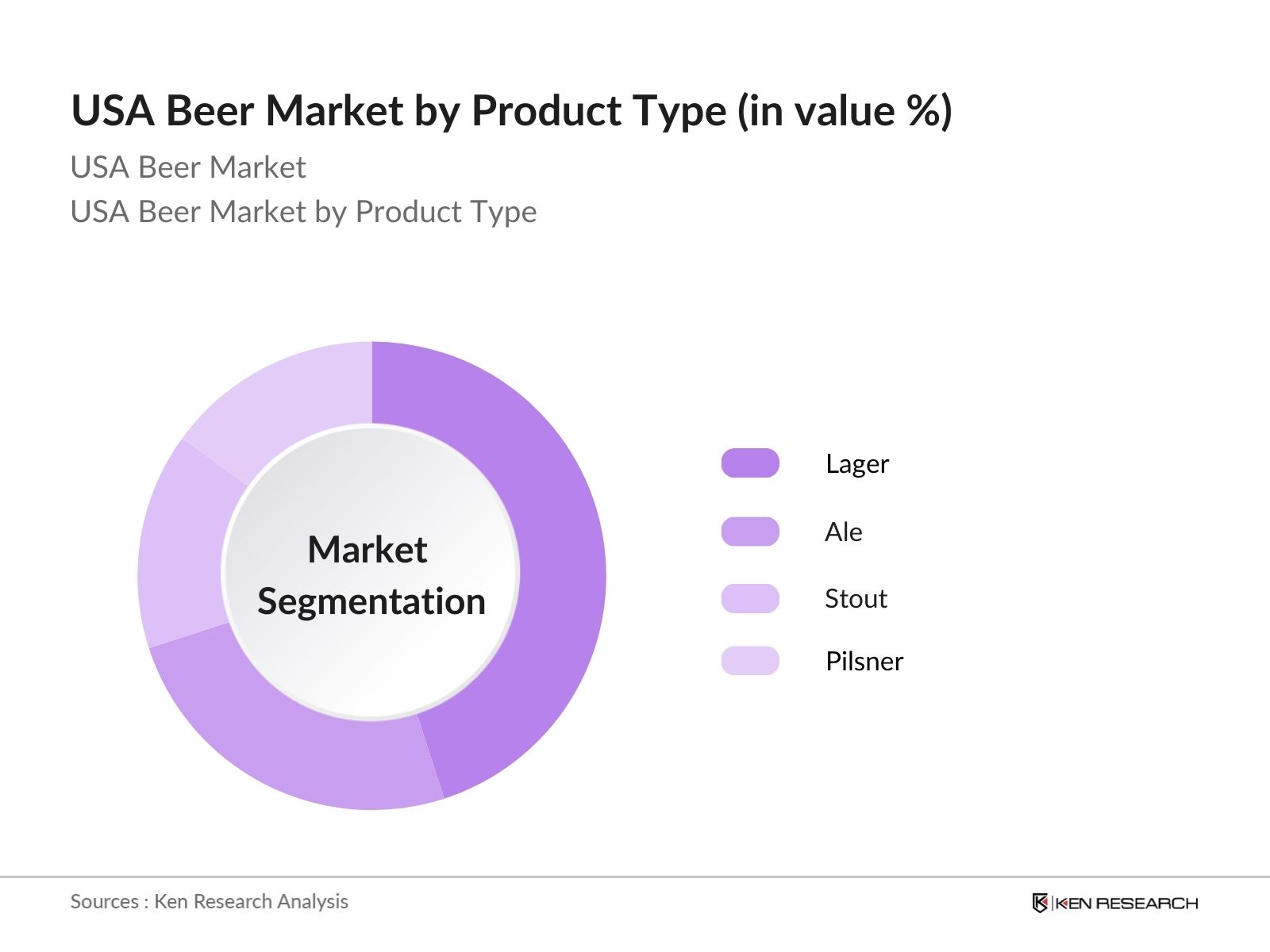
By Product Type: The market is segmented by product type into Lager, Ale, Stout, and Pilsner. Currently, lager holds a dominant market share within this segmentation due to its wide acceptance across different consumer demographics. Its refreshing taste profile, high availability in retail and on-trade channels, and the extensive portfolio of popular lager brands drive its popularity. The adaptability of lager to various marketing campaigns also strengthens its foothold in the market.
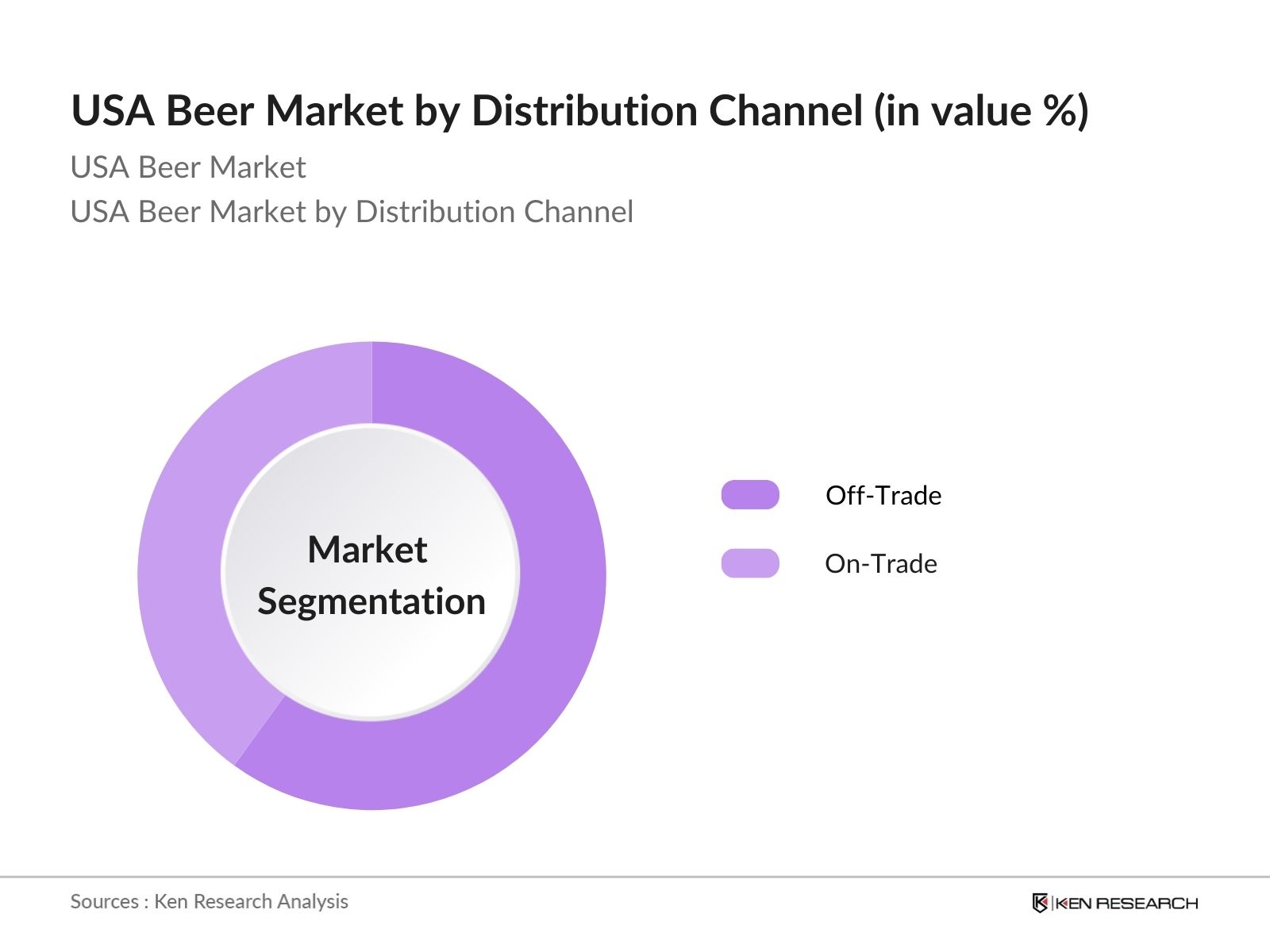
By Distribution Channel: The market segmentation by distribution channel includes On-Trade (bars, restaurants) and Off-Trade (retail, e-commerce). The Off-Trade channel commands the market due to consumers preference for purchasing beer from retail stores and the rising convenience of e-commerce platforms. The growth of large retail networks, such as supermarkets and hypermarkets, alongside the increasing accessibility of online shopping, contributes to the Off-Trade segment's strength.
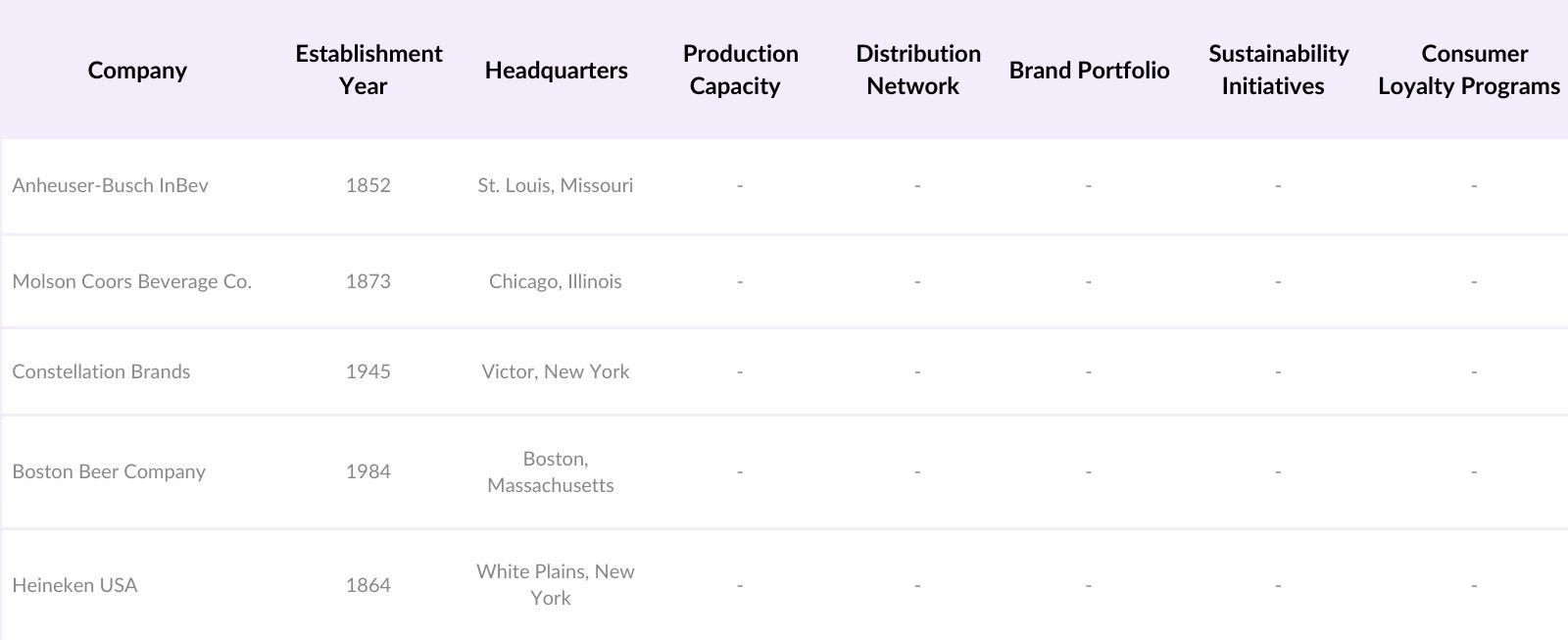
The USA Beer Market features several key players driving industry dynamics. The market is characterized by both global brands and local craft breweries, creating a competitive landscape that emphasizes brand loyalty and innovation.
Over the next five years, the USA Beer Market is anticipated to witness robust growth fueled by consumer demand for unique and high-quality beer varieties. The expansion of e-commerce channels and innovations in sustainable brewing practices will likely play pivotal roles. Additionally, the focus on health-conscious beer options will continue to shape market dynamics, responding to evolving consumer preferences.
|
By Product Type |
Lager Ale Stout Pilsner |
|
By Distribution Channel |
On-Trade (Bars, Restaurants) Off-Trade (Retail, E-commerce) |
|
By Consumer Age Group |
Millennials Gen X Baby Boomers |
|
By Packaging Type |
Bottles Cans Kegs |
|
By Region |
North East South West |
1.1 Definition and Scope
1.2 Market Taxonomy
1.3 Market Growth Rate
1.4 Market Segmentation Overview
2.1 Historical Market Size
2.2 Year-On-Year Growth Analysis
2.3 Key Market Developments and Milestones
3.1 Growth Drivers
3.1.1 Rise of Craft Breweries
3.1.2 Growing Demand for Low-Calorie Options
3.1.3 Cultural Beer Festivals and Events
3.1.4 Influence of Changing Demographics
3.2 Market Challenges
3.2.1 Fluctuating Raw Material Prices
3.2.2 Increased Competition from Non-Alcoholic Alternatives
3.2.3 Stringent Alcohol Regulatory Framework
3.3 Opportunities
3.3.1 Expansion into Health-Conscious Beer Variants
3.3.2 Potential for E-commerce Growth in Alcohol Distribution
3.3.3 Innovation in Flavored and Premium Beers
3.4 Trends
3.4.1 Increasing Focus on Sustainable Brewing
3.4.2 Rise of Brewpubs and Taprooms
3.4.3 Demand for Seasonal and Limited-Edition Beers
3.5 Government Regulations
3.5.1 State-Specific Alcohol Laws
3.5.2 Labeling Requirements and Compliance
3.5.3 Excise Tax Variations by Region
3.6 SWOT Analysis
3.7 Stakeholder Ecosystem
3.8 Porters Five Forces Analysis
3.9 Competition Ecosystem
4.1 By Product Type (In Value %)
4.1.1 Lager
4.1.2 Ale
4.1.3 Stout
4.1.4 Pilsner
4.2 By Distribution Channel (In Value %)
4.2.1 On-Trade (Bars, Restaurants)
4.2.2 Off-Trade (Retail, E-commerce)
4.3 By Consumer Age Group (In Value %)
4.3.1 Millennials
4.3.2 Gen X
4.3.3 Baby Boomers
4.4 By Packaging Type (In Value %)
4.4.1 Bottles
4.4.2 Cans
4.4.3 Kegs
4.5 By Region (In Value %)
4.5.1 Northeast
4.5.2 Midwest
4.5.3 South
4.5.4 West
5.1 Detailed Profiles of Major Companies
5.1.1 Anheuser-Busch InBev
5.1.2 Molson Coors Beverage Company
5.1.3 Constellation Brands
5.1.4 Boston Beer Company
5.1.5 Heineken USA
5.1.6 Sierra Nevada Brewing Co.
5.1.7 New Belgium Brewing Company
5.1.8 Yuengling Brewery
5.1.9 Stone Brewing
5.1.10 Dogfish Head Craft Brewery
5.1.11 Brooklyn Brewery
5.1.12 Samuel Adams
5.1.13 Pabst Brewing Company
5.1.14 Lagunitas Brewing Company
5.1.15 Founders Brewing Co.
5.2 Cross Comparison Parameters (Brand Portfolio, Sustainability Initiatives, Production Capacity, Distribution Networks, Consumer Loyalty Programs, Partnerships, Market Presence, Marketing Campaigns)
5.3 Market Share Analysis
5.4 Strategic Initiatives
5.5 Mergers and Acquisitions
5.6 Investment Analysis
5.7 Venture Capital Funding
5.8 Private Equity Investments
6.1 Alcohol Content Regulations
6.2 Health and Safety Compliance Standards
6.3 Advertising and Marketing Regulations
6.4 Labeling and Packaging Laws
7.1 Future Market Size Projections
7.2 Key Factors Driving Future Market Growth
8.1 By Product Type (In Value %)
8.2 By Distribution Channel (In Value %)
8.3 By Consumer Age Group (In Value %)
8.4 By Packaging Type (In Value %)
8.5 By Region (In Value %)
9.1 TAM/SAM/SOM Analysis
9.2 Consumer Cohort Analysis
9.3 Marketing Initiatives
9.4 White Space Opportunity Analysis
Disclaimer Contact Us
This initial phase entails identifying and mapping out essential variables within the USA Beer Market ecosystem. Extensive desk research across proprietary and secondary databases is conducted to establish a foundational understanding of market trends and key stakeholders.
Historical data on market penetration and consumer behavior trends is gathered and analyzed, focusing on retail versus on-trade distribution and the resulting revenue models. This ensures a robust basis for projecting reliable revenue estimates.
Industry-specific hypotheses are developed and validated through consultations with sector experts, leveraging computer-assisted telephone interviews (CATIs). This process enables the verification of operational data and provides deeper market insights.
In this final phase, data from direct interactions with major brewing companies and retailers is compiled. Detailed insights on product segment sales, consumer trends, and distribution metrics are gathered to support a comprehensive market analysis.
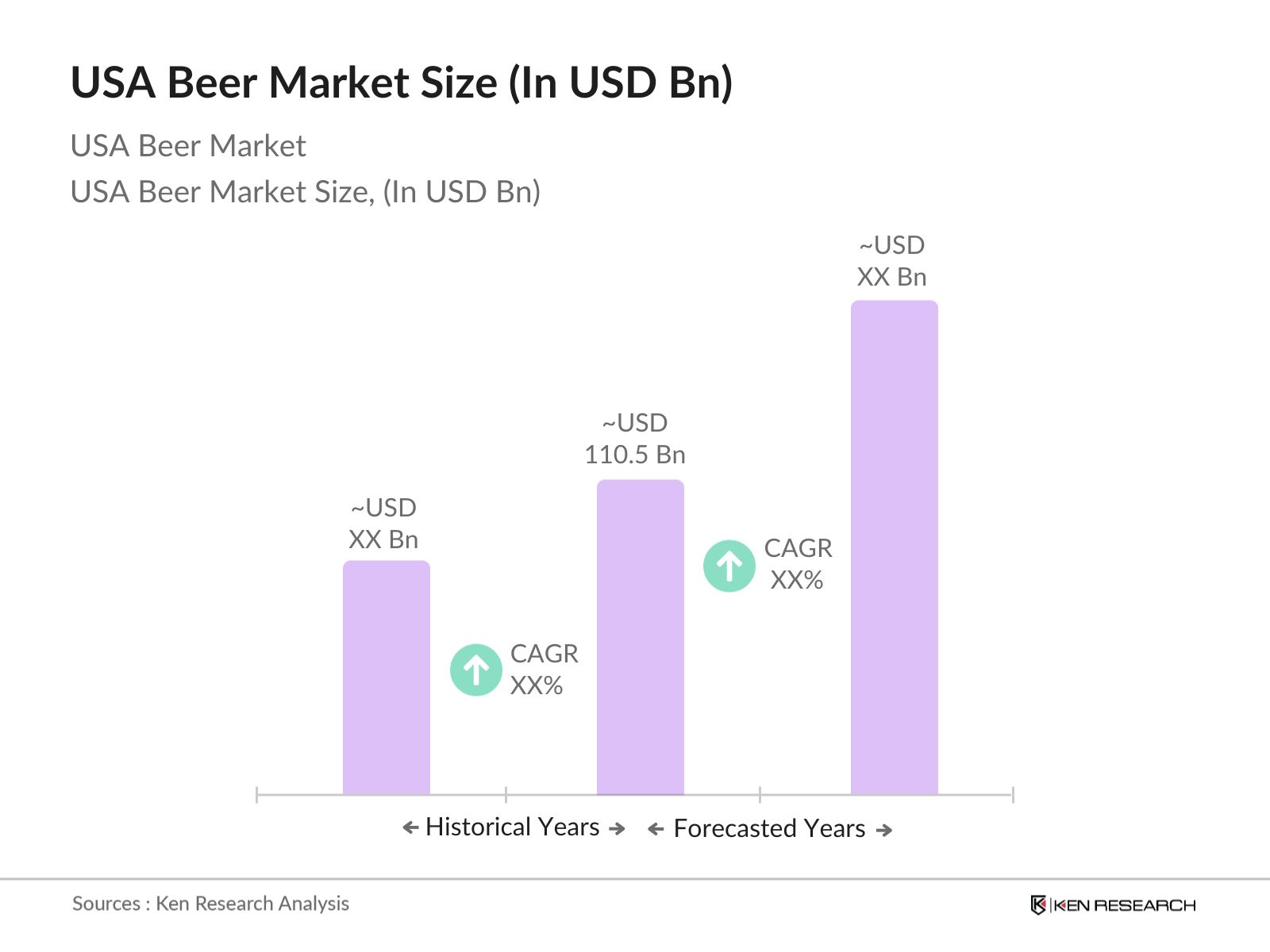
The USA Beer Market is valued at USD 110.5 billion, driven by strong consumer interest in craft beers, increasing distribution networks, and a broad product variety catering to diverse tastes.
Challenges in the market include regulatory hurdles, fluctuating raw material prices, and growing competition from alternative beverages such as ready-to-drink cocktails and spirits.
Key players include Anheuser-Busch InBev, Molson Coors Beverage Company, Constellation Brands, and Boston Beer Company, with established distribution networks and loyal consumer bases.
Growth drivers encompass increased consumer interest in premium beers, a rise in e-commerce for alcohol distribution, and innovations in low-calorie and non-alcoholic beer options.

What makes us stand out is that our consultants follows Robust, Refine and Result (RRR) methodology. i.e. Robust for clear definitions, approaches and sanity checking, Refine for differentiating respondents facts and opinions and Result for presenting data with story

We have set a benchmark in the industry by offering our clients with syndicated and customized market research reports featuring coverage of entire market as well as meticulous research and analyst insights.

While we don't replace traditional research, we flip the method upside down. Our dual approach of Top Bottom & Bottom Top ensures quality deliverable by not just verifying company fundamentals but also looking at the sector and macroeconomic factors.

With one step in the future, our research team constantly tries to show you the bigger picture. We help with some of the tough questions you may encounter along the way: How is the industry positioned? Best marketing channel? KPI's of competitors? By aligning every element, we help maximize success.

Our report gives you instant access to the answers and sources that other companies might choose to hide. We elaborate each steps of research methodology we have used and showcase you the sample size to earn your trust.

If you need any support, we are here! We pride ourselves on universe strength, data quality, and quick, friendly, and professional service.