
USA Carbon Capture, Utilization, and Storage (CCUS) Market Outlook to 2030
Region:United States
Author(s):Meenakshi Bisht
Product Code:KROD4922
Region:United States
Author(s):Meenakshi Bisht
Product Code:KROD4922
December 2024
90
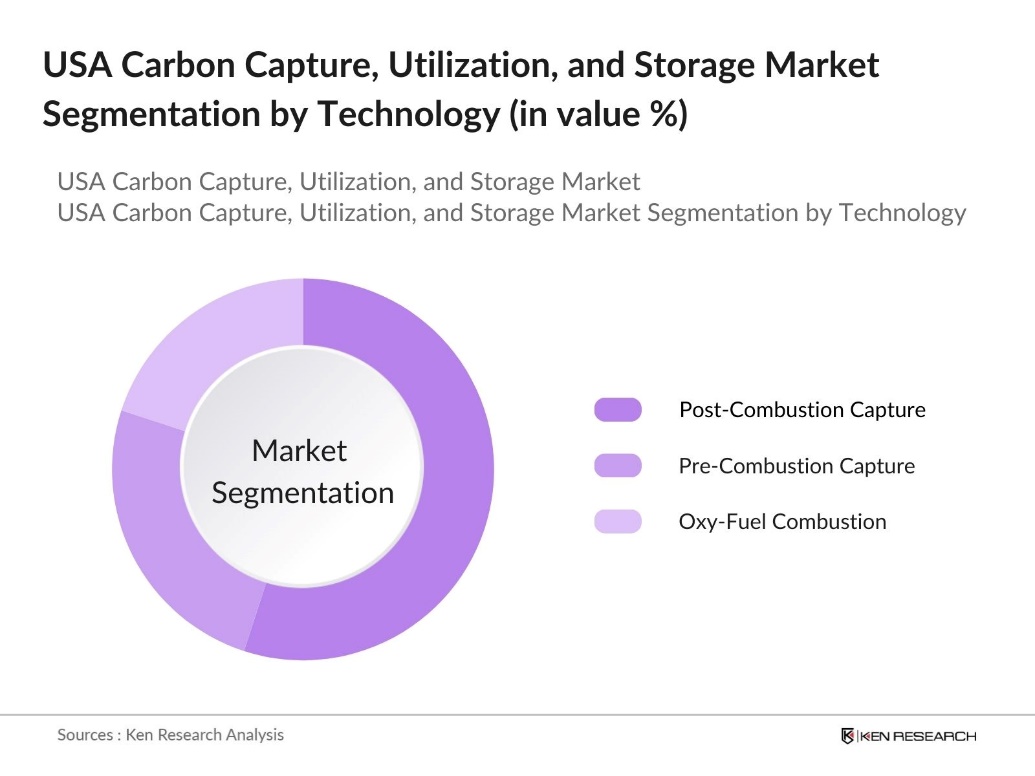
By Technology: The USA CCUS market is segmented by technology into pre-combustion capture, post-combustion capture, and oxy-fuel combustion. Recently, post-combustion capture has held a dominant market share due to its suitability for retrofitting existing power plants and industrial facilities. The ability to install carbon capture units on pre-existing infrastructure without significant modifications gives post-combustion capture a competitive edge. This technology is particularly favored in power generation and industrial processes where minimizing operational disruptions is crucial.
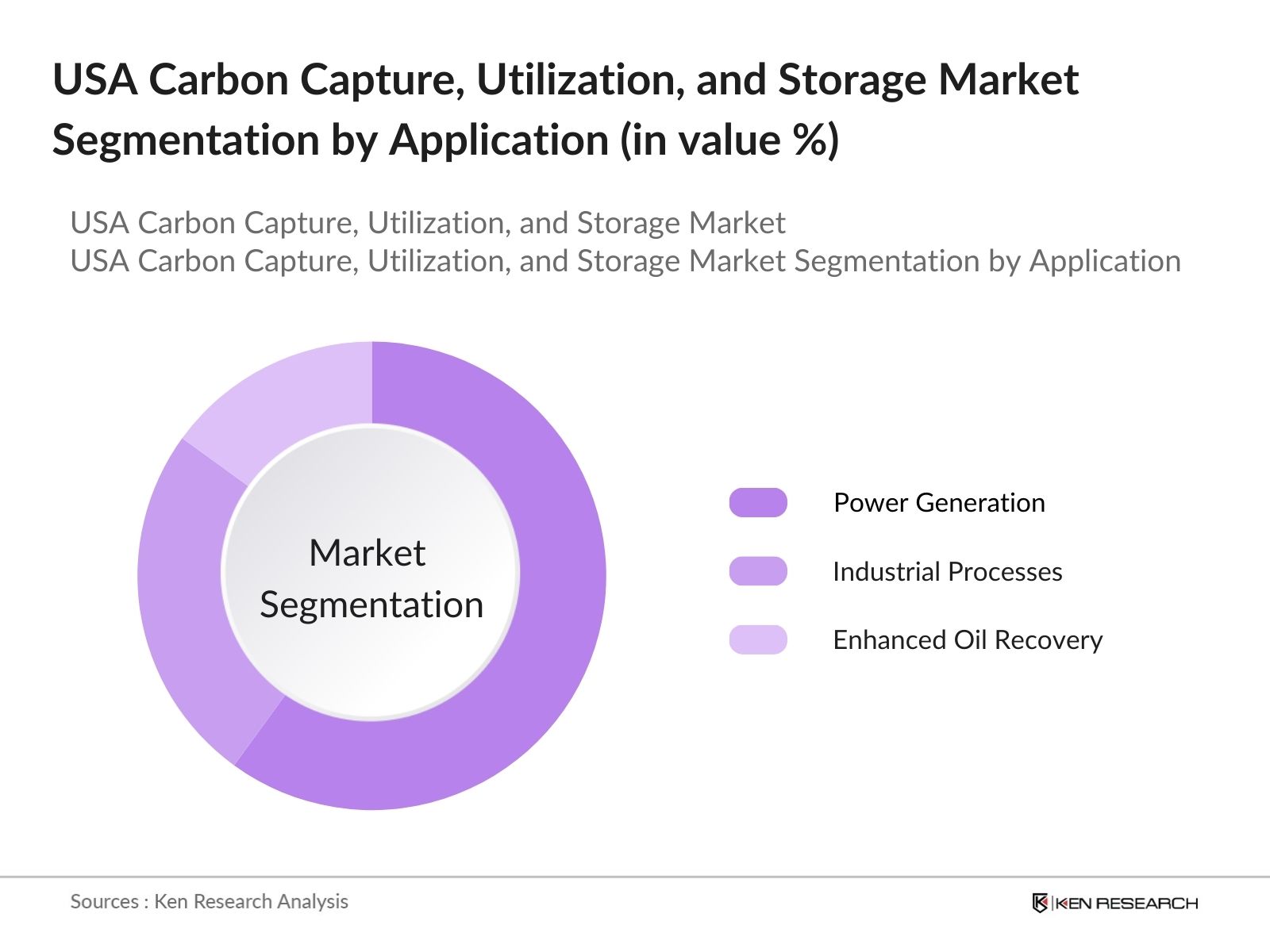
By Application: The CCUS market is segmented by application into power generation, industrial processes, and Enhanced Oil Recovery (EOR). Power generation is the dominant segment, primarily driven by the increasing demand for cleaner energy production. This segment benefits from significant government support and regulatory pressure to decarbonize electricity production. Utilities are rapidly adopting CCUS technologies to reduce their carbon footprint while maintaining energy output, making power generation the key application driving CCUS market adoption.
The market is dominated by a few key players, including both energy giants and innovative startups. Companies like ExxonMobil and Chevron are leveraging their extensive experience in the oil and gas industry to integrate CCUS into their operations, particularly in the context of Enhanced Oil Recovery (EOR). These firms, along with innovators such as Carbon Clean and Global Thermostat, are at the forefront of technological advancements in carbon capture and storage.
|
Company Name |
Establishment Year |
Headquarters |
CO2 Sequestration Capacity |
Key Projects |
Geographical Reach |
CCUS Investment |
CO2 Utilization |
R&D Focus |
|
ExxonMobil |
1870 |
Texas, USA |
||||||
|
Chevron |
1879 |
California, USA |
||||||
|
Carbon Clean |
2009 |
London, UK |
||||||
|
Global Thermostat |
2010 |
New York, USA |
||||||
|
Occidental Petroleum |
1920 |
Texas, USA |
The USA CCUS market is expected to witness substantial growth over the next five years, driven by continuous government support, advancements in carbon capture technologies, and increasing private sector investments. The implementation of federal policies such as the 45Q Tax Credit and various DOE funding initiatives is expected to further accelerate the development of new CCUS projects. Additionally, emerging innovations in CO2 utilization and the scaling up of Direct Air Capture (DAC) technology will play a critical role in driving the future market trajectory.
|
Technology |
Pre-Combustion Capture Post-Combustion Capture Oxy-Fuel Combustion |
|
Application |
Power Generation Industrial Processes Enhanced Oil Recovery (EOR) |
|
End-Use Industry |
Energy Sector Heavy Industries Waste Management |
|
CO2 Utilization Method |
Chemical Conversion Building Materials Production Algae Biofixation |
|
Region |
Gulf Coast (Texas, Louisiana) Midwest (Illinois Basin) Western USA (California) |
1.1 Definition and Scope
1.2 Market Taxonomy
1.3 Market Growth Rate
1.4 Market Segmentation Overview
2.1 Historical Market Size (Cost of CO2 Sequestration, CCUS Project Investment)
2.2 Year-On-Year Growth Analysis (CO2 Captured Volume, Utilization and Storage Capacity)
2.3 Key Market Developments and Milestones (Number of Operational Facilities, Pipeline Projects)
3.1 Growth Drivers
3.1.1 Energy Transition and Net-Zero Targets
3.1.2 Government Incentives (Tax Credits, Funding Programs)
3.1.3 Industrial Decarbonization Initiatives
3.1.4 Advances in Carbon Utilization Technologies
3.2 Market Challenges
3.2.1 High Costs of Infrastructure and Storage
3.2.2 Uncertainty in Policy Support
3.2.3 Limited Pipeline and Storage Capacity
3.3 Opportunities
3.3.1 Technological Innovations in CO2 Utilization
3.3.2 Public-Private Partnerships
3.3.3 Cross-Sector Collaboration (Energy, Cement, Chemical Industries)
3.4 Trends
3.4.1 Rise in Blue Hydrogen Production (with CCUS)
3.4.2 Use of CCUS in Industrial Clusters
3.4.3 Adoption of Direct Air Capture (DAC) Technologies
3.5 Government Regulations
3.5.1 45Q Tax Credit Implementation
3.5.2 Environmental Protection Agency (EPA) Guidelines on CO2 Sequestration
3.5.3 State-Level CCUS Policies (California, Texas)
3.5.4 Federal Funding Programs for CCUS Projects (DOE, ARPA-E)
3.6. SWOT Analysis
3.7. Stake Ecosystem Analysis (OEMs, Suppliers, Regulatory Bodies)
3.8. Porters Five Forces
3.9. Competition Ecosystem
4.1 By Technology (In Value %)
4.1.1 Pre-Combustion Capture
4.1.2 Post-Combustion Capture
4.1.3 Oxy-Fuel Combustion
4.2 By Application (In Value %)
4.2.1 Power Generation
4.2.2 Industrial Processes (Steel, Cement, Chemicals)
4.2.3 Enhanced Oil Recovery (EOR)
4.3 By End-Use Industry (In Value %)
4.3.1 Energy Sector
4.3.2 Heavy Industries
4.3.3 Waste Management
4.4 By CO2 Utilization Method (In Value %)
4.4.1 Chemical Conversion
4.4.2 Building Materials Production
4.4.3 Algae Biofixation
4.5 By Region (In Value %)
4.5.1 Gulf Coast (Texas, Louisiana)
4.5.2 Midwest (Illinois Basin)
4.5.3 Western USA (California)
5.1 Detailed Profiles of Major Companies
5.1.1 ExxonMobil
5.1.2 Chevron
5.1.3 Shell
5.1.4 Occidental Petroleum
5.1.5 BP
5.1.6 Air Liquide
5.1.7 Linde
5.1.8 Aker Solutions
5.1.9 Schlumberger
5.1.10 Carbon Clean
5.1.11 Global Thermostat
5.1.12 Climeworks
5.1.13 Carbon Engineering
5.1.14 NET Power
5.1.15 TotalEnergies
5.2 Cross Comparison Parameters (Revenue, No. of Employees, Key Projects, CO2 Sequestration Capacity, Headquarters, Inception Year, CCUS R&D Investment, Geographical Footprint)
5.3 Market Share Analysis
5.4 Strategic Initiatives (Joint Ventures, Technology Collaboration, New Project Launches)
5.5 Mergers and Acquisitions
5.6 Investment Analysis
5.7 Government Grants and Subsidies
5.8 Venture Capital Funding
5.9 Private Equity Investments
6.1 Federal Regulations (EPA, DOE, BLM)
6.2 State-Level Regulations (California, Texas)
6.3 Compliance Requirements for CO2 Storage
6.4 Certification Processes (Class VI Permits, Geologic Storage Approvals)
7.1 Future Market Size Projections
7.2 Key Factors Driving Future Market Growth (Increasing Regulatory Stringency, Decarbonization Goals)
8.1 By Technology (In Value %)
8.2 By Application (In Value %)
8.3 By End-Use Industry (In Value %)
8.4 By CO2 Utilization Method (In Value %)
8.5 By Region (In Value %)
9.1 TAM/SAM/SOM Analysis
9.2 Customer Cohort Analysis
9.3 Strategic Marketing Initiatives
9.4 White Space Opportunity Analysis
Disclaimer Contact UsThe research began with identifying key variables impacting the USA CCUS market, such as technological advancements, policy incentives, and industrial decarbonization targets. This phase involved extensive desk research, relying on proprietary databases and government resources to define the critical drivers and barriers.
Next, historical data was analyzed to assess the development of the CCUS market in terms of technology adoption, number of operational projects, and CO2 storage capacity. This analysis was crucial for projecting the future market trajectory and identifying key opportunities in the value chain.
Industry experts from key CCUS firms were consulted to validate market hypotheses. Through interviews and discussions, insights were gained regarding operational challenges, technology trends, and future market expectations, ensuring that the research was grounded in practical market realities.
In the final phase, data from both primary and secondary research were synthesized to produce a comprehensive analysis of the CCUS market. Key insights were drawn to inform strategic recommendations for market stakeholders, ensuring a reliable and validated market report.
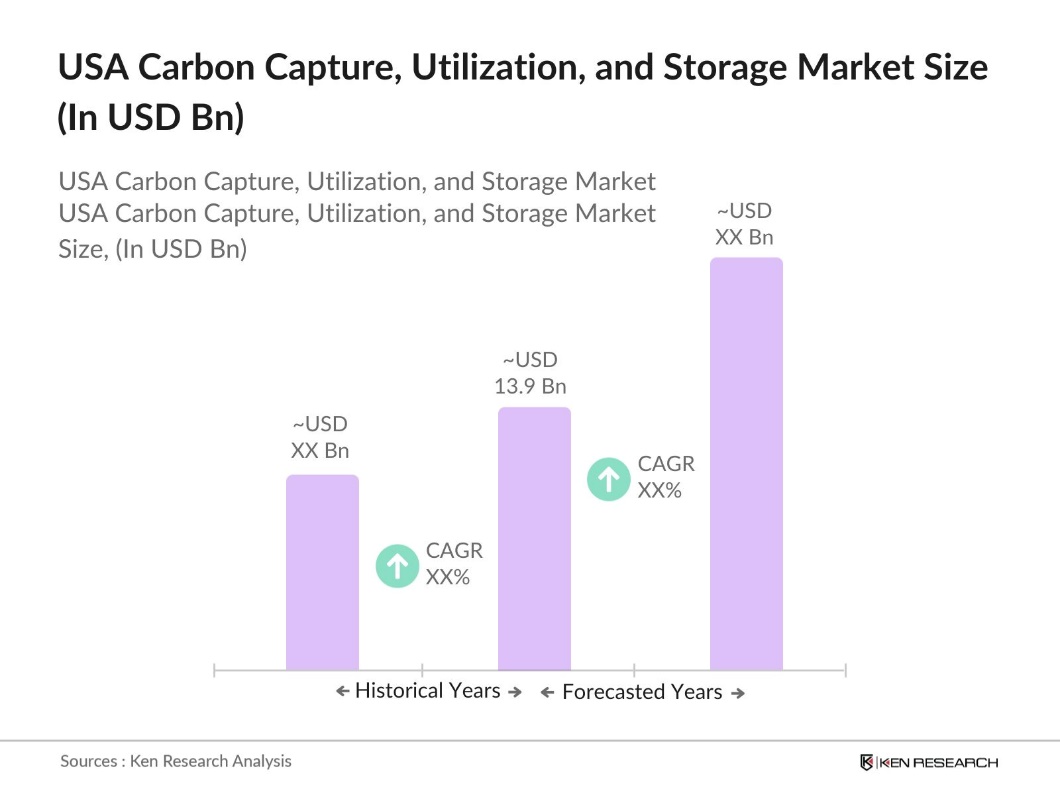
The USA CCUS Market, valued at USD 13.9 billion, is driven by increased demand for carbon capture technologies and government incentives aimed at reducing industrial CO2 emissions.
Key challenges in USA CCUS Market include the high costs associated with CCUS infrastructure development, regulatory uncertainties, and the limited availability of pipelines and storage sites for CO2.
Major players in USA CCUS Market include ExxonMobil, Chevron, Carbon Clean, Global Thermostat, and Occidental Petroleum, each contributing significantly to the adoption and innovation of CCUS technologies.
The USA CCUS Market growth is driven by government support through tax credits (e.g., 45Q Tax Credit), private sector investment, and the urgent need to meet decarbonization targets across industries.

What makes us stand out is that our consultants follows Robust, Refine and Result (RRR) methodology. i.e. Robust for clear definitions, approaches and sanity checking, Refine for differentiating respondents facts and opinions and Result for presenting data with story

We have set a benchmark in the industry by offering our clients with syndicated and customized market research reports featuring coverage of entire market as well as meticulous research and analyst insights.

While we don't replace traditional research, we flip the method upside down. Our dual approach of Top Bottom & Bottom Top ensures quality deliverable by not just verifying company fundamentals but also looking at the sector and macroeconomic factors.

With one step in the future, our research team constantly tries to show you the bigger picture. We help with some of the tough questions you may encounter along the way: How is the industry positioned? Best marketing channel? KPI's of competitors? By aligning every element, we help maximize success.

Our report gives you instant access to the answers and sources that other companies might choose to hide. We elaborate each steps of research methodology we have used and showcase you the sample size to earn your trust.

If you need any support, we are here! We pride ourselves on universe strength, data quality, and quick, friendly, and professional service.