
USA Healthcare Companion Robots Market Outlook to 2030
Region:North America
Author(s):Vijay Kumar
Product Code:KROD9137
November 2024
87
About the Report
USA Healthcare Companion Robots Market Overview
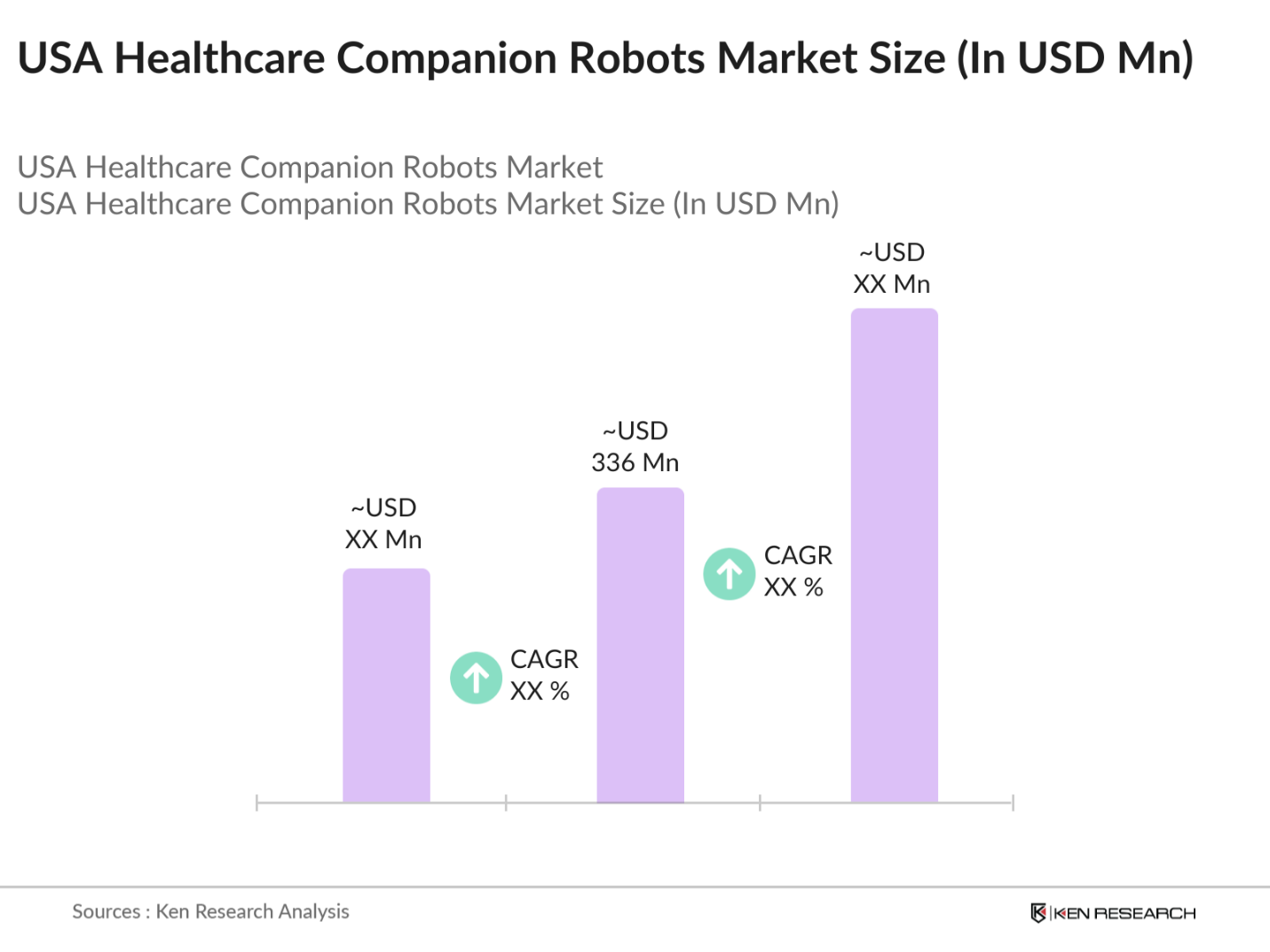
- The USA Healthcare Companion Robots market is valued at USD 336 million, based on a five-year historical analysis. This growth is primarily driven by an aging population and increasing demands for at-home healthcare solutions that support elderly independence and chronic disease management. Technological advancements, particularly in artificial intelligence (AI) and machine learning, have enabled these robots to provide personalized health monitoring and emotional support, making them essential in elderly care and chronic illness support in healthcare settings.
- The dominance of the U.S. in the healthcare companion robots market is attributed to its advanced technology sector, high healthcare spending, and a significant elderly population that benefits from home-based health solutions. Urban centers like New York, Los Angeles, and Chicago are key to the market, where high healthcare demand and awareness about health-tech innovations drive adoption. Additionally, healthcare policies and financial incentives for home care solutions bolster the markets growth.
- Healthcare robots must comply with HIPAA, particularly when handling patient data. In 2024, the Department of Health and Human Services recorded over 300 HIPAA-related violations involving digital health technologies, highlighting the importance of compliance in robotic applications. HIPAA regulations guide data handling practices, ensuring that healthcare robots meet stringent patient confidentiality standards, which is crucial for their successful integration into clinical and home settings.
USA Healthcare Companion Robots Market Segmentation
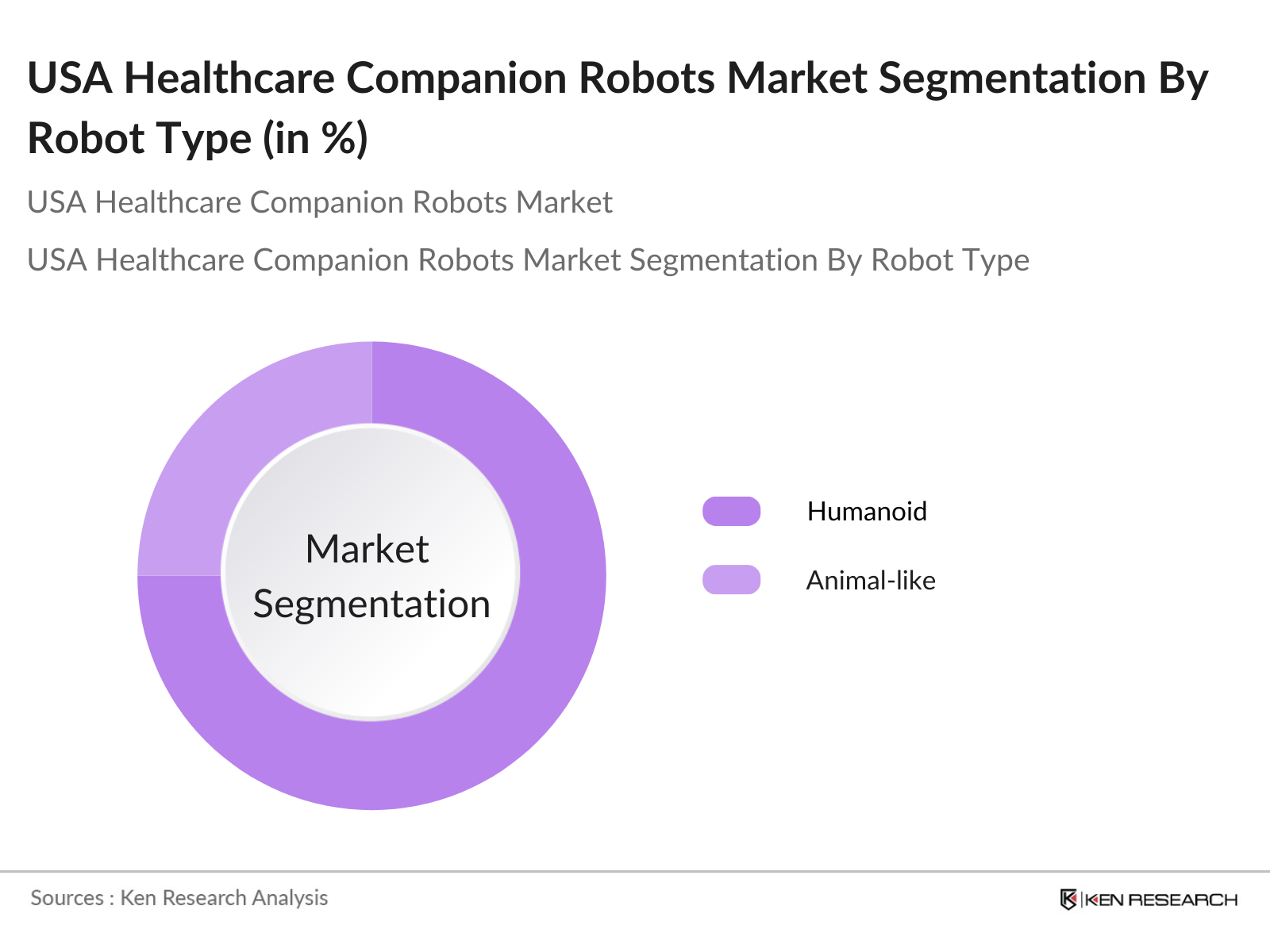
By Robot Type: The market is segmented by robot type into humanoid and animal-like robots. Recently, humanoid robots have a dominant market share under this segmentation due to their advanced interactive capabilities and resemblance to human interaction. These robots can perform a range of tasks, from basic emotional support to complex health monitoring, making them popular in elderly care and chronic illness management. Humanoid robots' versatility in offering companionship and support across a wide array of healthcare applications contributes to their dominance in the market.
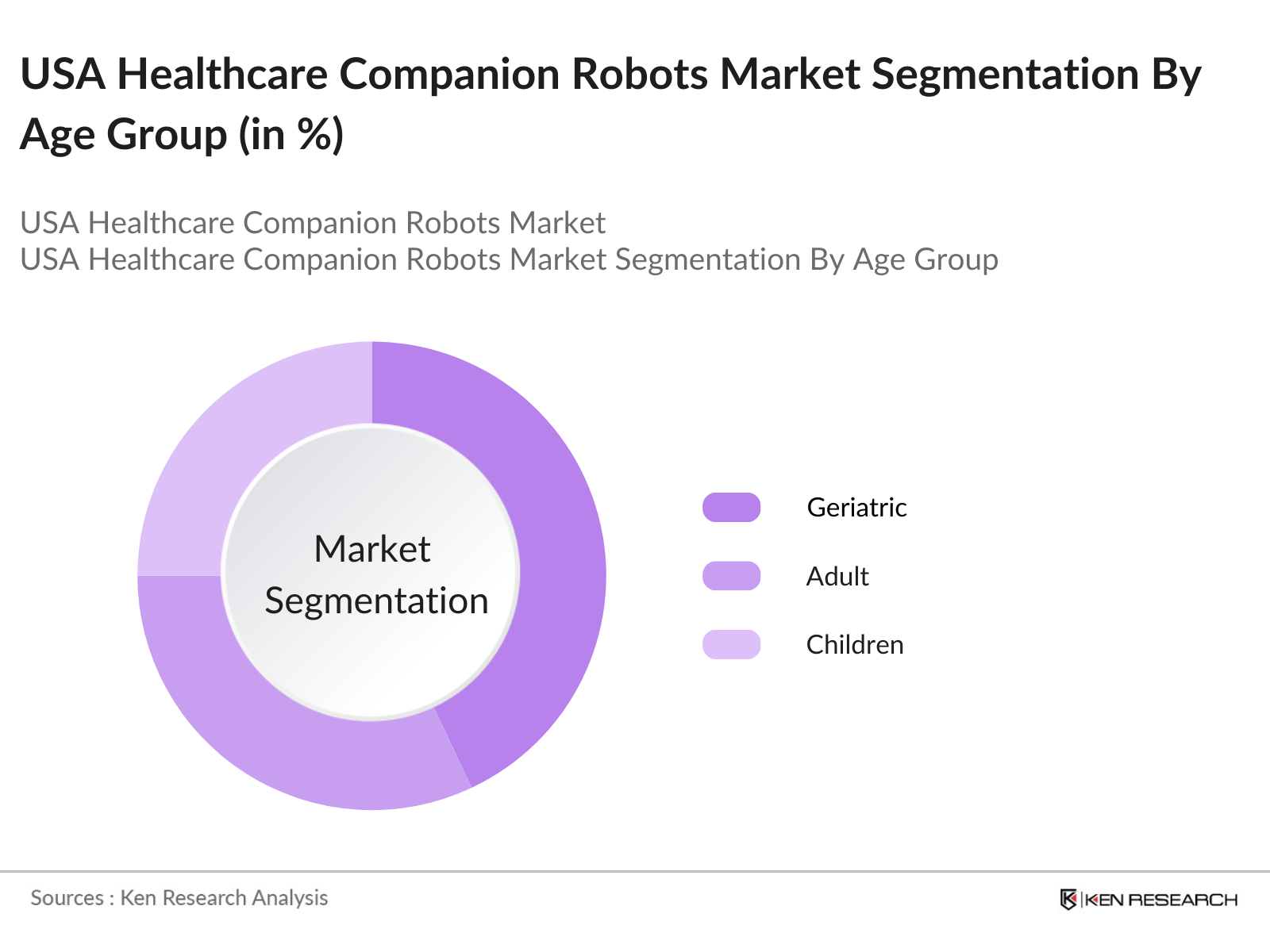
By Age Group: The healthcare companion robots market is also segmented by age group, categorized into children, adults, and geriatric populations. The geriatric segment holds a dominant market share due to the increasing elderly population requiring assistance with daily living, health monitoring, and social interaction. These robots support elderly users in managing health conditions and maintaining independence, factors critical to improving life quality and reducing hospital admissions, driving their adoption in home care environments.
USA Healthcare Companion Robots Market Competitive Landscape
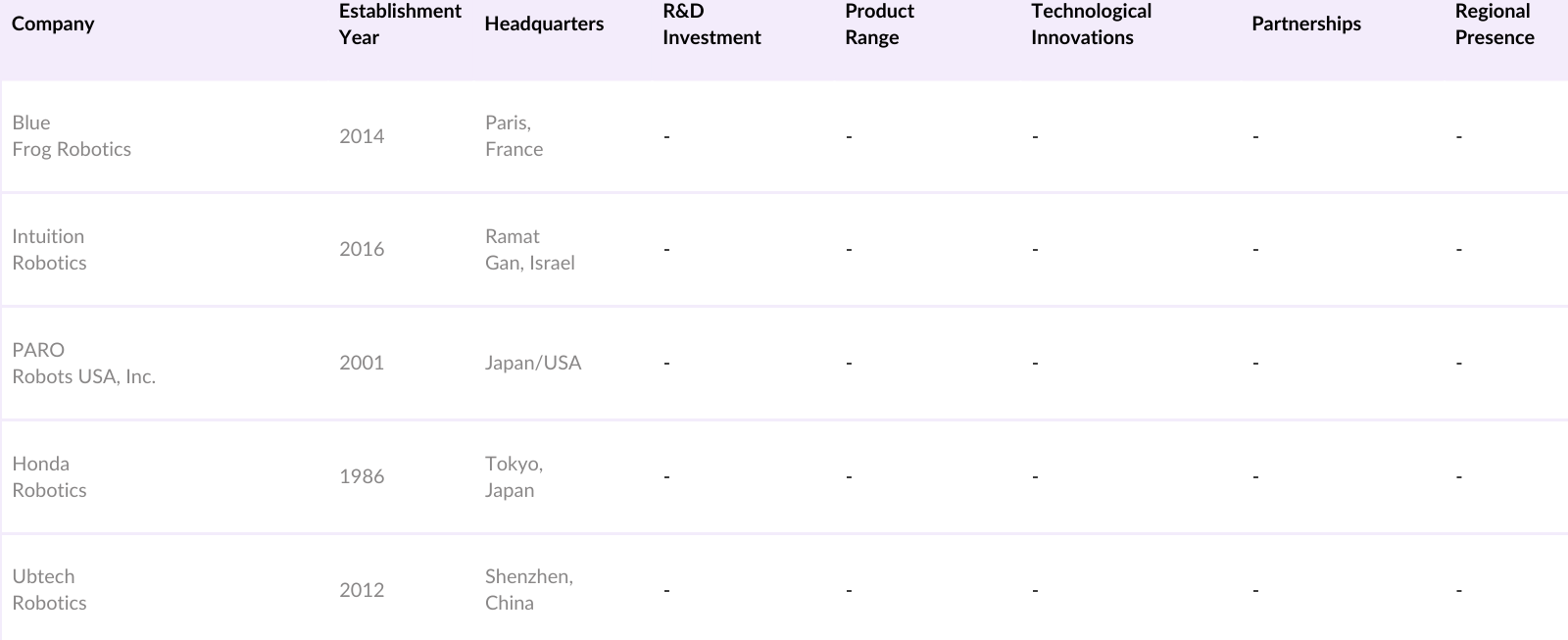
The USA healthcare companion robots market is characterized by the presence of both established and emerging players who focus on innovative healthcare solutions through artificial intelligence and machine learning. This competitive landscape includes a mix of global and local players actively investing in R&D to enhance robot functionalities for personalized care and emotional support.
USA Healthcare Companion Robots Industry Analysis
Growth Drivers
- Increasing Aging Population (Geriatric Segment Growth): The U.S. faces a rapidly aging population, with over 54 million individuals aged 65 and older in 2024, projected by the U.S. Census Bureau. This growth fuels demand for healthcare companion robots to support age-related challenges, including mobility and emotional well-being. Geriatric individuals require consistent healthcare support, and robots designed to assist in daily tasks can alleviate caregiver shortages. The Department of Health and Human Services highlights that 70% of adults over 65 will require long-term services, underscoring the potential for robotic aids.
- Technological Advancements in Robotics (AI and ML Integration): In 2024, advancements in artificial intelligence (AI) and machine learning (ML) are reshaping the healthcare robotics industry, providing enhanced capabilities such as autonomous navigation, personalized interaction, and predictive analytics. The National Institute of Standards and Technology reports that the federal government invested over $1.2 billion in AI research in recent years, benefiting fields including healthcare robotics. Integrating AI into robots helps address patients' unique needs by processing vast amounts of data in real-time, improving overall patient outcomes.
- Rise in Demand for Remote Healthcare Solutions: As of 2024, over 40 million Americans reside in medically underserved areas, as reported by the Health Resources and Services Administration. This situation is driving a surge in demand for remote healthcare solutions, including companion robots capable of monitoring patients and providing essential care in remote settings. The Department of Health and Human Services notes that 90% of healthcare providers consider telehealth and robotics key for supporting home-based care, emphasizing the role of robots in bridging gaps in healthcare access across underserved regions.
Market Challenges
- High Product Costs and Affordability Concerns: The cost of developing and deploying healthcare companion robots remains high, often exceeding $10,000 per unit, according to a report by the National Institute of Standards and Technology. For patients and healthcare providers, these costs represent a significant barrier, particularly in low-income communities where affordability is a primary concern. Although various government incentives attempt to reduce costs, affordability continues to challenge the widespread adoption of these technologies.
- Privacy and Ethical Issues (Data Handling and Patient Interaction): With the increasing use of AI-driven healthcare robots, ethical concerns regarding data privacy and patient interactions have intensified. According to the U.S. Department of Health and Human Services, over 25% of healthcare data breaches in 2023 involved AI or automated systems. Given the sensitive nature of patient information, strict adherence to the Health Insurance Portability and Accountability Act (HIPAA) regulations is mandatory, impacting how robots are integrated into healthcare settings.
USA Healthcare Companion Robots Market Future Outlook
Over the next five years, the USA healthcare companion robots market is expected to grow significantly, driven by continuous advancements in artificial intelligence, increasing support from healthcare policies, and the growing demand for cost-effective healthcare solutions that reduce dependency on human caregivers. The evolution of AI and sensor technologies will further empower these robots to address the personalized needs of the elderly and patients with chronic illnesses, which is anticipated to create substantial market opportunities.
Market Opportunities
- Technological Advancements in Sensors and Mobility: Advances in sensor technology in 2024, supported by a $500 million investment from the National Science Foundation, are driving improvements in healthcare robots' precision and responsiveness. These innovations enable robots to navigate complex environments and respond to patients needs with higher accuracy, expanding their applicability in rehabilitation and elderly care. Enhanced sensor capabilities also contribute to more accurate monitoring of patient vitals, presenting new avenues for healthcare robotics within intensive care and home-based monitoring.
- Expansion into Rehabilitation and Chronic Care: As of 2024, approximately 35 million Americans suffer from chronic illnesses, as per the Centers for Disease Control and Prevention, necessitating continuous support and rehabilitation services. Healthcare companion robots, equipped with specialized rehabilitation tools, are emerging as viable aids for chronic care management, enhancing patient recovery rates. Robotic applications are expanding to assist with exercises, mobility aid, and therapy, addressing a significant demand in rehabilitation services, which is critical for improving patient quality of life.
Scope of the Report
|
By Robot Type |
Humanoid Animal-like |
|
By Age Group |
Children Adult Geriatric |
|
By End-User |
Nursing Homes and Elderly Care Centers Hospitals and Clinics Home Healthcare |
|
By Application |
Emotional and Social Support Health Monitoring and Telemedicine Therapy and Rehabilitation Support |
|
By Region |
North-East USA South-East USA West USA Midwest USA |
Products
Key Target Audience
Healthcare Providers
Elderly Care Facilities
Hospitals and Clinics
Home Healthcare Services
Investment and Venture Capitalist Firms
Government and Regulatory Bodies (e.g., U.S. Department of Health and Human Services)
Assistive Technology Providers
Telehealth Companies
Companies
Players Mentioned in the Report
Blue Frog Robotics
Intuition Robotics
PARO Robots USA, Inc.
Honda Robotics
Ubtech Robotics
inGen Dynamics
Emotix
Jibo, Inc.
Hanson Robotics
ASUS Zenbo
Table of Contents
1. USA Healthcare Companion Robots Market Overview
1.1. Definition and Scope
1.2. Market Taxonomy
1.3. Market Growth Rate
1.4. Market Segmentation Overview
2. USA Healthcare Companion Robots Market Size (in USD Bn)
2.1. Historical Market Size
2.2. Year-On-Year Growth Analysis
2.3. Key Market Developments and Milestones
3. USA Healthcare Companion Robots Market Analysis
3.1. Growth Drivers
3.1.1. Increasing Aging Population (Geriatric Segment Growth)
3.1.2. Technological Advancements in Robotics (AI and ML Integration)
3.1.3. Rise in Demand for Remote Healthcare Solutions
3.1.4. Government Initiatives and Funding
3.2. Market Challenges
3.2.1. High Product Costs and Affordability Concerns
3.2.2. Privacy and Ethical Issues (Data Handling and Patient Interaction)
3.2.3. Limited Access in Low-Income Areas
3.3. Opportunities
3.3.1. Technological Advancements in Sensors and Mobility
3.3.2. Expansion into Rehabilitation and Chronic Care
3.3.3. Increased Focus on Mental Health Support
3.4. Trends
3.4.1. Integration with Telehealth and Remote Monitoring
3.4.2. Utilization in Therapy and Emotional Support
3.4.3. Development of Specialized Robots for Dementia Care
3.5. Regulatory Landscape
3.5.1. FDA Approval and Standards
3.5.2. Compliance with HIPAA and Patient Privacy Regulations
3.6. Stake Ecosystem Analysis
3.7. Porters Five Forces Analysis
3.8. Competitive Landscape and Ecosystem
4. USA Healthcare Companion Robots Market Segmentation
4.1. By Robot Type
4.1.1. Humanoid
4.1.2. Animal-like
4.2. By Age Group
4.2.1. Children
4.2.2. Adults
4.2.3. Geriatric
4.3. By End-User
4.3.1. Nursing Homes and Elderly Care Centers
4.3.2. Hospitals and Clinics
4.3.3. Home Healthcare
4.4. By Application
4.4.1. Emotional and Social Support
4.4.2. Health Monitoring and Telemedicine
4.4.3. Therapy and Rehabilitation Support
4.5. By Region
4.5.1. North-East USA
4.5.2. South-East USA
4.5.3. West USA
4.5.4. Midwest USA
5. USA Healthcare Companion Robots Market Competitive Analysis
5.1. Detailed Profiles of Major Competitors
5.1.1. Blue Frog Robotics
5.1.2. Intuition Robotics
5.1.3. PARO Robots USA, Inc.
5.1.4. Hanson Robotics
5.1.5. No Isolation
5.1.6. Ubtech Robotics
5.1.7. Honda Robotics
5.1.8. inGen Dynamics
5.1.9. Luvozo
5.1.10. Emotix
5.1.11. Jibo
5.1.12. Aeolus Robotics
5.1.13. ASUS Zenbo
5.1.14. Cutii (France)
5.1.15. Expper Technologies
5.2. Cross-Comparison Parameters (Revenue, Product Range, Technological Advancements, Market Reach, User Interface, Safety and Reliability, Customization Options, and Consumer Feedback)
5.3. Market Share Analysis
5.4. Strategic Initiatives (Product Innovations, Partnerships, Market Expansion)
5.5. Mergers and Acquisitions
5.6. Investment Analysis (Venture Capital, Government Grants)
5.7. Government Funding Programs and Private Equity
6. USA Healthcare Companion Robots Market Regulatory Framework
6.1. Safety Standards and Compliance
6.2. Certification Processes
6.3. Data Privacy and Security Regulations (HIPAA Compliance)
7. USA Healthcare Companion Robots Future Market Size
7.1. Market Projections
7.2. Key Factors Driving Future Growth
8. USA Healthcare Companion Robots Future Market Segmentation
8.1. By Robot Type
8.2. By Age Group
8.3. By End-User
8.4. By Application
8.5. By Region
9. Market Analysts Recommendations
9.1. TAM/SAM/SOM Analysis
9.2. Customer Cohort Analysis
9.3. Market Development Strategies
9.4. White Space Opportunity Analysis
Disclaimer Contact UsResearch Methodology
Step 1: Identification of Key Variables
This phase involves mapping all critical stakeholders in the USA Healthcare Companion Robots Market. Through extensive desk research and proprietary databases, we identify and define the core factors impacting market dynamics, including technological adoption, user demographics, and regulatory standards.
Step 2: Market Analysis and Construction
In this phase, historical data is compiled and analyzed, focusing on market penetration and revenue generation trends. Key variables such as end-user adoption rates and demand for product sub-segments are assessed to ensure precise revenue estimates and trend analysis.
Step 3: Hypothesis Validation and Expert Consultation
Hypotheses are developed and validated through interviews with industry experts from relevant companies. These consultations provide in-depth insights into operational strategies, product acceptance, and market expectations, enhancing the reliability of the market data.
Step 4: Research Synthesis and Final Output
The final phase includes direct engagement with healthcare institutions and robotic manufacturers. This validation phase ensures a well-rounded, accurate analysis by corroborating data obtained from both primary and secondary sources, ensuring a comprehensive market report.
Frequently Asked Questions
1. How big is the USA Healthcare Companion Robots Market?
The USA Healthcare Companion Robots market is valued at USD 336 million, based on a five-year historical analysis. This growth is primarily driven by an aging population and increasing demands for at-home healthcare solutions that support elderly independence and chronic disease management.
2. What are the key challenges in the USA Healthcare Companion Robots Market?
Challenges include high production costs, privacy concerns, and the need for regulatory compliance, particularly in data security and patient interactions.
3. Who are the major players in the USA Healthcare Companion Robots Market?
Key players include Blue Frog Robotics, Intuition Robotics, Honda Robotics, PARO Robots USA, and Ubtech Robotics, noted for their focus on technological innovation and product development.
4. What factors are driving growth in the USA Healthcare Companion Robots Market?
Growth drivers include an aging population, technological advancements in robotics, and a supportive healthcare infrastructure, enabling widespread adoption in home and elderly care facilities.
Why Buy From Us?

What makes us stand out is that our consultants follows Robust, Refine and Result (RRR) methodology. i.e. Robust for clear definitions, approaches and sanity checking, Refine for differentiating respondents facts and opinions and Result for presenting data with story

We have set a benchmark in the industry by offering our clients with syndicated and customized market research reports featuring coverage of entire market as well as meticulous research and analyst insights.

While we don't replace traditional research, we flip the method upside down. Our dual approach of Top Bottom & Bottom Top ensures quality deliverable by not just verifying company fundamentals but also looking at the sector and macroeconomic factors.

With one step in the future, our research team constantly tries to show you the bigger picture. We help with some of the tough questions you may encounter along the way: How is the industry positioned? Best marketing channel? KPI's of competitors? By aligning every element, we help maximize success.

Our report gives you instant access to the answers and sources that other companies might choose to hide. We elaborate each steps of research methodology we have used and showcase you the sample size to earn your trust.

If you need any support, we are here! We pride ourselves on universe strength, data quality, and quick, friendly, and professional service.