
USA Nanomaterials Market Outlook to 2030
Region:North America
Author(s):Yogita Sahu
Product Code:KROD8354
December 2024
98
About the Report
USA Nanomaterials Market Overview
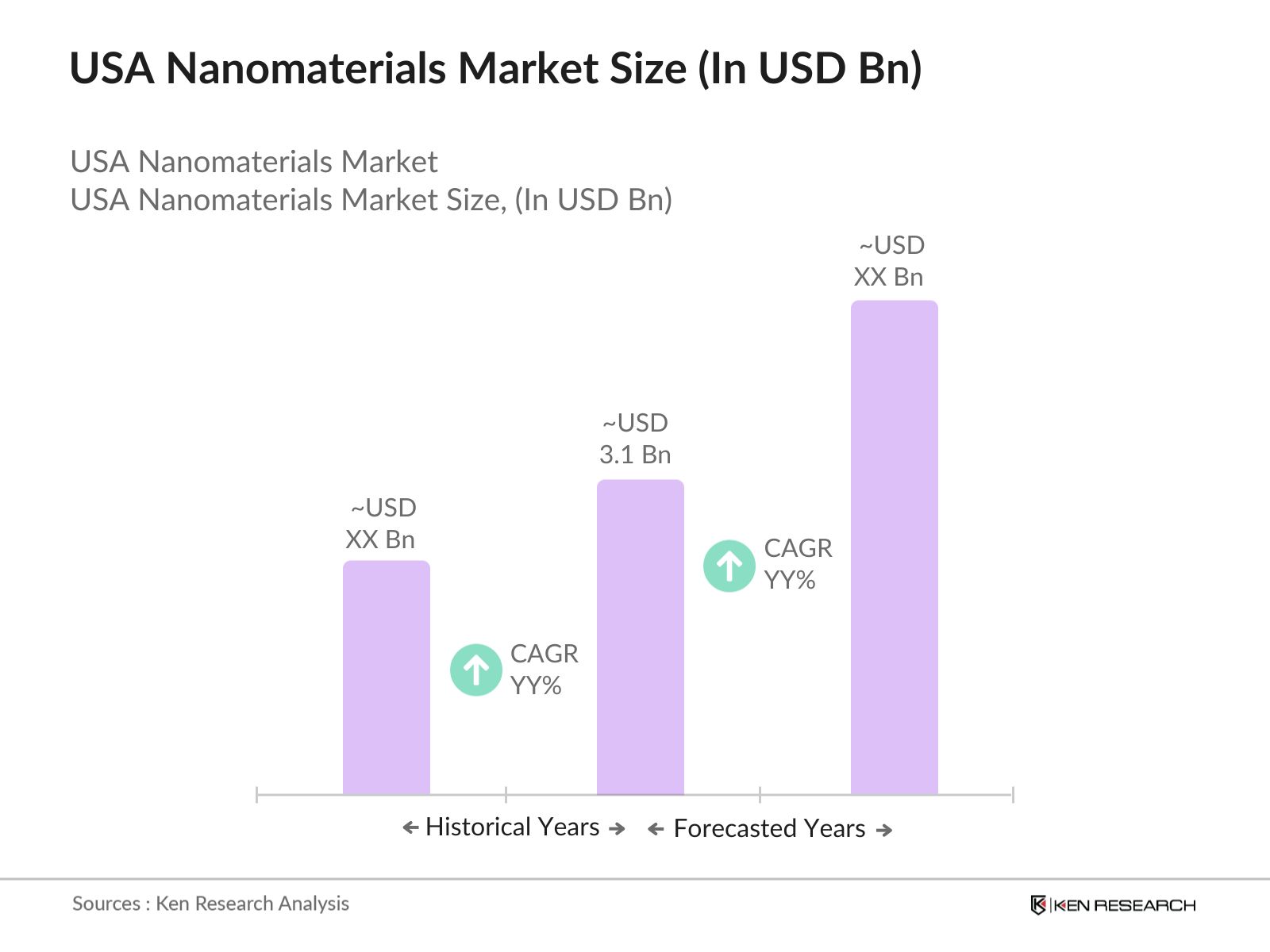
- The USA nanomaterials market was valued at USD 3.1 billion has seen robust growth, driven by increasing applications across industries like healthcare, electronics, and energy. Primarily fueled by advancements in biomedical applications such as drug delivery systems, cancer therapy, and biosensors. The demand for compact, high-performance materials in electronics has also contributed to market expansion.
- In the USA, the dominance of key cities like Boston, Los Angeles, and San Francisco is driven by their strong research ecosystems, proximity to leading universities, and government-funded R&D centers. These cities are home to several innovative startups and established players, focusing on nanotechnology applications. Additionally, New York and Texas are significant hubs due to their expanding industrial bases, with high demand from the medical and aerospace sectors.
- The U.S. government is increasing funding for the development of advanced nanomaterial manufacturing processes. In 2024, the National Institute of Standards and Technology (NIST) is providing $300 million in grants to develop scalable and cost-effective nanomaterials manufacturing techniques, particularly for the aerospace and defense sectors.
USA Nanomaterials Market Segmentation
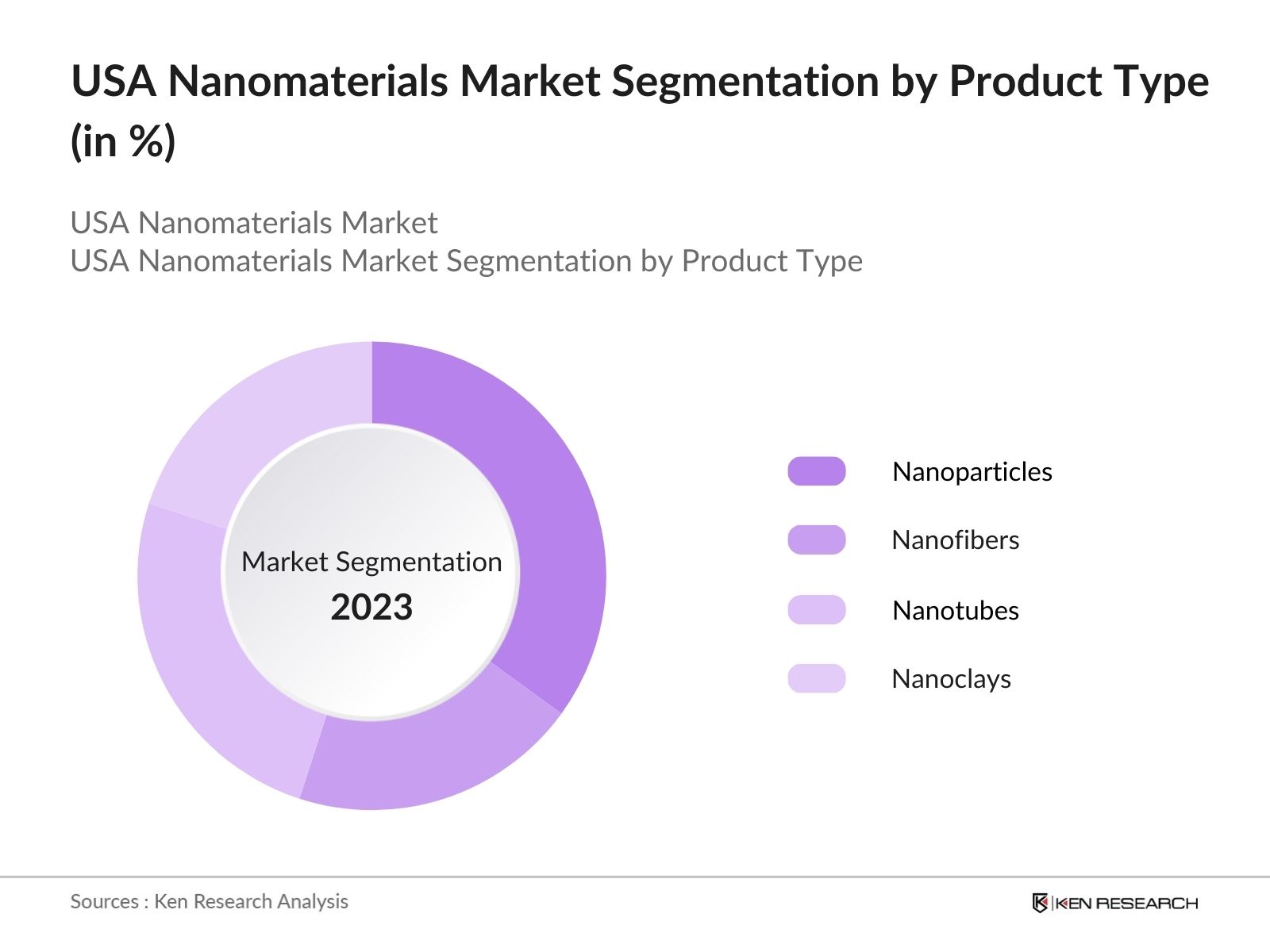
By Product Type: The market is segmented into nanoparticles, nanofibers, nanotubes, and nanoclays. Nanoparticles, particularly gold and silver, hold the dominant market share due to their extensive use in medical applications, including cancer treatment, diagnostics, and drug delivery. Gold nanoparticles are especially significant for their biocompatibility and stability, which makes them suitable for biomedical applications.
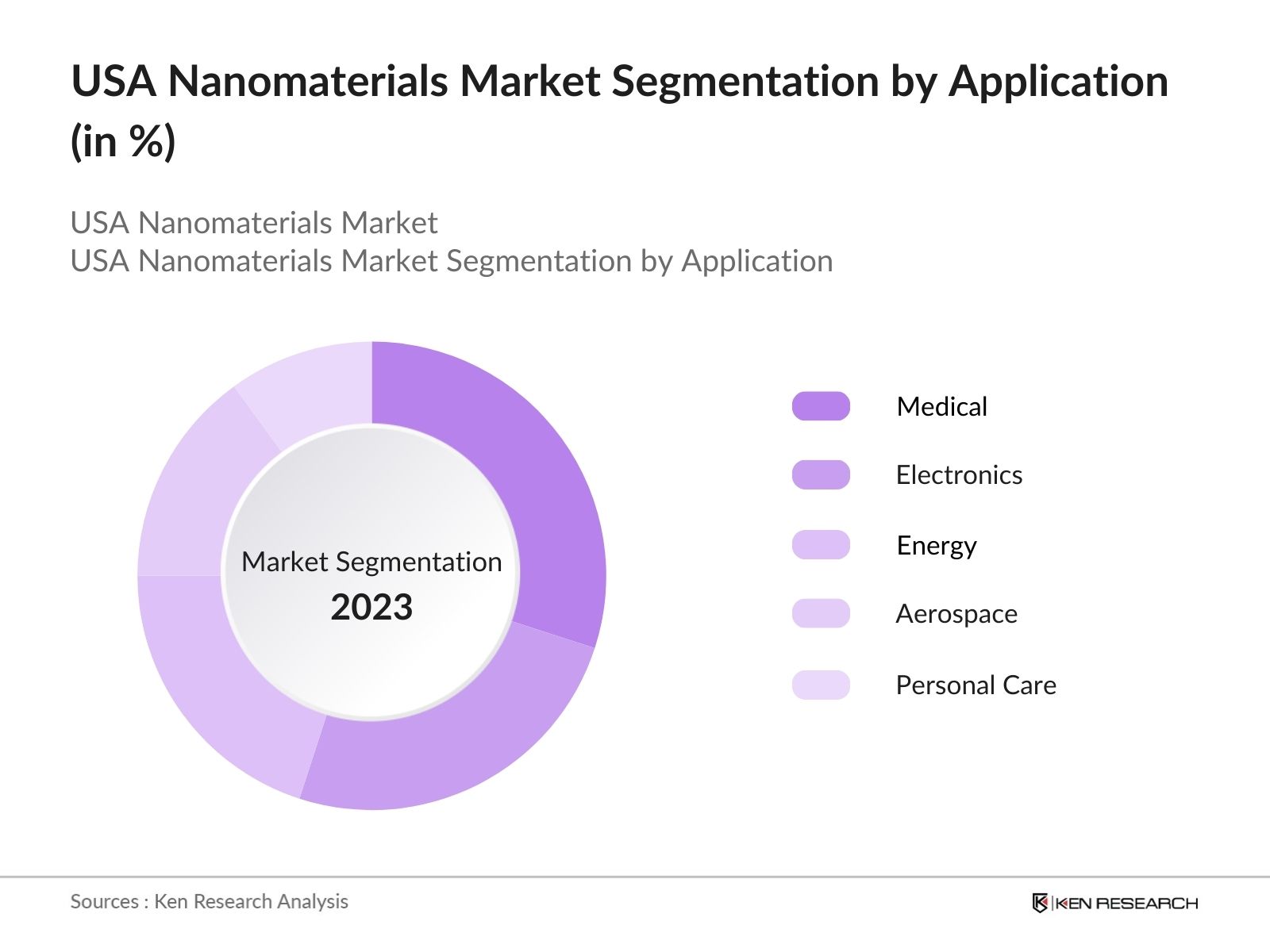
By Application: The market is also segmented by applications into medical, electronics, and energy sectors. The medical application segment dominates, holding nearly 30% of the market share in 2023, owing to the increasing use of nanomaterials in drug delivery systems and diagnostic tools. Nanomaterials offer precision and efficacy in treatments such as targeted drug delivery and cancer therapy, driving their demand in the healthcare sector.
USA Nanomaterials Market Competitive Landscape
The market is characterized by intense competition, with a few dominant players leading innovation. Major companies focus on research and development, strategic partnerships, and mergers to maintain their market positions.
|
Company |
Establishment Year |
Headquarters |
Key Parameter 1 |
Key Parameter 2 |
Key Parameter 3 |
Key Parameter 4 |
Key Parameter 5 |
Key Parameter 6 |
|
Strem Chemicals, Inc. |
1964 |
Massachusetts, USA |
||||||
|
American Elements |
1997 |
Los Angeles, USA |
||||||
|
US Research Nanomaterials, Inc. |
2005 |
Houston, USA |
||||||
|
Nanocomposix, Inc. |
2001 |
San Diego, USA |
||||||
|
SkySpring Nanomaterials, Inc. |
2007 |
Houston, USA |
USA Nanomaterials Market Analysis
Market Growth Drivers
- Increased Demand for Renewable Energy Applications: The market is being driven by the growing need for efficient renewable energy solutions. Nanomaterials like carbon nanotubes and quantum dots are increasingly used in solar panels and batteries due to their superior conductivity and enhanced energy conversion properties. According to the U.S. Energy Information Administration, the adoption of nanomaterials in energy storage systems in 2024 is expected to contribute to a projected rise in demand for more than 150 GW of renewable energy installations by 2027.
- Expansion in the Healthcare Sector: The healthcare industry in the USA is actively integrating nanomaterials for drug delivery, diagnostics, and medical imaging. In 2024, the U.S. Department of Health projects that the use of nanomaterials in precision medicine will grow as the healthcare sector looks to provide more targeted and effective treatments.
- Government Support and Research Funding: The U.S. government has been promoting nanotechnology innovation through various programs and grants. In 2024, over $2 billion in research grants are expected to be allocated to the development of nanotechnology applications, as per National Science Foundation reports. These funds are being distributed to research institutions and private companies to explore new uses of nanomaterials across industries such as electronics, aerospace, and defense.
Market Challenges
- Limited Commercial-Scale Manufacturing: Commercial-scale manufacturing of nanomaterials continues to face technical challenges. In 2024, the U.S. manufacturing sector is expected to report a production capacity shortfall for nanomaterials of up to 25%, as current manufacturing technologies struggle to scale efficiently. This limits the ability of suppliers to meet growing demand from industries such as automotive and consumer electronics.
- Public Perception and Ethical Concerns: Public concern over the potential toxicity of nanomaterials remains a challenge. In 2024, surveys conducted by the U.S. Consumer Product Safety Commission indicated that 45% of consumers have concerns regarding the safety of products containing nanomaterials. This public perception, if not addressed through rigorous testing and clear communication, could slow down the adoption of nanotechnology-based products in key consumer markets.
USA Nanomaterials Market Future Outlook
Over the next five years, the USA nanomaterials industry is poised for growth, driven by the expanding use of nanomaterials in emerging technologies such as 3D printing, artificial intelligence (AI), and the Internet of Things (IoT).
Future Market Opportunities
- Rising Adoption in Next-Generation Healthcare Solutions: Over the next five years, nanomaterials are forecasted to become a cornerstone in precision medicine and personalized healthcare in the U.S. By 2028, it is expected that nanomaterials will be integral to developing over 30 new drug formulations, benefiting treatments for chronic conditions such as cancer, diabetes, and neurological disorders, driving the demand in healthcare sectors.
- Widespread Use of Nanomaterials in EV and Energy Storage Markets: By 2029, nanomaterials are projected to be extensively used in electric vehicle batteries and large-scale energy storage systems, driven by the U.S.s push towards renewable energy solutions. The electric vehicle market alone is forecasted to require nanomaterials for producing over 1 million high-efficiency batteries annually by 2028, spurring market demand.
Scope of the Report
|
Product Type |
Nanoparticles Nanofibers Nanotubes Nanowires Nano Clays |
|
Application |
Medical Electronics Aerospace Energy Personal Care |
|
End-user |
Healthcare Electronics Construction Energy Consumer Goods |
|
Region |
North East West South |
Products
Key Target Audience Organizations and Entities Who Can Benefit by Subscribing This Report:
Nanotechnology Investors and Venture Capital Firms
Government and Regulatory Bodies (e.g., National Nanotechnology Initiative, FDA)
Medical Device Manufacturers
Pharmaceutical Companies
Aerospace and Defense Manufacturers
Energy Storage and Battery Manufacturers
Electronic Component Manufacturers
Coating and Adhesive Manufacturers
Companies
Players Mentioned in the Report:
Strem Chemicals, Inc.
American Elements
US Research Nanomaterials, Inc.
Nanocomposix, Inc.
SkySpring Nanomaterials, Inc.
Quantum Materials Corporation
Nanoshel LLC
Nanophase Technologies Corporation
Alcoa
Frontier Carbon Corporation
Table of Contents
USA Nanomaterials Market Overview
1.1. Definition and Scope
1.2. Market Taxonomy
1.3. Market Growth Rate
1.4. Market Segmentation Overview
USA Nanomaterials Market Size (In USD Bn)
2.1. Historical Market Size
2.2. Year-on-Year Growth Analysis
2.3. Key Market Developments and Milestones
USA Nanomaterials Market Analysis
3.1. Growth Drivers
3.1.1. Increased Demand in Healthcare (for targeted drug delivery, diagnostic applications)
3.1.2. Technological Advancements in Electronics (miniaturization and enhanced performance)
3.1.3. Government Funding and R&D (initiatives like NNI and NASA collaborations)
3.1.4. Rising Use in Energy Applications (improved energy storage solutions)
3.2. Market Challenges
3.2.1. High Production Costs (especially in manufacturing high-performance materials)
3.2.2. Limited Skilled Workforce (challenges in nanotechnology expertise)
3.2.3. Regulatory Hurdles (stringent FDA and environmental regulations)
3.3. Opportunities
3.3.1. Expanding Applications in Aerospace and Defense (enhanced materials for lightweight structures)
3.3.2. Development of Biodegradable Nanomaterials (for environmental sustainability)
3.3.3. Collaborative Research Initiatives (across industries for faster product development)
3.4. Trends
3.4.1. Increasing Adoption in 3D Printing (nano-coatings and functional materials)
3.4.2. Integration with IoT and AI (enhanced smart materials and sensors)
3.4.3. Growth of Nanomaterials in Coatings (enhanced UV resistance and antimicrobial properties)
3.5. Government Regulation
3.5.1. National Nanotechnology Initiative (NNI's Role in Funding)
3.5.2. Environmental Protection Agency (EPA Regulations for Nanomaterials)
3.5.3. FDA Guidelines on Nanomaterials in Drug Delivery and Cosmetics
3.6. SWOT Analysis
3.7. Stakeholder Ecosystem
3.8. Porters Five Forces Analysis
USA Nanomaterials Market Segmentation
4.1. By Product Type (In Value %)
4.1.1. Nanoparticles (gold, silver, copper)
4.1.2. Nanofibers
4.1.3. Nanotubes (carbon-based)
4.1.4. Nano clays
4.1.5. Nanowires
4.2. By Application (In Value %)
4.2.1. Medical (nanorobots, biosensors, drug delivery systems)
4.2.2. Electronics (miniaturization of electronic components)
4.2.3. Aerospace and Defense (lightweight materials)
4.2.4. Energy (nano-batteries, energy storage solutions)
4.2.5. Personal Care (nanomaterials in cosmetics, sunscreens)
4.3. By End-user (In Value %)
4.3.1. Healthcare
4.3.2. Electronics
4.3.3. Construction
4.3.4. Energy
4.3.5. Consumer Goods
4.4. By Region (In Value %)
4.4.1. North
4.4.2. East
4.4.3. West
4.4.4. South
USA Nanomaterials Market Competitive Analysis
5.1. Detailed Profiles of Major Companies
5.1.1. Strem Chemicals, Inc.
5.1.2. American Elements
5.1.3. US Research Nanomaterials, Inc.
5.1.4. Nanocomposix, Inc.
5.1.5. SkySpring Nanomaterials, Inc.
5.1.6. Quantum Materials Corporation
5.1.7. Nanoshel LLC
5.1.8. Nanophase Technologies Corporation
5.1.9. Frontier Carbon Corporation
5.1.10. Cytodiagnostics, Inc.
5.1.11. Alcoa
5.1.12. Advanced Material Development
5.1.13. Penn State Nano Labs
5.1.14. Advanced Material Development
5.1.15. BASF SE
5.2. Cross Comparison Parameters (R&D Investment, Market Reach, Product Innovation, Strategic Partnerships)
5.3. Market Share Analysis
5.4. Strategic Initiatives
5.5. Mergers and Acquisitions
5.6. Investment Analysis
USA Nanomaterials Market Regulatory Framework
6.1. FDA Regulations on Nanotechnology Products
6.2. Compliance with EPA Guidelines (environmental and safety standards)
6.3. Intellectual Property and Patent Protection
USA Nanomaterials Future Market Size (In USD Bn)
7.1. Market Size Projections
7.2. Key Factors Driving Future Market Growth
USA Nanomaterials Future Market Segmentation
8.1. By Product Type (In Value %)
8.2. By Application (In Value %)
8.3. By End-user (In Value %)
8.4. By Region (In Value %)
USA Nanomaterials Market Analysts Recommendations
9.1. TAM/SAM/SOM Analysis
9.2. Strategic Market Positioning
9.3. Customer Acquisition Strategies
9.4. White Space Opportunity Analysis
Research Methodology
Step 1: Identification of Key Variables
In this step, an ecosystem map was constructed to encompass all major stakeholders within the USA nanomaterials market. Extensive desk research, using a combination of secondary and proprietary databases, was conducted to gather comprehensive industry-level information. The primary objective was to identify and define critical variables influencing market dynamics.
Step 2: Market Analysis and Construction
The second phase involved compiling and analyzing historical data from the USA nanomaterials market. This included assessing market penetration, the ratio of manufacturers to service providers, and the resultant revenue generation. A thorough evaluation of service quality statistics was conducted to ensure the accuracy of revenue estimates.
Step 3: Hypothesis Validation and Expert Consultation
Market hypotheses were developed and validated through computer-assisted telephone interviews (CATI) with industry experts. These consultations provided valuable operational and financial insights, which were instrumental in refining and corroborating market data.
Step 4: Research Synthesis and Final Output
In this final phase, direct engagement with multiple nanomaterials manufacturers was conducted to acquire insights into product segments, sales performance, consumer preferences, and other pertinent factors. This interaction verified and complemented the statistics derived from the bottom-up approach, ensuring a comprehensive and validated analysis of the USA nanomaterials market.
Frequently Asked Questions
01. How big is the USA Nanomaterials Market?
The USA nanomaterials market was valued at USD 3.1 billion, driven by the rising demand for advanced materials in healthcare, electronics, and energy sectors.
02. What are the challenges in the USA Nanomaterials Market?
Challenges in the USA nanomaterials market include high production costs, limited skilled workforce in nanotechnology, and stringent regulatory hurdles related to environmental and health safety standards.
03. Who are the major players in the USA Nanomaterials Market?
Key players in the USA nanomaterials market include Strem Chemicals, Inc., American Elements, US Research Nanomaterials, Inc., Nanocomposix, Inc., and SkySpring Nanomaterials, Inc. These companies dominate through extensive R&D, innovation, and strategic partnerships.
04. What are the growth drivers of the USA Nanomaterials Market?
The growth in the USA nanomaterials market is driven by increased demand for nanomaterials in biomedical applications, government-funded research initiatives, and the growing need for miniaturization in electronics.
05. Which segments dominate the USA Nanomaterials Market?
The medical and electronics segments dominate the USA nanomaterials market, driven by their applications in drug delivery, diagnostics, and the development of compact, high-performance devices.
Why Buy From Us?

What makes us stand out is that our consultants follows Robust, Refine and Result (RRR) methodology. i.e. Robust for clear definitions, approaches and sanity checking, Refine for differentiating respondents facts and opinions and Result for presenting data with story

We have set a benchmark in the industry by offering our clients with syndicated and customized market research reports featuring coverage of entire market as well as meticulous research and analyst insights.

While we don't replace traditional research, we flip the method upside down. Our dual approach of Top Bottom & Bottom Top ensures quality deliverable by not just verifying company fundamentals but also looking at the sector and macroeconomic factors.

With one step in the future, our research team constantly tries to show you the bigger picture. We help with some of the tough questions you may encounter along the way: How is the industry positioned? Best marketing channel? KPI's of competitors? By aligning every element, we help maximize success.

Our report gives you instant access to the answers and sources that other companies might choose to hide. We elaborate each steps of research methodology we have used and showcase you the sample size to earn your trust.

If you need any support, we are here! We pride ourselves on universe strength, data quality, and quick, friendly, and professional service.