
USA Next Generation Memory Market Outlook to 2030
Region:North America
Author(s):Yogita Sahu
Product Code:KROD8324
Region:North America
Author(s):Yogita Sahu
Product Code:KROD8324
December 2024
85
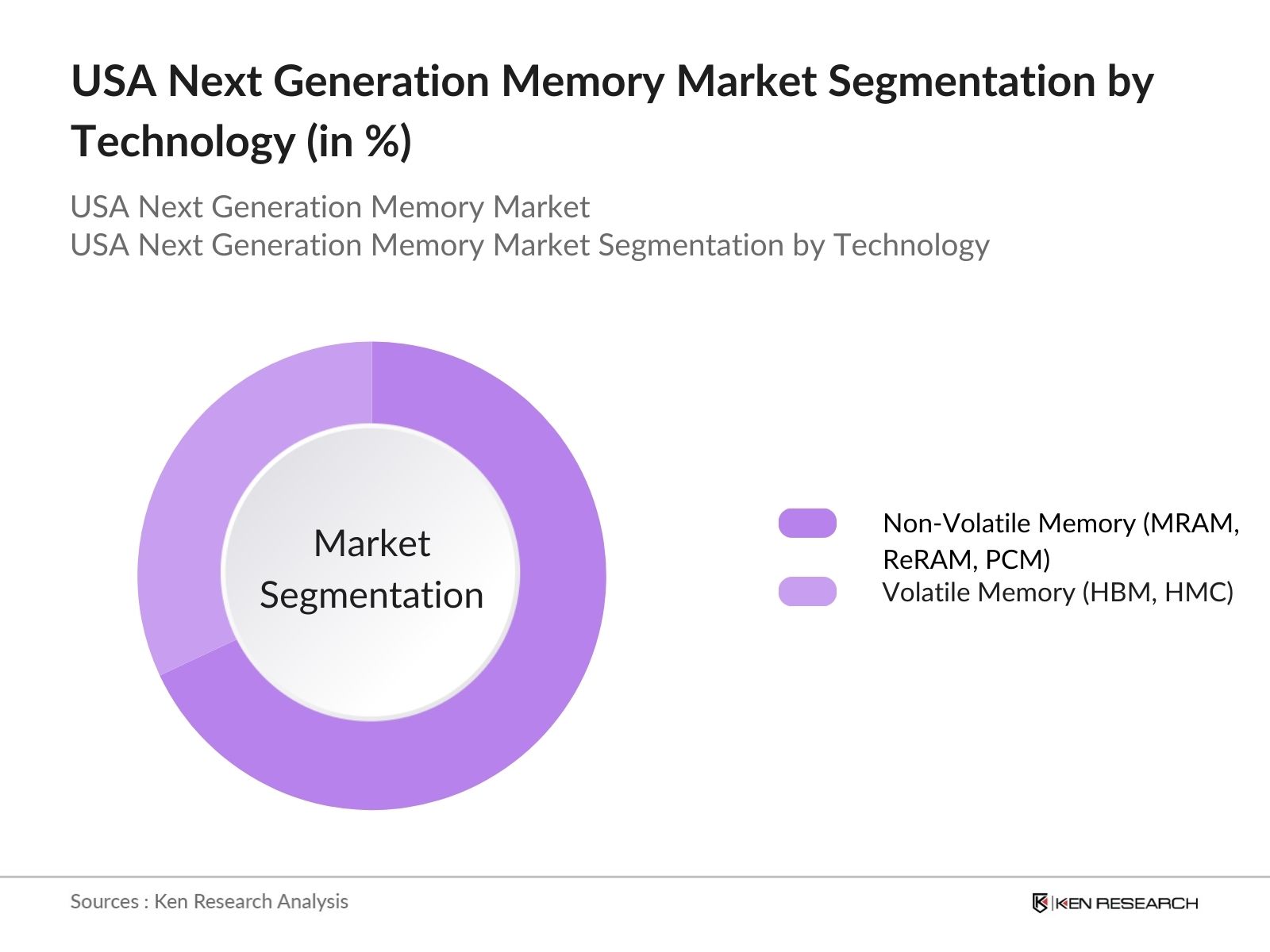
By Technology: The market is segmented by technology into non-volatile and volatile memories. Non-volatile memories, which include MRAM, ReRAM, and Phase-Change Memory (PCM), dominate the market. This dominance is due to their ability to retain data without a power source, making them essential for applications like automotive, industrial, and data storage. MRAM, for example, has gained significant traction due to its fast read and write capabilities and low power consumption, which are critical for energy-efficient devices in sectors like enterprise storage and consumer electronics.
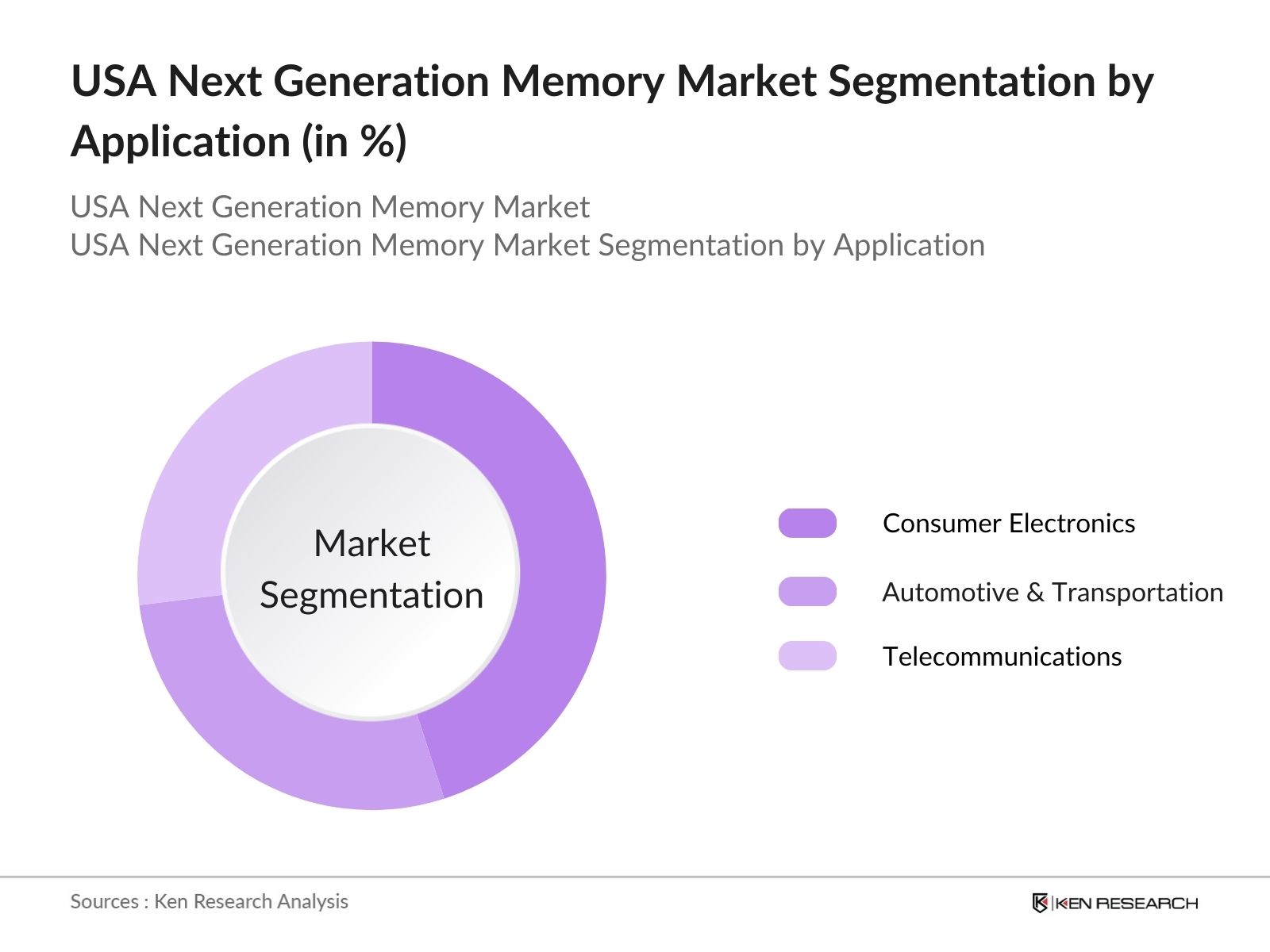
By Application: The market is further segmented by application into consumer electronics, automotive & transportation, and telecommunications. The consumer electronics segment dominates this space, primarily driven by the demand for faster, low-power memory solutions in smartphones, tablets, and gaming devices. As consumers continue to demand higher performance from their devices, next-generation memories like MRAM and PCM are being adopted to meet these needs, allowing manufacturers to build products with greater storage capabilities and longer battery life.
The market is characterized by the presence of several key players, each contributing to the industry's advancements through innovation and strategic initiatives. Companies like Intel and Micron Technology are leading the charge by developing cutting-edge memory technologies such as 3D XPoint and ReRAM.
|
Company Name |
Year Established |
Headquarters |
No. of Employees |
Revenue (USD bn) |
Technological Focus |
R&D Expenditure |
Recent Innovation |
Patent Portfolio |
|
Intel Corporation |
1968 |
Santa Clara, CA |
||||||
|
Micron Technology Inc. |
1978 |
Boise, ID |
||||||
|
Samsung Electronics Co. Ltd. |
1969 |
Suwon, South Korea |
||||||
|
Toshiba Corporation |
1875 |
Tokyo, Japan |
||||||
|
Everspin Technologies Inc. |
2008 |
Chandler, AZ |
Over the next five years, the USA Next Generation Memory industry is expected to show substantial growth, driven by continuous advancements in semiconductor technologies and the rising demand for data processing capabilities.
|
By Technology |
Non-Volatile Volatile |
|
By Wafer Size |
200 mm 300 mm |
|
By Application |
Consumer Electronics Enterprise Storage Automotive Telecommunications Healthcare |
|
By Region |
North East West South |
Definition and Scope
Market Taxonomy
Market Growth Rate
Market Segmentation Overview
Historical Market Size
Year-On-Year Growth Analysis
Key Market Developments and Milestones
Growth Drivers
Adoption in Edge Computing and IoT Devices
High Performance Computing (HPC) Demand
Rising Demand for Enterprise Storage Solutions
Non-Volatile Memory Advancements
Market Challenges
High Cost of New Memory Technologies
Manufacturing and Scalability Issues
Limited Compatibility with Legacy Systems
Opportunities
Integration with Artificial Intelligence (AI) Workloads
Expansion in 5G Networks and Telecommunications
Increased Demand in Autonomous Vehicles
Trends
Shift Towards Energy-Efficient Memory Solutions
Growth of MRAM, ReRAM, and PCM Technologies
Increased Adoption in Consumer Electronics
Government Regulation
USA Semiconductor Manufacturing Incentives
Regulatory Standards for Memory in Data Centers
By Technology (In Value %)
Non-Volatile (MRAM, ReRAM, 3D XPoint, FRAM, NRAM)
Volatile (Hybrid Memory Cube, High-Bandwidth Memory)
By Wafer Size (In Value %)
200 mm
300 mm
By Application (In Value %)
Consumer Electronics
Enterprise Storage
Automotive & Transportation
Telecommunications
Healthcare
By Region (In Value %)
North
East
West
South
Detailed Profiles of Major Companies
Intel Corporation
Micron Technology Inc.
Samsung Electronics Co. Ltd.
Toshiba Corporation
Fujitsu Ltd.
Honeywell International Inc.
SK Hynix Inc.
Kingston Technology Company Inc.
Infineon Technologies AG
Microchip Technology Inc.
Everspin Technologies Inc.
Western Digital Corporation
IBM Corporation
Qualcomm Technologies Inc.
Broadcom Inc.
Cross Comparison Parameters (No. of Employees, Headquarters, Revenue, R&D Spending, Market Share, Patent Portfolio, Technological Innovations, Product Launches)
Market Share Analysis
Strategic Initiatives
Mergers and Acquisitions
Investment Analysis
Government Grants & Private Equity Investments
Compliance Requirements
Data Security Standards in Memory Storage
Certifications and Testing Protocols
Future Market Size Projections
Key Factors Driving Future Market Growth
By Technology (In Value %)
By Wafer Size (In Value %)
By Application (In Value %)
By Region (In Value %)
TAM/SAM/SOM Analysis
Customer Cohort Analysis
White Space Opportunity Analysis
Disclaimer Contact UsThe first step involves developing a comprehensive ecosystem map of the USA Next Generation Memory Market. This includes identifying major stakeholders such as semiconductor companies, data centers, and telecommunications providers. A combination of secondary research and proprietary databases is employed to gather industry-level information and determine the critical variables impacting market dynamics.
Historical data for the USA Next Generation Memory Market is compiled, with a focus on market penetration and revenue generation. Service quality statistics, along with an evaluation of demand across key applications (such as consumer electronics and telecommunications), are used to ensure accurate market assessments.
Hypotheses derived from initial data are validated through expert consultations, including computer-assisted telephone interviews (CATI) with professionals from major market players like Intel and Micron Technology. These consultations provide insights into technological trends and future market opportunities.
Finally, a bottom-up approach is employed to synthesize research findings from industry leaders, ensuring comprehensive and reliable market data. This step also includes direct engagement with next-generation memory manufacturers to validate findings.
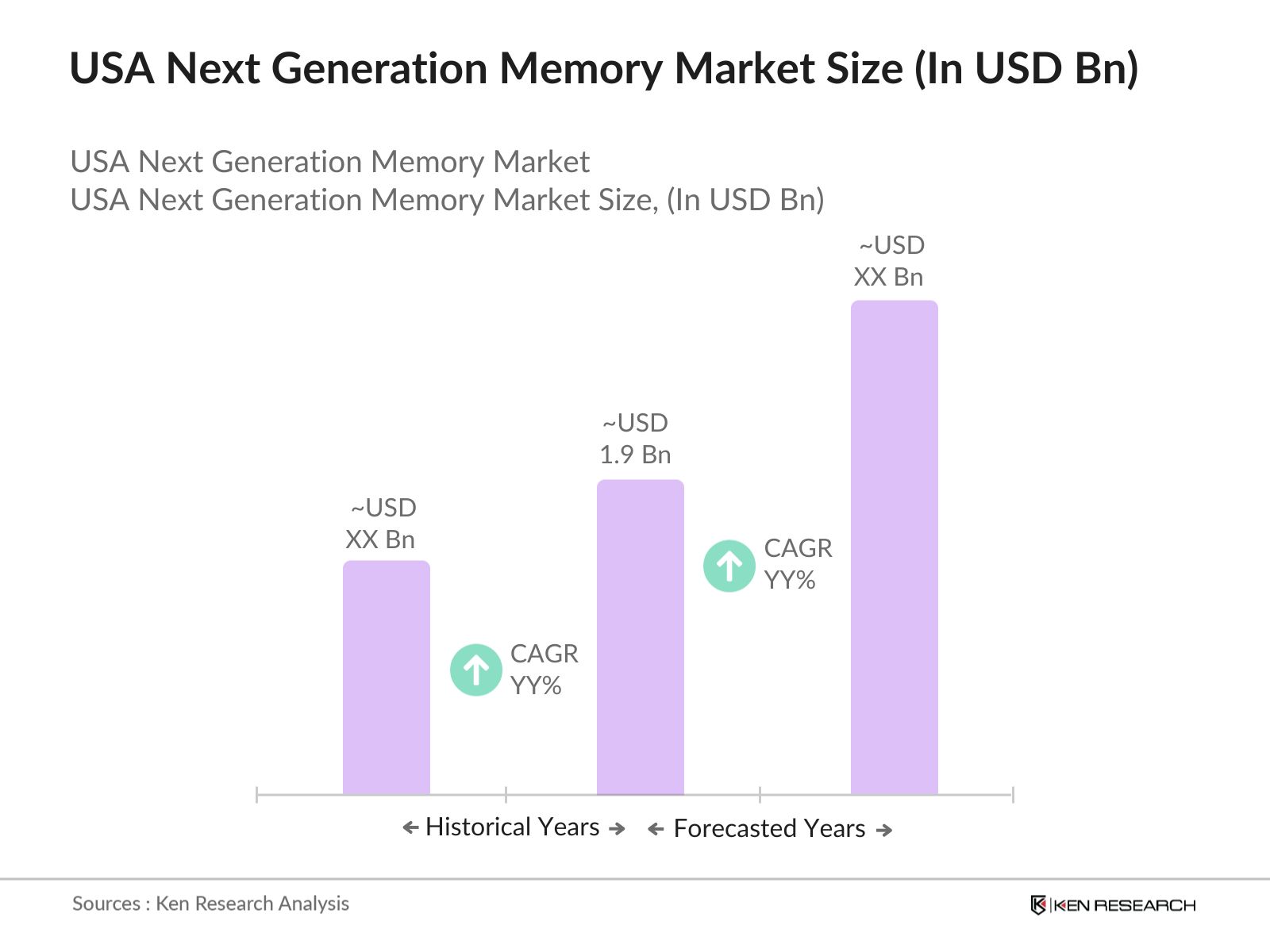
The USA Next Generation Memory Market is valued at USD 1.9 billion, driven by the increasing demand for high-performance memory solutions in industries like telecommunications, automotive, and consumer electronics.
Key drivers in the USA Next Generation Memory Market include the rising demand for high-performance computing, increased data storage needs, and advancements in non-volatile memory technologies like MRAM and PCM.
Major players in the USA Next Generation Memory Market include Intel Corporation, Micron Technology, Samsung Electronics, Toshiba Corporation, and Everspin Technologies, dominating due to their technological innovations and extensive R&D investments.
Challenges in the USA Next Generation Memory Market include the high costs associated with next-generation memory technologies and compatibility issues with existing systems, particularly in legacy industries.
The USA Next Generation Memory Market is poised for growth over the next five years, driven by advancements in edge computing, IoT, and increased demand for faster, energy-efficient memory solutions across various industries.

What makes us stand out is that our consultants follows Robust, Refine and Result (RRR) methodology. i.e. Robust for clear definitions, approaches and sanity checking, Refine for differentiating respondents facts and opinions and Result for presenting data with story

We have set a benchmark in the industry by offering our clients with syndicated and customized market research reports featuring coverage of entire market as well as meticulous research and analyst insights.

While we don't replace traditional research, we flip the method upside down. Our dual approach of Top Bottom & Bottom Top ensures quality deliverable by not just verifying company fundamentals but also looking at the sector and macroeconomic factors.

With one step in the future, our research team constantly tries to show you the bigger picture. We help with some of the tough questions you may encounter along the way: How is the industry positioned? Best marketing channel? KPI's of competitors? By aligning every element, we help maximize success.

Our report gives you instant access to the answers and sources that other companies might choose to hide. We elaborate each steps of research methodology we have used and showcase you the sample size to earn your trust.

If you need any support, we are here! We pride ourselves on universe strength, data quality, and quick, friendly, and professional service.