
USA Non-steroidal Anti-Inflammatory Drugs Market Outlook to 2030
Region:United States
Author(s):Yogita Sahu
Product Code:KROD8380
Region:United States
Author(s):Yogita Sahu
Product Code:KROD8380
December 2024
95
Listen to the audio summary
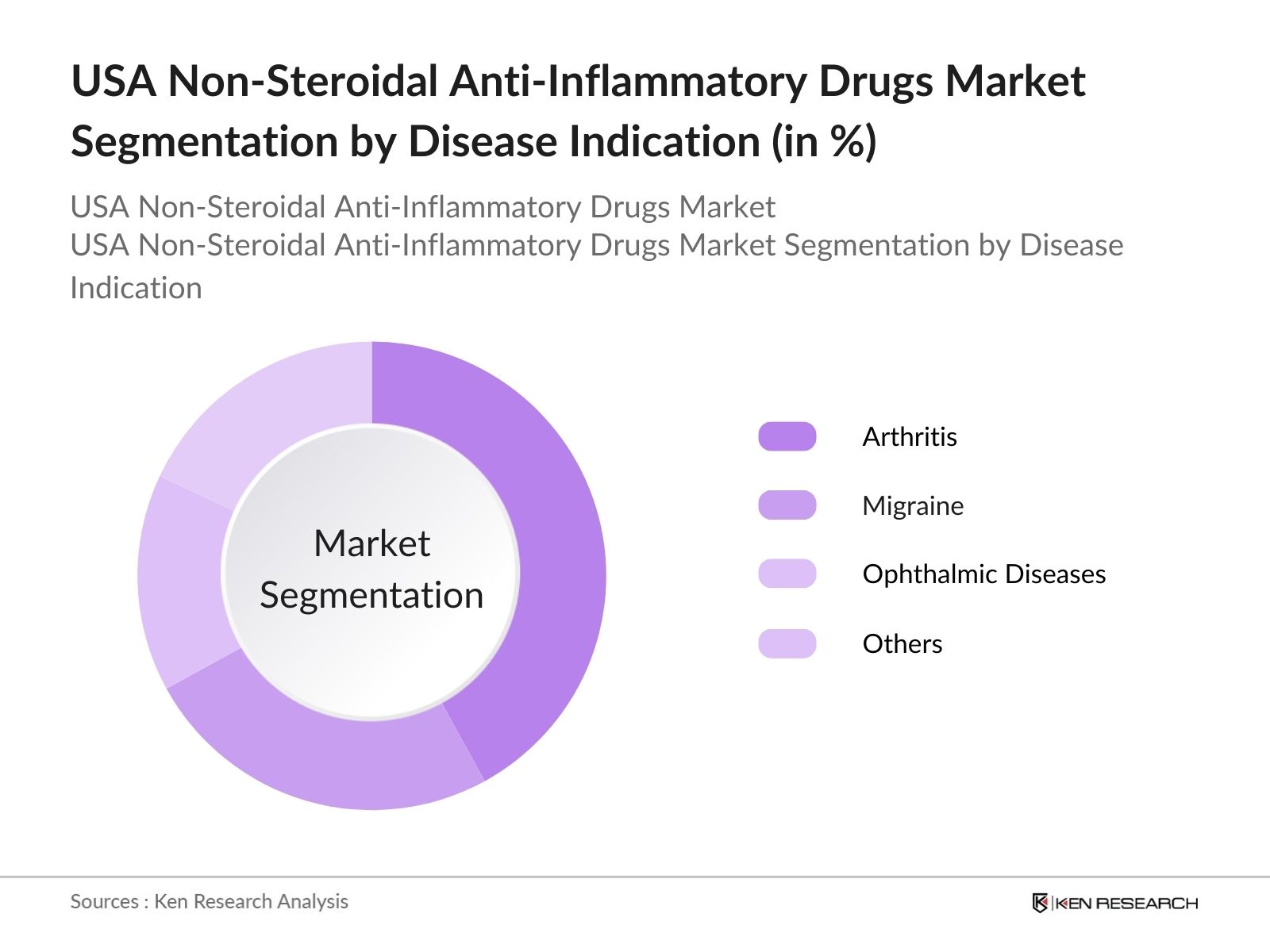
By Disease Indication: The market is segmented into four main disease indications: arthritis, migraines, ophthalmic diseases, and others (including fever and dysmenorrhea). Arthritis dominates the market in this category due to the high prevalence of osteoarthritis and rheumatoid arthritis. The geriatric population, which is more prone to joint inflammation, represents the largest consumer base. Prescription NSAIDs like Celebrex are widely used for arthritis management, supporting the dominance of this sub-segment.
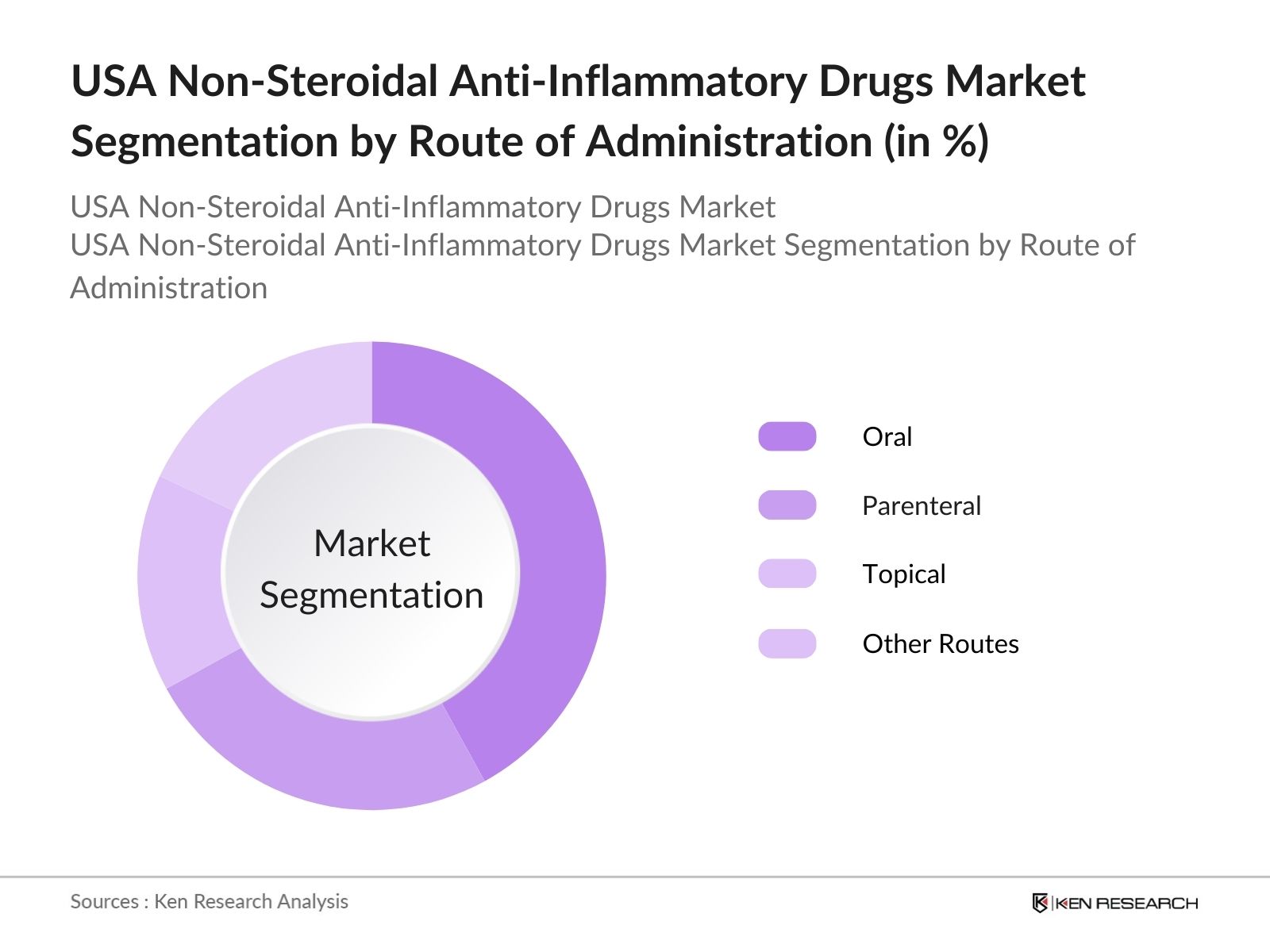
By Route of Administration: The market is also segmented by route of administration into oral, parenteral, topical, and other routes (such as rectal or nasal). Oral administration holds the largest market share due to the widespread availability of oral NSAID products like ibuprofen and naproxen, which are easily accessible over-the-counter and by prescription. Consumers favor oral forms for their convenience and efficacy, particularly for managing chronic pain and inflammation.
The market is highly consolidated, with a few major players dominating the space. Global pharmaceutical giants such as Pfizer and Johnson & Johnson continue to hold market shares due to their extensive product portfolios and strong distribution networks.
|
Company |
Establishment Year |
Headquarters |
Revenue (2023) |
Key Product |
M&A Activities |
R&D Initiatives |
Distribution Network |
Patent Portfolio |
|
Pfizer Inc. |
1849 |
New York, USA |
||||||
|
Johnson & Johnson |
1886 |
New Jersey, USA |
||||||
|
GlaxoSmithKline |
2000 |
Brentford, UK |
||||||
|
Bayer AG |
1863 |
Leverkusen, Germany |
||||||
|
Dr. Reddy's Laboratories Ltd. |
1984 |
Hyderabad, India |
Over the next five years, the USA Non-Steroidal Anti-Inflammatory Drugs industry is poised for steady growth driven by advancements in pharmaceutical technologies, increasing consumer awareness about self-medication, and continued research into novel NSAID formulations.
|
By Disease Indication |
Arthritis Migraine Ophthalmic Diseases Others |
|
By Route of Administration |
Oral Parenteral Topical Other Routes |
|
By Distribution Channel |
Hospital Pharmacy Retail Pharmacy Online Pharmacy Others |
|
By Drug Type |
Over-the-Counter (OTC) Prescription Drugs |
|
By Region |
North East West South |
1.1 Definition and Scope
1.2 Market Taxonomy
1.3 Market Growth Rate
1.4 Market Segmentation Overview
2.1 Historical Market Size
2.2 Year-On-Year Growth Analysis
2.3 Key Market Developments and Milestones
3.1 Growth Drivers [Rising Prevalence of Chronic Diseases, Increasing OTC Availability, Geriatric Population Growth, High Adoption for Pain Management]
3.2 Market Challenges [Side Effects of NSAIDs, Regulatory Barriers, Competition with Biologics, Limited Innovation]
3.3 Opportunities [Development of Combination Therapies, OTC Drug Expansions, Technological Advancements in Drug Delivery Systems, Strategic Mergers & Acquisitions]
3.4 Trends [Growing Demand for Topical Formulations, Expansion of Online Pharmacy Sales, Increasing Adoption of Generic NSAIDs, Focus on Personalized Pain Management]
3.5 Government Regulation [FDA Approvals, Drug Pricing Policies, Safety and Compliance Regulations, Insurance Coverage Policies]
3.6 SWOT Analysis
3.7 Stakeholder Ecosystem
3.8 Porters Five Forces Analysis
3.9 Competitive Ecosystem
4.1 By Disease Indication [Arthritis, Migraine, Ophthalmic Diseases, Others]
4.2 By Route of Administration [Oral, Parenteral, Topical, Other Routes (Rectal, Nasal)]
4.3 By Distribution Channel [Hospital Pharmacies, Retail Pharmacies, Online Pharmacies, Others (Supermarkets, Wholesale)]
4.4 By Drug Type [Over-The-Counter (OTC), Prescription Drugs]
4.5 By Region [North, East, West, South]
5.1 Detailed Profiles of Major Companies
5.1.1 Pfizer Inc.
5.1.2 Bayer AG
5.1.3 GlaxoSmithKline plc
5.1.4 Johnson & Johnson
5.1.5 AstraZeneca
5.1.6 Sanofi
5.1.7 Dr. Reddys Laboratories Ltd.
5.1.8 Novartis AG
5.1.9 Haleon PLC
5.1.10 Horizon Therapeutics PLC
5.1.11 Reckitt Benckiser Group PLC
5.1.12 Assertio Therapeutics Inc.
5.1.13 Iroko Pharmaceuticals Inc.
5.1.14 Perrigo Company
5.1.15 Zyla Life Sciences
5.2 Cross-Comparison Parameters [Revenue, Product Portfolio, Distribution Channels, Key Market Strategies, Geographical Reach, Research & Development Initiatives, New Product Launches, Mergers & Acquisitions]
5.3 Market Share Analysis
5.4 Strategic Initiatives
5.5 Mergers and Acquisitions
5.6 Investment Analysis [Private Equity, Venture Capital]
5.7 Government Funding and Grants
6.1 FDA Approvals and Regulations
6.2 Drug Safety and Efficacy Compliance
6.3 Pricing Policies and Reimbursement
6.4 Intellectual Property and Patents
7.1 Future Market Size Projections
7.2 Key Factors Driving Future Market Growth
8.1 By Disease Indication
8.2 By Route of Administration
8.3 By Distribution Channel
8.4 By Drug Type
8.5 By Region
9.1 TAM/SAM/SOM Analysis
9.2 Customer Cohort Analysis
9.3 Marketing Initiatives
9.4 White Space Opportunity Analysis
Disclaimer Contact UsThe first step involved identifying the critical variables that influence the USA Non-Steroidal Anti-Inflammatory Drugs market. This was accomplished through comprehensive desk research, leveraging industry databases and proprietary resources to gather market-level insights.
We utilized a bottom-up approach to analyze historical data and construct market size estimates. This analysis included key factors such as NSAID consumption patterns, distribution network strength, and retail market penetration.
Our team engaged in expert consultations with key industry stakeholders to validate market assumptions. These discussions offered valuable insights into operational challenges, emerging trends, and competitive dynamics within the USA NSAID market.
The final phase involved synthesizing all collected data and generating a detailed market report. This report was cross-validated using both top-down and bottom-up approaches, ensuring an accurate representation of the USA Non-Steroidal Anti-Inflammatory Drugs market.
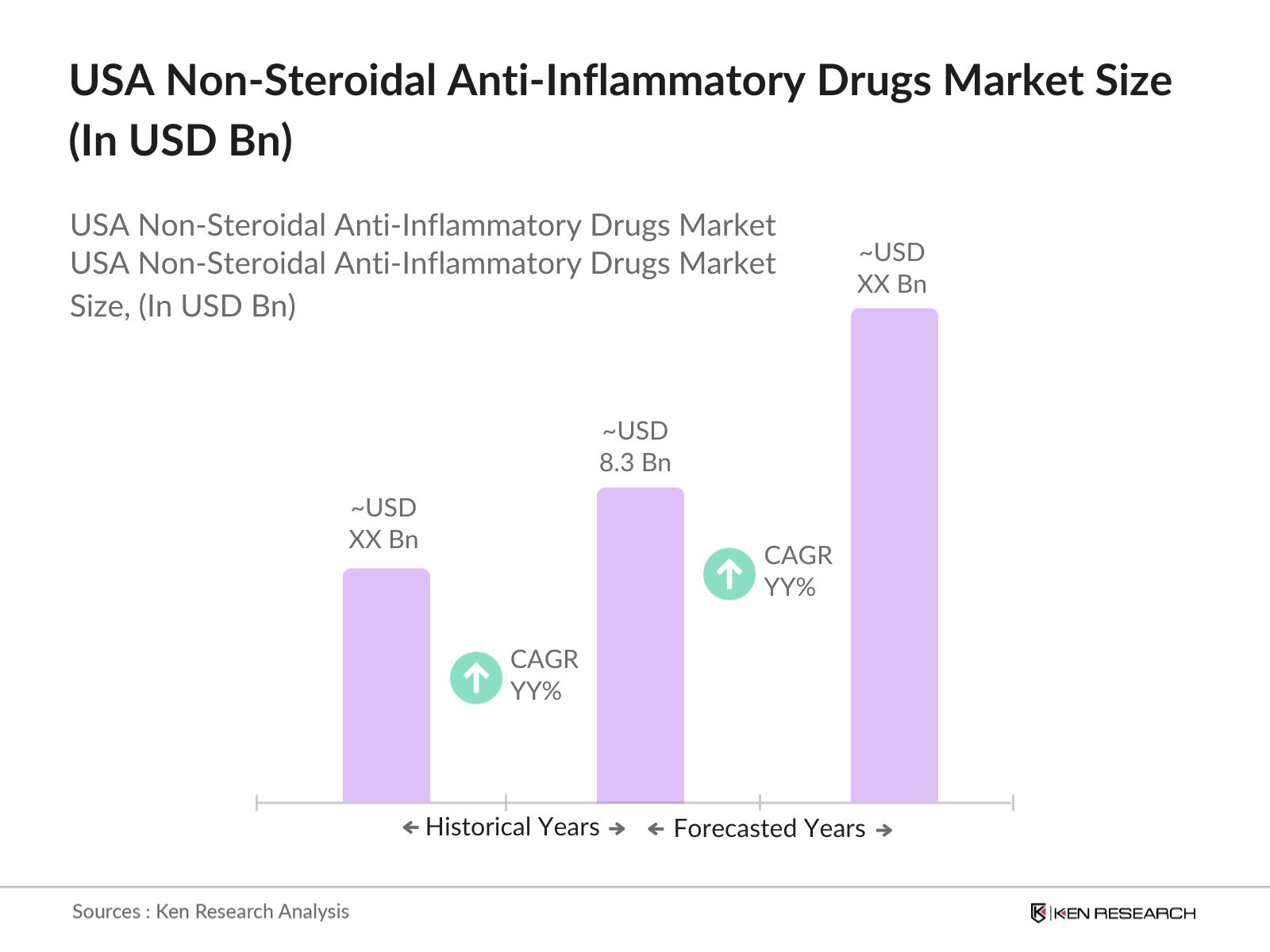
The USA Non-Steroidal Anti-Inflammatory Drugs market is valued at USD 8.3 billion, driven by rising chronic pain conditions and the increasing use of over-the-counter NSAIDs.
Challenges in the USA Non-Steroidal Anti-Inflammatory Drugs market include side effects associated with long-term NSAID usage, such as gastrointestinal issues, and growing competition from biologics, which offer targeted pain relief.
Key players in the USA Non-Steroidal Anti-Inflammatory Drugs market include Pfizer, Johnson & Johnson, GlaxoSmithKline, Bayer AG, and Dr. Reddys Laboratories, which dominate due to their extensive product portfolios and strong distribution networks.
The USA Non-Steroidal Anti-Inflammatory Drugs market is propelled by the increasing prevalence of arthritis, rising consumer demand for self-medication options, and ongoing pharmaceutical innovations in drug formulations.
The USA Non-Steroidal Anti-Inflammatory Drugs market is expected to grow steadily over the next five years, supported by advancements in drug delivery technologies, increased healthcare spending, and rising consumer awareness about pain management solutions.

What makes us stand out is that our consultants follows Robust, Refine and Result (RRR) methodology. i.e. Robust for clear definitions, approaches and sanity checking, Refine for differentiating respondents facts and opinions and Result for presenting data with story

We have set a benchmark in the industry by offering our clients with syndicated and customized market research reports featuring coverage of entire market as well as meticulous research and analyst insights.

While we don't replace traditional research, we flip the method upside down. Our dual approach of Top Bottom & Bottom Top ensures quality deliverable by not just verifying company fundamentals but also looking at the sector and macroeconomic factors.

With one step in the future, our research team constantly tries to show you the bigger picture. We help with some of the tough questions you may encounter along the way: How is the industry positioned? Best marketing channel? KPI's of competitors? By aligning every element, we help maximize success.

Our report gives you instant access to the answers and sources that other companies might choose to hide. We elaborate each steps of research methodology we have used and showcase you the sample size to earn your trust.

If you need any support, we are here! We pride ourselves on universe strength, data quality, and quick, friendly, and professional service.