
USA Online Clothing Rental Market Outlook to 2030
Region:North America
Author(s):Yogita Sahu
Product Code:KROD11061
Region:North America
Author(s):Yogita Sahu
Product Code:KROD11061
November 2024
88
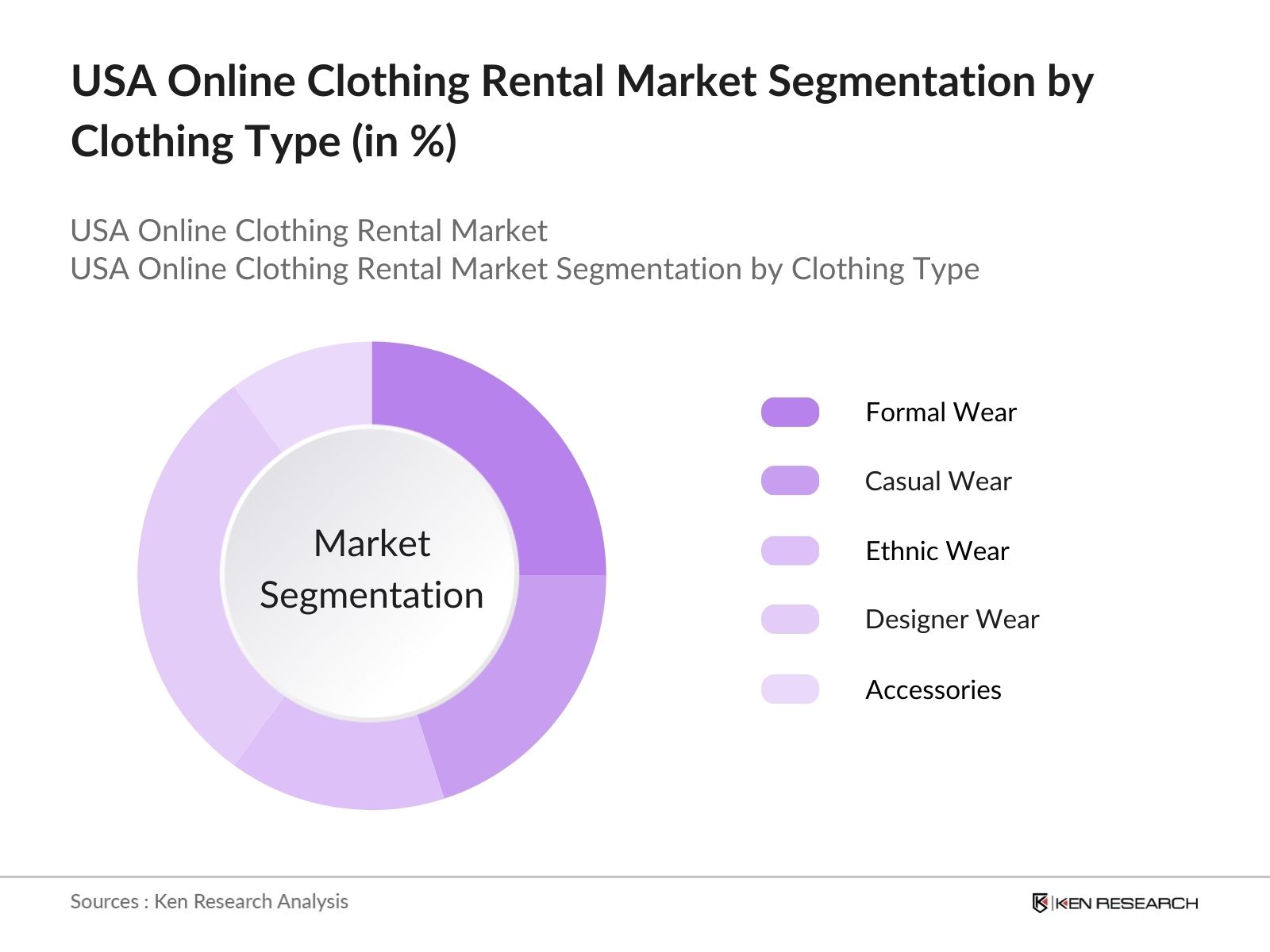
By Clothing Type: The market is segmented by clothing type into Formal Wear, Casual Wear, Ethnic Wear, Designer Wear, and Accessories. Designer wear currently holds a dominant position, owing to the growing demand for high-end fashion pieces among millennials and Gen Z. With established luxury brands offering rental partnerships, consumers gain access to premium garments, reinforcing designer wears dominance in this segment. Platforms like Rent the Runway capitalize on these high-demand pieces, creating exclusivity and perceived value, thereby enhancing designer wears appeal.
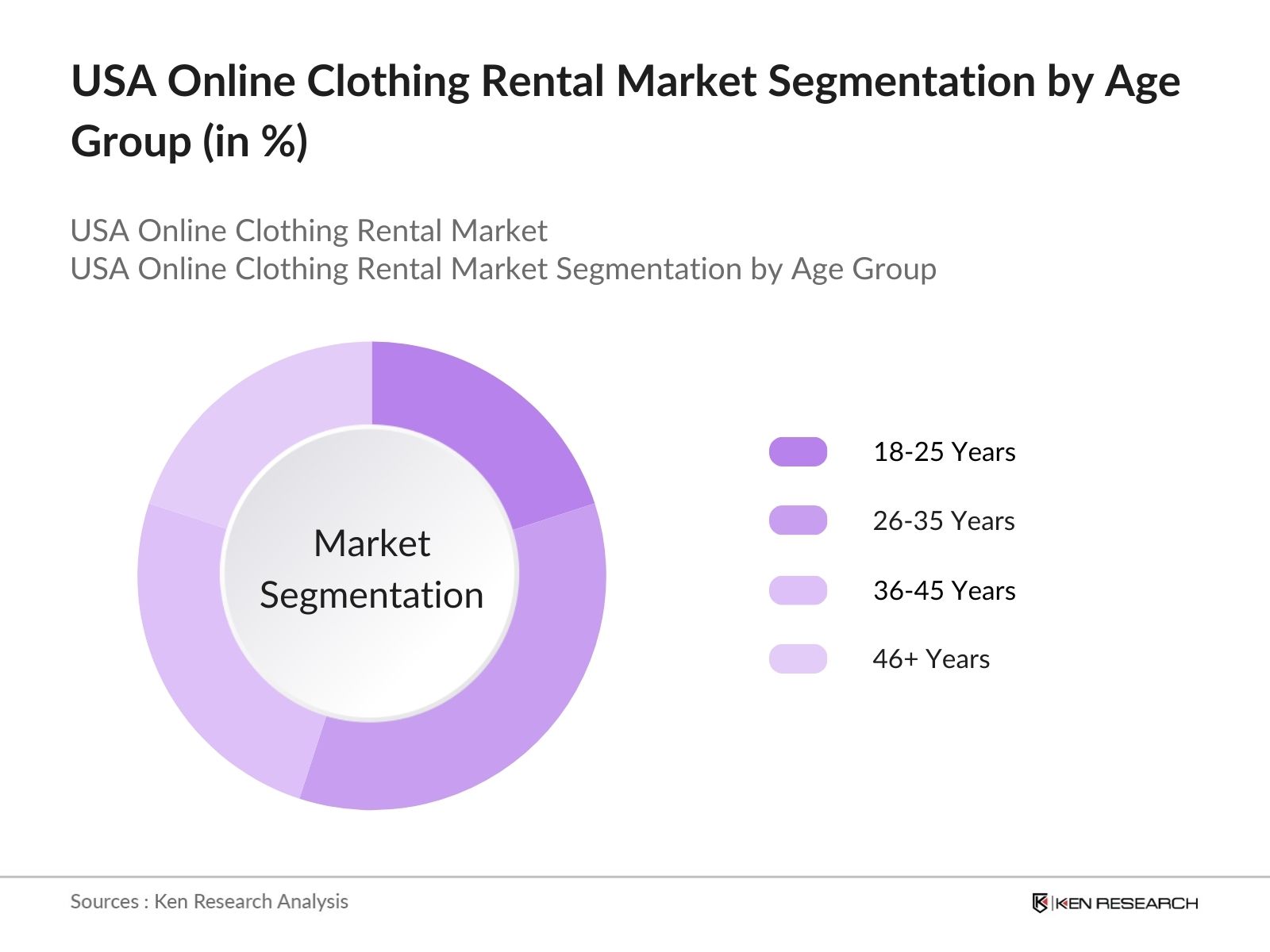
By User Age Group: The market is further segmented by User Age Group into 18-25 Years, 26-35 Years, 36-45 Years, and 46+ Years. The 26-35 age group dominates due to their preference for curated and varied fashion experiences. This demographics high social media presence also encourages adoption, as online rental services provide quick fashion refreshes for public appearances, events, and professional settings. Their spending power and inclination towards sustainable fashion further support this segments leading position.
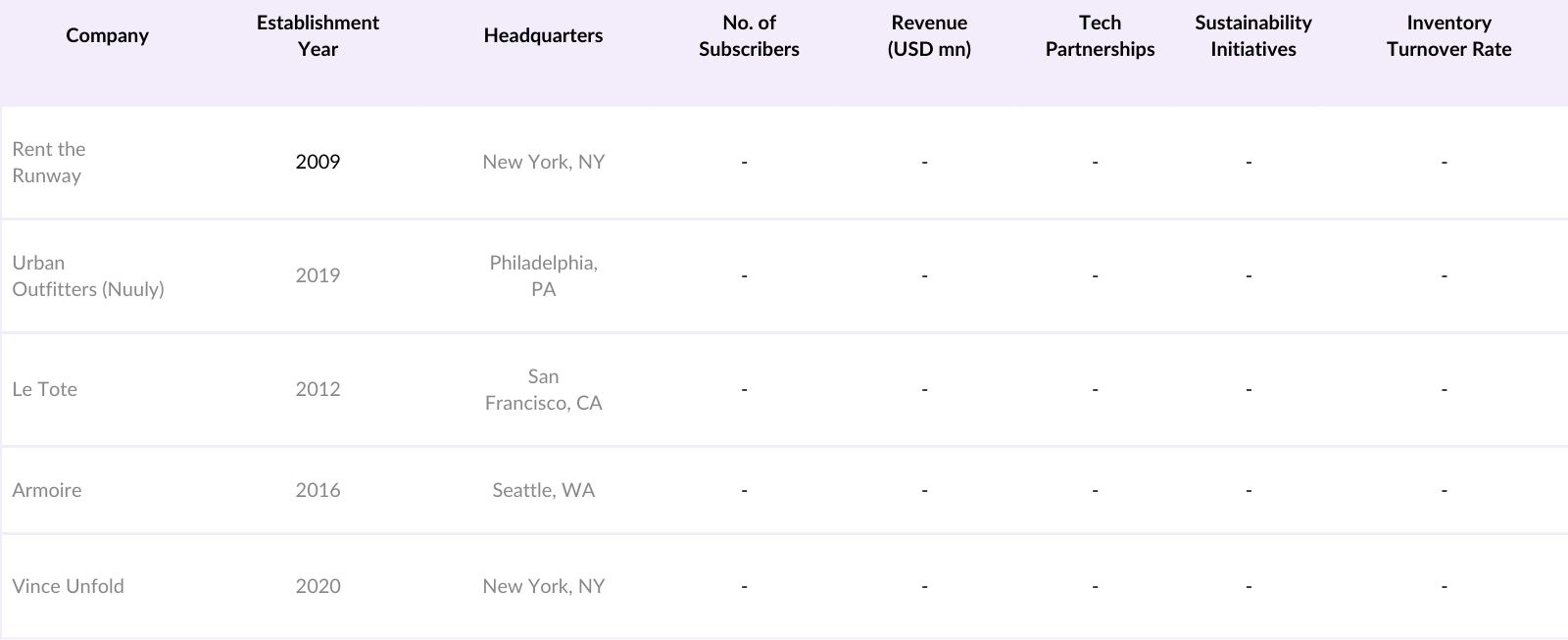
The market is consolidated with a mix of key domestic and international players offering varied services. Companies like Rent the Runway and Urban Outfitters (Nuuly) have established strong brand loyalty and partnerships with designer brands, driving the market.
Over the next five years, the USA online clothing rental industry is projected to see steady growth driven by consumer demand for sustainability, increased digital marketing adoption, and technology integration, such as virtual fittings and AI-driven recommendations.
|
Clothing Type |
Formal Wear |
|
User Age Group |
18-25 Years |
|
Rental Duration |
Short-Term Rentals |
|
Subscription Model |
Single Rental |
|
Region |
Northeast USA |
1.1 Definition and Scope
1.2 Market Taxonomy
1.3 Industry Value Chain Analysis
1.4 Market Segmentation Overview
2.1 Historical Market Size (In USD)
2.2 Growth Analysis (YoY Growth)
2.3 Market Milestones & Key Developments
3.1 Growth Drivers
3.1.1 Shifts in Consumer Behavior
3.1.2 Rise of Sustainable Fashion
3.1.3 Social Media Influence
3.1.4 Preference for Cost-Effective Alternatives
3.2 Market Challenges
3.2.1 Logistics and Inventory Management
3.2.2 High Operational Costs
3.2.3 Consumer Trust Issues
3.3 Market Opportunities
3.3.1 Expansion into Subscription Models
3.3.2 Brand Collaborations
3.3.3 Technological Integration (AI and AR)
3.4 Trends
3.4.1 Rise of Digital Styling Services
3.4.2 Customization and Personalization
3.4.3 Increasing Popularity Among Millennials and Gen Z
3.5 Consumer Insights (Trends in User Demographics, Preferences, Spending Patterns)
3.6 SWOT Analysis
3.7 Stakeholder Ecosystem
3.8 Porters Five Forces Analysis
3.9 Competitive Landscape Analysis
4.1 By Clothing Type (In Market Value %)
4.1.1 Formal Wear
4.1.2 Casual Wear
4.1.3 Ethnic/Traditional Wear
4.1.4 Designer Wear
4.1.5 Accessories
4.2 By User Age Group (In Market Value %)
4.2.1 18-25 Years
4.2.2 26-35 Years
4.2.3 36-45 Years
4.2.4 46+ Years
4.3 By Rental Duration (In Market Value %)
4.3.1 Short-Term Rentals
4.3.2 Long-Term Rentals
4.4 By Subscription Model (In Market Value %)
4.4.1 Single Rental
4.4.2 Monthly Subscription
4.4.3 Quarterly Subscription
4.4.4 Annual Subscription
4.5 By Region (In Market Value %)
4.5.1 Northeast USA
4.5.2 Midwest USA
4.5.3 South USA
4.5.4 West USA
5.1 Detailed Profiles of Major Companies
5.1.1 Rent the Runway
5.1.2 Le Tote
5.1.3 Armoire
5.1.4 Style Lend
5.1.5 Urban Outfitters (Nuuly)
5.1.6 My Wardrobe HQ
5.1.7 Hurr Collective
5.1.8 Glam Corner
5.1.9 Vince Unfold
5.1.10 Flyrobe
5.1.11 Bag Borrow or Steal
5.1.12 YCloset
5.1.13 Drexcode
5.1.14 Chic by Choice
5.1.15 Closet Collective
5.2 Cross-Comparison Parameters (Customer Retention Rate, Monthly Active Users, Inventory Turnover Rate, Average Rental Price, Customer Acquisition Cost, Regional Penetration, Social Media Engagement Rate, Technology Adaptation Rate)
5.3 Market Share Analysis
5.4 Strategic Initiatives
5.5 Mergers and Acquisitions
5.6 Investment Analysis
5.7 Venture Capital and Private Equity Funding
6.1 Consumer Protection Laws
6.2 Data Privacy and Security Regulations
6.3 E-commerce Compliance Standards
6.4 Environmental and Sustainability Standards
7.1 Future Market Size Projections
7.2 Key Growth Factors Influencing Future Market Trends
8.1 By Clothing Type
8.2 By User Age Group
8.3 By Rental Duration
8.4 By Subscription Model
8.5 By Region
9.1 Customer Segment Expansion Analysis
9.2 Marketing Channel Optimization
9.3 Product Portfolio Diversification
9.4 Technological Investment Opportunities
The initial stage involves mapping the online clothing rental ecosystem in the USA, encompassing primary stakeholders such as service providers, retailers, and consumer demographics. This foundation is constructed through comprehensive desk research, leveraging secondary and proprietary data sources to identify critical variables that influence market trends.
In this phase, historical data related to market penetration and demographic engagement with rental services is assessed. Key performance indicators, including revenue distribution and growth rate, are compiled to model the market's current structure. Analytical tools are applied to ensure data accuracy and reliability in revenue estimates.
We develop and test market hypotheses by consulting industry experts through surveys and in-depth interviews. These consultations provide a valuable lens on operational trends, helping to refine and validate the quantitative and qualitative data used in the report.
The final synthesis involves collaborating with industry leaders to capture insights into consumer behavior, subscription preferences, and technological integration. This comprehensive approach ensures a detailed and validated analysis of the USA online clothing rental market, establishing an accurate and actionable market report.
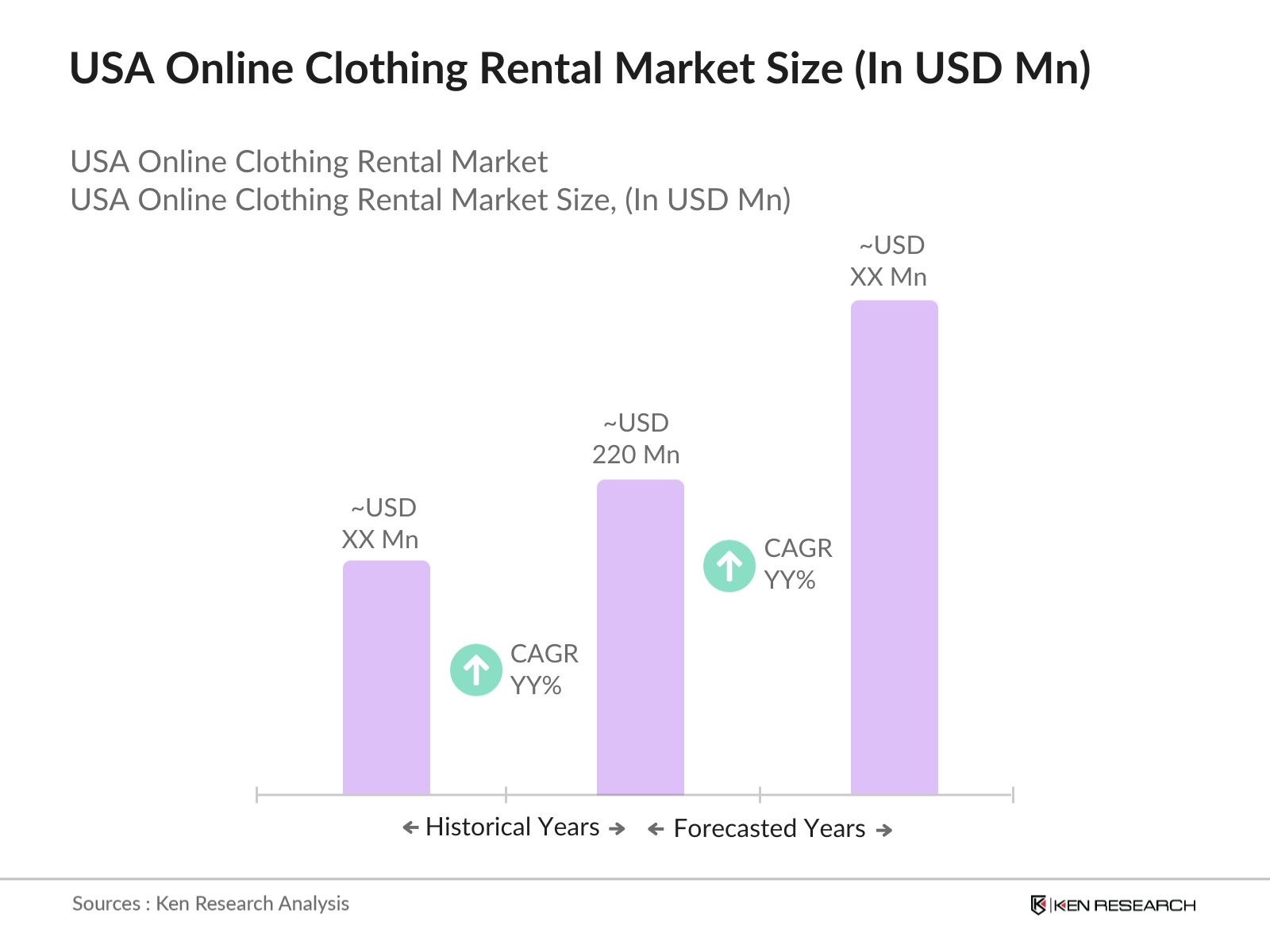
The USA online clothing rental market, valued at USD 220 billion, is driven by consumer demand for sustainable fashion, affordable luxury, and the appeal of wardrobe variety.
Key challenges in the USA online clothing rental market include high operational costs, inventory management, and consumer trust. The need for consistent upkeep and quality assurance also adds to logistical hurdles.
Notable players in the USA online clothing rental market include Rent the Runway, Urban Outfitters (Nuuly), and Le Tote, each offering unique models to cater to varied customer preferences and fashion needs.
Growth in the USA online clothing rental market is propelled by shifting consumer behavior towards rental over ownership, eco-conscious fashion trends, and advancements in digital styling technologies.

What makes us stand out is that our consultants follows Robust, Refine and Result (RRR) methodology. i.e. Robust for clear definitions, approaches and sanity checking, Refine for differentiating respondents facts and opinions and Result for presenting data with story

We have set a benchmark in the industry by offering our clients with syndicated and customized market research reports featuring coverage of entire market as well as meticulous research and analyst insights.

While we don't replace traditional research, we flip the method upside down. Our dual approach of Top Bottom & Bottom Top ensures quality deliverable by not just verifying company fundamentals but also looking at the sector and macroeconomic factors.

With one step in the future, our research team constantly tries to show you the bigger picture. We help with some of the tough questions you may encounter along the way: How is the industry positioned? Best marketing channel? KPI's of competitors? By aligning every element, we help maximize success.

Our report gives you instant access to the answers and sources that other companies might choose to hide. We elaborate each steps of research methodology we have used and showcase you the sample size to earn your trust.

If you need any support, we are here! We pride ourselves on universe strength, data quality, and quick, friendly, and professional service.