
USA Running Market Outlook to 2030
Region:North America
Author(s):Yogita Sahu
Product Code:KROD9149
Region:North America
Author(s):Yogita Sahu
Product Code:KROD9149
November 2024
95
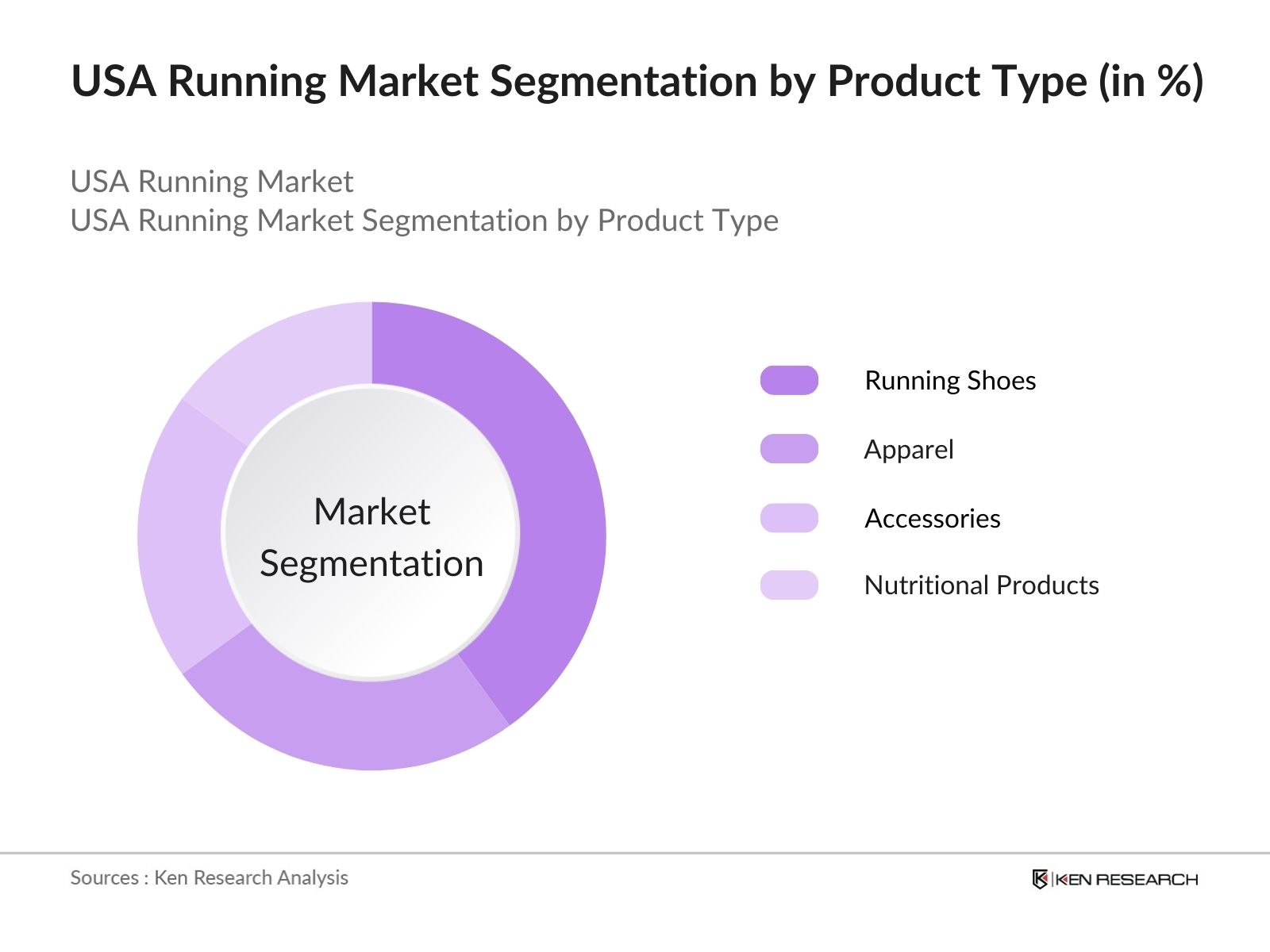
By Product Type: The market is segmented by product type into Running Shoes, Apparel, Accessories, and Nutritional Products. Recently, Running Shoes have maintained a dominant market share under this segmentation due to consumers' focus on performance-enhancing footwear tailored to various running needs, such as road running, trail running, and competition. Leading brands like Nike and Brooks have leveraged advanced technology in cushioning and support, which has resonated well with both professional and recreational runners.
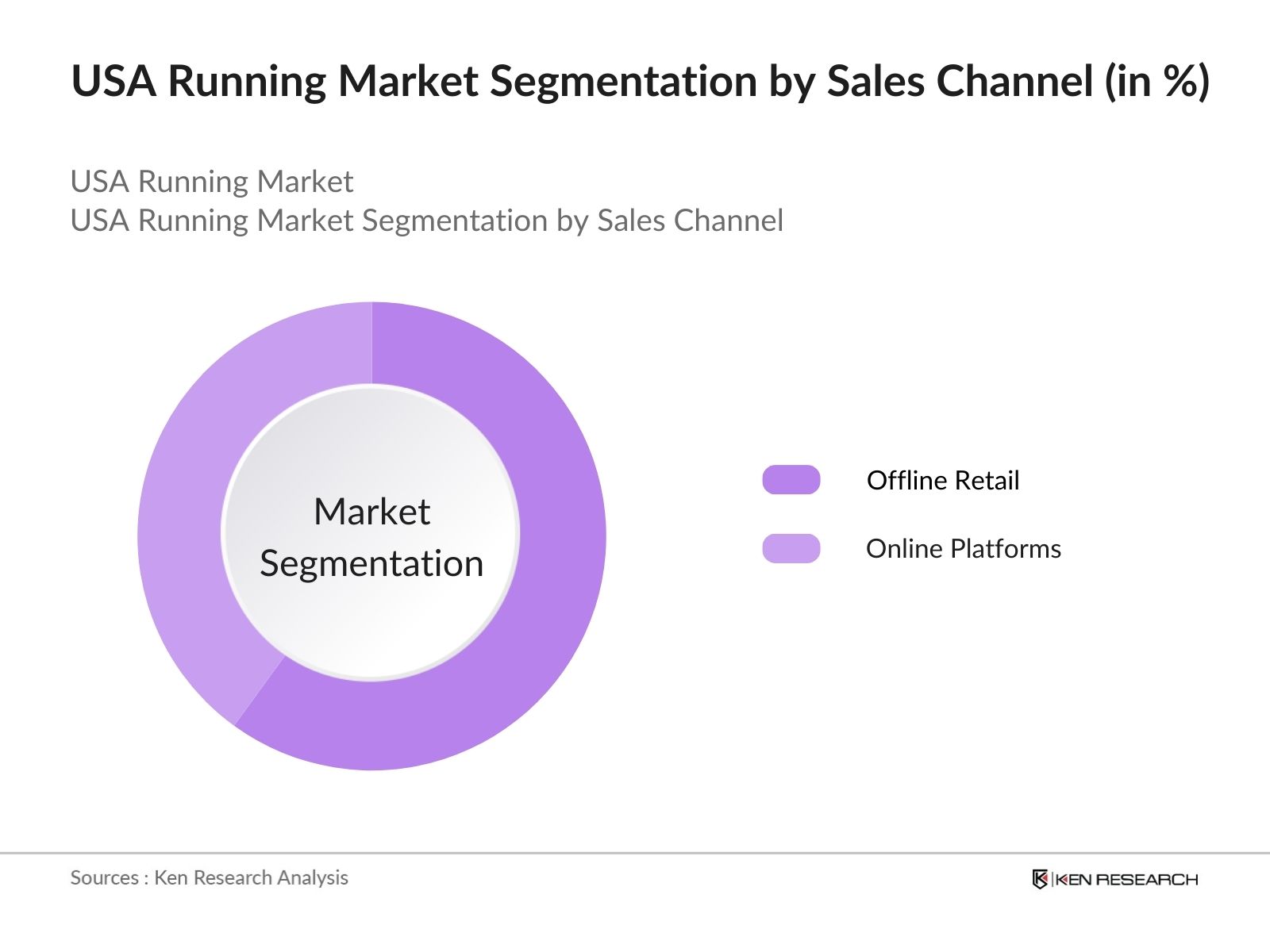
By Sales Channel: The market segmentation by sales channel includes Offline Retail and Online Platforms. Offline Retail channels, including specialty sports stores and general retail outlets, lead the market due to the consumer preference for in-person fittings and direct purchase experiences. Brick-and-mortar stores benefit from brand loyalty and allow runners to test products for optimal comfort and performance before purchase, making them a dominant sales channel in this market.
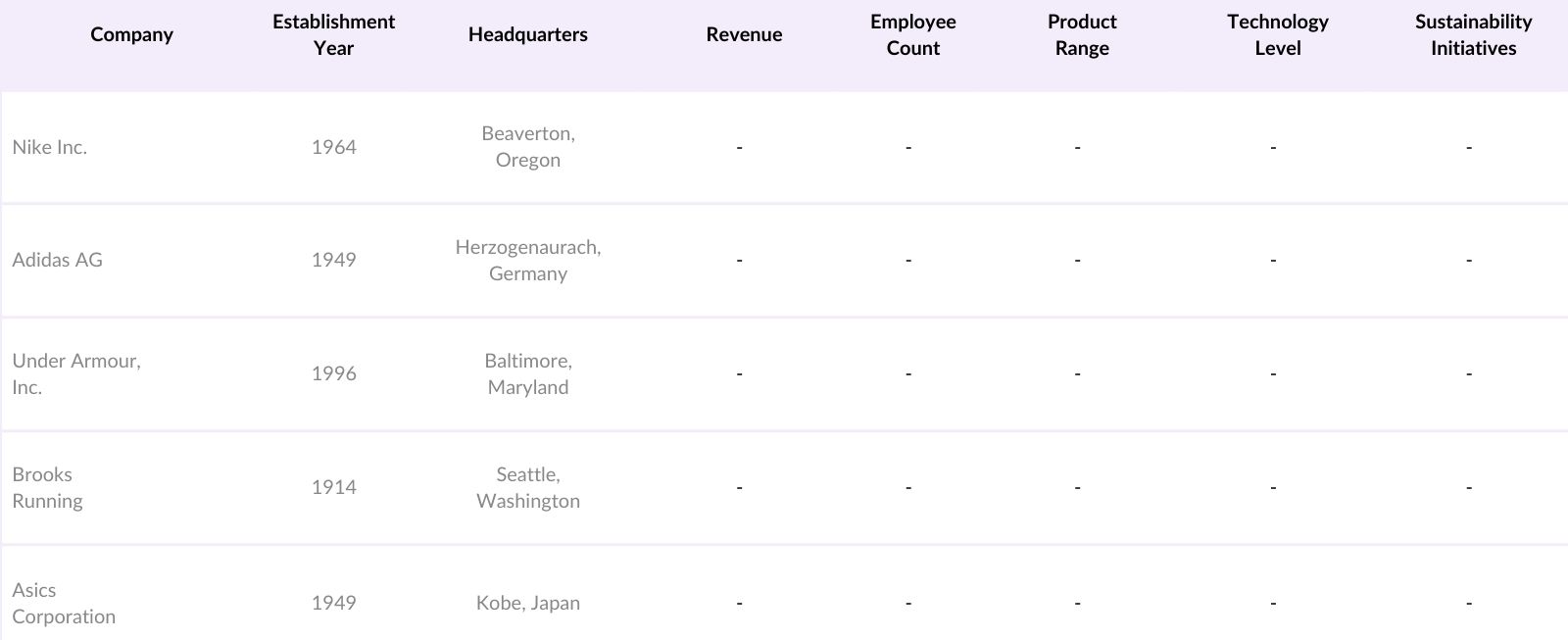
The market is dominated by both global and local players with a strong foothold in the running products segment. This consolidation highlights the influence of these key companies, which leverage brand reputation, technological advancements, and product diversification to retain their market share.
Over the next five years, the USA Running industry is projected to experience continued growth, fueled by technological advancements in performance gear, a greater emphasis on sustainable products, and the rising trend of personalized fitness solutions.
|
Product Type |
Running Shoes |
|
Demographic |
Men |
|
Sales Channel |
Offline Retail (Specialty Stores, Sporting Goods Stores) |
|
Technology |
Traditional Running Gear |
|
Region |
Northeast |
1.1 Definition and Scope
1.2 Market Taxonomy
1.3 Market Growth Rate
1.4 Key Industry Dynamics
2.1 Historical Market Size
2.2 Year-On-Year Growth Analysis
2.3 Key Market Milestones and Developments
3.1 Growth Drivers
3.1.1 Rise in Health and Wellness Awareness
3.1.2 Increase in Marathon and Running Events
3.1.3 Influence of Social Media and Virtual Events
3.2 Market Challenges
3.2.1 Seasonal and Weather Dependence
3.2.2 High Cost of Running Gear and Apparel
3.3 Opportunities
3.3.1 Growth in Smart Running Gear and Wearables
3.3.2 Expansion of Eco-Friendly and Sustainable Running Products
3.4 Trends
3.4.1 Demand for High-Performance Footwear
3.4.2 Integration of Wearable Technology in Running
3.4.3 Growth in Digital Running Platforms
3.5 Regulatory Influence
3.5.1 Safety and Standards for Running Gear
3.5.2 Health Guidelines and Sports Endorsements
4.1 By Product Type (In Value %)
4.1.1 Running Shoes
4.1.2 Apparel and Accessories
4.1.3 Running Wearables
4.1.4 Nutritional Products
4.2 By Demographic (In Value %)
4.2.1 Men
4.2.2 Women
4.2.3 Kids
4.3 By Sales Channel (In Value %)
4.3.1 Offline Retail (Specialty Stores, Sporting Goods Stores)
4.3.2 Online (E-commerce, Brand Websites)
4.4 By Technology (In Value %)
4.4.1 Traditional Running Gear
4.4.2 Smart Gear and Wearables
4.5 By Region (In Value %)
4.5.1 Northeast
4.5.2 Midwest
4.5.3 South
5.1 Detailed Profiles of Major Companies
5.1.1 Nike Inc.
5.1.2 Adidas AG
5.1.3 Under Armour, Inc.
5.1.4 New Balance Athletics, Inc.
5.1.5 ASICS Corporation
5.1.6 Puma SE
5.1.7 Skechers USA, Inc.
5.1.8 Saucony (a subsidiary of Wolverine World Wide)
5.1.9 Hoka One One (Deckers Brands)
5.1.10 Brooks Running Company
5.1.11 Altra Running (VF Corporation)
5.1.12 Lululemon Athletica Inc.
5.1.13 Reebok International Ltd.
5.1.14 Mizuno Corporation
5.1.15 Salomon (Amer Sports)
5.2 Cross Comparison Parameters (Market Share, Brand Popularity, Technological Advancements, Sustainability Initiatives, Product Range, Regional Presence, Revenue, Consumer Ratings)
5.3 Market Share Analysis
5.4 Strategic Initiatives
5.5 Mergers and Acquisitions
5.6 Investment Analysis
5.7 Partnership and Collaboration Strategies
6.1 Health and Safety Standards for Running Gear
6.2 Environmental Standards for Sustainable Products
6.3 Certification and Compliance Requirements
7.1 Future Market Size Projections
7.2 Key Factors Driving Future Market Growth
8.1 By Product Type (In Value %)
8.2 By Demographic (In Value %)
8.3 By Sales Channel (In Value %)
8.4 By Technology (In Value %)
8.5 By Region (In Value %)
9.1 TAM/SAM/SOM Analysis
9.2 Consumer Cohort Analysis
9.3 Marketing and Branding Strategies
9.4 White Space and Product Gap Analysis
Disclaimer Contact Us
In this phase, we establish a comprehensive map of key stakeholders within the USA Running Market. Extensive desk research helps to identify the variables, including major product categories, consumer preferences, and seasonal trends influencing market growth.
Here, historical data on product sales, revenue, and consumer demographics is compiled to determine market penetration rates and segmental performance. An in-depth analysis is conducted to assess the sales performance and consumer loyalty associated with various running product brands.
Market assumptions are tested using expert insights from key players within the running industry. Insights from industry veterans provide an understanding of product innovations, demand fluctuations, and challenges that further refine the market analysis.
The final stage involves synthesizing insights from both primary and secondary sources, resulting in a validated, data-driven outlook of the USA Running Market. This ensures an accurate understanding of key factors driving the market and substantiates the projected trends.
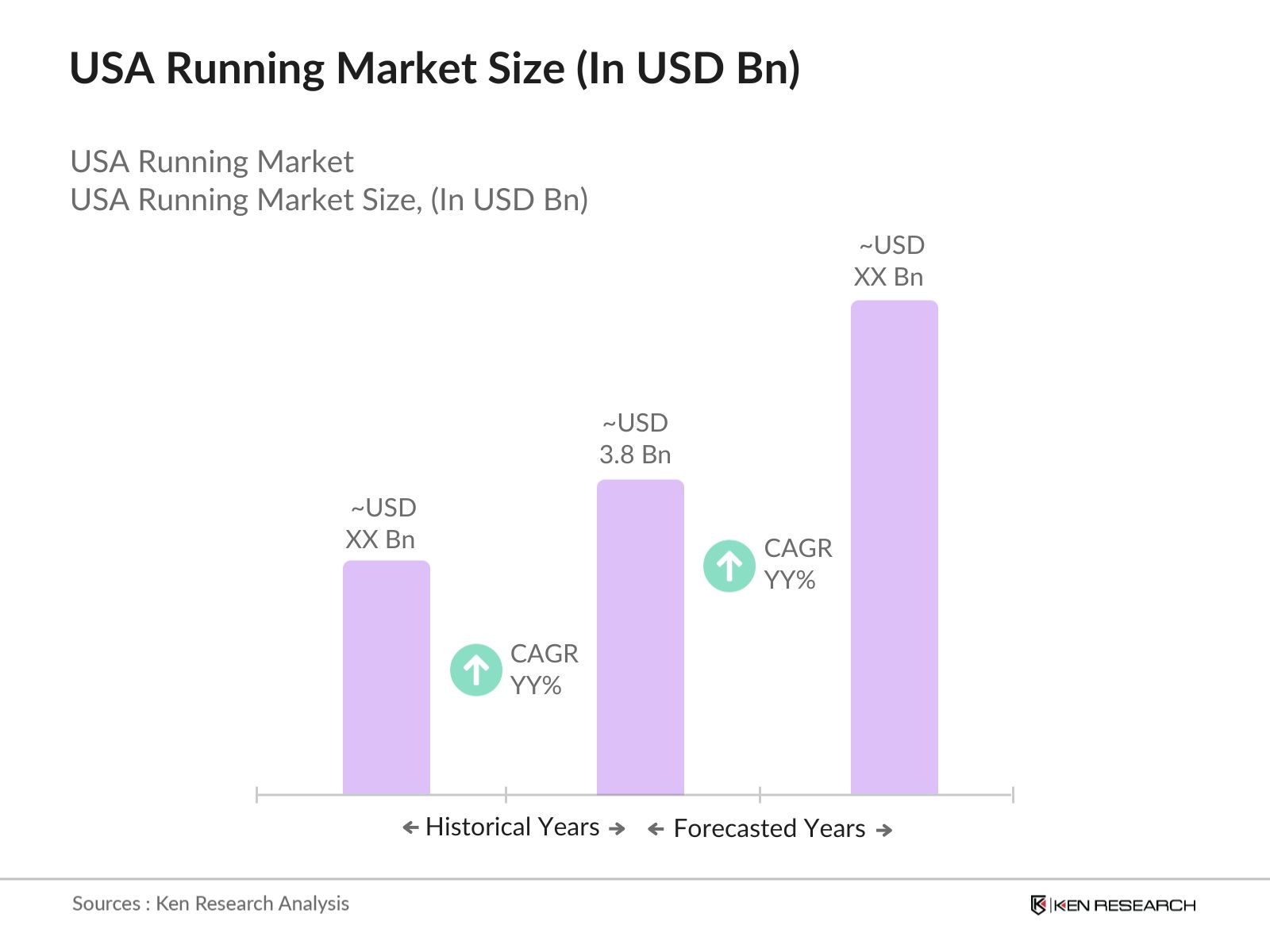
The USA Running Market is valued at USD 3.8 billion, with continued growth driven by increasing participation in recreational running and sports activities across the country.
Key challenges in the USA Running Market include seasonality affecting sales, high costs associated with performance-enhancing footwear, and the impact of fluctuating consumer trends in fitness and sports.
The USA Running Market is led by players like Nike Inc., Adidas AG, Under Armour, Brooks Running, and Asics Corporation, each leveraging technology and brand loyalty to maintain market share.
Growth drivers in the USA Running Market include an increasing focus on health and wellness, participation in marathons and running events, and advancements in running gear that enhance performance and comfort.

What makes us stand out is that our consultants follows Robust, Refine and Result (RRR) methodology. i.e. Robust for clear definitions, approaches and sanity checking, Refine for differentiating respondents facts and opinions and Result for presenting data with story

We have set a benchmark in the industry by offering our clients with syndicated and customized market research reports featuring coverage of entire market as well as meticulous research and analyst insights.

While we don't replace traditional research, we flip the method upside down. Our dual approach of Top Bottom & Bottom Top ensures quality deliverable by not just verifying company fundamentals but also looking at the sector and macroeconomic factors.

With one step in the future, our research team constantly tries to show you the bigger picture. We help with some of the tough questions you may encounter along the way: How is the industry positioned? Best marketing channel? KPI's of competitors? By aligning every element, we help maximize success.

Our report gives you instant access to the answers and sources that other companies might choose to hide. We elaborate each steps of research methodology we have used and showcase you the sample size to earn your trust.

If you need any support, we are here! We pride ourselves on universe strength, data quality, and quick, friendly, and professional service.