
USA Smart Bands Market Outlook to 2030
Region:North America
Author(s):Yogita Sahu
Product Code:KROD5639
November 2024
92
About the Report
USA Smart Bands Market Overview
- The USA Smart Bands market is valued at USD 1.1 billion, based on a five-year historical analysis. The market has been driven by increasing consumer health awareness, coupled with the rising adoption of fitness-tracking technologies and health-monitoring features. Consumers are increasingly seeking devices that provide real-time health data, such as heart rate, blood oxygen levels, and stress management tools, which has significantly boosted the demand for smart bands.
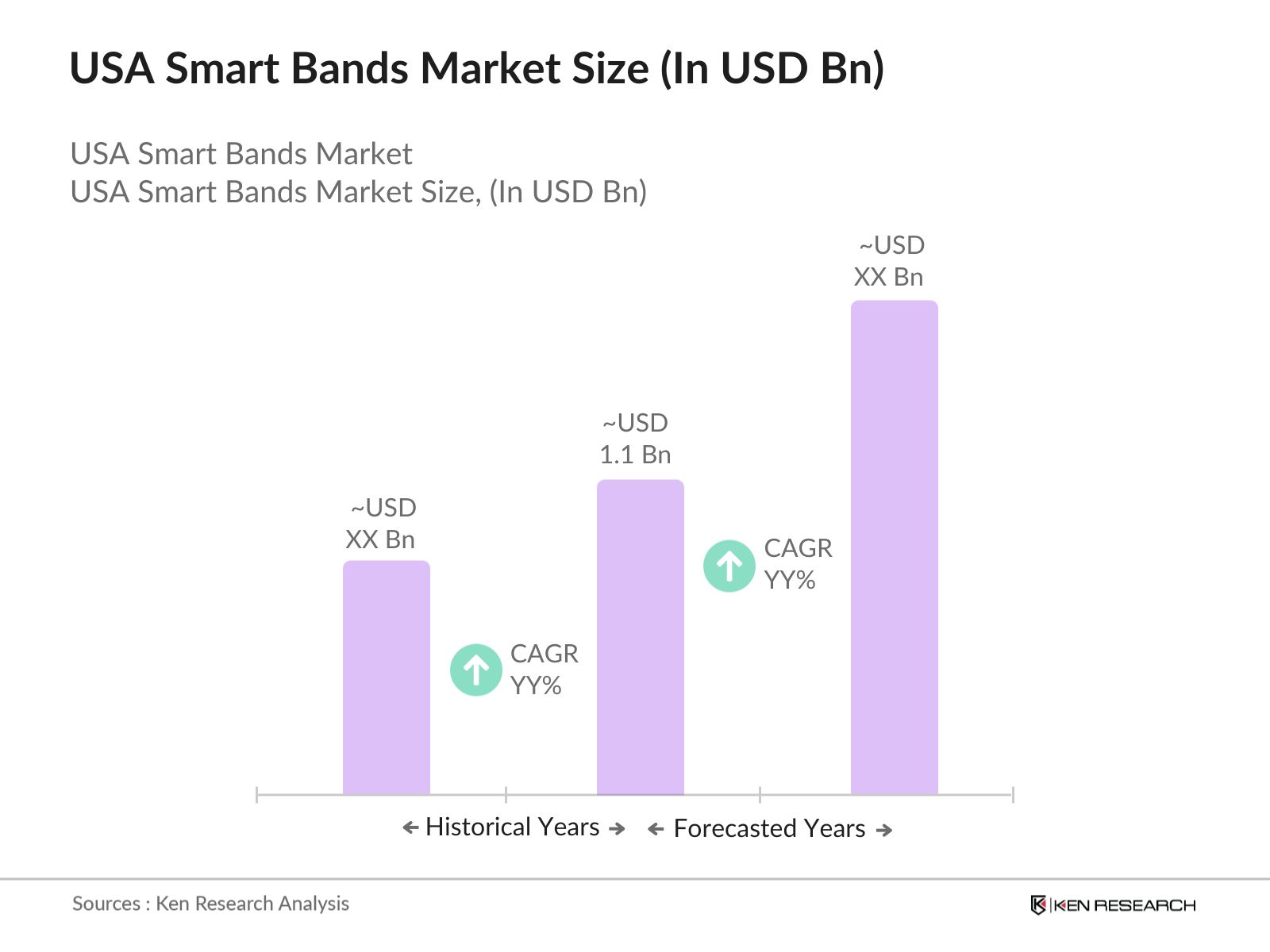
- In terms of geographic dominance, metropolitan regions such as New York, Los Angeles, and Chicago, along with tech hubs like San Francisco, dominate the smart bands market. These cities have a higher concentration of tech-savvy consumers, strong retail networks, and higher disposable incomes, allowing them to lead in both demand and innovation adoption in wearable technology.
- In 2024, the USA government, through Medicare and Medicaid, is encouraging the use of wearable health devices, including smart bands, to promote remote health monitoring, especially for elderly patients. Government funding has been allocated to integrate wearable technologies in managing chronic diseases, particularly as over 54 million Americans are aged 65 and older and can benefit from real-time health tracking.
USA Smart Bands Market Segmentation
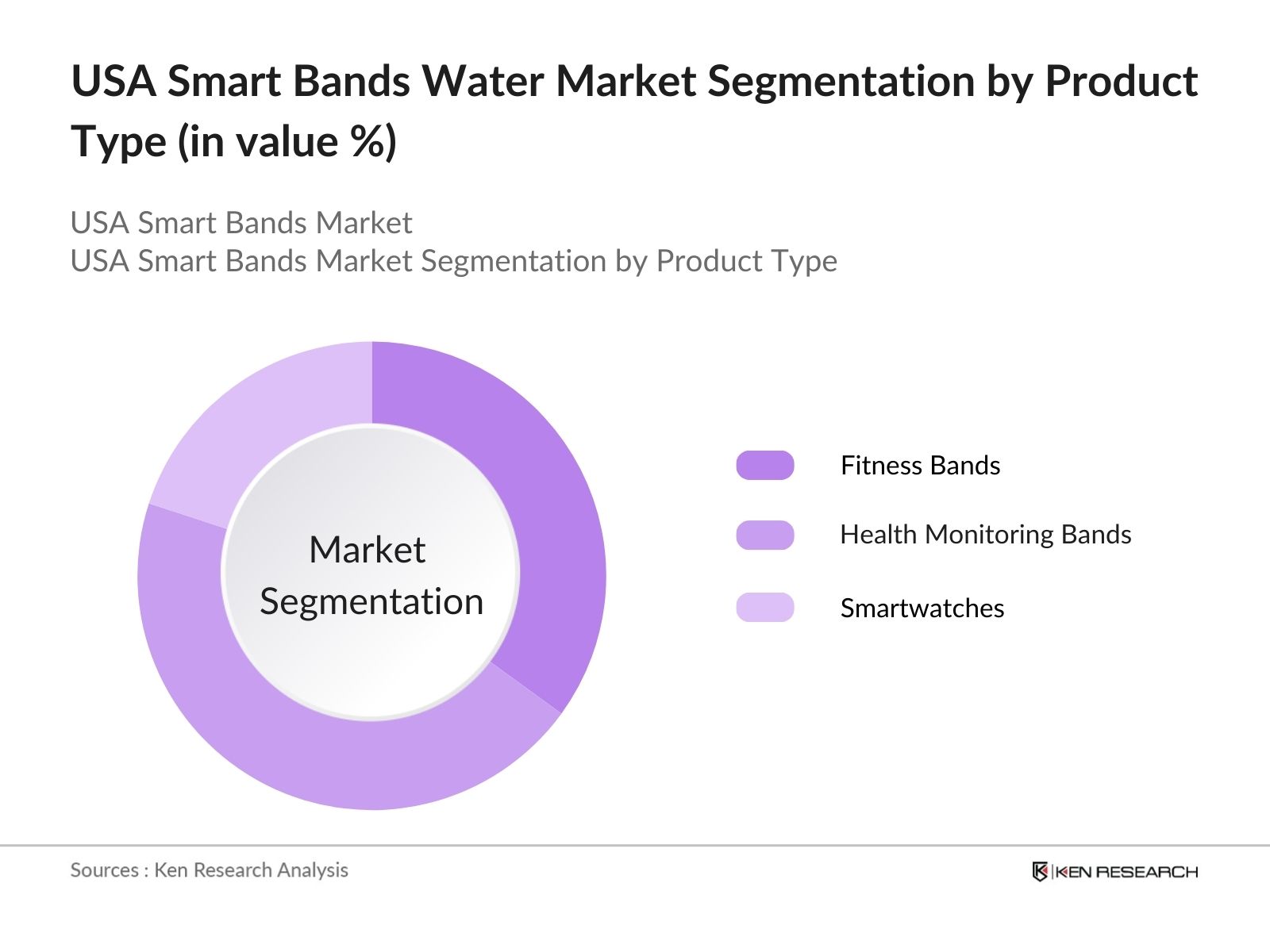
By Product Type: The market is segmented by product type into fitness bands, health monitoring bands, and smartwatches. Health monitoring bands have been leading in market share due to their advanced capabilities in tracking vital signs like heart rate, blood oxygen levels, and electrocardiograms (ECG). The demand is particularly high among consumers with pre-existing health conditions, athletes, and health-conscious individuals.
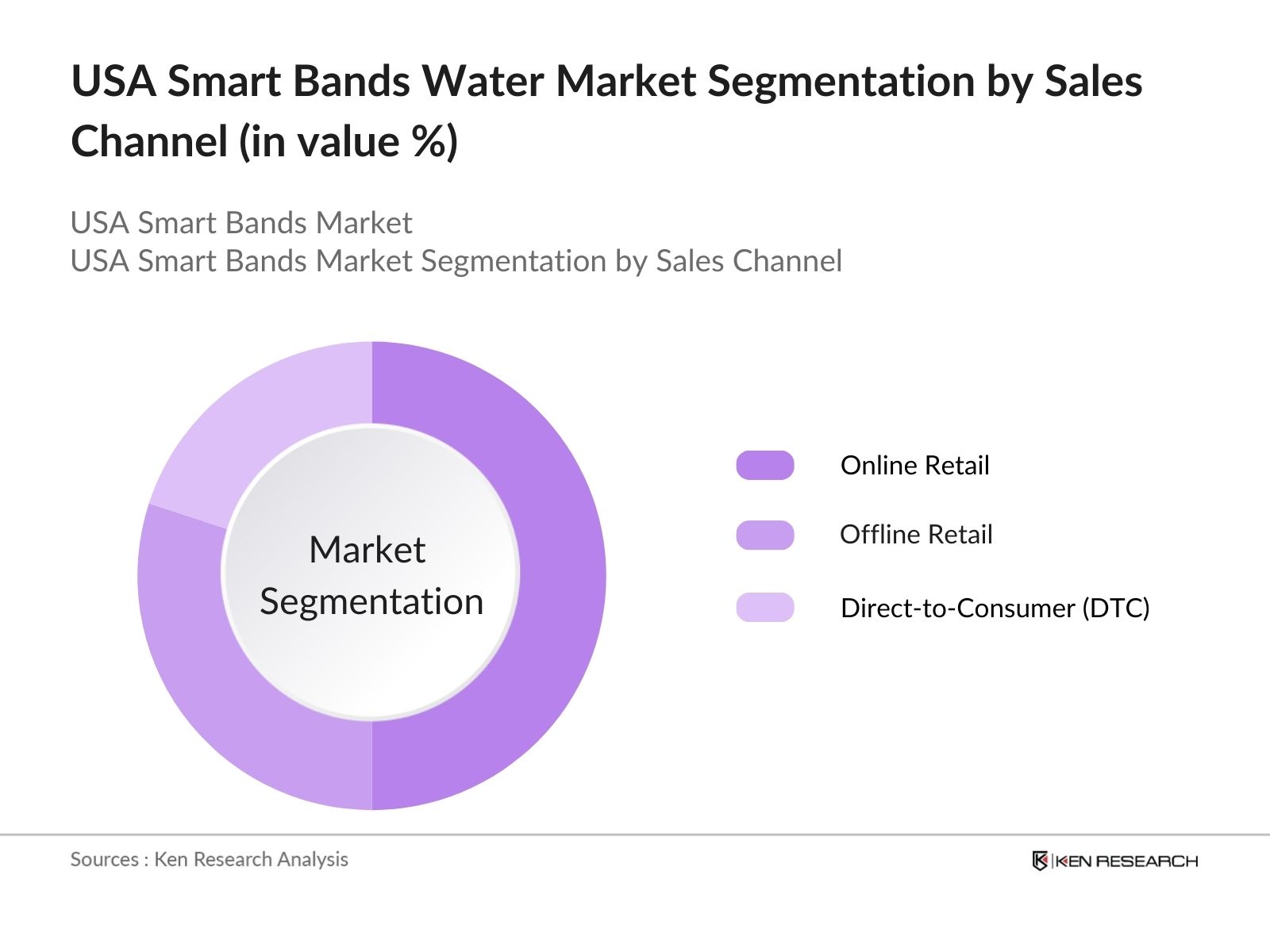
By Sales Channel: The market is also segmented by sales channels into online retail, offline retail, and direct-to-consumer (DTC) platforms. Online retail holds the dominant market share, driven by the increasing preference for e-commerce platforms such as Amazon and Best Buy. Consumers favor the convenience of online shopping, product variety, and discounts. Additionally, the detailed product reviews available on these platforms help buyers make informed decisions, boosting online retail growth.
USA Smart Bands Market Competitive Landscape
The market is dominated by key global and regional players. These companies are leading in product innovation, distribution, and partnerships. The competition is fueled by continuous technological advancements in sensor technologies, as well as growing consumer demand for advanced health-monitoring functionalities.
|
Company |
Establishment Year |
Headquarters |
Product Innovation |
Revenue (USD Bn) |
Employee Count |
Technology Adoption |
R&D Investment |
Market Penetration |
Distribution Channels |
|
Apple Inc. |
1976 |
Cupertino, CA |
|||||||
|
Fitbit (Google LLC) |
2007 |
San Francisco, CA |
|||||||
|
Garmin Ltd. |
1989 |
Olathe, KS |
|||||||
|
Xiaomi Corporation |
2010 |
Beijing, China |
|||||||
|
Samsung Electronics Co. |
1938 |
Suwon, South Korea |
USA Smart Bands Market Analysis
Market Growth Drivers
- Increase in Health Monitoring Awareness: In 2024, the USA has witnessed a rise in health-related issues such as cardiovascular diseases and diabetes, with over 37 million people currently affected by diabetes, according to the CDC. This growing health consciousness is driving consumers towards smart bands for tracking vital health metrics like heart rate, blood oxygen levels, and physical activity. This trend is further encouraged by the increasing number of health-conscious individuals in the USA, which is estimated to have reached around 77 million by the end of 2024.
- Integration with Smart Devices: As of 2024, there are around 275 million smartphone users in the United States, according to government reports. The integration of smart bands with smartphones, enabling seamless connectivity and real-time monitoring, has been a key driver for the market. The demand for these wearable devices, which can sync with other smart devices to provide comprehensive health and fitness tracking, is significantly contributing to market expansion.
- Support from Health Insurance Providers: In 2024, health insurance companies in the USA, covering over 330 million policyholders, are increasingly offering incentives for individuals to maintain a healthy lifestyle by using health-monitoring devices like smart bands. Several insurance companies have introduced rewards programs that encourage customers to track their physical activity, providing discounts or rebates based on the data gathered from their smart bands, further boosting the adoption of these devices.
Market Challenges
- Limited Battery Life: One of the persistent issues for users of smart bands is the limited battery life, with most devices requiring recharging every 5-7 days. Given that the average working week in the USA involves more than 40 hours of screen time for nearly 63 million office workers in 2024, the need for frequent recharging disrupts usage, especially for those seeking continuous monitoring of health metrics.
- Compatibility Issues: Despite the growing integration with smartphones and other devices, around 30% of smart band users in the USA have reported compatibility issues, particularly between different brands or older devices, in 2024. This lack of standardization in software and hardware platforms creates user dissatisfaction, hindering the mass adoption of these devices.
USA Smart Bands Market Future Outlook
Over the next five years, the USA Smart Bands industry is expected to experience growth due to increasing consumer interest in health and fitness tracking, advances in wearable technology, and the integration of artificial intelligence and machine learning for personalized health insights.
Future Market Opportunities
- Increased Adoption in the Elderly Population: By 2029, the USAs aging population, projected to reach 70 million people aged 65 and older, will be a key driver for smart band adoption. Smart bands tailored to the needs of elderly users, such as fall detection and emergency alerts, will gain traction as more seniors seek devices that enhance their safety and independence.
- Integration with Smart Home Ecosystems: In the next five years, smart bands will become more integrated with smart home ecosystems, allowing users to control household devices like lighting, thermostats, and security systems through their wearable devices. As the USA's smart home market is expected to have around 100 million connected devices by 2029, this integration will attract tech-savvy consumers seeking convenience.
Scope of the Report
|
Product Type |
Fitness Bands Health Monitoring Bands Smartwatches |
|
Sales Channel |
Online Retail Offline Retail Direct to Consumer (DTC) |
|
Feature Type |
Basic Fitness Tracking Advanced Health Monitoring GPS-Enabled |
|
Operating System |
iOS Android Other OS |
|
End-User |
General Consumers Athletes Corporate Wellness Medical & Elderly Care |
|
Region |
North East West South |
Products
Key Target Audience Organizations and Entities Who Can Benefit by Subscribing This Report:
Tech Companies and Smart Device Manufacturers
Healthcare Providers and Medical Device Companies
Insurance Providers (UnitedHealth Group, Humana, Cigna)
Banks and Financial Institution
Venture Capital and Investment Firms
Government and Regulatory Bodies (FDA, FCC)
Companies
Players Mentioned in the Report:
Apple Inc.
Fitbit (Google LLC)
Garmin Ltd.
Samsung Electronics Co., Ltd.
Xiaomi Corporation
Huawei Technologies Co., Ltd.
Amazfit (Huami Corp.)
Fossil Group, Inc.
Polar Electro
Withings
Realme
Honor (Huawei)
Jawbone Health
Suunto
Coros Wearables
Table of Contents
1. USA Smart Bands Market Overview
1.1. Definition and Scope
1.2. Market Taxonomy
1.3. Market Growth Rate
1.4. Market Segmentation Overview
2. USA Smart Bands Market Size (In USD Bn)
2.1. Historical Market Size
2.2. Year-on-Year Growth Analysis
2.3. Key Market Developments and Milestones
3. USA Smart Bands Market Analysis
3.1. Growth Drivers
3.1.1. Increased Health Awareness
3.1.2. Rising Adoption of IoT and Wearable Technology
3.1.3. Advancements in Sensors and Tracking Technology
3.1.4. Demand for Fitness and Wellness Monitoring
3.2. Market Challenges
3.2.1. Device Compatibility and Data Privacy Concerns
3.2.2. Battery Life and Charging Issues
3.2.3. High Market Competition
3.2.4. Supply Chain Disruptions
3.3. Opportunities
3.3.1. Integration with 5G and AI for Enhanced Features
3.3.2. Expanding Healthcare Applications
3.3.3. Collaborations with Health Insurance Providers
3.3.4. Expansion into Developing Markets
3.4. Trends
3.4.1. AI-Powered Health Monitoring Features
3.4.2. Enhanced Sleep and Stress Tracking Capabilities
3.4.3. Shift Toward Subscription-Based Services for Data Access
3.4.4. Increasing Fashion and Design Customizations
3.5. Government Regulations
3.5.1. Data Privacy Regulations (GDPR, CCPA)
3.5.2. FDA Approval for Health-Related Wearables
3.5.3. Import/Export Regulations for Wearable Devices
3.5.4. IoT Standards and Compliance
3.6. SWOT Analysis
3.7. Stakeholder Ecosystem
3.8. Porters Five Forces Analysis
3.8.1. Bargaining Power of Suppliers
3.8.2. Bargaining Power of Buyers
3.8.3. Threat of New Entrants
3.8.4. Threat of Substitutes
3.8.5. Intensity of Competitive Rivalry
3.9. Competition Ecosystem
4. USA Smart Bands Market Segmentation (In Value %)
4.1. By Product Type
4.1.1. Fitness Bands
4.1.2. Health Monitoring Bands
4.1.3. Smartwatches
4.2. By Sales Channel
4.2.1. Online Retail
4.2.2. Offline Retail
4.2.3. Direct to Consumer (DTC)
4.3. By Feature Type
4.3.1. Basic Fitness Tracking
4.3.2. Advanced Health Monitoring (Heart Rate, ECG)
4.3.3. GPS-Enabled Smart Bands
4.4. By Operating System Compatibility
4.4.1. iOS
4.4.2. Android
4.4.3. Other Operating Systems
4.5. By End-User
4.5.1. General Consumers
4.5.2. Athletes and Sports Enthusiasts
4.5.3. Corporate Wellness Programs
4.5.4. Medical and Elderly Care
4.6. By Region
4.6.1. North
4.6.2. East
4.6.3. West
4.6.4. South
5. USA Smart Bands Market Competitive Analysis
5.1. Detailed Profiles of Major Companies
5.1.1. Apple Inc.
5.1.2. Fitbit (Google LLC)
5.1.3. Garmin Ltd.
5.1.4. Xiaomi Corporation
5.1.5. Samsung Electronics Co., Ltd.
5.1.6. Huawei Technologies Co., Ltd.
5.1.7. Fossil Group, Inc.
5.1.8. Amazfit (Huami Corp.)
5.1.9. Polar Electro
5.1.10. Withings
5.1.11. Honor (Huawei)
5.1.12. Realme
5.1.13. Jawbone Health
5.1.14. Suunto
5.1.15. Coros Wearables
5.2. Cross Comparison Parameters
(No. of Employees, Headquarters, Revenue, Product Portfolio, Market Share, Growth Rate, Product Innovation, Customer Base)
5.3. Market Share Analysis
5.4. Strategic Initiatives
5.5. Mergers and Acquisitions
5.6. Investment Analysis
5.7. Venture Capital Funding
5.8. Government Grants and R&D Investment
5.9. Private Equity Investments
6. USA Smart Bands Market Regulatory Framework
6.1. FDA Regulations for Health-Tracking Devices
6.2. Data Privacy and Cybersecurity Standards
6.3. Wireless Communication Compliance (FCC Regulations)
6.4. Health Insurance Portability and Accountability Act (HIPAA) Compliance
7. USA Smart Bands Future Market Size (In USD Bn)
7.1. Future Market Size Projections
7.2. Key Factors Driving Future Market Growth
8. USA Smart Bands Future Market Segmentation (In Value %)
8.1. By Product Type
8.2. By Sales Channel
8.3. By Feature Type
8.4. By Operating System Compatibility
8.5. By End-User
8.6. By Region
9. USA Smart Bands Market Analysts Recommendations
9.1. TAM/SAM/SOM Analysis
9.2. Customer Cohort Analysis
9.3. Marketing Initiatives
9.4. White Space Opportunity Analysis
Research Methodology
Step 1: Identification of Key Variables
The initial phase involves mapping all key stakeholders within the USA Smart Bands Market. This step is carried out through extensive desk research, leveraging secondary data sources, industry databases, and proprietary research tools to gather comprehensive market-level information. The aim is to define and understand the key variables influencing market trends.
Step 2: Market Analysis and Construction
This phase involves analyzing historical data on the USA Smart Bands Market, including the adoption rate of wearables, market share by major players, and revenue generation trends. Further analysis is done on market penetration and consumer adoption rates to ensure the accuracy of growth predictions.
Step 3: Hypothesis Validation and Expert Consultation
We validate our market hypotheses by conducting interviews with industry experts and executives from key companies in the USA Smart Bands Market. These consultations provide critical insights into current market dynamics and future growth potential.
Step 4: Research Synthesis and Final Output
The final step involves synthesizing all the data collected into a cohesive report. In this phase, we integrate information from both primary and secondary sources to provide an accurate representation of the USA Smart Bands Market. The final report is carefully reviewed to ensure the inclusion of relevant statistics, market projections, and competitor analysis.
Frequently Asked Questions
01. How big is the USA Smart Bands Market?
The USA Smart Bands Market is valued at USD 1.1 billion, driven by growing consumer demand for health monitoring and fitness tracking devices, along with technological advancements in wearable technology.
02. What are the challenges in the USA Smart Bands Market?
The USA Smart Bands Market faces challenges such as concerns over data privacy, battery life, and high competition among leading brands. Additionally, compatibility issues with different operating systems and devices also pose hurdles to growth.
03. Who are the major players in the USA Smart Bands Market?
Key players in the USA Smart Bands Market include Apple Inc., Fitbit (Google LLC), Garmin Ltd., Xiaomi Corporation, and Samsung Electronics Co., Ltd. These companies dominate due to their innovation, extensive distribution networks, and strong brand presence.
04. What are the growth drivers of the USA Smart Bands Market?
The USA Smart Bands Market is driven by increased consumer awareness regarding fitness and health, advancements in wearable sensor technologies, and the growing trend of integrating smart bands with health insurance benefits and corporate wellness programs.
05. What trends are shaping the USA Smart Bands Market?
Key trends in the USA Smart Bands Market include the integration of AI-powered health tracking features, sleep and stress monitoring, and increased customization options for consumers. Moreover, advancements in 5G technology are expected to further boost the market.
Why Buy From Us?

What makes us stand out is that our consultants follows Robust, Refine and Result (RRR) methodology. i.e. Robust for clear definitions, approaches and sanity checking, Refine for differentiating respondents facts and opinions and Result for presenting data with story

We have set a benchmark in the industry by offering our clients with syndicated and customized market research reports featuring coverage of entire market as well as meticulous research and analyst insights.

While we don't replace traditional research, we flip the method upside down. Our dual approach of Top Bottom & Bottom Top ensures quality deliverable by not just verifying company fundamentals but also looking at the sector and macroeconomic factors.

With one step in the future, our research team constantly tries to show you the bigger picture. We help with some of the tough questions you may encounter along the way: How is the industry positioned? Best marketing channel? KPI's of competitors? By aligning every element, we help maximize success.

Our report gives you instant access to the answers and sources that other companies might choose to hide. We elaborate each steps of research methodology we have used and showcase you the sample size to earn your trust.

If you need any support, we are here! We pride ourselves on universe strength, data quality, and quick, friendly, and professional service.