CHAPTER 1 - MARKET SUMMARY
Market Overview
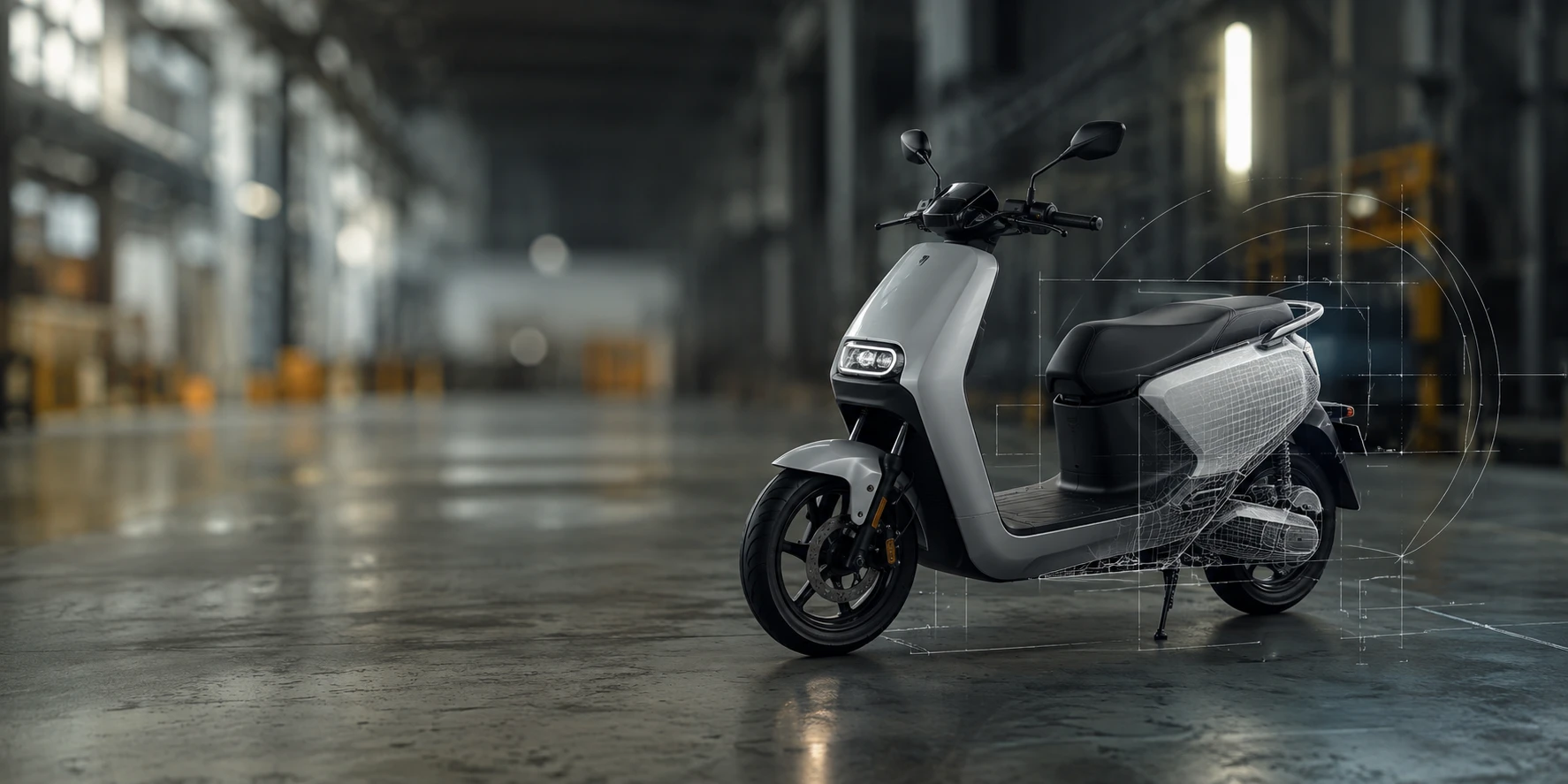
The Vietnam Electric Two-Wheeler Market operates through domestic manufacturers, foreign-owned assembly plants, authorized dealerships, direct retail networks and emerging fleet channels. Approximately 700,000 electric scooters and motorcycles were sold in 2025, equivalent to an estimated 20.6% of total two-wheeler sales. Daily commuting, education travel and delivery work collectively create high vehicle-utilization demand and shorten replacement cycles.
Demand is concentrated in Hanoi, Ho Chi Minh City and surrounding industrial provinces, where population density, short urban journeys and extensive dealer networks support electric vehicle economics. Vietnam had about 75 million motorcycles in circulation by the end of 2023. This installed base provides a substantial replacement pool, while dense city traffic reduces the practical importance of high-speed performance and favors efficient electric scooters.
Market Value
USD 620 million
2025
Dominant Region
Hanoi and Northern Urban Corridor
2025
Dominant Segment
Electric Scooters
fastest growing, 2025
Total Number of Players
87
Future Outlook
The Vietnam Electric Two-Wheeler Market is projected to increase from USD 620 million in 2025 to USD 1,450 million by 2031, representing a forecast CAGR of 15.21%. This follows a 29.84% historical CAGR during 2020-2025, when domestic brands expanded model availability and lower-priced vehicles accelerated mass adoption. Annual market volume is forecast to rise from 700,000 units to approximately 1.54 million units. The near-term growth rate is strongest during 2026-2028 as urban restrictions, consumer replacement cycles, fleet electrification and new battery-swapping networks convert policy signals into vehicle purchases across Hanoi and other major metropolitan areas.
Value growth is expected to exceed volume growth after 2028 as lithium-ion models, longer-range scooters, connected features and commercial fleet products increase the blended selling price. Market development will remain sensitive to charging access in apartments, national safety standards, battery warranty confidence and financing affordability. The base scenario assumes progressive implementation of Hanoi's low-emission zones, broader electrification measures in Ho Chi Minh City, stable battery input costs and continued capacity additions by domestic and Chinese-backed manufacturers. The projected terminal value carries a confidence range of USD 1,230-1,720 million, with policy enforcement and average selling prices representing the largest forecast variables.
15.21%
Forecast CAGR
$1,450 Mn
2030 Projection
Base Year
2025
Historical Period
2020-2025
Forecast Period
2026-2031
Historical CAGR
29.84%
CHAPTER 2 - SCOPE OF REPORT
Scope of the Market
CHAPTER 3 - Key Stakeholders
Key Target Audience
Key stakeholders who can leverage from this market analysis for investment, strategy, and operational planning.
Investors
CAGR, unit economics, battery assets, policy risk
Corporates
product mix, localization, pricing, dealer conversion
Government
emissions reduction, charging standards, affordability, employment transition
Operators
fleet uptime, swapping access, maintenance, residual value
Financial institutions
consumer credit, fleet leasing, battery finance, defaults
CHAPTER 4 - Market Size & Growth
Market Size, Growth Forecast and Trends
This section evaluates the historical market size, analyzes year-over-year growth dynamics, and presents forecast projections supported by market performance indicators and demand-side drivers.
Historical & Projected Market Size ($ Million)
Year-over-Year Growth Rate (%)
Market Value vs Volume Growth (%)
Historical Market Performance (2020-2025)
Market value expanded from USD 168 million in 2020 to USD 620 million in 2025. The strongest inflection occurred in 2025, when unit sales increased 70.7% and the blended selling price declined to USD 886. Affordable electric scooters captured consumers previously limited to lead-acid mopeds, while lithium-ion availability improved. The 2024-2025 period accounted for more than half of the absolute value increase recorded across the entire historical window, reflecting rapid commercialization rather than gradual category development.
Forecast Market Outlook (2026-2031)
Market value is forecast to reach USD 1,450 million by 2031 at a 15.21% CAGR, while volume reaches 1.54 million units at a 14.04% CAGR. Growth is expected to moderate from 16.9% in 2026 to 12.8% in 2031 as penetration rises. The value trajectory remains supported by a shift toward removable lithium-ion batteries, swapping-compatible fleets, longer-range products and premium connected scooters. Forecast acceleration depends on credible charging standards, apartment access and consistent enforcement of urban emission restrictions.
CHAPTER 5 - Market Data
Market Breakdown
The Vietnam Electric Two-Wheeler Market is transitioning from a fragmented low-speed mobility category into a scaled automotive segment. The following operating indicators show how unit growth, electric penetration and price mix influence the market's revenue trajectory and strategic attractiveness.
Year | Market Size (USD Mn) | YoY Growth (%) | Annual Sales (000 Units) | E2W Penetration (%) | Average Selling Price (USD) | Period |
|---|---|---|---|---|---|---|
| 2020 | $168 Mn | +- | 150 | 5.4% | Forecast | |
| 2021 | $205 Mn | +22.0% | 180 | 6.3% | Forecast | |
| 2022 | $258 Mn | +25.9% | 220 | 7.6% | Forecast | |
| 2023 | $332 Mn | +28.7% | 285 | 10.8% | Forecast | |
| 2024 | $445 Mn | +34.0% | 410 | 14.1% | Forecast | |
| 2025 | $620 Mn | +39.3% | 700 | 20.6% | Forecast | |
| 2026F | $725 Mn | +16.9% | 820 | 24.0% | Forecast | |
| 2027F | $845 Mn | +16.6% | 960 | 27.5% | Forecast | |
| 2028F | $980 Mn | +16.0% | 1,100 | 31.0% | Forecast | |
| 2029F | $1,120 Mn | +14.3% | 1,240 | 34.5% | Forecast | |
| 2030F | $1,285 Mn | +14.7% | 1,390 | 38.0% | Forecast | |
| 2031F | $1,450 Mn | +12.8% | 1,540 | 41.5% | Forecast |
Annual Sales
700,000 units, 2025, Vietnam. Sales scale indicates that electric two-wheelers have moved beyond an early-adopter market. VinFast alone reported 406,453 domestic deliveries in 2025, creating procurement leverage across cells, motors and power electronics.
E2W Penetration
20.6%, 2025, Vietnam. Penetration above one-fifth of annual two-wheeler demand materially changes dealer economics and model planning. Vietnam's overall motorcycle market reached approximately 3.4 million units during 2025 across reporting scopes.
Average Selling Price
USD 886, 2025, Vietnam. Falling blended prices widened the addressable market but compressed hardware margins. Yamaha's NEO's listed price of VND 36.9 million illustrates the continued premium paid for longer-range branded products.
CHAPTER 6 - Segmentation
Market Segmentation Framework
Comprehensive analysis across key dimensions providing insights into market structure, consumer preferences, and distribution patterns.
No of Segments
7
Dominant Segment
Vehicle Type
Fastest Growing Segment
Usage Type
Vehicle Type
Battery Type
Customer Type
Sales Channel
Usage Type
Price Tier
Geography
Key Segmentation Takeaways
Comprehensive analysis across all extracted segmentation dimensions providing insights into market structure, consumer preferences, and distribution patterns.
Vehicle Type
Electric scooters dominate because step-through designs, automatic operation and under-seat storage align with short urban journeys and household utility. Affordable commuter scooters generate the largest revenue pool, while removable-battery mopeds remain important for students and apartment residents. Competitive advantage depends on balancing range, payload, durability and purchase price rather than maximizing performance specifications.
Usage Type
Delivery and ride-hailing represents the fastest-growing use case because commercial riders travel substantially farther than private commuters and can monetize lower energy costs. Battery-swapping-compatible vehicles reduce downtime and support subscription revenue. Fleet demand is also more measurable than household demand, enabling manufacturers to secure contracted volumes, standardized maintenance schedules and recurring battery-service relationships.
CHAPTER 7 - Regional Analysis
Regional Analysis
Vietnam was the largest electric two-wheeler market among selected Southeast Asian peers in 2025, supported by a mature motorcycle culture, domestic manufacturing and accelerated urban emission policy. Its estimated 700,000 annual electric two-wheeler sales significantly exceeded peer-market adoption, although regional comparability remains affected by registration and low-speed vehicle definitions.
Focus Country Ranking
1st
Vietnam Market Size (2025)
USD 620 Mn
Vietnam CAGR (2026-2031)
15.21%
Focus Country Ranking
1st
Vietnam Market Size (2025)
USD 620 Mn
Vietnam CAGR (2026-2031)
15.21%
Regional Analysis (Current Year)
Market Position
Vietnam ranked first among the selected peers with an estimated USD 620 million market in 2025, supported by 700,000 electric two-wheeler sales and a large domestic replacement pool.
Growth Advantage
Vietnam's 15.21% forecast CAGR exceeds Indonesia's estimated 13.80% and Malaysia's 10.80%, while remaining below the Philippines' smaller, low-base market growth rate of 17.20%.
Competitive Strengths
Vietnam combines 75 million motorcycles in circulation, 406,453 VinFast electric two-wheeler sales and a phased Hanoi low-emission-zone mandate, creating stronger demand visibility and local scale than most ASEAN peers.
CHAPTER 8 - INDUSTRY ANALYSIS
Growth Drivers, Market Challenges & Market Opportunities
Comprehensive analysis of key factors shaping the Vietnam Electric Two-Wheeler Market, including growth catalysts, operational challenges, and emerging opportunities across production, distribution, and consumer segments.
Growth Drivers
Urban Low-Emission Policy
- Low-emission-zone implementation expands from selected Ring Road 1 areas in 2026 to Ring Road 3 by 2030 (Hanoi), creating a multi-year demand pipeline for compliant vehicles.
- Proposed consumer support of up to 20% of vehicle value and VND 5 million (2025 proposal, Hanoi) reduces the upfront price barrier and improves mass-market affordability.
- Commercial transport motorcycles face conversion milestones of 20% by 2027 and 100% by 2030 (Hanoi), benefiting fleet-focused OEMs, lessors and swapping-network operators.
Domestic Manufacturing Scale
- VinFast's volume represented about 58% of estimated 2025 electric two-wheeler sales (Vietnam), enabling procurement scale across battery packs, motors, controllers and plastics.
- The Evo model family exceeded 250,000 units in 2025 (Vietnam), demonstrating that concentrated platform architectures can support lower unit costs and rapid dealer throughput.
- Yadea has operated manufacturing in Vietnam since 2019 (Vietnam), strengthening price competition and creating a second scaled manufacturing ecosystem beyond domestic brands.
Motorcycle-Dependent Urban Mobility
- Vietnam's population reached approximately 102 million in 2025 (Vietnam), supporting a high-density consumer base for affordable personal mobility and extensive dealership coverage.
- Total motorcycle sales approached 3.4 million units in 2025 (Vietnam), allowing electric models to scale without depending exclusively on first-time vehicle ownership.
- A consumer survey found 54% of respondents in 2025 (Hanoi and Ho Chi Minh City) intended to choose an electric model for their next motorcycle purchase.
Market Challenges
Charging and Swapping Access
- Apartment residents frequently lack dedicated electrical connections, making removable batteries essential despite added weight and battery-handling requirements for millions of urban households in 2025 (Vietnam).
- Hanoi proposed that existing parking facilities allocate at least 15% of spaces to charging by 2030 (Hanoi), showing the infrastructure gap requires regulation as well as private investment.
- New developments may need at least 30% charging-enabled parking by 2030 (Hanoi proposal), increasing electrical-system costs but improving long-term vehicle usability and asset readiness.
Affordability and Financing Friction
- Upfront battery cost remains a major purchasing barrier even when operating expenses are lower, leading Hanoi to consider support equal to 30% of first-year loan interest in 2025 (Hanoi).
- Honda offered a VND 5 million incentive in 2026 (Vietnam) on the ICON e, indicating that price reductions are required to accelerate consumer trial even for established brands.
- Average market pricing fell to an estimated USD 886 per unit in 2025 (Vietnam), improving access but increasing pressure on dealer margins, warranty reserves and battery quality.
Standards, Safety and Residual-Value Risk
- Brand-specific battery formats can create stranded infrastructure and weaken asset utilization, particularly where public systems must serve multiple manufacturers from 2026 onward (Vietnam).
- Battery warranties and replacement costs materially affect resale values because the battery can represent 25-40% of vehicle manufacturing cost in 2025 (industry benchmark).
- Traditional manufacturers and suppliers warned that rapid transition could affect nearly 2,000 dealers and 200 suppliers in 2025 (Vietnam), creating labor and channel-conversion risk.
Market Opportunities
Battery Swapping for Commercial Fleets
- Subscription pricing converts battery expenditure into recurring revenue, while high-mileage riders generate substantially more swap transactions than private commuters over 250-300 operating days annually (fleet benchmark).
- Vehicle manufacturers, logistics platforms and infrastructure investors benefit when standardized packs support pooled asset utilization across food, parcel and ride-hailing fleets from 2026 onward (Vietnam).
- The opportunity requires interoperable connectors, fire-safety standards and station access, including the 110 potential pilot sites reviewed in 2025 (Hanoi).
Affordable Lithium-Ion Replacement Models
- Manufacturers can capture scale by designing modular scooters in the USD 800-1,300 mass-market tier during 2026-2031 (Vietnam forecast), balancing range, durability and financing affordability.
- Dealers and consumer-finance providers benefit from trade-in, installment and battery-warranty products that reduce the initial purchase barrier for millions of gasoline-motorcycle owners (Vietnam).
- Realization requires transparent battery-health diagnostics and residual-value standards, enabling used electric vehicles to develop alongside forecast sales of 1.54 million new units by 2031 (Vietnam).
Dealer and Service Network Conversion
- Dealers can replace declining engine-maintenance income with battery diagnostics, software services, insurance and financing as electric penetration rises from 20.6% in 2025 to 41.5% by 2031 (Vietnam forecast).
- OEMs benefit from converting proven gasoline dealerships rather than building entirely new networks, preserving customer trust while accelerating electric coverage beyond Hanoi and Ho Chi Minh City from 2026 onward (Vietnam).
- Channel conversion requires technician certification, high-voltage safety procedures and spare-parts availability before low-emission restrictions expand toward Hanoi Ring Road 3 in 2030 (Hanoi).
CHAPTER 9 - Competitive Landscape
Competitive Landscape Overview
The market is increasingly concentrated around VinFast, while Chinese-backed manufacturers, Vietnamese specialists and incumbent Japanese motorcycle brands compete through price, battery formats, range, dealer reach and fleet partnerships. Entry barriers are rising as manufacturing scale, charging access and warranty credibility become more important.
Market Share Distribution
Top 5 Players
Market Dynamics
8 new entrants in the past 5 years, indicating strong market attractiveness and growth potential.
Company Name | Market Share | Headquarters | Founding Year | Core Market Focus |
|---|---|---|---|---|
VinFast | 58.1% | Hanoi, Vietnam | 2017 | Mass-market electric scooters, motorcycles, charging and battery swapping |
Yadea | - | Wuxi, China | 2001 | Electric scooters, mopeds and localized manufacturing |
Dibao | - | - | - | Affordable electric scooters and student mobility products |
PEGA | - | Hanoi, Vietnam | 2012 | Vietnam-designed commuter scooters and dealer distribution |
Dat Bike | - | Ho Chi Minh City, Vietnam | 2019 | Long-range connected electric motorcycles and scooters |
Selex Motors | - | Hanoi, Vietnam | 2018 | Commercial electric scooters and battery-swapping services |
DK Bike | - | Thai Nguyen, Vietnam | - | Affordable electric mopeds, scooters and provincial retail |
Anbico | - | Hanoi, Vietnam | - | Entry-level electric two-wheelers and domestic assembly |
Honda Vietnam | - | Phu Tho, Vietnam | 1996 | Electric mopeds, scooters and nationwide authorized dealers |
Yamaha Motor Vietnam | - | Hanoi, Vietnam | 1998 | Premium electric scooters and established dealer services |
Cross Comparison Parameters
The report provides detailed cross-comparison of key players across 10 performance parameters to identify competitive strengths and weaknesses.
Annual Electric Two-Wheeler Sales
Battery and Charging Network Coverage
Vietnam Electric Mobility Revenue Growth
Gross Margin per Vehicle Platform
Analysis Covered
Market Share Analysis:
Compares estimated sales concentration across domestic and international electric manufacturers
Cross Comparison Matrix:
Benchmarks product range, infrastructure, channel coverage and financial performance indicators
SWOT Analysis:
Assesses brand strengths, operating constraints, expansion opportunities and competitive threats
Pricing Strategy Analysis:
Evaluates vehicle prices, battery ownership structures, financing and fleet economics
Company Profiles:
Reviews corporate background, market focus, products and strategic development priorities
CHAPTER 10 - REPORT TOC
Table of Contents
Market Assessment Phase
Supply-side and competitive intelligence covering market sizing, segmentation, competitive dynamics, regulatory landscape, and future forecasts.
Go-To-Market Strategy Phase
15 chapters
Entry strategy evaluation, execution roadmap, partner recommendations, and profitability outlook.
Survey Phase
8 chapters
Demand-side primary research conducted through structured interviews and online surveys with end users across priority metros and Tier 2/3 cities to capture consumption behavior, unmet needs, and purchase drivers.
Complete Report Coverage
201+ detailed sections covering every aspect of the market
143
Assessment Sections
58
Strategy Sections
CHAPTER 11 - Our Approach
Research Methodology
Desk Research
- Reviewed national motorcycle sales statistics
- Mapped electric vehicle policy milestones
- Benchmarked manufacturer model portfolios
- Assessed battery and charging infrastructure
Primary Research
- Electric motorcycle product directors interviewed
- Authorized dealership owners interviewed
- Battery infrastructure managers interviewed
- Commercial fleet managers interviewed
Validation and Triangulation
- Validated through 286 respondent interviews
- Reconciled vehicle sales and revenues
- Cross-checked prices across retail channels
- Tested forecast scenarios with experts
CHAPTER 12 - FAQ
FAQs
Still have questions?
Our research team is here to help you find the right solution
CHAPTER 13 - Related Research
Explore Related Reports
Expand your market intelligence with complementary research across regions and adjacent markets.
Regional/Country ReportsRelated market analysis across key regions
Related market analysis across key regions
- Egypt Electric Two-Wheeler Market Size, Share & Forecast, By Vehicle Type, Battery Type & Sales Channel, 2025-2032
- Malaysia Electric Two-Wheeler Market Size, Share & Forecast, By Vehicle Type, Battery Type & Technology, 2026–2032
- Nigeria Electric Two-Wheeler Market Size, Share & Forecast, By Vehicle Type, Battery Type, Usage Type & Business Model, 2026-2031
- Philippines Electric Two-Wheeler Market Size, Share & Forecast, By Vehicle Type, Battery Type & Sales Channel, 2026-2031
- Indonesia Electric Two-Wheeler Market Size, Share & Forecast, By Vehicle Type, Customer Type & Powertrain, 2025-2032
Adjacent ReportsRelated markets and complementary research
Related markets and complementary research
- Indonesia Electric Vehicle Charger Market
- KSA Battery Manufacturing Market Outlook to 2030
- Japan Micromobility Solutions Market
- Bahrain Urban Transportation Services Market
- Qatar Smart City Technology Market
500+
Market Research Reports
50+
Countries Covered
15+
Industry Verticals