
Vietnam Robotic Farming Market Outlook to 2030
Region:Asia
Author(s):Vijay Kumar
Product Code:KROD11299
Region:Asia
Author(s):Vijay Kumar
Product Code:KROD11299
December 2024
81
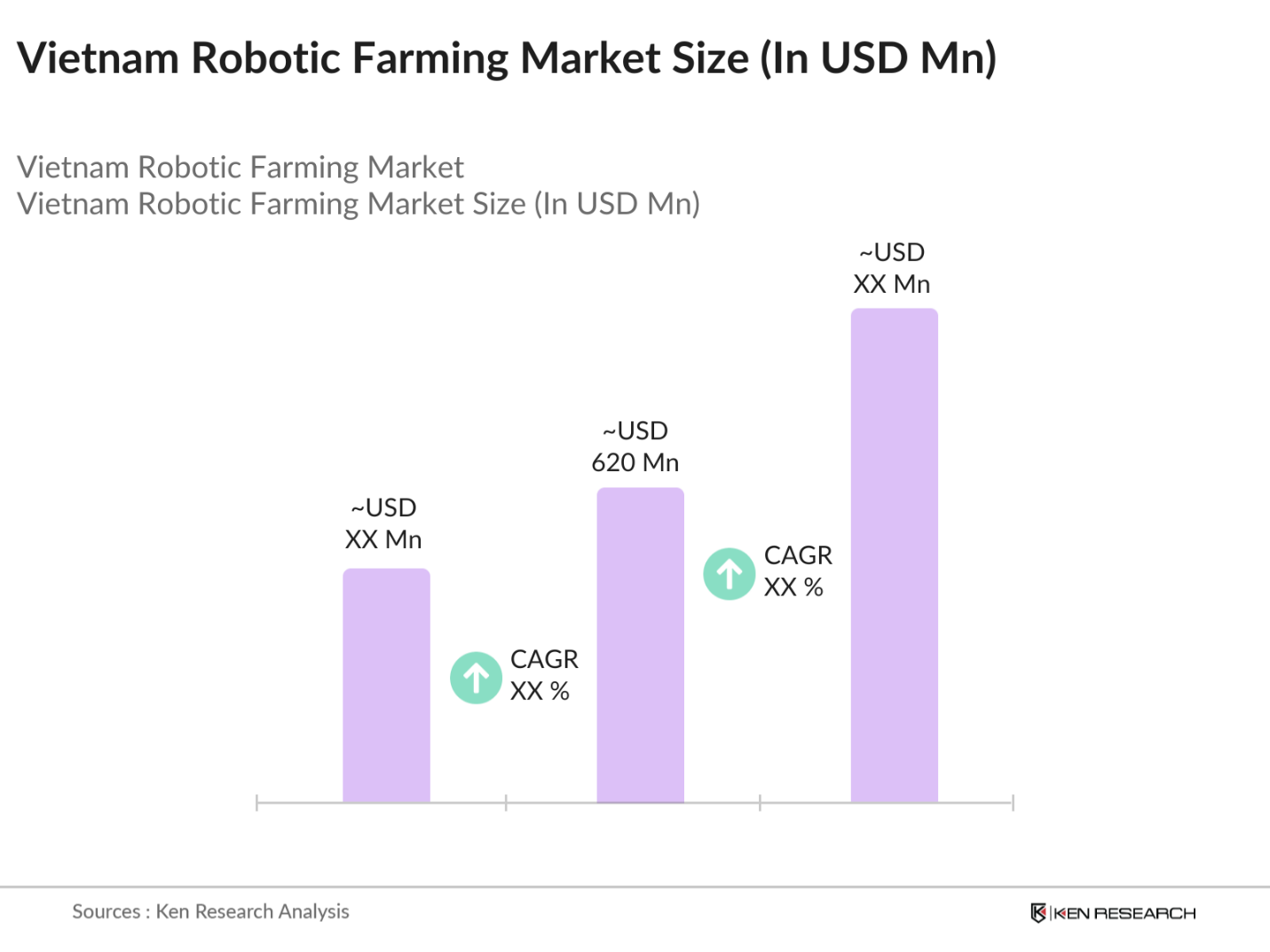
The Vietnam Robotic Farming Market can be segmented by various factors such as type of Product, Crop, and region.
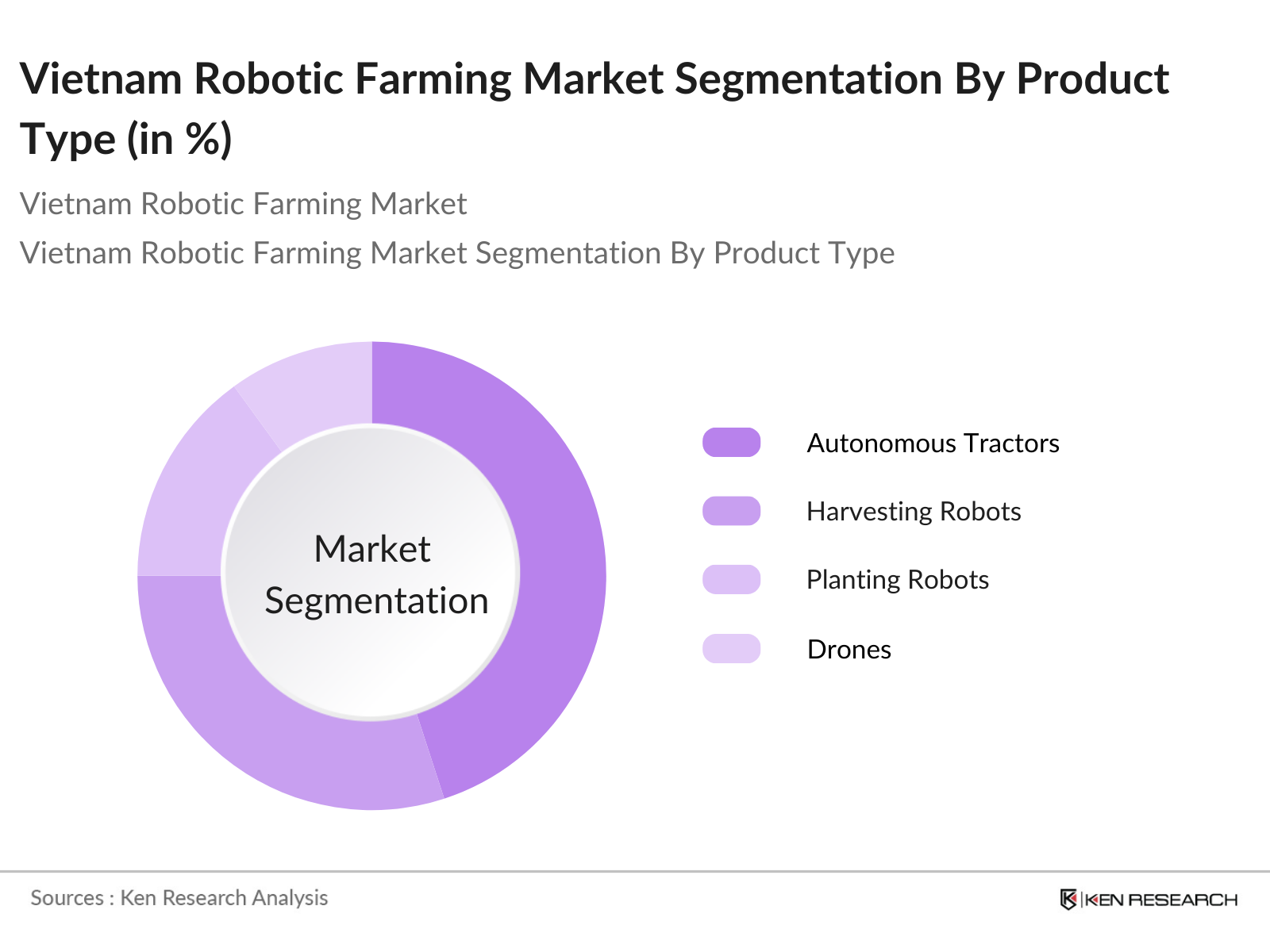
By Product Type: The market is segmented by product type into Autonomous Tractors, Harvesting Robots, Planting Robots, and Drones. In 2023, Autonomous Tractors held the largest market share due to their versatile applications and efficiency in large-scale farming operations. The demand for these tractors is driven by their ability to perform multiple tasks, such as plowing and seeding, which are crucial for Vietnam's extensive agricultural lands.
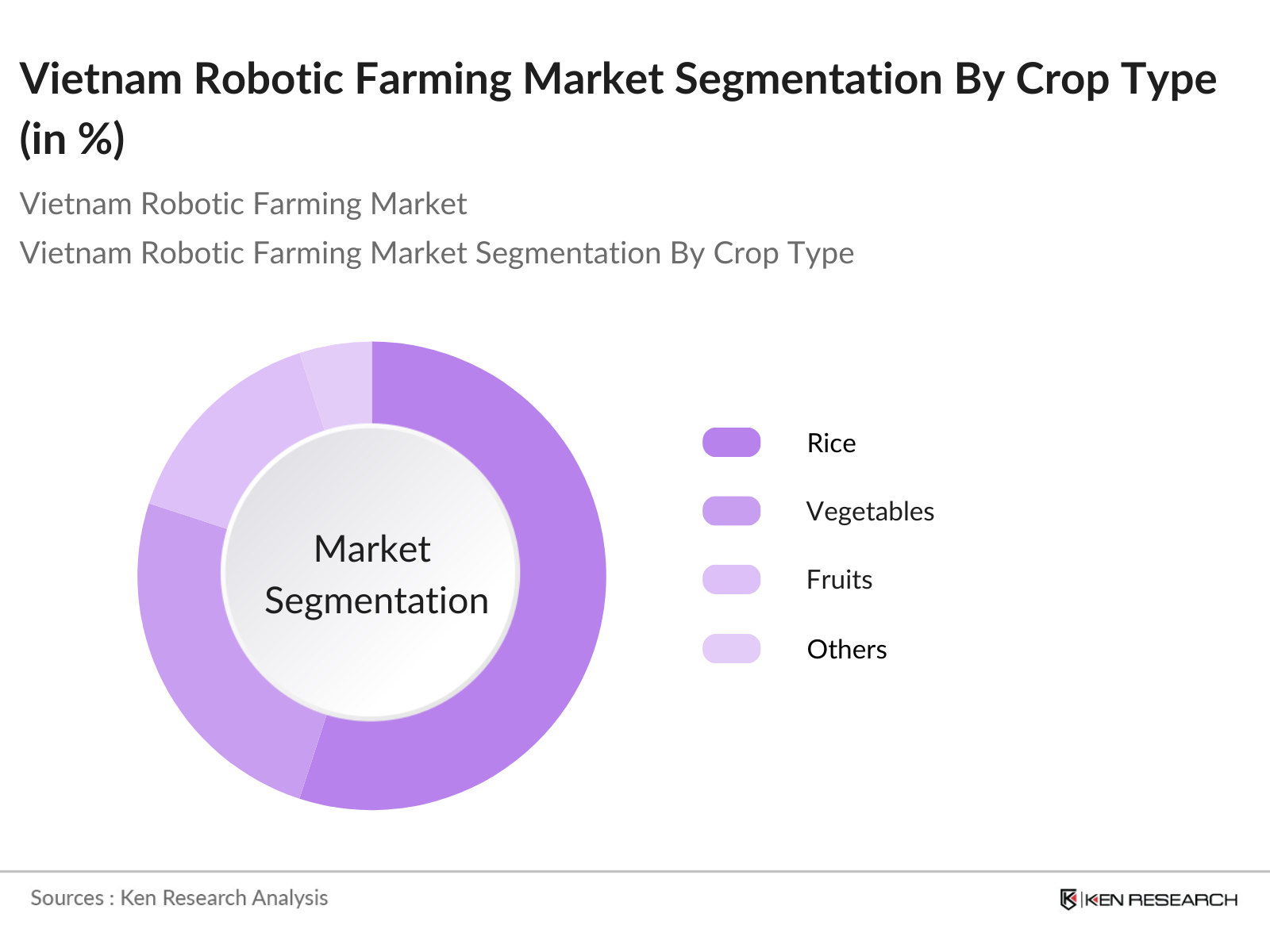
By Crop Type: The market is segmented by crop type into Rice, Vegetables, Fruits, and Others. In 2023, the Rice segment dominated the market due to its prominence in Vietnamese agriculture. The high demand for robotic systems in rice farming is attributed to the need for efficient harvesting and planting solutions in the countrys major rice-producing regions.
By Region: The market is segmented regionally into North, South, East, and Central Vietnam. In 2023, the South region led the market due to its extensive agricultural activities and early adoption of robotic technologies. The Mekong Delta, a major rice-producing area, is a key driver of market growth in this region, with significant investments in robotic systems to enhance productivity.
|
Company |
Establishment Year |
Headquarters |
|
FPT Corporation |
1988 |
Hanoi |
|
Vietnam Agricultural Machinery Corporation (VAM) |
1970 |
Ho Chi Minh City |
|
Mitsubishi Heavy Industries (Vietnam) |
1995 |
Ho Chi Minh City |
|
Yanmar Vietnam |
1990 |
Hanoi |
|
Panasonic Vietnam |
1996 |
Ho Chi Minh City |
The market is poised for remarkable growth, driven by the Integration of AI in Genomic Data Analysis, Expansion of Personalized Medicine, and the Development of Cost-Effective Sequencing Solutions.
|
By Product |
Autonomous Tractors Harvesting Robots Planting Robots Drones |
|
By Crop |
Rice Vegetables Fruits Others |
|
By Region |
North South East West |
1.1. Definition and Scope
1.2. Market Taxonomy
1.3. Market Growth Rate
1.4. Market Segmentation Overview
2.1. Historical Market Size
2.2. Year-On-Year Growth Analysis
2.3. Key Market Developments and Milestones
3.1. Growth Drivers
3.1.1. Labor Shortages in Agriculture
3.1.2. Government Initiatives for Agricultural Modernization
3.1.3. Increasing Demand for Precision Farming
3.1.4. Technological Advancements in Robotics
3.2. Market Challenges
3.2.1. High Initial Investment Costs
3.2.2. Limited Technical Expertise Among Farmers
3.2.3. Infrastructure Limitations in Rural Areas
3.3. Opportunities
3.3.1. Expansion of Smart Farming Practices
3.3.2. Collaboration with International Agri-tech Firms
3.3.3. Development of Affordable Robotic Solutions
3.4. Trends
3.4.1. Adoption of Drones for Crop Monitoring
3.4.2. Integration of AI and IoT in Farming Equipment
3.4.3. Use of Autonomous Tractors and Harvesting Robots
3.5. Government Regulations
3.5.1. Policies Promoting Agricultural Mechanization
3.5.2. Subsidies and Financial Support for Technology Adoption
3.5.3. Standards for Safety and Operation of Agricultural Robots
3.6. SWOT Analysis
3.7. Stakeholder Ecosystem
3.8. Porters Five Forces Analysis
3.9. Competitive Landscape
4.1. By Robot Type (In Value %)
4.1.1. Autonomous Tractors
4.1.2. Unmanned Aerial Vehicles (Drones)
4.1.3. Milking Robots
4.1.4. Harvesting Robots
4.1.5. Weeding Robots
4.2. By Application (In Value %)
4.2.1. Crop Production
4.2.2. Animal Husbandry
4.2.3. Field Mapping
4.2.4. Irrigation Management
4.2.5. Inventory Management
4.3. By Farming Environment (In Value %)
4.3.1. Indoor Farming
4.3.2. Outdoor Farming
4.4. By Component (In Value %)
4.4.1. Hardware
4.4.2. Software
4.4.3. Services
4.5. By Region (In Value %)
4.5.1. Red River Delta
4.5.2. Mekong Delta
4.5.3. Central Highlands
4.5.4. Northern Midlands and Mountain Areas
4.5.5. South East
5.1. Detailed Profiles of Major Companies
5.1.1. DJI Vit Nam
5.1.2. XAG Mekong
5.1.3. Hogitech Co., Ltd
5.1.4. Huida Tech
5.1.5. AGCO Corporation
5.1.6. John Deere
5.1.7. AgEagle Aerial Systems
5.1.8. Yamaha Robotics
5.1.9. MAJ Vietnam
5.1.10. AgriDrone
5.1.11. Kubota Corporation
5.1.12. Trimble Inc.
5.1.13. Lely Industries
5.1.14. DeLaval
5.1.15. Blue River Technology
5.2. Cross Comparison Parameters (Number of Employees, Headquarters, Inception Year, Revenue, Product Portfolio, Market Share, R&D Investment, Regional Presence)
5.3. Market Share Analysis
5.4. Strategic Initiatives
5.5. Mergers and Acquisitions
5.6. Investment Analysis
5.6.1. Venture Capital Funding
5.6.2. Government Grants
5.6.3. Private Equity Investments
6.1. Policies on Agricultural Mechanization
6.2. Compliance Requirements for Robotic Equipment
6.3. Certification Processes for Agricultural Robots
7.1. Future Market Size Projections
7.2. Key Factors Driving Future Market Growth
8.1. By Robot Type (In Value %)
8.2. By Application (In Value %)
8.3. By Farming Environment (In Value %)
8.4. By Component (In Value %)
8.5. By Region (In Value %)
9.1. TAM/SAM/SOM Analysis
9.2. Customer Cohort Analysis
9.3. Marketing Initiatives
9.4. White Space Opportunity Analysis
Disclaimer Contact UsWe begin by creating an ecosystem map of all significant players and stakeholders in the Vietnam Robotic Farming market. This involves comprehensive desk research using multiple secondary and proprietary databases to gather industry-level information. Key variables include market definition, scope, taxonomy, and growth drivers. This step provides a foundational understanding of market dynamics, including key players, market segmentation, and technological advancements.
Next, we gather and analyze historical and current statistics on the Vietnam Robotic Farming market, focusing on market size, growth trends, and penetration of robotic solutions in agriculture. This includes evaluating revenue generation, market shares of various robotic technologies, and service provider ratios. Additionally, we review adoption rates and technological innovations to ensure the accuracy and reliability of the data points shared, establishing a solid basis for market projections.
We build market hypotheses and validate these through Computer-Assisted Telephone Interviews (CATIs) with industry experts, agricultural technology providers, and key stakeholders. This step is essential for confirming the accuracy of the collected data and gaining insights into operational practices, financial performance, and market challenges. Feedback from these interviews is integrated into the market analysis to refine and verify the statistics and projections.
Our team engages with leading robotic farming companies and technology providers in Vietnam to gather detailed information about product segments, sales trends, consumer preferences, and market dynamics. This bottom-up approach ensures that the data and projections are accurate and relevant, providing a comprehensive and reliable analysis of the Vietnam Robotic Farming market.
The Vietnam Robotic Farming market was valued at USD 150 million in 2023. This growth is attributed to the increasing adoption of robotic technologies in agriculture, driven by advancements in automation and precision farming practices.
Challenges in the Vietnam Robotic Farming market include high initial investment costs for advanced robotics, a shortage of technical expertise and training for operating these systems, and infrastructure limitations in rural areas which hinder the widespread adoption of robotic technologies.
Major players in the Vietnam Robotic Farming market include Yanmar, Nao Technologies, AG Leader Technology, and DJI. These companies are leading the market with their innovative robotic solutions tailored to the needs of modern farming.
The Vietnam Robotic Farming market is driven by the integration of advanced robotics in agriculture, government support through subsidies and initiatives, and the rising demand for precision agriculture to improve crop yields and reduce labor costs.

What makes us stand out is that our consultants follows Robust, Refine and Result (RRR) methodology. i.e. Robust for clear definitions, approaches and sanity checking, Refine for differentiating respondents facts and opinions and Result for presenting data with story

We have set a benchmark in the industry by offering our clients with syndicated and customized market research reports featuring coverage of entire market as well as meticulous research and analyst insights.

While we don't replace traditional research, we flip the method upside down. Our dual approach of Top Bottom & Bottom Top ensures quality deliverable by not just verifying company fundamentals but also looking at the sector and macroeconomic factors.

With one step in the future, our research team constantly tries to show you the bigger picture. We help with some of the tough questions you may encounter along the way: How is the industry positioned? Best marketing channel? KPI's of competitors? By aligning every element, we help maximize success.

Our report gives you instant access to the answers and sources that other companies might choose to hide. We elaborate each steps of research methodology we have used and showcase you the sample size to earn your trust.

If you need any support, we are here! We pride ourselves on universe strength, data quality, and quick, friendly, and professional service.