About the Report
Base Year 2024Listen to the audio summary
Kenya Mobile Gaming and eSports Market Overview
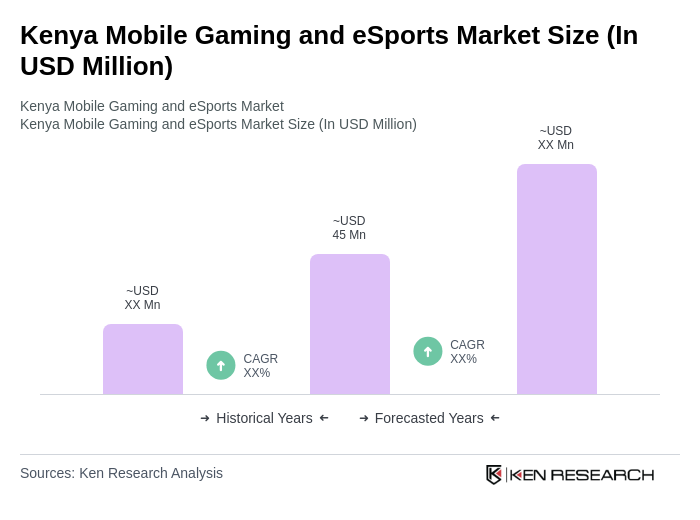
- The Kenya Mobile Gaming and eSports Market is valued at USD 45 million, based on a five-year historical analysis. This growth is primarily driven by surging smartphone penetration, affordable data plans, and a young, tech-savvy population eager to engage in mobile gaming and eSports activities. Additional factors include the expansion of mobile-money platforms, increased localization of content, and the rollout of cloud-gaming infrastructure, which collectively accelerate market adoption and monetization .
- Nairobi and Mombasa are the dominant cities in the market, primarily due to their high population density, urbanization, and the presence of tech hubs that foster innovation in gaming. These cities also have a vibrant youth culture that embraces gaming as a form of entertainment and social interaction. The mobile-first digital landscape and widespread internet access further support their leadership in gaming activities .
- In 2023, the Kenyan government implemented regulations to promote the growth of the gaming industry, including tax incentives for local game developers and eSports organizers. The Finance Act, 2023, issued by the National Assembly of Kenya, introduced targeted tax relief and compliance requirements for digital gaming enterprises, aiming to create a conducive environment for innovation and investment in the gaming sector. The Act mandates registration, reporting, and minimum capital thresholds for licensed operators .
Kenya Mobile Gaming and eSports Market Segmentation
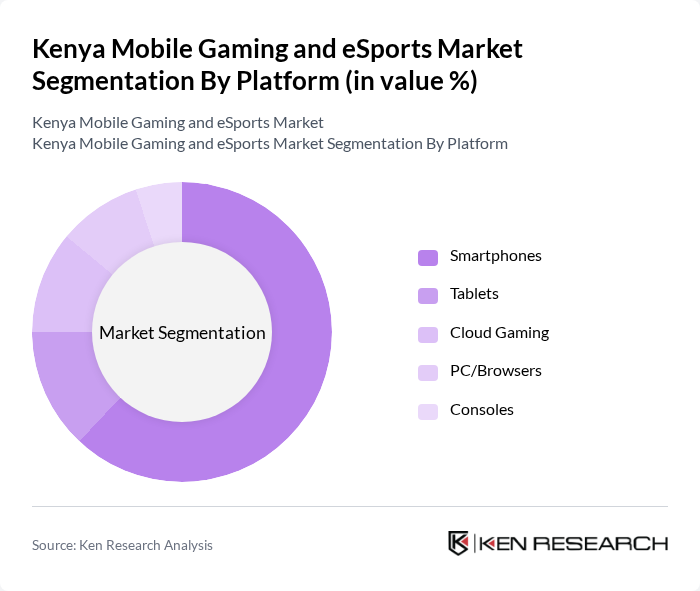
By Platform:The mobile gaming segment is primarily dominated by smartphones, which account for the largest share of the market due to their accessibility, affordability, and the proliferation of mobile applications. Tablets contribute to the market, but to a lesser extent, serving mostly urban and affluent users. Cloud gaming is emerging, enabled by improved data infrastructure and edge computing, allowing users to play high-quality games without expensive hardware. PC/browsers and consoles remain less prevalent, as Kenya’s mobile-first digital landscape favors portable devices for gaming .
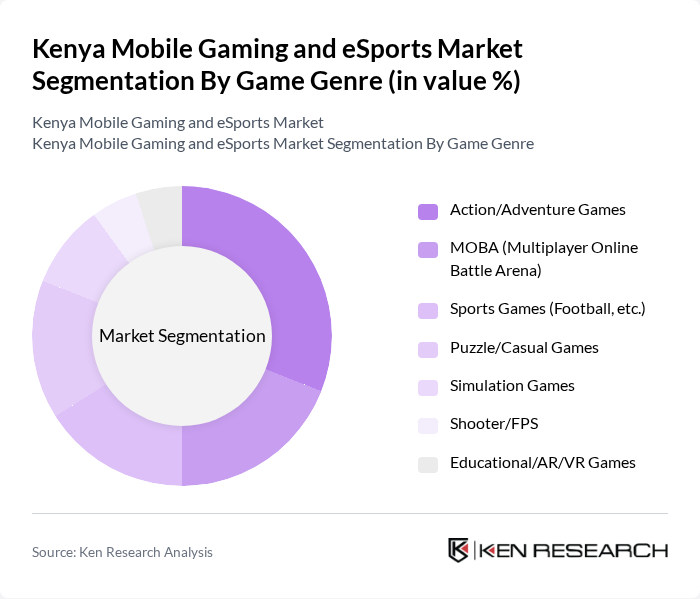
By Game Genre:Action/adventure games lead the market, appealing to a wide audience with their engaging narratives and gameplay. MOBA games have gained popularity, especially among competitive gamers, while sports games, particularly football, resonate strongly with local culture and youth interests. Puzzle/casual games attract a diverse demographic, and simulation games are gaining traction among urban players. Shooter/FPS games have a dedicated following, and educational/AR/VR games are emerging as innovative options for learning and entertainment, supported by increased adoption in schools and tech hubs .
Kenya Mobile Gaming and eSports Market Competitive Landscape
The Kenya Mobile Gaming and eSports Market is characterized by a dynamic mix of regional and international players. Leading participants such as Safaricom PLC, Telkom Kenya Limited, Usiku Games, Mekan Games, Kunta Content, Weza Interactive, Carry1st, Gamers Lounge Kenya, E-Sports Kenya Federation, Nairobi Gaming Hub, KCB Group, Absa Bank Kenya PLC, Zuku Games, Play Kenya, Digital Gaming Africa contribute to innovation, geographic expansion, and service delivery in this space.
Kenya Mobile Gaming and eSports Market Industry Analysis
Growth Drivers
- Increasing Smartphone Penetration:As of future, Kenya boasts approximately 27 million smartphone users, representing a significant increase from 40 million in the previous year. This growth is driven by affordable smartphone models, with prices averaging around $100. The World Bank reports that mobile phone penetration in Kenya reached 120%, indicating that many individuals own multiple devices. This widespread access to smartphones facilitates mobile gaming, allowing more users to engage with gaming applications and eSports platforms, thus driving market growth.
- Rising Internet Accessibility:Internet penetration in Kenya is projected to reach approximately 42% in future, up from 65% in the previous year, according to the Communications Authority of Kenya. This increase is largely attributed to the expansion of 4G networks, which now cover over 96% of urban areas. Additionally, the average internet speed has improved to approximately 15 Mbps, enhancing the gaming experience. As more users gain access to reliable internet, the mobile gaming and eSports market is expected to flourish, attracting a larger audience.
- Growing Youth Population:Kenya's youth population, defined as individuals aged 15-34, is estimated at about 14 million in future, representing about 29% of the total population. This demographic is increasingly tech-savvy and engaged in digital entertainment, including mobile gaming. The Kenya National Bureau of Statistics indicates that this age group is responsible for over 60% of mobile data consumption. Their preference for interactive and competitive gaming experiences is a key driver for the growth of the mobile gaming and eSports sectors in the country.
Market Challenges
- Limited Infrastructure in Rural Areas:Despite urban advancements, rural areas in Kenya face significant infrastructure challenges. Approximately 50% of the rural population lacks access to reliable electricity, which hampers the ability to engage in mobile gaming. The Kenya Rural Electrification Authority reports that only 25% of rural households have access to the national grid. This disparity limits the potential user base for mobile gaming and eSports, creating a challenge for market expansion in these regions.
- High Data Costs:The cost of mobile data remains a barrier for many potential gamers in Kenya. As of future, the average cost of 1GB of mobile data is approximately $0.84, which can be prohibitive for low-income users. The Communications Authority of Kenya notes that about 36% of the population earns less than $2 per day. High data costs restrict access to mobile gaming platforms, limiting market growth and user engagement in the mobile gaming and eSports sectors.
Kenya Mobile Gaming and eSports Market Future Outlook
The future of the mobile gaming and eSports market in Kenya appears promising, driven by technological advancements and a youthful demographic. As smartphone penetration continues to rise and internet accessibility improves, more users are expected to engage in mobile gaming. Additionally, the increasing popularity of eSports tournaments will likely attract investments and partnerships, fostering a vibrant gaming ecosystem. The focus on local content development will further enhance user engagement, creating a sustainable growth trajectory for the industry in the coming years.
Market Opportunities
- Development of Local Gaming Content:There is a significant opportunity for the creation of local gaming content tailored to Kenyan culture and interests. In future, the demand for localized games is expected to increase, as players seek relatable narratives and characters. This trend can enhance user engagement and retention, providing a competitive edge for developers who invest in culturally relevant gaming experiences.
- Partnerships with Telecom Providers:Collaborations between gaming companies and telecom providers can create bundled data packages that make mobile gaming more accessible. In future, such partnerships could lead to reduced data costs for gamers, encouraging higher participation rates. This strategy not only benefits users but also enhances the telecom companies' customer engagement, creating a win-win scenario for both sectors.
Scope of the Report
| Segment | Sub-Segments |
|---|---|
| By Platform | Smartphones Tablets Cloud Gaming PC/Browsers Consoles |
| By Game Genre | Action/Adventure Games MOBA (Multiplayer Online Battle Arena) Sports Games (Football, etc.) Puzzle/Casual Games Simulation Games Shooter/FPS Educational/AR/VR Games |
| By Payment Model | Free-to-Play Pay-to-Play Subscription-Based In-App Purchases |
| By End-User | Casual Gamers Competitive Gamers eSports Enthusiasts Social Gamers |
| By Distribution Channel | App Stores (Google Play, Apple App Store) Online Platforms (Carry1st, etc.) Direct Downloads Retail Outlets |
| By Age Group | Children Teenagers Adults |
| By Region | Nairobi Mombasa Kisumu Eldoret Nakuru Others |
Key Target Audience
Investors and Venture Capitalist Firms
Government and Regulatory Bodies (e.g., Communications Authority of Kenya, Kenya Film Classification Board)
Mobile Network Operators
Game Developers and Publishers
Advertising Agencies
Event Organizers and Tournament Hosts
Payment Solution Providers
Content Creators and Streamers
Players Mentioned in the Report:
Safaricom PLC
Telkom Kenya Limited
Usiku Games
Mekan Games
Kunta Content
Weza Interactive
Carry1st
Gamers Lounge Kenya
E-Sports Kenya Federation
Nairobi Gaming Hub
KCB Group
Absa Bank Kenya PLC
Zuku Games
Play Kenya
Digital Gaming Africa
Table of Contents
Market Assessment Phase
1. Executive Summary and Approach
2. Kenya Mobile Gaming and eSports Market Overview
2.1 Key Insights and Strategic Recommendations
2.2 Kenya Mobile Gaming and eSports Market Overview
2.3 Definition and Scope
2.4 Evolution of Market Ecosystem
2.5 Timeline of Key Regulatory Milestones
2.6 Value Chain & Stakeholder Mapping
2.7 Business Cycle Analysis
2.8 Policy & Incentive Landscape
3. Kenya Mobile Gaming and eSports Market Analysis
3.1 Growth Drivers
3.1.1 Increasing smartphone penetration
3.1.2 Rising internet accessibility
3.1.3 Growing youth population
3.1.4 Expansion of mobile payment solutions
3.2 Market Challenges
3.2.1 Limited infrastructure in rural areas
3.2.2 High data costs
3.2.3 Regulatory uncertainties
3.2.4 Competition from traditional gaming
3.3 Market Opportunities
3.3.1 Development of local gaming content
3.3.2 Partnerships with telecom providers
3.3.3 Growth of eSports tournaments
3.3.4 Investment in gaming technology
3.4 Market Trends
3.4.1 Rise of mobile eSports
3.4.2 Increased focus on user engagement
3.4.3 Adoption of augmented reality (AR) in gaming
3.4.4 Growth of influencer marketing in gaming
3.5 Government Regulation
3.5.1 Licensing requirements for gaming operators
3.5.2 Taxation policies on gaming revenues
3.5.3 Age restrictions for gaming participation
3.5.4 Consumer protection regulations
4. SWOT Analysis
5. Stakeholder Analysis
6. Porter's Five Forces Analysis
7. Kenya Mobile Gaming and eSports Market Market Size, 2019-2024
7.1 By Value
7.2 By Volume
7.3 By Average Selling Price
8. Kenya Mobile Gaming and eSports Market Segmentation
8.1 By Platform
8.1.1 Smartphones
8.1.2 Tablets
8.1.3 Cloud Gaming
8.1.4 PC/Browsers
8.1.5 Consoles
8.2 By Game Genre
8.2.1 Action/Adventure Games
8.2.2 MOBA (Multiplayer Online Battle Arena)
8.2.3 Sports Games (Football, etc.)
8.2.4 Puzzle/Casual Games
8.2.5 Simulation Games
8.2.6 Shooter/FPS
8.2.7 Educational/AR/VR Games
8.3 By Payment Model
8.3.1 Free-to-Play
8.3.2 Pay-to-Play
8.3.3 Subscription-Based
8.3.4 In-App Purchases
8.4 By End-User
8.4.1 Casual Gamers
8.4.2 Competitive Gamers
8.4.3 eSports Enthusiasts
8.4.4 Social Gamers
8.5 By Distribution Channel
8.5.1 App Stores (Google Play, Apple App Store)
8.5.2 Online Platforms (Carry1st, etc.)
8.5.3 Direct Downloads
8.5.4 Retail Outlets
8.6 By Age Group
8.6.1 Children
8.6.2 Teenagers
8.6.3 Adults
8.7 By Region
8.7.1 Nairobi
8.7.2 Mombasa
8.7.3 Kisumu
8.7.4 Eldoret
8.7.5 Nakuru
8.7.6 Others
9. Kenya Mobile Gaming and eSports Market Competitive Analysis
9.1 Market Share of Key Players
9.2 Cross Comparison of Key Players
9.2.1 Company Name
9.2.2 Group Size (Large, Medium, or Small as per industry convention)
9.2.3 Monthly Active Users (MAU)
9.2.4 Average Revenue Per User (ARPU)
9.2.5 Customer Acquisition Cost (CAC)
9.2.6 Retention Rate
9.2.7 Pricing Strategy
9.2.8 Engagement Rate (Session Frequency, Average Session Duration)
9.2.9 Market Penetration Rate (Share of Kenyan mobile gamers reached)
9.2.10 Revenue Growth Rate (YoY %)
9.2.11 In-App Purchase Conversion Rate
9.2.12 Tournament Participation Rate (for eSports platforms)
9.2.13 User Demographics (Age, Gender, Location)
9.3 SWOT Analysis of Top Players
9.4 Pricing Analysis
9.5 Detailed Profile of Major Companies
9.5.1 Safaricom PLC
9.5.2 Telkom Kenya Limited
9.5.3 Usiku Games
9.5.4 Mekan Games
9.5.5 Kunta Content
9.5.6 Weza Interactive
9.5.7 Carry1st
9.5.8 Gamers Lounge Kenya
9.5.9 E-Sports Kenya Federation
9.5.10 Nairobi Gaming Hub
9.5.11 KCB Group
9.5.12 Absa Bank Kenya PLC
9.5.13 Zuku Games
9.5.14 Play Kenya
9.5.15 Digital Gaming Africa
10. Kenya Mobile Gaming and eSports Market End-User Analysis
10.1 Procurement Behavior of Key Ministries
10.1.1 Engagement with local developers
10.1.2 Budget allocation for digital initiatives
10.1.3 Collaboration with educational institutions
10.2 Corporate Spend on Infrastructure & Energy
10.2.1 Investment in gaming infrastructure
10.2.2 Funding for eSports events
10.2.3 Sponsorship of gaming tournaments
10.3 Pain Point Analysis by End-User Category
10.3.1 Accessibility issues in rural areas
10.3.2 High costs of data
10.3.3 Limited local content availability
10.4 User Readiness for Adoption
10.4.1 Awareness of mobile gaming options
10.4.2 Familiarity with eSports
10.4.3 Willingness to invest in gaming
10.5 Post-Deployment ROI and Use Case Expansion
10.5.1 Metrics for measuring success
10.5.2 Opportunities for scaling
10.5.3 Feedback mechanisms for improvement
11. Kenya Mobile Gaming and eSports Market Future Size, 2025-2030
11.1 By Value
11.2 By Volume
11.3 By Average Selling Price
Go-To-Market Strategy Phase
1. Whitespace Analysis + Business Model Canvas
1.1 Market gaps identification
1.2 Value proposition development
1.3 Revenue model exploration
1.4 Customer segmentation analysis
1.5 Competitive landscape overview
1.6 Key partnerships identification
1.7 Risk assessment
2. Marketing and Positioning Recommendations
2.1 Branding strategies
2.2 Product USPs
2.3 Target audience engagement
2.4 Digital marketing tactics
2.5 Community building initiatives
3. Distribution Plan
3.1 Urban retail strategies
3.2 Rural NGO tie-ups
3.3 Online distribution channels
3.4 Partnerships with telecom providers
4. Channel & Pricing Gaps
4.1 Underserved routes
4.2 Pricing bands analysis
4.3 Competitor pricing strategies
4.4 Consumer willingness to pay
5. Unmet Demand & Latent Needs
5.1 Category gaps identification
5.2 Consumer segments analysis
5.3 Emerging trends in gaming
5.4 Feedback from potential users
6. Customer Relationship
6.1 Loyalty programs
6.2 After-sales service
6.3 Community engagement strategies
6.4 Customer feedback loops
7. Value Proposition
7.1 Sustainability initiatives
7.2 Integrated supply chains
7.3 Unique selling points
7.4 Customer-centric approach
8. Key Activities
8.1 Regulatory compliance
8.2 Branding efforts
8.3 Distribution setup
8.4 Marketing campaigns
9. Entry Strategy Evaluation
9.1 Domestic Market Entry Strategy
9.1.1 Product mix considerations
9.1.2 Pricing band analysis
9.1.3 Packaging strategies
9.2 Export Entry Strategy
9.2.1 Target countries identification
9.2.2 Compliance roadmap development
10. Entry Mode Assessment
10.1 Joint Ventures
10.2 Greenfield investments
10.3 Mergers & Acquisitions
10.4 Distributor Model
11. Capital and Timeline Estimation
11.1 Capital requirements
11.2 Timelines for market entry
12. Control vs Risk Trade-Off
12.1 Ownership considerations
12.2 Partnerships evaluation
13. Profitability Outlook
13.1 Breakeven analysis
13.2 Long-term sustainability strategies
14. Potential Partner List
14.1 Distributors
14.2 Joint Ventures
14.3 Acquisition targets
15. Execution Roadmap
15.1 Phased Plan for Market Entry
15.1.1 Market Setup
15.1.2 Market Entry
15.1.3 Growth Acceleration
15.1.4 Scale & Stabilize
15.2 Key Activities and Milestones
15.2.1 Activity timelines
15.2.2 Milestone tracking
Research Methodology
Phase 1: Approach1
Desk Research
- Analysis of industry reports from local and international gaming associations
- Review of market trends and statistics from government publications and regulatory bodies
- Examination of academic papers and case studies on mobile gaming and eSports in Kenya
Primary Research
- Interviews with key stakeholders in the mobile gaming industry, including developers and publishers
- Surveys targeting gamers to understand preferences, spending habits, and engagement levels
- Focus groups with eSports participants and organizers to gather qualitative insights
Validation & Triangulation
- Cross-validation of findings through multiple data sources, including market reports and expert opinions
- Triangulation of quantitative data from surveys with qualitative insights from interviews
- Sanity checks through expert panel reviews comprising industry veterans and analysts
Phase 2: Market Size Estimation1
Top-down Assessment
- Estimation of total addressable market (TAM) based on mobile penetration rates and gaming demographics
- Segmentation of the market by game type, platform, and user demographics
- Incorporation of growth rates from regional gaming markets to project future trends
Bottom-up Modeling
- Collection of revenue data from leading mobile game developers and eSports organizers
- Estimation of average revenue per user (ARPU) based on survey data
- Calculation of market size by aggregating revenue estimates across different segments
Forecasting & Scenario Analysis
- Development of forecasting models using historical growth rates and market drivers
- Scenario analysis based on potential regulatory changes and technological advancements
- Creation of baseline, optimistic, and pessimistic projections through 2028
Phase 3: CATI Sample Composition1
| Scope Item/Segment | Sample Size | Target Respondent Profiles |
|---|---|---|
| Mobile Game Developers | 80 | Founders, Product Managers, Game Designers |
| eSports Event Organizers | 60 | Event Managers, Marketing Directors, Sponsorship Coordinators |
| Casual Gamers | 120 | Mobile Users, Age 18-35, Diverse Backgrounds |
| Professional Gamers | 40 | eSports Athletes, Coaches, Team Managers |
| Gaming Influencers and Streamers | 40 | Content Creators, Social Media Managers, Brand Ambassadors |
Frequently Asked Questions
What is the current value of the Kenya Mobile Gaming and eSports Market?
The Kenya Mobile Gaming and eSports Market is valued at approximately USD 45 million, reflecting significant growth driven by smartphone penetration, affordable data plans, and a young, tech-savvy population eager to engage in gaming and eSports activities.
What factors are driving the growth of mobile gaming in Kenya?
Which cities are leading in the mobile gaming market in Kenya?
What regulatory changes have impacted the gaming industry in Kenya?
Other Regional/Country Reports
Indonesia Mobile Gaming and eSports Market
Malaysia Mobile Gaming and eSports Market
KSA Mobile Gaming and eSports Market
APAC Mobile Gaming and eSports Market
Other Adjacent Reports
Malaysia Mobile App Development Market
Germany Digital Entertainment Market
Mexico Online Streaming Services Market
Thailand Virtual Reality Technology Market
UAE Augmented Reality Applications Market
Belgium Esports Event Management Market
Philippines Gaming Hardware Accessories Market
Vietnam Mobile Payment Solutions Market
Belgium Telecommunications Infrastructure Market
Oman Content Localization Services Market
Why Buy From Us?

What makes us stand out is that our consultants follow Robust, Refine and Result (RRR) methodology. Robust for clear definitions, approaches and sanity checking, Refine for differentiating respondents' facts and opinions, and Result for presenting data with story.

We have set a benchmark in the industry by offering our clients with syndicated and customized market research reports featuring coverage of entire market as well as meticulous research and analyst insights.

While we don't replace traditional research, we flip the method upside down. Our dual approach of Top Bottom & Bottom Top ensures quality deliverable by not just verifying company fundamentals but also looking at the sector and macroeconomic factors.

With one step in the future, our research team constantly tries to show you the bigger picture. We help with some of the tough questions you may encounter along the way: How is the industry positioned? Best marketing channel? KPI's of competitors? By aligning every element, we help maximize success.

Our report gives you instant access to the answers and sources that other companies might choose to hide. We elaborate each steps of research methodology we have used and showcase you the sample size to earn your trust.

If you need any support, we are here! We pride ourselves on universe strength, data quality, and quick, friendly, and professional service.