About the Report
Base Year 2024Malaysia Cold Chain for Fisheries and Seafood Market Overview
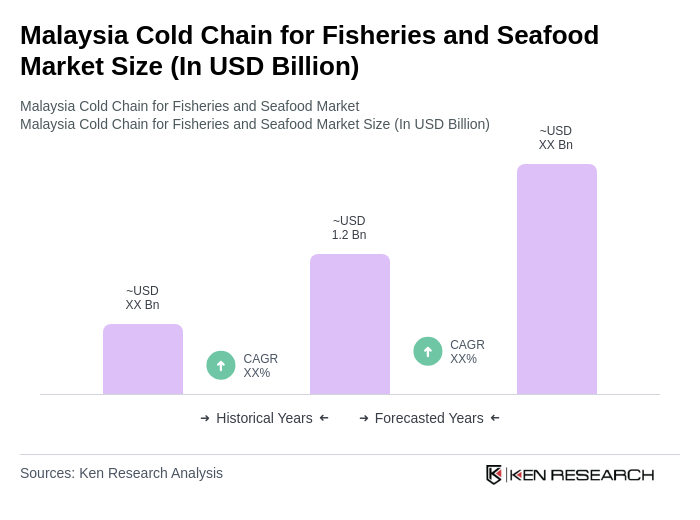
- The Malaysia Cold Chain for Fisheries and Seafood Market is valued at USD 1.2 billion, based on a five-year historical analysis. This growth is primarily driven by rising demand for fresh and frozen seafood products, advancements in cold chain logistics technology, and the expansion of the food service and retail sectors. Increasing consumer awareness of food safety, health benefits of seafood, and the need for compliance with export-grade certifications further propel the requirement for efficient cold chain logistics .
- Key hubs in this market include Kuala Lumpur, Penang, and Johor Bahru, which dominate due to their strategic locations, robust logistics infrastructure, and proximity to major fishing ports. These cities serve as critical distribution centers, facilitating efficient supply chain operations and supporting both domestic consumption and export activities .
- The Food Safety and Quality Act 1983 (as amended), issued by the Ministry of Health Malaysia, mandates strict compliance with cold chain management practices for seafood products. This regulation requires operators to maintain specific temperature controls, implement certified storage and transportation protocols, and adhere to regular inspections to ensure food safety and minimize spoilage. The Act covers all stages of seafood handling, including import, export, processing, and retail distribution .
Malaysia Cold Chain for Fisheries and Seafood Market Segmentation
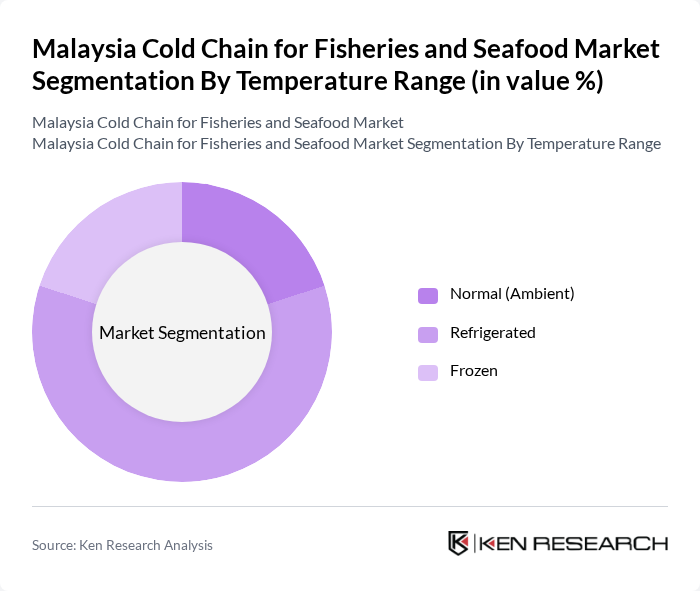
By Temperature Range:The cold chain for fisheries and seafood is segmented into three temperature ranges: Normal (Ambient), Refrigerated, and Frozen. The Refrigerated segment is currently dominating the market, accounting for the largest share due to its essential role in preserving seafood freshness and quality during transport and storage. Consumer preference for fresh seafood and the expansion of food service outlets drive demand for reliable refrigeration solutions. The Frozen segment also holds substantial market share, supported by the growing need for convenience and longer shelf life in both retail and export channels .
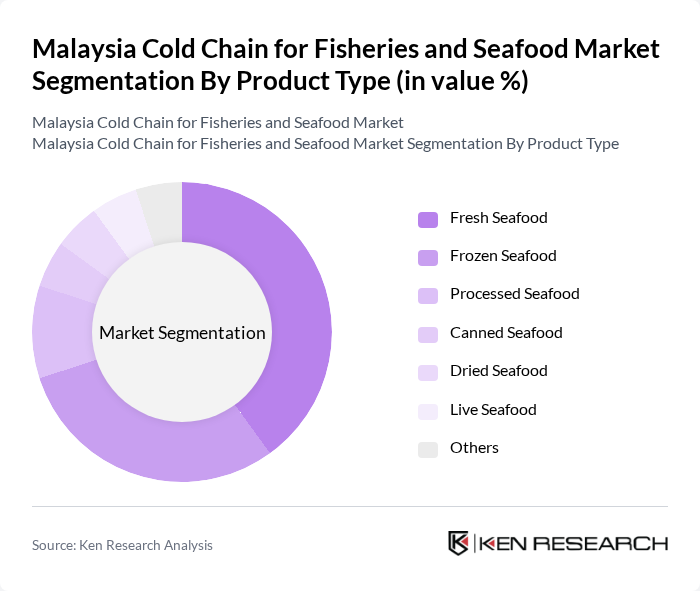
By Product Type:The market is further segmented by product type into Fresh Seafood, Frozen Seafood, Processed Seafood, Canned Seafood, Dried Seafood, Live Seafood, and Others. Fresh Seafood leads the segment, driven by consumer demand for high-quality, fresh products and the increasing popularity of seafood in health-conscious diets and diverse cuisines. Frozen Seafood is also gaining traction, offering convenience and extended shelf life, which appeals to busy consumers and food service establishments. Processed, canned, dried, and live seafood segments continue to serve niche markets and export requirements .
Malaysia Cold Chain for Fisheries and Seafood Market Competitive Landscape
The Malaysia Cold Chain for Fisheries and Seafood Market is characterized by a dynamic mix of regional and international players. Leading participants such as Cold Chain Logistics Sdn Bhd, Tiong Nam Logistics Holdings Berhad, GAG Logistics Sdn Bhd, LF Logistics Services (Malaysia) Sdn Bhd, QL Resources Berhad, FFM Marketing Sdn Bhd, Berjaya Cold Chain Sdn Bhd, Syarikat Perniagaan Hasil Laut Soon Seng Sdn Bhd, Sinaran Marine Sdn Bhd, Tanjung Manis Integrated Port Sdn Bhd, Syarikat Ternakan Ikan Air Tawar Sdn Bhd, Kumpulan Perikanan Sdn Bhd, Sumber Laut Sdn Bhd, Tunas Manja Sdn Bhd, Ocean Fresh Sdn Bhd contribute to innovation, geographic expansion, and service delivery in this space.
Malaysia Cold Chain for Fisheries and Seafood Market Industry Analysis
Growth Drivers
- Increasing Demand for Fresh Seafood:The demand for fresh seafood in Malaysia is projected to reach 1.6 million metric tons in future, driven by rising consumer preferences for healthy diets. The per capita seafood consumption in Malaysia is approximately 56 kg annually, reflecting a growing trend towards protein-rich diets. This increasing demand is further supported by the country's expanding middle class, which is expected to grow by 4% annually, enhancing purchasing power and consumption patterns.
- Expansion of Export Markets:Malaysia's seafood exports are anticipated to exceed MYR 6 billion in future, bolstered by increasing global demand, particularly from markets in the United States and Europe. The government has been actively promoting seafood exports, with initiatives aimed at enhancing trade agreements and reducing tariffs. This expansion is crucial as the global seafood market is projected to grow at a rate of 5% annually, providing Malaysian exporters with significant opportunities to increase their market share.
- Technological Advancements in Cold Chain Logistics:The cold chain logistics sector in Malaysia is expected to see investments of MYR 1.5 billion in future, driven by technological advancements such as IoT and blockchain. These technologies enhance traceability and efficiency in the supply chain, ensuring that seafood products maintain their freshness and quality. The adoption of automated cold storage solutions is projected to increase by 25% annually, significantly improving operational efficiency and reducing spoilage rates in the seafood industry.
Market Challenges
- High Operational Costs:The operational costs for cold chain logistics in Malaysia are estimated to be around MYR 4 billion annually, primarily due to energy expenses and maintenance of refrigeration systems. These high costs pose a significant challenge for small to medium-sized enterprises (SMEs) in the seafood sector, limiting their ability to compete effectively. Additionally, fluctuating fuel prices further exacerbate these operational challenges, impacting overall profitability in the industry.
- Inadequate Infrastructure:Malaysia's cold chain infrastructure is currently underdeveloped, with only 35% of the required cold storage facilities in place. This inadequacy leads to significant post-harvest losses, estimated at 25% for seafood products. The lack of efficient transportation networks further complicates the distribution of perishable goods, resulting in delays and quality degradation. Addressing these infrastructure gaps is critical for enhancing the overall efficiency of the cold chain system in the fisheries sector.
Malaysia Cold Chain for Fisheries and Seafood Market Future Outlook
The future of the cold chain for fisheries and seafood in Malaysia appears promising, driven by increasing consumer awareness of food safety and sustainability. As the market adapts to technological innovations, the integration of digital solutions in supply chain management will enhance operational efficiency. Furthermore, the government's commitment to improving infrastructure and supporting sustainable practices will likely foster growth. The focus on e-commerce and ready-to-eat seafood products will also create new avenues for market expansion, catering to evolving consumer preferences.
Market Opportunities
- Growth in E-commerce for Seafood:The e-commerce sector for seafood is projected to grow significantly, with online sales expected to reach MYR 1.5 billion in future. This growth is driven by changing consumer behaviors favoring online shopping, particularly among younger demographics. The convenience of home delivery and access to a wider variety of seafood products presents a substantial opportunity for businesses to expand their market reach.
- Investment in Cold Storage Facilities:There is a pressing need for investment in cold storage facilities, with an estimated requirement of MYR 600 million to meet future demands. Enhanced cold storage capabilities will reduce spoilage rates and improve product quality, directly benefiting the seafood supply chain. This investment will also attract foreign partnerships, further strengthening Malaysia's position in the global seafood market.
Scope of the Report
| Segment | Sub-Segments |
|---|---|
| By Temperature Range | Normal (Ambient) Refrigerated Frozen |
| By Product Type | Fresh Seafood Frozen Seafood Processed Seafood Canned Seafood Dried Seafood Live Seafood Others |
| By End-User Industry | Food & Beverage Retail Food Service (Hotels, Restaurants, Catering) Exporters Wholesalers Others |
| By Distribution Channel | Direct Sales Online Sales Retail Outlets Wholesale Markets Others |
| By Packaging Type | Vacuum Packaging Modified Atmosphere Packaging Canned Packaging Bulk Packaging Others |
| By Storage Type | Cold Storage Refrigerated Transport Ice Storage Others |
| By Product Origin | Locally Sourced Imported Others |
| By Price Range | Premium Mid-Range Budget Others |
Key Target Audience
Investors and Venture Capitalist Firms
Government and Regulatory Bodies (e.g., Ministry of Agriculture and Food Security, Department of Fisheries Malaysia)
Manufacturers and Producers
Distributors and Retailers
Logistics and Cold Chain Service Providers
Industry Associations (e.g., Malaysian Fisheries Society)
Financial Institutions
Exporters and Importers
Players Mentioned in the Report:
Cold Chain Logistics Sdn Bhd
Tiong Nam Logistics Holdings Berhad
GAG Logistics Sdn Bhd
LF Logistics Services (Malaysia) Sdn Bhd
QL Resources Berhad
FFM Marketing Sdn Bhd
Berjaya Cold Chain Sdn Bhd
Syarikat Perniagaan Hasil Laut Soon Seng Sdn Bhd
Sinaran Marine Sdn Bhd
Tanjung Manis Integrated Port Sdn Bhd
Syarikat Ternakan Ikan Air Tawar Sdn Bhd
Kumpulan Perikanan Sdn Bhd
Sumber Laut Sdn Bhd
Tunas Manja Sdn Bhd
Ocean Fresh Sdn Bhd
Table of Contents
Market Assessment Phase
1. Executive Summary and Approach
2. Malaysia Cold Chain for Fisheries and Seafood Market Overview
2.1 Key Insights and Strategic Recommendations
2.2 Malaysia Cold Chain for Fisheries and Seafood Market Overview
2.3 Definition and Scope
2.4 Evolution of Market Ecosystem
2.5 Timeline of Key Regulatory Milestones
2.6 Value Chain & Stakeholder Mapping
2.7 Business Cycle Analysis
2.8 Policy & Incentive Landscape
3. Malaysia Cold Chain for Fisheries and Seafood Market Analysis
3.1 Growth Drivers
3.1.1 Increasing demand for fresh seafood
3.1.2 Expansion of export markets
3.1.3 Technological advancements in cold chain logistics
3.1.4 Government support for fisheries sector
3.2 Market Challenges
3.2.1 High operational costs
3.2.2 Inadequate infrastructure
3.2.3 Regulatory compliance issues
3.2.4 Competition from alternative protein sources
3.3 Market Opportunities
3.3.1 Growth in e-commerce for seafood
3.3.2 Sustainable fishing practices
3.3.3 Investment in cold storage facilities
3.3.4 Partnerships with logistics providers
3.4 Market Trends
3.4.1 Increasing consumer awareness of food safety
3.4.2 Rise of organic and sustainably sourced seafood
3.4.3 Digital transformation in supply chain management
3.4.4 Growth of ready-to-eat seafood products
3.5 Government Regulation
3.5.1 Food safety standards
3.5.2 Import/export regulations
3.5.3 Environmental protection laws
3.5.4 Subsidies for cold chain investments
4. SWOT Analysis
5. Stakeholder Analysis
6. Porter's Five Forces Analysis
7. Malaysia Cold Chain for Fisheries and Seafood Market Market Size, 2019-2024
7.1 By Value
7.2 By Volume
7.3 By Average Selling Price
8. Malaysia Cold Chain for Fisheries and Seafood Market Segmentation
8.1 By Temperature Range
8.1.1 Normal (Ambient)
8.1.2 Refrigerated
8.1.3 Frozen
8.2 By Product Type
8.2.1 Fresh Seafood
8.2.2 Frozen Seafood
8.2.3 Processed Seafood
8.2.4 Canned Seafood
8.2.5 Dried Seafood
8.2.6 Live Seafood
8.2.7 Others
8.3 By End-User Industry
8.3.1 Food & Beverage
8.3.2 Retail
8.3.3 Food Service (Hotels, Restaurants, Catering)
8.3.4 Exporters
8.3.5 Wholesalers
8.3.6 Others
8.4 By Distribution Channel
8.4.1 Direct Sales
8.4.2 Online Sales
8.4.3 Retail Outlets
8.4.4 Wholesale Markets
8.4.5 Others
8.5 By Packaging Type
8.5.1 Vacuum Packaging
8.5.2 Modified Atmosphere Packaging
8.5.3 Canned Packaging
8.5.4 Bulk Packaging
8.5.5 Others
8.6 By Storage Type
8.6.1 Cold Storage
8.6.2 Refrigerated Transport
8.6.3 Ice Storage
8.6.4 Others
8.7 By Product Origin
8.7.1 Locally Sourced
8.7.2 Imported
8.7.3 Others
8.8 By Price Range
8.8.1 Premium
8.8.2 Mid-Range
8.8.3 Budget
8.8.4 Others
9. Malaysia Cold Chain for Fisheries and Seafood Market Competitive Analysis
9.1 Market Share of Key Players
9.2 Cross Comparison of Key Players
9.2.1 Company Name
9.2.2 Group Size (Large, Medium, or Small as per industry convention)
9.2.3 Revenue Growth Rate (%)
9.2.4 Market Penetration Rate (%)
9.2.5 Customer Retention Rate (%)
9.2.6 Operational Efficiency Ratio (e.g., cost per ton-km, energy use per ton)
9.2.7 Average Delivery Time (hours/days)
9.2.8 Cold Storage Capacity (MT or cubic meters)
9.2.9 Fleet Size (number of refrigerated vehicles)
9.2.10 Compliance Certifications (e.g., GDP, HACCP, Halal)
9.2.11 Supply Chain Visibility (real-time tracking adoption)
9.2.12 Product Quality Index
9.2.13 Innovation Rate (new tech/processes adopted per year)
9.3 SWOT Analysis of Top Players
9.4 Pricing Analysis
9.5 Detailed Profile of Major Companies
9.5.1 Cold Chain Logistics Sdn Bhd
9.5.2 Tiong Nam Logistics Holdings Berhad
9.5.3 GAG Logistics Sdn Bhd
9.5.4 LF Logistics Services (Malaysia) Sdn Bhd
9.5.5 QL Resources Berhad
9.5.6 FFM Marketing Sdn Bhd
9.5.7 Berjaya Cold Chain Sdn Bhd
9.5.8 Syarikat Perniagaan Hasil Laut Soon Seng Sdn Bhd
9.5.9 Sinaran Marine Sdn Bhd
9.5.10 Tanjung Manis Integrated Port Sdn Bhd
9.5.11 Syarikat Ternakan Ikan Air Tawar Sdn Bhd
9.5.12 Kumpulan Perikanan Sdn Bhd
9.5.13 Sumber Laut Sdn Bhd
9.5.14 Tunas Manja Sdn Bhd
9.5.15 Ocean Fresh Sdn Bhd
10. Malaysia Cold Chain for Fisheries and Seafood Market End-User Analysis
10.1 Procurement Behavior of Key Ministries
10.1.1 Ministry of Agriculture and Food Security
10.1.2 Ministry of Health
10.1.3 Ministry of International Trade and Industry
10.2 Corporate Spend on Infrastructure & Energy
10.2.1 Investment in cold storage facilities
10.2.2 Energy-efficient refrigeration systems
10.2.3 Transportation infrastructure upgrades
10.3 Pain Point Analysis by End-User Category
10.3.1 Retailers
10.3.2 Wholesalers
10.3.3 Exporters
10.4 User Readiness for Adoption
10.4.1 Awareness of cold chain benefits
10.4.2 Training and skill development
10.4.3 Financial readiness
10.5 Post-Deployment ROI and Use Case Expansion
10.5.1 Increased sales from improved freshness
10.5.2 Cost savings from reduced spoilage
10.5.3 Expansion into new markets
11. Malaysia Cold Chain for Fisheries and Seafood Market Future Size, 2025-2030
11.1 By Value
11.2 By Volume
11.3 By Average Selling Price
Go-To-Market Strategy Phase
1. Whitespace Analysis + Business Model Canvas
1.1 Market Gaps Identification
1.2 Value Proposition Development
1.3 Revenue Streams Analysis
1.4 Cost Structure Evaluation
1.5 Key Partnerships
1.6 Customer Segments
1.7 Channels
2. Marketing and Positioning Recommendations
2.1 Branding strategies
2.2 Product USPs
2.3 Target Market Identification
2.4 Communication Strategy
2.5 Digital Marketing Approach
3. Distribution Plan
3.1 Urban retail vs rural NGO tie-ups
3.2 Logistics Partnerships
3.3 Distribution Channels Optimization
3.4 Inventory Management Strategies
4. Channel & Pricing Gaps
4.1 Underserved routes
4.2 Pricing bands
4.3 Competitive Pricing Analysis
4.4 Value-based Pricing Strategies
5. Unmet Demand & Latent Needs
5.1 Category gaps
5.2 Consumer segments
5.3 Product Development Opportunities
6. Customer Relationship
6.1 Loyalty programs
6.2 After-sales service
6.3 Customer Feedback Mechanisms
7. Value Proposition
7.1 Sustainability
7.2 Integrated supply chains
7.3 Customer-Centric Innovations
8. Key Activities
8.1 Regulatory compliance
8.2 Branding
8.3 Distribution setup
9. Entry Strategy Evaluation
9.1 Domestic Market Entry Strategy
9.1.1 Product mix
9.1.2 Pricing band
9.1.3 Packaging
9.2 Export Entry Strategy
9.2.1 Target countries
9.2.2 Compliance roadmap
10. Entry Mode Assessment
10.1 JV
10.2 Greenfield
10.3 M&A
10.4 Distributor Model
11. Capital and Timeline Estimation
11.1 Capital requirements
11.2 Timelines
12. Control vs Risk Trade-Off
12.1 Ownership vs Partnerships
13. Profitability Outlook
13.1 Breakeven analysis
13.2 Long-term sustainability
14. Potential Partner List
14.1 Distributors
14.2 JVs
14.3 Acquisition targets
15. Execution Roadmap
15.1 Phased Plan for Market Entry
15.1.1 Market Setup
15.1.2 Market Entry
15.1.3 Growth Acceleration
15.1.4 Scale & Stabilize
15.2 Key Activities and Milestones
15.2.1 Activity Planning
15.2.2 Milestone Tracking
Research Methodology
Phase 1: Approach1
Desk Research
- Analysis of government reports on fisheries and seafood regulations in Malaysia
- Review of industry publications and market reports on cold chain logistics
- Examination of trade statistics and export-import data specific to seafood products
Primary Research
- Interviews with key stakeholders in the fisheries sector, including fishery operators and distributors
- Surveys with cold chain logistics providers to understand operational challenges and capacities
- Field visits to seafood processing plants to observe cold chain practices and technologies
Validation & Triangulation
- Cross-validation of findings through multiple data sources, including trade associations and government agencies
- Triangulation of qualitative insights from interviews with quantitative data from surveys
- Sanity checks conducted through expert panel reviews comprising industry veterans
Phase 2: Market Size Estimation1
Top-down Assessment
- Estimation of the total market size based on national seafood consumption and export figures
- Segmentation of the market by product type, including fresh, frozen, and processed seafood
- Incorporation of growth rates from government forecasts and industry growth projections
Bottom-up Modeling
- Collection of data on cold storage capacities from major logistics providers in Malaysia
- Operational cost analysis based on service pricing models of cold chain logistics
- Volume estimates derived from fishery production statistics and distribution channels
Forecasting & Scenario Analysis
- Multi-factor regression analysis incorporating factors such as population growth and dietary trends
- Scenario modeling based on potential regulatory changes affecting seafood safety and quality
- Development of baseline, optimistic, and pessimistic forecasts through 2030
Phase 3: CATI Sample Composition1
| Scope Item/Segment | Sample Size | Target Respondent Profiles |
|---|---|---|
| Fisheries Operators | 50 | Fishery Owners, Operations Managers |
| Cold Chain Logistics Providers | 40 | Logistics Managers, Supply Chain Managers |
| Seafood Processors | 40 | Production Managers, Quality Control Officers |
| Retail Seafood Outlets | 40 | Store Managers, Procurement Officers |
| Regulatory Bodies | 40 | Policy Makers, Compliance Officers |
Frequently Asked Questions
What is the current value of the Malaysia Cold Chain for Fisheries and Seafood Market?
The Malaysia Cold Chain for Fisheries and Seafood Market is valued at approximately USD 1.2 billion, driven by increasing demand for fresh and frozen seafood, advancements in logistics technology, and the growth of the food service and retail sectors.
What are the key drivers of growth in the Malaysia Cold Chain for Fisheries and Seafood Market?
Which cities are major hubs for the cold chain logistics in Malaysia?
What regulations govern the cold chain management for seafood in Malaysia?
Other Regional/Country Reports
Indonesia Cold Chain for Fisheries and Seafood Market
KSA Cold Chain for Fisheries and Seafood Market
APAC Cold Chain for Fisheries and Seafood Market
SEA Cold Chain for Fisheries and Seafood Market
Vietnam Cold Chain for Fisheries and Seafood Market
Thailand Cold Chain for Fisheries and Seafood Market
Other Adjacent Reports
South Korea Seafood Processing Market
South Korea Aquaculture Supply Chain Market
Bahrain Refrigerated Transportation Market
Bahrain Cold Storage Facilities Market
Indonesia Food Safety Compliance Market
Philippines Seafood Export Logistics Market
Mexico Fisheries Equipment Market
Singapore Sustainable Fishing Technology Market
Vietnam Marine Product Packaging Market
Vietnam E-commerce Seafood Distribution Market
Why Buy From Us?

What makes us stand out is that our consultants follow Robust, Refine and Result (RRR) methodology. Robust for clear definitions, approaches and sanity checking, Refine for differentiating respondents' facts and opinions, and Result for presenting data with story.

We have set a benchmark in the industry by offering our clients with syndicated and customized market research reports featuring coverage of entire market as well as meticulous research and analyst insights.

While we don't replace traditional research, we flip the method upside down. Our dual approach of Top Bottom & Bottom Top ensures quality deliverable by not just verifying company fundamentals but also looking at the sector and macroeconomic factors.

With one step in the future, our research team constantly tries to show you the bigger picture. We help with some of the tough questions you may encounter along the way: How is the industry positioned? Best marketing channel? KPI's of competitors? By aligning every element, we help maximize success.

Our report gives you instant access to the answers and sources that other companies might choose to hide. We elaborate each steps of research methodology we have used and showcase you the sample size to earn your trust.

If you need any support, we are here! We pride ourselves on universe strength, data quality, and quick, friendly, and professional service.