About the Report
Base Year 2024Middle East Towel Warmers Market Overview
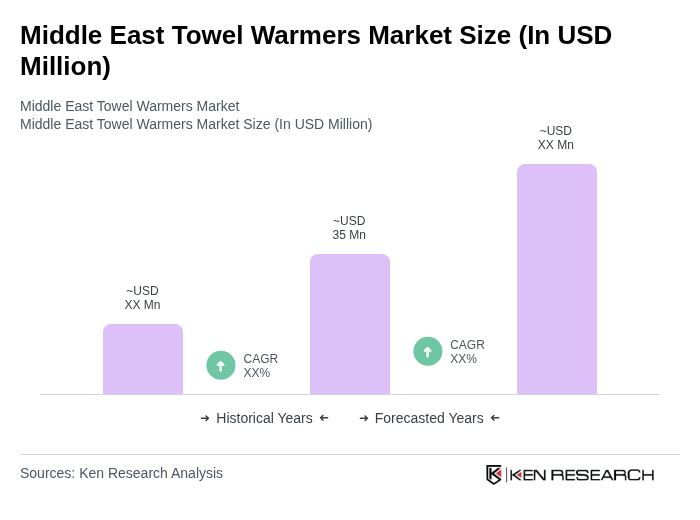
- The Middle East Towel Warmers Market is valued at USD 35 million, based on a five-year historical analysis and triangulation from the share of Middle East & Africa within the global towel warmer market. This growth is primarily driven by increasing consumer demand for luxury bathroom amenities, coupled with rising disposable incomes and a growing focus on home improvement, wellness trends, and premium residential and hospitality projects across the Gulf Cooperation Council countries. The market has seen a surge in interest as consumers and developers seek to enhance bathroom experiences with modern, space-efficient, and energy-conscious heating solutions that support comfort and hygiene in both homes and upscale hotels and spas.
- Key players in this market include Saudi Arabia, the United Arab Emirates, and Qatar. These countries dominate the regional demand due to their high standards of living, rapid urbanization, strong project pipelines in residential and commercial real estate, and a robust hospitality sector that emphasizes luxury and comfort. The increasing number of hotels, resorts, wellness centers, and high-end residential towers in cities such as Dubai, Abu Dhabi, Riyadh, Jeddah, and Doha further fuels the demand for towel warmers and heated towel rails as part of premium bathroom fit-outs.
- In 2023, the UAE government implemented regulations to promote energy-efficient appliances, including towel warmers, through the broader framework of minimum energy performance standards and labeling for electrical products used in buildings. The UAE Energy Efficiency Standards and Labeling Scheme, enforced by the Emirates Authority for Standardization and Metrology (ESMA) under the UAE Cabinet Resolution No. 34 of 2014 and subsequent updates, sets mandatory minimum energy performance requirements and efficiency labels for electrical appliances such as water heaters, air conditioners, and other building-related equipment, and is used as a reference for specifying energy-efficient electrical heating solutions in residential and commercial projects. This initiative aims to reduce energy consumption in buildings, encouraging the adoption of modern heating solutions that comply with sustainability standards and green building codes in the UAE, including Estidama and Dubai Green Building Regulations, thereby indirectly driving innovation and preference for more efficient towel warmer products in the market.
Middle East Towel Warmers Market Segmentation
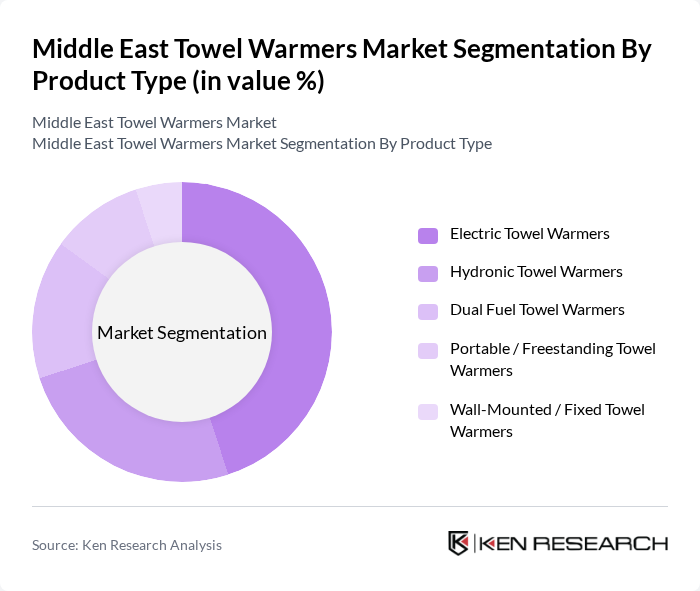
By Product Type:The towel warmers market can be segmented into various product types, including Electric Towel Warmers, Hydronic Towel Warmers, Dual Fuel Towel Warmers, Portable / Freestanding Towel Warmers, and Wall-Mounted / Fixed Towel Warmers. Electric Towel Warmers are gaining significant traction due to their ease of installation, relatively low upfront cost, and ability to be retrofitted without major plumbing work, making them a preferred choice for both residential and commercial applications in the region. In global benchmarks, electric towel warmers account for well over half of total towel warmer demand, reflecting a similar direction of preference in Middle East projects where plug-in and hardwired electric models are widely specified.
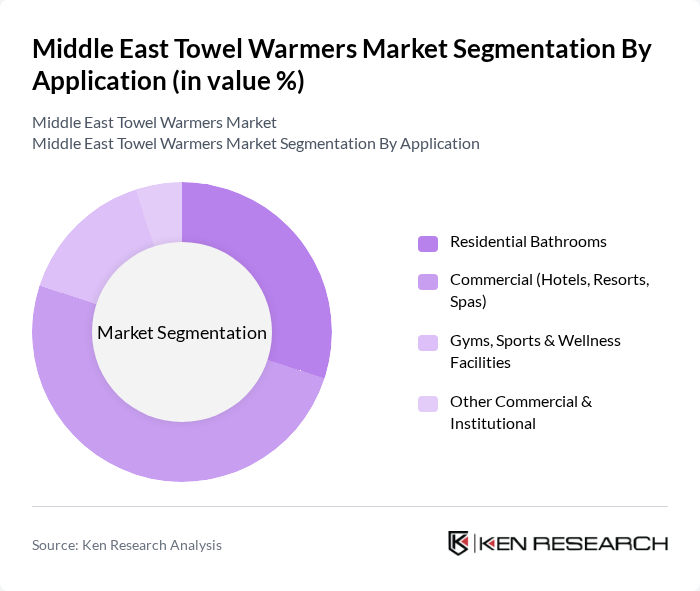
By Application:The towel warmers market is segmented based on application into Residential Bathrooms, Commercial (Hotels, Resorts, Spas), Gyms, Sports & Wellness Facilities, and Other Commercial & Institutional. The Commercial segment is leading the market, supported by the growing stock of luxury hotels, branded residences, wellness resorts, and premium spas across the Gulf region, where towel warmers and heated towel rails are increasingly specified as standard comfort and hygiene features. Rising investment in sports clubs, fitness centers, and wellness facilities in Saudi Arabia, the UAE, and Qatar further underpins demand in gyms and sports & wellness applications.
Middle East Towel Warmers Market Competitive Landscape
The Middle East Towel Warmers Market is characterized by a dynamic mix of regional and international players. Leading participants such as Zehnder Group, Runtal (Zehnder Brand), Amba Products, WarmlyYours, Myson, Kudox, Vogue (UK), Reina Radiators, Kermi, Stelrad, Radox Radiators, Vasco Group, Hudson Reed, Local GCC & Middle East Brands contribute to innovation, geographic expansion, and service delivery in this space, leveraging global expertise in electric and hydronic towel warmers to serve Middle Eastern residential and hospitality projects.
Middle East Towel Warmers Market Industry Analysis
Growth Drivers
- Increasing Demand for Luxury Bathroom Amenities:The Middle East's luxury bathroom segment is projected to reach $6.1 billion in future, driven by rising disposable incomes and a growing preference for high-end home improvements. The demand for towel warmers is particularly strong in affluent markets like the UAE and Saudi Arabia, where consumers are increasingly investing in premium bathroom fixtures. This trend is supported by an 8% annual growth rate in luxury home renovations, indicating a robust market for towel warmers as part of luxury amenities.
- Rising Awareness of Energy-Efficient Heating Solutions:With energy consumption in the Middle East expected to rise by 4% annually, there is a growing emphasis on energy-efficient solutions. Towel warmers that utilize advanced heating technologies can reduce energy costs significantly. For instance, energy-efficient models can save up to 35% on heating bills compared to traditional systems. This awareness is further bolstered by government initiatives promoting energy conservation, making towel warmers an attractive option for environmentally conscious consumers.
- Growth in the Hospitality and Wellness Sectors:The Middle East's hospitality sector is projected to grow to $45 billion in future, with a significant focus on enhancing guest experiences. Towel warmers are increasingly being integrated into luxury hotels and spas, where comfort and luxury are paramount. The wellness trend, which emphasizes relaxation and self-care, is driving demand for towel warmers in both commercial and residential settings, creating a lucrative market opportunity for manufacturers and suppliers.
Market Challenges
- High Initial Investment Costs:The average cost of installing a towel warmer can range from $600 to $1,800, which may deter potential buyers, especially in price-sensitive markets. This high upfront cost is compounded by installation expenses, which can add another 25% to the total investment. As a result, many consumers may opt for cheaper alternatives, limiting market penetration and growth potential for towel warmer manufacturers in the region.
- Limited Consumer Awareness in Certain Regions:Despite the growing popularity of towel warmers, consumer awareness remains low in several Middle Eastern countries. For instance, in markets like Yemen and Sudan, less than 20% of homeowners are familiar with towel warmers as a bathroom amenity. This lack of awareness can hinder market growth, as consumers may not recognize the benefits of towel warmers, leading to slower adoption rates in these regions.
Middle East Towel Warmers Market Future Outlook
The Middle East towel warmers market is poised for significant growth, driven by increasing consumer demand for luxury and energy-efficient products. As the hospitality and wellness sectors expand, towel warmers will become essential in enhancing customer experiences. Additionally, the trend towards smart home integration will likely lead to innovative designs and features, making towel warmers more appealing. With ongoing government support for energy-efficient solutions, the market is expected to evolve, presenting new opportunities for manufacturers and retailers alike.
Market Opportunities
- Technological Advancements in Towel Warmer Designs:Innovations in towel warmer technology, such as smart controls and energy-efficient heating elements, present a significant opportunity. These advancements can enhance user convenience and reduce energy consumption, appealing to tech-savvy consumers. As smart home technology continues to gain traction, towel warmers that integrate seamlessly with home automation systems are likely to see increased demand.
- Potential for Eco-Friendly Product Offerings:The rising consumer preference for sustainable products creates an opportunity for manufacturers to develop eco-friendly towel warmers. Utilizing recyclable materials and energy-efficient technologies can attract environmentally conscious buyers. As sustainability becomes a key purchasing factor, companies that prioritize eco-friendly designs are likely to gain a competitive edge in the Middle Eastern market.
Scope of the Report
| Segment | Sub-Segments |
|---|---|
| By Product Type | Electric Towel Warmers Hydronic Towel Warmers Dual Fuel Towel Warmers Portable / Freestanding Towel Warmers Wall-Mounted / Fixed Towel Warmers |
| By Application | Residential Bathrooms Commercial (Hotels, Resorts, Spas) Gyms, Sports & Wellness Facilities Other Commercial & Institutional |
| By Material | Stainless Steel Mild Steel Aluminum Others |
| By Design / Style | Ladder / Rail Designs Panel / Flat Designs Designer & Custom Models Others |
| By Installation Mode | Wall-Mounted Floor-Mounted / Freestanding Plug-in Hardwired |
| By Distribution Channel | Offline (Showrooms, Specialty Stores) Online (E-commerce & Marketplaces) Project Sales / Direct to B2B |
| By Country | Saudi Arabia United Arab Emirates Qatar Kuwait Rest of Middle East |
Key Target Audience
Investors and Venture Capitalist Firms
Government and Regulatory Bodies (e.g., Ministry of Industry and Advanced Technology, Saudi Standards, Metrology and Quality Organization)
Manufacturers and Producers
Distributors and Retailers
Hospitality Industry Stakeholders (e.g., Hotel Chains, Spa Operators)
Interior Designers and Architects
Construction and Real Estate Developers
Home Improvement and Renovation Companies
Players Mentioned in the Report:
Zehnder Group
Runtal (Zehnder Brand)
Amba Products
WarmlyYours
Myson
Kudox
Vogue (UK)
Reina Radiators
Kermi
Stelrad
Radox Radiators
Vasco Group
Hudson Reed
Local GCC & Middle East Brands (Overview)
Emerging Online & Private Label Brands
Table of Contents
Market Assessment Phase
1. Executive Summary and Approach
2. Middle East Towel Warmers Market Overview
2.1 Key Insights and Strategic Recommendations
2.2 Middle East Towel Warmers Market Overview
2.3 Definition and Scope
2.4 Evolution of Market Ecosystem
2.5 Timeline of Key Regulatory Milestones
2.6 Value Chain & Stakeholder Mapping
2.7 Business Cycle Analysis
2.8 Policy & Incentive Landscape
3. Middle East Towel Warmers Market Analysis
3.1 Growth Drivers
3.1.1 Increasing demand for luxury bathroom amenities
3.1.2 Rising awareness of energy-efficient heating solutions
3.1.3 Growth in the hospitality and wellness sectors
3.1.4 Expansion of residential construction projects
3.2 Market Challenges
3.2.1 High initial investment costs
3.2.2 Limited consumer awareness in certain regions
3.2.3 Competition from alternative heating solutions
3.2.4 Regulatory hurdles in product compliance
3.3 Market Opportunities
3.3.1 Technological advancements in towel warmer designs
3.3.2 Growing trend of smart home integration
3.3.3 Potential for eco-friendly product offerings
3.3.4 Expansion into emerging markets within the region
3.4 Market Trends
3.4.1 Increasing customization options for consumers
3.4.2 Shift towards online retail channels
3.4.3 Rising popularity of multifunctional bathroom products
3.4.4 Focus on sustainable and energy-efficient products
3.5 Government Regulation
3.5.1 Energy efficiency standards for heating appliances
3.5.2 Safety regulations for electrical products
3.5.3 Import tariffs on heating equipment
3.5.4 Incentives for energy-efficient home improvements
4. SWOT Analysis
5. Stakeholder Analysis
6. Porter's Five Forces Analysis
7. Middle East Towel Warmers Market Market Size, 2019-2024
7.1 By Value
7.2 By Volume
7.3 By Average Selling Price
8. Middle East Towel Warmers Market Segmentation
8.1 By Product Type
8.1.1 Electric Towel Warmers
8.1.2 Hydronic Towel Warmers
8.1.3 Dual Fuel Towel Warmers
8.1.4 Portable / Freestanding Towel Warmers
8.1.5 Wall-Mounted / Fixed Towel Warmers
8.2 By Application
8.2.1 Residential Bathrooms
8.2.2 Commercial (Hotels, Resorts, Spas)
8.2.3 Gyms, Sports & Wellness Facilities
8.2.4 Other Commercial & Institutional
8.3 By Material
8.3.1 Stainless Steel
8.3.2 Mild Steel
8.3.3 Aluminum
8.3.4 Others
8.4 By Design / Style
8.4.1 Ladder / Rail Designs
8.4.2 Panel / Flat Designs
8.4.3 Designer & Custom Models
8.4.4 Others
8.5 By Installation Mode
8.5.1 Wall-Mounted
8.5.2 Floor-Mounted / Freestanding
8.5.3 Plug-in
8.5.4 Hardwired
8.6 By Distribution Channel
8.6.1 Offline (Showrooms, Specialty Stores)
8.6.2 Online (E-commerce & Marketplaces)
8.6.3 Project Sales / Direct to B2B
8.7 By Country
8.7.1 Saudi Arabia
8.7.2 United Arab Emirates
8.7.3 Qatar
8.7.4 Kuwait
8.7.5 Rest of Middle East
9. Middle East Towel Warmers Market Competitive Analysis
9.1 Market Share of Key Players
9.2 Cross Comparison of Key Players
9.2.1 Company Name
9.2.2 Regional Revenue (USD million) from Towel Warmers
9.2.3 3-year CAGR in Towel Warmers Revenue
9.2.4 EBITDA Margin from Towel Warmers Business
9.2.5 Market Share in Middle East Towel Warmers (%)
9.2.6 Average Selling Price Positioning
9.2.7 Product Portfolio Breadth (SKUs by Type & Design)
9.2.8 R&D / Innovation Intensity (% of Sales)
9.2.9 Channel Reach (Countries / Active Distributors)
9.2.10 Project & Hospitality Pipeline Wins (No. of Projects)
9.2.11 Brand Awareness / Preference Score (Survey-based)
9.2.12 After-Sales Service Coverage (Countries / Response SLAs)
9.3 SWOT Analysis of Top Players
9.4 Pricing Analysis
9.5 Detailed Profile of Major Companies
9.5.1 Zehnder Group
9.5.2 Runtal (Zehnder Brand)
9.5.3 Amba Products
9.5.4 WarmlyYours
9.5.5 Myson
9.5.6 Kudox
9.5.7 Vogue (UK)
9.5.8 Reina Radiators
9.5.9 Kermi
9.5.10 Stelrad
9.5.11 Radox Radiators
9.5.12 Vasco Group
9.5.13 Hudson Reed
9.5.14 Local GCC & Middle East Brands (Overview)
9.5.15 Emerging Online & Private Label Brands
10. Middle East Towel Warmers Market End-User Analysis
10.1 Procurement Behavior of Key Ministries
10.1.1 Budget Allocation Trends
10.1.2 Decision-Making Processes
10.1.3 Preferred Suppliers
10.1.4 Compliance Requirements
10.2 Corporate Spend on Infrastructure & Energy
10.2.1 Investment Trends
10.2.2 Key Projects
10.2.3 Budget Prioritization
10.2.4 Procurement Strategies
10.3 Pain Point Analysis by End-User Category
10.3.1 Residential Users
10.3.2 Commercial Users
10.3.3 Industrial Users
10.3.4 Government Users
10.4 User Readiness for Adoption
10.4.1 Awareness Levels
10.4.2 Adoption Barriers
10.4.3 Training Needs
10.4.4 Support Requirements
10.5 Post-Deployment ROI and Use Case Expansion
10.5.1 ROI Measurement Techniques
10.5.2 Use Case Scenarios
10.5.3 Feedback Mechanisms
10.5.4 Future Expansion Plans
11. Middle East Towel Warmers Market Future Size, 2025-2030
11.1 By Value
11.2 By Volume
11.3 By Average Selling Price
Go-To-Market Strategy Phase
1. Whitespace Analysis + Business Model Canvas
1.1 Market Gaps Identification
1.2 Value Proposition Development
1.3 Revenue Streams Analysis
1.4 Cost Structure Evaluation
1.5 Key Partnerships Exploration
1.6 Customer Segmentation
1.7 Channels of Distribution
2. Marketing and Positioning Recommendations
2.1 Branding Strategies
2.2 Product USPs
2.3 Target Audience Identification
2.4 Marketing Channels Selection
2.5 Promotional Strategies
3. Distribution Plan
3.1 Urban Retail Strategies
3.2 Rural NGO Tie-ups
3.3 Online Distribution Channels
3.4 Logistics and Supply Chain Management
4. Channel & Pricing Gaps
4.1 Underserved Routes
4.2 Pricing Bands Analysis
4.3 Competitor Pricing Strategies
4.4 Customer Price Sensitivity
5. Unmet Demand & Latent Needs
5.1 Category Gaps Identification
5.2 Consumer Segments Analysis
5.3 Product Development Opportunities
5.4 Market Entry Strategies
6. Customer Relationship
6.1 Loyalty Programs Design
6.2 After-sales Service Strategies
6.3 Customer Feedback Mechanisms
6.4 Community Engagement Initiatives
7. Value Proposition
7.1 Sustainability Initiatives
7.2 Integrated Supply Chains
7.3 Customer-Centric Innovations
7.4 Competitive Differentiation
8. Key Activities
8.1 Regulatory Compliance
8.2 Branding Initiatives
8.3 Distribution Setup
8.4 Market Research Activities
9. Entry Strategy Evaluation
9.1 Domestic Market Entry Strategy
9.1.1 Product Mix Considerations
9.1.2 Pricing Band Analysis
9.1.3 Packaging Strategies
9.2 Export Entry Strategy
9.2.1 Target Countries Identification
9.2.2 Compliance Roadmap Development
10. Entry Mode Assessment
10.1 Joint Ventures
10.2 Greenfield Investments
10.3 Mergers & Acquisitions
10.4 Distributor Model Evaluation
11. Capital and Timeline Estimation
11.1 Capital Requirements Analysis
11.2 Timelines for Market Entry
12. Control vs Risk Trade-Off
12.1 Ownership vs Partnerships
12.2 Risk Mitigation Strategies
13. Profitability Outlook
13.1 Breakeven Analysis
13.2 Long-term Sustainability Strategies
14. Potential Partner List
14.1 Distributors Identification
14.2 Joint Ventures Opportunities
14.3 Acquisition Targets
15. Execution Roadmap
15.1 Phased Plan for Market Entry
15.1.1 Market Setup
15.1.2 Market Entry
15.1.3 Growth Acceleration
15.1.4 Scale & Stabilize
15.2 Key Activities and Milestones
15.2.1 Milestone Planning
15.2.2 Activity Tracking
Research Methodology
Phase 1: Approach1
Desk Research
- Market reports from industry associations and trade publications specific to the towel warmer sector
- Analysis of import/export data from regional trade databases and customs reports
- Review of consumer behavior studies and market trends published by regional research firms
Primary Research
- Interviews with manufacturers and distributors of towel warmers in the Middle East
- Surveys targeting interior designers and architects to understand market preferences
- Focus groups with end-users to gauge product satisfaction and feature importance
Validation & Triangulation
- Cross-validation of findings through multiple data sources including sales data and consumer feedback
- Triangulation of insights from primary interviews with secondary research findings
- Sanity checks conducted through expert panel reviews comprising industry veterans
Phase 2: Market Size Estimation1
Top-down Assessment
- Estimation of market size based on overall home improvement and renovation spending in the region
- Segmentation of market size by product type, including electric and hydronic towel warmers
- Incorporation of growth rates from related sectors such as bathroom fixtures and home appliances
Bottom-up Modeling
- Collection of sales data from key towel warmer manufacturers and retailers
- Estimation of average selling prices and volume sold across different distribution channels
- Analysis of installation and maintenance service revenues associated with towel warmers
Forecasting & Scenario Analysis
- Multi-factor regression analysis incorporating factors such as housing market trends and consumer spending
- Scenario planning based on potential regulatory changes and shifts in consumer preferences
- Development of baseline, optimistic, and pessimistic market forecasts through 2030
Phase 3: CATI Sample Composition1
| Scope Item/Segment | Sample Size | Target Respondent Profiles |
|---|---|---|
| Residential Towel Warmers | 120 | Homeowners, Interior Designers |
| Commercial Towel Warmers | 90 | Hotel Managers, Spa Owners |
| Retail Distribution Channels | 60 | Retail Managers, Sales Representatives |
| Installation Services | 50 | Contractors, Plumbers |
| Consumer Preferences | 100 | End-users, Product Reviewers |
Frequently Asked Questions
What is the current value of the Middle East Towel Warmers Market?
The Middle East Towel Warmers Market is valued at approximately USD 35 million, reflecting a growing demand for luxury bathroom amenities and energy-efficient heating solutions across the region, particularly in countries like the UAE, Saudi Arabia, and Qatar.
What factors are driving the growth of the towel warmers market in the Middle East?
Which countries are the largest markets for towel warmers in the Middle East?
What types of towel warmers are available in the Middle East market?
Other Regional/Country Reports
Indonesia Towel Warmers Market
Malaysia Towel Warmers Market
KSA Towel Warmers Market
APAC Towel Warmers Market
SEA Towel Warmers Market
Vietnam Towel Warmers Market
Other Adjacent Reports
Brazil Bathroom Fixtures Market
Indonesia Heating Appliances Market
Germany Luxury Bathroom Accessories Market
KSA Hospitality Equipment Market
Germany Wellness Products Market
UAE Energy-Efficient Appliances Market
Belgium Smart Home Devices Market
Vietnam Plumbing Systems Market
Singapore Electric Heaters Market
Belgium Hydronic Heating Market
Why Buy From Us?

What makes us stand out is that our consultants follow Robust, Refine and Result (RRR) methodology. Robust for clear definitions, approaches and sanity checking, Refine for differentiating respondents' facts and opinions, and Result for presenting data with story.

We have set a benchmark in the industry by offering our clients with syndicated and customized market research reports featuring coverage of entire market as well as meticulous research and analyst insights.

While we don't replace traditional research, we flip the method upside down. Our dual approach of Top Bottom & Bottom Top ensures quality deliverable by not just verifying company fundamentals but also looking at the sector and macroeconomic factors.

With one step in the future, our research team constantly tries to show you the bigger picture. We help with some of the tough questions you may encounter along the way: How is the industry positioned? Best marketing channel? KPI's of competitors? By aligning every element, we help maximize success.

Our report gives you instant access to the answers and sources that other companies might choose to hide. We elaborate each steps of research methodology we have used and showcase you the sample size to earn your trust.

If you need any support, we are here! We pride ourselves on universe strength, data quality, and quick, friendly, and professional service.