About the Report
Base Year 2024Nigeria E-Learning and Digital Classrooms Market Overview
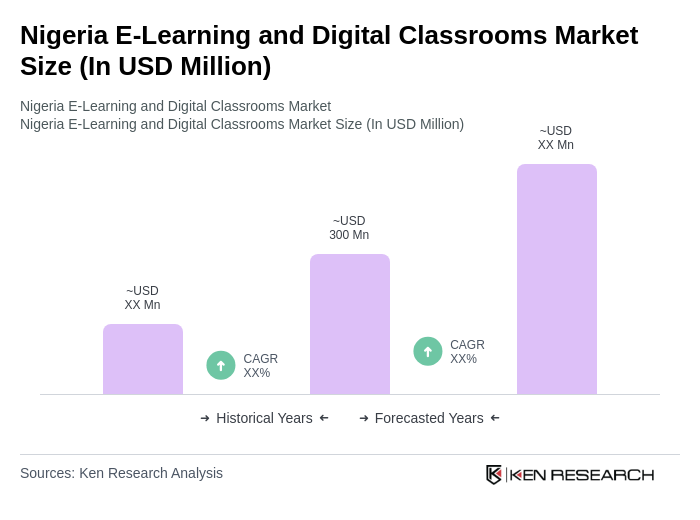
- The Nigeria E-Learning and Digital Classrooms Market is valued at USD 300 million, based on a five-year historical analysis. This valuation reflects the latest available market estimates and is driven by the increasing adoption of digital technologies in education, rapid smartphone penetration, and the growing demand for flexible learning solutions among students and professionals. The sector’s expansion is further supported by improved mobile internet coverage and a youthful population, with 64% of Nigerians under the age of 25, fueling demand for digital education platforms .
- Lagos, Abuja, and Port Harcourt remain the dominant cities in the Nigeria E-Learning and Digital Classrooms Market. Lagos, as the commercial hub, hosts a high concentration of educational institutions and tech startups. Abuja, the political capital, attracts significant investments in educational technology, while Port Harcourt’s growing population and economic activity are driving increased digital learning initiatives .
- In 2023, the Nigerian government implemented theNational Policy on Digital Education, issued by the Federal Ministry of Education. This policy mandates the integration of technology into the educational system and provides operational guidelines for the development and deployment of digital educational resources across all levels of education. The policy requires institutions to adopt digital learning platforms, ensure teacher upskilling in digital pedagogy, and comply with minimum standards for content quality and accessibility .
Nigeria E-Learning and Digital Classrooms Market Segmentation
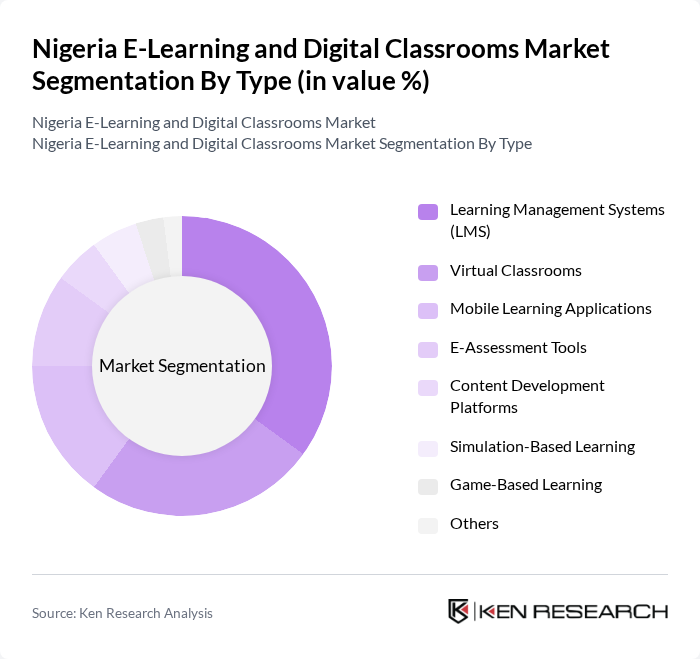
By Type:The market is segmented into various types, including Learning Management Systems (LMS), Virtual Classrooms, Mobile Learning Applications, E-Assessment Tools, Content Development Platforms, Simulation-Based Learning, Game-Based Learning, and Others.Learning Management Systems (LMS)lead the market due to their ability to streamline educational processes and enhance user engagement through interactive features. The surge in remote learning and the necessity for centralized digital content management have accelerated LMS adoption in both educational institutions and corporate training environments. Mobile-first solutions and adaptive content delivery are increasingly prioritized, reflecting the country’s high smartphone usage .
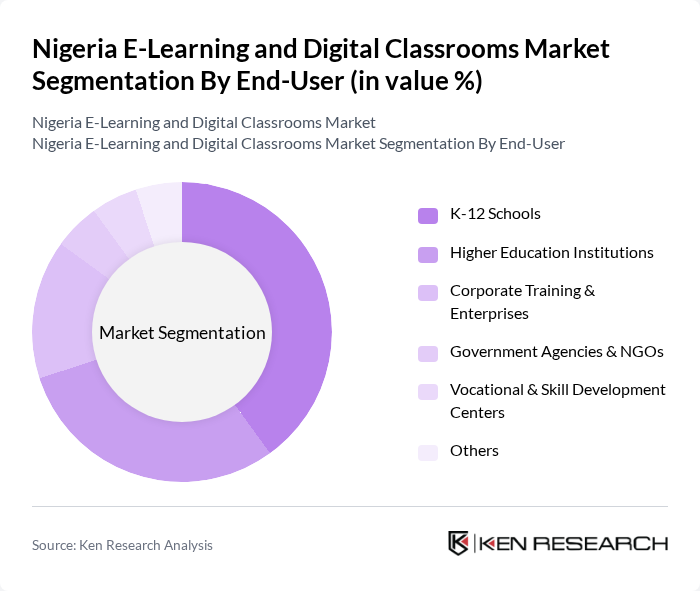
By End-User:The end-user segmentation includes K-12 Schools, Higher Education Institutions, Corporate Training & Enterprises, Government Agencies & NGOs, Vocational & Skill Development Centers, and Others.K-12 Schoolsare the dominant segment, driven by the need for innovative teaching methods and the integration of technology in classrooms. The increasing focus on personalized learning experiences, remote education solutions, and digital curriculum alignment has made K-12 institutions pivotal in Nigeria’s e-learning landscape. Corporate training and higher education are also significant contributors, reflecting the demand for upskilling and lifelong learning .
Nigeria E-Learning and Digital Classrooms Market Competitive Landscape
The Nigeria E-Learning and Digital Classrooms Market is characterized by a dynamic mix of regional and international players. Leading participants such as Andela, uLesson, Learn Africa Plc, PrepClass, Edves, Tuteria, Classera, Schoolable, Konga, ScholarX, Teesas, Coursera, Udemy, Google Classroom, Microsoft Teams for Education contribute to innovation, geographic expansion, and service delivery in this space.
Nigeria E-Learning and Digital Classrooms Market Industry Analysis
Growth Drivers
- Increasing Internet Penetration:Nigeria's internet penetration rate reached approximately 55% in future, with over 110 million active internet users. This growth is driven by the expansion of mobile networks and affordable data plans, enabling access to e-learning platforms. The National Communications Commission reported a 15% increase in internet subscriptions from 2023 to future, facilitating the adoption of digital classrooms and online learning resources across urban and rural areas.
- Government Initiatives for Digital Education:The Nigerian government allocated ?20 billion (approximately $48 million) in future to enhance digital education infrastructure. This funding supports initiatives like the National Digital Economy Policy, which aims to integrate technology into education. Additionally, partnerships with international organizations have led to the development of digital curricula, improving educational access and quality, particularly in underserved regions.
- Rising Demand for Flexible Learning Solutions:The demand for flexible learning solutions has surged, with over 60% of students preferring online courses due to their convenience. The World Bank reported that 70% of Nigerian parents support e-learning as a viable alternative to traditional education. This shift is driven by the need for personalized learning experiences and the ability to balance education with work and family commitments, particularly in urban areas.
Market Challenges
- Limited Infrastructure in Rural Areas:Approximately 40% of Nigeria's rural population lacks access to reliable electricity and internet connectivity, hindering the adoption of e-learning solutions. The Nigerian Bureau of Statistics indicated that only 30% of rural schools have basic digital infrastructure. This disparity creates significant barriers to implementing effective digital classrooms, limiting educational opportunities for millions of students in these regions.
- High Cost of Technology Implementation:The initial investment required for technology implementation in schools is a major challenge, with costs averaging ?1.5 million (about $3,600) per classroom for necessary equipment and software. Many educational institutions struggle to secure funding, particularly in public schools, where budgets are constrained. This financial barrier limits the widespread adoption of e-learning technologies, particularly in lower-income areas.
Nigeria E-Learning and Digital Classrooms Market Future Outlook
The future of Nigeria's e-learning and digital classrooms market appears promising, driven by ongoing technological advancements and increasing acceptance of digital education. As internet access continues to expand, more educational institutions are likely to adopt hybrid learning models that combine traditional and online methods. Furthermore, the integration of artificial intelligence and personalized learning tools will enhance educational experiences, making learning more engaging and effective for students across diverse backgrounds.
Market Opportunities
- Expansion of Public-Private Partnerships:Collaborations between the government and private sector can significantly enhance digital education infrastructure. By leveraging private investment, Nigeria can improve access to technology and resources in schools, particularly in underserved areas, fostering a more equitable educational landscape.
- Development of Localized Content:There is a growing opportunity to create localized educational content tailored to Nigeria's diverse languages and cultures. This approach can enhance student engagement and comprehension, making learning more relevant and effective, ultimately driving higher enrollment in e-learning programs.
Scope of the Report
| Segment | Sub-Segments |
|---|---|
| By Type | Learning Management Systems (LMS) Virtual Classrooms Mobile Learning Applications E-Assessment Tools Content Development Platforms Simulation-Based Learning Game-Based Learning Others |
| By End-User | K-12 Schools Higher Education Institutions Corporate Training & Enterprises Government Agencies & NGOs Vocational & Skill Development Centers Others |
| By Application | Academic Learning Professional Development Skill Development & Certification Compliance Training Language Learning Others |
| By Distribution Channel | Direct Sales Online Marketplaces Educational Institutions Resellers and Distributors Telecom Partnerships Others |
| By Pricing Model | Subscription-Based Pay-Per-Use Freemium One-Time Purchase Institutional Licensing Others |
| By Content Type | Video Lectures Interactive Modules Text-Based Resources Assessments and Quizzes Live Classes & Webinars Others |
| By User Demographics | Age Group Educational Background Geographic Location (Urban/Rural) Learning Preferences (Self-paced/Instructor-led) Device Usage (Mobile/Desktop) Others |
Key Target Audience
Investors and Venture Capitalist Firms
Government and Regulatory Bodies (e.g., National Information Technology Development Agency, Universal Basic Education Commission)
Telecommunications Companies
Content Developers and E-Learning Platform Providers
Corporate Training and Development Firms
Non-Governmental Organizations (NGOs) focused on Education
Technology Hardware Manufacturers
Local and International Donor Agencies
Players Mentioned in the Report:
Andela
uLesson
Learn Africa Plc
PrepClass
Edves
Tuteria
Classera
Schoolable
Konga
ScholarX
Teesas
Coursera
Udemy
Google Classroom
Microsoft Teams for Education
Table of Contents
Market Assessment Phase
1. Executive Summary and Approach
2. Nigeria E-Learning and Digital Classrooms Market Overview
2.1 Key Insights and Strategic Recommendations
2.2 Nigeria E-Learning and Digital Classrooms Market Overview
2.3 Definition and Scope
2.4 Evolution of Market Ecosystem
2.5 Timeline of Key Regulatory Milestones
2.6 Value Chain & Stakeholder Mapping
2.7 Business Cycle Analysis
2.8 Policy & Incentive Landscape
3. Nigeria E-Learning and Digital Classrooms Market Analysis
3.1 Growth Drivers
3.1.1 Increasing Internet Penetration
3.1.2 Government Initiatives for Digital Education
3.1.3 Rising Demand for Flexible Learning Solutions
3.1.4 Growth of Mobile Learning Platforms
3.2 Market Challenges
3.2.1 Limited Infrastructure in Rural Areas
3.2.2 High Cost of Technology Implementation
3.2.3 Resistance to Change from Traditional Learning Methods
3.2.4 Inadequate Training for Educators
3.3 Market Opportunities
3.3.1 Expansion of Public-Private Partnerships
3.3.2 Development of Localized Content
3.3.3 Integration of AI and Machine Learning in Education
3.3.4 Growth of Corporate E-Learning Solutions
3.4 Market Trends
3.4.1 Shift Towards Hybrid Learning Models
3.4.2 Increasing Use of Gamification in Learning
3.4.3 Focus on Personalized Learning Experiences
3.4.4 Rise of Social Learning Platforms
3.5 Government Regulation
3.5.1 National Policy on Education
3.5.2 Guidelines for Digital Learning Implementation
3.5.3 Standards for E-Learning Content Development
3.5.4 Regulations on Data Privacy in Education
4. SWOT Analysis
5. Stakeholder Analysis
6. Porter's Five Forces Analysis
7. Nigeria E-Learning and Digital Classrooms Market Market Size, 2019-2024
7.1 By Value
7.2 By Volume
7.3 By Average Selling Price
8. Nigeria E-Learning and Digital Classrooms Market Segmentation
8.1 By Type
8.1.1 Learning Management Systems (LMS)
8.1.2 Virtual Classrooms
8.1.3 Mobile Learning Applications
8.1.4 E-Assessment Tools
8.1.5 Content Development Platforms
8.1.6 Simulation-Based Learning
8.1.7 Game-Based Learning
8.1.8 Others
8.2 By End-User
8.2.1 K-12 Schools
8.2.2 Higher Education Institutions
8.2.3 Corporate Training & Enterprises
8.2.4 Government Agencies & NGOs
8.2.5 Vocational & Skill Development Centers
8.2.6 Others
8.3 By Application
8.3.1 Academic Learning
8.3.2 Professional Development
8.3.3 Skill Development & Certification
8.3.4 Compliance Training
8.3.5 Language Learning
8.3.6 Others
8.4 By Distribution Channel
8.4.1 Direct Sales
8.4.2 Online Marketplaces
8.4.3 Educational Institutions
8.4.4 Resellers and Distributors
8.4.5 Telecom Partnerships
8.4.6 Others
8.5 By Pricing Model
8.5.1 Subscription-Based
8.5.2 Pay-Per-Use
8.5.3 Freemium
8.5.4 One-Time Purchase
8.5.5 Institutional Licensing
8.5.6 Others
8.6 By Content Type
8.6.1 Video Lectures
8.6.2 Interactive Modules
8.6.3 Text-Based Resources
8.6.4 Assessments and Quizzes
8.6.5 Live Classes & Webinars
8.6.6 Others
8.7 By User Demographics
8.7.1 Age Group
8.7.2 Educational Background
8.7.3 Geographic Location (Urban/Rural)
8.7.4 Learning Preferences (Self-paced/Instructor-led)
8.7.5 Device Usage (Mobile/Desktop)
8.7.6 Others
9. Nigeria E-Learning and Digital Classrooms Market Competitive Analysis
9.1 Market Share of Key Players(Micro, Small, Medium, Large Enterprises)
9.2 Cross Comparison of Key Players
9.2.1 Company Name
9.2.2 Group Size (Large, Medium, or Small as per industry convention)
9.2.3 Revenue Growth Rate (YoY %)
9.2.4 Number of Active Users / Learners
9.2.5 Customer Acquisition Cost (CAC)
9.2.6 Customer Retention Rate (%)
9.2.7 Market Penetration Rate (Nigeria, West Africa)
9.2.8 Pricing Strategy (Subscription, Freemium, Institutional, etc.)
9.2.9 Average Revenue Per User (ARPU)
9.2.10 User Engagement Metrics (Daily/Monthly Active Users, Session Duration)
9.2.11 Content Development Efficiency (Courses/Content per Developer per Month)
9.2.12 Mobile App Ratings & Downloads
9.2.13 Partnerships with Schools/Institutions
9.2.14 Localization/Language Support
9.2.15 Others (e.g., Certification Rate, Completion Rate)
9.3 SWOT Analysis of Top Players
9.4 Pricing Analysis(By Class and Payload)
9.5 Detailed Profile of Major Companies
9.5.1 Andela
9.5.2 uLesson
9.5.3 Learn Africa Plc
9.5.4 PrepClass
9.5.5 Edves
9.5.6 Tuteria
9.5.7 Classera
9.5.8 Schoolable
9.5.9 Konga
9.5.10 ScholarX
9.5.11 Teesas
9.5.12 Coursera
9.5.13 Udemy
9.5.14 Google Classroom
9.5.15 Microsoft Teams for Education
10. Nigeria E-Learning and Digital Classrooms Market End-User Analysis
10.1 Procurement Behavior of Key Ministries
10.1.1 Budget Allocation for E-Learning
10.1.2 Decision-Making Process
10.1.3 Preferred Vendors
10.1.4 Evaluation Criteria
10.2 Corporate Spend on Infrastructure & Energy
10.2.1 Investment in Digital Tools
10.2.2 Budget for Training Programs
10.2.3 Spending on Maintenance and Support
10.3 Pain Point Analysis by End-User Category
10.3.1 Challenges in Implementation
10.3.2 User Experience Issues
10.3.3 Content Relevance
10.4 User Readiness for Adoption
10.4.1 Training Needs Assessment
10.4.2 Technology Familiarity
10.4.3 Support Systems
10.5 Post-Deployment ROI and Use Case Expansion
10.5.1 Metrics for Success
10.5.2 Feedback Mechanisms
10.5.3 Opportunities for Upscaling
11. Nigeria E-Learning and Digital Classrooms Market Future Size, 2025-2030
11.1 By Value
11.2 By Volume
11.3 By Average Selling Price
Go-To-Market Strategy Phase
1. Whitespace Analysis + Business Model Canvas
1.1 Market Gaps Identification
1.2 Value Proposition Development
1.3 Revenue Streams
1.4 Key Partnerships
1.5 Cost Structure
1.6 Customer Segments
1.7 Channels
2. Marketing and Positioning Recommendations
2.1 Branding Strategies
2.2 Product USPs
3. Distribution Plan
3.1 Urban Retail Strategies
3.2 Rural NGO Tie-Ups
4. Channel & Pricing Gaps
4.1 Underserved Routes
4.2 Pricing Bands
5. Unmet Demand & Latent Needs
5.1 Category Gaps
5.2 Consumer Segments
6. Customer Relationship
6.1 Loyalty Programs
6.2 After-Sales Service
7. Value Proposition
7.1 Sustainability
7.2 Integrated Supply Chains
8. Key Activities
8.1 Regulatory Compliance
8.2 Branding
8.3 Distribution Setup
9. Entry Strategy Evaluation
9.1 Domestic Market Entry Strategy
9.1.1 Product Mix
9.1.2 Pricing Band
9.1.3 Packaging
9.2 Export Entry Strategy
9.2.1 Target Countries
9.2.2 Compliance Roadmap
10. Entry Mode Assessment
10.1 Joint Ventures
10.2 Greenfield Investments
10.3 Mergers & Acquisitions
10.4 Distributor Model
11. Capital and Timeline Estimation
11.1 Capital Requirements
11.2 Timelines
12. Control vs Risk Trade-Off
12.1 Ownership vs Partnerships
13. Profitability Outlook
13.1 Breakeven Analysis
13.2 Long-Term Sustainability
14. Potential Partner List
14.1 Distributors
14.2 Joint Ventures
14.3 Acquisition Targets
15. Execution Roadmap
15.1 Phased Plan for Market Entry
15.1.1 Market Setup
15.1.2 Market Entry
15.1.3 Growth Acceleration
15.1.4 Scale & Stabilize
15.2 Key Activities and Milestones
15.2.1 Milestone Planning
15.2.2 Activity Tracking
Research Methodology
Phase 1: Approach1
Desk Research
- Analysis of government reports on digital education initiatives in Nigeria
- Review of academic publications and white papers on e-learning trends
- Examination of market reports from educational technology associations
Primary Research
- Interviews with educational administrators from primary and secondary schools
- Surveys with teachers and educators on digital classroom adoption
- Focus groups with students and parents regarding e-learning experiences
Validation & Triangulation
- Cross-validation of findings with data from educational NGOs and government agencies
- Triangulation of insights from primary research with secondary data trends
- Sanity checks through expert panel discussions with industry leaders
Phase 2: Market Size Estimation1
Top-down Assessment
- Estimation of total education expenditure in Nigeria as a baseline
- Segmentation of market size by educational levels (primary, secondary, tertiary)
- Incorporation of growth rates from digital content and platform providers
Bottom-up Modeling
- Data collection on the number of schools adopting e-learning solutions
- Estimation of average spending per institution on digital tools and resources
- Calculation of total market size based on institutional adoption rates
Forecasting & Scenario Analysis
- Multi-factor regression analysis incorporating internet penetration and smartphone usage
- Scenario modeling based on government policy changes and funding for digital education
- Development of baseline, optimistic, and pessimistic growth forecasts through 2030
Phase 3: CATI Sample Composition1
| Scope Item/Segment | Sample Size | Target Respondent Profiles |
|---|---|---|
| Primary School E-Learning Adoption | 100 | School Administrators, Teachers |
| Secondary School Digital Classroom Implementation | 80 | Principals, IT Coordinators |
| Tertiary Institution E-Learning Strategies | 60 | University Deans, Educational Technologists |
| Parental Perspectives on E-Learning | 90 | Parents, Guardians |
| Student Engagement in Digital Learning | 70 | Students, Recent Graduates |
Frequently Asked Questions
What is the current value of the Nigeria E-Learning and Digital Classrooms Market?
The Nigeria E-Learning and Digital Classrooms Market is valued at approximately USD 300 million, reflecting significant growth driven by the adoption of digital technologies, smartphone penetration, and demand for flexible learning solutions among students and professionals.
Which cities are the main hubs for E-Learning in Nigeria?
What government initiatives support digital education in Nigeria?
What are the main types of E-Learning solutions available in Nigeria?
Other Regional/Country Reports
Indonesia E-Learning and Digital Classrooms Market
Malaysia E-Learning and Digital Classrooms Market
KSA E-Learning and Digital Classrooms Market
APAC E-Learning and Digital Classrooms Market
SEA E-Learning and Digital Classrooms Market
Vietnam E-Learning and Digital Classrooms Market
Other Adjacent Reports
Kuwait Educational Technology Market
South Africa Online Tutoring Market
Thailand Digital Content Publishing Market
Bahrain Learning Management Systems Market
Singapore Virtual Reality Education Market
Thailand Artificial Intelligence Education Market
UAE Mobile Learning Applications Market
Bahrain Corporate Training Software Market
Japan K-12 Education Software Market
Qatar Higher Education Platforms Market
Why Buy From Us?

What makes us stand out is that our consultants follow Robust, Refine and Result (RRR) methodology. Robust for clear definitions, approaches and sanity checking, Refine for differentiating respondents' facts and opinions, and Result for presenting data with story.

We have set a benchmark in the industry by offering our clients with syndicated and customized market research reports featuring coverage of entire market as well as meticulous research and analyst insights.

While we don't replace traditional research, we flip the method upside down. Our dual approach of Top Bottom & Bottom Top ensures quality deliverable by not just verifying company fundamentals but also looking at the sector and macroeconomic factors.

With one step in the future, our research team constantly tries to show you the bigger picture. We help with some of the tough questions you may encounter along the way: How is the industry positioned? Best marketing channel? KPI's of competitors? By aligning every element, we help maximize success.

Our report gives you instant access to the answers and sources that other companies might choose to hide. We elaborate each steps of research methodology we have used and showcase you the sample size to earn your trust.

If you need any support, we are here! We pride ourselves on universe strength, data quality, and quick, friendly, and professional service.