About the Report
Base Year 2024Philippines Torpedo Market Overview
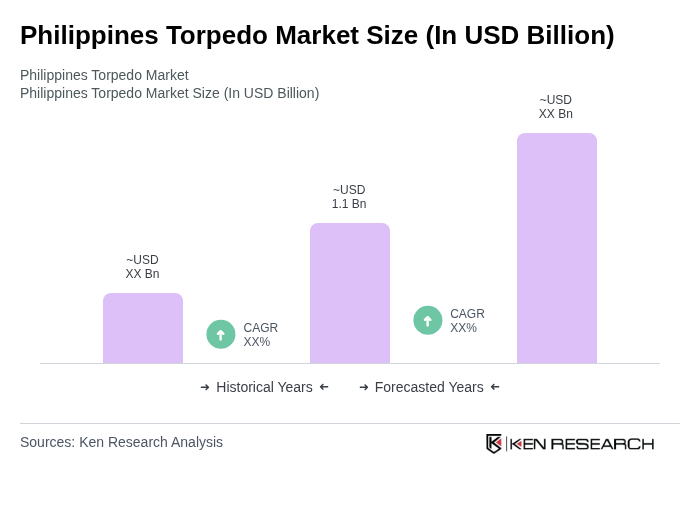
- The Philippines Torpedo Market is valued at USD 1.1 billion, based on a five-year historical analysis. This growth is primarily driven by increasing defense budgets, modernization of naval forces, rising geopolitical tensions in the region, and rising strategic need for sub-surface deterrence in contested waters such as the South China Sea. The demand for advanced torpedo systems is further fueled by the need for enhanced anti-submarine warfare capabilities and the integration of cutting-edge technologies in military operations.
- Key players in this market include Metro Manila, Cebu, and Davao. Metro Manila dominates due to its strategic location, hosting major defense contractors and government agencies. Cebu and Davao are also significant due to their growing naval bases and increased military presence, which contribute to the demand for torpedo systems and related technologies.
- In 2023, the Philippine government implemented the Revised Armed Forces of the Philippines Modernization Program, which allocates approximately USD 35 billion for the procurement of advanced weaponry, including torpedoes. This initiative aims to enhance the country's maritime security and defense capabilities in response to regional threats.
Philippines Torpedo Market Segmentation
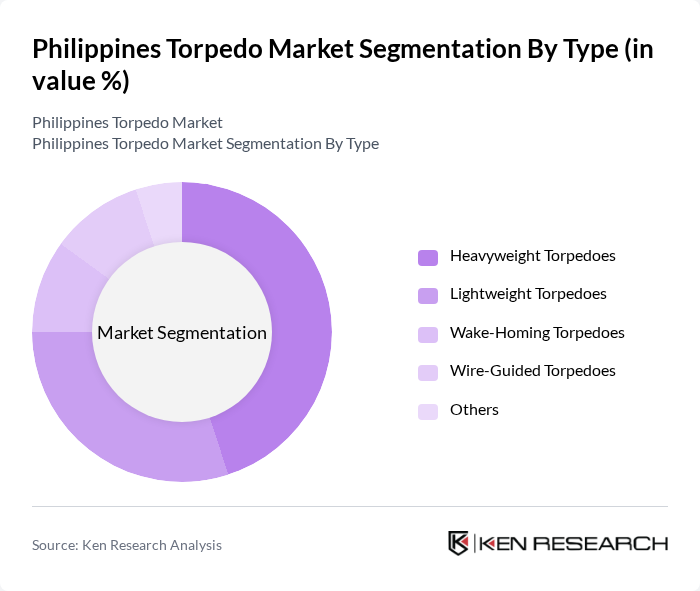
By Type:The market is segmented into various types of torpedoes, including Heavyweight Torpedoes, Lightweight Torpedoes, Wake-Homing Torpedoes, Wire-Guided Torpedoes, and Others. Heavyweight torpedoes are currently leading the market due to their effectiveness in anti-submarine warfare and their deployment on submarines and surface vessels. The increasing focus on naval warfare and the need for advanced weaponry have driven the demand for heavyweight torpedoes, which are favored for their range and payload capacity.
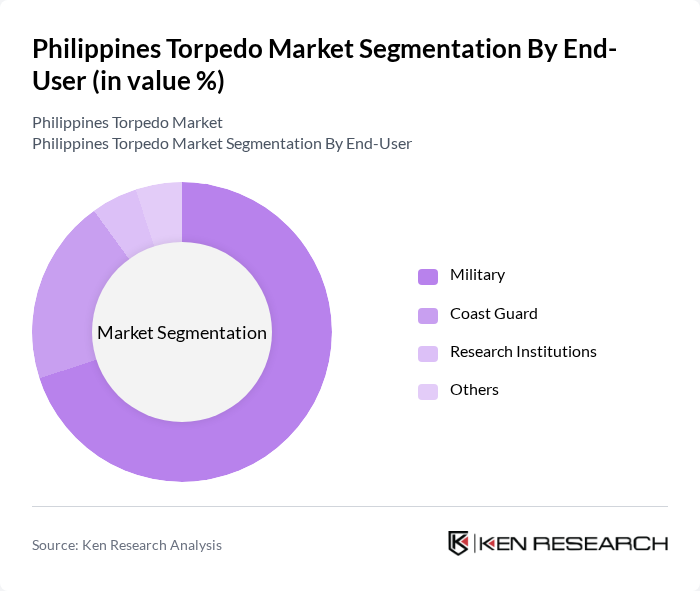
By End-User:The end-user segmentation includes Military, Coast Guard, Research Institutions, and Others. The military sector is the dominant end-user, driven by the increasing need for advanced naval capabilities and the modernization of the armed forces. The Philippine Navy's focus on enhancing its anti-submarine warfare capabilities has led to a significant investment in torpedo systems, making the military the primary consumer in this market.
Philippines Torpedo Market Competitive Landscape
The Philippines Torpedo Market is characterized by a dynamic mix of regional and international players. Leading participants such as Rafael Advanced Defense Systems, BAE Systems, Lockheed Martin, Northrop Grumman, Thales Group, Kongsberg Gruppen, Saab AB, Leonardo S.p.A., General Dynamics, Mitsubishi Heavy Industries, Hyundai Heavy Industries, Navantia, DCNS, Rolls-Royce, Textron Systems contribute to innovation, geographic expansion, and service delivery in this space.
Philippines Torpedo Market Industry Analysis
Growth Drivers
- Increasing Defense Budgets:The Philippines government allocated approximately PHP 220 billion (USD 4.1 billion) for defense, reflecting a 10% increase from the previous year. This rise in defense spending is primarily aimed at enhancing national security and modernizing military capabilities, including naval forces. The focus on upgrading maritime defense systems directly supports the growth of the torpedo market, as the government seeks to procure advanced weaponry to address regional security challenges.
- Technological Advancements in Torpedo Design:The Philippines is witnessing significant advancements in torpedo technology, with investments reaching PHP 16 billion (USD 300 million) in research and development. These innovations include the development of lightweight, high-speed torpedoes with enhanced guidance systems. Such technological improvements are crucial for maintaining a competitive edge in naval warfare, driving demand for modern torpedo systems that can effectively counter emerging threats in the region.
- Rising Maritime Security Concerns:The Philippines faces increasing maritime security threats, particularly in the South China Sea, prompting a strategic focus on naval capabilities. The government reported a 30% increase in maritime security incidents, underscoring the urgency for enhanced defense measures. This heightened concern drives investments in torpedo systems, as the military prioritizes the acquisition of advanced weaponry to safeguard territorial waters and ensure national sovereignty.
Market Challenges
- High Development Costs:The development of advanced torpedo systems involves substantial financial investments, often exceeding PHP 12 billion (USD 220 million) per project. These high costs can deter local manufacturers from entering the market, limiting competition and innovation. Additionally, the reliance on foreign technology and expertise further escalates expenses, posing a significant challenge for the Philippines to establish a self-sufficient torpedo manufacturing capability.
- Regulatory Compliance Issues:The Philippines faces stringent regulatory frameworks governing defense procurement and manufacturing, which can complicate the torpedo market landscape. Compliance with international arms control agreements and local defense procurement policies often results in lengthy approval processes, delaying project timelines. The government reported an average delay of 20 months for defense contracts, hindering timely advancements in torpedo technology and production capabilities.
Philippines Torpedo Market Future Outlook
The Philippines torpedo market is poised for significant evolution, driven by technological advancements and increasing defense budgets. As the government prioritizes maritime security, investments in autonomous and AI-integrated torpedo systems are expected to rise in future. Furthermore, collaborations with international defense agencies will enhance local capabilities, fostering innovation. The focus on eco-friendly materials in torpedo production will also gain traction, aligning with global sustainability trends while addressing environmental compliance standards in defense manufacturing.
Market Opportunities
- Expansion of Naval Forces:The Philippine Navy plans to expand its fleet by acquiring 15 new vessels, creating a substantial demand for advanced torpedo systems. This expansion is expected to drive investments of approximately PHP 35 billion (USD 650 million) in naval armaments, including torpedoes, enhancing the country's maritime defense capabilities and fostering local manufacturing opportunities.
- Increased Investment in R&D:The government is set to increase its R&D budget for defense technologies to PHP 6 billion (USD 120 million). This investment aims to foster innovation in torpedo design and production, encouraging partnerships with local universities and research institutions. Such initiatives will not only enhance technological capabilities but also stimulate economic growth within the defense sector.
Scope of the Report
| Segment | Sub-Segments |
|---|---|
| By Type | Heavyweight Torpedoes Lightweight Torpedoes Wake-Homing Torpedoes Wire-Guided Torpedoes Others |
| By End-User | Military Coast Guard Research Institutions Others |
| By Region | Luzon Visayas Mindanao |
| By Technology | Conventional Torpedoes Advanced Propulsion Systems Stealth Technology Others |
| By Application | Anti-Submarine Warfare Anti-Surface Warfare Training and Simulation Others |
| By Investment Source | Government Funding Private Investments International Aid Others |
| By Policy Support | Defense Subsidies Tax Incentives Research Grants Others |
Key Target Audience
Investors and Venture Capitalist Firms
Government and Regulatory Bodies (e.g., Department of National Defense, Bureau of Customs)
Manufacturers and Producers
Distributors and Retailers
Defense Contractors
Military and Naval Procurement Agencies
Industry Associations (e.g., Philippine Defense Industry Association)
Financial Institutions
Players Mentioned in the Report:
Rafael Advanced Defense Systems
BAE Systems
Lockheed Martin
Northrop Grumman
Thales Group
Kongsberg Gruppen
Saab AB
Leonardo S.p.A.
General Dynamics
Mitsubishi Heavy Industries
Hyundai Heavy Industries
Navantia
DCNS
Rolls-Royce
Textron Systems
Table of Contents
Market Assessment Phase
1. Executive Summary and Approach
2. Philippines Torpedo Market Overview
2.1 Key Insights and Strategic Recommendations
2.2 Philippines Torpedo Market Overview
2.3 Definition and Scope
2.4 Evolution of Market Ecosystem
2.5 Timeline of Key Regulatory Milestones
2.6 Value Chain & Stakeholder Mapping
2.7 Business Cycle Analysis
2.8 Policy & Incentive Landscape
3. Philippines Torpedo Market Analysis
3.1 Growth Drivers
3.1.1 Increasing Defense Budgets
3.1.2 Technological Advancements in Torpedo Design
3.1.3 Rising Maritime Security Concerns
3.1.4 Strategic Partnerships with Defense Contractors
3.2 Market Challenges
3.2.1 High Development Costs
3.2.2 Regulatory Compliance Issues
3.2.3 Limited Domestic Manufacturing Capabilities
3.2.4 Competition from International Suppliers
3.3 Market Opportunities
3.3.1 Expansion of Naval Forces
3.3.2 Increased Investment in R&D
3.3.3 Collaborations with International Defense Agencies
3.3.4 Development of Advanced Torpedo Systems
3.4 Market Trends
3.4.1 Shift Towards Autonomous Torpedoes
3.4.2 Integration of AI in Torpedo Systems
3.4.3 Focus on Eco-Friendly Materials
3.4.4 Enhanced Training Simulators for Torpedo Operations
3.5 Government Regulation
3.5.1 Export Control Regulations
3.5.2 Defense Procurement Policies
3.5.3 Environmental Compliance Standards
3.5.4 Safety Regulations for Manufacturing
4. SWOT Analysis
5. Stakeholder Analysis
6. Porter's Five Forces Analysis
7. Philippines Torpedo Market Market Size, 2019-2024
7.1 By Value
7.2 By Volume
7.3 By Average Selling Price
8. Philippines Torpedo Market Segmentation
8.1 By Type
8.1.1 Heavyweight Torpedoes
8.1.2 Lightweight Torpedoes
8.1.3 Wake-Homing Torpedoes
8.1.4 Wire-Guided Torpedoes
8.1.5 Others
8.2 By End-User
8.2.1 Military
8.2.2 Coast Guard
8.2.3 Research Institutions
8.2.4 Others
8.3 By Region
8.3.1 Luzon
8.3.2 Visayas
8.3.3 Mindanao
8.4 By Technology
8.4.1 Conventional Torpedoes
8.4.2 Advanced Propulsion Systems
8.4.3 Stealth Technology
8.4.4 Others
8.5 By Application
8.5.1 Anti-Submarine Warfare
8.5.2 Anti-Surface Warfare
8.5.3 Training and Simulation
8.5.4 Others
8.6 By Investment Source
8.6.1 Government Funding
8.6.2 Private Investments
8.6.3 International Aid
8.6.4 Others
8.7 By Policy Support
8.7.1 Defense Subsidies
8.7.2 Tax Incentives
8.7.3 Research Grants
8.7.4 Others
9. Philippines Torpedo Market Competitive Analysis
9.1 Market Share of Key Players
9.2 Cross Comparison of Key Players
9.2.1 Company Name
9.2.2 Group Size (Large, Medium, or Small as per industry convention)
9.2.3 Revenue Growth Rate
9.2.4 Market Penetration Rate
9.2.5 Customer Retention Rate
9.2.6 Product Development Cycle Time
9.2.7 Pricing Strategy
9.2.8 Operational Efficiency Ratio
9.2.9 Supply Chain Responsiveness
9.2.10 Customer Satisfaction Index
9.3 SWOT Analysis of Top Players
9.4 Pricing Analysis
9.5 Detailed Profile of Major Companies
9.5.1 Rafael Advanced Defense Systems
9.5.2 BAE Systems
9.5.3 Lockheed Martin
9.5.4 Northrop Grumman
9.5.5 Thales Group
9.5.6 Kongsberg Gruppen
9.5.7 Saab AB
9.5.8 Leonardo S.p.A.
9.5.9 General Dynamics
9.5.10 Mitsubishi Heavy Industries
9.5.11 Hyundai Heavy Industries
9.5.12 Navantia
9.5.13 DCNS
9.5.14 Rolls-Royce
9.5.15 Textron Systems
10. Philippines Torpedo Market End-User Analysis
10.1 Procurement Behavior of Key Ministries
10.1.1 Defense Ministry Procurement Trends
10.1.2 Budget Allocation for Naval Defense
10.1.3 Supplier Selection Criteria
10.1.4 Contract Award Processes
10.2 Corporate Spend on Infrastructure & Energy
10.2.1 Investment in Naval Infrastructure
10.2.2 Spending on Defense Technology
10.2.3 Budgeting for Research and Development
10.2.4 Others
10.3 Pain Point Analysis by End-User Category
10.3.1 Challenges in Procurement Processes
10.3.2 Issues with Supplier Reliability
10.3.3 Budget Constraints
10.3.4 Others
10.4 User Readiness for Adoption
10.4.1 Training Needs for Personnel
10.4.2 Infrastructure Readiness
10.4.3 Technology Adoption Barriers
10.4.4 Others
10.5 Post-Deployment ROI and Use Case Expansion
10.5.1 Evaluation of Operational Effectiveness
10.5.2 Cost-Benefit Analysis
10.5.3 Potential for Future Upgrades
10.5.4 Others
11. Philippines Torpedo Market Future Size, 2025-2030
11.1 By Value
11.2 By Volume
11.3 By Average Selling Price
Go-To-Market Strategy Phase
1. Whitespace Analysis + Business Model Canvas
1.1 Market Gaps Identification
1.2 Value Proposition Development
1.3 Revenue Streams Analysis
1.4 Cost Structure Evaluation
1.5 Key Partnerships Exploration
1.6 Customer Segmentation
1.7 Channels of Distribution
2. Marketing and Positioning Recommendations
2.1 Branding Strategies
2.2 Product USPs
3. Distribution Plan
3.1 Urban Retail vs Rural NGO Tie-Ups
4. Channel & Pricing Gaps
4.1 Underserved Routes
4.2 Pricing Bands
5. Unmet Demand & Latent Needs
5.1 Category Gaps
5.2 Consumer Segments
6. Customer Relationship
6.1 Loyalty Programs
6.2 After-Sales Service
7. Value Proposition
7.1 Sustainability
7.2 Integrated Supply Chains
8. Key Activities
8.1 Regulatory Compliance
8.2 Branding
8.3 Distribution Setup
9. Entry Strategy Evaluation
9.1 Domestic Market Entry Strategy
9.1.1 Product Mix
9.1.2 Pricing Band
9.1.3 Packaging
9.2 Export Entry Strategy
9.2.1 Target Countries
9.2.2 Compliance Roadmap
10. Entry Mode Assessment
10.1 JV
10.2 Greenfield
10.3 M&A
10.4 Distributor Model
11. Capital and Timeline Estimation
11.1 Capital Requirements
11.2 Timelines
12. Control vs Risk Trade-Off
12.1 Ownership vs Partnerships
13. Profitability Outlook
13.1 Breakeven Analysis
13.2 Long-Term Sustainability
14. Potential Partner List
14.1 Distributors
14.2 JVs
14.3 Acquisition Targets
15. Execution Roadmap
15.1 Phased Plan for Market Entry
15.1.1 Market Setup
15.1.2 Market Entry
15.1.3 Growth Acceleration
15.1.4 Scale & Stabilize
15.2 Key Activities and Milestones
15.2.1 Milestone Planning
15.2.2 Activity Tracking
Research Methodology
Phase 1: Approach1
Desk Research
- Analysis of government reports on the fishing and aquaculture sectors in the Philippines
- Review of industry publications and market reports specific to the torpedo market
- Examination of trade statistics and import/export data related to torpedoes and fishing equipment
Primary Research
- Interviews with key stakeholders in the fishing industry, including boat manufacturers and fishing gear suppliers
- Surveys conducted with local fishermen to understand usage patterns and preferences
- Focus group discussions with fishing cooperatives to gather insights on market trends and challenges
Validation & Triangulation
- Cross-validation of findings through multiple data sources, including government and industry reports
- Triangulation of qualitative insights from interviews with quantitative data from surveys
- Sanity checks through expert reviews from industry veterans and academic professionals
Phase 2: Market Size Estimation1
Top-down Assessment
- Estimation of the overall fishing equipment market size and its share attributed to torpedoes
- Analysis of demographic trends and fishing participation rates in the Philippines
- Incorporation of seasonal fishing patterns and their impact on torpedo demand
Bottom-up Modeling
- Collection of sales data from major retailers and distributors of fishing equipment
- Estimation of average selling prices for various types of torpedoes
- Volume estimates based on fishing activity levels and equipment replacement cycles
Forecasting & Scenario Analysis
- Multi-factor regression analysis considering economic indicators and fishing industry growth
- Scenario modeling based on environmental regulations and sustainability trends
- Development of baseline, optimistic, and pessimistic forecasts through 2030
Phase 3: CATI Sample Composition1
| Scope Item/Segment | Sample Size | Target Respondent Profiles |
|---|---|---|
| Commercial Fishing Operators | 100 | Fleet Managers, Equipment Buyers |
| Recreational Fishermen | 80 | Hobbyist Fishermen, Fishing Club Members |
| Fishing Gear Retailers | 60 | Store Owners, Sales Representatives |
| Aquaculture Farms | 70 | Farm Managers, Procurement Officers |
| Fishing Equipment Manufacturers | 50 | Product Development Managers, Engineers |
Frequently Asked Questions
What is the current value of the Philippines Torpedo Market?
The Philippines Torpedo Market is valued at approximately USD 1.1 billion, driven by increased defense budgets, modernization of naval forces, and rising geopolitical tensions, particularly in the South China Sea.
What factors are driving the growth of the Philippines Torpedo Market?
Who are the major players in the Philippines Torpedo Market?
What types of torpedoes are available in the Philippines market?
Other Regional/Country Reports
Other Adjacent Reports
Bahrain Anti-Submarine Warfare Market
South Korea Naval Vessel Market
US sonar system market report size, share, growth drivers, trends, opportunities & forecast 2025–2030Brazil Missile System Market
Singapore Defense Electronics Market
Bahrain Maritime Security Market
Qatar Underwater Drone Market
Egypt Weapon Guidance System Market
Brazil Naval Propulsion Market
Why Buy From Us?

What makes us stand out is that our consultants follow Robust, Refine and Result (RRR) methodology. Robust for clear definitions, approaches and sanity checking, Refine for differentiating respondents' facts and opinions, and Result for presenting data with story.

We have set a benchmark in the industry by offering our clients with syndicated and customized market research reports featuring coverage of entire market as well as meticulous research and analyst insights.

While we don't replace traditional research, we flip the method upside down. Our dual approach of Top Bottom & Bottom Top ensures quality deliverable by not just verifying company fundamentals but also looking at the sector and macroeconomic factors.

With one step in the future, our research team constantly tries to show you the bigger picture. We help with some of the tough questions you may encounter along the way: How is the industry positioned? Best marketing channel? KPI's of competitors? By aligning every element, we help maximize success.

Our report gives you instant access to the answers and sources that other companies might choose to hide. We elaborate each steps of research methodology we have used and showcase you the sample size to earn your trust.

If you need any support, we are here! We pride ourselves on universe strength, data quality, and quick, friendly, and professional service.