Urban Heat Is Becoming a Real Estate Risk: Why GCC Cities Must Build for Thermal Resilience
Download the Full Consulting POV Now
A Ken Research POV on Urban Heat Island risk, real estate resilience, and the next urban infrastructure opportunity across GCC
Extreme heat is no longer only an environmental challenge for GCC cities. It is becoming a measurable economic, operational, and real estate risk.
As urban density rises, built surfaces expand, and cooling demand intensifies, GCC cities are facing a sharper Urban Heat Island challenge. Dense commercial districts, high-exposure residential clusters, industrial zones, and fast-growing mixed-use developments are absorbing and retaining heat at levels that directly affect productivity, infrastructure performance, energy budgets, tenant comfort, and long-term asset value.
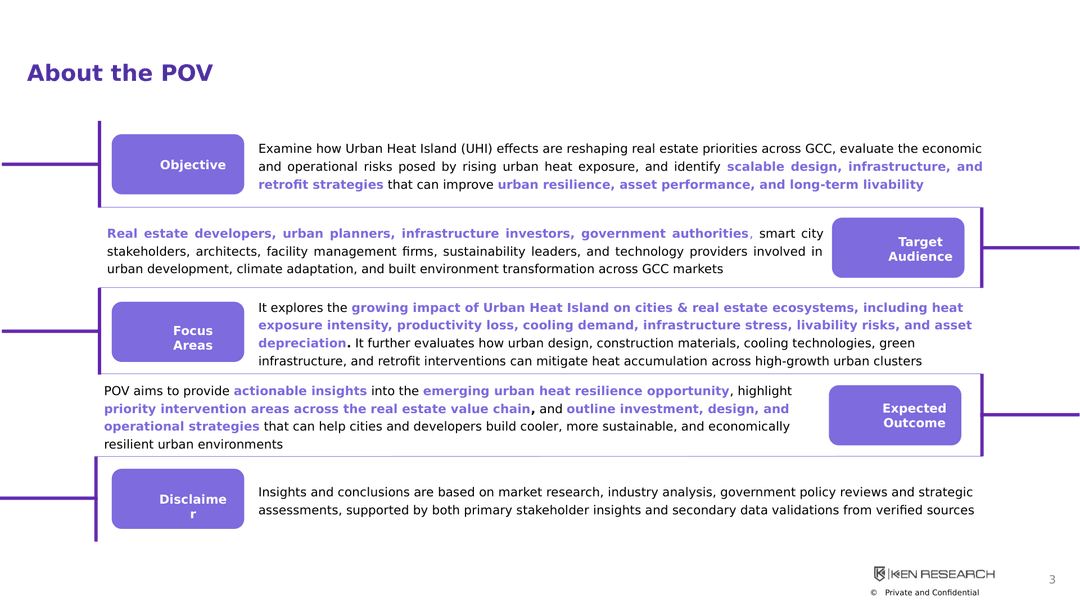
Ken Research’s Urban Heat Island POV examines how heat exposure is reshaping urban development priorities across GCC markets. The study evaluates where UHI risk is most concentrated, why the built environment is amplifying heat, and how design, construction materials, green infrastructure, district cooling, and retrofitting can create more resilient and economically sustainable cities.
The Strategic Question
Is GCC real estate being designed for yesterday’s climate or tomorrow’s heat reality?
For decades, urban development across GCC markets has prioritized density, commercial expansion, premium real estate, transport connectivity, and large-scale infrastructure. These remain central to the region’s growth model.
But the climate context has changed.
The same urban features that support economic growth — dense construction, hard surfaces, limited permeability, high cooling dependency, and concentrated human activity — are now intensifying urban heat. As a result, heat is no longer just a weather condition. It is becoming a design flaw, an operational cost, and a long-term asset risk.
The strategic question is therefore shifting from:
“How do cities manage extreme heat?”to:“How should real estate, infrastructure, and urban planning be redesigned to protect productivity, livability, and asset performance?”
Market Context
Urban heat is becoming economically costly, not just uncomfortable
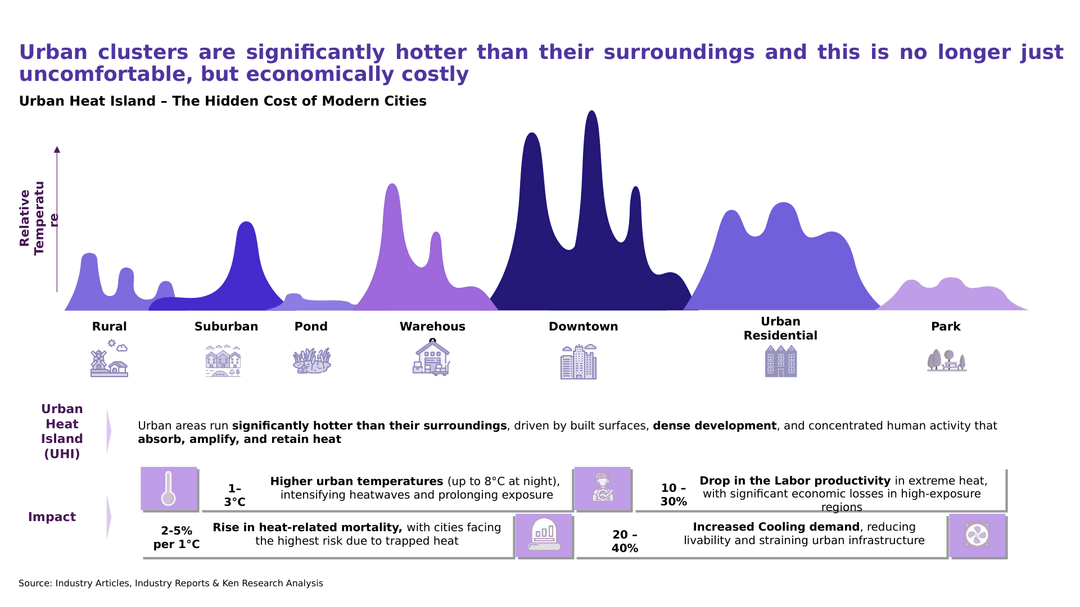
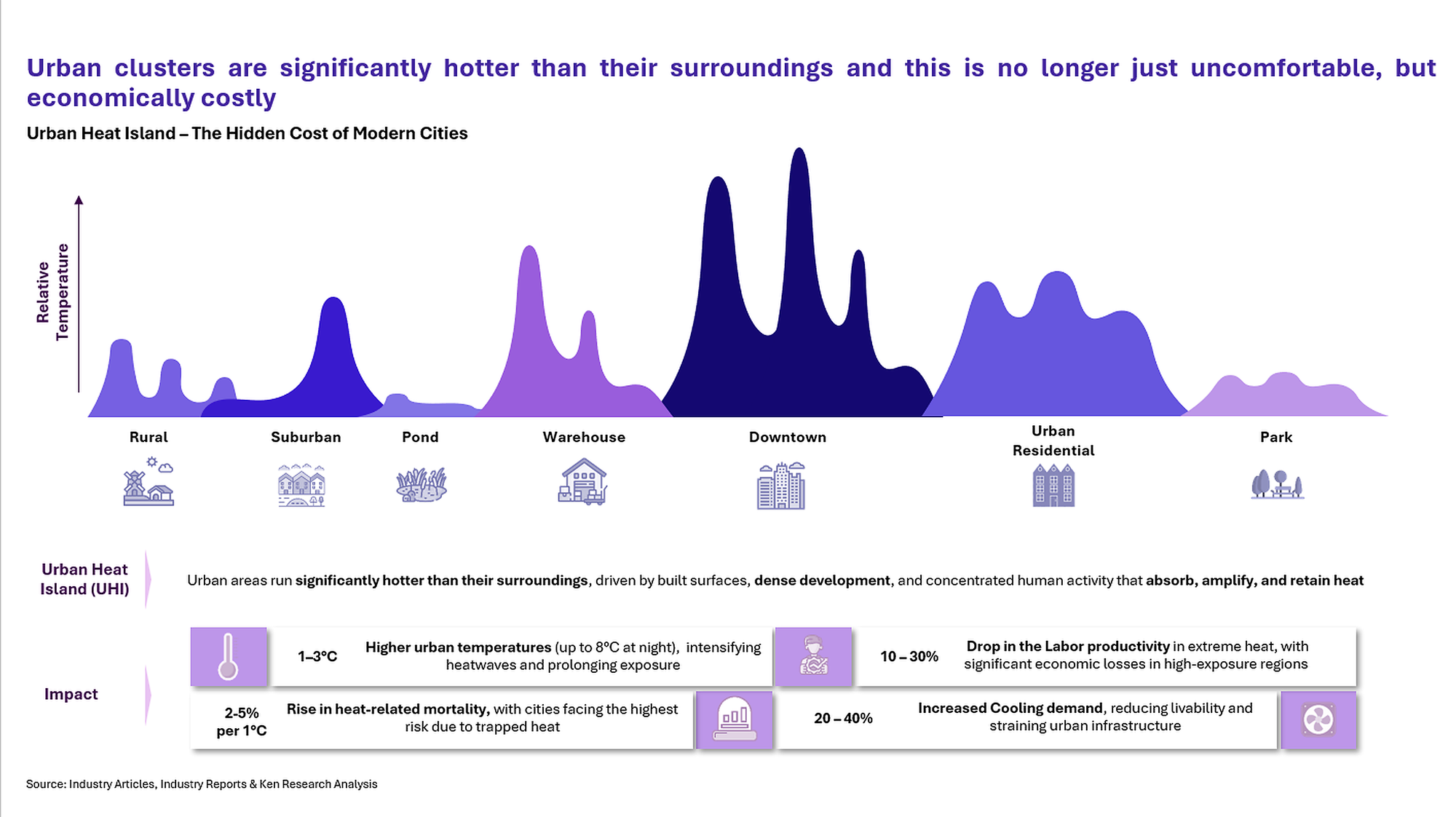
Urban Heat Island effects occur when cities run significantly hotter than their surrounding areas due to heat-absorbing materials, dense built environments, reduced vegetation, limited airflow, and concentrated energy use. In GCC cities, this effect is amplified by already high baseline temperatures and rapid urban expansion.
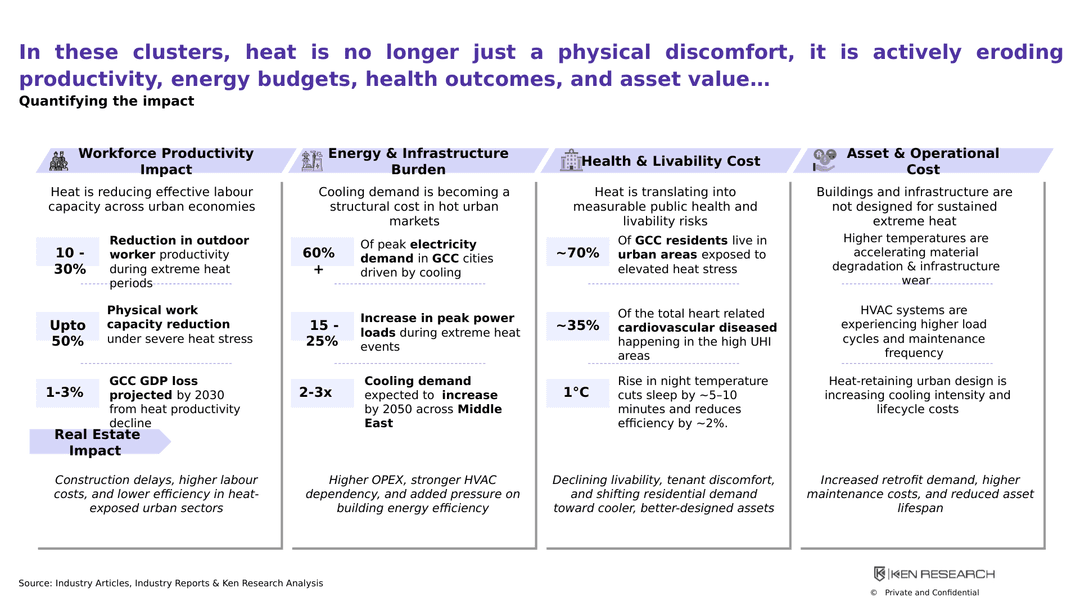
The impact is now visible across multiple layers of the built environment. Higher temperatures increase cooling demand, extend HVAC load cycles, reduce outdoor labour productivity, strain electricity networks, increase infrastructure wear, and reduce the livability of exposed urban districts.
For real estate developers and city planners, this means heat resilience is no longer an optional sustainability feature. It is becoming a core requirement for asset competitiveness.
Why This Matters Now
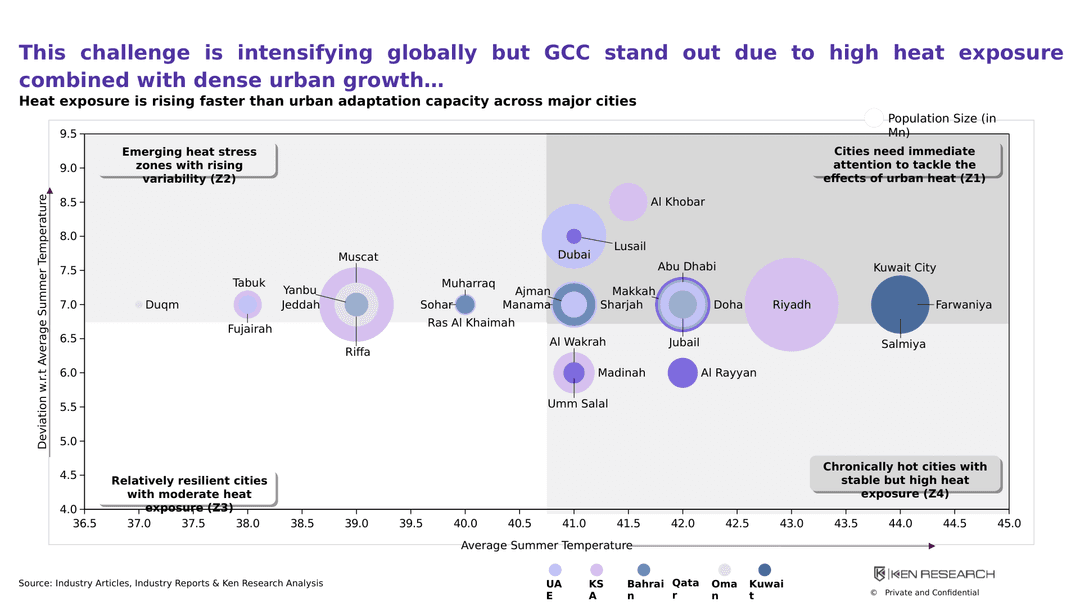
GCC markets stand out because they combine high heat exposure with dense urban growth. Cities such as Dubai, Abu Dhabi, Riyadh, Doha, Lusail, Manama, Kuwait City, Muscat, and others are expanding through commercial districts, residential towers, tourism zones, transport corridors, and new urban mega-projects.
However, heat risk is not distributed evenly.
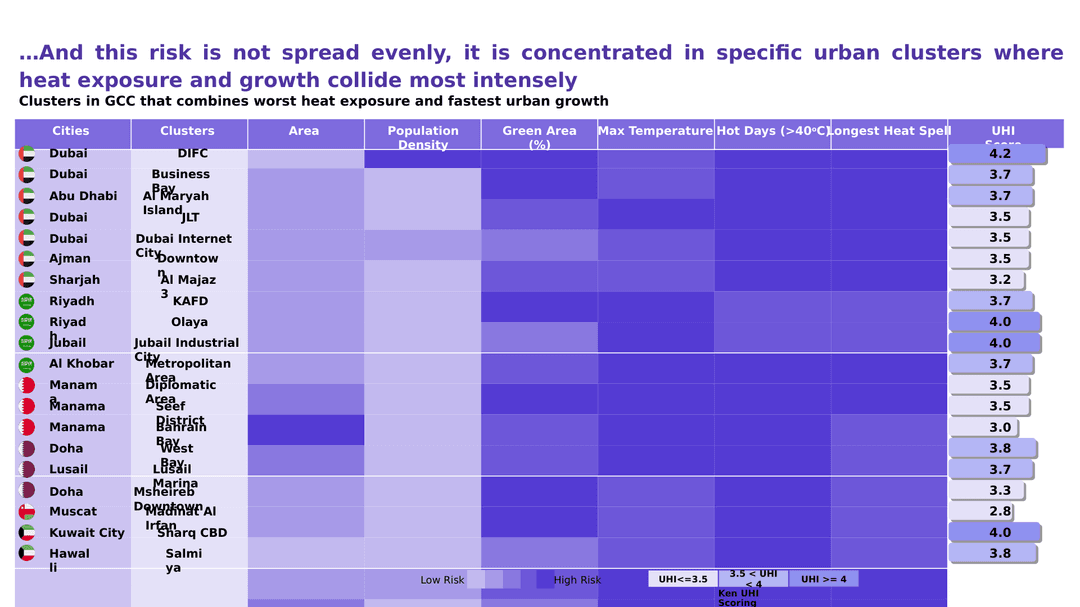
Some urban clusters face a much higher risk because heat exposure and growth intensity collide in the same locations. CBDs, waterfront business districts, dense residential-commercial corridors, industrial zones, and low-green-cover districts can experience stronger heat retention, higher cooling intensity, and greater operational stress.
This creates a new planning challenge: GCC cities do not only need climate resilience at the national or city level. They needcluster-level heat diagnosticsthat can identify where intervention should happen first.
Key Insight from the POV
UHI risk is concentrated in specific urban clusters where heat exposure and growth collide
The POV shows that urban heat risk becomes more actionable when analyzed at the cluster level. Across GCC cities, several high-density commercial and mixed-use clusters show elevated UHI exposure because they combine built density, limited green coverage, high surface absorption, and intensive economic activity.
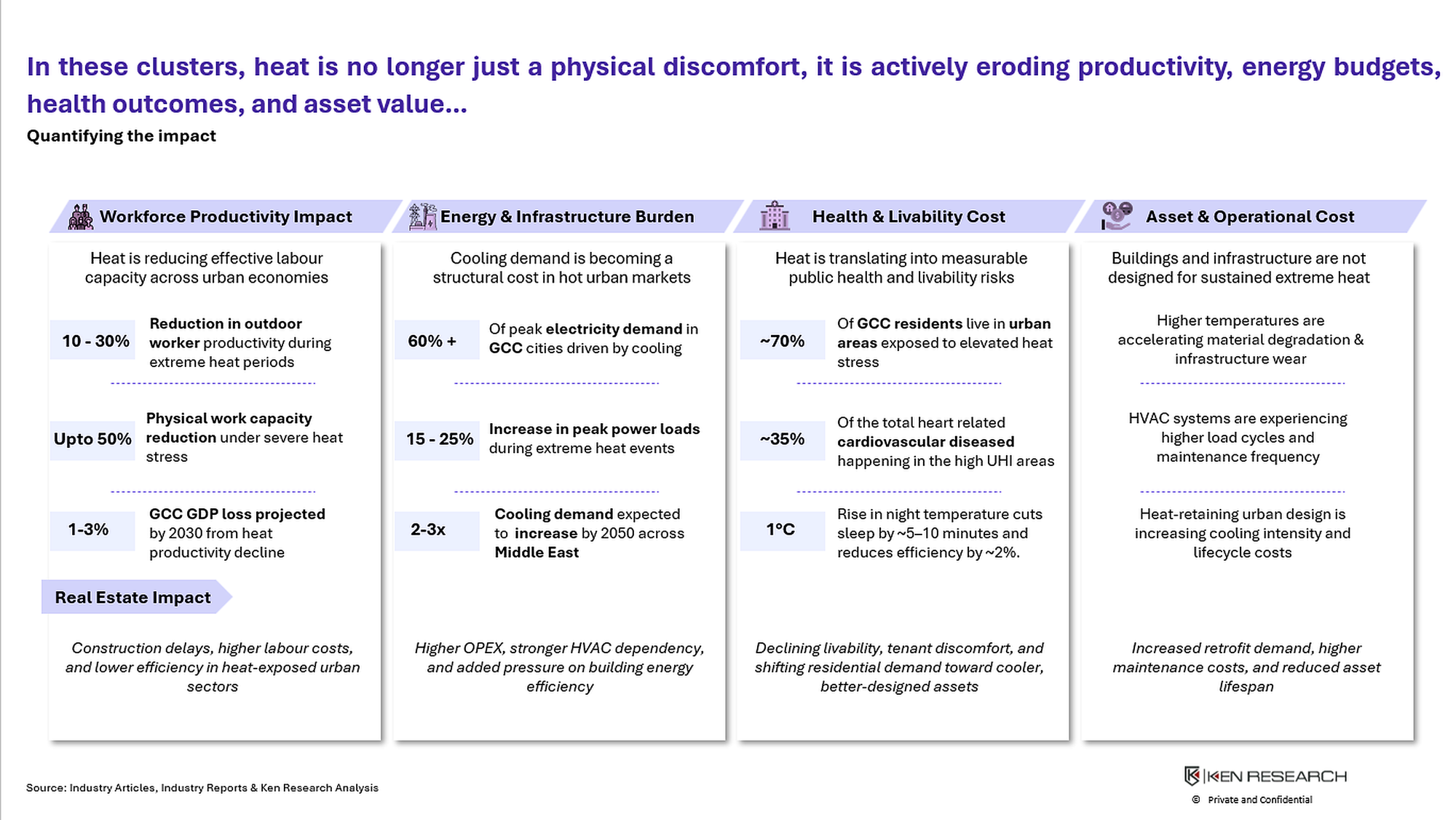
This matters because the cost of urban heat is not theoretical. It affects labour productivity, cooling demand, infrastructure durability, tenant comfort, public health, and the long-term value of real estate assets.
For developers, infrastructure investors, and city authorities, the implication is clear: the most urgent opportunities are not spread evenly across the region. They are concentrated in specific high-risk urban clusters where targeted design, retrofit, and infrastructure interventions can deliver the highest impact.
The Built Environment Problem
GCC cities are not only experiencing heat; they are also regenerating it
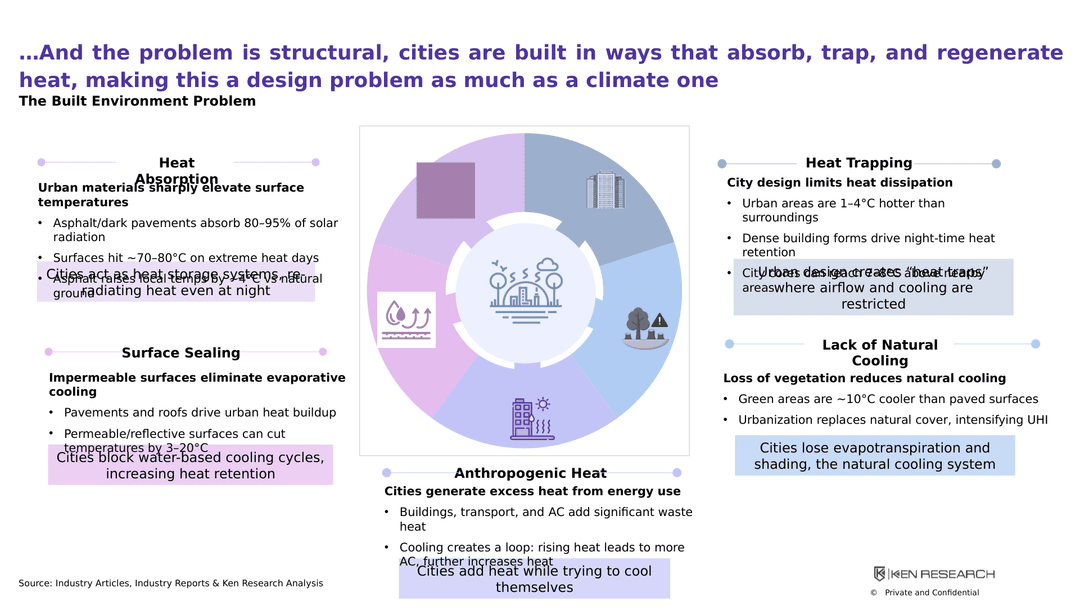
Urban heat is intensified by the way cities are designed, built, and operated. Dark pavements, asphalt roads, glass-heavy façades, dense tower clusters, sealed surfaces, limited tree canopy, and high dependence on mechanical cooling create a feedback loop.
Buildings and roads absorb heat during the day. Dense layouts trap heat at night. Reduced vegetation limits natural cooling. Impermeable surfaces prevent evaporative cooling. Air-conditioning systems release waste heat into already stressed urban environments.
This makes UHI both a climate problem and a built-environment problem.
The solution, therefore, cannot sit only with climate policy. It must be embedded into real estate planning, building design, procurement, construction materials, HVAC strategy, public realm design, and retrofit programs.
What Needs to Change
Heat resilience must move across the full real estate value chain
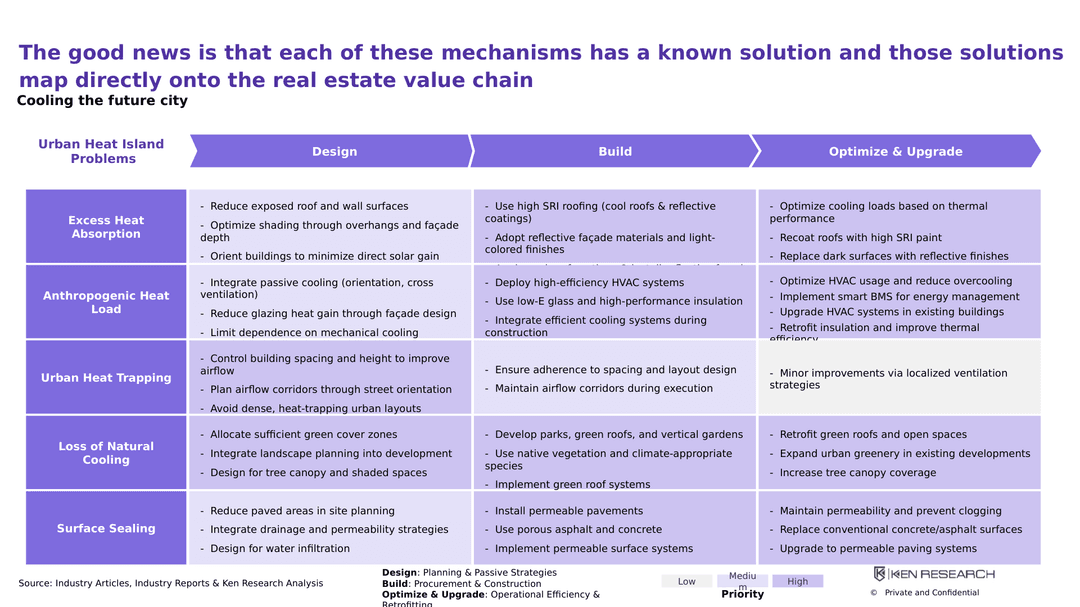
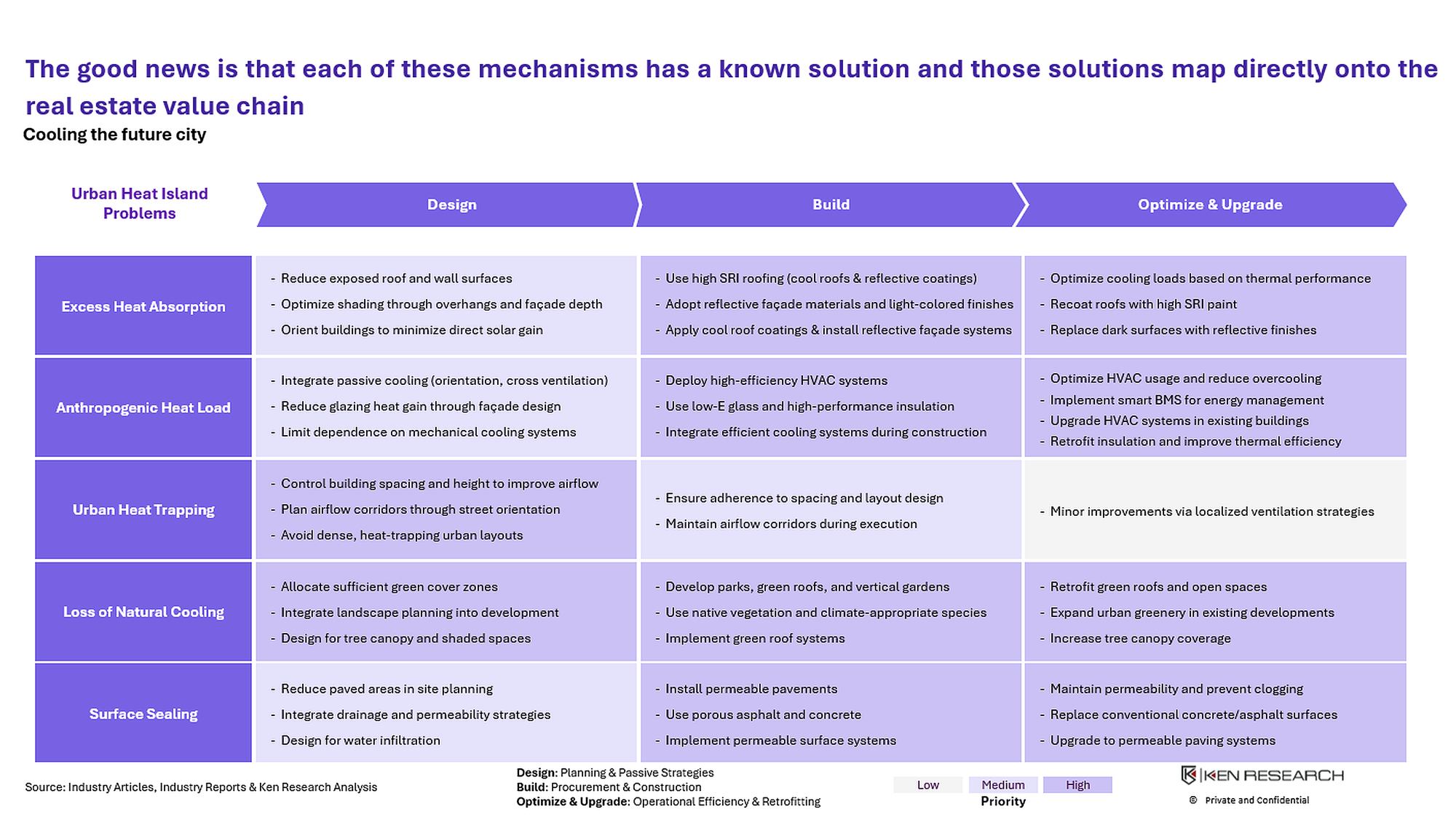
The good news is that the mechanisms driving Urban Heat Island effects are well understood, and many solutions already exist.
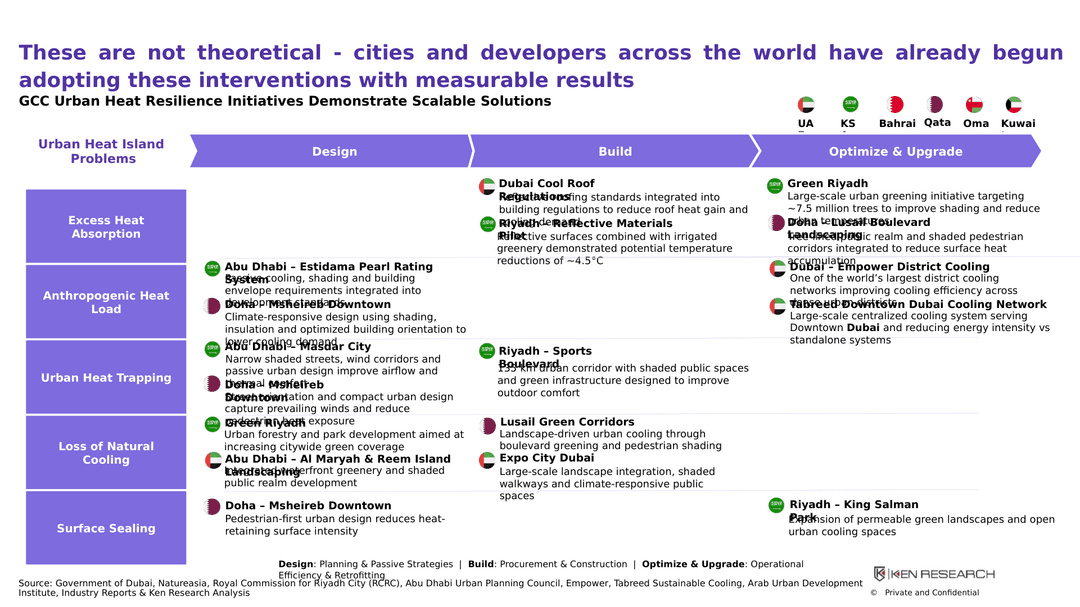
Cool roofs, reflective materials, passive design, façade optimization, shaded public spaces, airflow corridors, permeable surfaces, district cooling, green roofs, vertical gardens, urban tree canopies, HVAC optimization, and retrofit programs can all reduce heat accumulation and improve asset performance.
But these interventions need to be integrated across three stages of the real estate value chain:
Stage | Priority Actions |
Design | Orient buildings, improve airflow, reduce solar gain, plan green cover, and reduce exposed heat-absorbing surfaces |
Build | Use reflective materials, high-performance façades, permeable pavements, efficient cooling systems, and climate-responsive construction methods |
Optimize & Upgrade | Retrofit roofs, upgrade HVAC, improve insulation, expand greenery, replace dark surfaces, and deploy smart building management systems |
The Emerging Opportunity
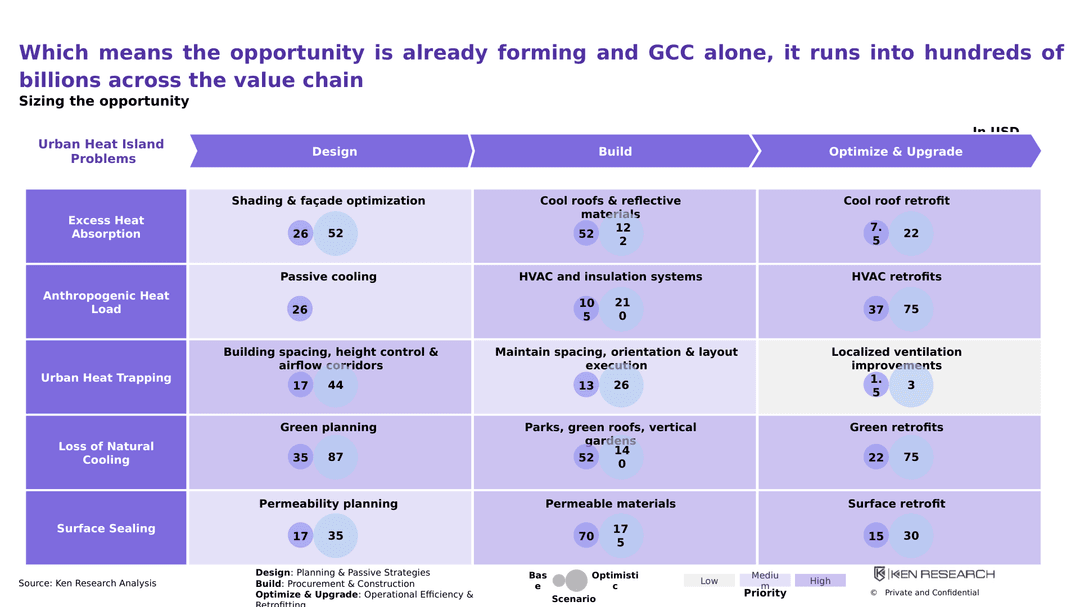
Heat resilience is becoming a multi-billion-dollar urban infrastructure and real estate opportunity
As GCC cities respond to extreme heat, a new opportunity is forming across the built environment value chain. This includes climate-responsive design, reflective materials, cool roof systems, permeable surfaces, HVAC upgrades, district cooling, façade optimization, green infrastructure, public realm shading, urban forestry, and asset-level retrofitting.
The investment case is not only environmental.
For developers, heat resilience can improve tenant comfort, reduce cooling-related operating costs, strengthen ESG positioning, and protect long-term asset value. For governments, it can reduce infrastructure pressure, improve public health outcomes, and support more livable urban districts. For investors, it can create new opportunities across materials, cooling technologies, retrofit services, infrastructure planning, and climate-resilient real estate.
The next phase of GCC urban development will increasingly reward assets and districts that can remain functional, comfortable, and efficient under sustained heat stress.
What the POV Covers
This consulting-led POV examines Urban Heat Island risk across GCC real estate and urban infrastructure markets.
The POV covers:
Area | What the POV Explores |
Urban heat risk | How UHI effects are intensifying across GCC urban clusters |
Economic impact | How heat affects productivity, cooling demand, infrastructure stress, health, livability, and asset performance |
Cluster-level exposure | Which urban districts face the highest heat-risk concentration |
Built environment drivers | How materials, density, airflow, surface sealing, vegetation loss, and cooling systems intensify heat |
Mitigation levers | How design, construction, green infrastructure, district cooling, and retrofits can reduce UHI intensity |
Investment opportunity | Where heat resilience creates opportunities across real estate, infrastructure, materials, and climate technology |
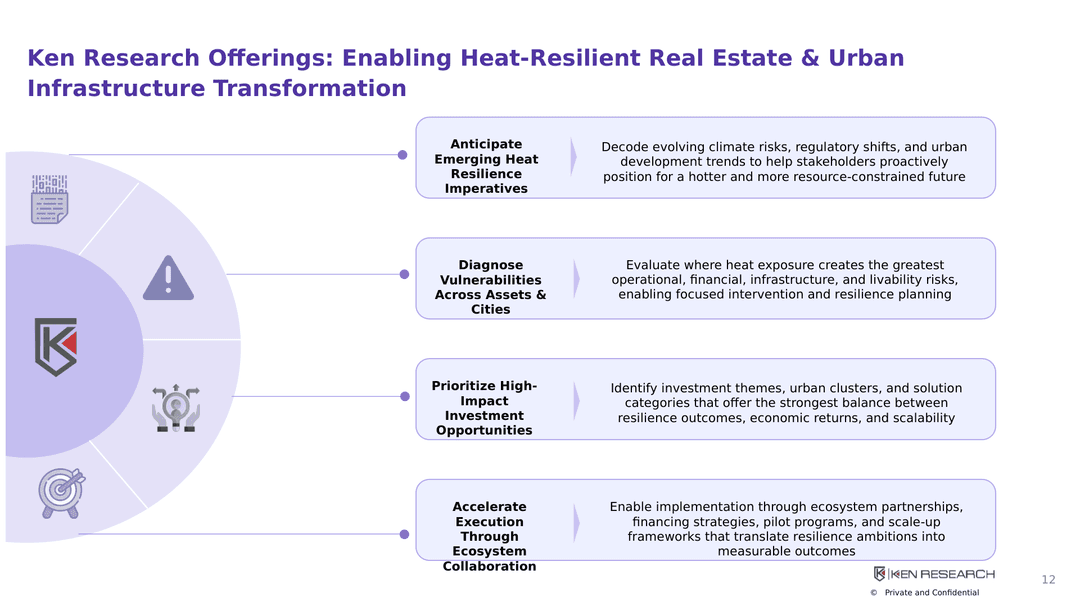
Ken Research advisory role | How stakeholders can diagnose risk, prioritize interventions, and build heat-resilient urban development strategies |
Urban heat is becoming a strategic risk for GCC real estate.
Developers need to assess whether their projects are designed for rising thermal stress, not only current building codes. City authorities need to identify high-risk urban clusters and prioritize interventions that reduce heat exposure at scale. Infrastructure investors need to understand where cooling, retrofit, materials, and green infrastructure opportunities are becoming investable. Facility managers need to reduce HVAC strain and improve asset-level energy performance.
The central implication is clear:
The future of GCC real estate will not be defined only by location, luxury, or scale. It will also be defined by thermal resilience.
Cities and developers that move early can protect asset value, reduce operating costs, improve livability, and create more competitive urban environments in an era of extreme heat.