The Cyber-Readiness Gap in Digital India: Risk, Resilience, and the Path Forward
Download the Full Consulting POV Now

Executive Summary
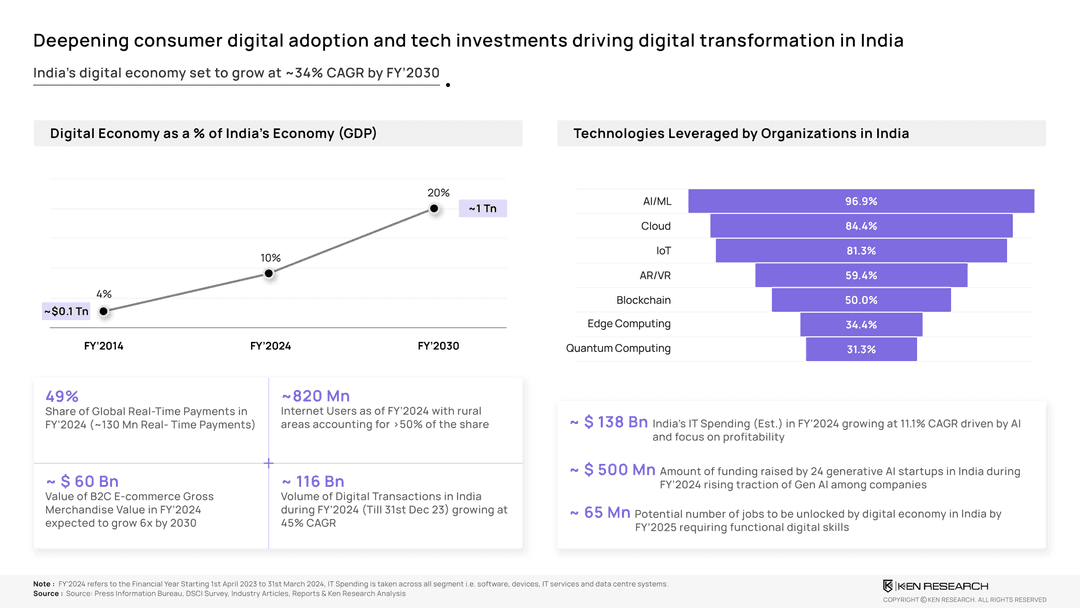
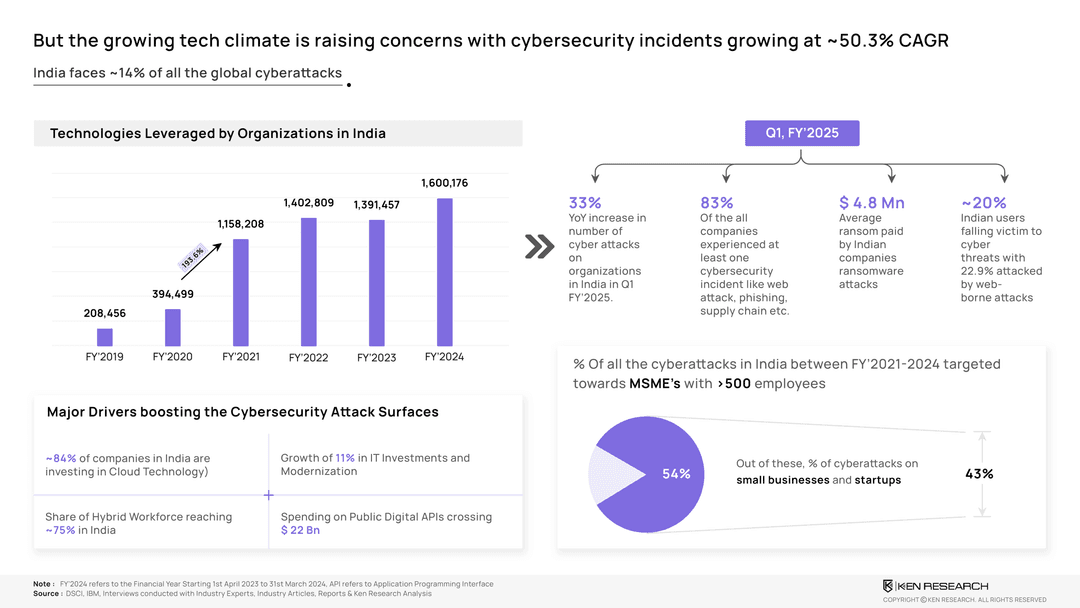
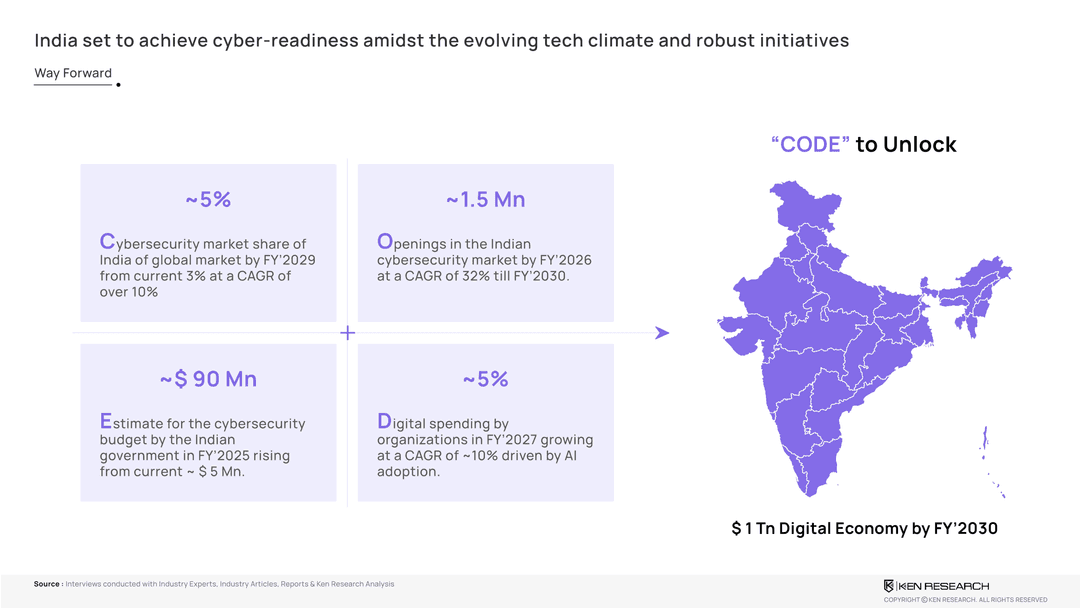
India’s digital economy is accelerating at scale, projected to grow at~34% CAGR toward FY’2030, supported by rising IT modernization, cloud adoption, APIs, and hybrid workforce models. However, cyber risk is compounding faster than digital value creation. Cybersecurity incidents in India are rising at~50.3% CAGR, with the country accounting for~14% of global cyberattacks, highlighting a widening gap between digital ambition and cyber preparedness.
While5.14 billion cyberattacks were blocked on Indian websites in FY’2024, organizational readiness remains uneven—only52% of companies consider themselves highly prepared, and just4% qualify as maturein cybersecurity readiness frameworks. This POV evaluates India’s cyber threat landscape, financial impact, readiness gaps, and the strategic imperatives required to secure Digital India.
Digital Expansion Is Structurally Increasing Cyber Exposure
India’s digital transformation is being driven by:
- ~84% of organizations investing in cloud technologies
- ~75% hybrid workforce penetration
- Public digital API spending exceeding$22 billion
- IT investments growing by~11%, spanning software, devices, services, and data centres
These shifts have significantly expanded attack surfaces across cloud environments, APIs, endpoints, and distributed users. As a result, India now faces one of the fastest-growing cyber risk profiles globally, with cyber incidents rising materially faster than digital GDP growth.
Threat Landscape: Attack Vectors Are Concentrated, Not Random
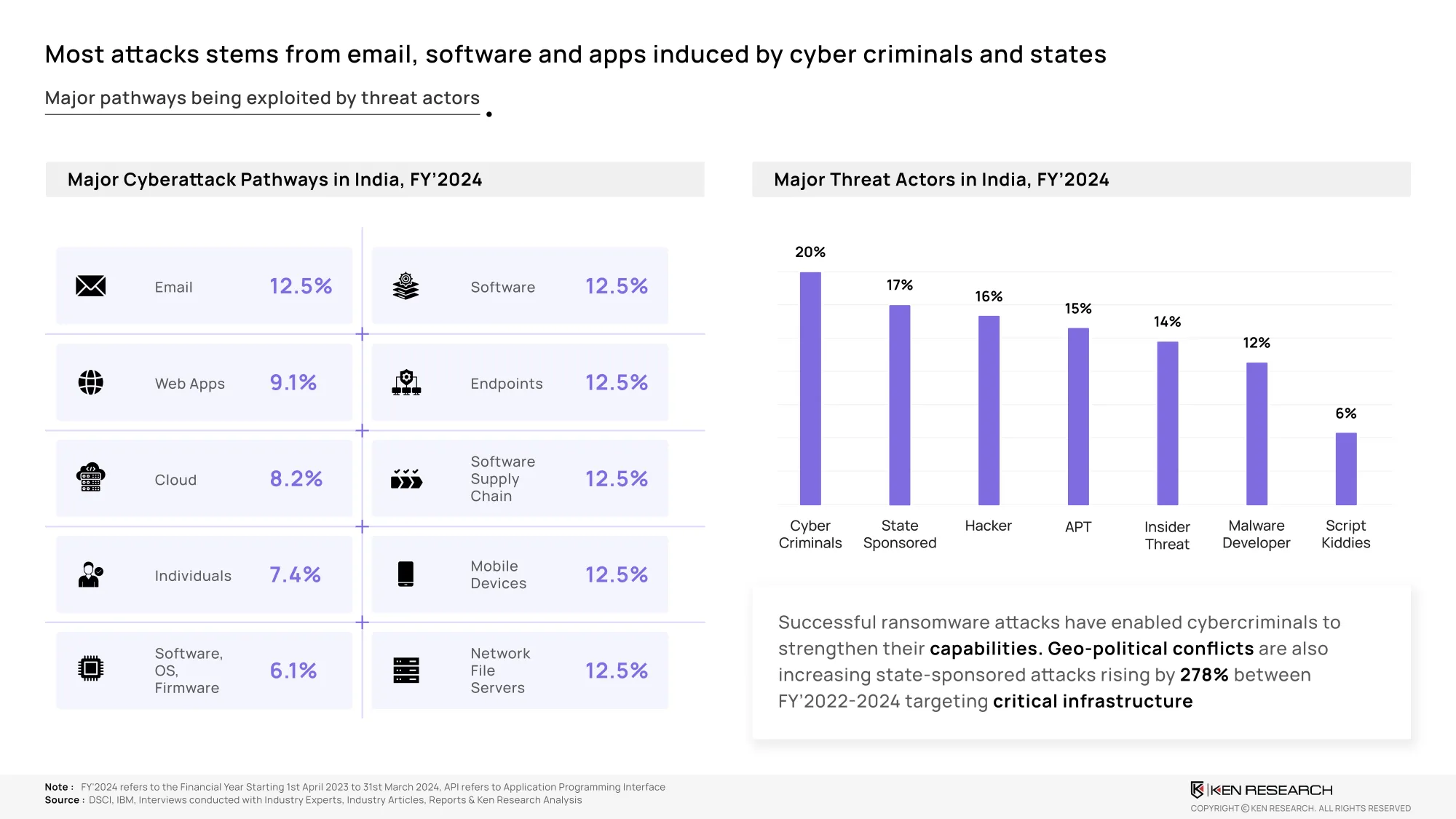
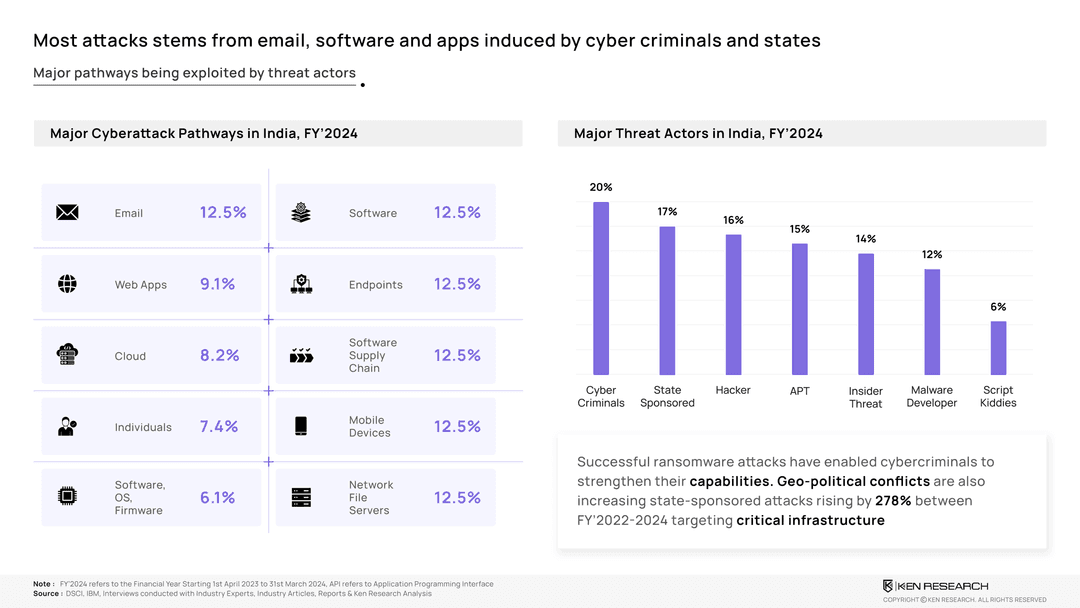
Cyberattacks in India are largely concentrated across a few dominant pathways:
- Email (~12.5%)
- Software and operating systems (~10%)
- Web applications (~9.1%)
- Cloud environments (~8.2%)
- Endpoints and mobile devices (~15% combined)
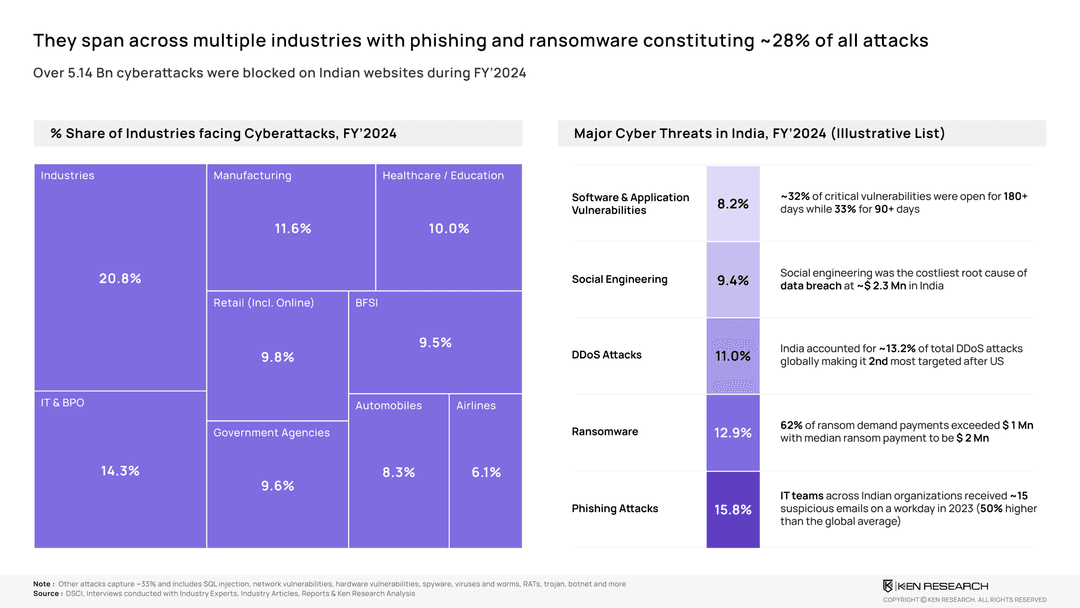
Threat actors range from cybercriminal groups and ransomware operators to state-sponsored entities, withstate-sponsored attacks increasing by ~278% between FY’2022–FY’2024, primarily targeting critical infrastructure. Phishing and ransomware together account for~28% of all attacks, reinforcing the role of social engineering and credential compromise.
Cyber Impact Is Now a Material Financial Risk
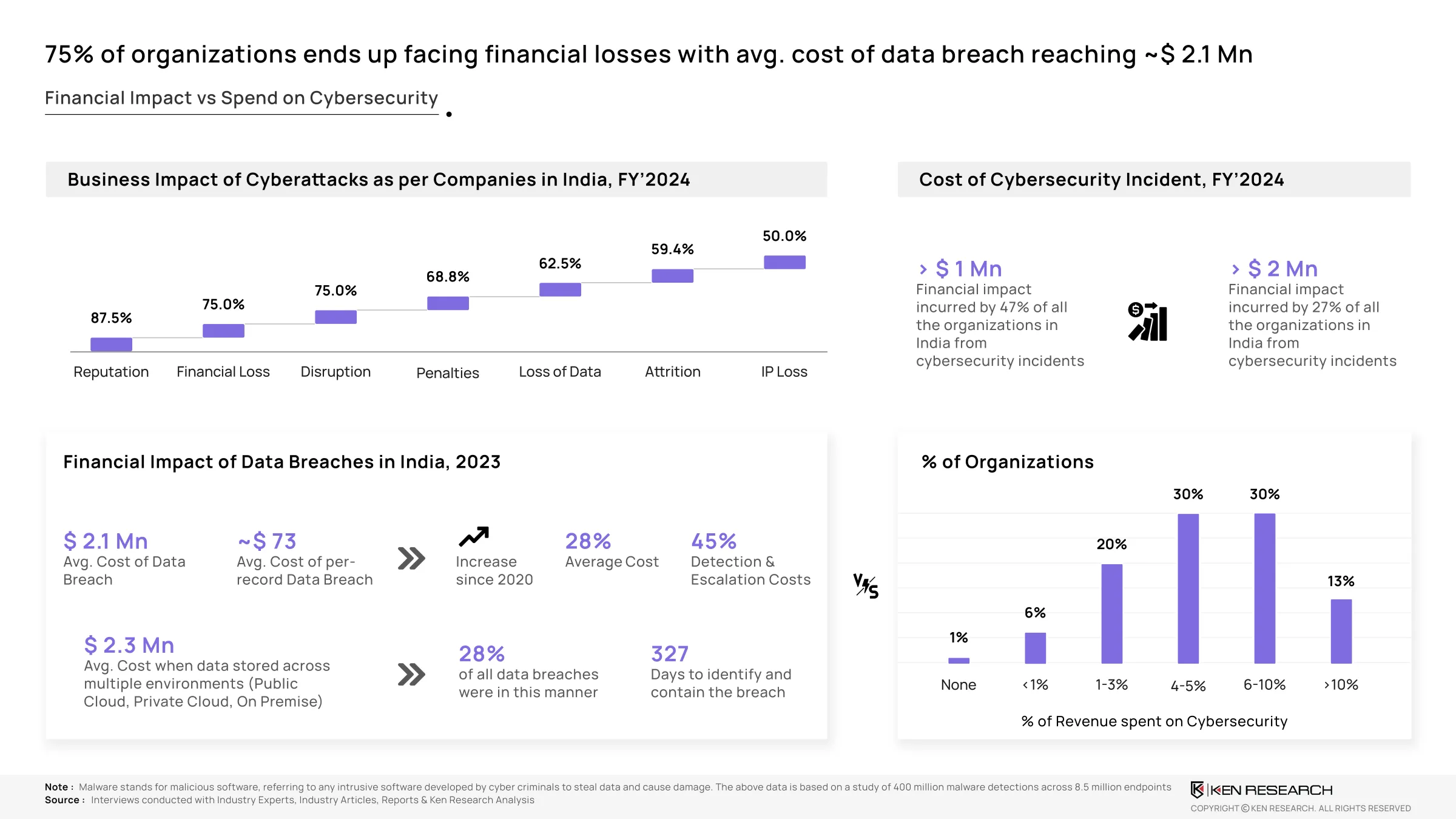
Cyber incidents are translating into direct financial and operational losses:
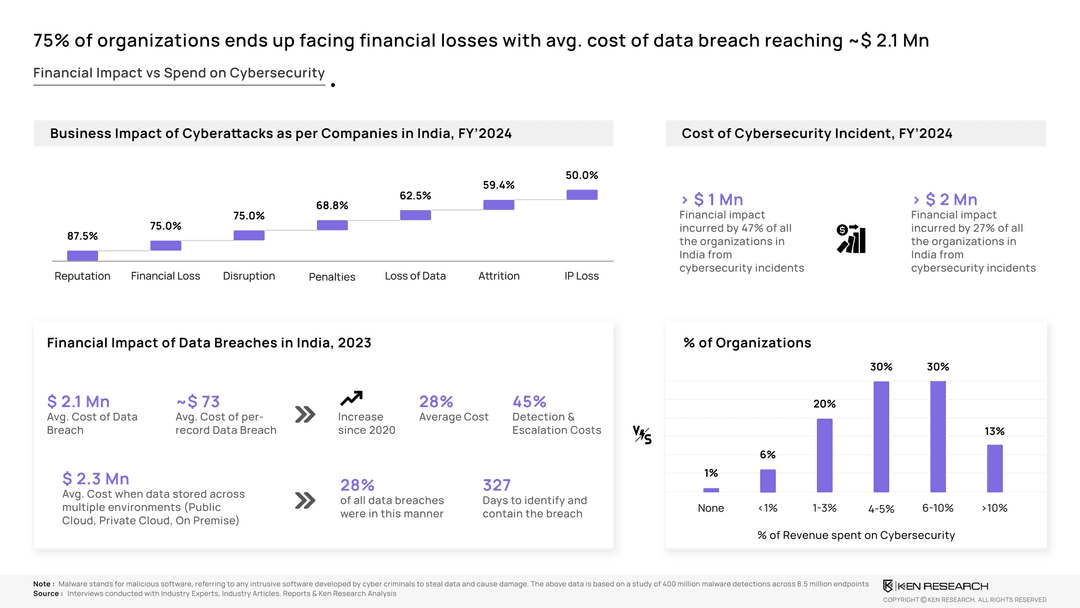
- $2.1 millionaverage cost of a data breach in India
- 327 dayson average to identify and contain breaches
- 47%of organizations incurred>$1 millionimpact from cyber incidents
- 27%reported losses exceeding$2 million
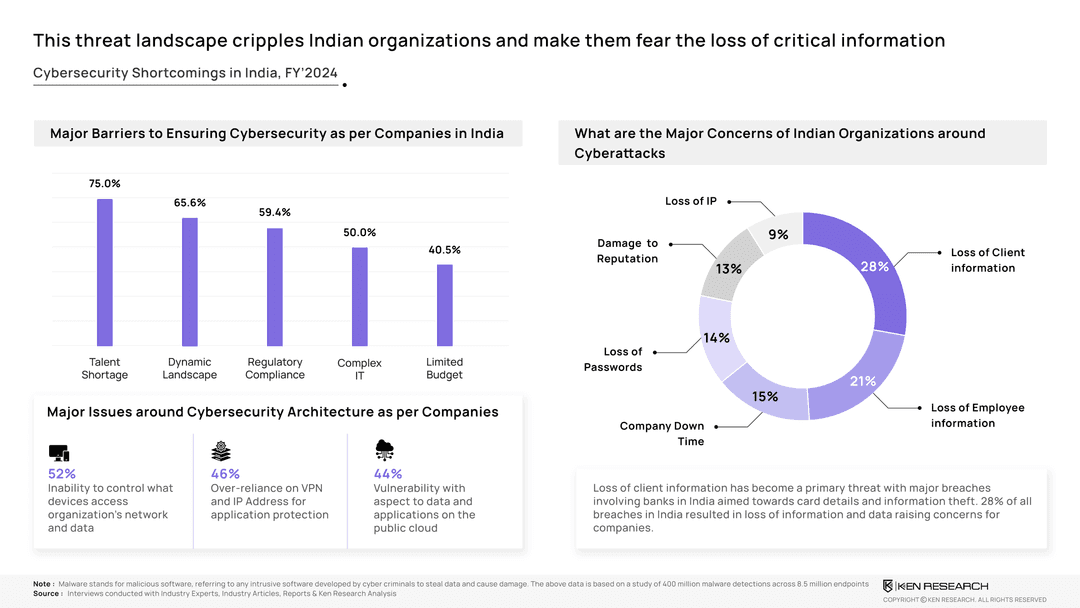
Breaches involving data stored across multiple environments (cloud + on-premise) show higher costs (~$2.3 million average), while62% of ransomware demands exceeded $1 million, with median payments near$2 million. Loss of client and sensitive personal data remains the top organizational concern, accounting for~28% of breach outcomes.
Readiness Gap: Digital India Is Under-Secured
Despite rising awareness and budget increases:
- Only52%of organizations consider themselves highly prepared
- Just4%of Indian firms are classified as cyber-mature
- India faces a shortage of~0.8 million cybersecurity professionals, with a total workforce of only~0.3 million
Key architectural gaps cited by organizations include:
- 52%inability to control device access
- 46%over-reliance on VPNs and IP-based protection
- 44%vulnerabilities linked to public cloud data and applications
This readiness deficit creates systemic exposure across enterprises, MSMEs, and critical infrastructure.
Generative AI: Productivity Catalyst, Risk Amplifier
Generative AI is reshaping India’s cyber equation:
- >90%of organizations expect productivity gains and new business lines from GenAI
- 73%fear GenAI could enable catastrophic cyberattacks within 12 months
- 58%of Indian GenAI startups were founded post-2021, with88%still at seed stage
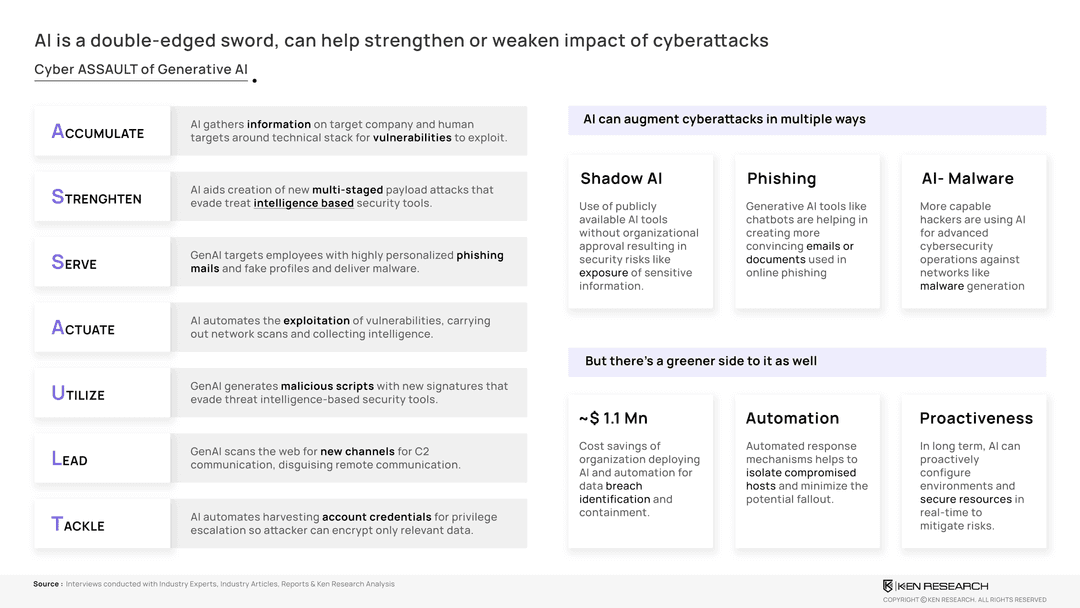
AI is enabling more convincing phishing, AI-generated malware, and shadow AI risks. At the same time, AI-driven automation is delivering~$1.1 million in cost savingsthrough faster breach detection and containment. The net impact depends on governance, controls, and security-by-design adoption.
Market Opportunity: Cybersecurity Spend Is Catching Up
India’s cybersecurity market:
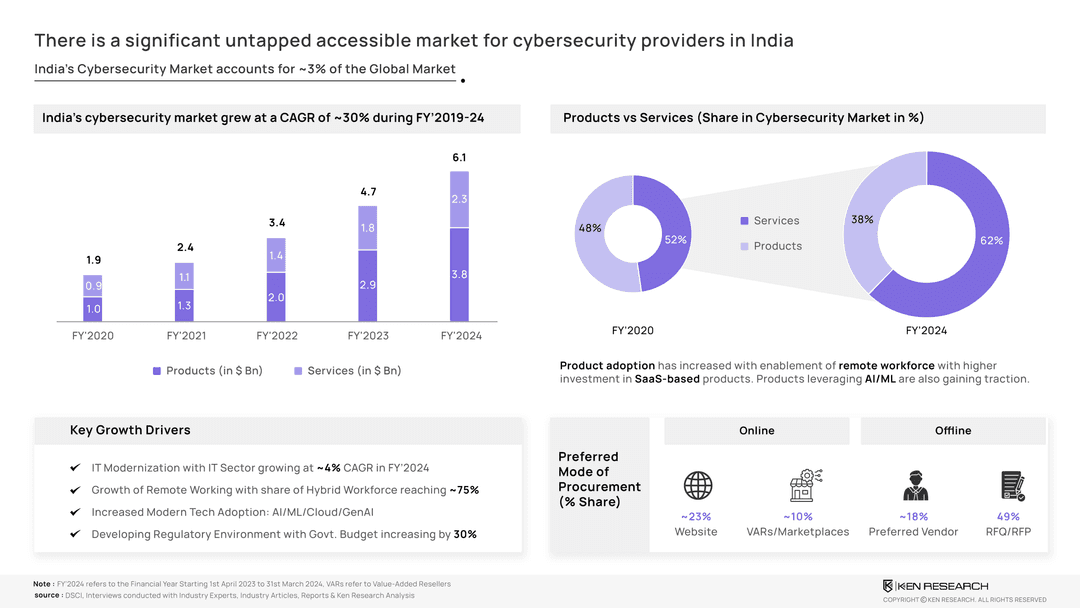
- Accounts for only~3% of the global cybersecurity market
- Grew at~30% CAGR during FY’2019–FY’2024
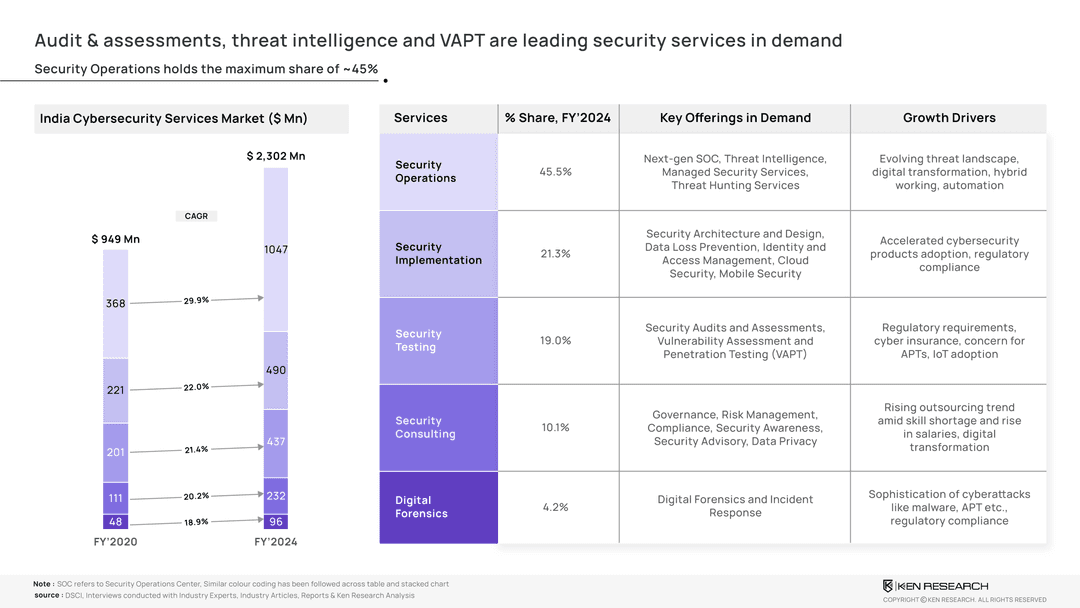
- Services market expanded from$949 million to $2,302 million
- Security operations command~45%share of services demand
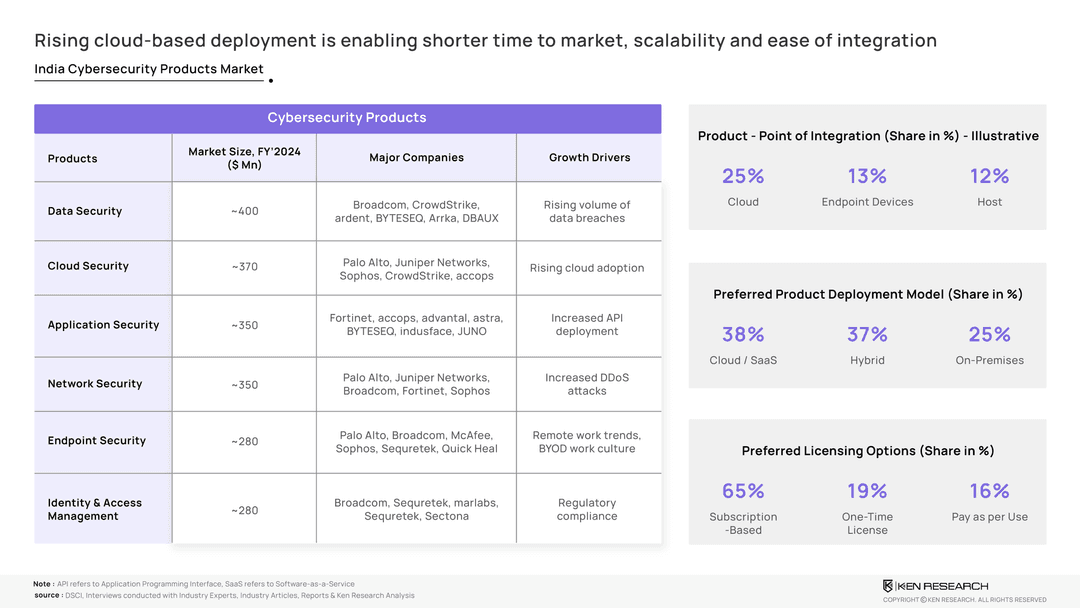
Product adoption is shifting toward cloud-based, SaaS, and subscription models, driven by remote work, AI/ML integration, and faster deployment cycles. This highlights a large untapped opportunity for providers aligned with India’s regulatory and digital trajectory.
Policy Signals: Cybersecurity Is Becoming Enforceable Infrastructure
India’s regulatory environment is tightening:
- 6-hour mandatory breach reportingunder CERT-In
- DPDP Act penalties up to$30 millionfor non-compliance
- Dedicated cybersecurity budget allocations exceeding$120 million
- Increased focus on critical infrastructure protection through NCIIPC
Cybersecurity is shifting from discretionary IT spend to a board-level compliance and risk management priority.
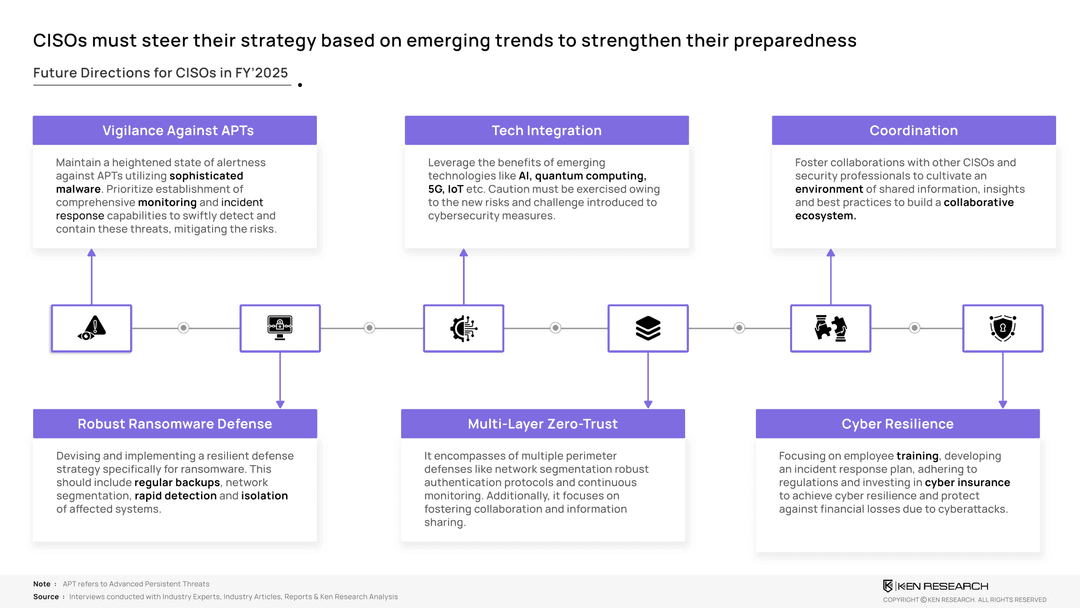
Strategic Imperatives for CISOs and Leadership
To close the readiness gap, leaders must:
- Move beyond perimeter-centric defences toward zero-trust architectures
- Strengthen ransomware resilience through backups, segmentation, and rapid isolation
- Secure hybrid workforces and cloud-native environments
- Address talent shortages through skilling and ecosystem collaboration
- Integrate AI defensively while mitigating AI-driven attack vectors
With99% of organizations increasing cyber budgets in FY’2025, execution discipline will determine outcomes—not spend alone.
Cyber-Readiness Is the Economic Backbone of Digital India
India’s ambition to become a trillion-dollar digital economy depends on trust, resilience, and cyber preparedness. With cyber incidents growing faster than digital value creation, cybersecurity has become a national economic safeguard—not just a technical function. The coming years will define whether India’s digital growth is securely scaled or structurally exposed. Leaders who act decisively now will shape the resilience of Digital India.