How Can Digital Transformation Solve the Complex Workflow of Indian SMBs?
Download the Full Consulting POV Now

Overview
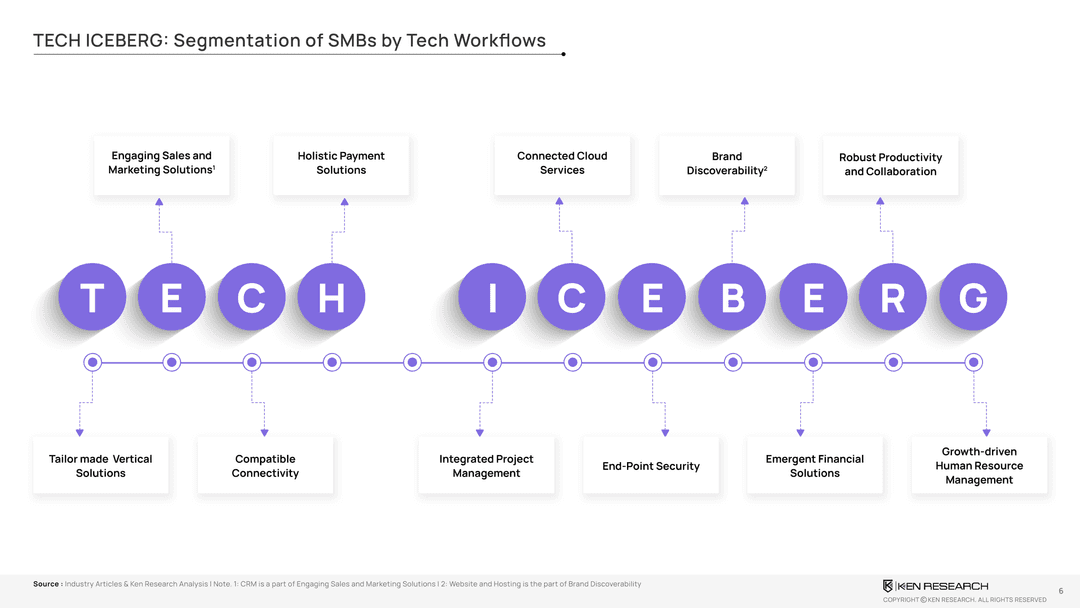
India's 75 million small and medium businesses (SMBs) are the backbone of the economy, yet their digital transformation remains largely untapped. Despite rapid digitization trends, SMBs are underinvesting in digital solutions, limiting their ability to scale and compete. This write-up unveils the "Tech Iceberg", highlighting hidden inefficiencies in digital spending and offering a roadmap for tech adoption.

What are the Core Challenges
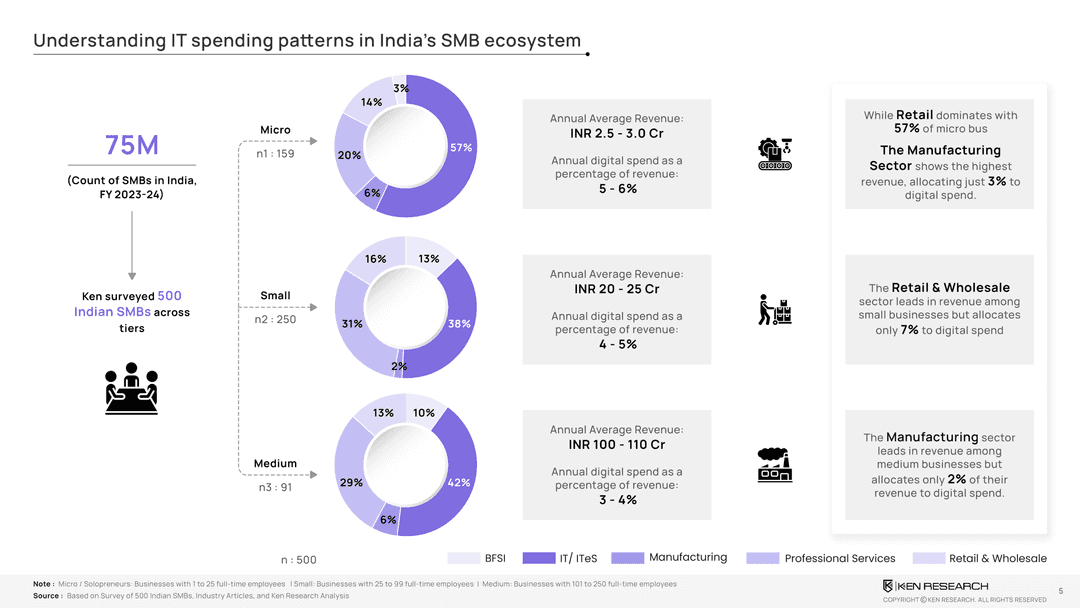
- Low Digital Adoption Rates:SMBs allocate only 3-7% of their revenue to digital solutions.Despite the growing digitalization adoption among businesses, SMB tech investments are scattered without an integrated digital strategy.
- The retail and Wholesale sector, allocates only 7% of its budget to digital spend despite being the leading industry in small businesses.
- Cost Barriers & Affordability: Micro and small businesses prioritize affordability over long-term efficiency.The majority of micro-businesses operate on tight margins and prefer to invest in immediate operational needs (rent, inventory, salaries) rather than long-term tech infrastructure.
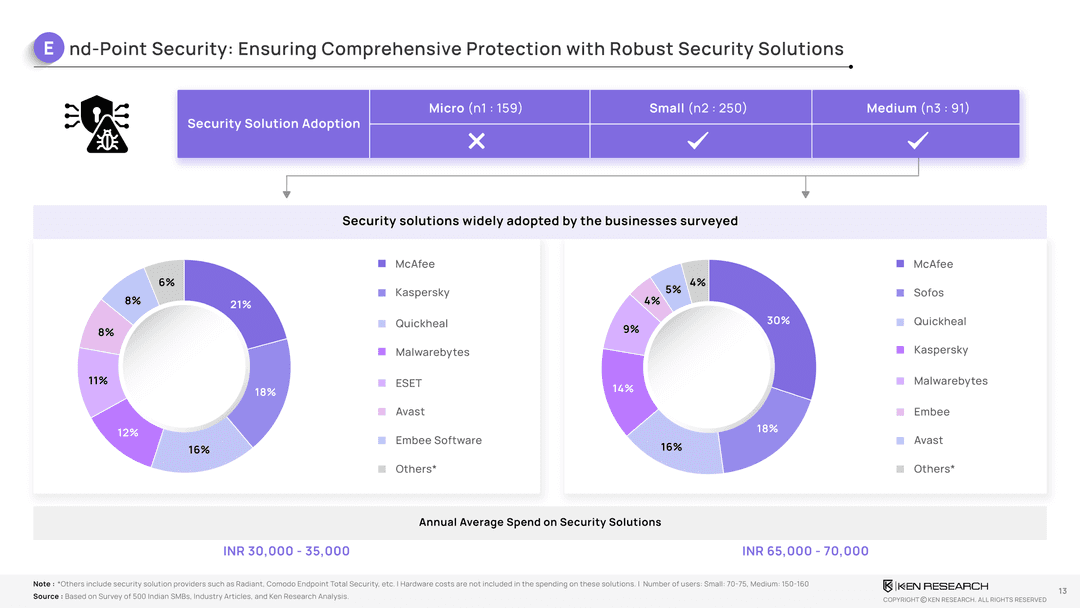
- Subsequently, annually small businesses allocate only ₹30,000-₹35,000 for cybersecurity tools, showing a lack of interest in digital solutions.
- Fragmented Digital Adoption:SMBs tend to adopt standalone solutions that do not work well together.SMBsgenerally use Google Sheets for finance, a basic POS system for sales, and WhatsApp for customer management, leading to data and manual inefficiencies.
- Trust and Support Issues:SMBs worry about ROI, data security, and tech reliability, preventing them from fully embracing digital solutions. The majority of digital service providers don’t offer localized support, training, or after-sales service making it difficult for SMBs to properly utilize tech investments.
Root Cause Analysis
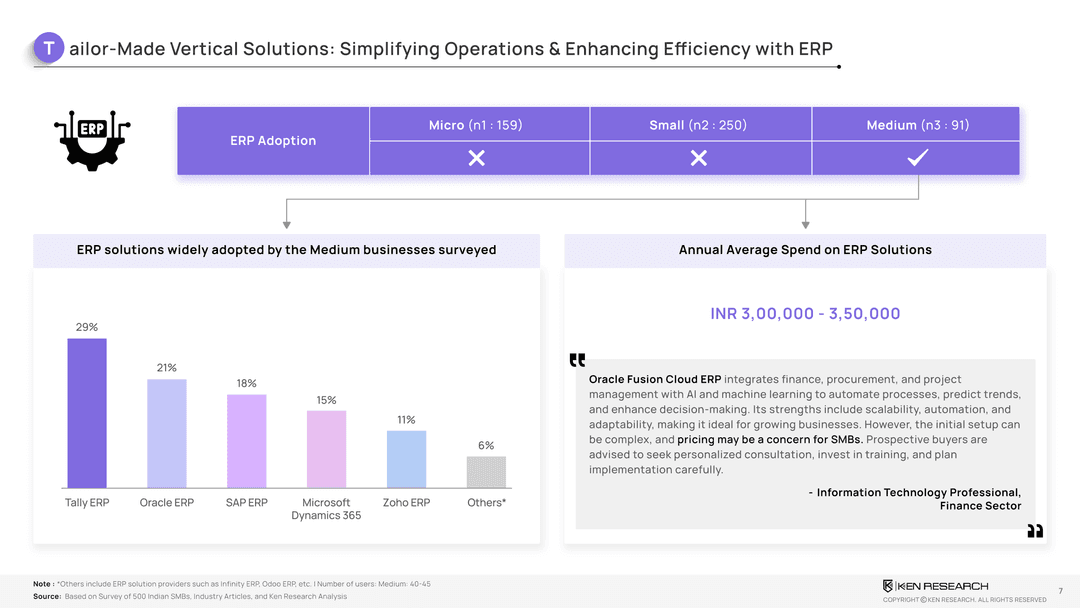
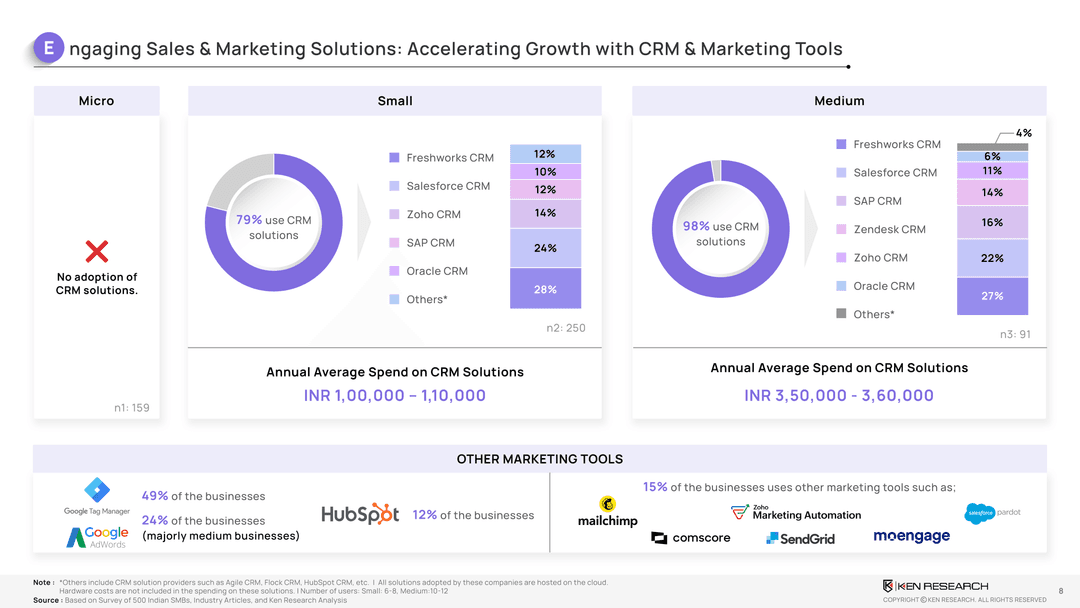
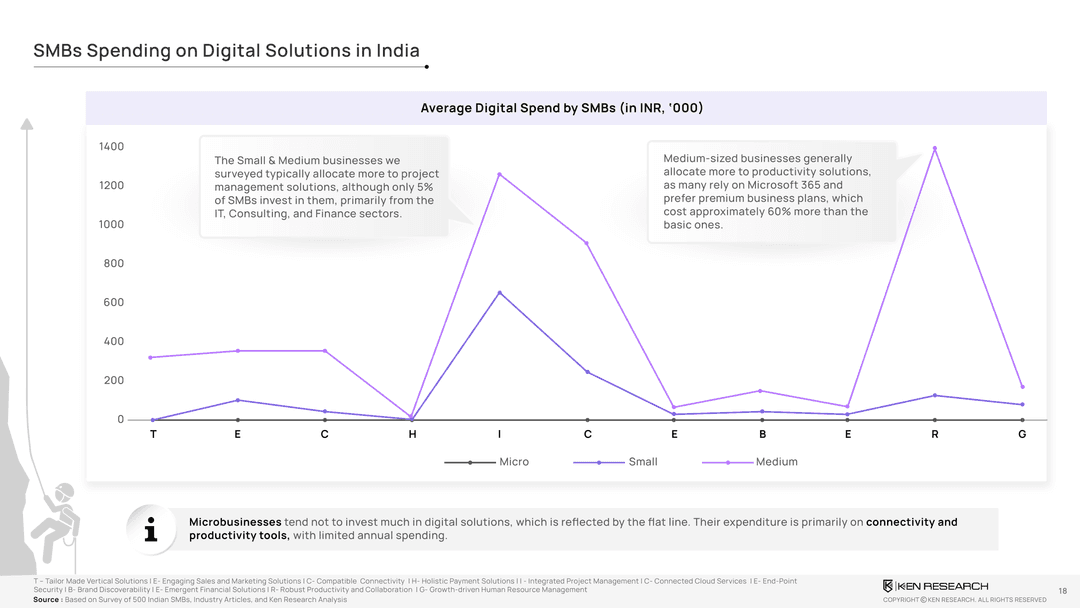
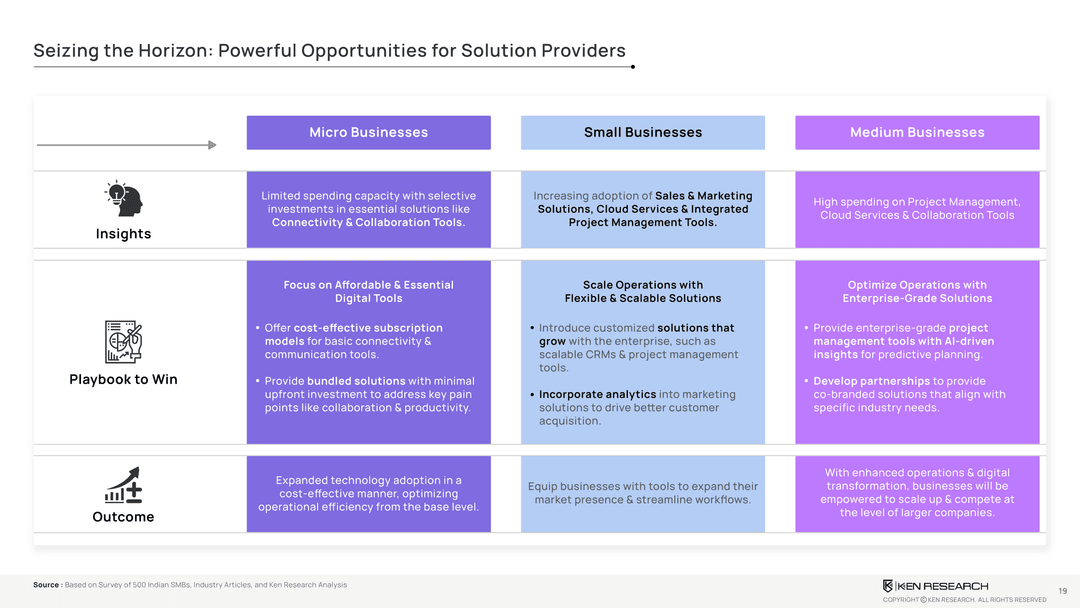
- Cost Sensitivity:Micro and small businesses prioritize cost-effective tools but often hesitate to invest beyond basic needs. SMBs underutilized automation tools such as ERP, CRM, and others with micro businesses spending only INR 50,000 annually on digital tools.
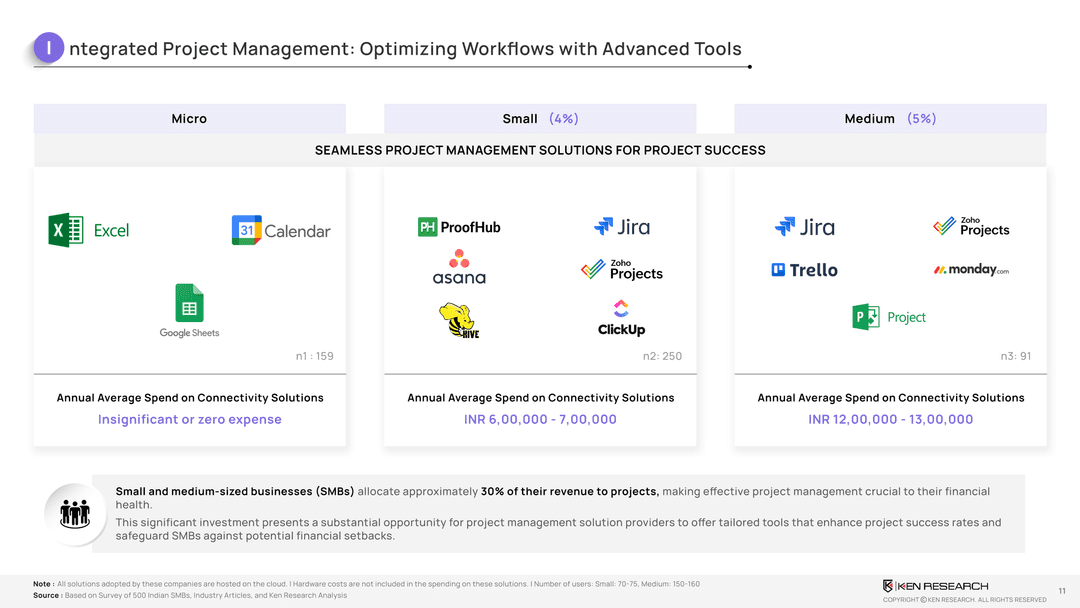
- Lack of Integration:Majority of SMBs adopt standalone tech tools resulting in fragmented workflows and inefficiencies in business operations.Medium-sized businesses spend only 5% of their revenue on project management solution tools such as Jira, Zoho Projects, Trello, and others, owing to low digital tools integration.
The India Advantage & Potential Solutions
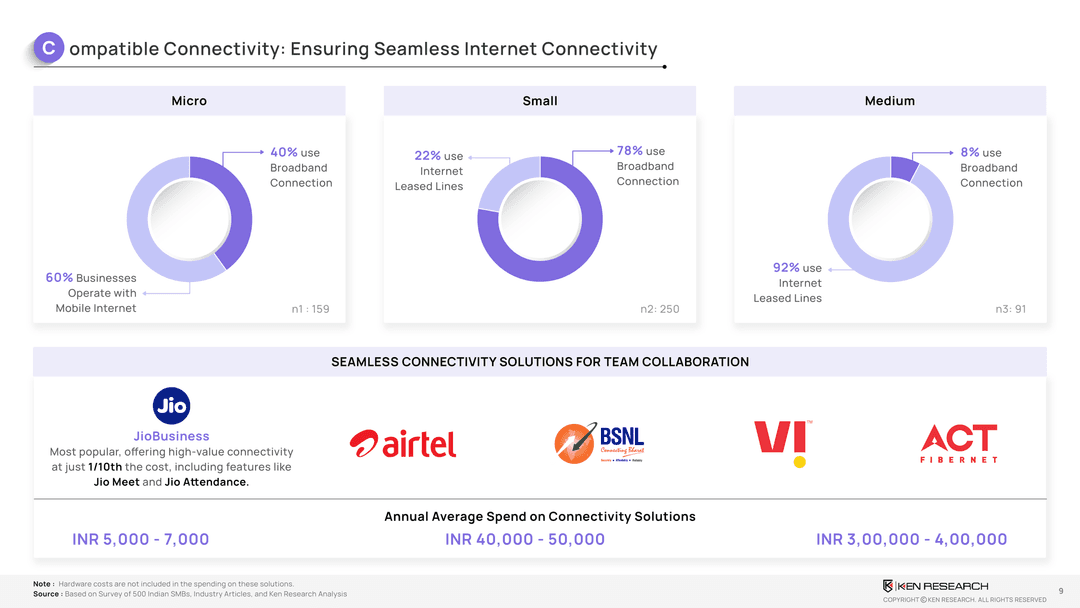
Despite these challenges, India is well-positioned for a digital revolution among SMBs with: AffordableDigital Infrastructure:India’s internet services are one of the lowest globally.Indian telecom giant Jio provides enterprise connectivity at 1/10th the cost of global competitors. As of now, 92% of medium businesses prefer leased internet lines ensuring high-speed connectivity.

- However, 60% of SMBs still rely on mobile internet, to solve this problem, the government has announced MSME digitalization programs such as Startup India and Digital India.These programs provide subsidies and incentives to encourage tech adoption among SMBs.
- Growing SaaS & Cloud Market:India SaaS (Software as a Service) sector is anticipated to grow at a CAGR of 30% between 2024-2024reaching a market size of USD 70 Bn. As a result, Domestic SaaS firms Zoho, Freshworks, and Razorpay are offering affordable and scalable solutions to SMBs.

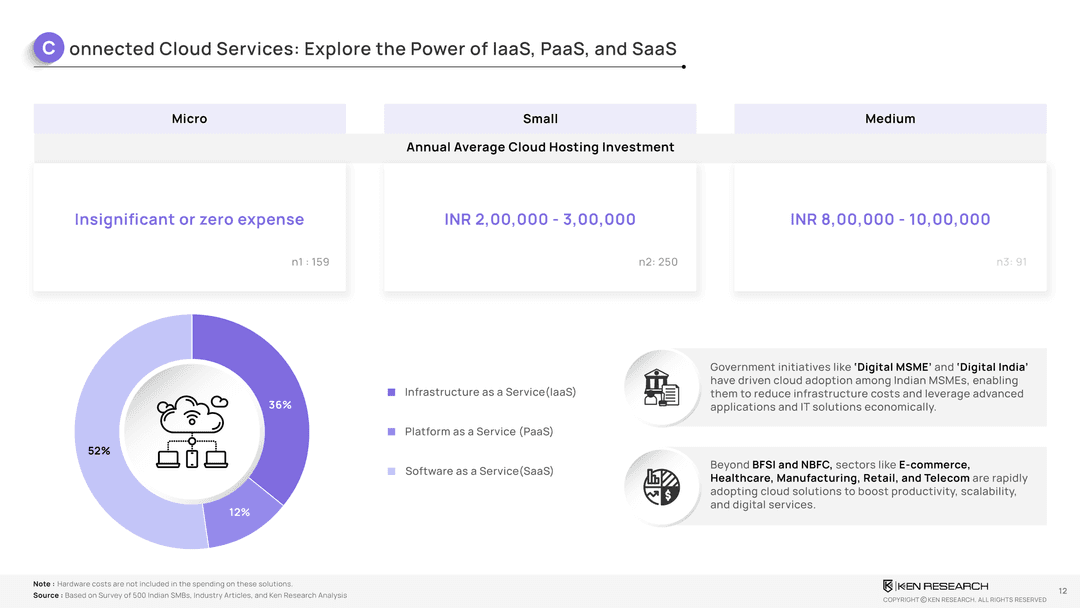
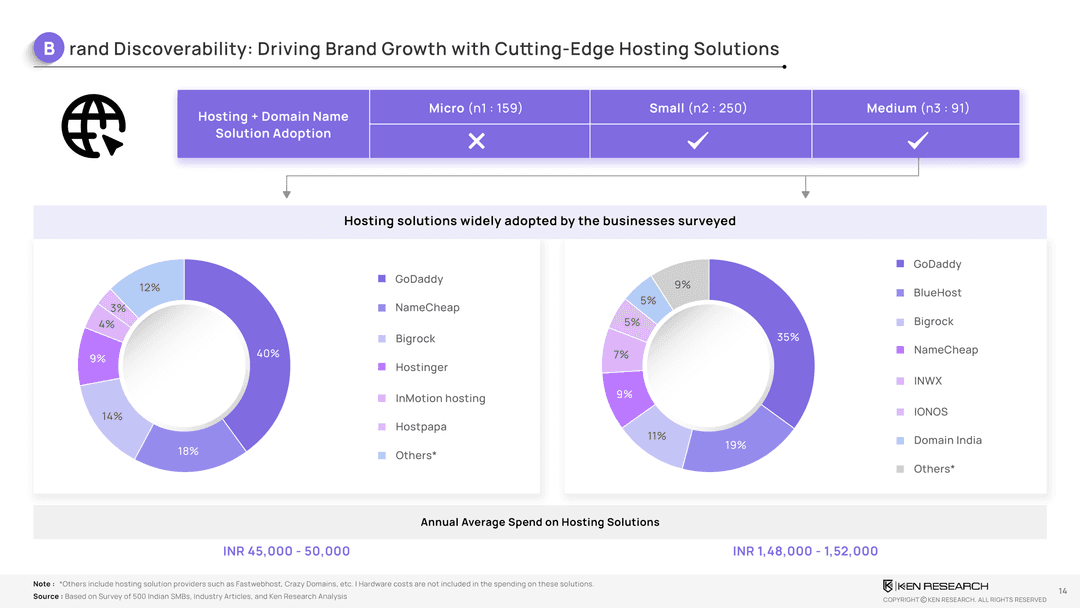
- Moreover, Medium Businesses are rapidly adopting SaaS solutions as medium businesses allocate INR 8-10 Lakh annually to cloud hosting showing an increasing preference for SaaS in its workflow.
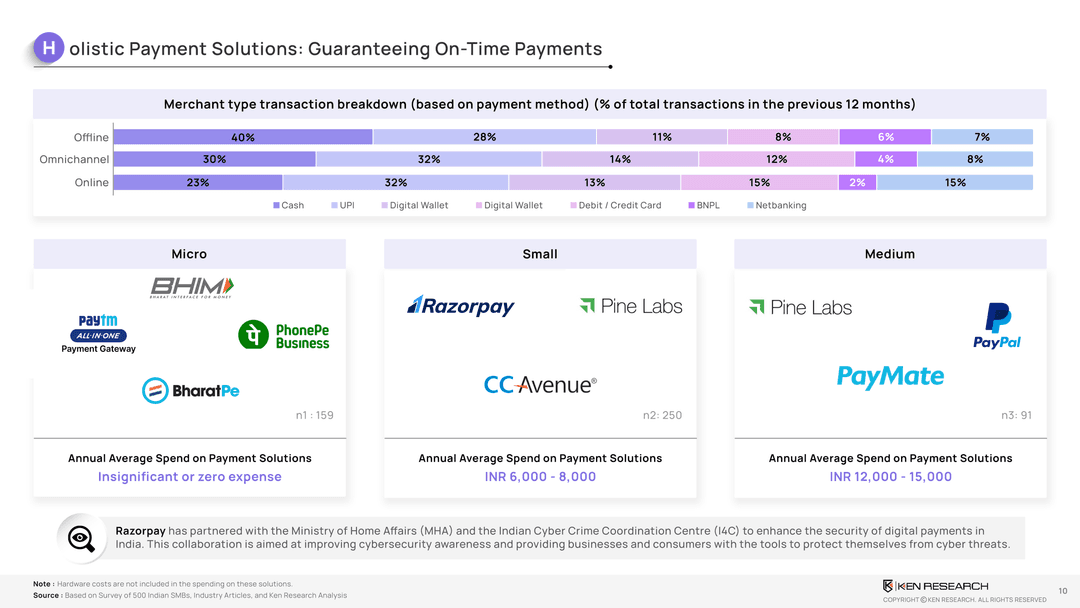
- Rising Digital Payment Adoption:UPI transactions reached USD 1.5 trillion in 2023, making India the global leader in digital payments. Similarly, for seamless payment solutions small businesses annually spend INR 6000-8000 and medium businesses allocate INR 12,000-15,000 annually to enhance digital transaction security.
Roadmap for Execution
To accelerate SMB digitization, a three-step strategy is needed:
A. Short-Term (0-1 Year) – Build Awareness & Access
The biggest challenge in SMB digital adoption is low awareness and affordability, particularly in Tier 2 & Tier 3 cities.
- To address this, government-private sector collaboration is essential in providing subsidized digital tools and financial incentives for SMBs adopting technology.
- Additionally, Freemium models and trial-based adoption by SaaS providers will allow SMBs to experience digital tools without upfront commitments, encouraging long-term investment.
B. Mid-Term (1-3 Years) – Integration & Expansion
- Once awareness is established, the next phase is ensuring SMBs adopt technology in a structured, integrated manner instead of using disconnected tools from one another.
- This requires cross-industry collaborations, to achieve this, businesses in retail, manufacturing, finance, and logistics need to adopt consistent digital workflows that streamline operations.
- To make adoption smoother, affordable cloud-based "Digital Starter Kits" should be developed, bundling CRM (Customer Relationship Management), ERP (Enterprise resource planning), and payment solutions into ready-to-use, cost-effective packages for SMBs.
C. Long-Term (3-5 Years) – Scalability & Global Competitiveness
- In the final phase, AI-powered tools should be scaled across SMBs to automate workflows, predict market trends, and enhance decision-making allowing businesses to compete at a global level.
- To measure progress, India’s SMB Digital Index should be established which will be responsible for tracking adoption rates, digital readiness, and tech ROI across different business categories, enabling data-driven policymaking.
- Finally, cybersecurity infrastructure must be strengthened ensuring safe digital payments and fraud prevention to build trust in digital transactions, which is critical as more SMBs transition to cashless operations.
Unlocking a USD 200 Billion Digital Economy
The “Tech Iceberg of SMB” digital spending presents both a challenge and a massive opportunity. By bridging gaps in affordability, awareness, and integration, India's SMBs can unlock a USD 200 Bn digital economy potential by 2030.
Solution providers, policymakers, and investors must act now to empower SMBs with cost-effective, scalable, and AI-powered digital solutions, transforming them into globally competitive, tech-enabled enterprises.