About the Report
Base Year 2024Qatar Premium Vegan Chocolate Boutiques Retail Market Overview
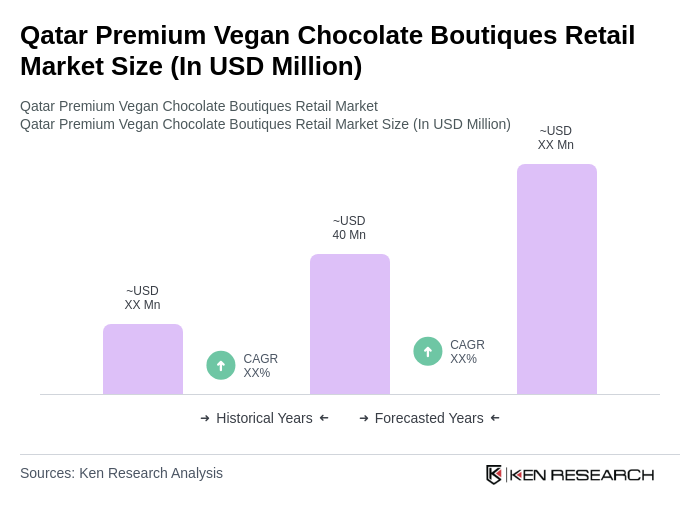
- The Qatar Premium Vegan Chocolate Boutiques Retail Market is valued at approximately USD 40 million, based on a five-year historical analysis. This growth is primarily driven by increasing consumer demand for plant-based products, rising health consciousness, and a shift towards sustainable and ethical consumption patterns. The market has seen a significant uptick in interest as consumers seek alternatives to traditional chocolate that align with their dietary preferences and values. The broader Middle East and Africa vegan chocolate market was valued at USD 27.03 million in 2024, with Qatar’s premium boutique segment reflecting a higher per capita spend due to its affluent consumer base and concentrated retail environment.
- Doha is the dominant city in the Qatar Premium Vegan Chocolate Boutiques Retail Market, primarily due to its affluent population and a growing number of health-conscious consumers. The city has witnessed a surge in boutique chocolate shops that cater to the vegan segment, supported by a vibrant culinary scene and increasing awareness of veganism among residents and expatriates alike.
- In 2023, the Ministry of Public Health, Qatar, issued the National Food Safety Policy, which includes provisions for promoting the use of organic and sustainable ingredients in food products, including chocolates. This policy aims to enhance food safety and quality while encouraging local producers to adopt environmentally friendly practices. Compliance involves adherence to organic certification standards, traceability requirements, and periodic audits for food businesses. The regulation is expected to boost the market for premium vegan chocolates, as consumers increasingly prefer products that meet these standards.
Qatar Premium Vegan Chocolate Boutiques Retail Market Segmentation
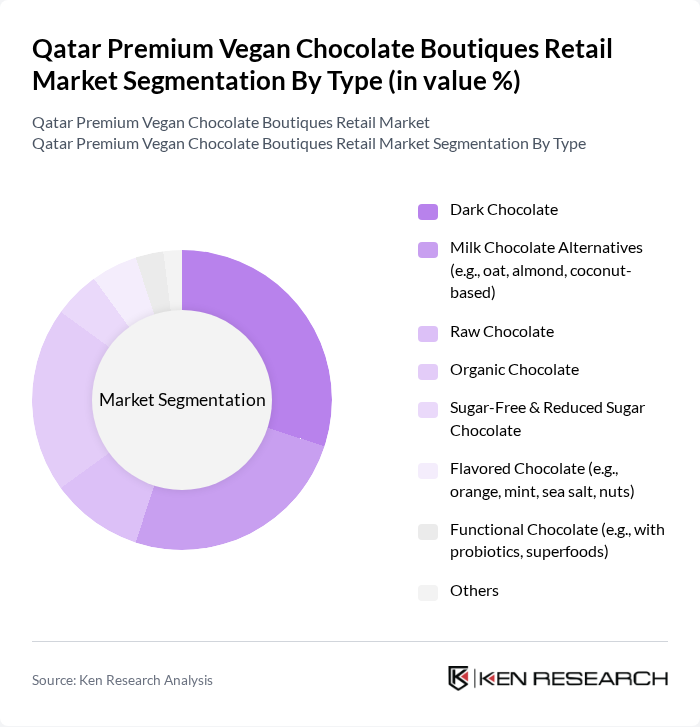
By Type:The market is segmented into various types of vegan chocolates, including Dark Chocolate, Milk Chocolate Alternatives, Raw Chocolate, Organic Chocolate, Sugar-Free & Reduced Sugar Chocolate, Flavored Chocolate, Functional Chocolate, and Others. Among these, Dark Chocolate and Organic Chocolate are particularly popular due to their perceived health benefits and rich flavors. The demand for Milk Chocolate Alternatives is also rising as consumers seek dairy-free options, with innovations in oat, almond, and coconut-based chocolates driving segment growth globally. Functional chocolates, such as those with added probiotics or superfoods, are emerging as a niche but growing category, reflecting broader health and wellness trends.
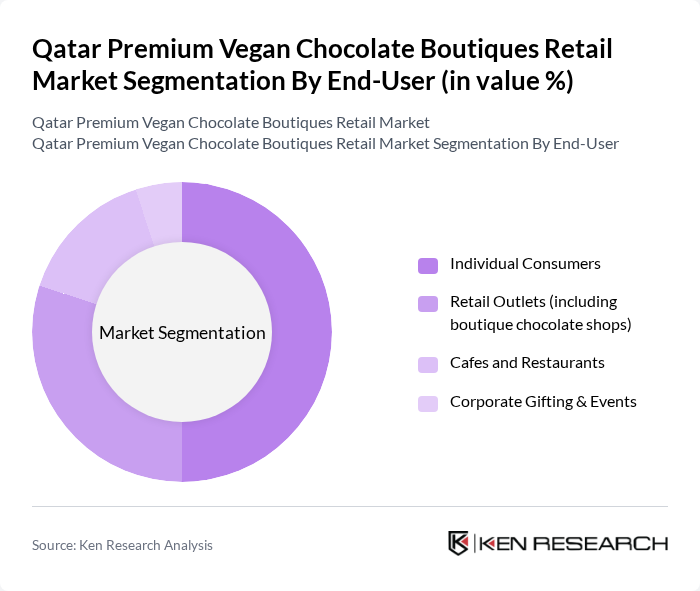
By End-User:The end-user segmentation includes Individual Consumers, Retail Outlets, Cafes and Restaurants, and Corporate Gifting & Events. Individual Consumers represent the largest segment, driven by the growing trend of health-conscious eating and the increasing popularity of vegan diets. Retail Outlets, including boutique chocolate shops, are also significant as they provide a unique shopping experience and cater to niche markets. The rise of veganism and flexitarian diets, along with increased availability of premium vegan chocolates in supermarkets and specialty stores, is expanding the consumer base beyond traditional chocolate buyers.
Qatar Premium Vegan Chocolate Boutiques Retail Market Competitive Landscape
The Qatar Premium Vegan Chocolate Boutiques Retail Market is characterized by a dynamic mix of regional and international players. Leading participants such as Chocola Paris, Melty's Chocolaterie, Nouga Chocolates, Ritter Sport, Divine Chocolate, NOMO, Chocolove, Taza Chocolate, Hu Kitchen, Endangered Species Chocolate, Goodio, Equal Exchange, The Chocolate Tree, Eating Evolved, Luppo contribute to innovation, geographic expansion, and service delivery in this space.
Qatar Premium Vegan Chocolate Boutiques Retail Market Industry Analysis
Growth Drivers
- Increasing Health Consciousness:The health and wellness market in Qatar is projected to reach $1.5 billion in future, driven by a growing awareness of dietary choices. Consumers are increasingly opting for vegan products due to their perceived health benefits, such as lower cholesterol and reduced risk of chronic diseases. This trend is supported by the Qatar National Health Strategy, which emphasizes healthier lifestyles, thus boosting the demand for premium vegan chocolate options that align with these health-conscious choices.
- Rising Demand for Ethical Products:In future, the ethical consumerism market in Qatar is expected to grow by 20%, reflecting a significant shift towards products that are environmentally friendly and cruelty-free. This trend is fueled by increased consumer awareness regarding animal welfare and sustainability. As a result, premium vegan chocolate boutiques are well-positioned to cater to this demand, offering products that align with ethical values, thereby attracting a dedicated customer base willing to pay a premium for such offerings.
- Expansion of Vegan Lifestyle:The number of vegans in Qatar has increased by 30% over the past three years, indicating a growing acceptance of plant-based diets. This shift is supported by local initiatives promoting veganism, including workshops and community events. As more consumers adopt vegan lifestyles, the demand for premium vegan chocolate is expected to rise, providing boutiques with a unique opportunity to capture this expanding market segment and diversify their product offerings to meet evolving consumer preferences.
Market Challenges
- High Production Costs:The production costs for premium vegan chocolate in Qatar are approximately 25% higher than traditional chocolate due to the sourcing of high-quality, organic ingredients. This cost disparity poses a challenge for boutique retailers, as they must balance pricing strategies to remain competitive while ensuring product quality. Additionally, fluctuations in raw material prices can further strain profit margins, making it essential for businesses to optimize their supply chains and production processes.
- Limited Consumer Awareness:Despite the growing interest in vegan products, consumer awareness regarding premium vegan chocolate remains limited, with only 40% of the population familiar with its benefits. This lack of awareness can hinder market growth, as potential customers may not actively seek out these products. To overcome this challenge, boutiques must invest in marketing and educational campaigns to inform consumers about the advantages of vegan chocolate, thereby expanding their customer base and increasing sales.
Qatar Premium Vegan Chocolate Boutiques Retail Market Future Outlook
The future of the Qatar premium vegan chocolate market appears promising, driven by increasing health consciousness and a growing demand for ethical products. As more consumers adopt vegan lifestyles, the market is likely to see innovative product offerings that cater to diverse tastes and preferences. Additionally, the rise of e-commerce and digital marketing strategies will enable boutiques to reach a broader audience, enhancing their visibility and sales potential in the competitive landscape of gourmet chocolates.
Market Opportunities
- Growth in E-commerce Sales:E-commerce sales in Qatar are projected to reach $1 billion in future, providing a significant opportunity for vegan chocolate boutiques to expand their online presence. By leveraging digital platforms, retailers can tap into a wider customer base, offering convenience and accessibility that traditional retail may lack, thus driving sales growth and brand recognition.
- Collaborations with Health Food Stores:Partnering with health food stores can enhance market reach for vegan chocolate boutiques. With over 150 health food stores in Qatar, collaborations can facilitate product placement and increase visibility among health-conscious consumers. Such partnerships can also lead to co-marketing opportunities, further driving sales and brand loyalty within the growing health-focused community.
Scope of the Report
| Segment | Sub-Segments |
|---|---|
| By Type | Dark Chocolate Milk Chocolate Alternatives (e.g., oat, almond, coconut-based) Raw Chocolate Organic Chocolate Sugar-Free & Reduced Sugar Chocolate Flavored Chocolate (e.g., orange, mint, sea salt, nuts) Functional Chocolate (e.g., with probiotics, superfoods) Others |
| By End-User | Individual Consumers Retail Outlets (including boutique chocolate shops) Cafes and Restaurants Corporate Gifting & Events |
| By Sales Channel | Online Retail (brand-owned and marketplaces) Specialty Vegan Stores Gourmet & Premium Supermarkets Health Food Stores Hotel & Hospitality Outlets |
| By Price Range | Premium (QAR 30+ per 100g) Mid-Range (QAR 15–30 per 100g) Budget (< QAR 15 per 100g) |
| By Packaging Type | Eco-Friendly Packaging (compostable, recyclable) Standard Packaging Gift & Custom Packaging |
| By Flavor Profile | Classic Flavors (plain, nutty, fruity) Exotic Flavors (spices, floral, regional specialties) Seasonal & Limited Edition Flavors |
| By Distribution Mode | Direct Sales (brand-owned boutiques, D2C online) Indirect Sales (distributors, resellers) Franchise & Licensing Model |
Key Target Audience
Investors and Venture Capitalist Firms
Government and Regulatory Bodies (e.g., Ministry of Commerce and Industry, Qatar Development Bank)
Manufacturers and Producers of Vegan Chocolate
Distributors and Retailers of Specialty Foods
Health and Wellness Organizations
Food Safety and Quality Assurance Agencies
Luxury Goods Market Analysts
Import and Export Regulatory Authorities
Players Mentioned in the Report:
Chocola Paris
Melty's Chocolaterie
Nouga Chocolates
Ritter Sport
Divine Chocolate
NOMO
Chocolove
Taza Chocolate
Hu Kitchen
Endangered Species Chocolate
Goodio
Equal Exchange
The Chocolate Tree
Eating Evolved
Luppo
Table of Contents
Market Assessment Phase
1. Executive Summary and Approach
2. Qatar Premium Vegan Chocolate Boutiques Retail Market Overview
2.1 Key Insights and Strategic Recommendations
2.2 Qatar Premium Vegan Chocolate Boutiques Retail Market Overview
2.3 Definition and Scope
2.4 Evolution of Market Ecosystem
2.5 Timeline of Key Regulatory Milestones
2.6 Value Chain & Stakeholder Mapping
2.7 Business Cycle Analysis
2.8 Policy & Incentive Landscape
3. Qatar Premium Vegan Chocolate Boutiques Retail Market Analysis
3.1 Growth Drivers
3.1.1 Increasing Health Consciousness
3.1.2 Rising Demand for Ethical Products
3.1.3 Expansion of Vegan Lifestyle
3.1.4 Innovative Product Offerings
3.2 Market Challenges
3.2.1 High Production Costs
3.2.2 Limited Consumer Awareness
3.2.3 Competition from Traditional Chocolate Brands
3.2.4 Supply Chain Constraints
3.3 Market Opportunities
3.3.1 Growth in E-commerce Sales
3.3.2 Collaborations with Health Food Stores
3.3.3 Expansion into International Markets
3.3.4 Development of New Flavors and Varieties
3.4 Market Trends
3.4.1 Increased Focus on Sustainability
3.4.2 Rise of Plant-Based Diets
3.4.3 Customization and Personalization of Products
3.4.4 Growth of Subscription Services
3.5 Government Regulation
3.5.1 Food Safety Standards
3.5.2 Labeling Requirements for Vegan Products
3.5.3 Import Regulations on Raw Materials
3.5.4 Tax Incentives for Health-Conscious Products
4. SWOT Analysis
5. Stakeholder Analysis
6. Porter's Five Forces Analysis
7. Qatar Premium Vegan Chocolate Boutiques Retail Market Market Size, 2019-2024
7.1 By Value
7.2 By Volume
7.3 By Average Selling Price
8. Qatar Premium Vegan Chocolate Boutiques Retail Market Segmentation
8.1 By Type
8.1.1 Dark Chocolate
8.1.2 Milk Chocolate Alternatives (e.g., oat, almond, coconut-based)
8.1.3 Raw Chocolate
8.1.4 Organic Chocolate
8.1.5 Sugar-Free & Reduced Sugar Chocolate
8.1.6 Flavored Chocolate (e.g., orange, mint, sea salt, nuts)
8.1.7 Functional Chocolate (e.g., with probiotics, superfoods)
8.1.8 Others
8.2 By End-User
8.2.1 Individual Consumers
8.2.2 Retail Outlets (including boutique chocolate shops)
8.2.3 Cafes and Restaurants
8.2.4 Corporate Gifting & Events
8.3 By Sales Channel
8.3.1 Online Retail (brand-owned and marketplaces)
8.3.2 Specialty Vegan Stores
8.3.3 Gourmet & Premium Supermarkets
8.3.4 Health Food Stores
8.3.5 Hotel & Hospitality Outlets
8.4 By Price Range
8.4.1 Premium (QAR 30+ per 100g)
8.4.2 Mid-Range (QAR 15–30 per 100g)
8.4.3 Budget (< QAR 15 per 100g)
8.5 By Packaging Type
8.5.1 Eco-Friendly Packaging (compostable, recyclable)
8.5.2 Standard Packaging
8.5.3 Gift & Custom Packaging
8.6 By Flavor Profile
8.6.1 Classic Flavors (plain, nutty, fruity)
8.6.2 Exotic Flavors (spices, floral, regional specialties)
8.6.3 Seasonal & Limited Edition Flavors
8.7 By Distribution Mode
8.7.1 Direct Sales (brand-owned boutiques, D2C online)
8.7.2 Indirect Sales (distributors, resellers)
8.7.3 Franchise & Licensing Model
9. Qatar Premium Vegan Chocolate Boutiques Retail Market Competitive Analysis
9.1 Market Share of Key Players
9.2 Cross Comparison of Key Players
9.2.1 Company Name
9.2.2 Group Size (Large, Medium, or Small as per industry convention)
9.2.3 Revenue Growth Rate (YoY %)
9.2.4 Market Penetration Rate (boutique locations, online reach in Qatar)
9.2.5 Customer Retention Rate (%)
9.2.6 Average Order Value (QAR)
9.2.7 Pricing Strategy (premium, value-based, promotional)
9.2.8 Product Diversification Index (number of vegan SKUs, flavor/format variety)
9.2.9 Brand Recognition Score (survey-based, social media metrics)
9.2.10 Distribution Efficiency (delivery time, channel coverage, % on-time delivery)
9.2.11 Sustainability Index (eco-packaging, ethical sourcing, certifications)
9.2.12 Local Sourcing Ratio (% ingredients sourced within Qatar/GCC)
9.3 SWOT Analysis of Top Players
9.4 Pricing Analysis
9.5 Detailed Profile of Major Companies
9.5.1 Chocola Paris
9.5.2 Melty's Chocolaterie
9.5.3 Nouga Chocolates
9.5.4 Ritter Sport
9.5.5 Divine Chocolate
9.5.6 NOMO
9.5.7 Chocolove
9.5.8 Taza Chocolate
9.5.9 Hu Kitchen
9.5.10 Endangered Species Chocolate
9.5.11 Goodio
9.5.12 Equal Exchange
9.5.13 The Chocolate Tree
9.5.14 Eating Evolved
9.5.15 Luppo
10. Qatar Premium Vegan Chocolate Boutiques Retail Market End-User Analysis
10.1 Procurement Behavior of Key Ministries
10.1.1 Health and Wellness Initiatives
10.1.2 Corporate Social Responsibility Programs
10.1.3 Event Sponsorships
10.1.4 Procurement Policies for Vegan Products
10.2 Corporate Spend on Infrastructure & Energy
10.2.1 Investment in Sustainable Practices
10.2.2 Budget Allocation for Vegan Products
10.2.3 Partnerships with Vegan Brands
10.3 Pain Point Analysis by End-User Category
10.3.1 Availability of Vegan Options
10.3.2 Price Sensitivity
10.3.3 Quality Assurance
10.4 User Readiness for Adoption
10.4.1 Awareness of Vegan Benefits
10.4.2 Willingness to Pay a Premium
10.4.3 Accessibility of Products
10.5 Post-Deployment ROI and Use Case Expansion
10.5.1 Customer Feedback Mechanisms
10.5.2 Repeat Purchase Rates
10.5.3 Expansion into New Markets
11. Qatar Premium Vegan Chocolate Boutiques Retail Market Future Size, 2025-2030
11.1 By Value
11.2 By Volume
11.3 By Average Selling Price
Go-To-Market Strategy Phase
1. Whitespace Analysis + Business Model Canvas
1.1 Market Gaps Identification
1.2 Value Proposition Development
1.3 Revenue Streams Analysis
1.4 Cost Structure Evaluation
1.5 Key Partnerships
1.6 Customer Segments
1.7 Channels
2. Marketing and Positioning Recommendations
2.1 Branding Strategies
2.2 Product USPs
2.3 Target Audience Identification
2.4 Marketing Channels
2.5 Promotional Strategies
3. Distribution Plan
3.1 Urban Retail Strategy
3.2 Rural NGO Tie-Ups
3.3 Online Distribution Channels
3.4 Partnerships with Local Retailers
4. Channel & Pricing Gaps
4.1 Underserved Routes
4.2 Pricing Bands Analysis
4.3 Competitor Pricing Comparison
5. Unmet Demand & Latent Needs
5.1 Category Gaps
5.2 Consumer Segments Analysis
5.3 Product Development Opportunities
6. Customer Relationship
6.1 Loyalty Programs
6.2 After-sales Service
6.3 Customer Engagement Strategies
7. Value Proposition
7.1 Sustainability Initiatives
7.2 Integrated Supply Chains
7.3 Unique Selling Points
8. Key Activities
8.1 Regulatory Compliance
8.2 Branding Efforts
8.3 Distribution Setup
9. Entry Strategy Evaluation
9.1 Domestic Market Entry Strategy
9.1.1 Product Mix
9.1.2 Pricing Band
9.1.3 Packaging Considerations
9.2 Export Entry Strategy
9.2.1 Target Countries
9.2.2 Compliance Roadmap
10. Entry Mode Assessment
10.1 Joint Ventures
10.2 Greenfield Investments
10.3 Mergers & Acquisitions
10.4 Distributor Model
11. Capital and Timeline Estimation
11.1 Capital Requirements
11.2 Timelines for Market Entry
12. Control vs Risk Trade-Off
12.1 Ownership Considerations
12.2 Partnerships Evaluation
13. Profitability Outlook
13.1 Breakeven Analysis
13.2 Long-term Sustainability
14. Potential Partner List
14.1 Distributors
14.2 Joint Ventures
14.3 Acquisition Targets
15. Execution Roadmap
15.1 Phased Plan for Market Entry
15.1.1 Market Setup
15.1.2 Market Entry
15.1.3 Growth Acceleration
15.1.4 Scale & Stabilize
15.2 Key Activities and Milestones
15.2.1 Milestone Planning
15.2.2 Activity Tracking
Research Methodology
Phase 1: Approach1
Desk Research
- Analysis of market reports from local and international vegan food organizations
- Review of consumer behavior studies focusing on veganism and chocolate consumption in Qatar
- Examination of trade publications and industry journals related to the gourmet chocolate sector
Primary Research
- Interviews with owners and managers of existing vegan chocolate boutiques in Qatar
- Surveys targeting consumers who purchase premium chocolate products
- Focus groups with health and wellness influencers to gauge market trends
Validation & Triangulation
- Cross-validation of findings through multiple consumer surveys and expert interviews
- Triangulation of data from retail sales figures and consumer feedback
- Sanity checks through expert panel discussions with industry veterans
Phase 2: Market Size Estimation1
Top-down Assessment
- Estimation of total market size based on national chocolate consumption statistics
- Segmentation of the market by product type, including dark chocolate, truffles, and bars
- Incorporation of demographic data to assess potential growth in vegan chocolate consumption
Bottom-up Modeling
- Collection of sales data from boutique retailers and online platforms
- Estimation of average transaction values and purchase frequency among consumers
- Analysis of production costs and pricing strategies of premium vegan chocolate brands
Forecasting & Scenario Analysis
- Multi-factor regression analysis incorporating trends in health consciousness and veganism
- Scenario modeling based on potential changes in consumer preferences and economic conditions
- Development of baseline, optimistic, and pessimistic market growth projections through 2030
Phase 3: CATI Sample Composition1
| Scope Item/Segment | Sample Size | Target Respondent Profiles |
|---|---|---|
| Vegan Chocolate Consumers | 120 | Health-conscious individuals, Vegan lifestyle advocates |
| Retail Boutique Owners | 40 | Business owners, Retail managers |
| Food Industry Experts | 40 | Food scientists, Nutritionists |
| Market Analysts | 40 | Market researchers, Trend analysts |
| Health and Wellness Influencers | 40 | Social media influencers, Bloggers |
Frequently Asked Questions
What is the current value of the Qatar Premium Vegan Chocolate Boutiques Retail Market?
The Qatar Premium Vegan Chocolate Boutiques Retail Market is valued at approximately USD 40 million, reflecting a growing consumer demand for plant-based products and a shift towards sustainable consumption patterns.
Which city dominates the Qatar Premium Vegan Chocolate market?
What are the main types of vegan chocolates available in Qatar?
What factors are driving the growth of the vegan chocolate market in Qatar?
Other Regional/Country Reports
Indonesia Premium Vegan Chocolate Boutiques Retail Market
Malaysia Premium Vegan Chocolate Boutiques Retail Market
APAC Premium Vegan Chocolate Boutiques Retail Market
SEA Premium Vegan Chocolate Boutiques Retail Market
Other Adjacent Reports
Bahrain Premium Chocolate Retail Market
KSA Vegan Confectionery Market
Malaysia Organic Food Products Market
Philippines Plant-Based Snacks Market
Brazil Luxury Gourmet Foods Market
Singapore Health and Wellness Products Market
KSA Sustainable Packaging Market
Egypt E-Commerce Food Retail Market
Singapore Ethical Consumer Goods Market
Qatar Functional Chocolate Market
Why Buy From Us?

What makes us stand out is that our consultants follow Robust, Refine and Result (RRR) methodology. Robust for clear definitions, approaches and sanity checking, Refine for differentiating respondents' facts and opinions, and Result for presenting data with story.

We have set a benchmark in the industry by offering our clients with syndicated and customized market research reports featuring coverage of entire market as well as meticulous research and analyst insights.

While we don't replace traditional research, we flip the method upside down. Our dual approach of Top Bottom & Bottom Top ensures quality deliverable by not just verifying company fundamentals but also looking at the sector and macroeconomic factors.

With one step in the future, our research team constantly tries to show you the bigger picture. We help with some of the tough questions you may encounter along the way: How is the industry positioned? Best marketing channel? KPI's of competitors? By aligning every element, we help maximize success.

Our report gives you instant access to the answers and sources that other companies might choose to hide. We elaborate each steps of research methodology we have used and showcase you the sample size to earn your trust.

If you need any support, we are here! We pride ourselves on universe strength, data quality, and quick, friendly, and professional service.