About the Report
Base Year 2024South America Mate Market Overview
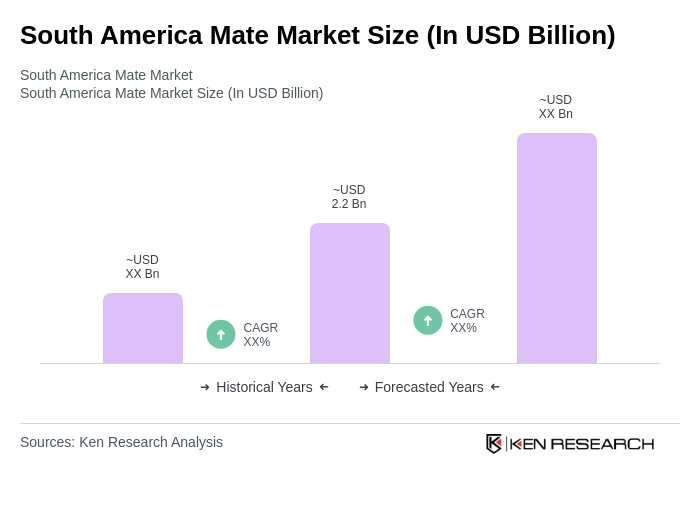
- The South America Mate Market is valued at USD 2.2 billion, based on a five-year historical analysis. This growth is primarily driven by the increasing popularity of mate as a health-conscious beverage, rising consumer awareness regarding its antioxidant properties, and its traditional cultural significance in countries like Argentina, Brazil, and Paraguay. The market has seen robust expansion due to the shift toward natural and functional beverages, with yerba mate recognized for its energy-boosting and wellness benefits. Millennials and Gen Z are major drivers, drawn by mate’s mix of energy, tradition, and natural sourcing .
- Argentina, Brazil, and Paraguay dominate the South America Mate Market due to their rich cultural heritage associated with mate consumption. Argentina, in particular, maintains a long-standing tradition of mate drinking deeply embedded in social interactions, while Brazil’s growing interest in health and wellness beverages has further fueled demand. Paraguay is a leading producer and exporter, with innovation focused on high-yield varieties and sustainable practices .
- In recent years, the Argentine government has strengthened regulations to promote sustainable yerba mate production. These initiatives include guidelines for organic farming practices and certifications aimed at reducing environmental impact, ensuring the long-term viability of the yerba mate industry. Regulatory frameworks across the region prioritize environmental protection and food safety standards .
South America Mate Market Segmentation
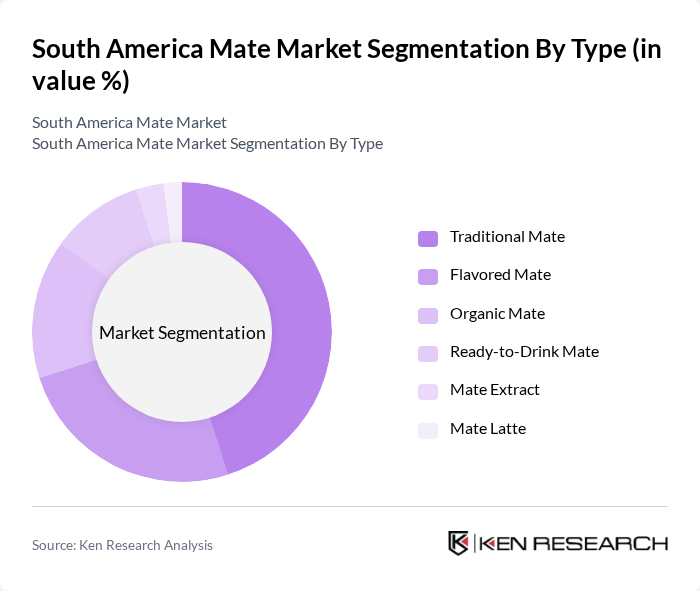
By Type:The market is segmented into Traditional Mate, Flavored Mate, Organic Mate, Ready-to-Drink Mate, Mate Extract, and Mate Latte. Traditional Mate remains the most popular due to its deep-rooted cultural significance and traditional preparation methods. Flavored and Organic Mate are gaining traction as consumers seek variety and health benefits, while Ready-to-Drink options cater to convenience-seeking demographics. Mate Extract and Mate Latte are niche segments, often used in wellness products and specialty beverages .
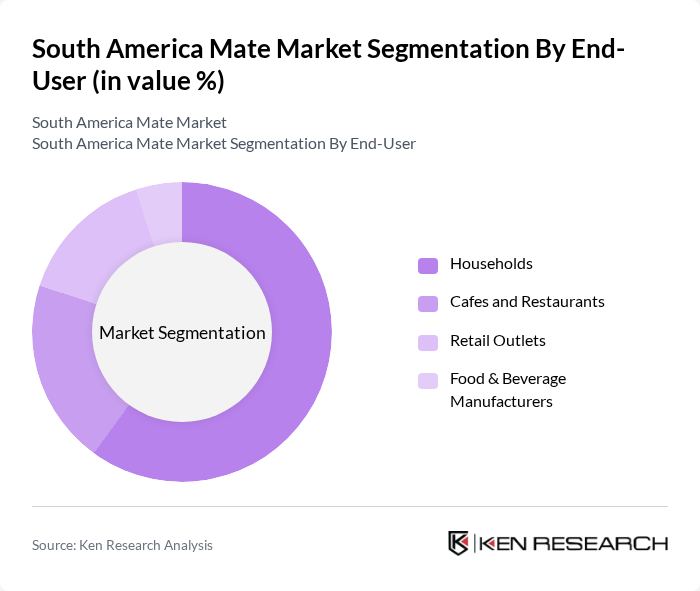
By End-User:The end-user segmentation includes Households, Cafes and Restaurants, Retail Outlets, and Food & Beverage Manufacturers. Households represent the largest segment, driven by the cultural practice of mate consumption in daily life. Cafes and Restaurants are increasingly offering mate-based beverages, while Retail Outlets provide a variety of options to consumers. Food & Beverage Manufacturers are incorporating mate into their products, capitalizing on its health benefits and functional beverage trends .
South America Mate Market Competitive Landscape
The South America Mate Market is characterized by a dynamic mix of regional and international players. Leading participants such as Companhia de Bebidas das Américas (Ambev), Grupo Mate Verde, Mate Leão (The Coca-Cola Company), Cruz de Malta (Molinos Río de la Plata S.A.), Taragüi (Establecimiento Las Marías), La Tranquera (Cooperativa Agrícola de la Colonia Liebig Ltda.), Canarias (Compañía Salus S.A.), Establecimiento Las Marías, Yerba Mate Rosamonte (HREÑUK S.A.), Yerba Mate Playadito (Cooperativa Agrícola de la Colonia Liebig Ltda.), La Merced (Establecimiento Las Marías), El Cebador, Mate de Misiones, Mate Argentina, Yerba Mate Pajarito (Lauro Raatz S.A.) contribute to innovation, geographic expansion, and service delivery in this space.
South America Mate Market Industry Analysis
Growth Drivers
- Increasing Health Consciousness:The South American population is increasingly prioritizing health, with 65% of consumers actively seeking natural and organic products. This trend is supported by a report from the World Health Organization indicating that 75% of adults in Brazil are aware of the health benefits of mate, including its antioxidant properties. As a result, the demand for mate, known for its health benefits, is expected to rise significantly, driving market growth.
- Rising Popularity of Natural Beverages:The global shift towards natural beverages is evident in South America, where the market for natural drinks is projected to reach $6 billion in future. According to the Brazilian Institute of Geography and Statistics, sales of natural beverages, including mate, have increased by 18% annually. This trend is fueled by consumer preferences for healthier alternatives, positioning mate as a key player in the beverage sector.
- Cultural Significance and Tradition:Mate consumption is deeply rooted in South American culture, particularly in Argentina, where over 85% of the population consumes it regularly. The National Institute of Statistics and Censuses reported that mate is consumed by approximately 32 million people in Argentina alone. This cultural significance not only sustains demand but also encourages younger generations to adopt mate-drinking habits, ensuring continued market growth.
Market Challenges
- Competition from Other Beverages:The South American beverage market is highly competitive, with alternatives like coffee and energy drinks gaining popularity. In future, coffee consumption in Brazil is expected to reach 22 million 60-kilogram bags, reflecting a 6% increase from the previous period. This competition poses a challenge for the mate market, as consumers have a wide array of beverage options, potentially impacting mate's market share.
- Regulatory Hurdles:The mate industry faces significant regulatory challenges, particularly concerning food safety standards. In future, the Brazilian government is expected to implement stricter regulations on food imports, affecting the availability of mate products. Compliance with these regulations requires investment in quality assurance, which can strain smaller producers. The complexity of navigating these regulations can hinder market growth and limit product availability.
South America Mate Market Future Outlook
The South America mate market is poised for growth, driven by increasing health consciousness and a shift towards natural beverages. As consumers prioritize wellness, the demand for mate is expected to rise, particularly among younger demographics. Additionally, the expansion of e-commerce platforms will facilitate greater access to mate products, enhancing market penetration. Innovations in product offerings, such as flavored and ready-to-drink options, will further attract diverse consumer segments, ensuring a dynamic market landscape.
Market Opportunities
- Export Potential to Global Markets:South America has significant export potential for mate, with exports reaching $250 million in future. Countries like the United States and Europe are increasingly interested in natural beverages, presenting an opportunity for South American producers to expand their market reach and increase revenue.
- Product Innovation and Diversification:The demand for innovative mate products is on the rise, with a 30% increase in new product launches in future. Companies can capitalize on this trend by introducing flavored variants and ready-to-drink options, appealing to health-conscious consumers and enhancing market competitiveness.
Scope of the Report
| Segment | Sub-Segments |
|---|---|
| By Type | Traditional Mate Flavored Mate Organic Mate Ready-to-Drink Mate Mate Extract Mate Latte |
| By End-User | Households Cafes and Restaurants Retail Outlets Food & Beverage Manufacturers |
| By Distribution Channel | Supermarkets/Hypermarkets Specialty Stores Online Retail Convenience Stores |
| By Packaging Type | Loose Leaf Tea Bags Bottled Cans Bags |
| By Price Range | Economy Mid-Range Premium |
| By Region | Argentina Brazil Paraguay Uruguay Chile |
| By Others | Niche Products Seasonal Offerings |
Key Target Audience
Investors and Venture Capitalist Firms
Government and Regulatory Bodies (e.g., ANVISA, SENASA)
Manufacturers and Producers
Distributors and Retailers
Exporters and Importers
Food and Beverage Industry Stakeholders
Health and Wellness Organizations
Market Analysts and Industry Experts
Players Mentioned in the Report:
Companhia de Bebidas das Americas (Ambev)
Grupo Mate Verde
Mate Leao (The Coca-Cola Company)
Cruz de Malta (Molinos Rio de la Plata S.A.)
Taragui (Establecimiento Las Marias)
La Tranquera (Cooperativa Agricola de la Colonia Liebig Ltda.)
Canarias (Compania Salus S.A.)
Establecimiento Las Marias
Yerba Mate Rosamonte (HRENUK S.A.)
Yerba Mate Playadito (Cooperativa Agricola de la Colonia Liebig Ltda.)
La Merced (Establecimiento Las Marias)
El Cebador
Mate de Misiones
Mate Argentina
Yerba Mate Pajarito (Lauro Raatz S.A.)
Table of Contents
Market Assessment Phase
1. Executive Summary and Approach
2. South America Mate Market Overview
2.1 Key Insights and Strategic Recommendations
2.2 South America Mate Market Overview
2.3 Definition and Scope
2.4 Evolution of Market Ecosystem
2.5 Timeline of Key Regulatory Milestones
2.6 Value Chain & Stakeholder Mapping
2.7 Business Cycle Analysis
2.8 Policy & Incentive Landscape
3. South America Mate Market Analysis
3.1 Growth Drivers
3.1.1 Increasing Health Consciousness
3.1.2 Rising Popularity of Natural Beverages
3.1.3 Cultural Significance and Tradition
3.1.4 Expansion of Distribution Channels
3.2 Market Challenges
3.2.1 Competition from Other Beverages
3.2.2 Regulatory Hurdles
3.2.3 Supply Chain Disruptions
3.2.4 Price Volatility of Raw Materials
3.3 Market Opportunities
3.3.1 Export Potential to Global Markets
3.3.2 Product Innovation and Diversification
3.3.3 E-commerce Growth
3.3.4 Health and Wellness Trends
3.4 Market Trends
3.4.1 Sustainable Packaging Initiatives
3.4.2 Premiumization of Products
3.4.3 Increased Online Sales
3.4.4 Focus on Organic and Fair Trade Products
3.5 Government Regulation
3.5.1 Import Tariffs and Trade Policies
3.5.2 Food Safety Standards
3.5.3 Labeling Requirements
3.5.4 Environmental Regulations
4. SWOT Analysis
5. Stakeholder Analysis
6. Porter's Five Forces Analysis
7. South America Mate Market Market Size, 2019-2024
7.1 By Value
7.2 By Volume
7.3 By Average Selling Price
8. South America Mate Market Segmentation
8.1 By Type
8.1.1 Traditional Mate
8.1.2 Flavored Mate
8.1.3 Organic Mate
8.1.4 Ready-to-Drink Mate
8.1.5 Mate Extract
8.1.6 Mate Latte
8.2 By End-User
8.2.1 Households
8.2.2 Cafes and Restaurants
8.2.3 Retail Outlets
8.2.4 Food & Beverage Manufacturers
8.3 By Distribution Channel
8.3.1 Supermarkets/Hypermarkets
8.3.2 Specialty Stores
8.3.3 Online Retail
8.3.4 Convenience Stores
8.4 By Packaging Type
8.4.1 Loose Leaf
8.4.2 Tea Bags
8.4.3 Bottled
8.4.4 Cans
8.4.5 Bags
8.5 By Price Range
8.5.1 Economy
8.5.2 Mid-Range
8.5.3 Premium
8.6 By Region
8.6.1 Argentina
8.6.2 Brazil
8.6.3 Paraguay
8.6.4 Uruguay
8.6.5 Chile
8.7 Others
8.7.1 Niche Products
8.7.2 Seasonal Offerings
9. South America Mate Market Competitive Analysis
9.1 Market Share of Key Players
9.2 Cross Comparison of Key Players
9.2.1 Company Name
9.2.2 Group Size (Large, Medium, or Small as per industry convention)
9.2.3 Revenue (USD, latest fiscal year)
9.2.4 Revenue Growth Rate (CAGR %)
9.2.5 Market Share (%)
9.2.6 Production Volume (tons/year)
9.2.7 Export Share (%)
9.2.8 Distribution Network Reach (number of countries/regions)
9.2.9 Brand Recognition Index (survey-based or market share proxy)
9.2.10 Product Portfolio Breadth (number of SKUs or product types)
9.2.11 Innovation Rate (number of new launches/year)
9.2.12 Sustainability/Certification Score (e.g., % organic, fair trade certified)
9.3 SWOT Analysis of Top Players
9.4 Pricing Analysis
9.5 Detailed Profile of Major Companies
9.5.1 Companhia de Bebidas das Américas (Ambev)
9.5.2 Grupo Mate Verde
9.5.3 Mate Leão (The Coca-Cola Company)
9.5.4 Cruz de Malta (Molinos Río de la Plata S.A.)
9.5.5 Taragüi (Establecimiento Las Marías)
9.5.6 La Tranquera (Cooperativa Agrícola de la Colonia Liebig Ltda.)
9.5.7 Canarias (Compañía Salus S.A.)
9.5.8 Establecimiento Las Marías
9.5.9 Yerba Mate Rosamonte (HREÑUK S.A.)
9.5.10 Yerba Mate Playadito (Cooperativa Agrícola de la Colonia Liebig Ltda.)
9.5.11 La Merced (Establecimiento Las Marías)
9.5.12 El Cebador
9.5.13 Mate de Misiones
9.5.14 Mate Argentina
9.5.15 Yerba Mate Pajarito (Lauro Raatz S.A.)
10. South America Mate Market End-User Analysis
10.1 Procurement Behavior of Key Ministries
10.1.1 Government Contracts
10.1.2 Bulk Purchasing Trends
10.1.3 Sustainability Preferences
10.2 Corporate Spend on Infrastructure & Energy
10.2.1 Investment in Local Production
10.2.2 Partnerships with Local Farmers
10.2.3 Funding for Sustainable Practices
10.3 Pain Point Analysis by End-User Category
10.3.1 Quality Consistency
10.3.2 Supply Chain Reliability
10.3.3 Pricing Fluctuations
10.4 User Readiness for Adoption
10.4.1 Awareness of Health Benefits
10.4.2 Accessibility of Products
10.4.3 Cultural Acceptance
10.5 Post-Deployment ROI and Use Case Expansion
10.5.1 Customer Feedback Mechanisms
10.5.2 Expansion into New Markets
10.5.3 Long-term Customer Engagement
11. South America Mate Market Future Size, 2025-2030
11.1 By Value
11.2 By Volume
11.3 By Average Selling Price
Go-To-Market Strategy Phase
1. Whitespace Analysis + Business Model Canvas
1.1 Market Gaps Identification
1.2 Value Proposition Development
1.3 Revenue Streams Analysis
1.4 Customer Segmentation
1.5 Key Partnerships
1.6 Cost Structure
1.7 Channels of Distribution
2. Marketing and Positioning Recommendations
2.1 Branding Strategies
2.2 Product USPs
2.3 Target Audience Identification
2.4 Marketing Channels
2.5 Promotional Activities
3. Distribution Plan
3.1 Urban Retail Strategies
3.2 Rural NGO Tie-ups
3.3 Logistics and Supply Chain Management
3.4 Distribution Partnerships
4. Channel & Pricing Gaps
4.1 Underserved Routes
4.2 Pricing Bands Analysis
4.3 Competitor Pricing Strategies
4.4 Consumer Price Sensitivity
5. Unmet Demand & Latent Needs
5.1 Category Gaps
5.2 Consumer Segments
5.3 Product Development Opportunities
5.4 Market Entry Barriers
6. Customer Relationship
6.1 Loyalty Programs
6.2 After-sales Service
6.3 Customer Feedback Loops
6.4 Community Engagement
7. Value Proposition
7.1 Sustainability Initiatives
7.2 Integrated Supply Chains
7.3 Customer-Centric Approaches
7.4 Competitive Differentiation
8. Key Activities
8.1 Regulatory Compliance
8.2 Branding Efforts
8.3 Distribution Setup
8.4 Market Research Activities
9. Entry Strategy Evaluation
9.1 Domestic Market Entry Strategy
9.1.1 Product Mix
9.1.2 Pricing Band
9.1.3 Packaging Considerations
9.2 Export Entry Strategy
9.2.1 Target Countries
9.2.2 Compliance Roadmap
9.2.3 Market Entry Barriers
10. Entry Mode Assessment
10.1 Joint Ventures
10.2 Greenfield Investments
10.3 Mergers & Acquisitions
10.4 Distributor Model
11. Capital and Timeline Estimation
11.1 Capital Requirements
11.2 Timelines for Market Entry
11.3 Financial Projections
12. Control vs Risk Trade-Off
12.1 Ownership vs Partnerships
12.2 Risk Mitigation Strategies
12.3 Control Mechanisms
13. Profitability Outlook
13.1 Breakeven Analysis
13.2 Long-term Sustainability
13.3 Profit Margin Projections
14. Potential Partner List
14.1 Distributors
14.2 Joint Ventures
14.3 Acquisition Targets
15. Execution Roadmap
15.1 Phased Plan for Market Entry
15.1.1 Market Setup
15.1.2 Market Entry
15.1.3 Growth Acceleration
15.1.4 Scale & Stabilize
15.2 Key Activities and Milestones
15.2.1 Activity Timeline
15.2.2 Milestone Tracking
Research Methodology
Phase 1: Approach1
Desk Research
- Analysis of market reports from industry associations and trade publications focused on the South American mate market
- Review of import/export data from government trade databases to understand regional trade flows
- Examination of consumer behavior studies and market trends published by academic journals and research institutions
Primary Research
- Interviews with key stakeholders including mate producers, distributors, and retailers across South America
- Surveys targeting consumers to gauge preferences, consumption patterns, and brand loyalty in the mate market
- Focus group discussions with mate enthusiasts to explore cultural significance and emerging trends
Validation & Triangulation
- Cross-validation of findings through comparison with historical sales data and market growth rates
- Triangulation of insights from primary interviews with secondary data sources to ensure consistency
- Sanity checks conducted through expert panel reviews involving industry veterans and market analysts
Phase 2: Market Size Estimation1
Top-down Assessment
- Estimation of the total addressable market (TAM) for mate based on national beverage consumption statistics
- Segmentation of the market by product type (traditional, flavored, organic) and distribution channel (retail, online)
- Incorporation of demographic data to assess potential market growth in urban versus rural areas
Bottom-up Modeling
- Collection of sales data from leading mate brands to establish baseline revenue figures
- Analysis of production volumes and pricing strategies from local producers to estimate market share
- Calculation of market size based on unit sales multiplied by average selling prices across different segments
Forecasting & Scenario Analysis
- Utilization of time series analysis to project future market growth based on historical trends
- Scenario modeling to assess the impact of economic factors, such as inflation and currency fluctuations, on consumer spending
- Development of best-case, worst-case, and most-likely scenarios to provide a comprehensive market outlook through 2030
Phase 3: CATI Sample Composition1
| Scope Item/Segment | Sample Size | Target Respondent Profiles |
|---|---|---|
| Consumer Preferences for Mate | 100 | Regular Mate Drinkers, Occasional Consumers |
| Retail Distribution Channels | 60 | Store Managers, Retail Buyers |
| Production Insights from Manufacturers | 50 | Production Managers, Quality Control Officers |
| Market Trends and Innovations | 40 | Product Development Managers, Marketing Executives |
| Export Opportunities and Challenges | 40 | Export Managers, Trade Analysts |
Frequently Asked Questions
What is the current value of the South America Mate Market?
The South America Mate Market is valued at approximately USD 2.2 billion, reflecting a robust growth trend driven by increasing consumer interest in health-conscious beverages and the cultural significance of mate in countries like Argentina, Brazil, and Paraguay.
Which countries dominate the South America Mate Market?
What are the main types of mate products available in the market?
Who are the primary consumers of mate in South America?
Other Regional/Country Reports
Indonesia Mate Market
Malaysia Mate Market
KSA Mate Market
APAC Mate Market
SEA Mate Market
Vietnam Mate Market
Why Buy From Us?

What makes us stand out is that our consultants follow Robust, Refine and Result (RRR) methodology. Robust for clear definitions, approaches and sanity checking, Refine for differentiating respondents' facts and opinions, and Result for presenting data with story.

We have set a benchmark in the industry by offering our clients with syndicated and customized market research reports featuring coverage of entire market as well as meticulous research and analyst insights.

While we don't replace traditional research, we flip the method upside down. Our dual approach of Top Bottom & Bottom Top ensures quality deliverable by not just verifying company fundamentals but also looking at the sector and macroeconomic factors.

With one step in the future, our research team constantly tries to show you the bigger picture. We help with some of the tough questions you may encounter along the way: How is the industry positioned? Best marketing channel? KPI's of competitors? By aligning every element, we help maximize success.

Our report gives you instant access to the answers and sources that other companies might choose to hide. We elaborate each steps of research methodology we have used and showcase you the sample size to earn your trust.

If you need any support, we are here! We pride ourselves on universe strength, data quality, and quick, friendly, and professional service.