About the Report
Base Year 2024US Hospitality Mattress Market Overview
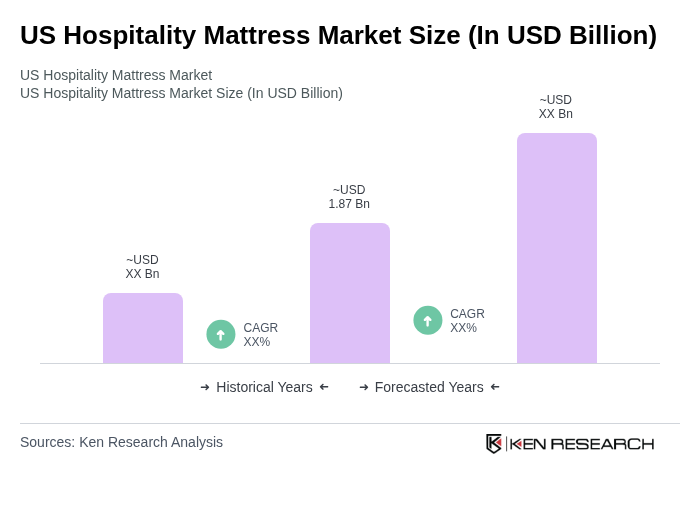
- The US Hospitality Mattress Market is valued at USD 1.87 billion, based on a five-year historical analysis. This growth is primarily driven by the increasing demand for quality sleep solutions in the hospitality sector, as hotels and resorts prioritize guest comfort to enhance their service offerings. The rise in domestic and international tourism has further fueled the need for high-quality mattresses in various accommodations. The U.S. ranked as the world's most powerful travel and tourism market in 2023, contributing an unprecedented USD 2.36 trillion to the national economy, which directly supports sustained demand for premium hospitality bedding solutions.
- Key drivers of market expansion include urbanization and infrastructure development coupled with government incentives and tourism infrastructure investments. Rising discretionary income, coupled with favorable economic indicators and low unemployment rates, is fueling travel activity across the U.S. Higher hotel occupancy rates are propelling hospitality operators to invest in premium, durable, and guest-centric mattress designs that meet evolving guest expectations for comfort and quality. These upgraded bedding solutions enhance sleep quality, contributing to improved guest satisfaction scores, repeat bookings, and brand loyalty, making mattress procurement a strategic priority for property owners.
- The Flammability Standards for Mattresses Rule, issued by the Consumer Product Safety Commission (CPSC) in 2007, establishes mandatory fire safety standards for all mattresses sold in the United States, including those used in hospitality settings. This regulation mandates that all mattresses sold to hotels and other lodging establishments must meet specific flammability performance standards, ensuring enhanced safety for guests and compliance with federal fire safety requirements. Compliance with these standards is mandatory for all mattress manufacturers and distributors operating in the hospitality sector.
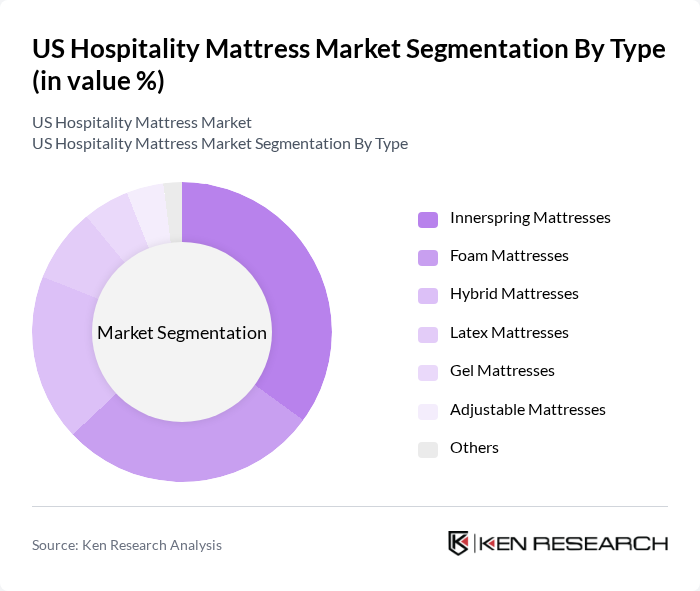
US Hospitality Mattress Market Segmentation
By Type:The market is segmented into various types of mattresses, including innerspring, foam, hybrid, latex, gel, adjustable, and others. Each type caters to different consumer preferences and comfort levels, with foam and hybrid mattresses gaining popularity due to their adaptability and support. Innerspring mattresses account for the largest revenue share, fueled by widespread adoption in mid-scale and economy hotels due to durability, cost efficiency, and consistent performance under high guest turnover. The demand for these mattresses is influenced by trends in consumer behavior, where comfort and sleep quality are prioritized.
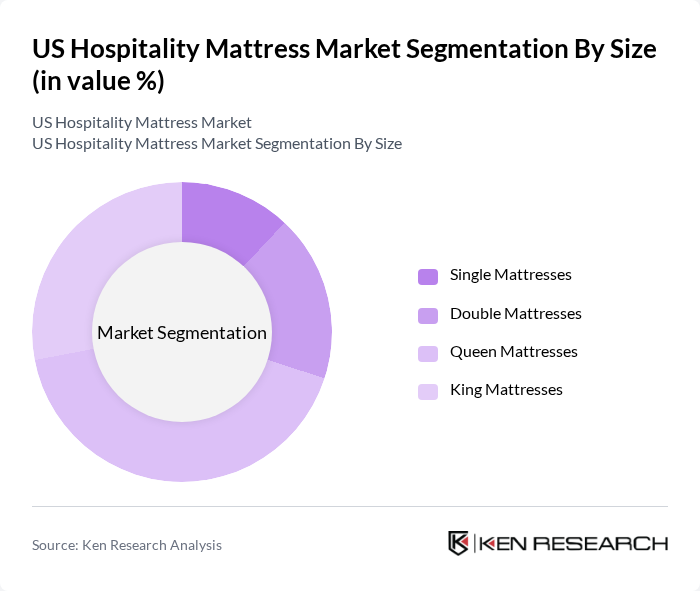
By Size:The market is also segmented by mattress size, including single, double, queen, and king mattresses. The queen and king sizes are particularly popular in the hospitality sector, as they cater to couples and families seeking comfort during their stay. King-size mattresses are anticipated to register the fastest growth over the forecast period, fueled by the expansion of luxury and premium hotel segments that prioritize spaciousness and high-end guest experiences. The increasing trend of luxury accommodations has further driven the demand for larger mattress sizes.
US Hospitality Mattress Market Competitive Landscape
The US Hospitality Mattress Market is characterized by a dynamic mix of regional and international players. Leading participants such as Tempur Sealy International, Inc., Serta Simmons Bedding, LLC, Sleep Number Corporation, King Koil Licensing Company, Inc., Hilding Anders International AB, Corsicana Mattress Company, Restonic Mattress Corporation, KINGSDOWN, INC., Whitestone Home Furnishings, LLC (Saatva), Therapedic International, Brooklyn Bedding, LLC, Avocado Green Mattress, Zinus, Inc., Helix Sleep, Bear Mattress contribute to innovation, geographic expansion, and service delivery in this space.
US Hospitality Mattress Market Industry Analysis
Growth Drivers
- Increasing Demand for High-Quality Sleep Solutions:The US sleep market is projected to reach $90 billion by 2025, driven by a growing emphasis on sleep quality. With 70 million Americans suffering from sleep disorders, the demand for high-quality mattresses is surging. Hotels are increasingly investing in premium sleep solutions to enhance guest experiences, leading to a 20% increase in mattress sales in the hospitality sector in future, according to the American Hotel and Lodging Association.
- Growth in the Hospitality Sector:The US hospitality industry is expected to generate $1.2 trillion in revenue in future, reflecting a robust recovery post-pandemic. This growth is spurring demand for quality mattresses as hotels seek to differentiate themselves through superior guest experiences. The number of hotel rooms in the US is projected to increase by 3% annually, further driving the need for upgraded bedding solutions to accommodate rising occupancy rates.
- Rising Consumer Awareness about Health and Wellness:A recent survey indicated that 65% of consumers prioritize health and wellness when choosing accommodations. This trend is influencing hotels to invest in mattresses that promote better sleep and overall well-being. The wellness tourism market is projected to reach $1 trillion by future, encouraging hospitality providers to enhance their offerings, including high-quality mattresses that cater to health-conscious travelers.
Market Challenges
- Intense Competition Among Manufacturers:The US hospitality mattress market is characterized by fierce competition, with over 250 manufacturers vying for market share. This saturation leads to price wars, which can erode profit margins. In future, the average profit margin for mattress manufacturers is expected to be reported at 7%, down from 12% in previous years, as companies struggle to maintain pricing power amidst aggressive competition and consumer price sensitivity.
- Fluctuating Raw Material Prices:The volatility in raw material prices, particularly for foam and latex, poses a significant challenge for mattress manufacturers. In future, the price of polyurethane foam is anticipated to increase by 25% due to supply chain disruptions and rising oil prices. This fluctuation can lead to increased production costs, forcing manufacturers to either absorb the costs or pass them on to consumers, impacting overall market stability.
US Hospitality Mattress Market Future Outlook
The US hospitality mattress market is poised for significant transformation, driven by technological advancements and evolving consumer preferences. The integration of smart technology into mattresses is expected to enhance guest experiences, while the rise of eco-friendly materials aligns with growing sustainability trends. Additionally, the expansion of online sales channels will facilitate easier access to high-quality products, allowing manufacturers to reach a broader audience and adapt to changing market dynamics effectively.
Market Opportunities
- Expansion of Online Sales Channels:The shift towards e-commerce is creating new opportunities for mattress manufacturers. In future, online mattress sales are expected to account for 35% of total sales, a figure expected to rise as consumers increasingly prefer the convenience of online shopping. This trend allows manufacturers to reach a wider audience and reduce overhead costs associated with traditional retail.
- Customization and Personalization Trends:The demand for personalized sleep solutions is on the rise, with 45% of consumers expressing interest in customized mattresses. This trend presents an opportunity for manufacturers to develop tailored products that meet individual preferences, enhancing customer satisfaction and loyalty. Companies that invest in customization technologies can differentiate themselves in a competitive market.
Scope of the Report
| Segment | Sub-Segments |
|---|---|
| By Type | Innerspring Mattresses Foam Mattresses Hybrid Mattresses Latex Mattresses Gel Mattresses Adjustable Mattresses Others |
| By Size | Single Mattresses Double Mattresses Queen Mattresses King Mattresses |
| By End-User | Hotels & Resorts Vacation Rentals Hostels Bed and Breakfasts Motels Others |
| By Distribution Channel | Direct Sales to Hotels Wholesale Distributors Online Retail Specialty Stores Others |
| By Price Range | Budget Mattresses Mid-Range Mattresses Premium Mattresses Luxury Mattresses |
| By Firmness Level | Soft Medium Firm Adjustable |
| By Brand Positioning | Luxury Brands Mid-Tier Brands Budget Brands Private Labels |
Key Target Audience
Investors and Venture Capitalist Firms
Government and Regulatory Bodies (e.g., U.S. Consumer Product Safety Commission, U.S. Department of Commerce)
Manufacturers and Producers
Distributors and Retailers
Hospitality Industry Stakeholders (e.g., Hotel Chains, Resorts)
Interior Designers and Architects
Industry Associations (e.g., American Hotel and Lodging Association)
Financial Institutions
Players Mentioned in the Report:
Tempur Sealy International, Inc.
Serta Simmons Bedding, LLC
Sleep Number Corporation
King Koil Licensing Company, Inc.
Hilding Anders International AB
Corsicana Mattress Company
Restonic Mattress Corporation
KINGSDOWN, INC.
Whitestone Home Furnishings, LLC (Saatva)
Therapedic International
Brooklyn Bedding, LLC
Avocado Green Mattress
Zinus, Inc.
Helix Sleep
Bear Mattress
Table of Contents
Market Assessment Phase
1. Executive Summary and Approach
2. US Hospitality Mattress Market Overview
2.1 Key Insights and Strategic Recommendations
2.2 US Hospitality Mattress Market Overview
2.3 Definition and Scope
2.4 Evolution of Market Ecosystem
2.5 Timeline of Key Regulatory Milestones
2.6 Value Chain & Stakeholder Mapping
2.7 Business Cycle Analysis
2.8 Policy & Incentive Landscape
3. US Hospitality Mattress Market Analysis
3.1 Growth Drivers
3.1.1 Increasing demand for high-quality sleep solutions
3.1.2 Growth in the hospitality sector
3.1.3 Rising consumer awareness about health and wellness
3.1.4 Technological advancements in mattress materials
3.2 Market Challenges
3.2.1 Intense competition among manufacturers
3.2.2 Fluctuating raw material prices
3.2.3 Changing consumer preferences
3.2.4 Regulatory compliance issues
3.3 Market Opportunities
3.3.1 Expansion of online sales channels
3.3.2 Customization and personalization trends
3.3.3 Sustainable and eco-friendly product offerings
3.3.4 Partnerships with hospitality brands
3.4 Market Trends
3.4.1 Increasing adoption of smart mattresses
3.4.2 Growth of subscription-based mattress services
3.4.3 Focus on sleep technology integration
3.4.4 Rising popularity of hybrid mattresses
3.5 Government Regulation
3.5.1 Safety standards for mattress manufacturing
3.5.2 Environmental regulations on materials used
3.5.3 Labeling requirements for mattress products
3.5.4 Compliance with fire safety regulations
4. SWOT Analysis
5. Stakeholder Analysis
6. Porter's Five Forces Analysis
7. US Hospitality Mattress Market Market Size, 2019-2024
7.1 By Value
7.2 By Volume
7.3 By Average Selling Price
8. US Hospitality Mattress Market Segmentation
8.1 By Type
8.1.1 Innerspring Mattresses
8.1.2 Foam Mattresses
8.1.3 Hybrid Mattresses
8.1.4 Latex Mattresses
8.1.5 Gel Mattresses
8.1.6 Adjustable Mattresses
8.1.7 Others
8.2 By Size
8.2.1 Single Mattresses
8.2.2 Double Mattresses
8.2.3 Queen Mattresses
8.2.4 King Mattresses
8.3 By End-User
8.3.1 Hotels & Resorts
8.3.2 Vacation Rentals
8.3.3 Hostels
8.3.4 Bed and Breakfasts
8.3.5 Motels
8.3.6 Others
8.4 By Distribution Channel
8.4.1 Direct Sales to Hotels
8.4.2 Wholesale Distributors
8.4.3 Online Retail
8.4.4 Specialty Stores
8.4.5 Others
8.5 By Price Range
8.5.1 Budget Mattresses
8.5.2 Mid-Range Mattresses
8.5.3 Premium Mattresses
8.5.4 Luxury Mattresses
8.6 By Firmness Level
8.6.1 Soft
8.6.2 Medium
8.6.3 Firm
8.6.4 Adjustable
8.7 By Brand Positioning
8.7.1 Luxury Brands
8.7.2 Mid-Tier Brands
8.7.3 Budget Brands
8.7.4 Private Labels
9. US Hospitality Mattress Market Competitive Analysis
9.1 Market Share of Key Players
9.2 Cross Comparison of Key Players
9.2.1 Company Name
9.2.2 Company Size (Large, Medium, or Small)
9.2.3 Revenue Growth Rate (%)
9.2.4 Market Share (%)
9.2.5 Hotel Chain Partnerships
9.2.6 Product Portfolio Breadth
9.2.7 Pricing Strategy (Budget/Mid-Range/Premium)
9.2.8 Distribution Network Reach
9.2.9 Brand Recognition in Hospitality Sector
9.2.10 Innovation & Technology Integration
9.3 SWOT Analysis of Top Players
9.4 Pricing Analysis
9.5 Detailed Profile of Major Companies
9.5.1 Tempur Sealy International, Inc.
9.5.2 Serta Simmons Bedding, LLC
9.5.3 Sleep Number Corporation
9.5.4 King Koil Licensing Company, Inc.
9.5.5 Hilding Anders International AB
9.5.6 Corsicana Mattress Company
9.5.7 Restonic Mattress Corporation
9.5.8 KINGSDOWN, INC.
9.5.9 Whitestone Home Furnishings, LLC (Saatva)
9.5.10 Therapedic International
9.5.11 Brooklyn Bedding, LLC
9.5.12 Avocado Green Mattress
9.5.13 Zinus, Inc.
9.5.14 Helix Sleep
9.5.15 Bear Mattress
10. US Hospitality Mattress Market End-User Analysis
10.1 Procurement Behavior of Hospitality Operators
10.1.1 Budget Allocation for Bedding
10.1.2 Procurement Processes and Standards
10.1.3 Supplier Evaluation Criteria
10.1.4 Contract Management Practices
10.2 Corporate Spend on Hospitality Infrastructure
10.2.1 Investment in Guest Room Upgrades
10.2.2 Refurbishment Cycles and Frequency
10.2.3 Budgeting for Mattress Replacements
10.2.4 Cost-Benefit Analysis of Mattress Purchases
10.3 Pain Point Analysis by End-User Category
10.3.1 Durability Under High Guest Turnover
10.3.2 Comfort and Guest Satisfaction Issues
10.3.3 Supply Chain Disruptions
10.3.4 Maintenance and Replacement Challenges
10.4 User Readiness for Adoption
10.4.1 Awareness of New Mattress Technologies
10.4.2 Willingness to Invest in Premium Solutions
10.4.3 Training and Support Needs
10.4.4 Feedback Mechanisms for Improvement
10.5 Post-Deployment ROI and Use Case Expansion
10.5.1 Measurement of Guest Satisfaction Improvements
10.5.2 Impact on Online Reviews and Ratings
10.5.3 Long-term Cost Savings Analysis
10.5.4 Opportunities for Upselling Premium Bedding
11. US Hospitality Mattress Market Future Size, 2025-2033
11.1 By Value
11.2 By Volume
11.3 By Average Selling Price
Go-To-Market Strategy Phase
1. Whitespace Analysis + Business Model Canvas
1.1 Market Gaps Identification
1.2 Value Proposition Development
1.3 Revenue Streams Analysis
1.4 Customer Segmentation
1.5 Key Partnerships
1.6 Cost Structure Evaluation
1.7 Channels of Distribution
2. Marketing and Positioning Recommendations
2.1 Branding Strategies
2.2 Product USPs
2.3 Target Audience Identification
2.4 Marketing Channels Selection
2.5 Promotional Strategies
2.6 Customer Engagement Tactics
2.7 Performance Metrics
3. Distribution Plan
3.1 Direct Sales to Hotel Chains vs Distributor Networks
3.2 E-commerce Strategy
3.3 Logistics and Supply Chain Management
3.4 Hospitality Supplier Partnerships
3.5 Inventory Management
3.6 Distribution Cost Analysis
3.7 Delivery and Installation Options
4. Channel & Pricing Gaps
4.1 Underserved Hotel Segments
4.2 Pricing Bands by Property Type
4.3 Competitor Pricing Analysis
4.4 Value-Based Pricing Strategies
4.5 Volume Discount and Promotion Strategies
4.6 Price Sensitivity Analysis by Segment
4.7 Channel Conflict Resolution
5. Unmet Demand & Latent Needs
5.1 Category Gaps
5.2 Consumer Segments
5.3 Product Development Opportunities
5.4 Market Entry Barriers
5.5 Customer Feedback Analysis
5.6 Future Trends Forecasting
5.7 Innovation Opportunities
6. Customer Relationship
6.1 Loyalty Programs
6.2 After-sales Service
6.3 Customer Feedback Mechanisms
6.4 Relationship Management Strategies
6.5 Customer Retention Strategies
6.6 Engagement through Industry Events
6.7 Personalization of Customer Experience
7. Value Proposition
7.1 Sustainability
7.2 Integrated Supply Chains
7.3 Unique Selling Points
7.4 Guest-Centric Innovations
7.5 Competitive Differentiation
7.6 Value-Added Services
7.7 Brand Loyalty Development
8. Key Activities
8.1 Regulatory Compliance
8.2 Branding
Research Methodology
Phase 1: Approach1
Desk Research
- Industry reports from hospitality trade organizations and mattress manufacturers
- Market analysis from government publications and economic reports on the US hospitality sector
- Consumer behavior studies and trends from hospitality journals and academic publications
Primary Research
- Interviews with hotel procurement managers and purchasing agents
- Surveys with hospitality industry experts and mattress manufacturers
- Field interviews with hotel operations managers to understand mattress usage and preferences
Validation & Triangulation
- Cross-validation of findings through multiple data sources, including sales data and market trends
- Triangulation of insights from primary interviews and secondary data to ensure consistency
- Sanity checks through expert panel reviews comprising industry veterans and analysts
Phase 2: Market Size Estimation1
Top-down Assessment
- Estimation of total market size based on overall revenue generated by the US hospitality sector
- Segmentation of the market by hotel type (luxury, midscale, economy) and mattress category
- Incorporation of growth rates from historical data and projected trends in the hospitality industry
Bottom-up Modeling
- Collection of sales data from leading mattress suppliers in the hospitality sector
- Estimation of average mattress replacement cycles and associated costs
- Volume estimates based on the number of hotel rooms and average mattress spend per room
Forecasting & Scenario Analysis
- Multi-factor regression analysis incorporating economic indicators and hospitality growth forecasts
- Scenario modeling based on potential impacts of economic downturns and recovery phases
- Baseline, optimistic, and pessimistic projections through 2030, considering market dynamics
Phase 3: CATI Sample Composition1
| Scope Item/Segment | Sample Size | Target Respondent Profiles |
|---|---|---|
| Luxury Hotel Procurement | 45 | Procurement Managers, General Managers |
| Midscale Hotel Operations | 38 | Operations Managers, Housekeeping Directors |
| Economy Hotel Management | 32 | Hotel Owners, Facility Managers |
| Hospitality Mattress Suppliers | 28 | Sales Directors, Product Managers |
| Consumer Preferences in Hospitality | 42 | Frequent Travelers, Hotel Guests |
Frequently Asked Questions
What is the current value of the US Hospitality Mattress Market?
The US Hospitality Mattress Market is valued at approximately USD 1.87 billion, reflecting a significant demand for quality sleep solutions in the hospitality sector, driven by increased tourism and a focus on guest comfort.
What factors are driving growth in the US Hospitality Mattress Market?
What types of mattresses are most popular in the hospitality sector?
How does the Flammability Standards for Mattresses Rule affect the market?
Other Regional/Country Reports
Indonesia Hospitality Mattress Market
Malaysia Hospitality Mattress Market
APAC Hospitality Mattress Market
Other Adjacent Reports
UAE Hotel Furniture Market
Germany Bedding Accessories Market
UAE Sleep Technology Market
Philippines Hospitality Supplies Market
KSA Commercial Bedding Market
KSA Luxury Linens Market
Egypt Mattress Manufacturing Market
Singapore Wellness Products Market
Kuwait Hospitality Interior Market
Thailand Eco-Friendly Bedding Market
Why Buy From Us?

What makes us stand out is that our consultants follow Robust, Refine and Result (RRR) methodology. Robust for clear definitions, approaches and sanity checking, Refine for differentiating respondents' facts and opinions, and Result for presenting data with story.

We have set a benchmark in the industry by offering our clients with syndicated and customized market research reports featuring coverage of entire market as well as meticulous research and analyst insights.

While we don't replace traditional research, we flip the method upside down. Our dual approach of Top Bottom & Bottom Top ensures quality deliverable by not just verifying company fundamentals but also looking at the sector and macroeconomic factors.

With one step in the future, our research team constantly tries to show you the bigger picture. We help with some of the tough questions you may encounter along the way: How is the industry positioned? Best marketing channel? KPI's of competitors? By aligning every element, we help maximize success.

Our report gives you instant access to the answers and sources that other companies might choose to hide. We elaborate each steps of research methodology we have used and showcase you the sample size to earn your trust.

If you need any support, we are here! We pride ourselves on universe strength, data quality, and quick, friendly, and professional service.